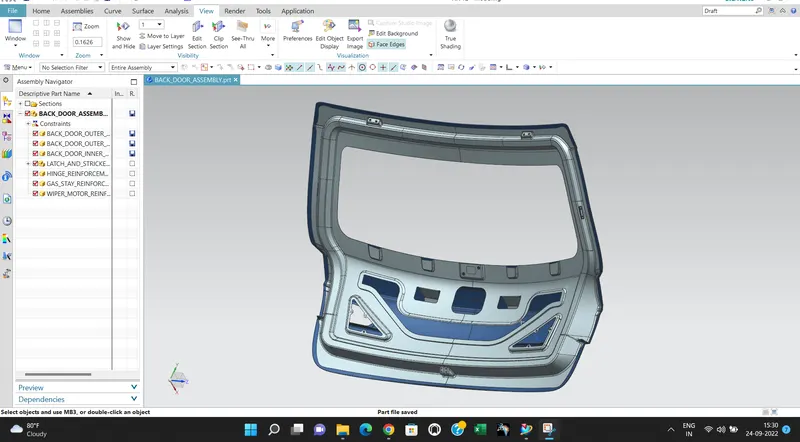
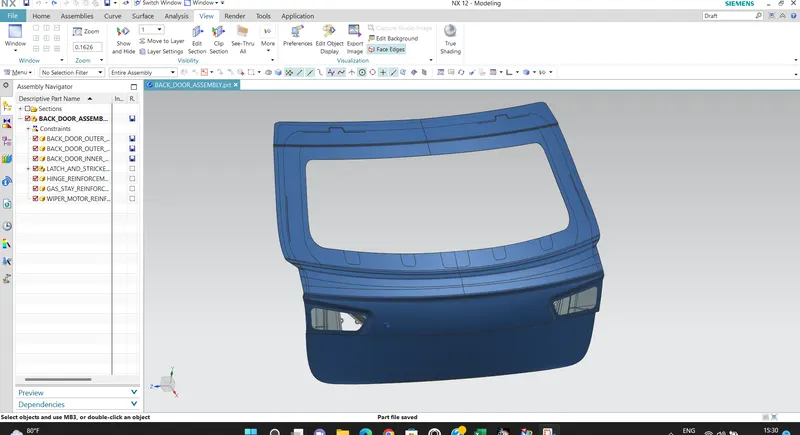
Design of backdoor
BIW - Design Of Backdoor
AIM - To design the Back door (Tail gate) of a car from the styling surface provided using NX CAD. The ultimate aim is to design the Back Door by following the Industrial Standards.
BACK DOOR - A back door is a BIW component found in all Automotive car generally used for opening and closing of the so called car luggage that is usually used for storing items inside a car. In general the opening and closing of the door is co-ordinated by the Latch and Stricker position and the Gas stay position that is mounted on the body and back door of the car. These positions play a major role in ensuring smooth opening and closing of the tail gate.
DESIGN CONSIDERATION FOR BACKDOOR INNER PANEL -
1. Rear Visibility.
2. Support structures like hinges and gas stays.
3. Mounts for wiper motor, tail lamps, and other wiring loops.
4. Fit and clearances.
5. Boot space
6. Rear crash regulations and requirements.
7. Sealing and its functions.
8. Joining techniques like hemming, spot welding etc.
All these design considerations go hand in hand with eachother because these positions are dependant on each other and if position gets altered all the positions has to be altered for effective opening and closing of the back door. The Latch and Stricker, Hinge Position and the Gas stay Positions has to be maintained in a proper way so that they play a major role in the opening and closing as well as the rear Visibility criteria of the car.
Material Selection:
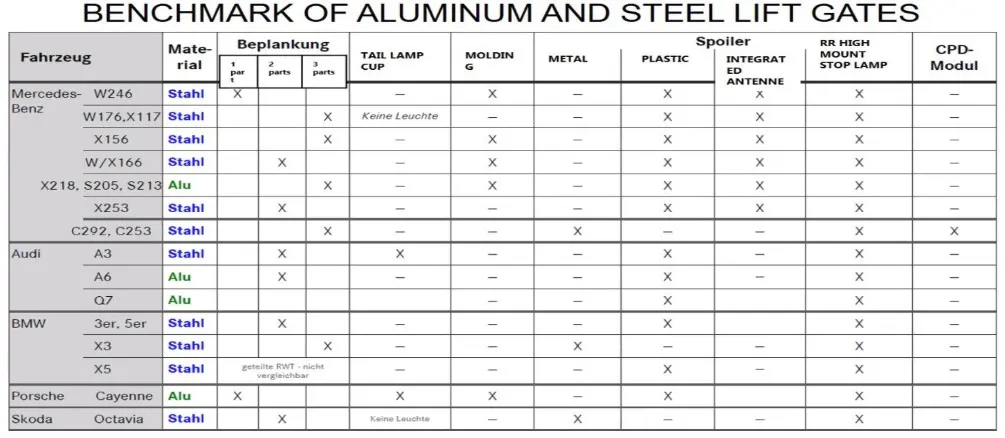
The material selection play a major role in determing the overall weight of the back door. The materials generally used are Steel and Aluminium. The Density of Steel is higher than Aluminium thus it results in adding more weight of the door. Basically the material is used based on the budget of the car, because the cost of steel very cheap than Aluminium. If aluminium is used instead of steel there is no need of many parts like Reinforcements for each mounting and the overall weight geta reduced by 6-10 kg approximately. But the draw back is Aluminium is much costlier than Steel. Hence based on the budget of the car aluminium is used. In higher end models like Benz, Audi, Porshe and BMW we can find aluminium is used instead of steel resulting in reduced weight and increased performance of the vehicle.
Another Factor to make a note is using Casted Aluminium instead of deep drawn Steel components and adding reinforcements to it is the space of the luggage commodity gets increased by a certain amount because the draft angle for Casted aluminium is much lesser (3 degree) than the deep drawn Steel inner panel (7-9 degree). Thus it reduces the space between the inner and outer panel resulting in much larger cabin space than the deep drawn steel inner panel. Thus the material selection is one of the design consideration taken. Since it reduces the space between the inner and the outer panel the rear visibility of the car is also inproved giving more space for the mirror to view.
Hence in this design the material chosen is steel since it is designed for a medium budget car and hence high cost could not be afforded to design the back door.
TYPES OF DOOR OPENING -
- Top mounted door
- Side mounted door
- Bottom Door
In these project, I designed Top mounted door, So here we discuss mainly about top mounted door only.
COMPONENTS OF BACKDOOR:
- Inner panel
- Outter panel upper
- Outter panel lower
- Hinge reinforcement LH
- Hinge reinforcement RH
- Gas stay reinforcement LH
- Gas stay reinforcement RH
- Wiper motor reinforcement
- Latch reinforcement
- Plastic trim
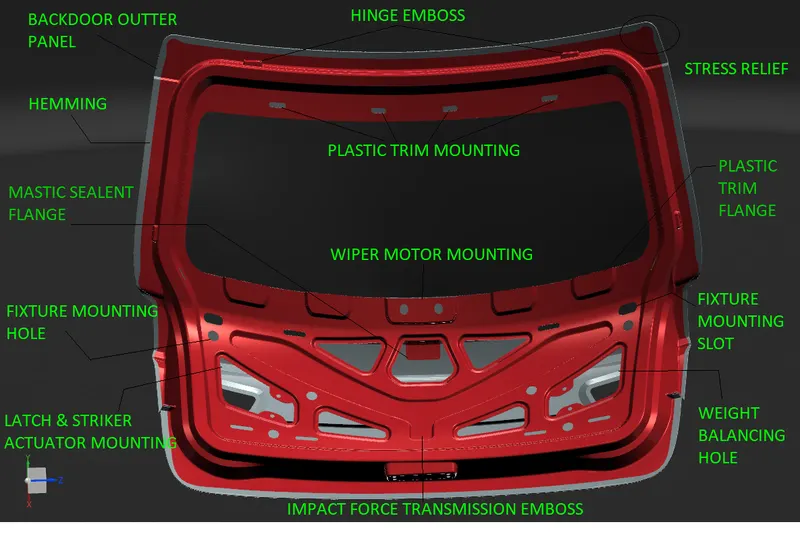
Back Door Assembly -
- Inner panel
- Outer panel
- Hinge and its reinforcement
- Wiper motor reinforcement
- Latch & stricker and its reinforcement
Inner Panel -
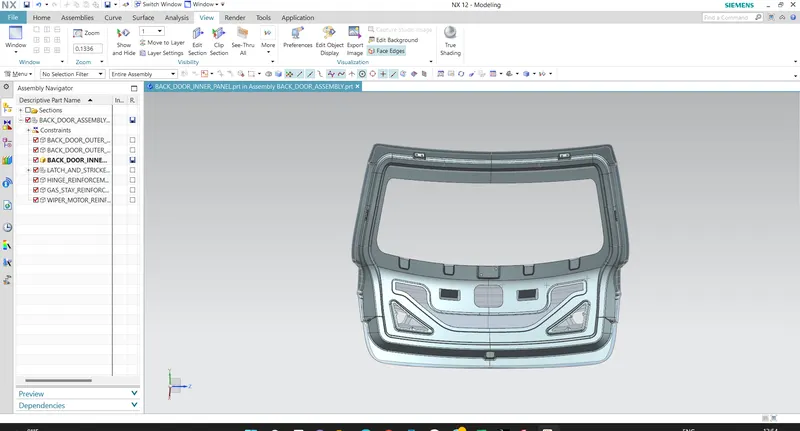
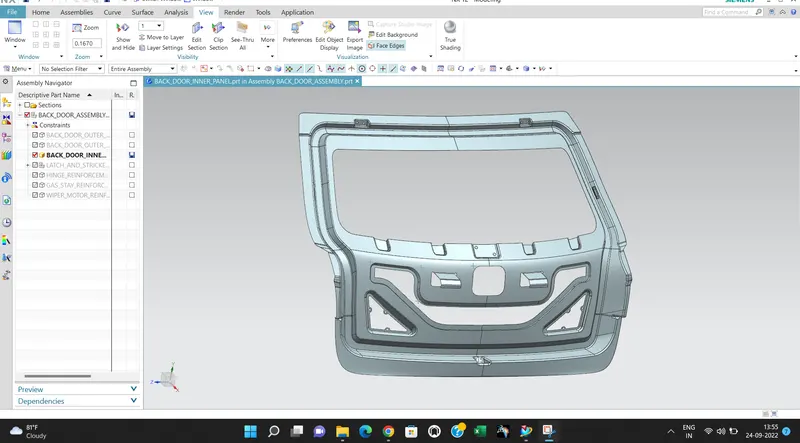
The inner panel is one of the most important components of backdoor assembly. It provides strength and helps in dissipation of forces outside the part with the help of embosses made on it. It helps in mounting of accessories like hinges, wiper motor, gas stay, latch & striker etc.
The inner panel is produced by either casting or through Deep drawing process.
Mostly aluminum part is casted, steel inner panel are manufactured by deep drawing process. If deep drawn, there must be a tooling direction through which that panel must be deep drawn.
DRAFT ANALYSIS:
Draft analysis of inner panel is carried out through the tooling direction only.Only the green areas are acceptable and i worst cases yellow regions are accepted but the blue and red regions are never accepted.
The draft angle for aluminium casted panel is 2 to 3 degrees is enough but if it is steel then the angle is more than 10 degrees.
In this project i considered it as steel and used 7 degrees as draft angle and direction is choosen as tooling direction which is the deep drawn direction.
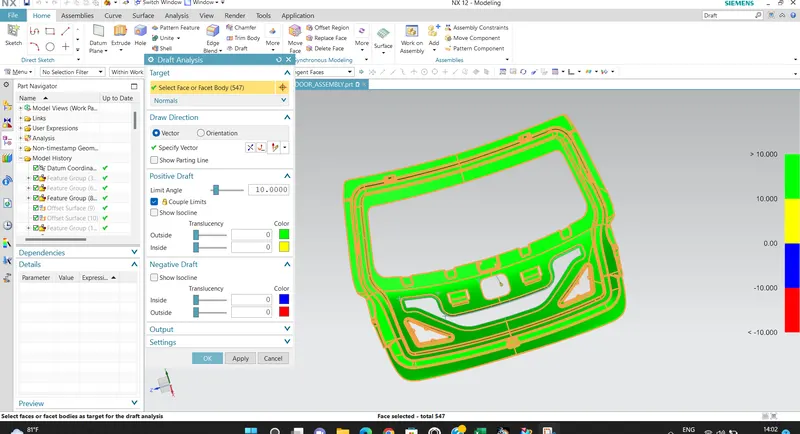
From the above fig. it is clear that all areas are in green color so my design is passed draft analysis.
OUTER PANEL UPPER AND LOWER -
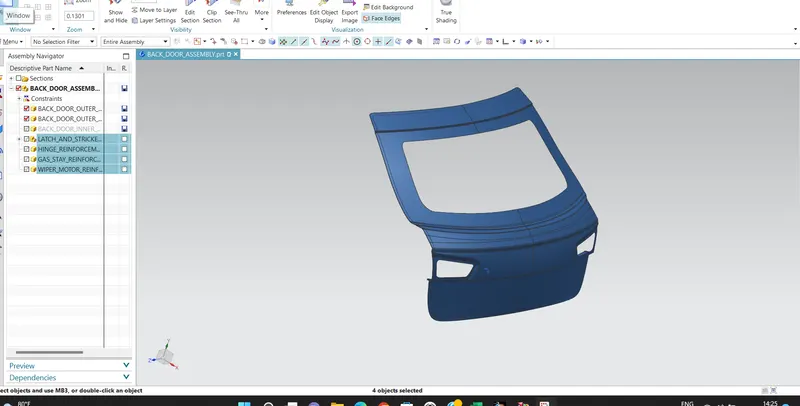
Outter panel is the styling surface of the backdoor.Glass for rear visibility is mounted on the outter panel upper.Rear lights are also mounted on the outter panel upper.
Number plate is mounted on the outter panel lower.Spot welds and other manufacturing process should done only on the inner panel because the outter panel is the styling surface which should not have any scratches or welds .Because it affects the style of the car which leads to bad impression on the customers.
EMBOSSES -
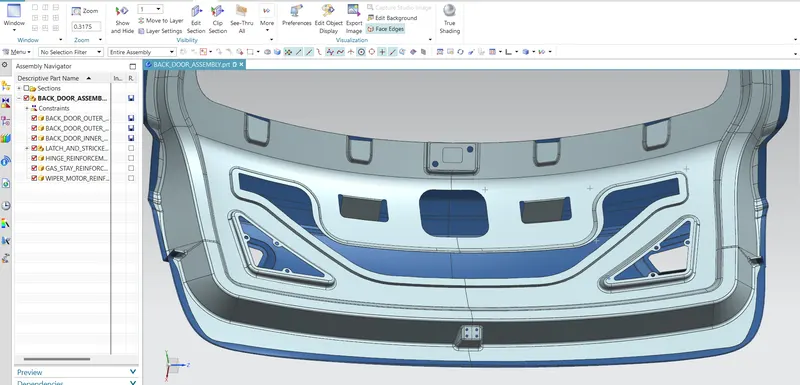
It is provided to give extra strength to sheet metal panel and to help dissipate forces/energy towards a specific direction. Here embosses (Y/V emboss) are designed in such a way so as to direct them towards the outer end of the backdoor as shown in the image.
FORCE DISTRIBUTIONS -
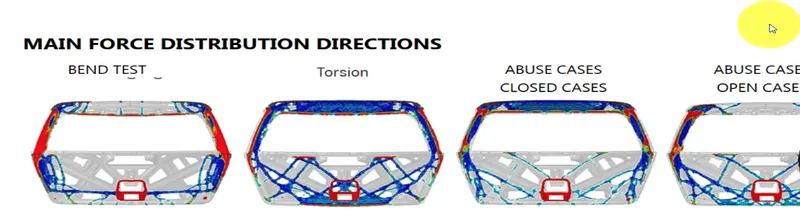
The major criteria in designing the back door or any BIW part is the force dissipation during an impact or a colloision. Hence studies are being done inorder to dissipate the force on the sides and avoiding it reach the inner cabin of the car so that possible damage of imapct inside the car is reduced. Hence inorder to do that the V or Y embosses are created on the inner panel so that the force gets transmitted on to the sides instead reaching it on the cabin. This is one of the main criterias in back door design.
Thus from the above image it is clear that the forces are dissipated on the sides instead of reaching inside. This is the reason to have Y or V embosses on the panel to increase the stiffness and to dissipate forces onto the sides.
REINFORCEMENTS:
As mentioned for local strengthening reinforcements are usually provided. Instead of making the whole panel off a thicker sheet, a thinner sheet with thicker local reinforcements wherever needed is preferred. The reinforcements are usually 1-1.5mm thick whereas the panel itself is 0.55-1 mm thick.
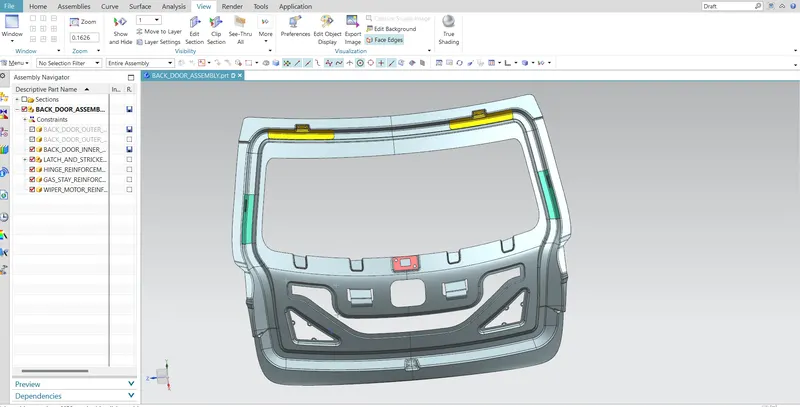
Backdoor parts thickness value used in this design -
- Outter panel - 0.75 mm
- Inner panel - 0.75 mm
- Reinforcements - 1 mm
HINGE REINFORCEMENT -
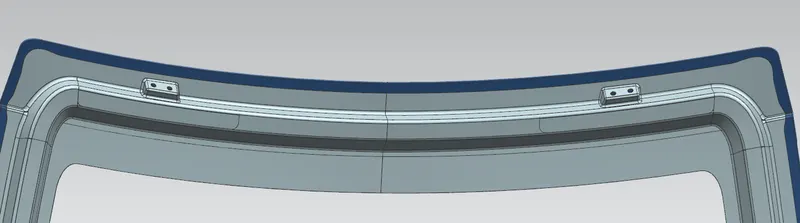
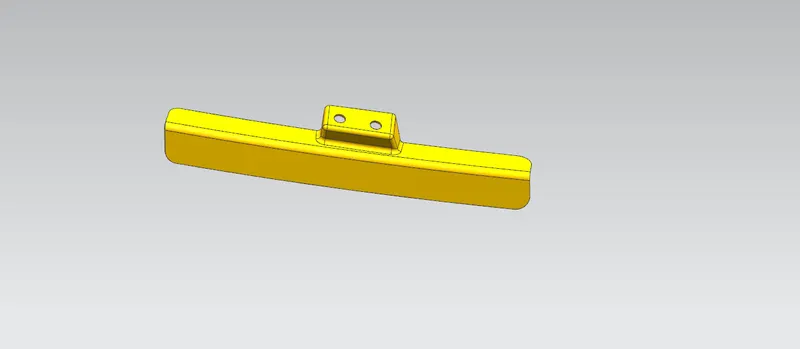
Hinges support the weight of the whole backdoor.Hence, the reinforcements must be provided there too.The emboss is designed in such a way that the hinges should operate freely.The hinge is connected to the rear roof of the car.
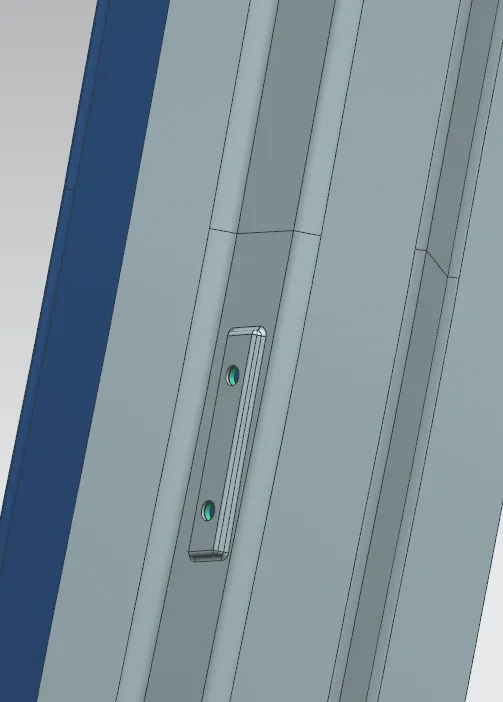
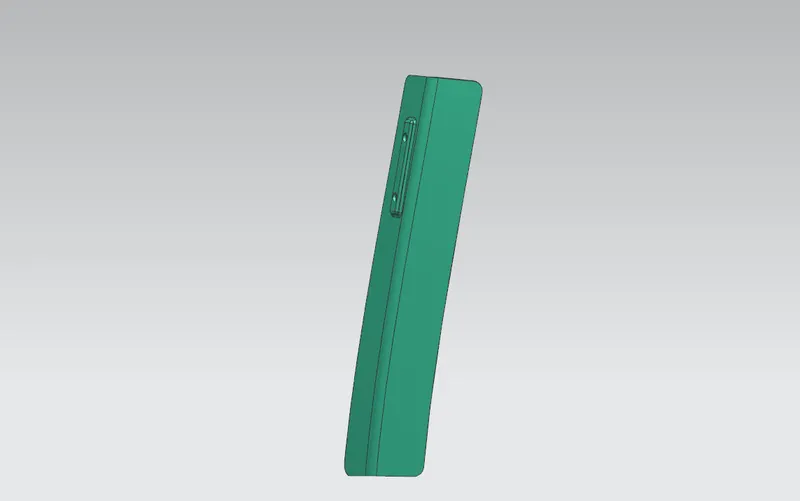
GAS STAY REINFORCEMENT -
Gas stay is used to lift the backdoor automatically.There are two types of gas stay one is semi-automated and another one is fully automated.In semi automated type the back boor needs little force to lift after that it lift the backdoor automatically.In fully automated , it has power spindle which lift the backdoor automatically.
WIPER MOTOR REINFORCEMENT -
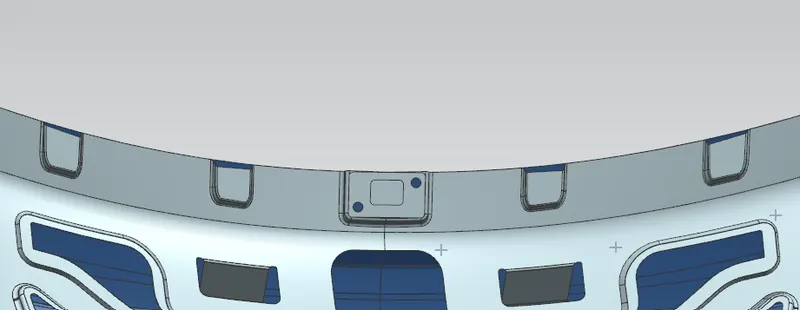
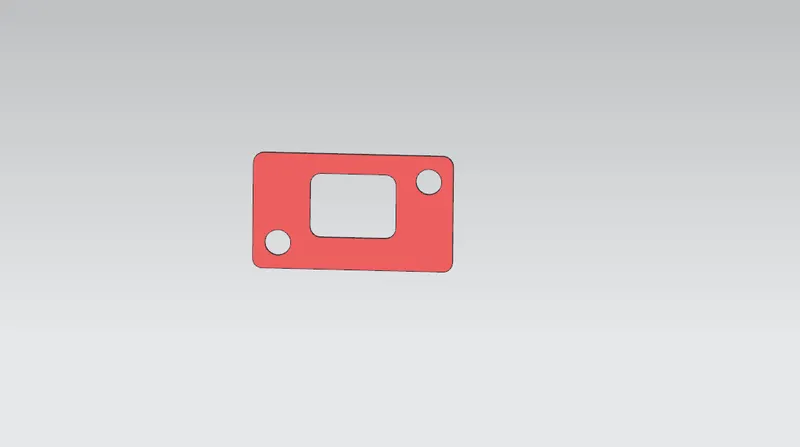
Wiper is used to to wipeout the rain water falls on the backdoor window.It is actuated by the motor which is mounted on the inner panel.Due to the vibration and heat created by the motor .the inner panel where the motor is mounted gets deform and the parts attached to the motor starts to vibrate which leads to poor NVH.So we have to provide the reinforcement where the wiper motor is placed.
LATCH REINFORCEMENT -
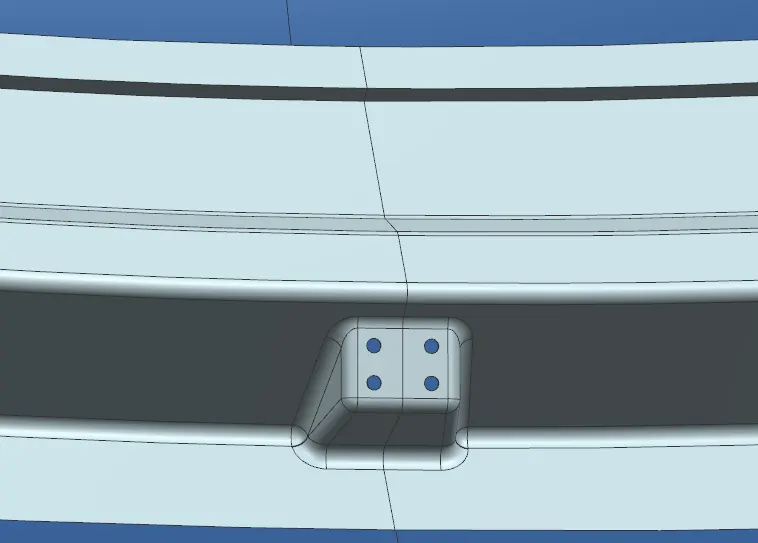
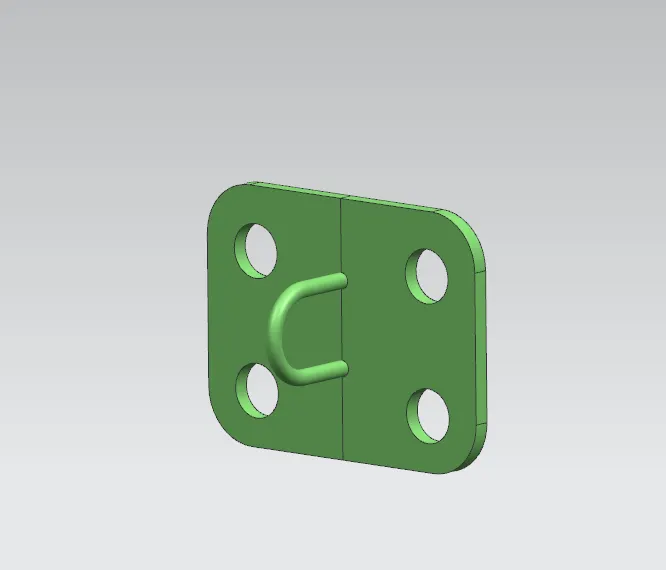
At bottom of the panel , reinforcement and emboss are given to accomodate the latch and striker assembly.Generally key operated or automatic remotly controllable mechanism is used to keep the door open or closed.The actuators , recivers and other electronic devices are mounted on the inner panel only.
LATCH & STRIKER POSITION -
The Latch and Stricker positions play a major role in determing the opening and closing of the back door. Hence the opening and closing of the had to smooth and inorder to ensure that the the centre point of the latch and stricker has to to be at the same point and the trajectory has to be tangent to the open close circle that is drawn. This is shown in the below image. Only if the centre points and the tangent line are perfect the opening and closing of the back door is smooth and clear. Or else the Hinge positions, Gas stay positions and Latch and Stricker Positions has to be altered to meet the change.
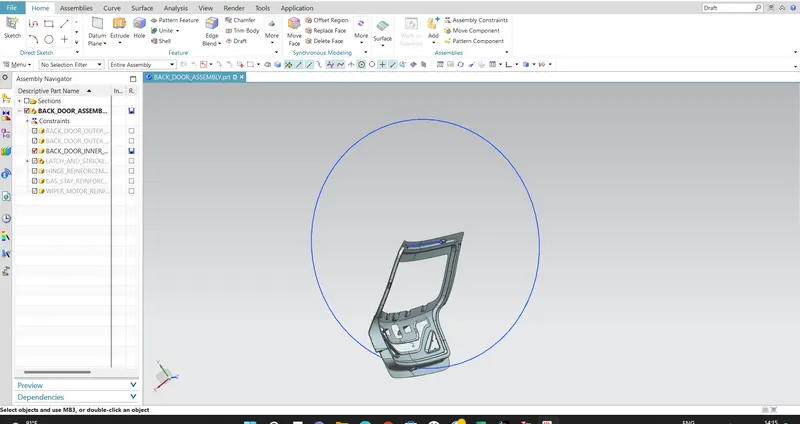
Here the hinge centre and the stricker centres are in line with each other and the trajectory of the movement is clearly obtained.
MASTIC SEALENTS -
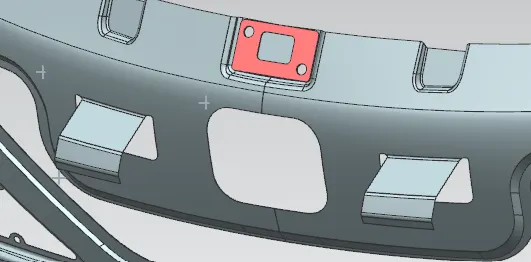
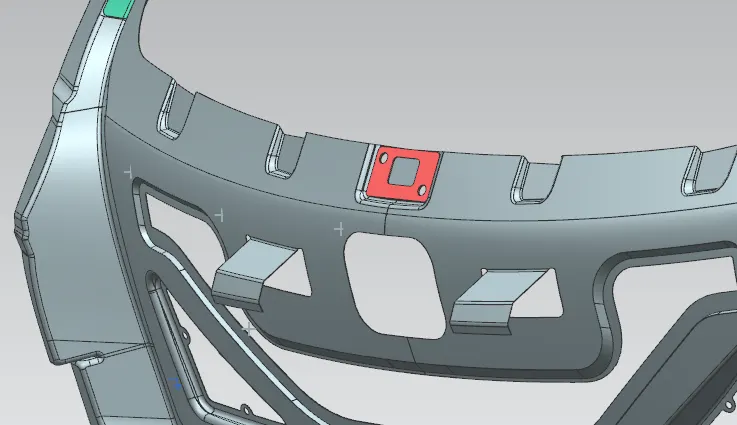
The region in the image is the region where both the inner and outer panel are joined at the centre with the help of Mastic Sealants. There is a gap of 5mm for the mastic sealants to melt and gets fixed at the surface of the panels.
HEMMING:
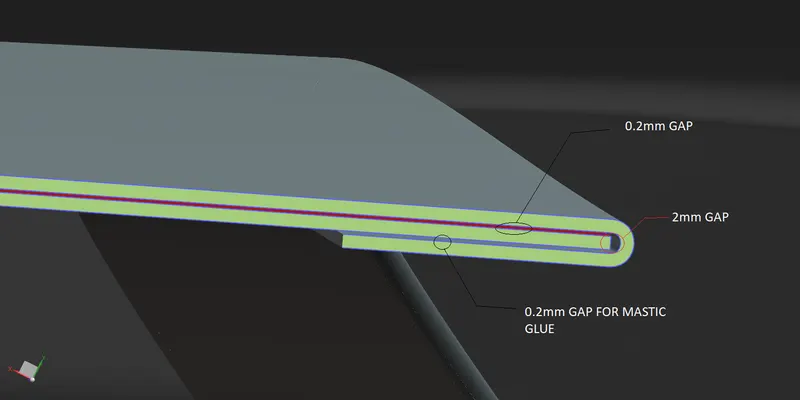
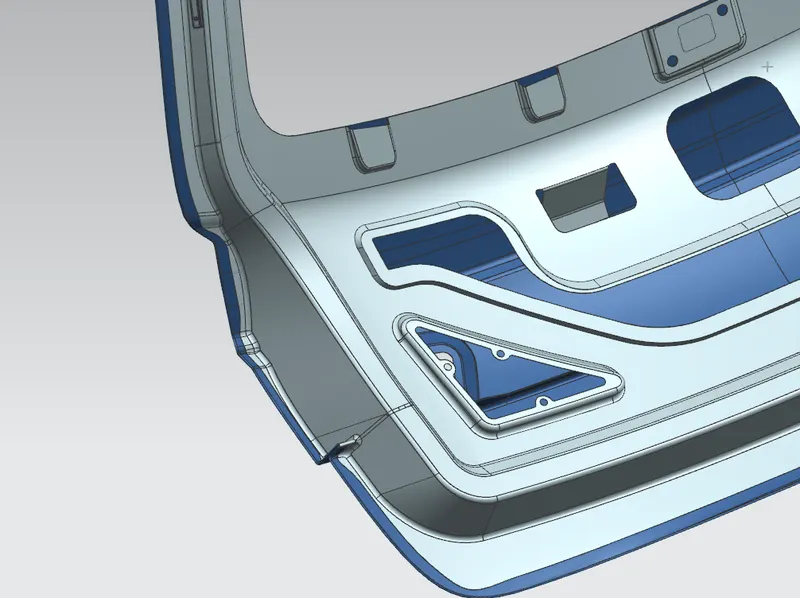
Hemming is the metelworking process in which a sheet metal edge is rolled into itself.The outter surface of the panel is rolled 2 or 3 times over the inner panel.In first roll the panel is bent slinghtly,and in the second roll the shhet matel is rolled even more and in the last roll it completely fits or covered the inner panel.There must be a 0.2mm gap between outter and inner pannel in both upper and lower side.
SPOT WELDING:
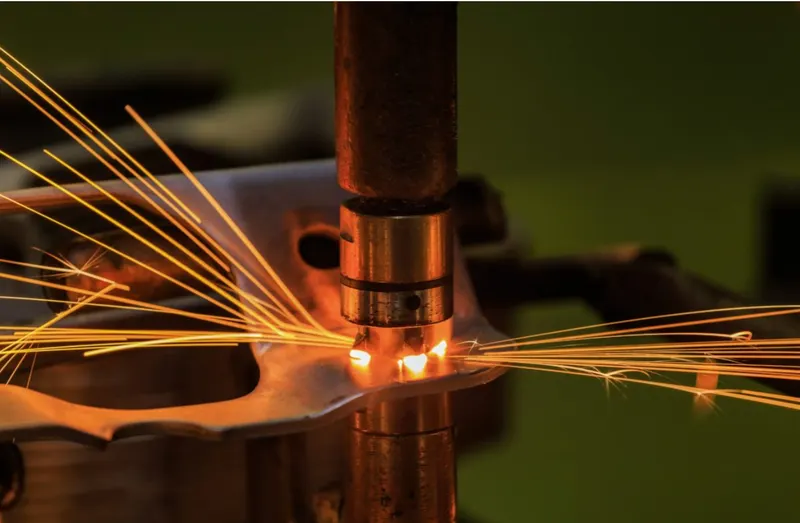
Spot Welding is a form of resistance welding also known as Resistance Spot Welding (RSW). Spot Welding involves using heat produced by resistance to an electrical current to join materials together. The current heats the materials to a point where they become malleable. The use of strong pressure bonds them together.
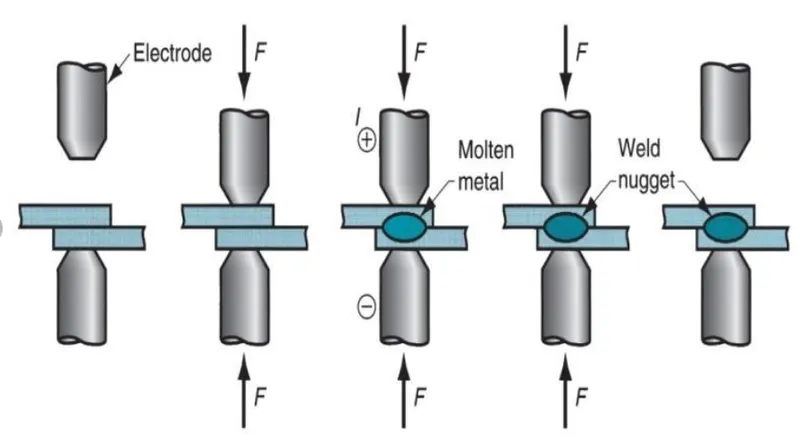
Another form of resistance welding is Projection Welding. This process involves fusing a fastener’s embossed or coined projections to the metal base material to form a weld. As the materials never melt, they do not intermix. This means the resulting weld is more like a forging of the materials.
Spot welding is only suitable for a small selection of base materials. Low carbon steel is the most suitable material for spot welding. This is because it is more resistant to electricity and has a lower thermal conductivity than the copper electrodes used to create the required electrical current.
High carbon steels and aluminium alloys can form brittle welds that don’t last with the spot welding process. Pure aluminium can qualify for spot welding but requires higher current levels. This is because it has a lower resistance to electricity than low carbon steel.
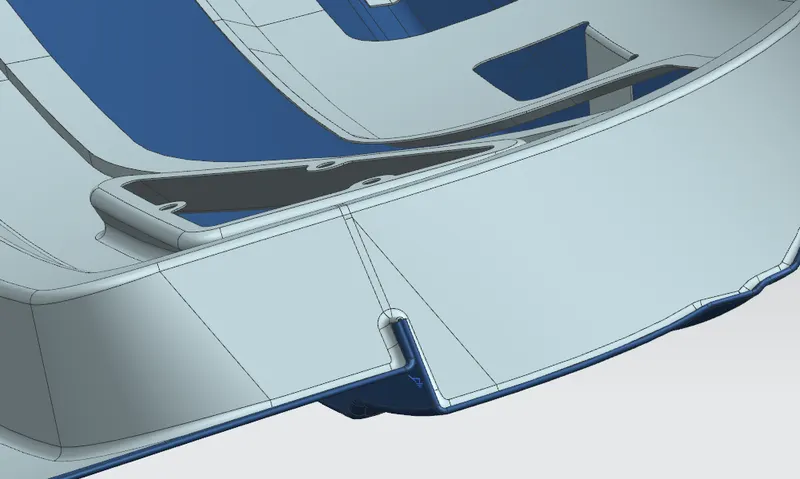
The outter panel upper and outter panel lower are joined through the spot welding .So there must be no gap between the outter panel upper and outter panel lower.
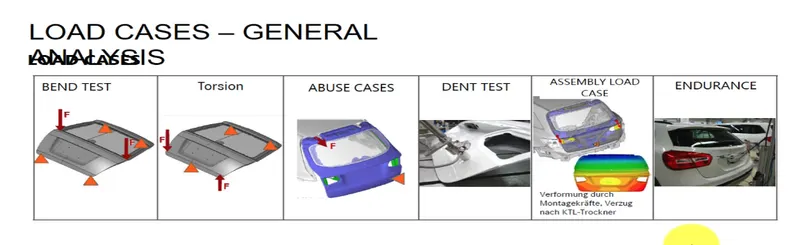
DIFFERENT LOAD TEST CARRIED OUT DURING SIMULATION -
SHEET METAL MANUFACTURING PROCESSES -
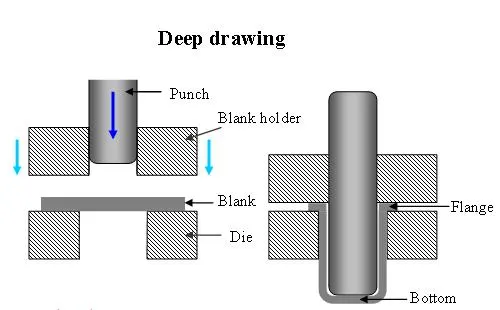
1) DEEP DRAWING OPERATIONS -
(a) It is a forming process by pushing a punch against a flat sheet and forcing it into a die to take the required shape. Or in other words drawing is the operation of producing thin walled, hollow shaped parts from sheet metal. Both the die and the punch have shape of the part to be manufactured . Classifications of drawing operations could be cupping, redrawing and deep drawing. Components like cups, shells, household utensils etc. can be made by drawing.
(b) In the drawing operation soft material are used since the material is required to undergo large permanent deformation to acquire the intended shapes in the presses. Drawing operations could be for cup making or deep drawing.
(c) For making cup shapes on the press first a circular blank of proper size is taken. The die is usually open from the bottom side and has an ejector system placed below a pad for the removal of the component after pressing it into shape. The pressure pad ensures smooth flow of the blank over the die/punch.
(d) The ratio of the diameter of the blank (D) and that of the cup (d) is called draw ratio (Did). If draw ratio is greater than about 1.8 then the cup cannot be drawn in one draw. Such items may require redrawing in several steps.
(e) In drawing operations lubricants are extensively used.
2) BENDING -
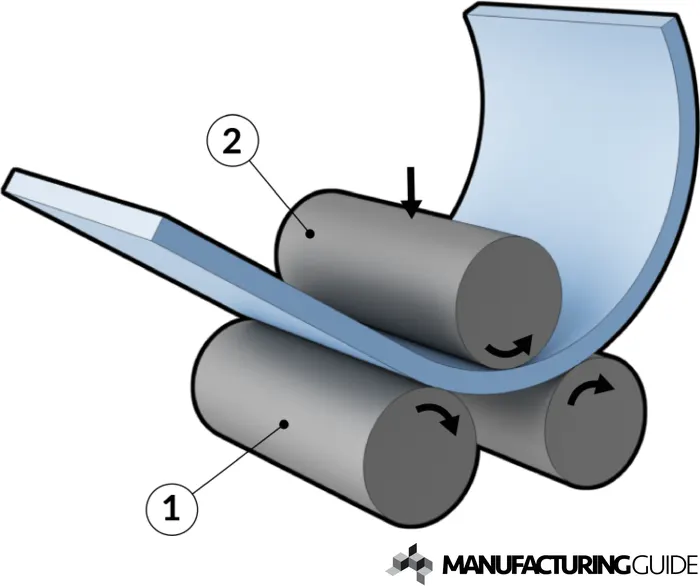
It is a forming operation performed on a press to bend a sheet metal or a strip through required angle.
Salient features of bending are:
(a) It requires a press and tooling to do the bending operation.
(b) The sheet metal strip is permanently deformed to the required shape.
(c) When the sheet metal is pressed for bending in the die the outer portion is stretched while inner sides (towards the punch) are compressed.
(d) The radius of the corner should not be small i.e., the angle at the bent should not be too sharp—otherwise material can crack at the bend.
(e) After removal of the bent component from the press there is usually spring back up to about 4 degrees depending on the material hardness. Hard material have greater tendency to spring back while softer materials have less tendency to recover shape.
3) BLANKING -
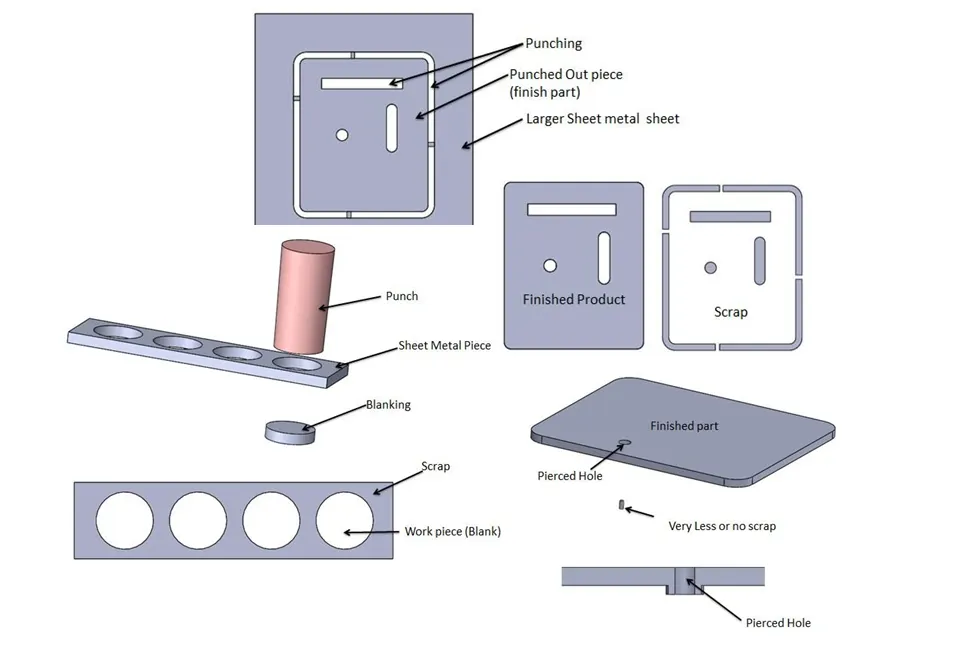
(a) Blanking is an operation of cutting an object of given shape from sheet metal strip. It may or may not be necessary to perform further operations on the blank. Piece detached from the metal strip is called blank. Examples are discs, washers.
(b) Blanking operations are extensively used in sheet metal working to make components like washers, discs etc. If needed other operations may be combined with the blanking operation. Blanking is usually the first operation in sheet metal.
(c) A blanking operation to make disc from a steel strip would require-
(i) A press
(ii) A punch and die with clearance at the lower side so that the disc can fall down freely.
(iii) The material for blanking operation is usually hard.
4) PIERCING -
It is a distinct process of making a hole in sheet metals.
It is characterized by:
(a) The punch is sharp and pointed tool which is able to penetrate or pierce through the sheet metal.
(b) There is no scrap from the hole.
(c) The hole has rough flanges around the hole.
5) NOTCHING -
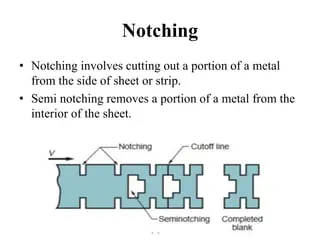
Notching is removing small quantity of material from the edges of a sheet metal part. Notching may be done to avoid overlapping of material after bending at the seams. Proper notching would give the sheet metal joints a better fit.
WORKING PROCESS IN INDUSTRIES -
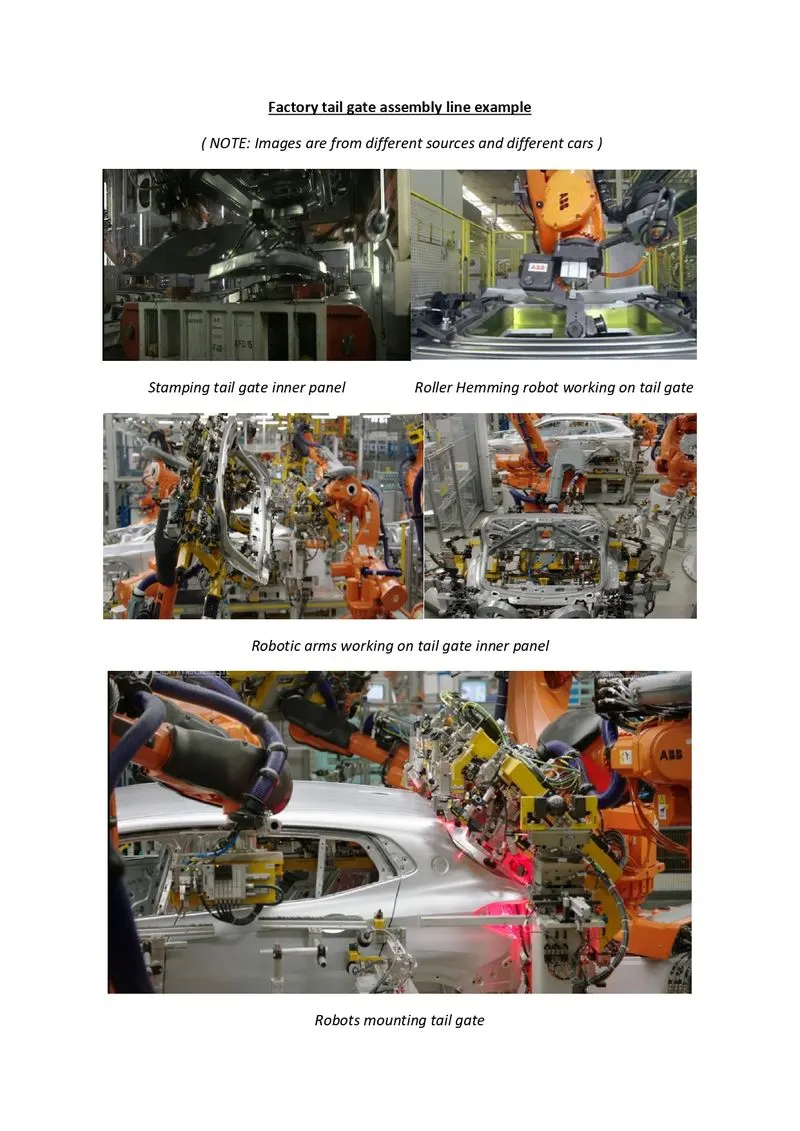
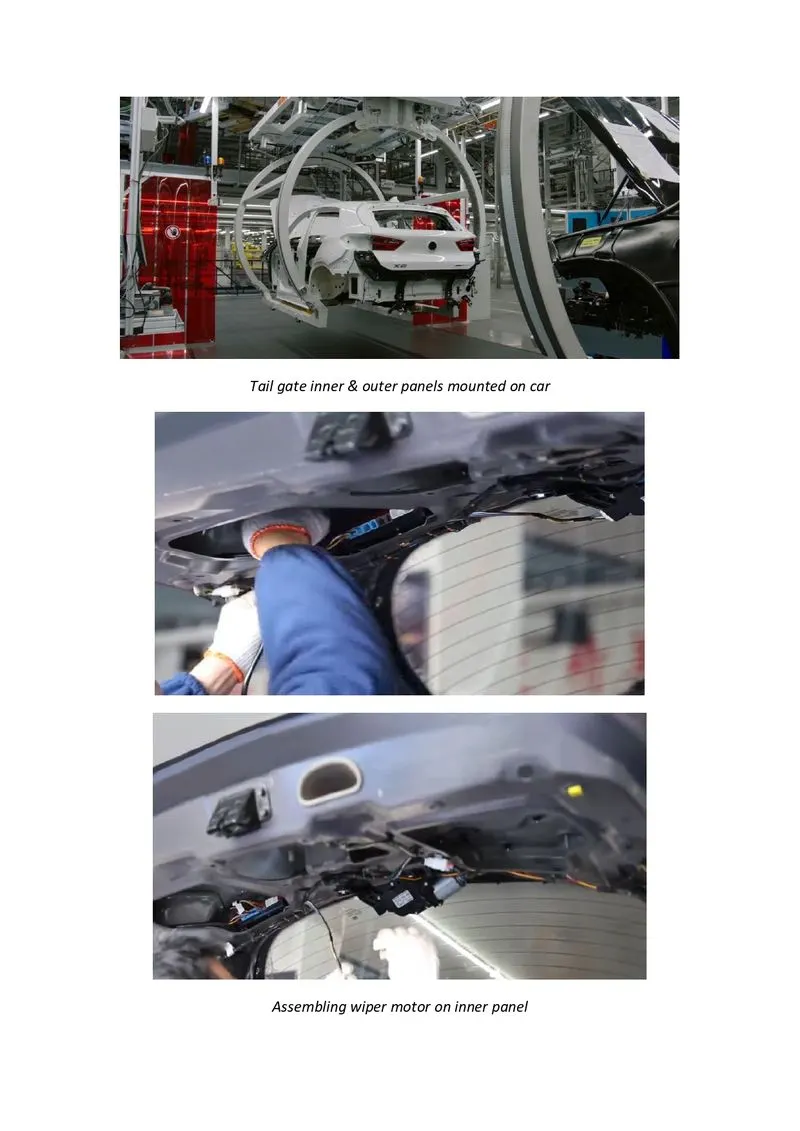
CONCLUSION - Hence, the backdoor is designed with all the necessary reinforcements and embosses along with considering all the important design criteria.