Design of backdoor
AUTOMOBILE BACK DOOR DESIGN AND VARIOUS CONSIDERATIONS FOR MODELING
INTRODUCTION
Back Door
The trunk or boot of a car is the vehicle's main storage or cargo compartment, often a hatch at the rear of the vehicle. In India, the storage area is known as a dickey, in a compartment.
The trunk or luggage compartment is most often located at the rear of the vehicle. Early designs included an exterior rack mounted on the rear of the vehicle to which it was possible to attach a real luggage trunk. Later designs integrated the storage area into the vehicle's body and evolved to provide a streamlined appearance. The main storage compartment is normally provided at the end of the vehicle opposite to which the engine is located.
The door or opening of a cargo area may be hinged at the top, side, or bottom.
If the door is hinged at the bottom it is termed a tailgate. They are used on station wagons and pickup trucks, as well as on some sport utility vehicles (SUV). Traditional drop-down station wagon and pickup tailgates can also serve as a mount for a workbench.
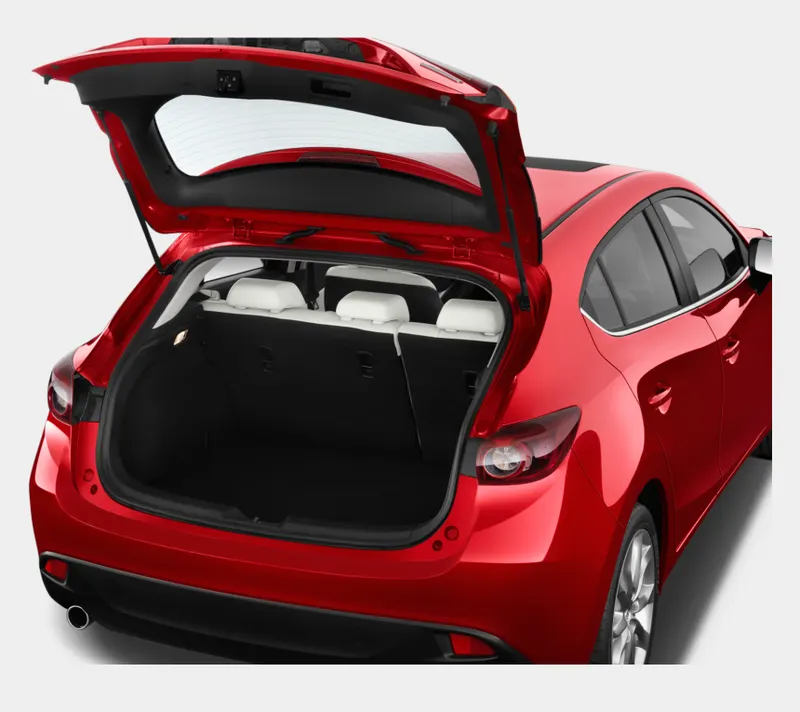
- source - " wikipedia"
Now In this project, I am going to design and model an automobile backdoor with the help of some input data like parent CAD files of the backdoor.
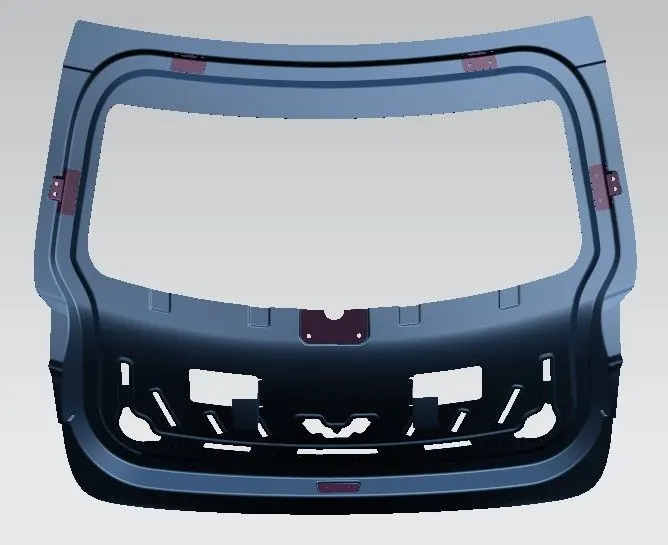
By doing some research on backdoor parts and some videos I have come to know that, a single component does not specify or completes a Backdoor, many reinforcements to withstand some amount of force which are,
- Outer panel (upper)
- Outer panel (lower)
- Inner panel (upper), (lower)
- Hinge reinforcement
- Gas stay reinforcement
- Wiper motor reinforcement
- Latch reinforcement
DESIGN OF BACK DOOR
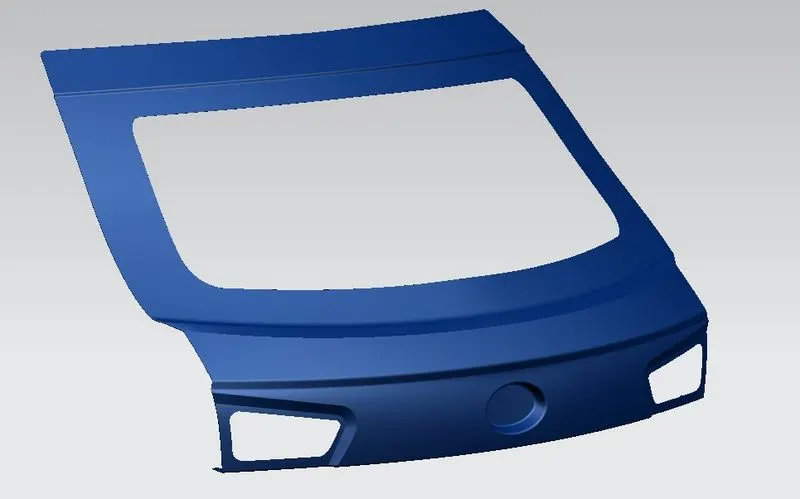
- Outer panel
Upper
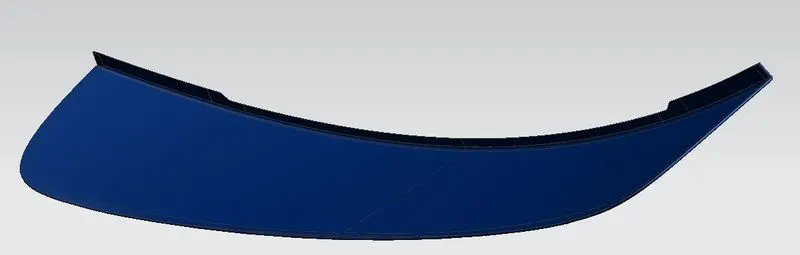
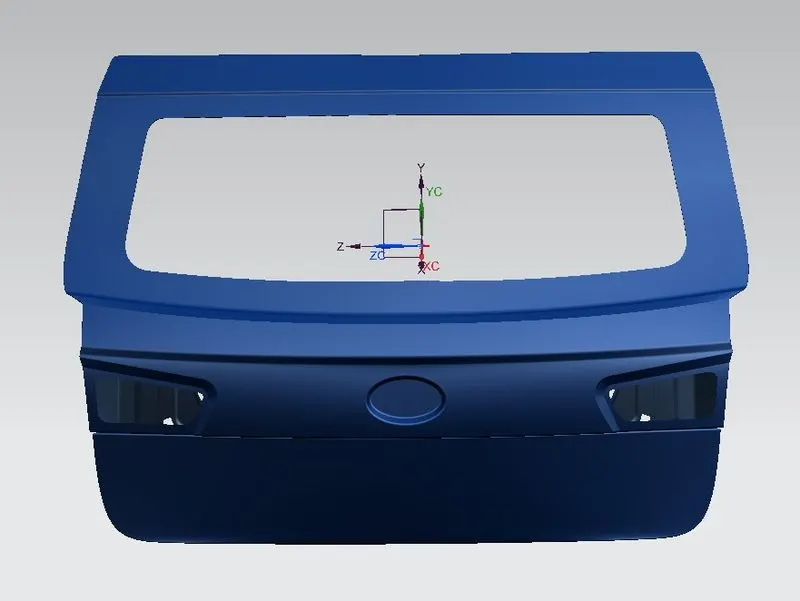
An outer panel is the outermost sheet metal of the roof in which there are aerodynamic cut-outs or back glass for see-through cut-outs or tail-light cut-outs etc. And there can be some fixtures or carriages to carry larger objects or cycles.
The thickness of the sheet metal of the upper panel should be around 0.75 mm.
Material – SP121AQ (Cold Rolled Mild Steel)
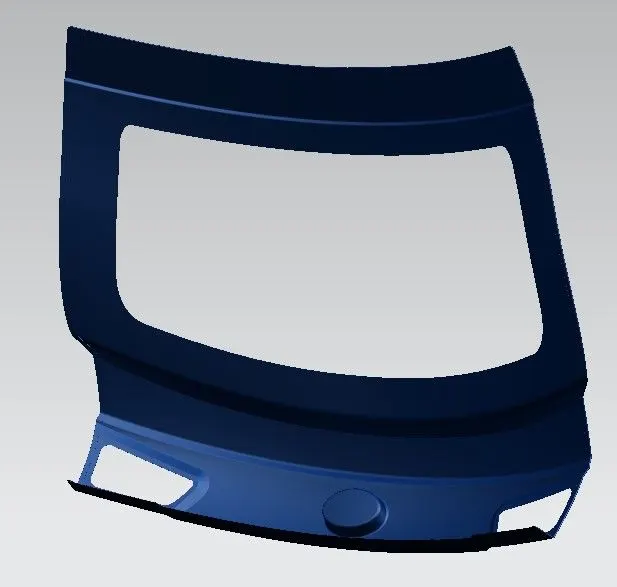
lower
Similarly, the backdoor comprises of two parts one is upper, and another is lower. In the lower part the latch embosses, and reinforcement are fixed. Between the upper and lower there can be some mounts like sensors or latch etc.
The thickness of the sheet metal of the lower panel should be around 0.75 mm.
Material – SP121AQ (Cold Rolled Mild Steel)
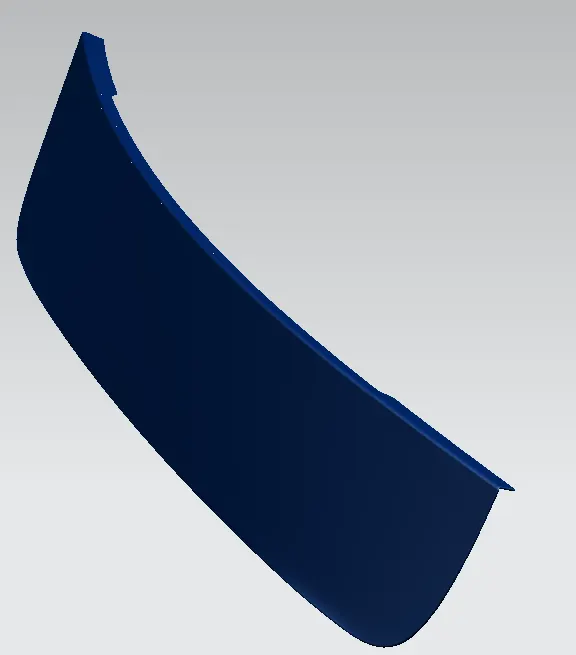
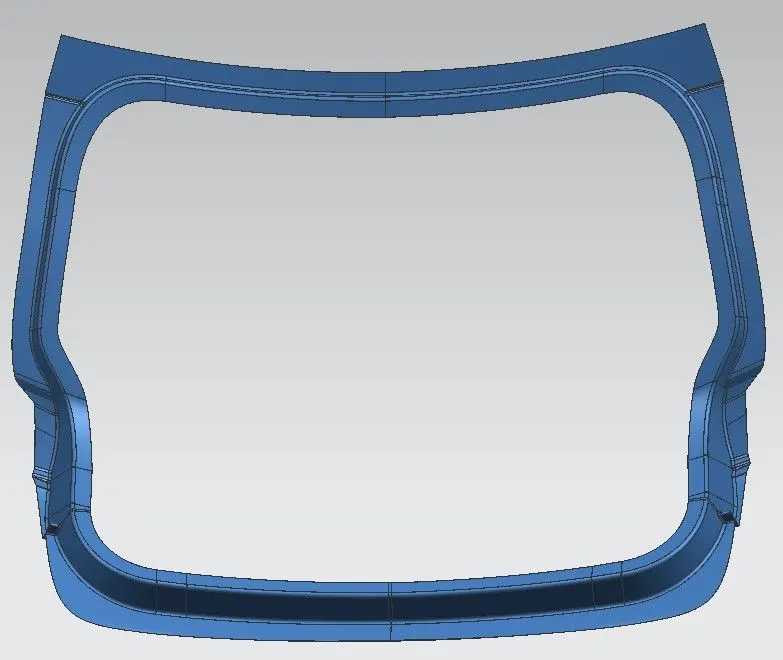
- Back door inner panel
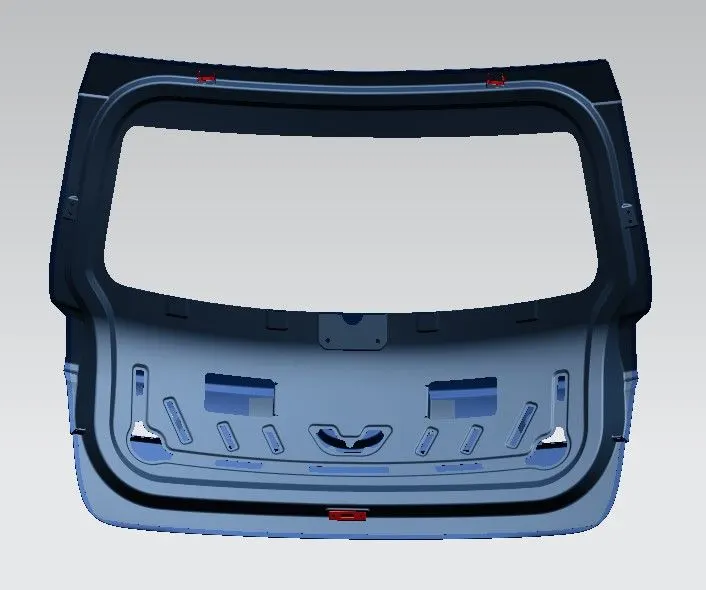
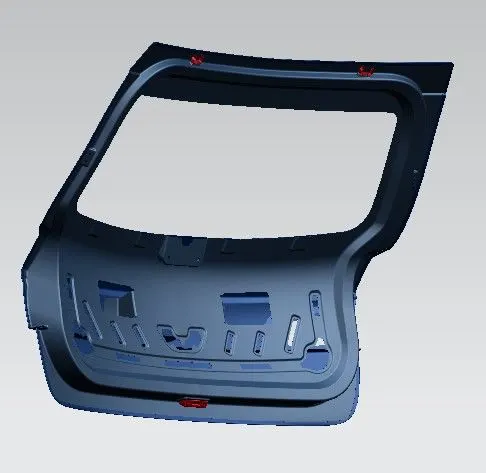
The inner panel of the back door is a single part where, the embosses for all reinforcements, force distribution embosses, and sealing flange punch is made. So, all the process is made in the inner panel only.
- Sealing flange
This emboss is made to secure the backside of the car which tightly or perfectly seals the door to the body of the car. And, during the rainy season or any water splash happens, this embosses seals the body so that no water comes in.
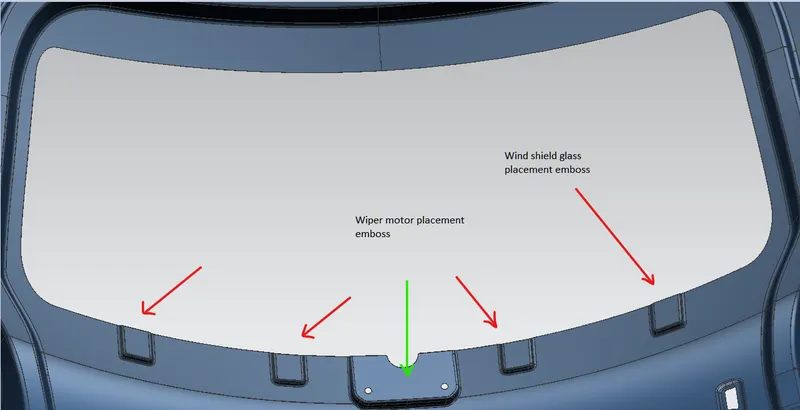
- Windshield glass and wiper motor mount
These windshield Mount and wiper motor Mount are situated on the bottom edges of the Windshield glass cut out. these mounts are basically embossed which are created to hold the windshield glass and wiper motor.
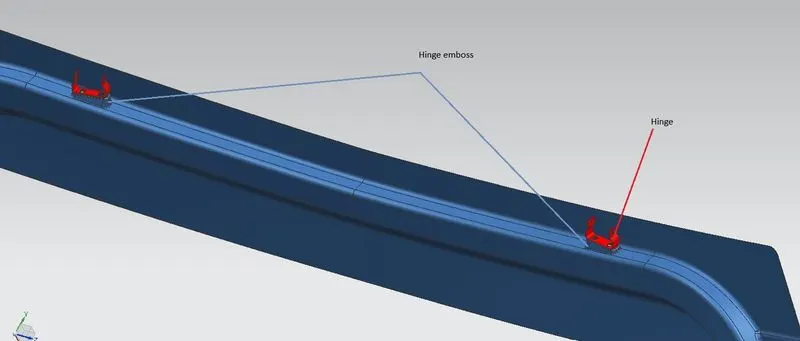
- Door hinge emboss
during the process of creating the hinge emboss there should not be any curvature on the surface of the emboss because if there is some curvature in the emboss, the hinge would not perfectly place and create some problem while opening and closing the back door. There are totally 2 hinges emboss on the upper part of the back door.
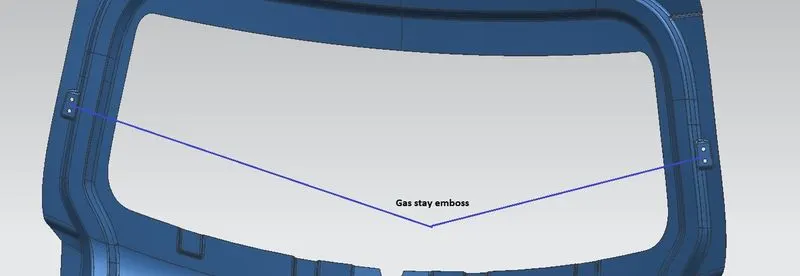
- Gas stays emboss
The gas stays emboss is Placed connecting to the ceiling flange and hem flange. in this process the emboss surface should be flat because the gas stay should be placed perfectly on the embossing. There is a total of 2 number of embossing made on both sides of the back door.
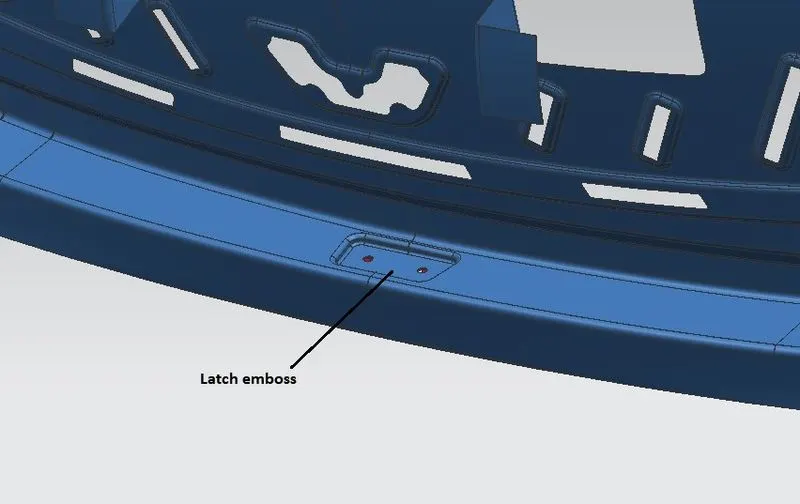
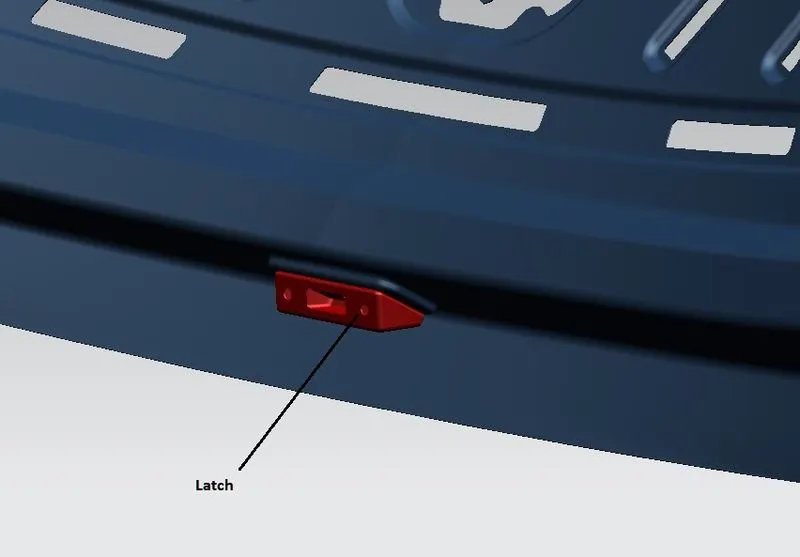
- Latch emboss
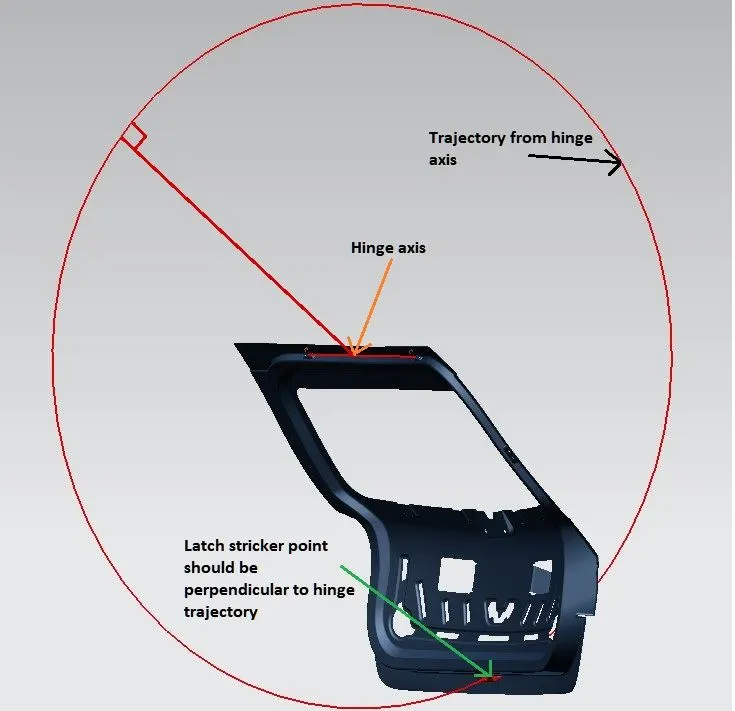
For locking of the back-door latch is placed. this latch is placed at the bottom of the back door and the axis of this latch should be perfectly aligned with the hinge axis.
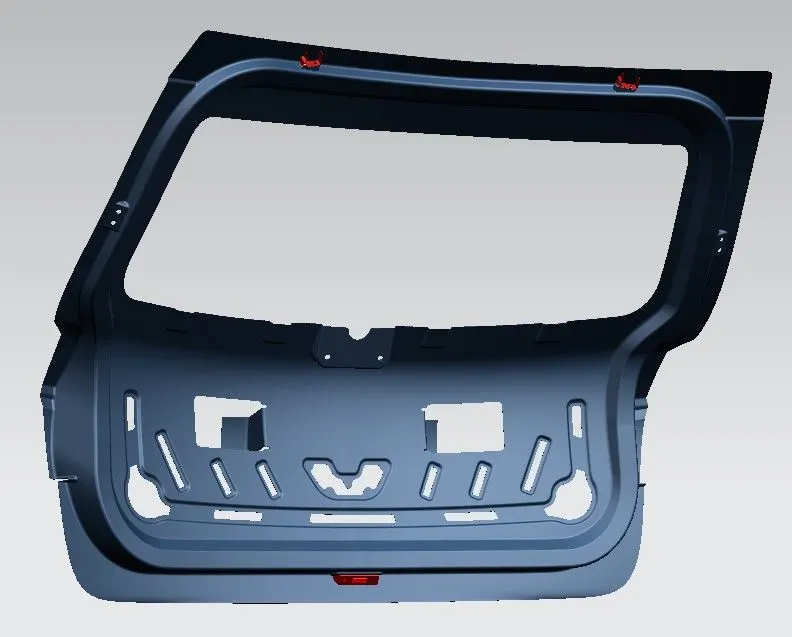
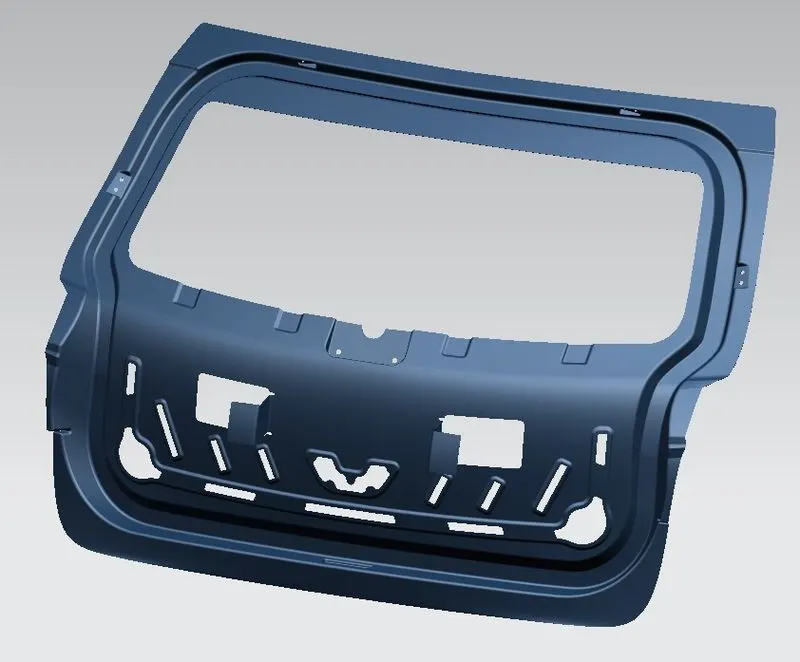
A model is designed with the following specifications-
Material – steel
Thickness – 0.75 mm
- Draft analysis
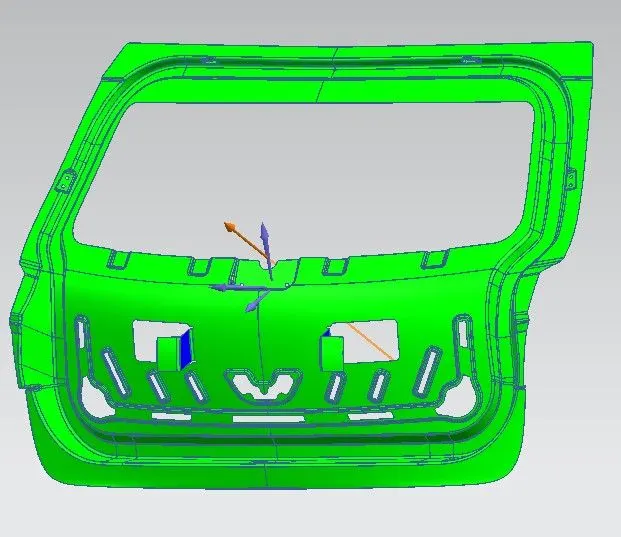
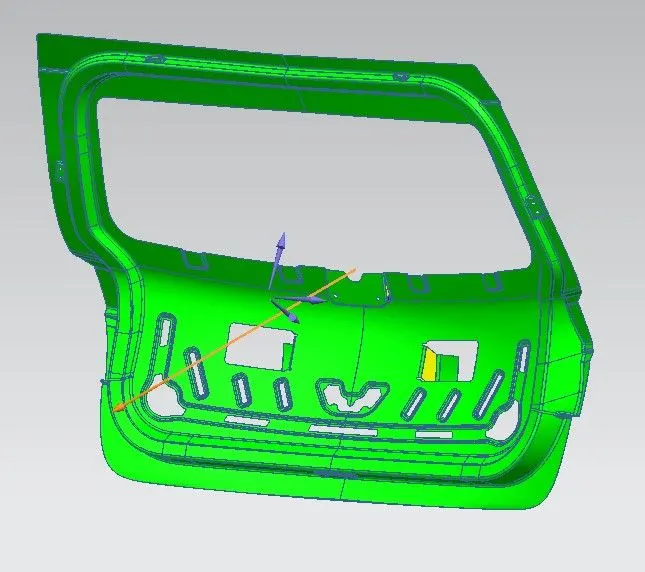
In the real-world application of manufacturing of sheet metals with some operations like hot and cold rolling, punching, etc. The angle modeled in the CAD software for this component should be applicable for the real-world manufacturing processes also.
So, in the CAD software, some analysis can be made to precheck the operations that can be performed in Manufacturing industries. Draft analysis is one of the analyses that check the angle between the components which are operated in sheet metals.
- Reinforcements
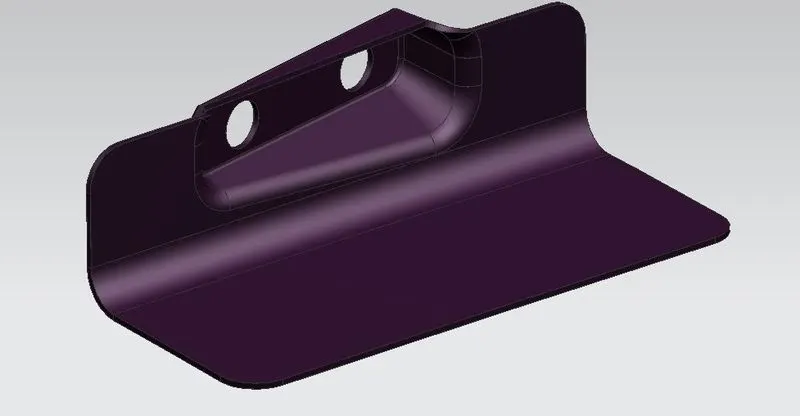
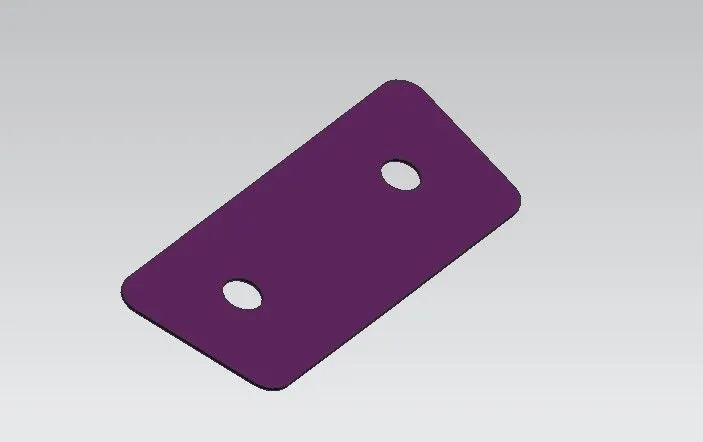
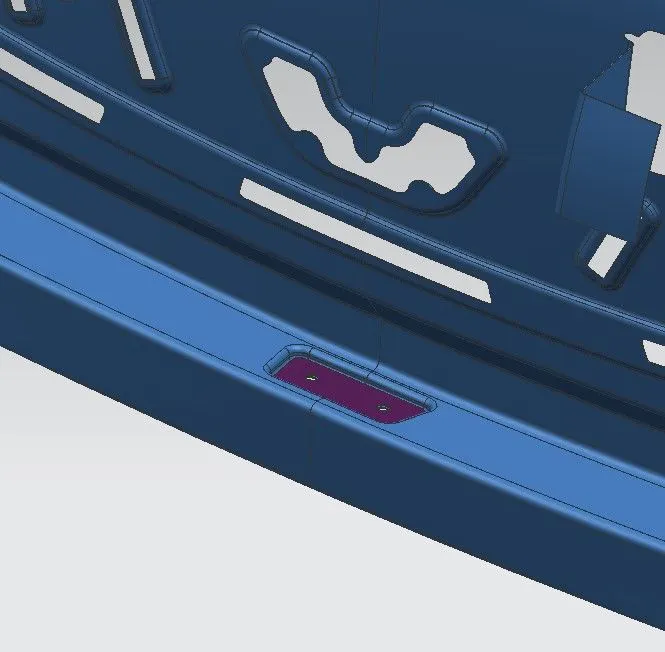
During the manufacturing or punching of reinforcement, there may be some Decrease in the strength of those areas or around those embosses so to strengthen those emboss reinforcements are placed to tightly fix those attachments with the inner panel and to strengthen those part alone.
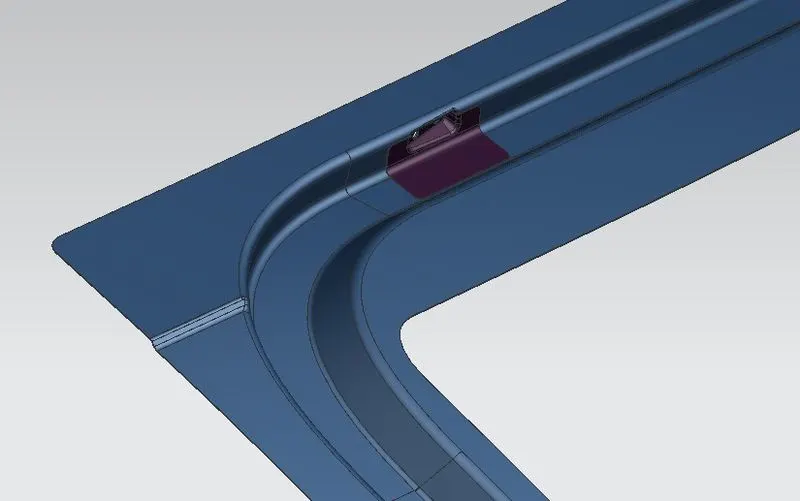
- Hinge reinforcement
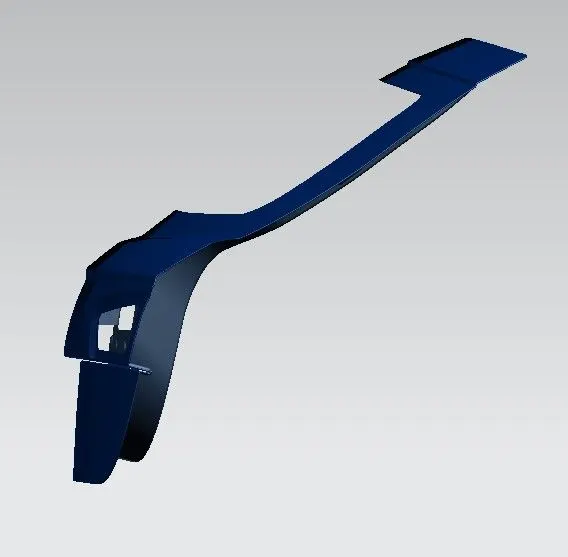
To strengthen the emboss which is made for the hinge, reinforcement is placed on both hinges embosses.
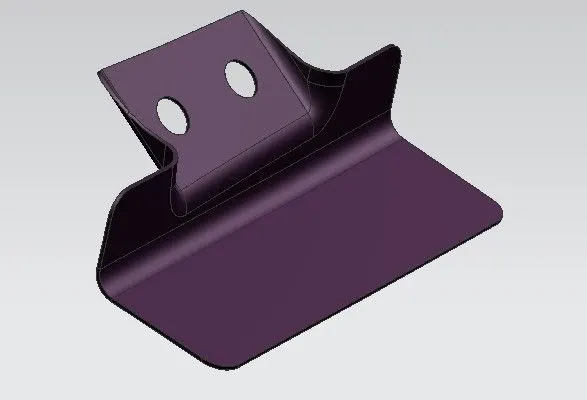
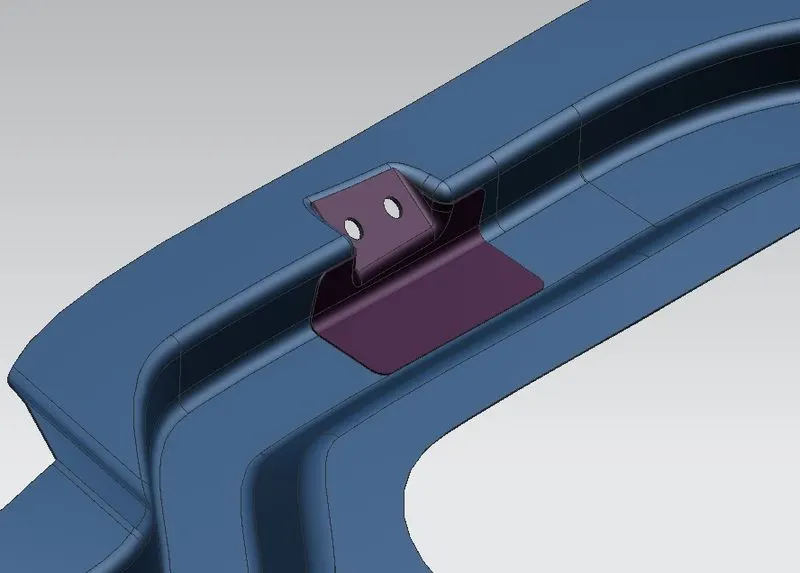
- Gas stay reinforcement
To strengthen the emboss made for the gas stay, reinforcement is placed to securely fix the attachment like gas stay to the inner panel.
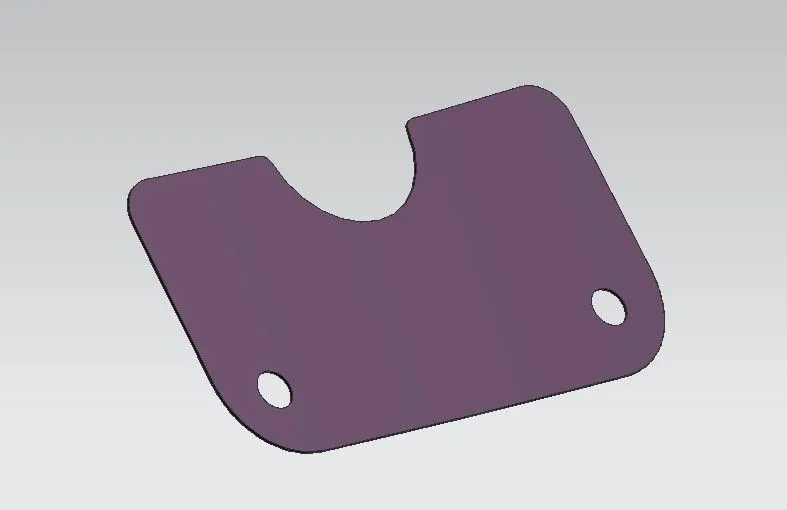
- Wiper motor reinforcement
Similarly, to strengthen the emboss made for the wiper motor, reinforcement is placed
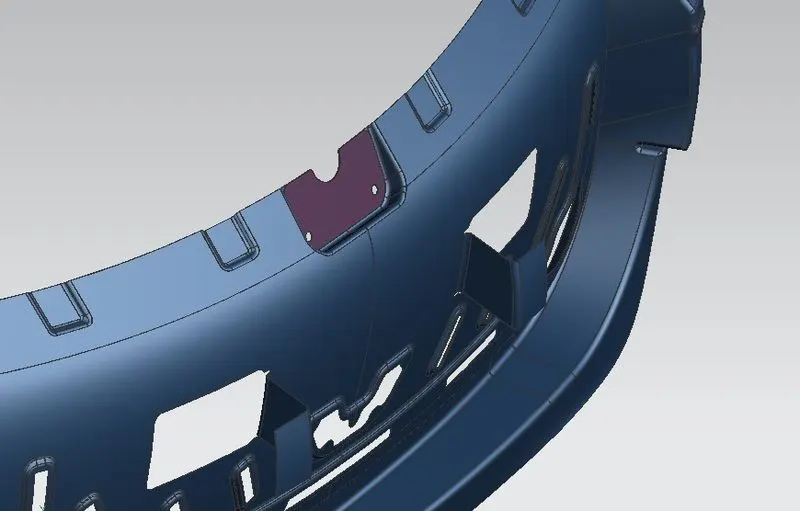
- Latch reinforcement
The latch is an important part, so another reinforcement is placed at the emboss made for the latch.
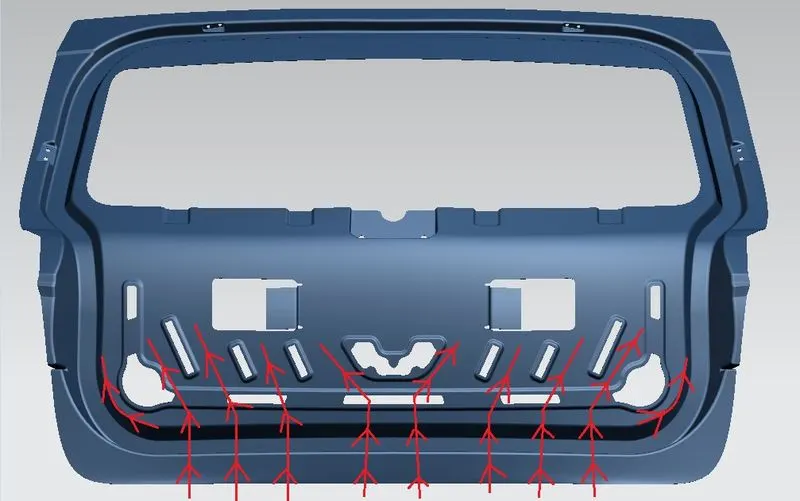
- Impact Force distribution emboss
When there's an impact at the back door and when it is attached to the car, the force should be distributed across the sideways of the door so that everyone inside the car is safe.
- Latch trajectory motion
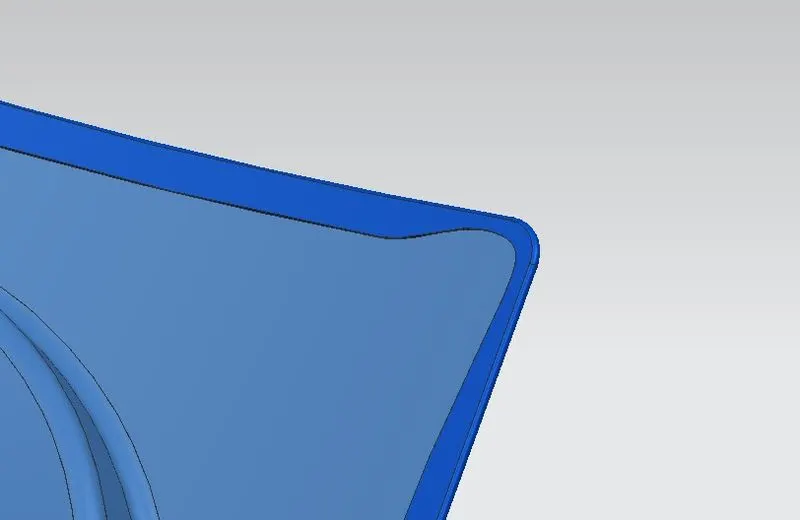
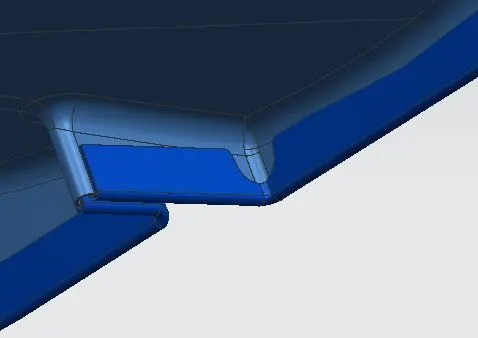
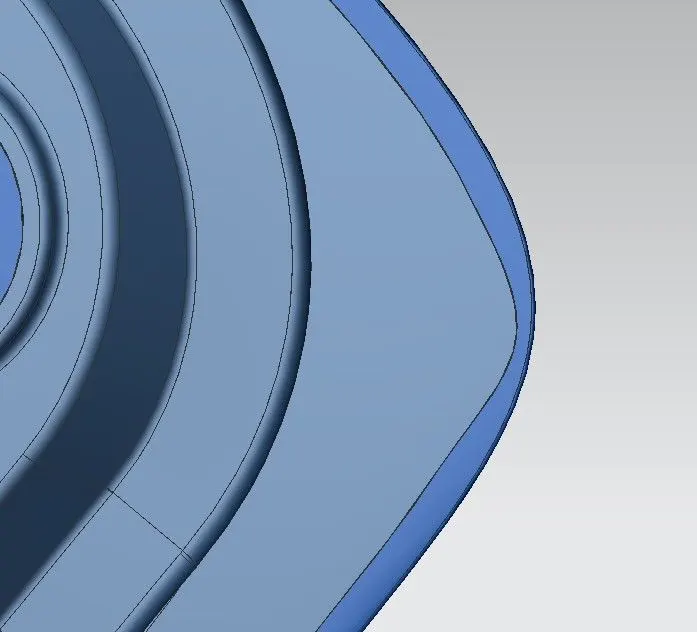
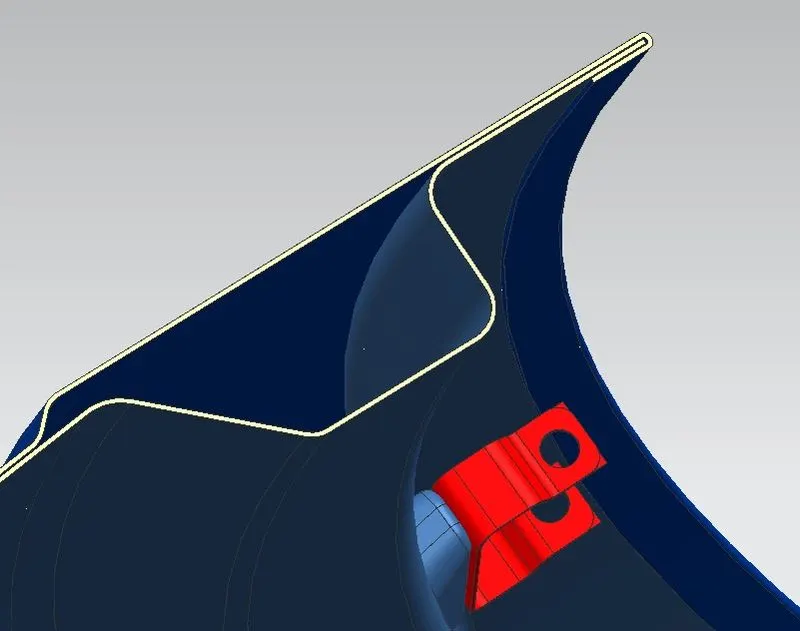
- Hemming and relief
- Final Design
- CONCLUSIONTherefore, i have designed a back door that falls under the rules and regulation of Manufacturer's Standards.