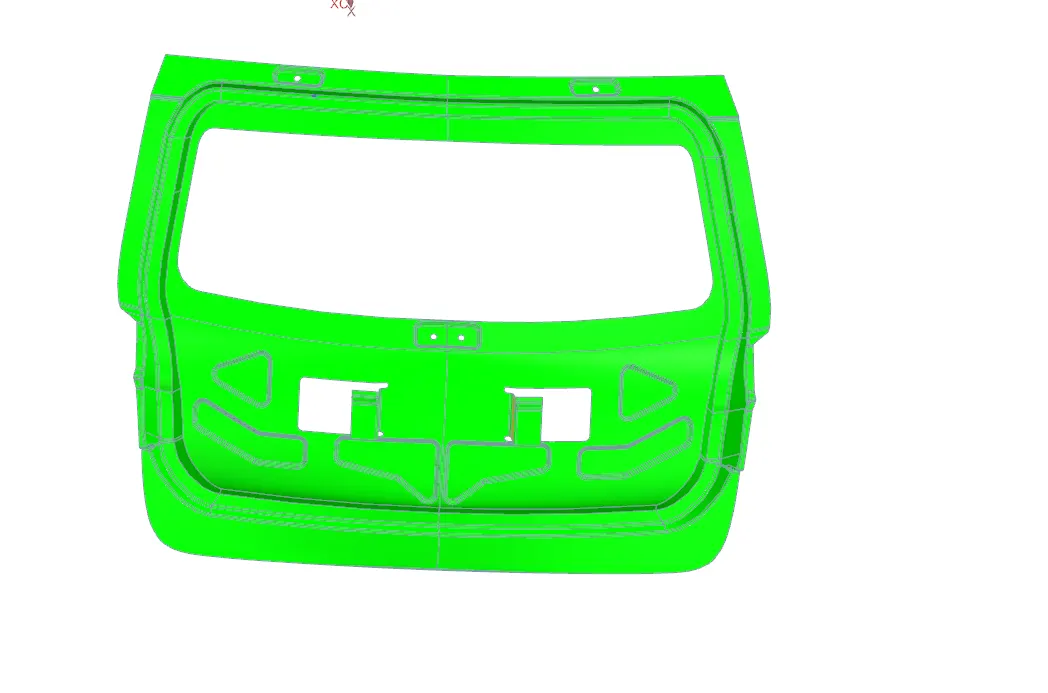
Design of backdoor
Aim: To repair the given surface, design the inner panel of the back door, and make necessary reinforcements
Introduction: A car's "boot door" otherwise the rear door, which provides access to the trunk or cargo area. The boot door is typically hinged at the back of the vehicle and can be opened to load and unload items. It may have a handle or a release mechanism that allows it to be opened from outside the car using a key, remote control, or a button, as well as from inside the car using a lever or button located near the driver's seat.
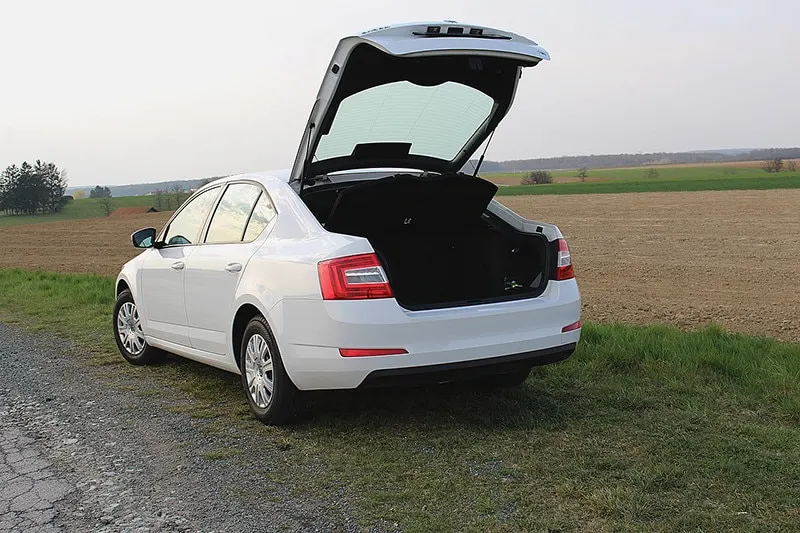
Source: https://housegrail.com/is-a-trunk-considered-a-door/
Material Choices:
The material used in a car's boot door can vary depending on the make and model of the vehicle, as well as the manufacturer's design choices. However several common materials are used in the construction.
Many car boot doors are primarily made of steel, which is a strong and durable material. Steel provides protection to the trunk area and its contents. Some higher-end or lightweight vehicles may have boot doors made of aluminum, which is lighter than steel but still strong. Aluminium can help reduce the overall weight of the vehicle, which can contribute to better fuel efficiency. In modern cars, especially those designed for performance or fuel efficiency, composite materials may be used in the construction.
Manufacturing Processes:
Stamping and Cutting: Large sheets of the chosen material are cut and stamped into the shape of the door panels. This involves the use of heavy presses and dies to shape the metal or other materials accurately
Welding and Assembly: The individual components of the door, such as the inner and outer panel, reinforcement beams, and door frame, are welded and bonded together. This assembly process creates the basic structure of the door.
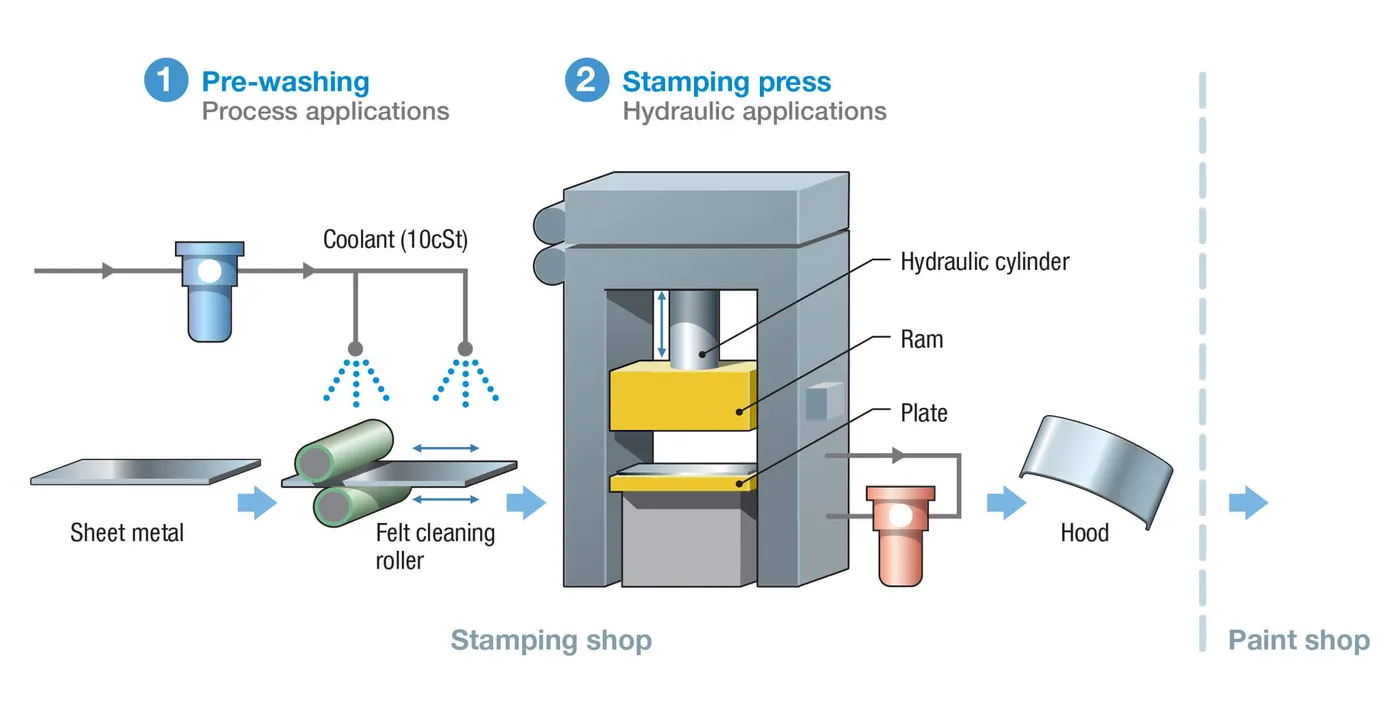
Source: https://www.pall.co.in/en/industrial-manufacturing/automotive/stamping.html
Hemming: It is a technique used to fold or bend the edge of a metal sheet or panel back onto itself. This process is typically employed to create a safe and smooth edge, to reinforce the edge for added strength, or to hide sharp edges. Here, the outer and inner panels are joined by hemming
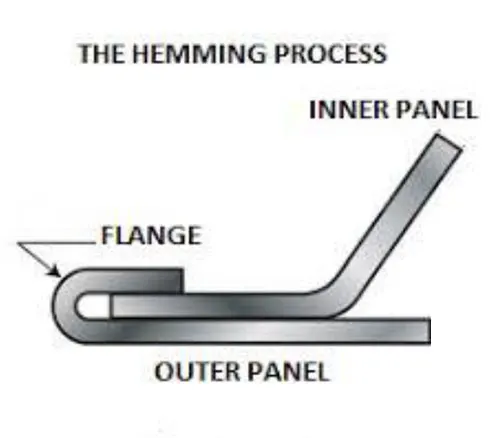
Source: https://www.dsource.in/course/sheet-metal/sheet-metal-joinery/hemming-and-seaming
Back Door Design:
The following considerations are required in designing the back door: Enough visibility, Force dissipation, Latch & Striker reinforcements, and Hinge reinforcements.
Back Door Outer Panel:
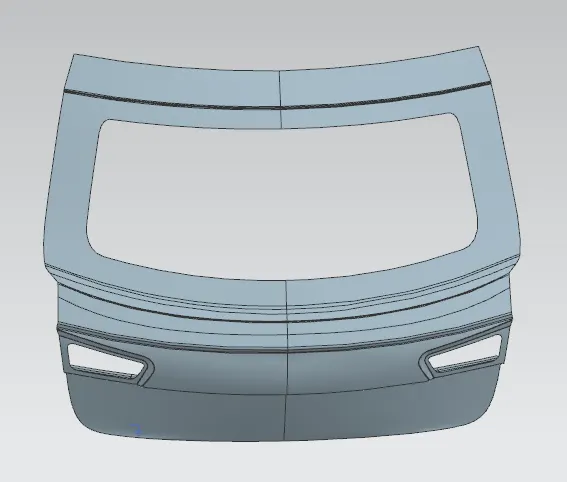
The outer panel is given with two separate parts- the upper and lower panel. The given surface is repaired and extracted to make an offset. The extract is used to design sealing and connecting flanges and finally the inner panel.
Back Door Inner Panel:
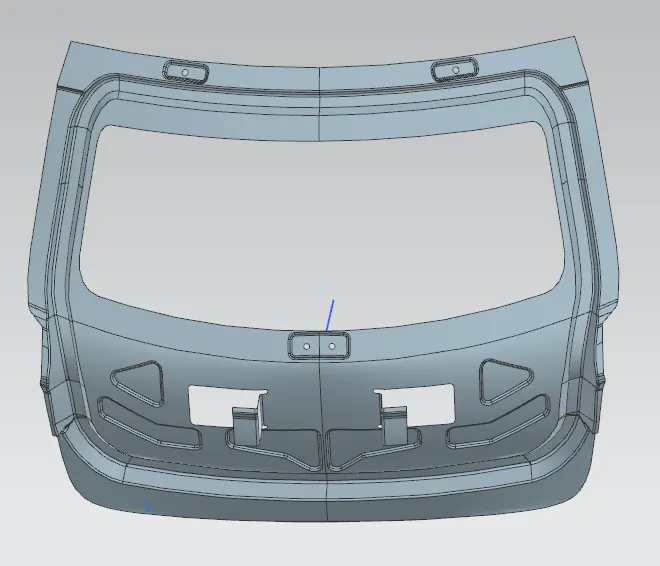
The inner panel is designed with a suitable tooling axis. The tooling axis is used to create embosses with the required draft angle. The embosses are made in such a way that the force will be dissipated along the sides. Mastic areas are provided with appropriate clearance to adhere the inner panel to the outer one
Draft Analysis:
Draft analysis in sheet metal design is a critical aspect of ensuring that sheet metal parts and components can be properly manufactured and assembled. It involves assessing the angle or taper applied to a sheet metal feature, such as a wall or flange, to facilitate the forming and removal of the part from the tooling during the manufacturing process.