Design of backdoor
NOTE - ZIP FILE IS GREATER THAN THE GIVEN ALLOWABLE ZIP FILE SIZE .SO, IM ATTACHING A GOOGLE DRIVE LINK.PLEASE CONSIDER IT.
https://drive.google.com/file/d/1A91cc1ABdPjuvkiFDEIFGpl0CKoDAgA1/view
AIM – Design a back door of an automobile by using styling surface provided, by taking design considerations and suitable reinforcements.
BACK DOOR - It simply refers to the back of the car that can open and close. It is covering the rear of the vehicle. It provide access to a boot area .A tailgate hinged at the roof is a predominant characteristic of hatchbacks and lift backs .The door or opening of a boot area may be hinged at the top, side, or bottom. In most cars, it is manually operated. One has to get down the car to open and close the tail-gate with the car key. Nowadays, automobile manufacturers providing Advanced features like the automated tail-gate. An automatic tail-gate in the car will do the process of shutting and opening the tail-gate electronically.
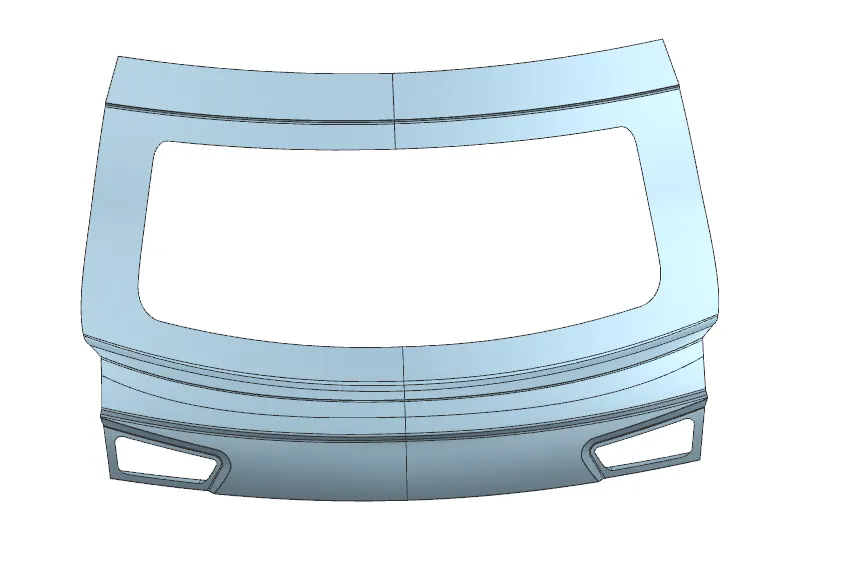
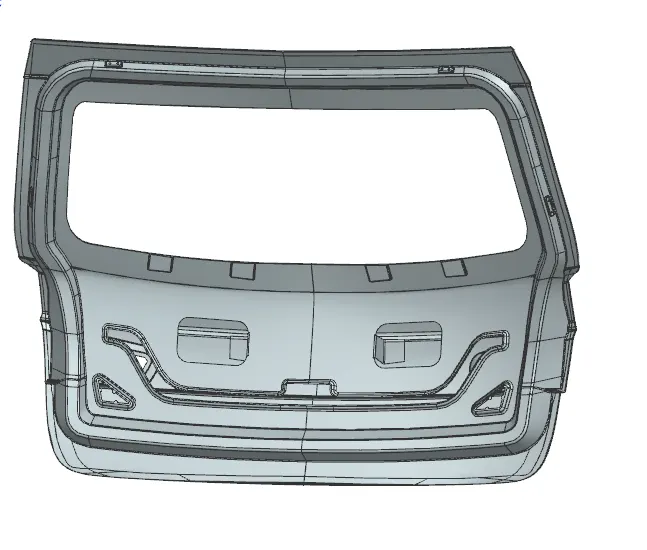
MANUFACTURING PROCESS -Conventional tailgate assemblies are made from stamped metal panels welded together to form a tailgate. Latches are added on either side of the tailgate to engage a striker on the pickup sides. A handle operates the latches to open and close the tailgate assembly. Steel tailgate assemblies provide a durable and secure closure for the pickup bed. Another disadvantage of steel tailgate assemblies is the cost of the tooling required and equipment required to stamp metal tailgate components. Metal tailgate components are generally produced in a large stamping press the stamping presses generally require finely machined tools made from hardened steel. The cost of tooling a metal tailgate is much more expensive.
MATERIALS USED – Steel and Aluminum are the two materials mostly used for the body panels.
Density of aluminum = 2700 kg/m^3 and Density of steel = 7860 kg/m^3
|
ALUMINIUM |
STEEL |
|
Parts are casted |
Parts are stamped |
|
Reinforcements can be neglected |
Reinforcements are necessary |
|
Local thickness can be varied |
Uniform thickness |
|
Lighter in weight and less number of components |
heavier in weight and more number of components |
From above differences if we use aluminum for a body panel, greater reduction of weight can be neglected like wiper motor, latch reinforcement, hinge reinforcement, gas stay etc. can be neglected. Says total reduction of weight can be of 30 % with aluminum material. So, many car companies like Audi Benz etc. started incorporating aluminum for body panels even though cost of the material is high for its improved performance.
STAMPING PROCESS – It to be used for a panel depend on its design. However, normally the processes used extensively are blanking, drawing, piercing, forming, notching, trimming, hemming, etc. Blanking prepares the cut out form of the part in flat sheet. Drawing is generally the first operation to attain depth related form. Piercing, notching, hemming, are product design related operations. Trimming generally removes the extra material on the periphery of the panel provided for blank holding during draw operation. Decision on trim line is very important and becomes deciding factor to obtain good draw.
1. Blanking - When required, blanking is the first step of the stamping process. Blanking is the process of cutting larger sheet of metal into smaller pieces. Blanking is usually performed when a stamped metal piece will be drawn or formed. Its opposite of punching.
2. Piercing-If a part requires slots, holes, or other cut-outs, piercing can be employed. Piercing, which can be performed simultaneously with blanking, punches the requisite shapes out of the metal sheet.
3. Drawing- It is the actual stamping in the metal stamping process. A punch forces a portion of metal through a die, providing the primary shape of the part. When the depth of the part is less than the primary opening, it is considered shallow drawing; parts with a depth greater than the opening are deep drawn.
4. Bending - The part is placed on a specially designed die and a ram pushes against the metal, providing the required bend. Bending is performed after drawing, as attempting to punch an already bent piece of metal causes the entire part to deform.
5. Hemming - It is a technology used by the automotive industry to join inner and outer panels together (hoods, doors, tailgates, etc.). It is the process of bending the flange of the outer panel over the inner one. The accuracy of the operation affects significantly the appearance of the car’s outer surfaces and is therefore a critical factor in the final quality of a finished vehicle.
BACK DOOR DESIGN - The design considerations of back door are
<!-- [if !supportLists]-->· <!--[endif]-->Rear Visibility Criteria - The area behind a vehicle that a driver cannot see is affected by structural design aspects of the vehicle, such as vehicle height and length, pillar width, and rear window dimensions. Poor rear visibility contributes to the likelihood of unseen obstacles, which may include pedestrians
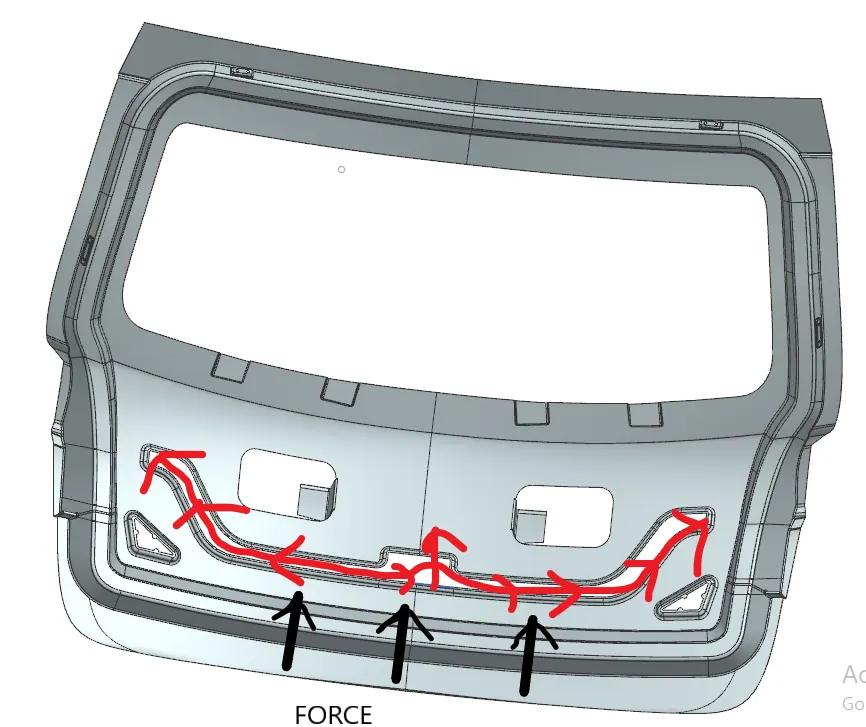
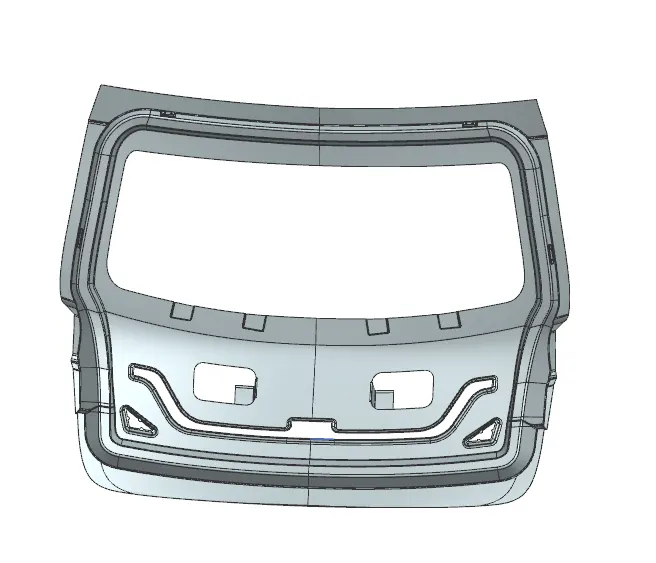
<!-- [if !supportLists]-->· <!--[endif]-->Force Dissipation - The inner panel is designed in such a way that in case of collision, the impact force must goes in outward direction, so that the impact on the pedestrians inside must reduce.so U-shaped or Y-shaped emboss is created on the panel. Studies show that for these shapes force distribution is along the design shape to satisfy the purpose.
<!-- [if !supportLists]-->· <!--[endif]-->Hinge and striker Positions - The striker is designed to create a tight fit between the door and the seal on the cab. To get a complete closure of striker, it follows the trajectory of the door closure.it is perpendicular to the axis and tangent to the trajectory. Circle is drawn from the hinge axis. The striker follow this path. The reinforcement given in the latch and striker mounting area to increase the strength.it is spot welded on the inner panel.
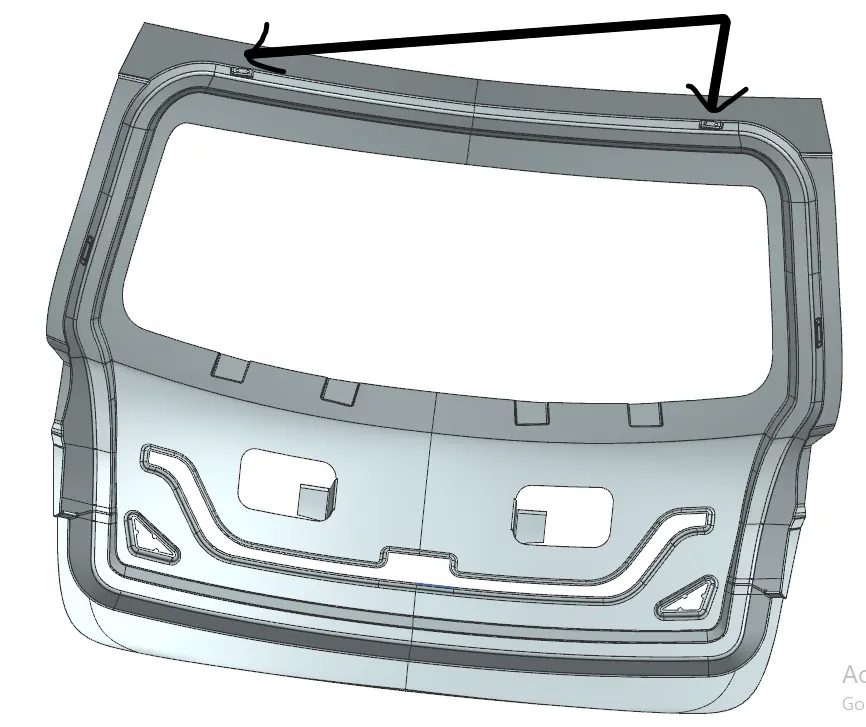
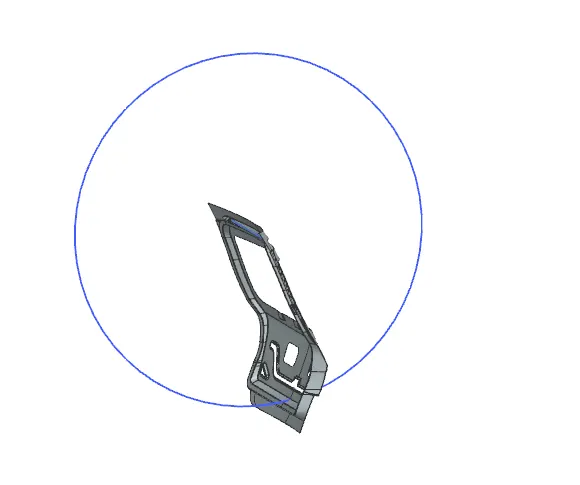
<!-- [if !supportLists]-->· <!--[endif]--> Gas Stay Position - It support the weight of the back door while they are open. More load act on this region, so suitable reinforcement provided for better strength .it is spot welded on the inner panel. Struts contain nitrogen gas under pressure and some oil to damp movement and to lubricate the seals. Based on the type of Gas Stay, Door Weight and Kinematics the distance between the Gas Stay and Hinge axis is 60-90mm and an angle of 85-90.
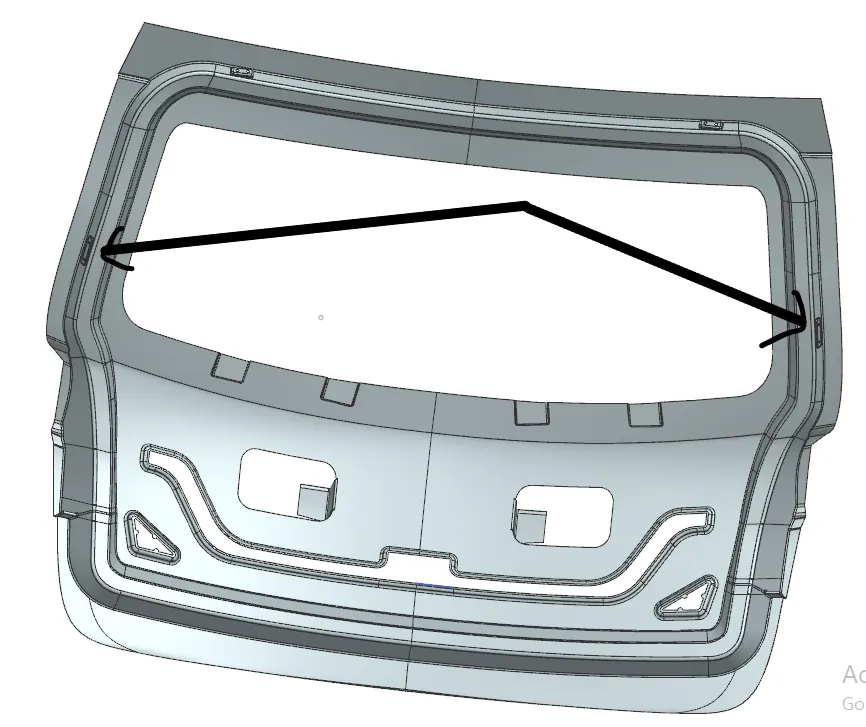
<!-- [if !supportLists]-->· <!--[endif]-->Hemming and Relief Areas - Hemming is a sheet metal forming process in which sheets are joined by bending it usually to 180°. Body panels and parts such as deck-lids, trunk-lids, doors, hoods and tailgates are formed by hemming process. Normally hemming operations are used to connect parts together, to improve the appearance of a part and to reinforce part edges. Relief areas at sharper edge are provided to increase the strength .less the area more the strength.
DESIGN OF BACK DOOR –
CLASS A SURFACE – check the given styling surface for inside boundaries to have a closed surface. Repair the surface if we find any inside boundaries and by using sew command get a close surface.
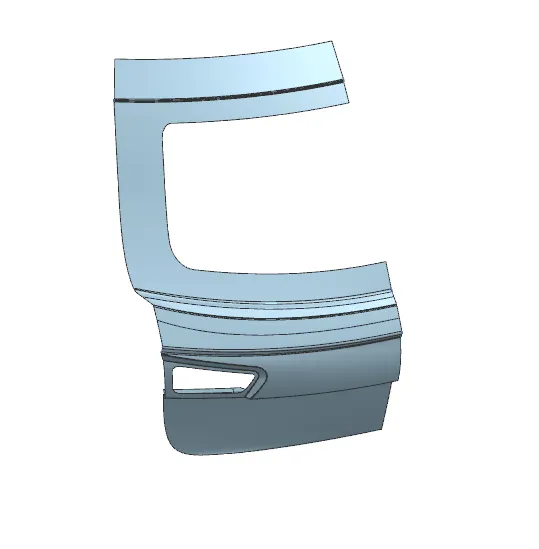
UPPER OUTER PANEL - Design of outer panel is mainly inspired by aesthetic but there is some engineering also to it. Main purpose of outer panel is to cover the inner panel to provide aesthetic look at the same time Panel must be curve & smooth so that it behave aerodynamically and air hitting from front reflect from it efficiently. So, rather than using seam and spot welding we use hemming method to join outer and inner panel. Hemming is a type of folding or wrap-around process in which roller bend and press the extrapolated flange in a way that it holds the inner panel firmly, then a sealant is also provided in between them under folds to get water tightening. While hemming we provide relief around corner as it helps in easy hemming or undistorted hemming while roller took turn around any corner. Its thickness to be given is 0.75 mm.
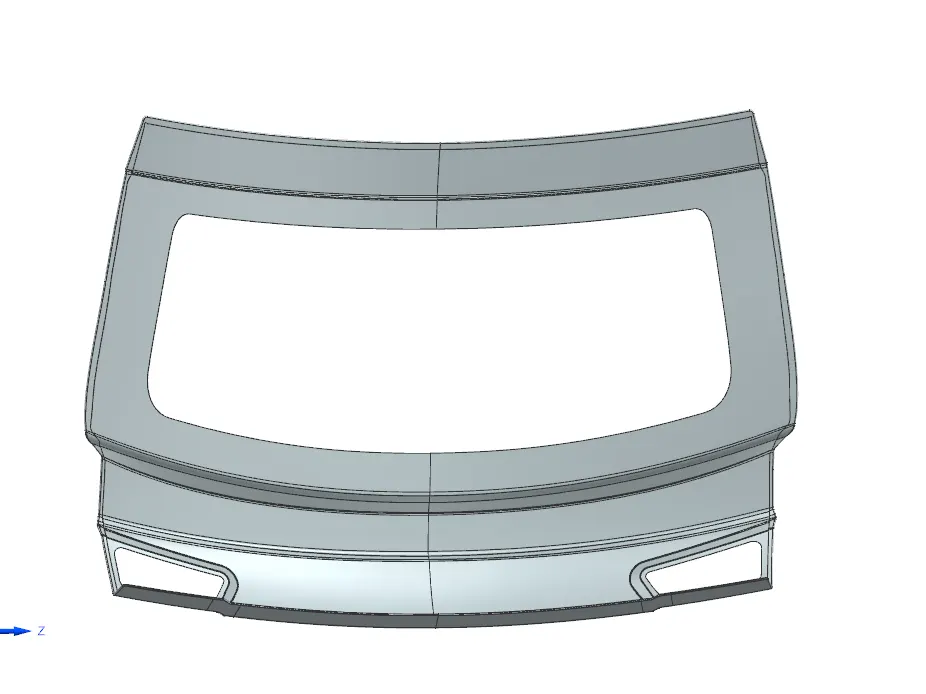
LOWER OUTER PANEL – Hemming process is applied to join outer and inner panel and its thickness is 0.75mm.
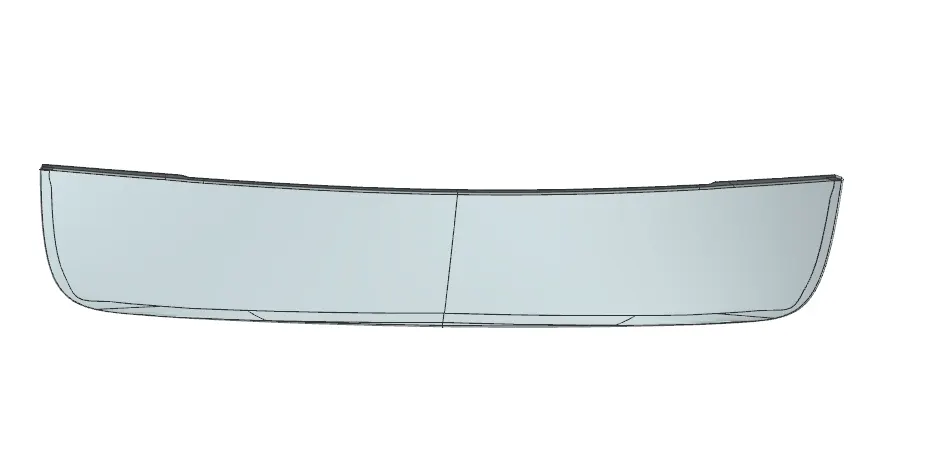
INNER PANEL - The inner panel is provided with the Embosses to increase the strength of the panel locally. Embosses has been given to create extra strength in inner panel and embosses design needs to be inspired by force dissipation phenomena like if any object hit from front most of the force will get dissipated by its design so that less force reach at pedestrians end and thickness to be given is 0.75mm
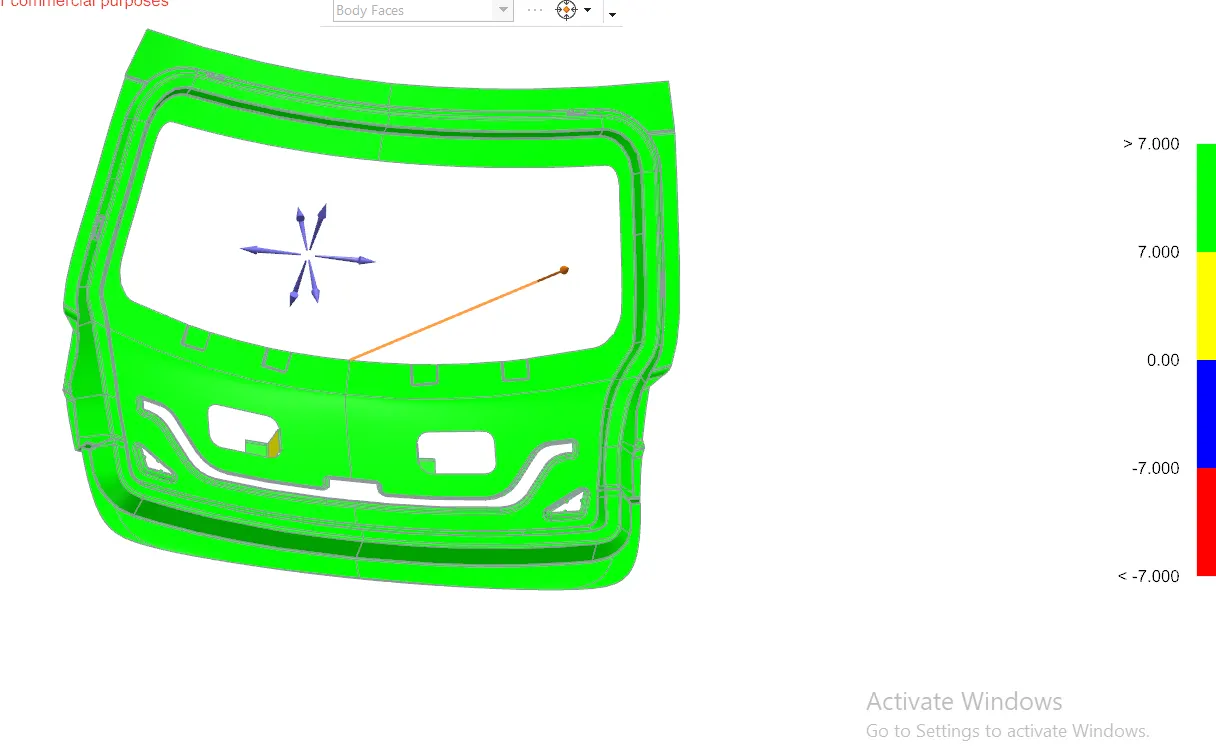
DRAFT ANALYSIS - Parts cannot be ejected from the tool if it is at 90 degree surface. For the reason, A small Draft angle is to be provide for each and every surface s of the Component in order to easy removal of component from the molds without any defects. Draft is the angle in which the part is tapered to allow it to release. 7 degrees are widely accepted in sheet metal component design. Draft Analysis is the technique used to analyze whether our designed product are manufactural or not. Green color infer on the parts that all face along the tooling direction has positive draft angle greater than 7 degrees.