Design of backdoor
DESIGN OF BACKDOOR USING NX-CAD
OBJECTIVES
- Using the provided styling surface
- Appropriate design methodologies
- Make the necessary reinforcements
- Embosses
Backdoor design is formulated.
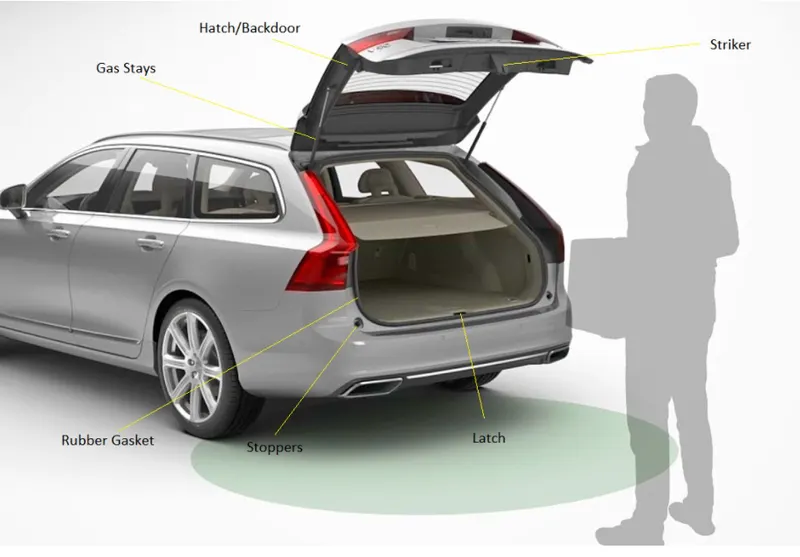
While coming to the design and functionality of the backdoor, ensuring that it aligns with the overall aesthetic of the vehicle and provides convenient access to the rear area.
The backdoor may vary in design depending on the type of vehicle, such as a sedan, SUV, or hatchback,
Include features such as hinges, latch and striker, handles, locks, and windows.
Back door based on opening positions:
The door or opening of a cargo area may be hinged at the top, side, & bottom.
If the door hinged in the bottom it is called as a Tailgate.
Top-mounted:
This type of back doors is used in a station wagon, pickup truck and some of the sport utility vehicles
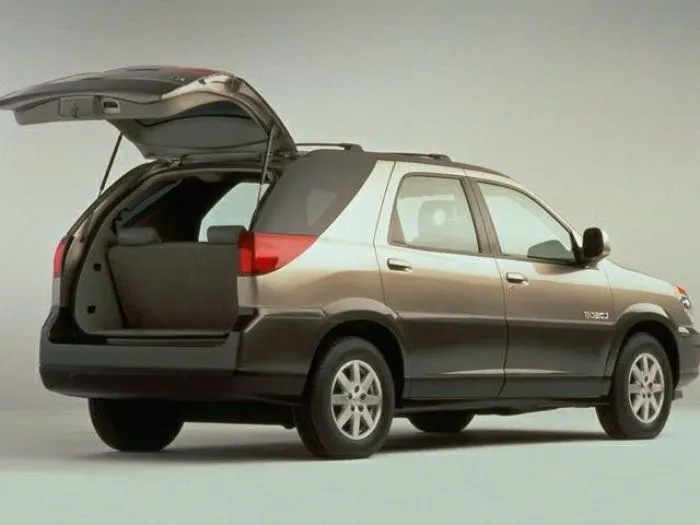
Today’s modern cars use top-mounted tailgating systems which are both powered and also gas stay supported. These top mounted tailgates provide greater rear visibility compared to side-mounted or bar doors which have canter pillars in it.
SIDE MOUNTED DOORS:
As the name signifies side-mounted doors are the one which is used in the van type MPVs, SUVs, pickup truck vehicles. These side-mounted doors or barn doors are a lot easier compared to top-mounted doors.
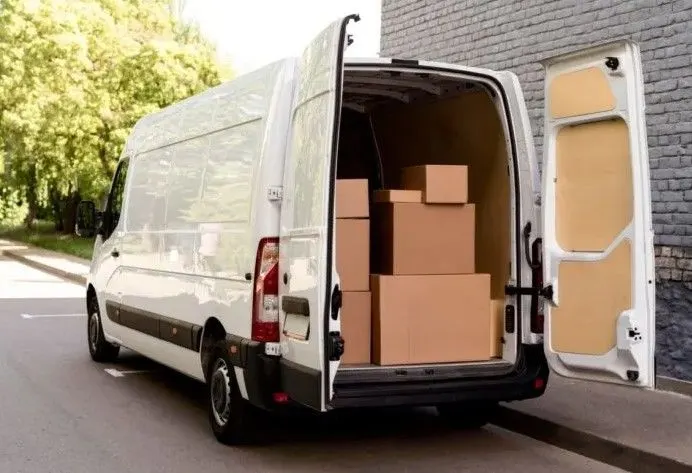
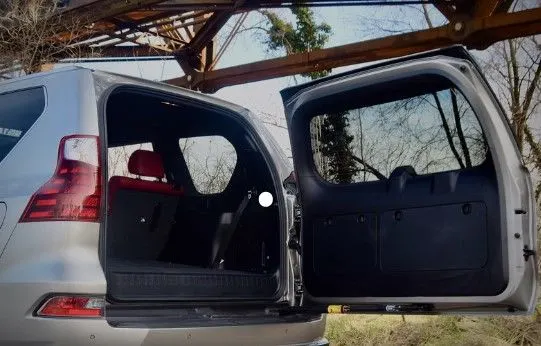
These doors are generally smaller in size and can be easily accessed. These doors are more convenient for the goods handlers for long pipe and lengthy components where one door is kept open. These doors also save accidental head impacts. It is a lot easier to load and unload items in the side-mounted doors.
Bottom / split type:
This bottom type or split type backdoor system are used in the car type such as estate type car, pickup trucks and some luxury SUVs.
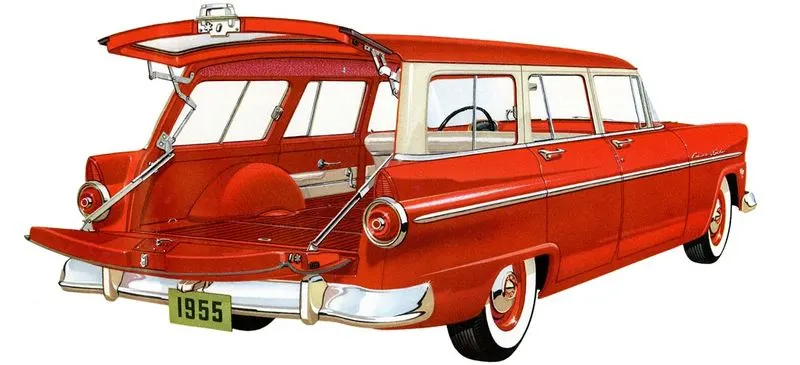
These are the most convenient type of back door in which the bottom split is used as a support or even as a table for the tour going people.
Types based on working mechanism.
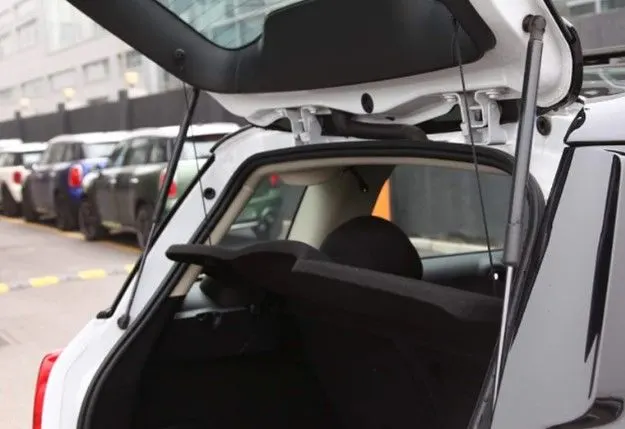
Gas stays type:
Gas stay types backdoor/liftgate/tailgate is an ideal and most commonly used tailgate mechanism from lower segment car to luxury car segment. The ideal components of tailgate consist of a hinge, door, gas stay and some rubber beadings for sealing of door which is shown in the image below:
Powered lift system:
Power trunk lid system is another sophisticated way of trunk/liftgate opening mechanism which is to automatically open and close of the trunk/liftgate and release of the latch by the touch of a button. The following image shows the component as used in the powered trunk/back door lift system.
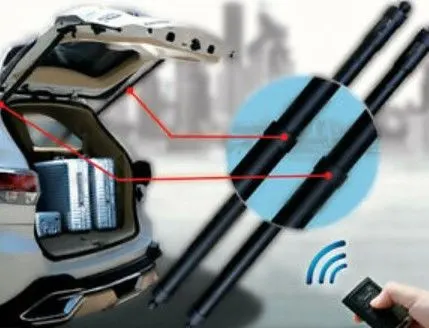

Powered trunk lift system consists of a power latch, anti-pinch switch, PTG ass’y, PTG main switch. When the switch is pressed in the compartment or outside the power latch releases the latch and the entire backdoor is opened. The anti-pinch switch is located in order to avoid accidental hand insertion during the operation of the door.
Manufacturing the Back Door
Deep Drawing:
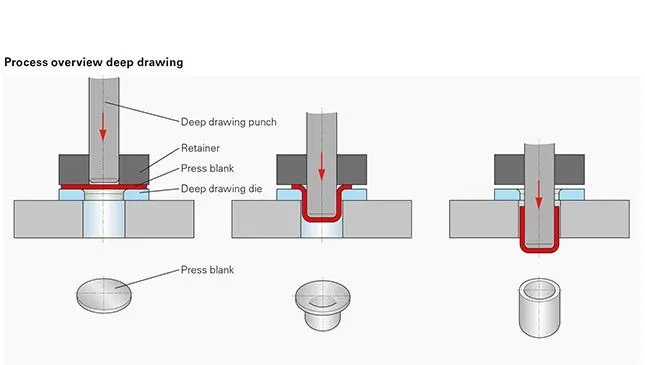
The metal deep drawing process is an effective method of manufacturing cups, cans, and other similar deep drawing products. The deep drawings having 2 main categories.
- First-stage drawing: The blank shape of metal is placed on the die and in contact with the punch. When the metal specimen is a flat piece of sheet metal is used in forming and finish the product. Initially, the punch moves in a downward direction. The outer rim of the blank is subjected to pure radial drawing (drawing toward vertical axes) between the die and blank metal. The metal becomes a bend and slides over the die and is also stretched between die and punch. The metal in the vicinity of the punch head and contact with it bend and slide over the radii and stretch over the punch head.
- Redrawing: The components drawn from the first stage again it is redrawn convert into more depth to form a cup shape in the die and punch. The second stage of drawing is called redrawing.
Hemming
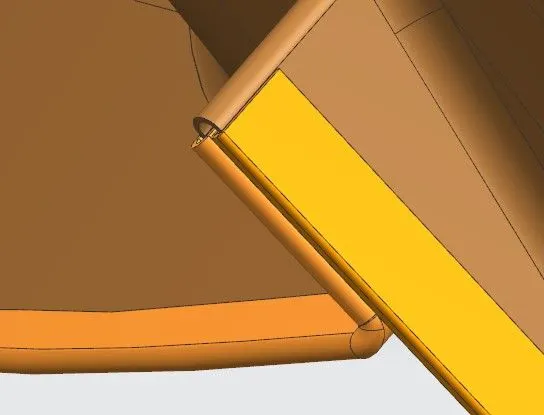
Hemming is a process used in automobile manufacturing to join two pieces of sheet metal together. It is commonly used in the assembly of vehicle body panels, such as doors, hoods, and trunk lids. Hemming provides a clean and secure joint that enhances the structural integrity and overall appearance of the vehicle. The inner & outer panels are joined by the process of hemming.
Hemming plays a crucial role in the production of automobiles, providing strong, secure, and aesthetically pleasing joints between sheet metal components. It contributes to the overall structural integrity, safety, and quality of the vehicles that we drive.
DESIGN CONSIDERATION
- Functional Requirement of Hinge and gas stay
- Rear visibility criteria
- Luggage volume area
- Crash Analysis
- Bend Test, Dent Test, Torsion Test & Endurance Test
- Rear Crash Regulation
- Gap and flushness Requirements
ASSEMBLEY
1.Inner Panel
2.Outer Panel
3.Hinge Reniforcement.
4.Gas Stay Reniforcement.
5.Wiper Motor Reniforcement.
6.Latch and Striker Reniforcement.
1.Inner Panel:
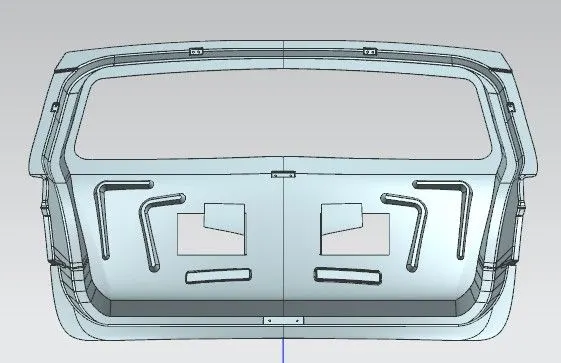
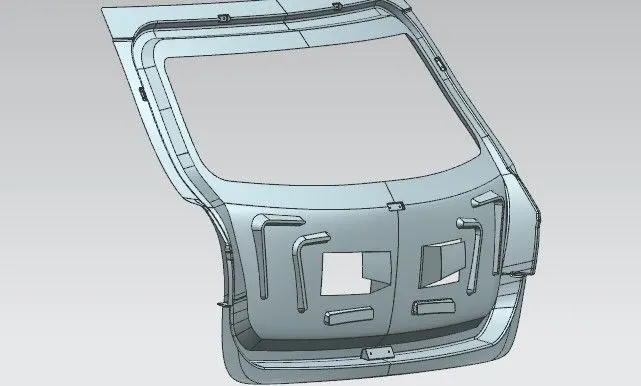
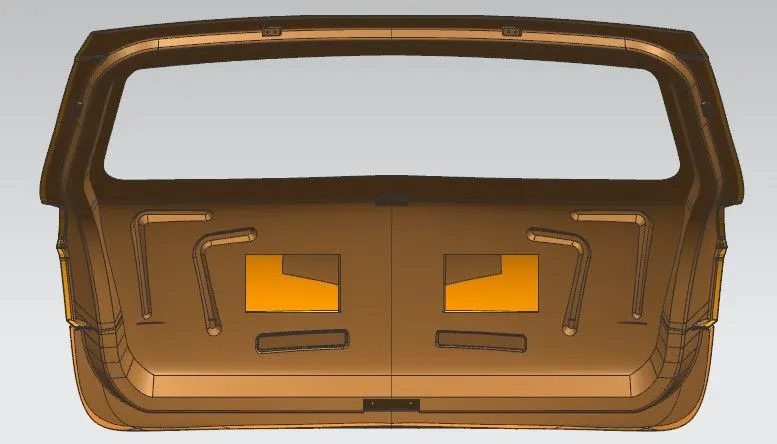
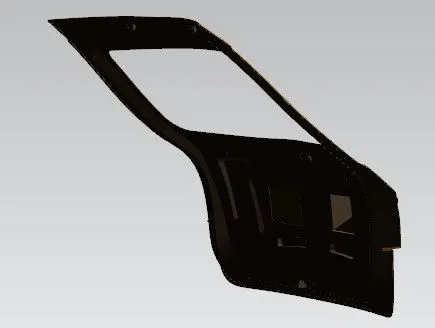
The inner Panel is a component which is used for strengthening the door and it is one of the most important components on which all accessories are mounted like hinges, glass guide channel, mounted trim, latch etc.., The possible method is the integration method. In the integration method, the part is stamped out of a single blank. This reduces the numberof tools needed the assembly cost and eliminates any fit ability problem
2.Outer panel:
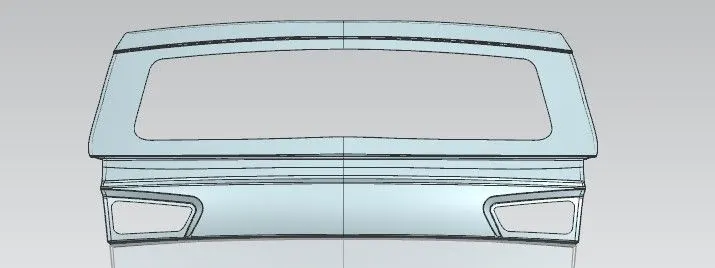
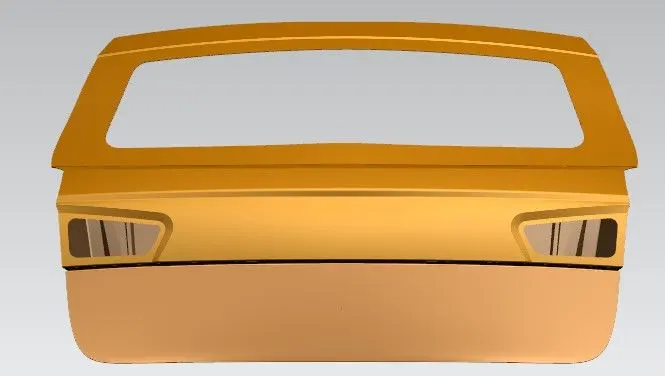
The Outer panel of the back door is similar to other BIW components where it is the aesthetic part of a vehicle. The coating provided is of multi stage which has the property of scratch resistance, rush prevention and smooth and attractive finishes. The Outer panel also has the provisions for the tail lamp, rear fog lamp and also has the provision for lisence plate mountings. Most of the hatch back cars have the provision for wiper motor.

3.Hinge Reinforcement:
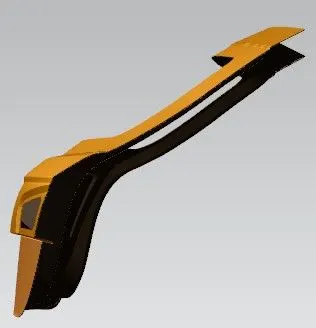
Hinges support the weight of the whole backdoor. Hence a reinforcement are provided here too. Emboss is designed such that the hinges should operated freely. The electrical wiring looms are through the holes along the periphery to keep them hidden.
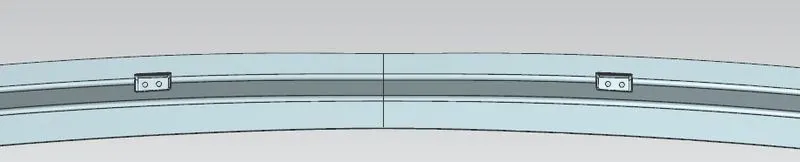
4.Gas stay Reinforcement:
An angled or Diabolic emboss is provided for the gas stay mounts. The angle makes it easy to be machined and stamped. It is reniforcement with a thicker sheet.

5.Wiper motor Reniforcement:
A dedicated space near the window is left for wiper motor assembly. A cavity is placed in the middle of the panel for the necessary components in the assembly as well as other accessories.
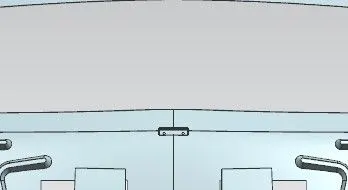
The holes or cavities are placed strategically to accommodate wiring looms, tail lamp mount, and other accessories. Embosses help stiffening the panel and act like local reniforcements. Extensions are provided around holes which are attached to outer panels and acts are crumple zone elements in case of rear impacts.
6.Latch and strikere Reniforcement:
At the bottom of the latch and striker assembly. Generally a key operated or automatic remotely controllable locking mechanism is used to keep the door closed and open.

Another purpose of the emboss design is to distribute impact force towards hinges and latch assembly which are reniforced and can absorbe them.
FINAL ASSEMBLEY
CONCLUSION
Thus the design of BIW Fixtures of a Backdoor of a car has been designed using NX-CAD.