Design of backdoor
BACKDOOR DESIGN USING SIEMENS NX CAD
AIM
To design the Back Door of the car using given styling surface using appropriate design methodologies, and to provide the necessary reinforcements and embosses
BACKDOOR OF THE CAR
- A Backdoor or a tailgate of a car is a one-piece rear door that is hinged at the top and opens out horizontally and In some cars, the backdoor opens
- It is hinged to the roof and a gas stay support fixed at the body side outer for keeping the backdoor in open position
- The rear door also supports the reinforcements and added weights of the Wiper Motor, Gas Stay, Tail Lamp, Latch and
- It is the rear most part of the vehicle which gives access to the trunk space of the
- The Backdoor is one of the closure commodities in BIW sheet metal
- The rear visibility and luggage area of the car should be considered while designing a back
- Mostly Aluminium and Steel will be used whereas low budget vehicles use steel which makes the manufacturing process easy and cost-effective since it follows the stamping of moulds.
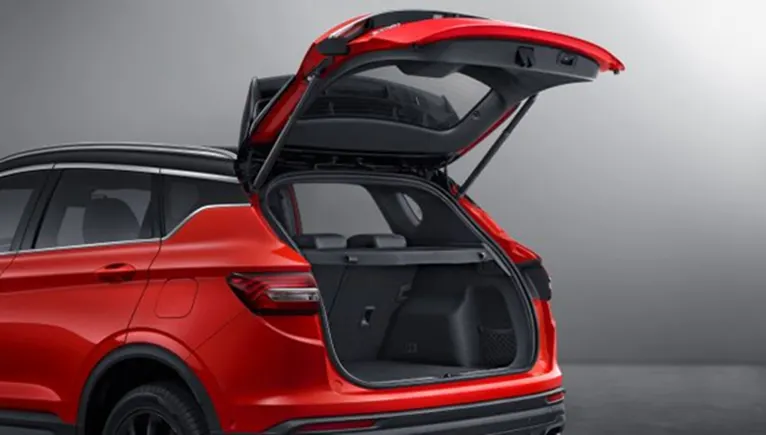
- Back Door is one of the important components of the car as it is also the aesthetic surface of the car
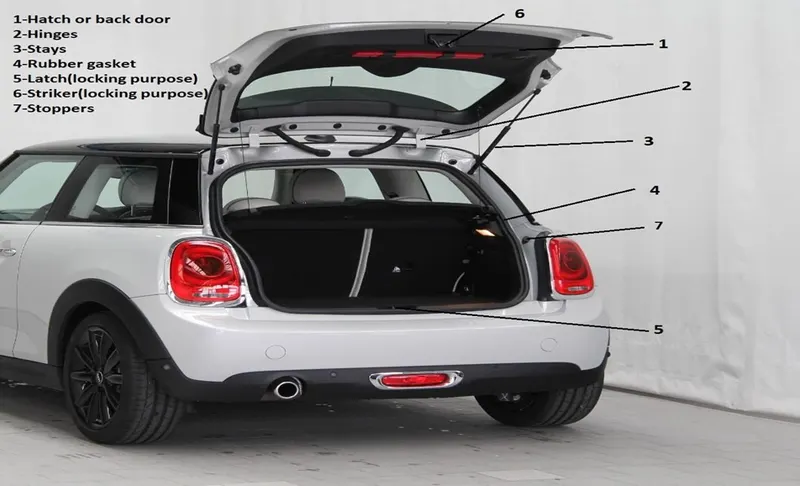
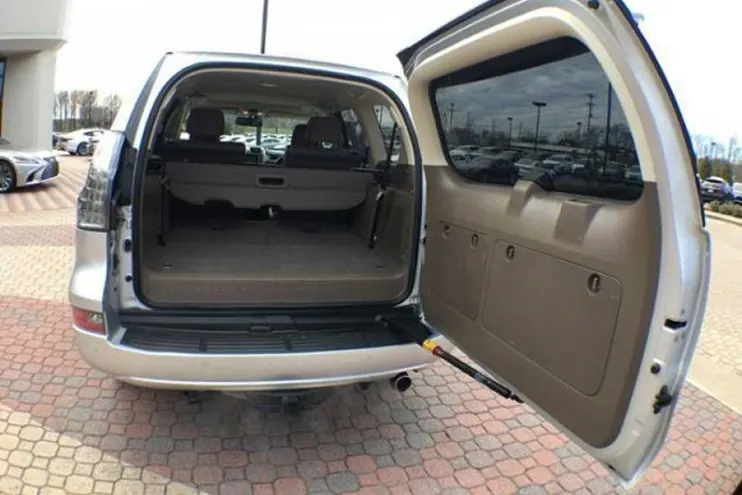
COMPONENTS OF BACK DOOR OR TAIL GATE
- Outer Panel Upper
- Outer Panel Lower
- Inner Panel
- Hinge Reinforcement (LH&RH)
- Gas Stay Reinforcement (LH&RH)
- Wiper Motor Reinforcement (LH&RH)
- Latch and Striker Reinforcement
DESIGN CONSIDERATIONS OF BACKDOOR
- Rear Visibility Criteria
- Luggage Volume
- Rear Crash regulation
- Gap and Flushness requirements
- Crash analysis
PROCEDURE OUTER PANEL
- The class A surface or the styling surface of the car backdoor is provided by the styling team and it has the aesthetic look of the
- With the help of the surface, the inner panel of the car backdoor and all the other required components is to be designed with all the design
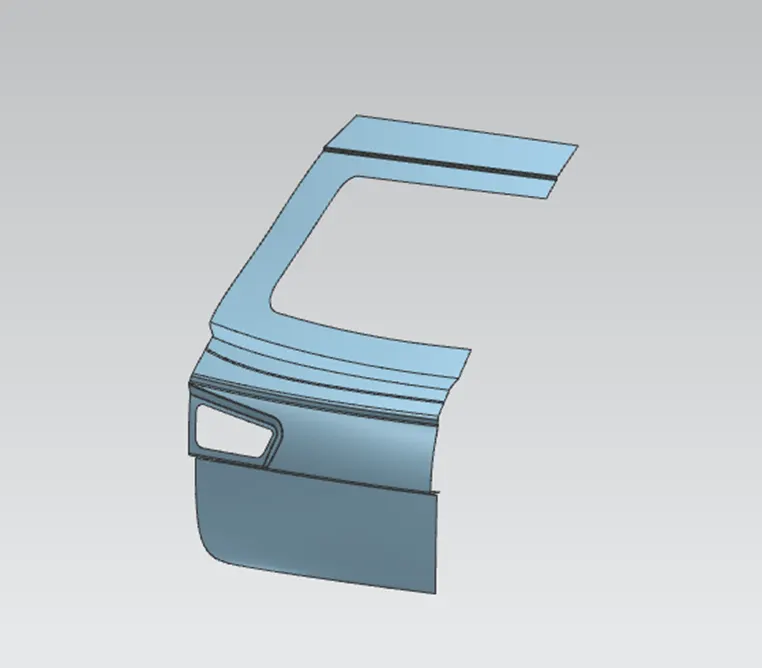
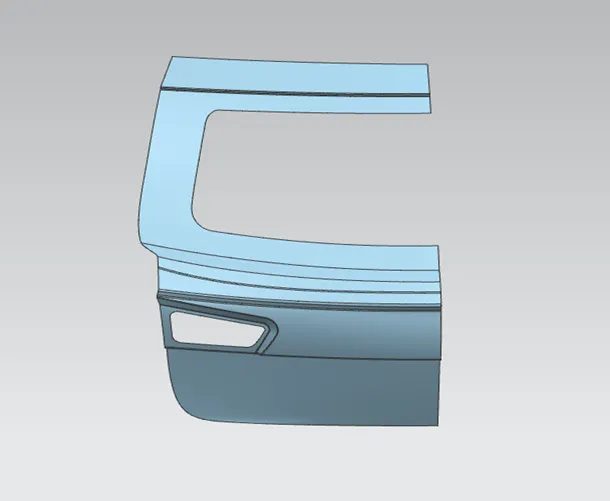
- In this given Styling surface, it consists of lot of uneven surfaces and So, the class A surface is corrected.
- Before Correcting the styling surface, it should be properly communicated to the styling
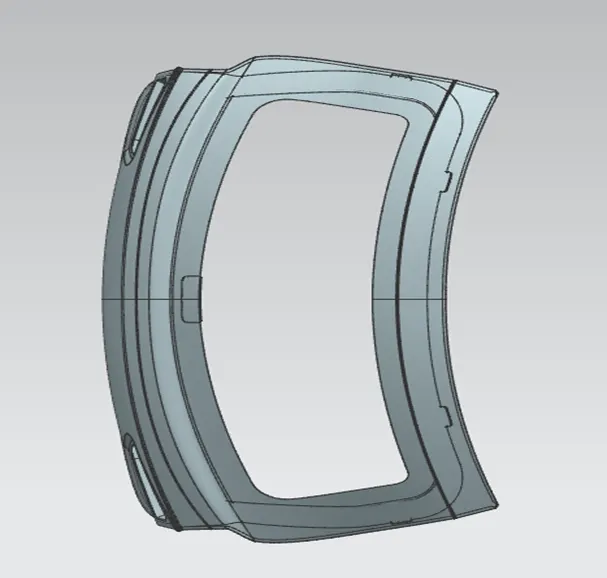
- The below images show the corrected class A surface of the
TOOLING DIRECTION
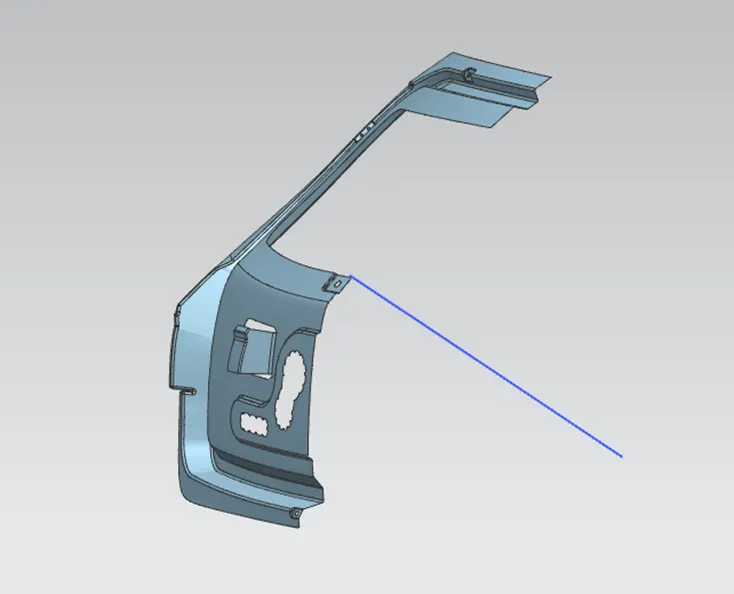
- The Tooling Direction is basically the direction that the mold pulls apart. The mold is built in two separate pieces, basically. You have a Cavity side and you have the Core The Core pulls apart from the Cavity and that's the Dyeline or the Tooling Direction.
INNER PANEL
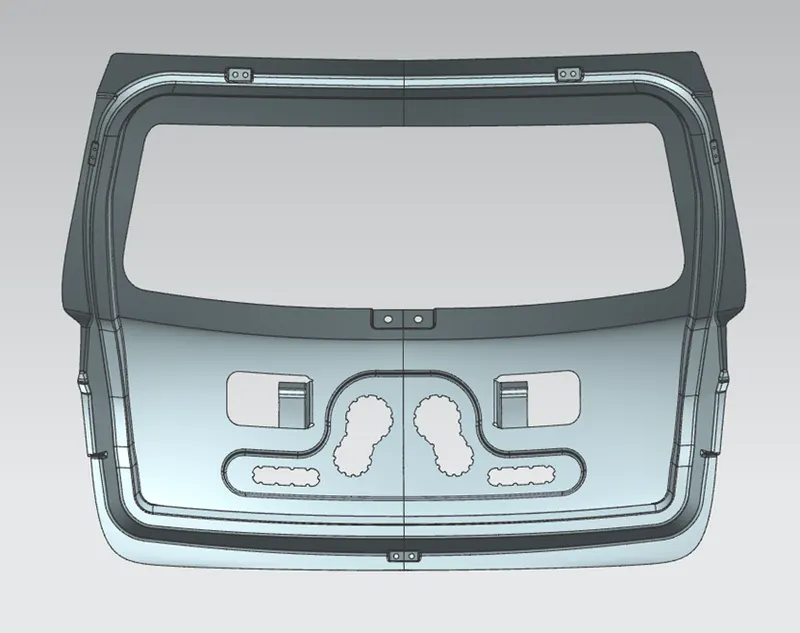
- With reference to the class A surface, the inner panel of the backdoor is to be
- The tooling direction is first
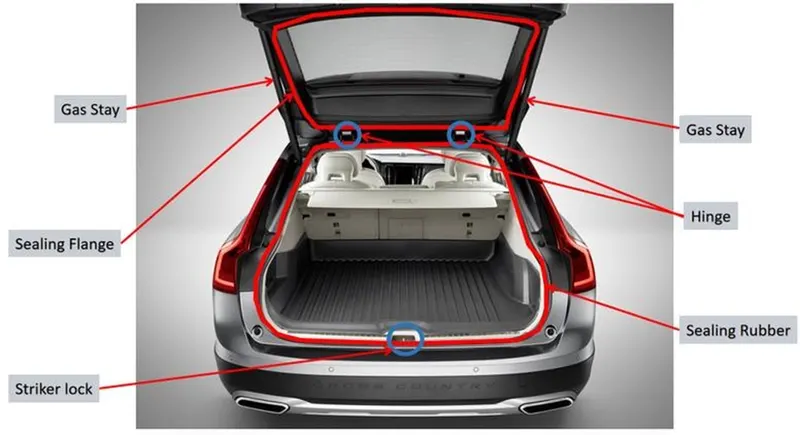
- The Sealing Flange of the inner panel is designed initially as it is also the important part of the inner panel which decides how the backdoor will be mounted at the rear side of the car.
- Sealing Flange is a rubber type part which helps to protect the rear side of the car by preventing the entry of the dust or water from entering the
- The width of the sealing flange is given as
- After creating sealing flange, the working surface is trimmed with the sealing flange to get the desired inner panel
- After inner panel was created, embosses were created to in “V” or “Y” shape so that the vehicle undergoes the crash then the force dissipated over it which reduces the damage transferred to the trunk
Inner Panel
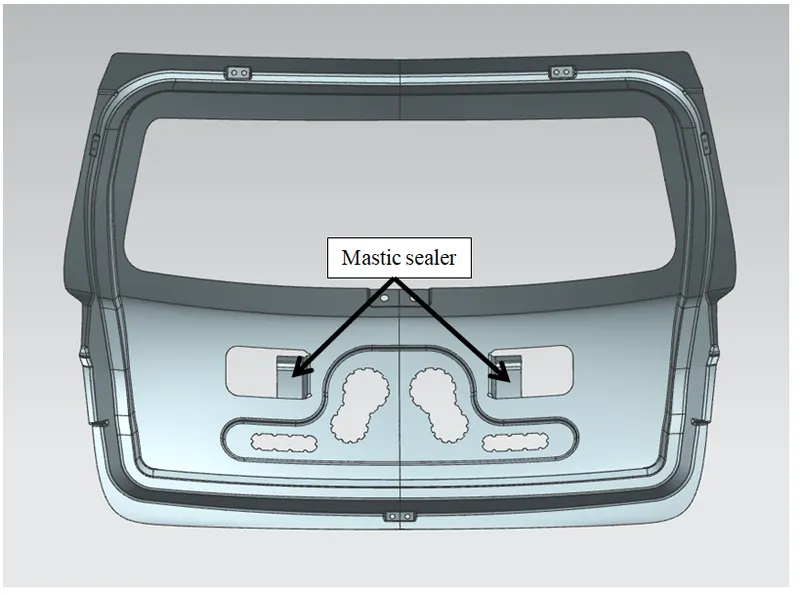
MASTIC SEALANT
- The Mastic sealant is used to fix the inner panel with the outer which increases the NVH factor and stiffness of the back
- 4-5mm is to be maintained between the inner panel and the outer panel for the mastic sealant
EMBOSSES
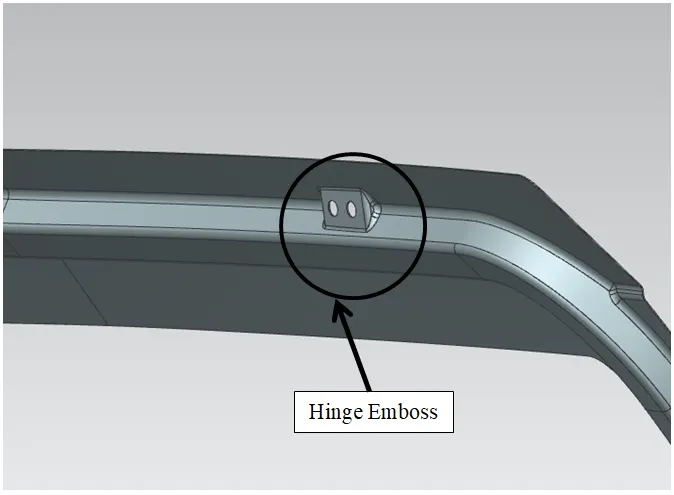
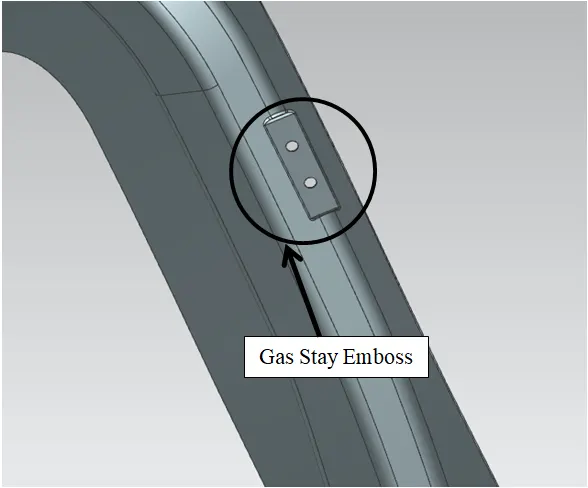
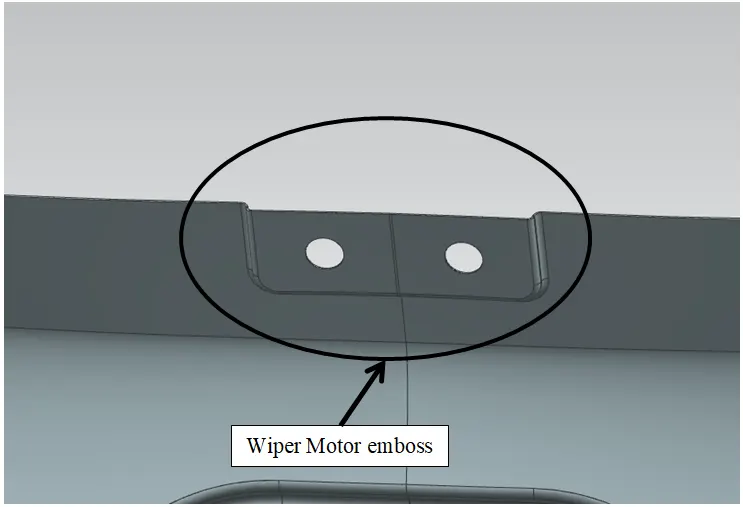
- Embosses are created to give more strength to the And to avoid the hem sealer interference while applying.
HINGE EMBOSS
GAS STAY EMBOSS
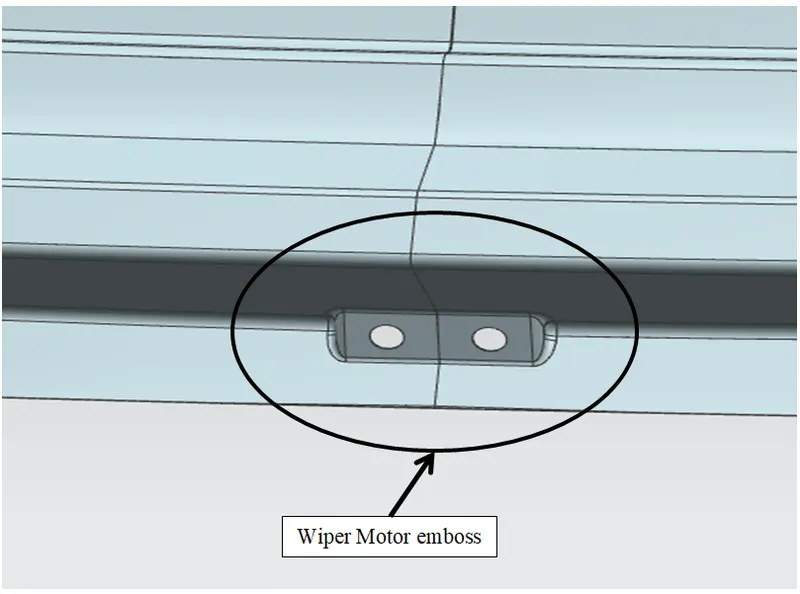
WIPER MOTOR EMBOSS
LATCH AND STRIKER EMBOSS
STRIKER POSITION
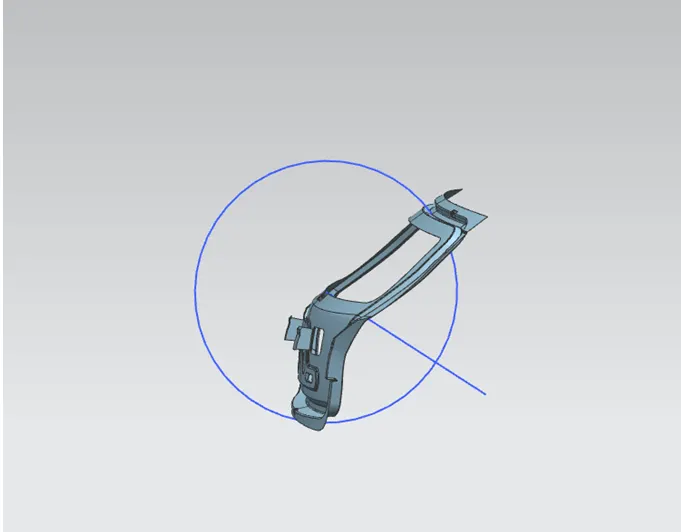
- The position of the hinge should be perpendicular to the latch when the latch and striker meets.
- The circle is drawn from the center of the hinge axis to find the path of the striker and positioning of the
OUTER PANEL HEMMING
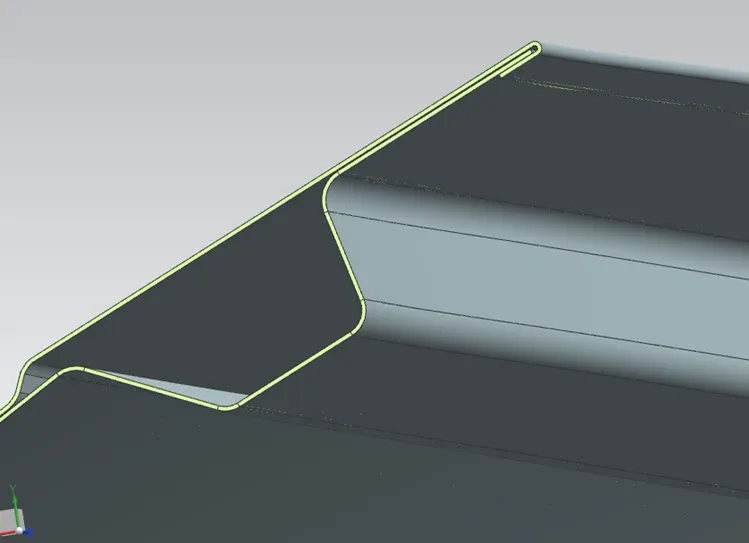
- Hemming is the process of the joining the outer panel and inner panel
- It is the metalworking process in which a sheet metal edge is rolled over onto
- Hemming is the process in which the edge is rolled flush to
- Hemming is done separately for both upper outer panel and lower outer
- Hemming is done by firstly offsetting the outer
- After offsetting, the outer panel is trimmed to get the hemming
- With the help of bridge curve and swept surface, Hemming is designed as per design
- The same procedure is repeated for designing the hemming in the outer panel
- Both the outer panel (upper) and outer panel (lower) will be joined using
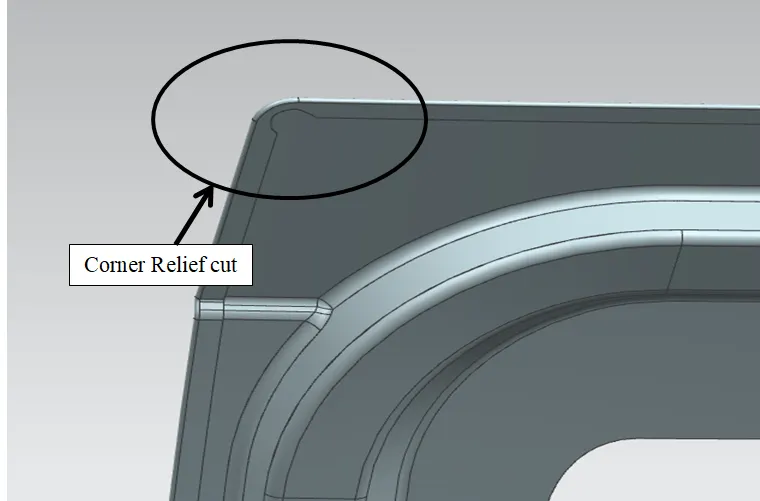
CORNER RELIEF
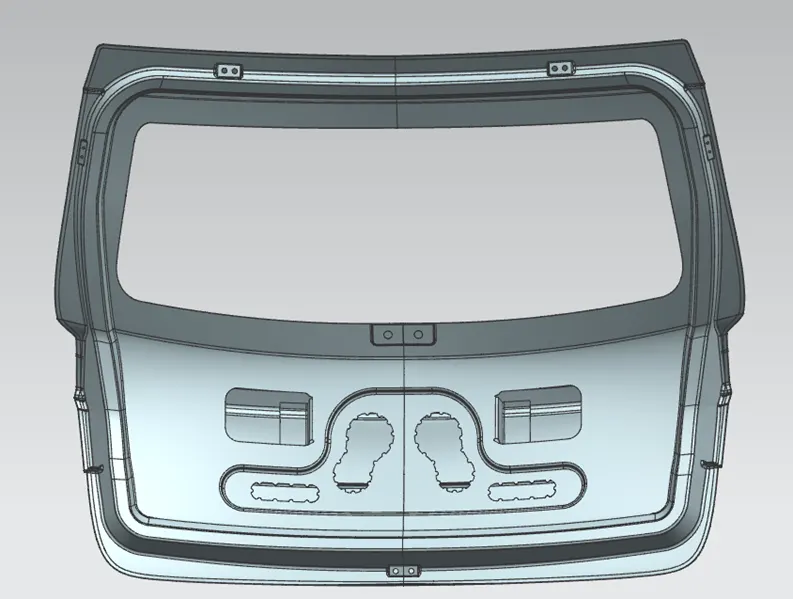
- Corner relief helps to control the sheet metal material behavior and to prevent unwanted deformation during unbend operations and also helps to reduce the number of passes in
REINFORCEMENTS
- Reinforcements are provided to give strength to the parts wherever there are weak parts.
- The thickness provided for all the reinforcements is
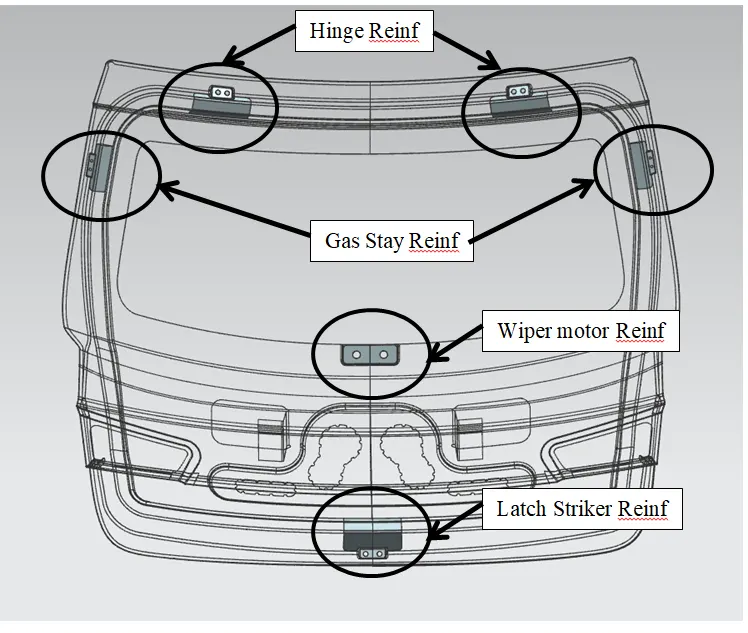
1) HINGE REINFORCEMENT
- Hinge enable the opening and closing of the back door. One end of the hinge is fixed on the backdoor and the other end on the Roof, on both
- One end of the hinge is fixed on the backdoor and the other end of the roof, on both
- Hinges can be fixed either in outside or inside of the
- Hinge reinforcement are added to give strength to the weak parts due to the load acting on
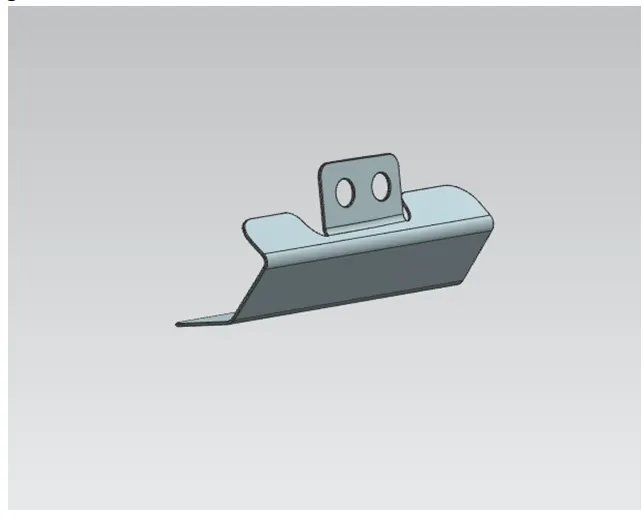
2. GAS STAY REINFORCEMENT
- Gas stay is used for supporting the back door in open
- It is actuated with the help of the motor and requires no
- One end of the Gas stay is fixed on the backdoor and the other end on the body side or on the back door stationary
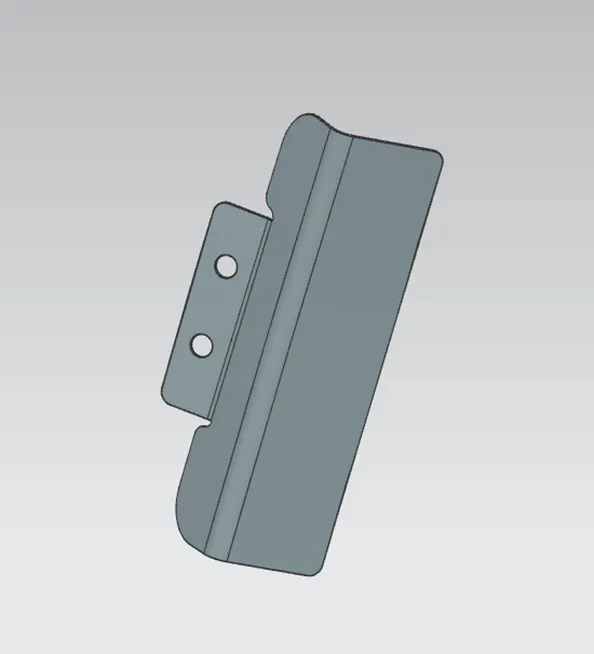
3. WIPER MOTOR REINFORCEMENT
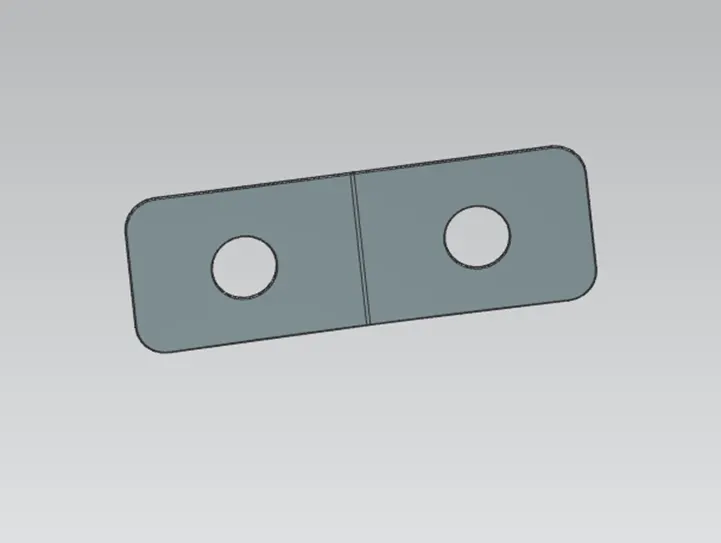
4. LATCH AND STRIKER REINFORCEMENT
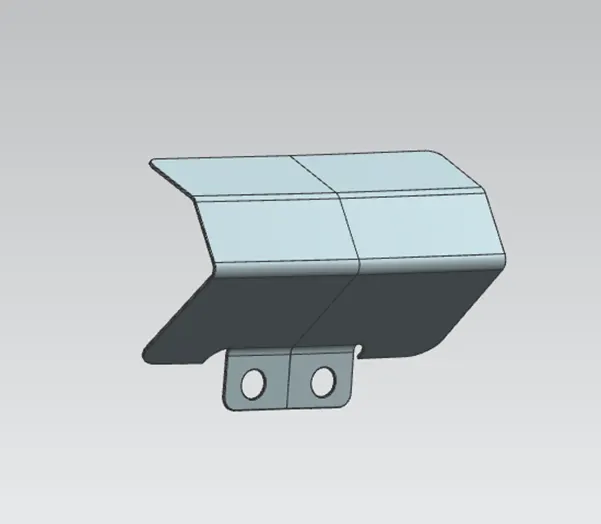
- Latch and striker reinforcement forms the locking mechanism of the backdoor with the car.
- Due to regular opening and closing of the back door, there is stress developed in the latch and striker areas and to compensate this, the reinforcements are added in this
DRAFT ANALYSIS
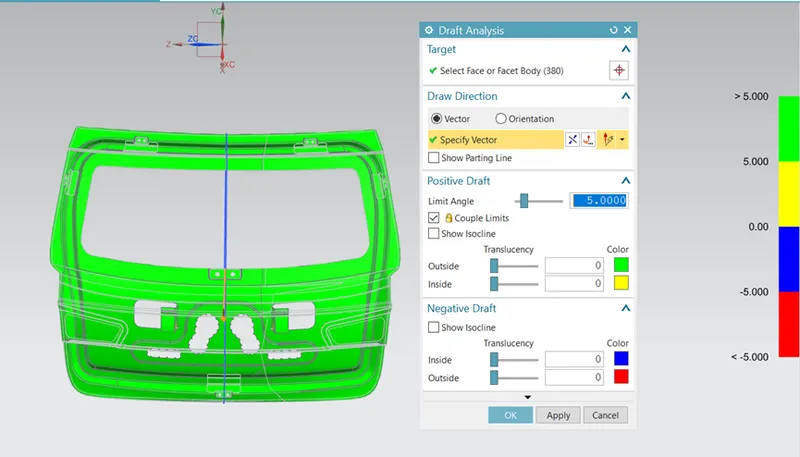
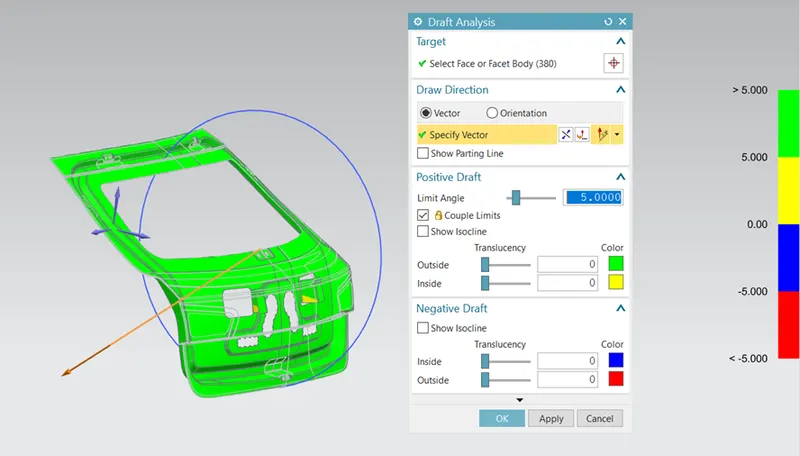
- Draft analysis is a method of checking the draft angle on various faces of a part with a particular
- The draft analysis will be performed with respect to the tooling direction and checked whether the model has sufficient draft angle and suitable for
- The draft analysis shows the green color which shows the model has sufficient draft angle and
- In case of not getting the green color, embosses can be provided to get the required draft
- The draft analysis enables us to detect that the part drafted will be easily removed or
- There are many color zones in which red color shows negative draft angle whereas green color shows positive draft angle.
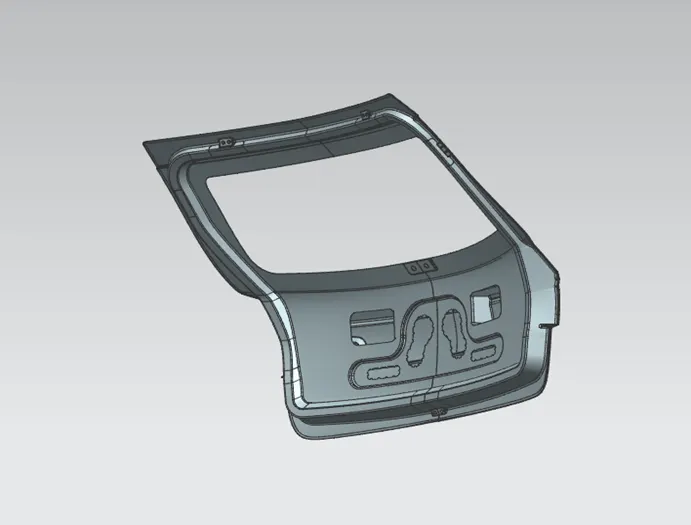
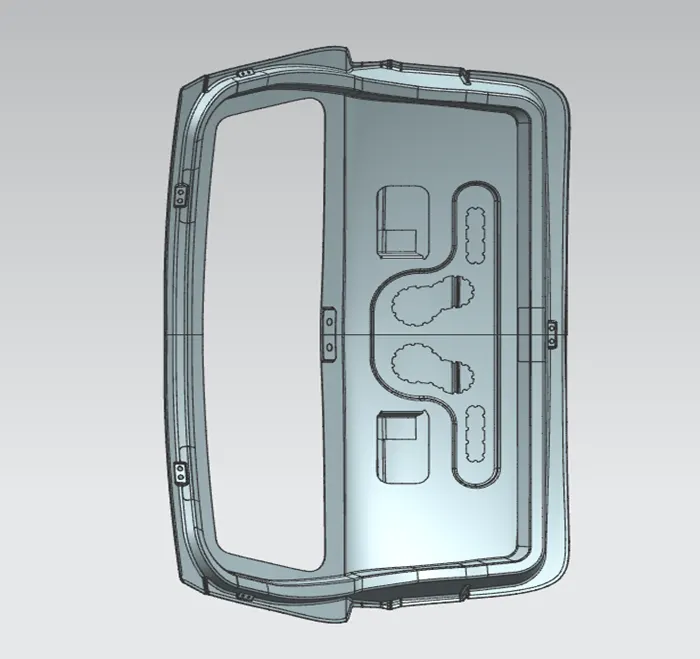
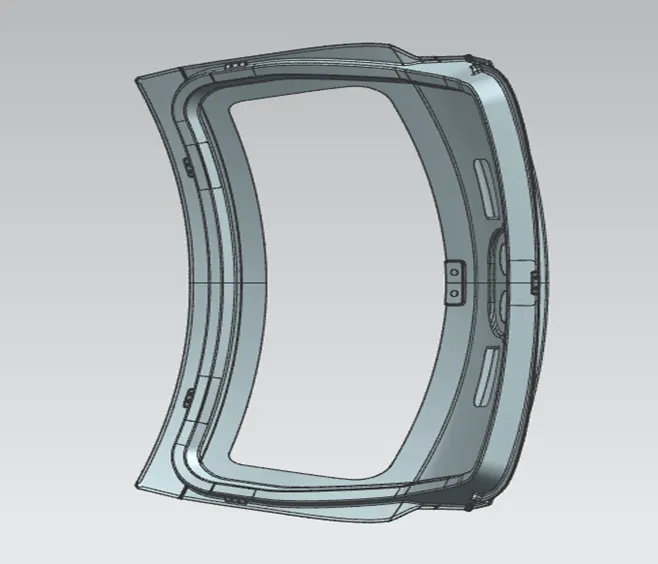
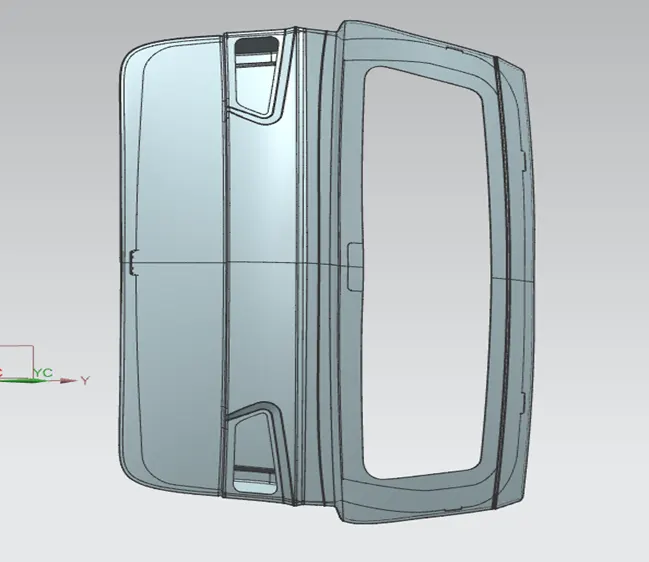
BACKDOOR ASSEMBLY DIFFERENT TYPES OF VIEWS
ISOMETRIC VIEW
LEFT VIEW
FRONT VIEW
RIGHT VIEW
BACK VIEW
CONCLUSION
In this challenge, the design consideration and requirements of the Backdoor is studied and thus the backdoor model has been successfully created in NX Cad.