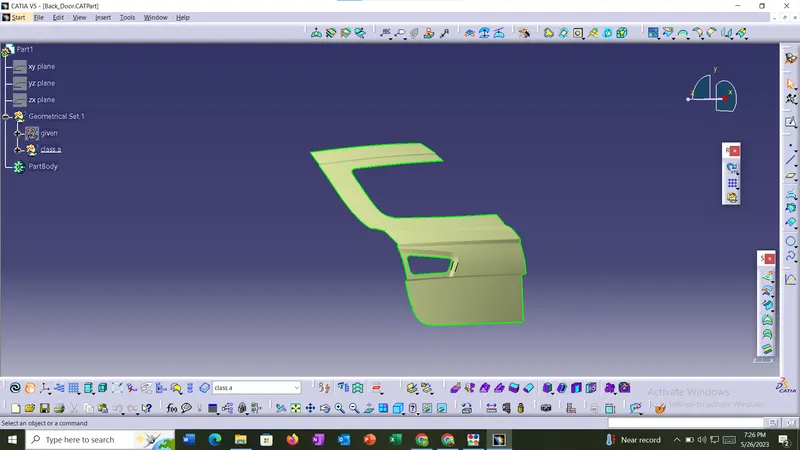
Design of backdoor
AIM
Use the provided styling surface to come up with a back door design, use appropriate design methodologies, and provide the necessary reinforcements and embosses
INTRODUCTION
The back door of a car, commonly known as the rear door or trunk door, serves as an entry and exit point for passengers and provides access to the trunk or cargo area. It plays a crucial role in ensuring convenience, security, and functionality for both passengers and the storage of items.
When designing the back door of a car, several factors come into play, including safety, ergonomics, aesthetics, and practicality. The design must meet stringent safety standards to protect passengers in the event of a collision or impact. Structural integrity and the integration of reinforced components are essential to ensure the door withstands such forces.
MANUFACTURING PROCESS
The manufacturing process of a back door involves several key steps to ensure its quality and functionality. These steps may include:
-
Design and Engineering: The initial stage involves designing the back door and creating detailed engineering specifications. This includes determining the dimensions, shape, and features of the door, as well as incorporating any necessary reinforcements or embossing details.
-
Material Selection: The choice of materials for the back door depends on factors such as strength, weight, cost, and design requirements. Common materials used in back door manufacturing include steel, aluminum, fiberglass, or composite materials.
-
Panel Formation: The chosen material is cut and shaped into panels that will form the back door. This can be done using various techniques such as stamping, bending, or molding, depending on the material and desired design.
-
Assembly: The individual panels are then assembled together using techniques such as welding, adhesive bonding, or fasteners. Hinges, locks, handles, and other hardware components are also integrated into the door during this stage.
-
Surface Treatment: The back door undergoes surface treatments to enhance its appearance and protect it from corrosion or damage. This may involve processes such as painting, powder coating, or applying protective coatings.
-
Quality Control: Throughout the manufacturing process, rigorous quality control measures are implemented to ensure that the back door meets the required specifications and safety standards. Inspections and tests are conducted to check for dimensional accuracy, structural integrity, and proper functioning of components.
-
Final Finishing: Once the back door passes all quality checks, final finishing touches are applied. This may include cleaning, polishing, and adding any necessary decals, badges, or branding elements.
-
Packaging and Distribution: The finished back doors are carefully packaged to protect them during transportation. They are then distributed to the assembly plants or service centers for installation onto vehicles.
STAMPING PROCESS
The stamping process is commonly used in the manufacturing of back doors for automobiles. It involves shaping and forming metal sheets into the desired shape of the door panels. Here is a brief overview of the stamping process for back doors:
-
Material Preparation: The first step involves preparing the metal sheets that will be used for stamping. These sheets are typically made of steel or aluminum and are cut into specific sizes based on the design requirements.
-
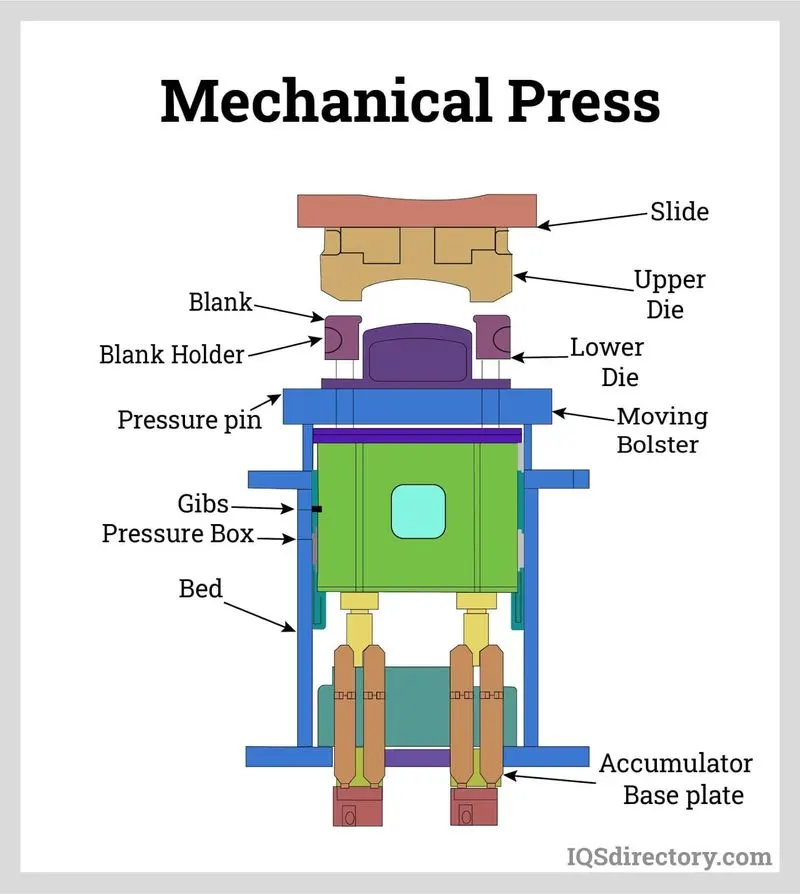
Die Design and Fabrication: Dies, which are specialized tools used for shaping the metal, are designed and fabricated. The die consists of two halves: the upper die (punch) and the lower die (die block). The die design corresponds to the desired shape and contours of the back door panels.
-
Blank Cutting: The metal sheets are fed into a blanking press, which cuts them into appropriately sized blanks. Blanks are flat pieces of metal that will be shaped into the final door panels
Hemming
Hemming is a technology used by the automotive industry to join inner and outer closure panels together (hoods, doors, tailgates, etc.). It is the process of bending/folding the flange of the outer panel over the inner one. The accuracy of the operation affects significantly the appearance of the car’s outer surfaces and is therefore a critical factor in the final quality of a finished vehicle.
BACK DOOR DESIGN
The design consideration of back door are ,
- Visibility Criteria
- Force Dissipation
- Latch and Stricker Positions
- Hinge Position
- Gas Stay Position
- Hemming and Relief Areas
PARTS OF BACKDOOR
- Back door outer panel (upper and lower)
- Back door inner panel
- Hinge reinforcements
- Gas stay reinforcements
- Latch and striker reinforcements
- Wiper motor reinforcements