Design of backdoor
AUTOMOBILE BACKDOOR
Introduction –
A Backdoor or Tailgate is the door at the rare most end of the car which encloses the boot space. It also has the Wiper Motor mounted on it, along the Tail Lamp, Gas Stay and Latch & Striker.
The backdoor is the rearmost part of the automobile which opens upwards, downwards, and sideways to give access to the luggage space or seating.
In most of the cars, these back doors are operated with the help of gas stay which in turn reduces the effort required to lift open the door. Some luxury cars have powered backdoor which in turn is driven by an electric motor.
Types of door mounting :
- Top-mounted door
- Side-mounted door
- Bottom Door
Types of Metal Fabrication Processes –
Thermal Cutting - Laser Cutting Metal –
Laser cutting is the preferred option for cutting sheet. A very quick and precise cutting method that guarantees good results.
With thicker materials, plasma cutting may be used because of its quickness. This advantage is only evident with thicknesses upward of 10 mm though.
At the same time, cutting quality favours laser cutting. So we would advise to rather go with laser cutting services.
Mechanical Cutting –
Shearing, or die cutting, refers to a process that cuts sheet metal without burning or melting it. Also, it does not produce any chips. In essence, shearing is not too different from cutting with scissors.
In shearing, a punch presses the workpiece against a fixed die or blade. The clearance between is such that the workpiece does not fit through, causing it to shear.
It is a great and cost-effective method to cut sheets into size whenever complex cuts are not necessary.
Punching –
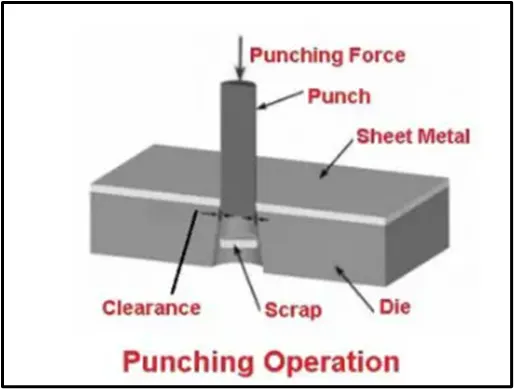
Punching is another way for cutting holes into a sheet. A metal punch hits the sheet, perforating it. It is suitable for large-scale production but not cost-effective for smaller jobs. The reason lies with the need for a separate tool for different cuts.
Blanking –
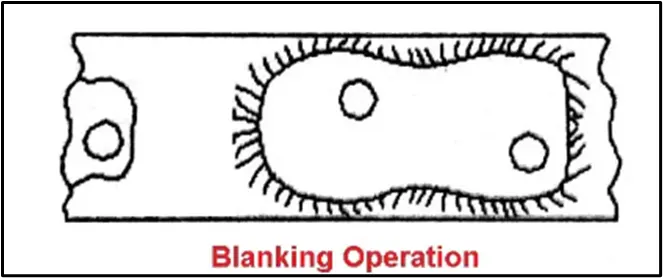
It is an operation of cutting a whole piece from sheet metal. In which enough scrap is left all around as shown in fig. A punch and die is applied for this type of sheet metal operation.
Bending –
When it comes to actual engineering, there aren’t many metal components that elude the bending section of a fabrication shop. Press brakes are responsible for the folding of sheet metal parts.
This is probably the most difficult step in metal manufacturing because of the complexity of some bends. An engineer must be well acquainted with the limitations of metal bending to things that are actually producible.
Drawing –
It is an operation of producing thin-walled hallows or vessel shaped parts from sheet metal. It can be divided into two categories:
- Deep drawing
- Shallow drawing
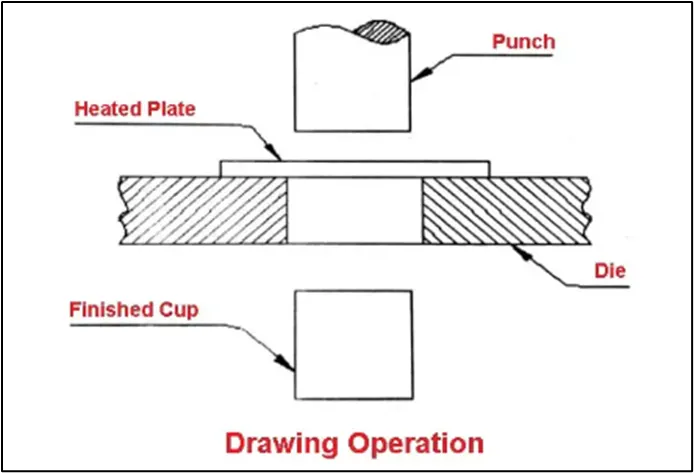
A) Deep Drawing - The length of depth of the object to be drawn is deeper than its width.
B) Shallow Drawing - The length of the object to be drawn is less than its width. The examples of drawing are pans, tubes and cams.
Embossing Operations –
It’s a metalworking technique for creating raised surfaces or letters in sheet metal. During this operation, the thickness of the metal does not change.
Hemming –
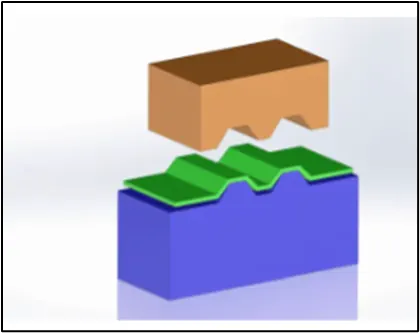
Hemming is a forming operation in which the edges of the sheet are folded or folded over another part in order to achieve a tight fit. Normally hemming operations are used to connect parts together, to improve the appearance of a part and to reinforce part edges.
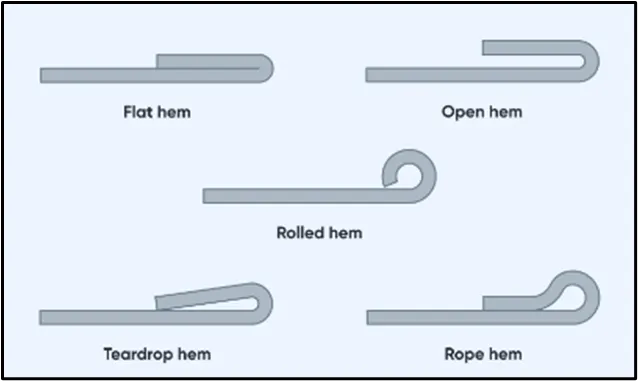
In car part production, hemming is used in assembly as a secondary operation after deep drawing, trimming and flanging operations to join two sheet metal parts (outer and inner) together. Typical parts for this type of assembly are hoods, doors, trunk lids and fenders.
Automotive Sheet Metal Design using Siemens NX CAD
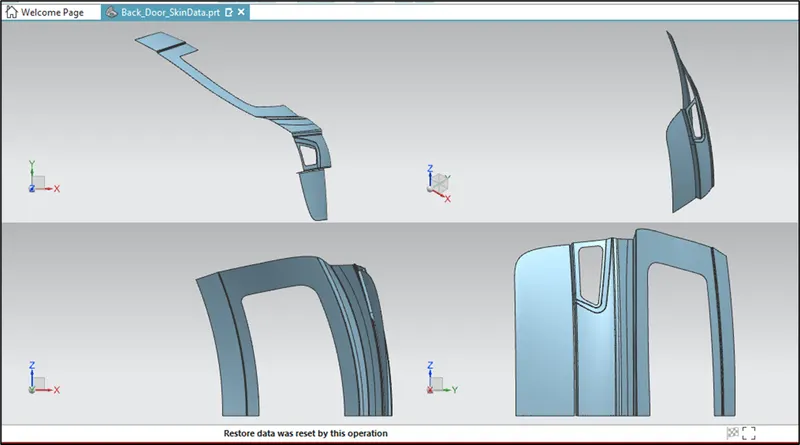
1. SKIN DATA
2. OUTER PANEL – (0.75MM-THICK)
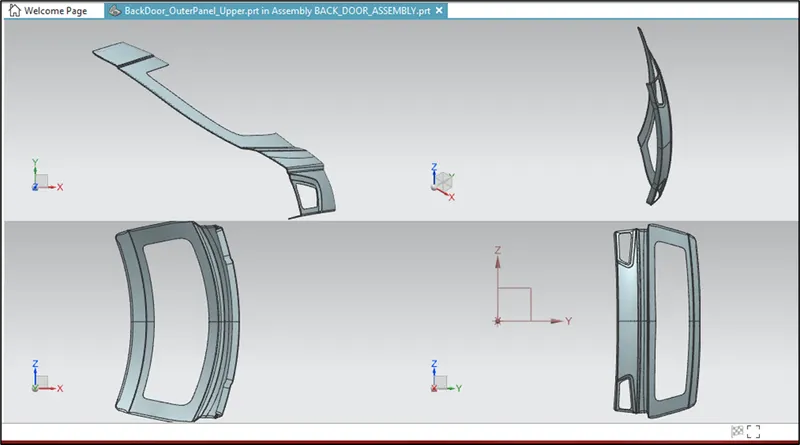
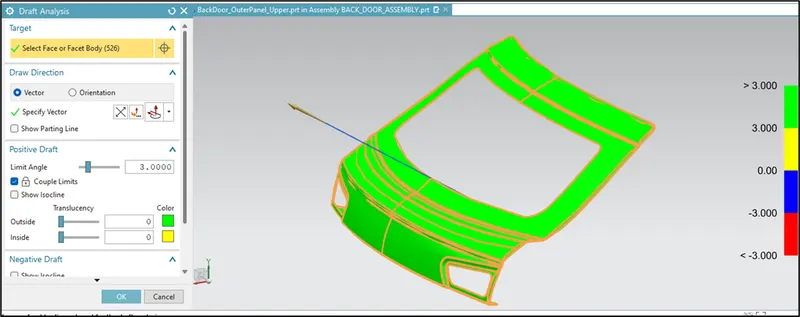
2.1. UPPER OUTER PANEL –
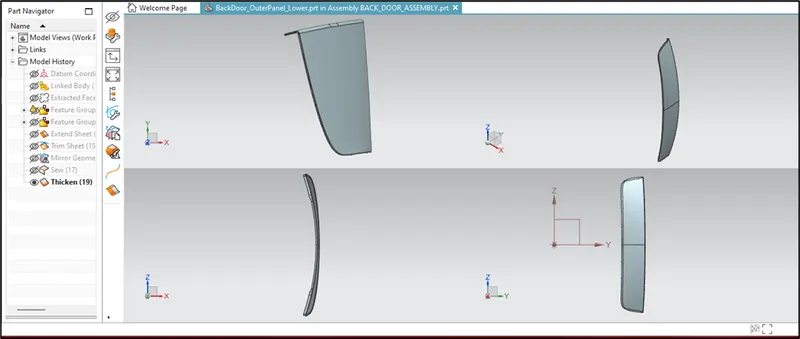
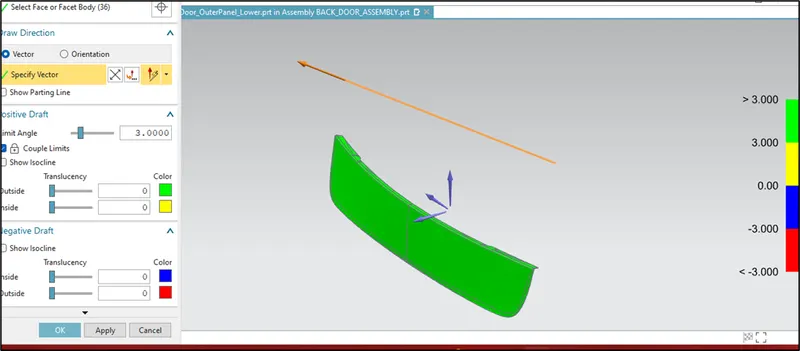
2.2 LOWER OUTER PANEL –
3. INNER PANEL – (0.75MM-THICK)
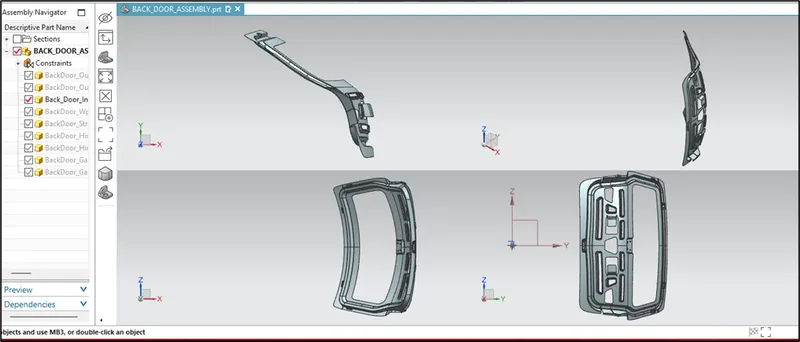
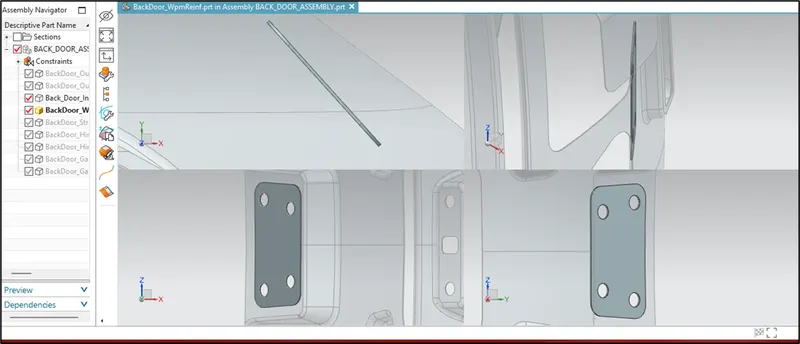
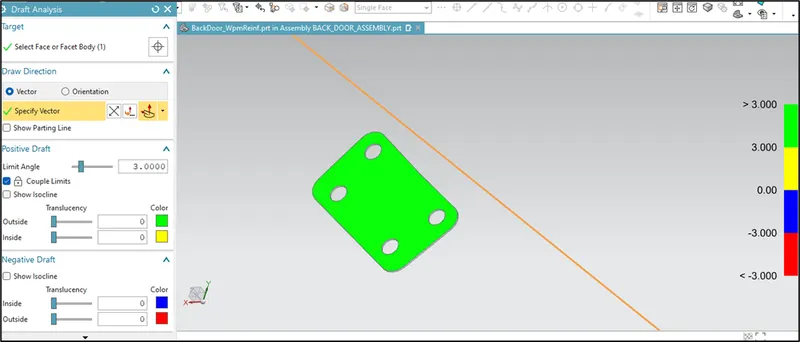
4. WIPER MOTOR REINFORCEMENT – (1MM-THICK)
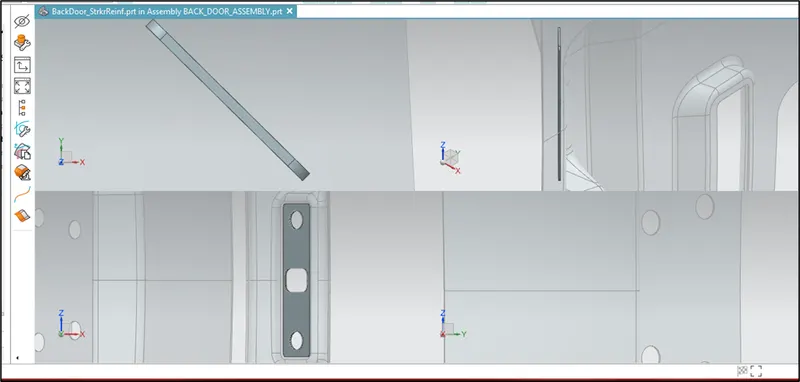
5. STRIKER REINFORCEMENT – (1MM-THICK)
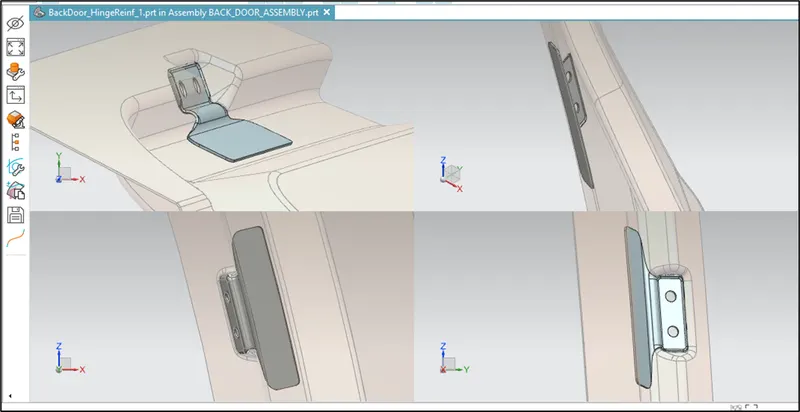
6. HINGE REINFORCEMENT – (1MM-THICK)
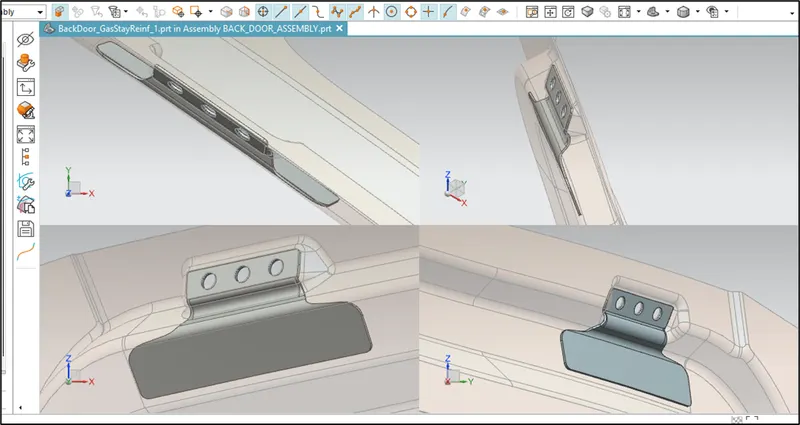
7. GAS STAY REINFORCEMENT – (1MM-THICK)
8. HEMMING –
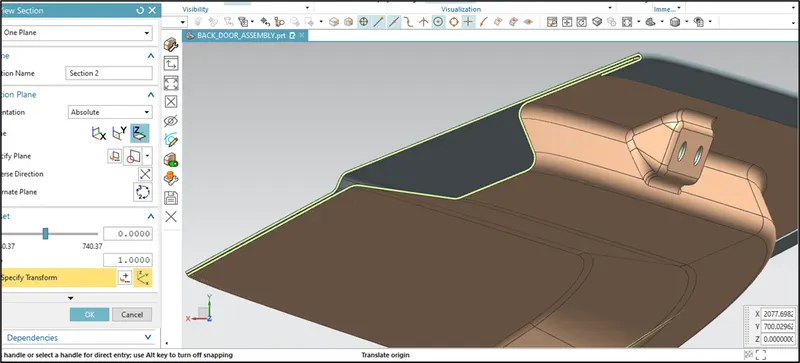
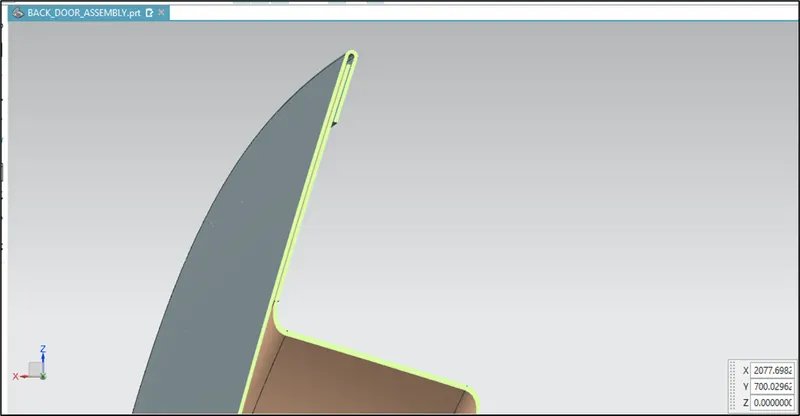
9. FINAL MODEL –
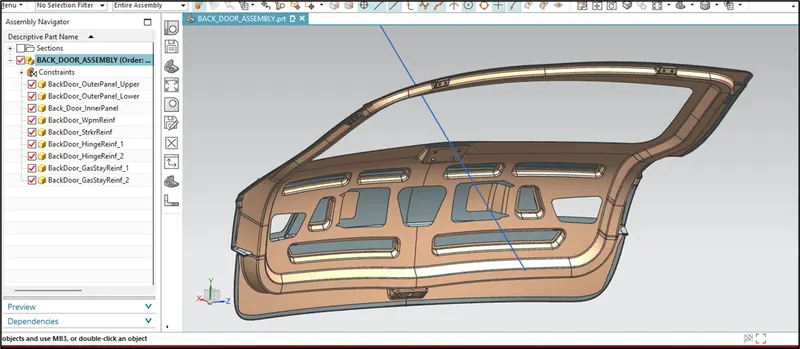
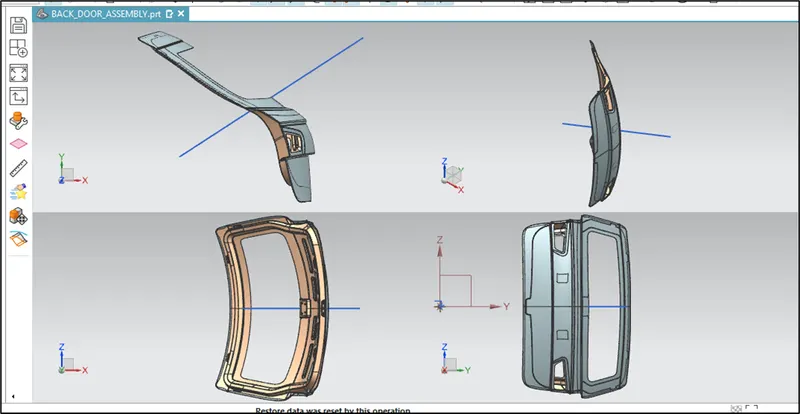
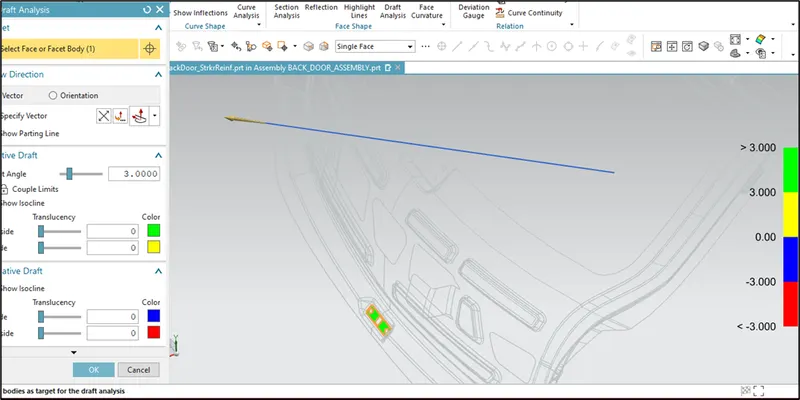
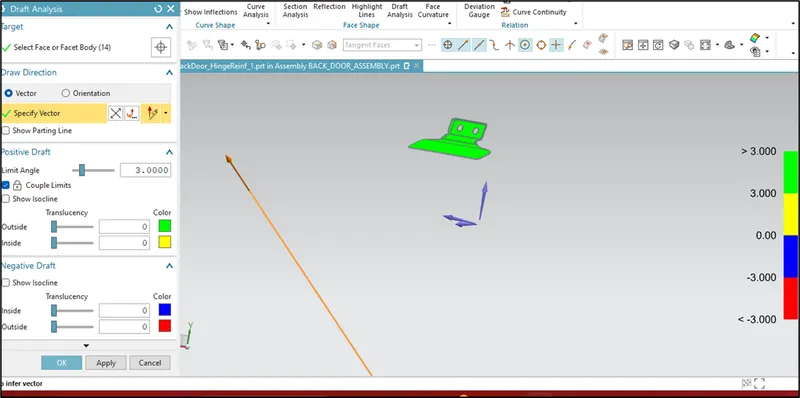
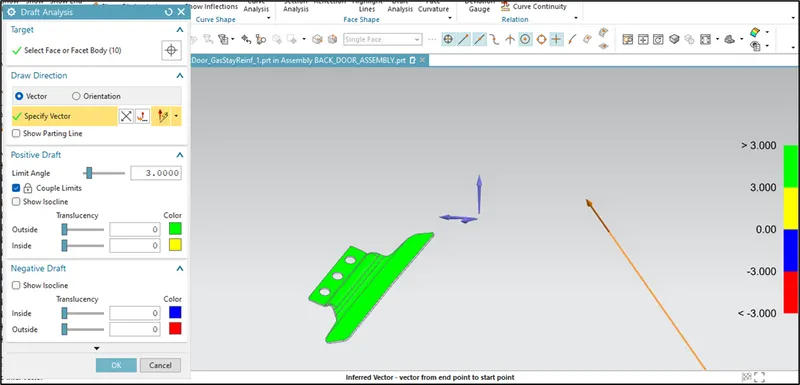
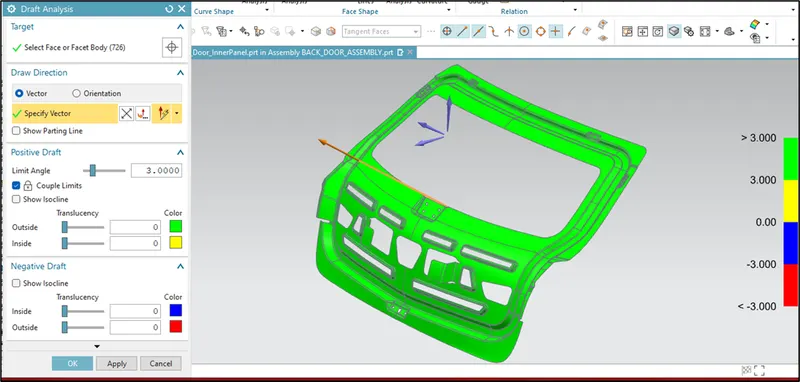
10. DRAFT ANALYSIS –
===================================================