Design of backdoor
BACK DOOR
Objective:-Design of the back door Outer upper pannel and lower panel, inner panel, and the necessary reinforcements by following the Master section with the design parameters for the given styling surface.
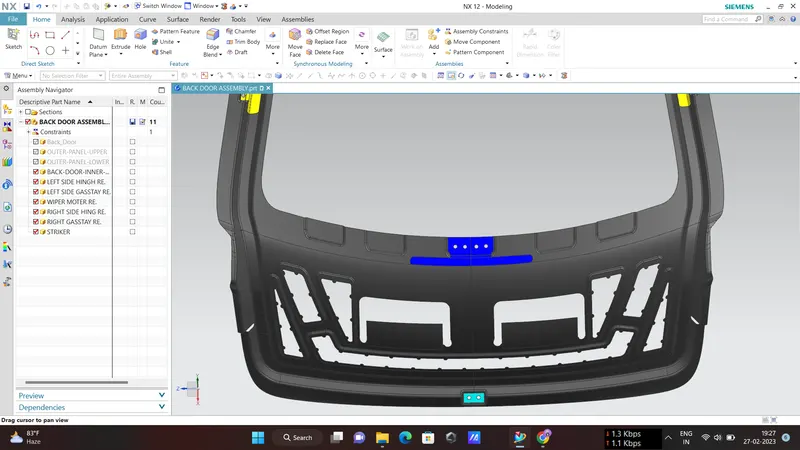
Introduction:-Back Door also called as 'Hatch', or 'Tailgate', 'Trunk-lid', 'Boot-door' is basically the 5 door in a 4-door car. It's the rearmost part of the vehicle which gives access to the trunk and has mounts for wiper motor, tail lamps, hinges for supporting its weight in opened position, gas stays which help with its opening and keeping it open, radars and cameras etc.
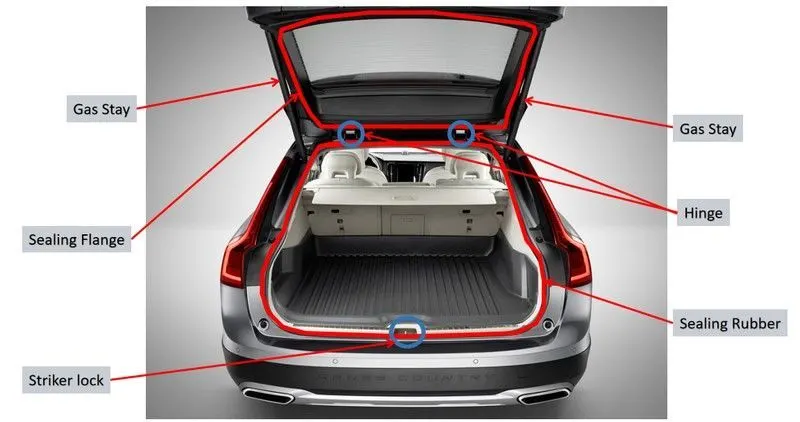
The trunk or luggage compartment is most often at the rear of the vehicle. Early designs had an exterior rack on the rear of the vehicle to attach luggage trunk. Later designs integrated the storage area into the vehicle's body, and eventually became more streamlined. The main storage compartment is normally provided at the end of the vehicle opposite to which the engine is located.
The Main Parts of the Back Door:
- Outer Upper Panel.
- Outer Lower Panel.
- Inner Panel.
- Gas Stay Reinforcement Left and Right
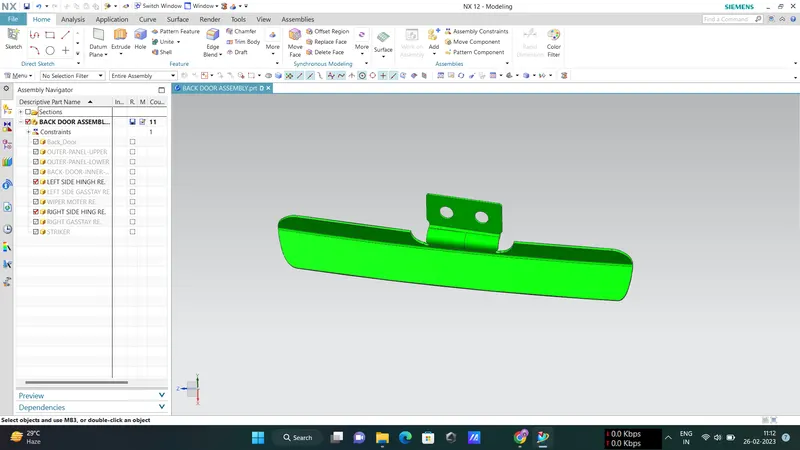
- Hinge Reinforcement LH and RH.
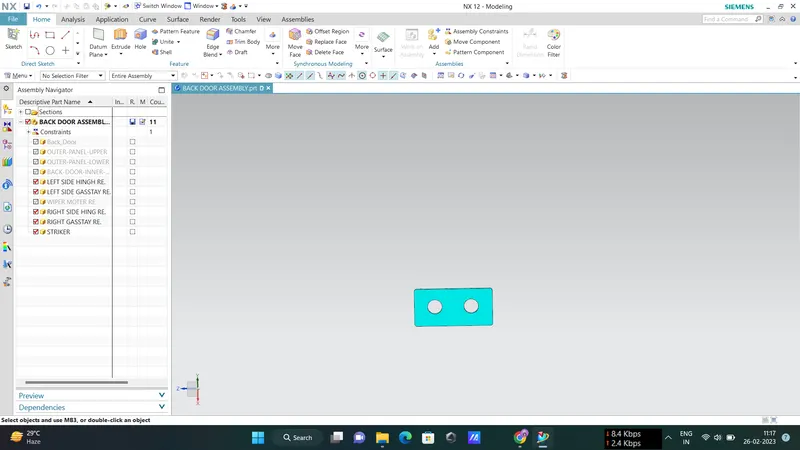
- Striker Reinforcement.
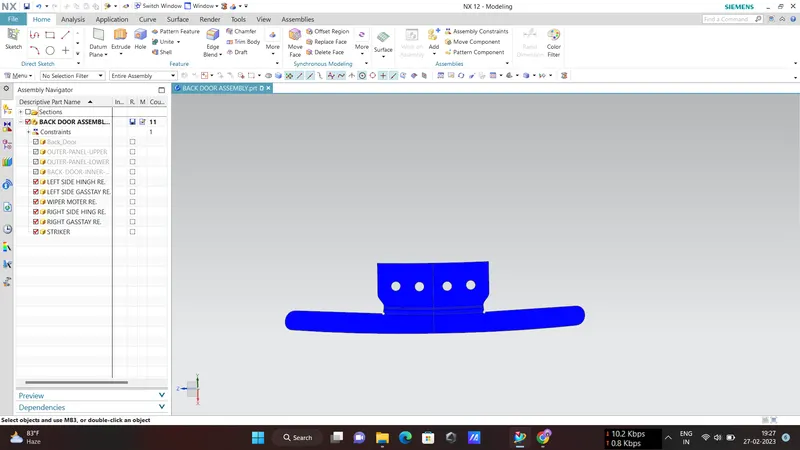
- Wiper Reinforcement.
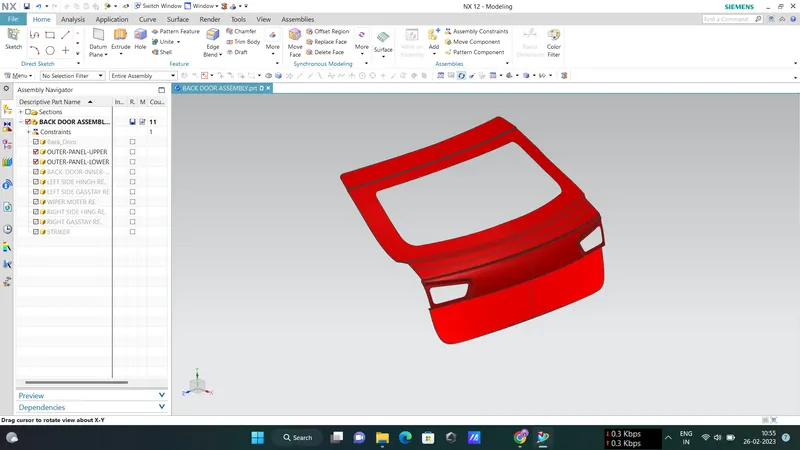
1. Outer upper panel and lower panel:-Outter panel is the styling surface of the backdoor.Glass for rear visibility is mounted on the outter panel upper.Rear lights are also mounted on the outter panel upper.Number plate is mounted on the outter panel lower.Spot welds and other manufacturing process should done only on the inner panel because the outter panel is the styling surface which should not have any scratches or welds .Because it affects the style of the car which leads to bad impression on the customers.
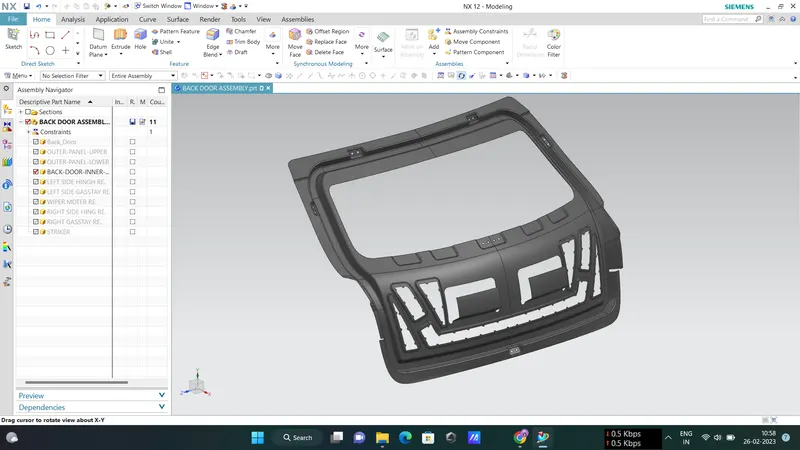
2.Inner panel:-Car backdoor inner panel is made of either steel or alumminium. Most of the luxuary car's inner panel are made of aluminium because of is properties But the cost of aluminium is high. It's thickness is 0.75 millimetres. It is one of the most important components on which all accessories are mounted like Hinges, Gas Stay, Wiper Moter , Latch and Striker etc.
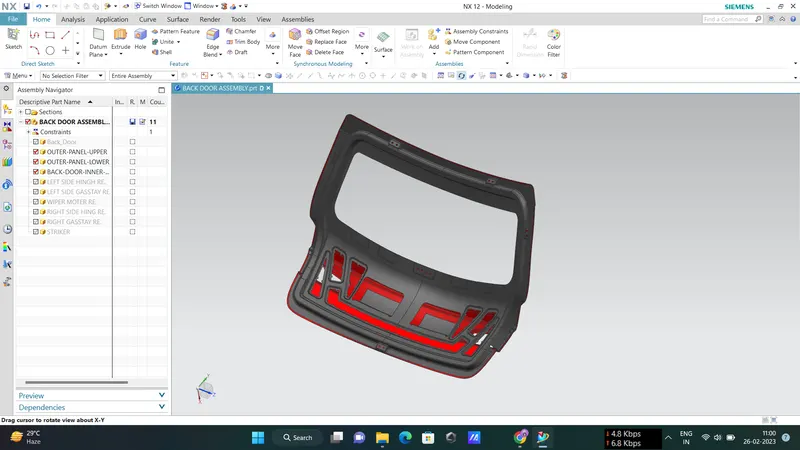
3.Gas Stay Reinforcement Left and Right:-Gas stay is used to lift the backdoor automatically.There are two types of gas stay one is semi-automated and another one is fully automated. In semi automated type the back boor needs little force to lift after that it lift the backdoor automatically. In fully automated it has power spindle which lift the backdoor automatically.
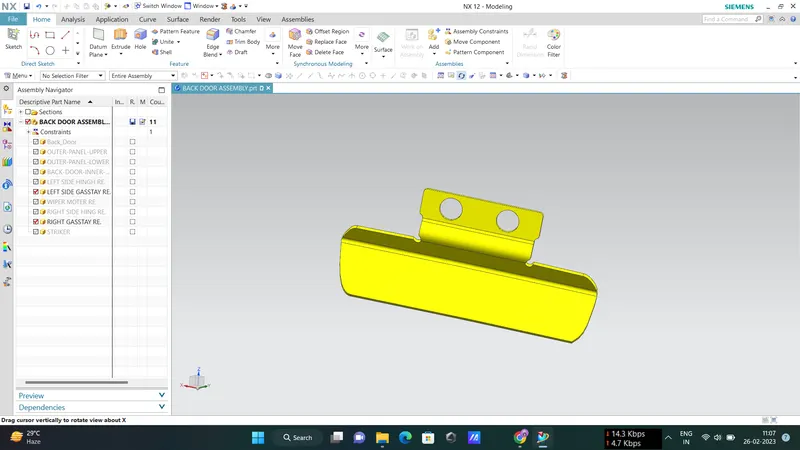
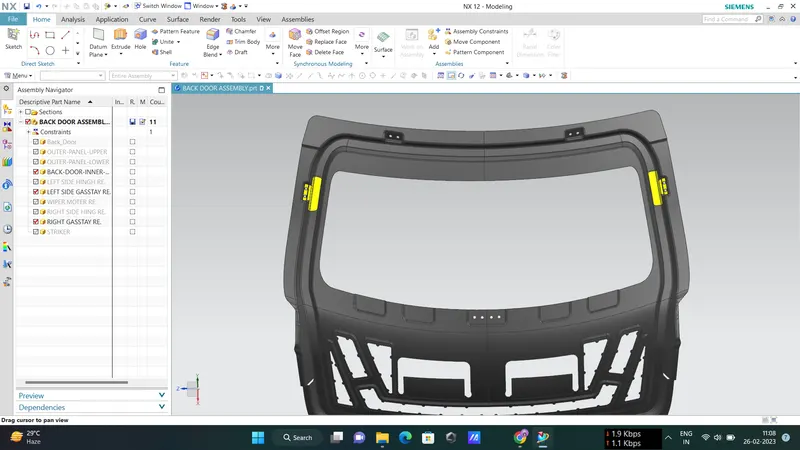
4.Hinge Reinforcement LH and RH:-Hinges support the weight of the whole backdoor.Hence, the reinforcements must be provided there too.The emboss is designed in such a way that the hinges should operate freely.The hinge is connected to the rear roof of the car.
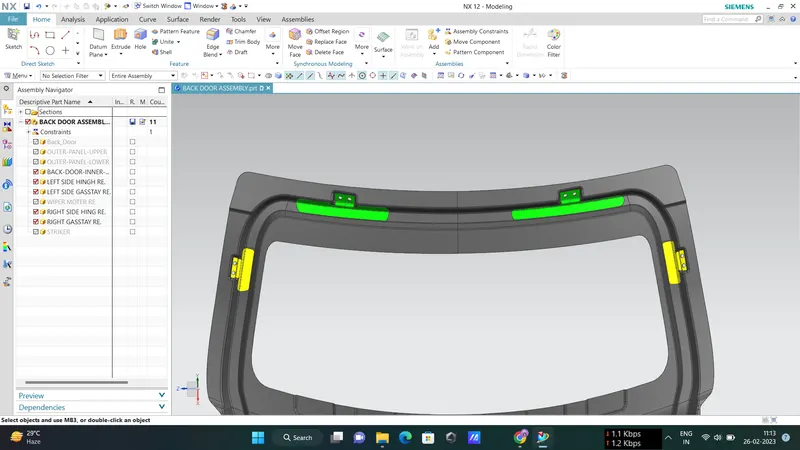
5.Striker Reinforcement:-The striker reinforcement is used for locking mechanism and gives better strength.
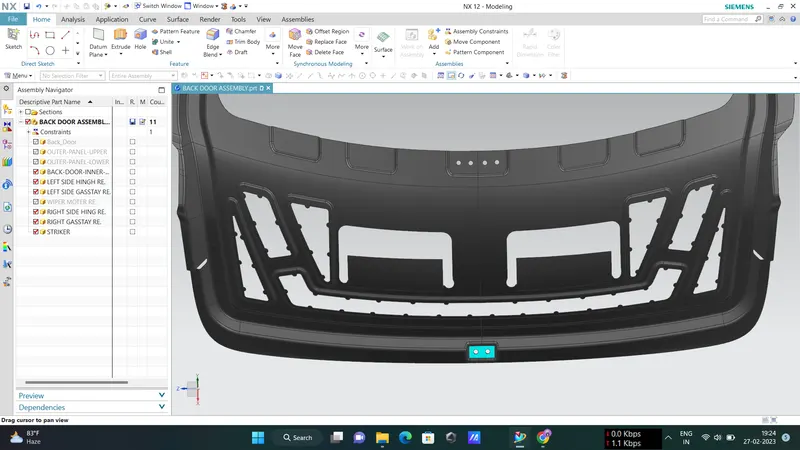
6.Wiper Reinforcement:-Wiper is used to to wipeout the rain water falls on the backdoor window.It is actuated by the motor which is mounted on the inner panel.Due to the vibration and heat created by the motor .the inner panel where the motor is mounted gets deform and the parts attached to the motor starts to vibrate which leads to poor NVH.So we have to provide the reinforcement where the wiper motor is placed.
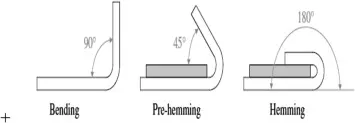
HEMMING:-
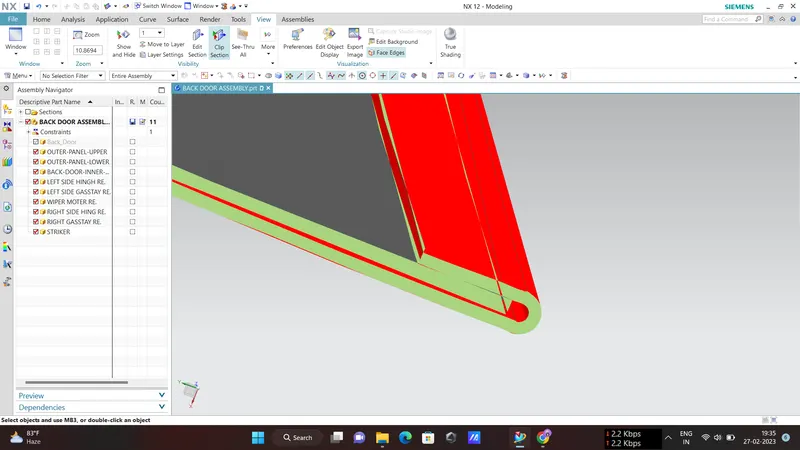
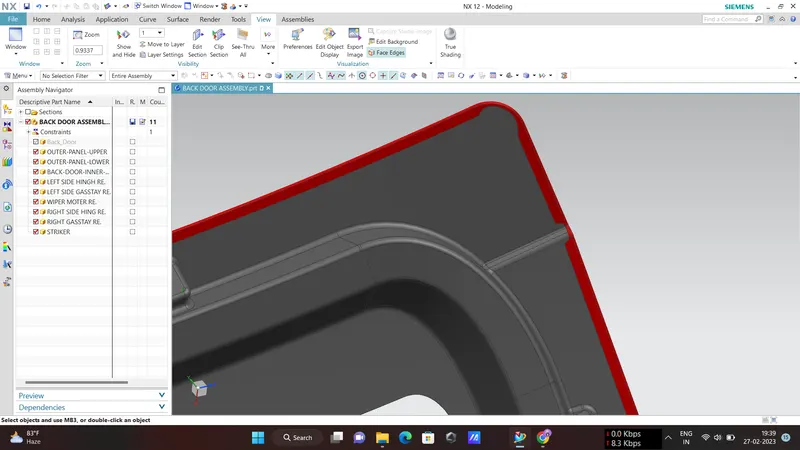
- Hemming is a sheet metal forming process in which sheets are joined by bending it to 180°. Automotive body panels and automotive parts such as deck-lids, trunk-lids, doors, hoods and tailgates are formed by hemming process. In this process, usually a sheet is bent with the help of inner sheet in three different stages.
- Hemming is a forming operation in which the edges of the sheet are folded or folded over another part in order to achieve a tight fit. Normally hemming operations are used to connect parts together, to improve the appearance of a part and to reinforce part edges.
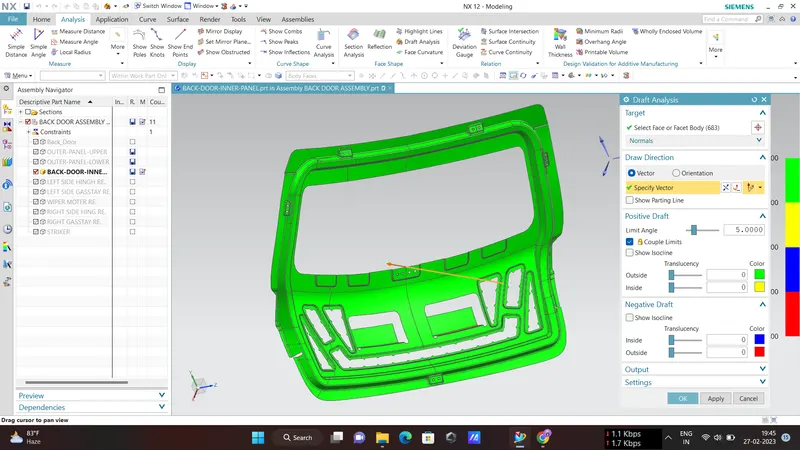
Draft analysis:-The Draft Analysis command enables you to detect if the part you drafted will be easily removed. This type of analysis is performed based on color ranges identifying zones on the analyzed element where the deviation from the draft direction at any point, corresponds to specified values.