Cyclone Separator Challenge
AIM: To perform analysis of cyclone separator and calculate the separation efficiency and pressure drop.
We can divide the methodology in given parts
- Basic of cyclone separator
- empirical models of cyclone separator
- Fluent study
- Case 1
- Case 2
- Learning outcome
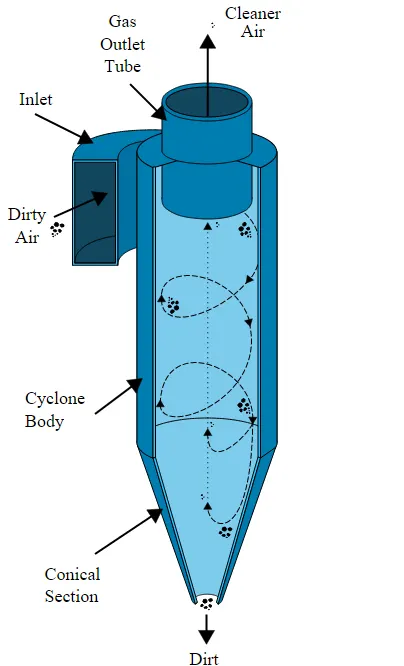
Cyclone separator: Cyclone separator is a device used to separate the suspended particle matter form the air. Cyclone consists of a cylindrical upper body with a conical lower section and a smaller center cylinder that extends from the top to just below the entrance through relatively clean air is discharged.
Working principle: A cyclone is a centrifugal separator in which particles, due to their mass, are pushed to the outer edges as a result of centrifugal force. Incoming air is automatically forced to adopt a fast-evolving spiral movement - the socalled double vortex. This double spiral movement consists of an outer stream, which flows downwards in a spiral, and an inner stream, which flows upwards in a spiral. At the interchange between both streams, air passes from one stream to the other. The particles which are present in the air are forced to the outer edges and leave the separator via a collection device fitted to the bottom of the separator.
Some of the best empirical models for pressure drop and used to calculate cyclone separator efficiency are given below.
- Ioizia and Leith model
Iozia and leith model is upgraded model of barth which is developed based on force balance.The model assumes that a particle carried by the vortex endures 165
the influence of two forces: a centrifugal force, Z and a flow resistance, W. The collection efficiency ni of particle diameter `Dp i` can be calculated from
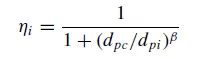
`beta`=expression for the slope parameter
`Dpc`=50% cut size given by barth.
- Li and Wang Model
this model includes particle bounce or re-entrainment and turbulent diffusion at the cyclone wall. A two-dimensional analytical expression of particle distribution in the cyclone is obtained.
There are some assumptions taken by li and wang
- The radial particle velocity and the radial concentration profile are not constant for uncollected particles within the cyclone.
- Boundary conditions with the consideration of turbulent diffusion coefficient and particle bounce re-entrainment on the cyclone wall are:
`C=C0 and theta =0` - The tangential velocity is related to the radius of cyclone by uRn = constant.
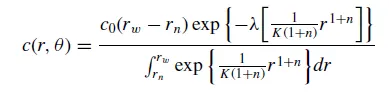
- The concentration distribution in a cyclone is given as:
- Koch and Licht Model
This model is based on the inherently turbulent nature of cyclones and the distribution of gas residence times within the cyclone.Koch and Licht described
particle motion in the entry and collection regions with the additional following assumptions:
- The tangential velocity of a particle is equal to the tangential velocity of the gas flow, i.e. there is no slip in the tangential direction between the particle and the gas.
- The tangential velocity is related to the radius of cyclone by: uRn = constant.
force balance and an equation on the particles collection yields the grade efficiency `etai`
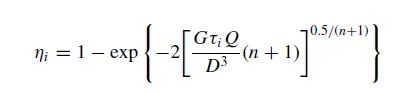
G is a factor related to the configuration of the cyclone, n is related to the vortex, and is the relaxation term.
- Lapple Model
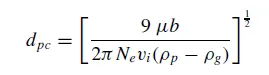
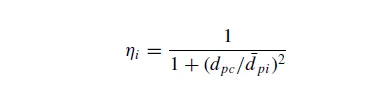
Lapple model was developed based on force balance without considering the flow resistance. Lapple assumed that a particle entering the cyclone is evenly distributed across the inlet opening. The particle that travels from inlet half-width to the wall in the cyclone is collected with 50% efficiency.The semi empirical relationship developed by Lapple to calculate a 50% cut diameter, dpc, is
Fluent case study
For both, the setup of the case will remain the same except for some small changes.
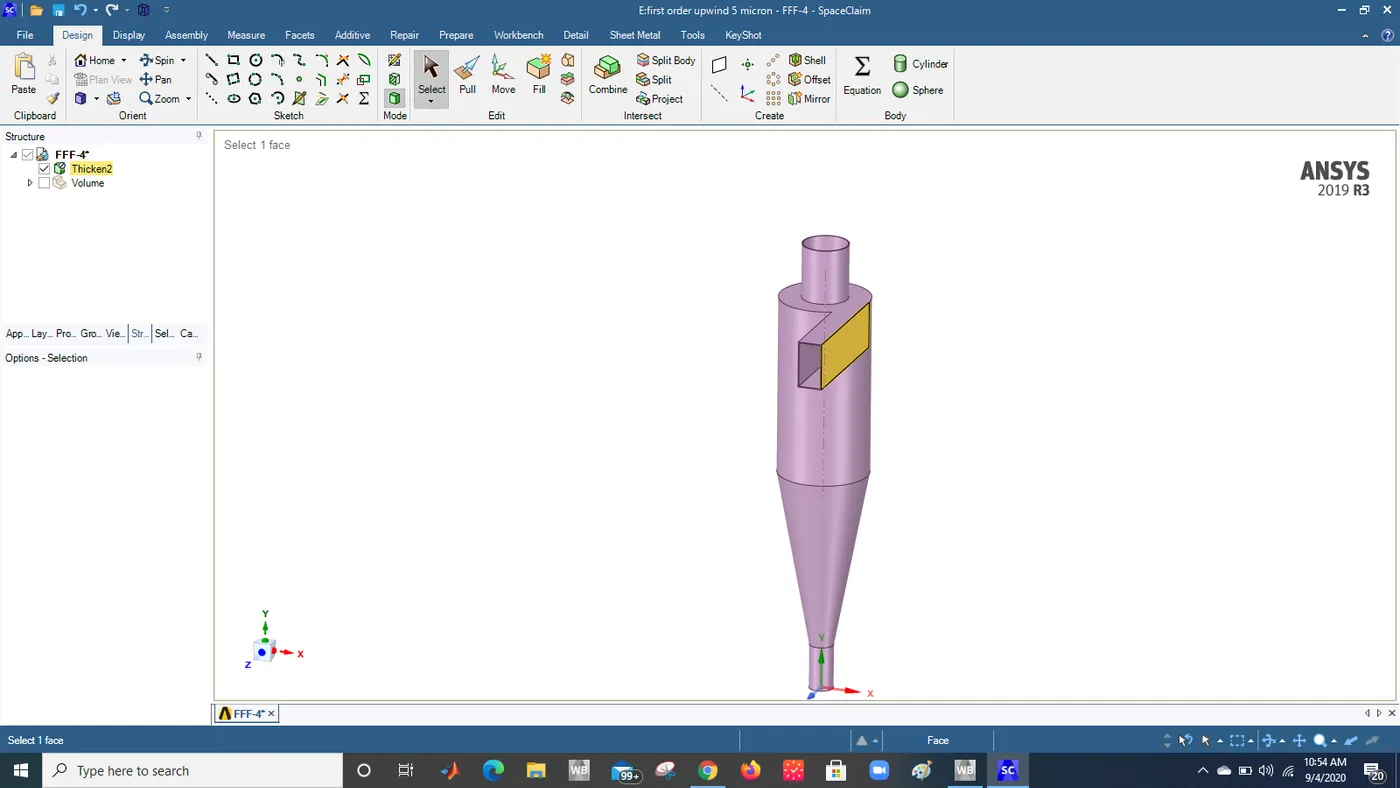
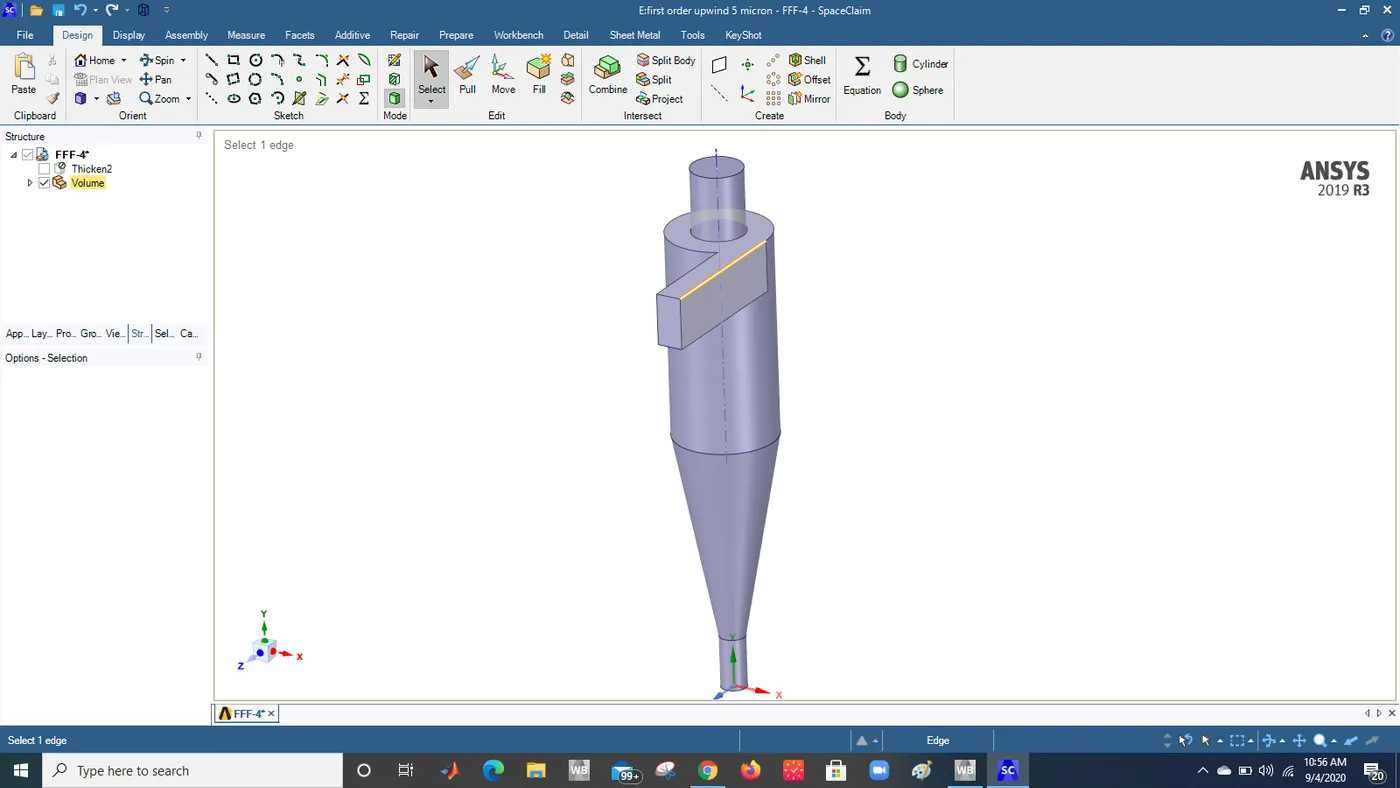
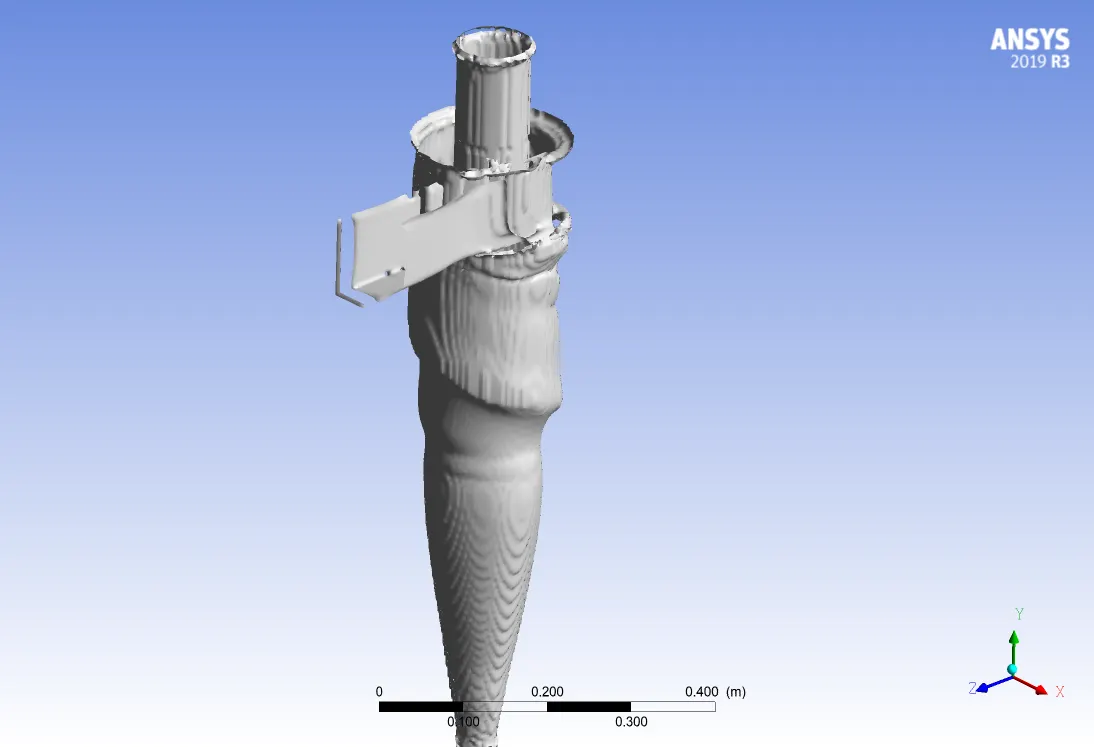
Export the geometry and extract out the fluid volume
The next step will be the meshing approach
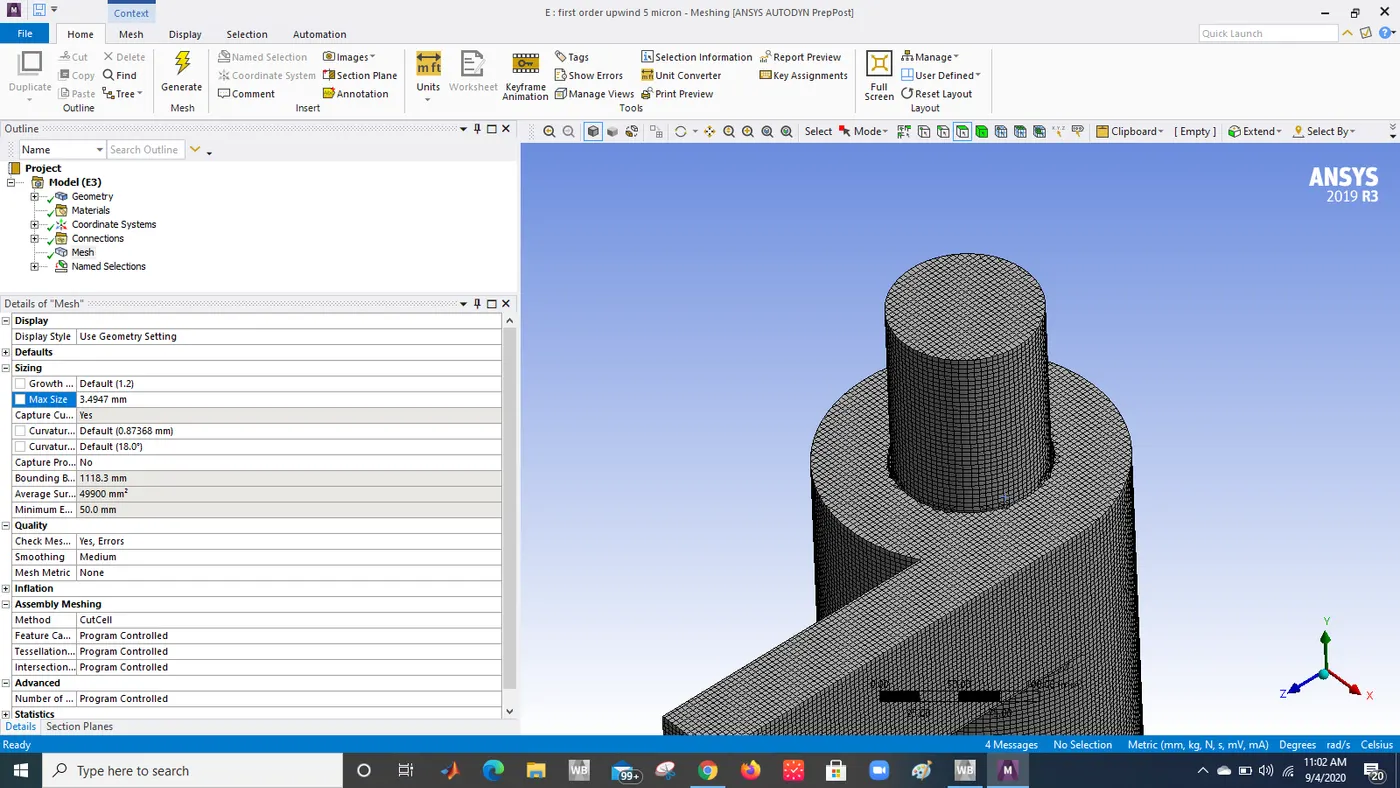
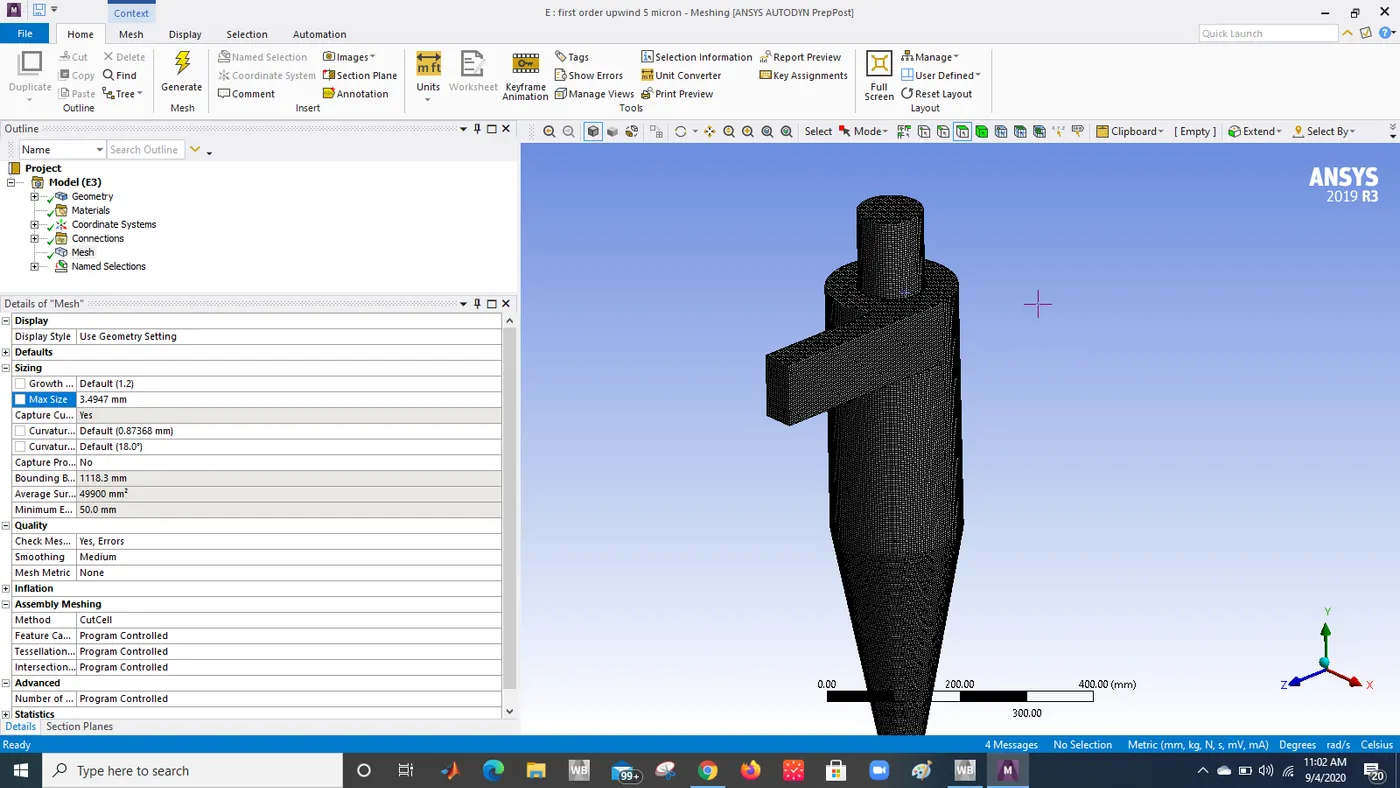
- Mesh parameter:
mesh method: cut cell approach
tria and quad are used
element size: 5mm
Numer of elements: 5 million
- Boundary conditions:
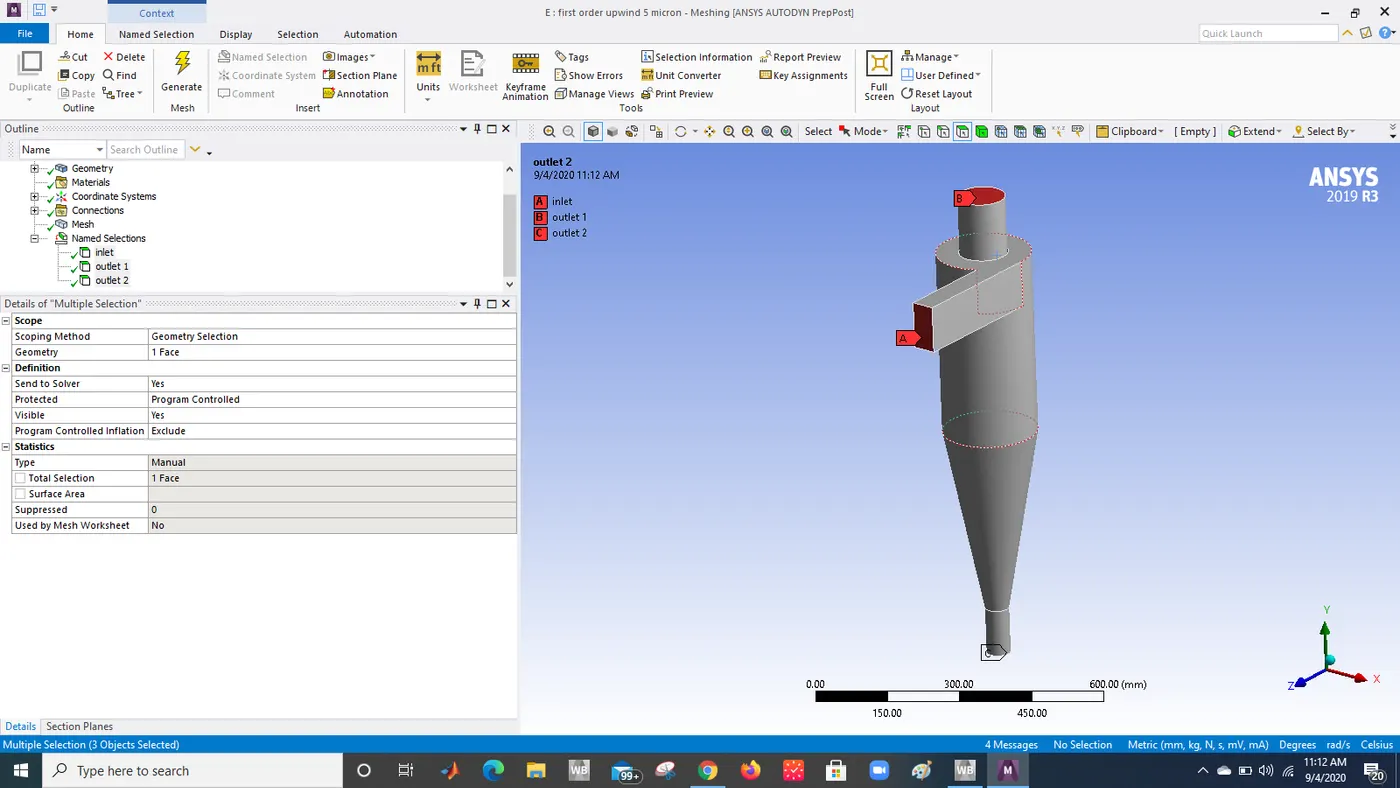
In boundary conditions there will be 1 inelt and 2 outlets. Top outlet is for gas and the bottom outlet will be for debris
Fluent setup:
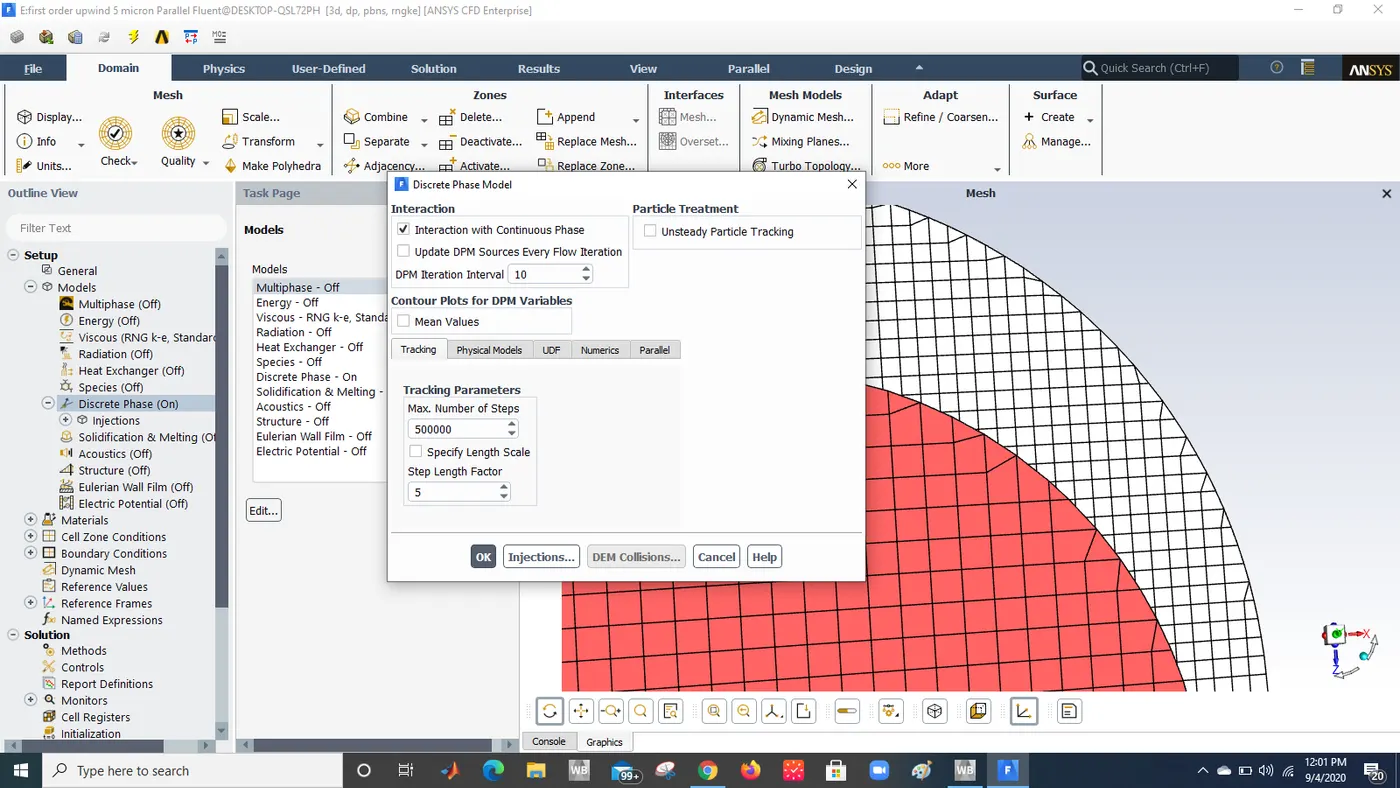
type: pressure-based and steady analysis
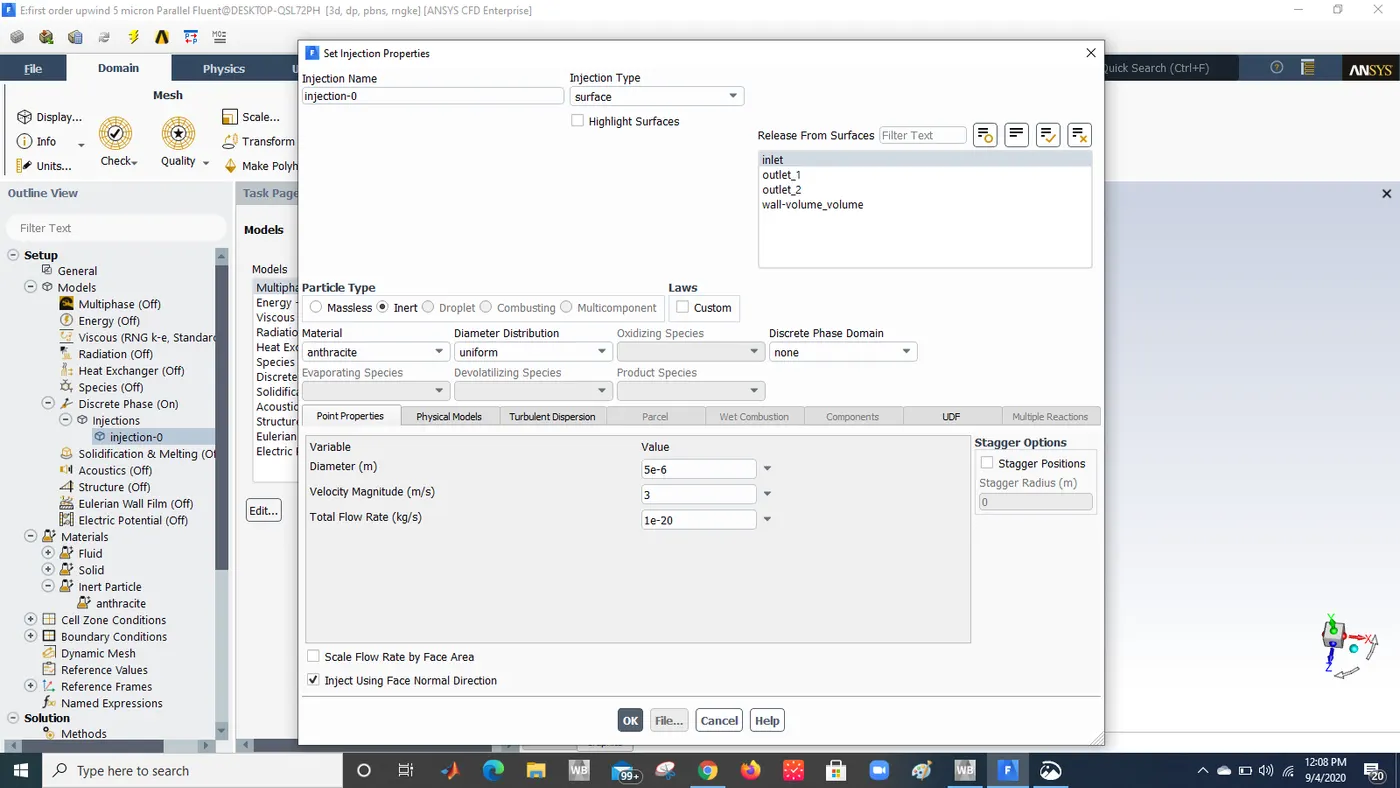
DPM: on(Lagrange approach)
Cell zone material: air
Insertion particle material : anthrecite
Boundary conditions:
Inlet: DPM type: REFLECT
Outlet 1: DPM type: escape
Outlet 2: DPM type: trapped
Case 1(part a)
Velocity : 3m/s
particle diameter: 5 micron
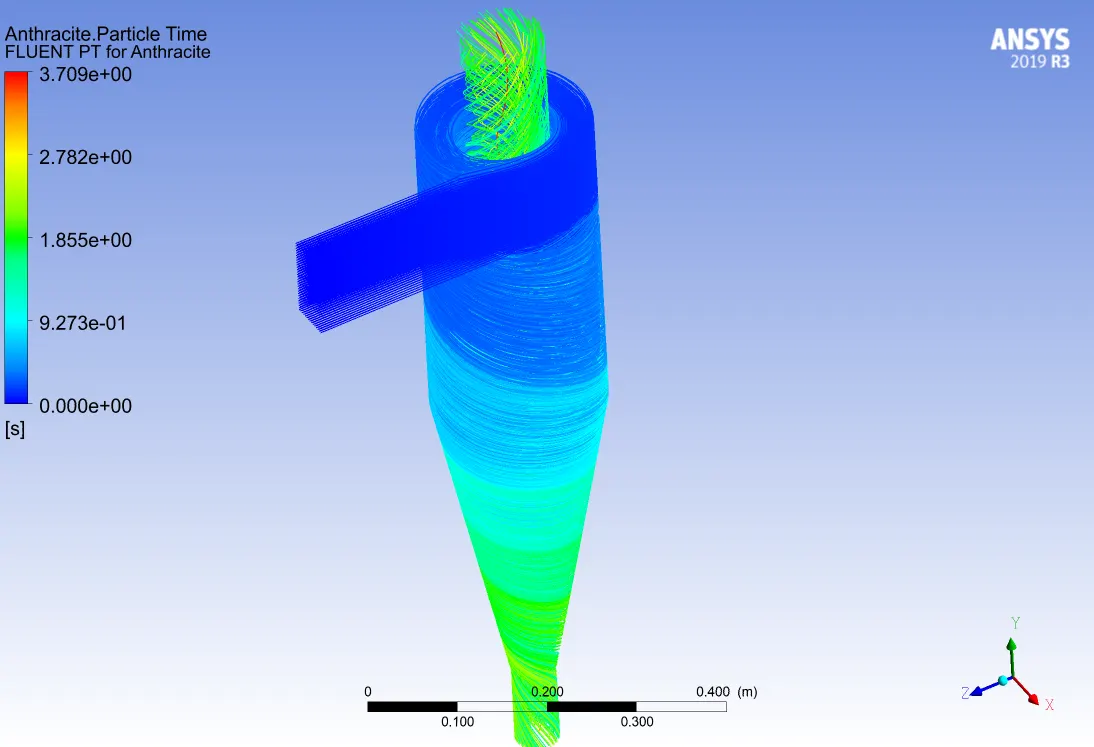
Particle history data

Particle tracing image
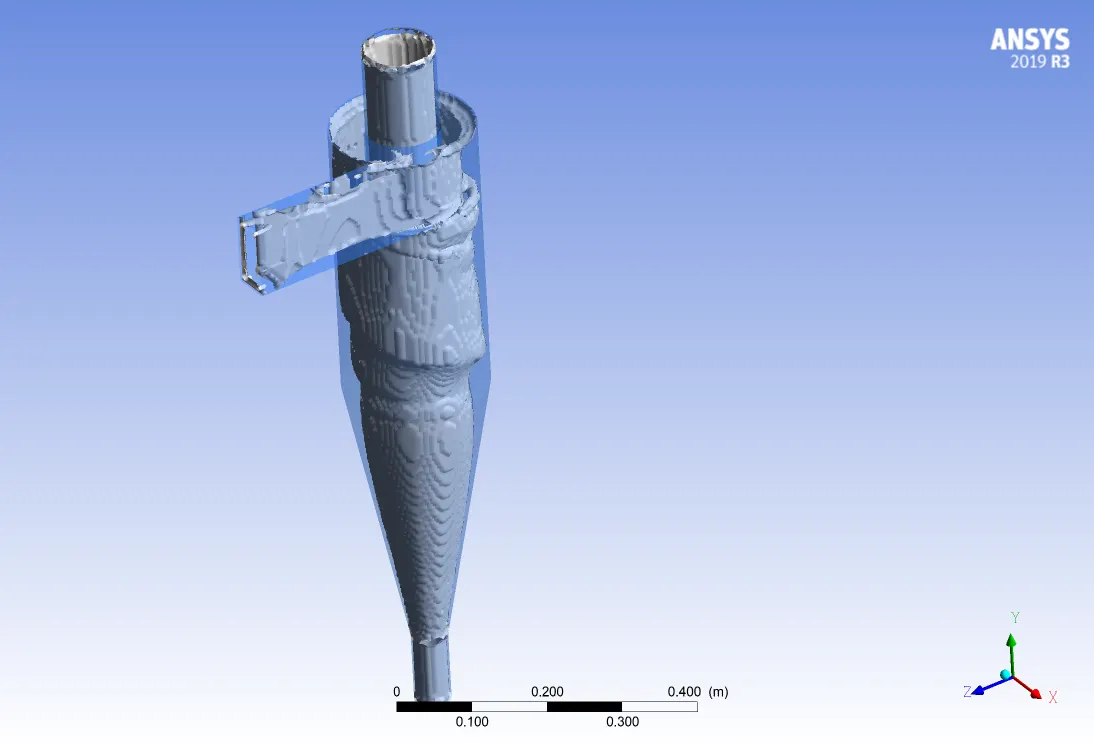
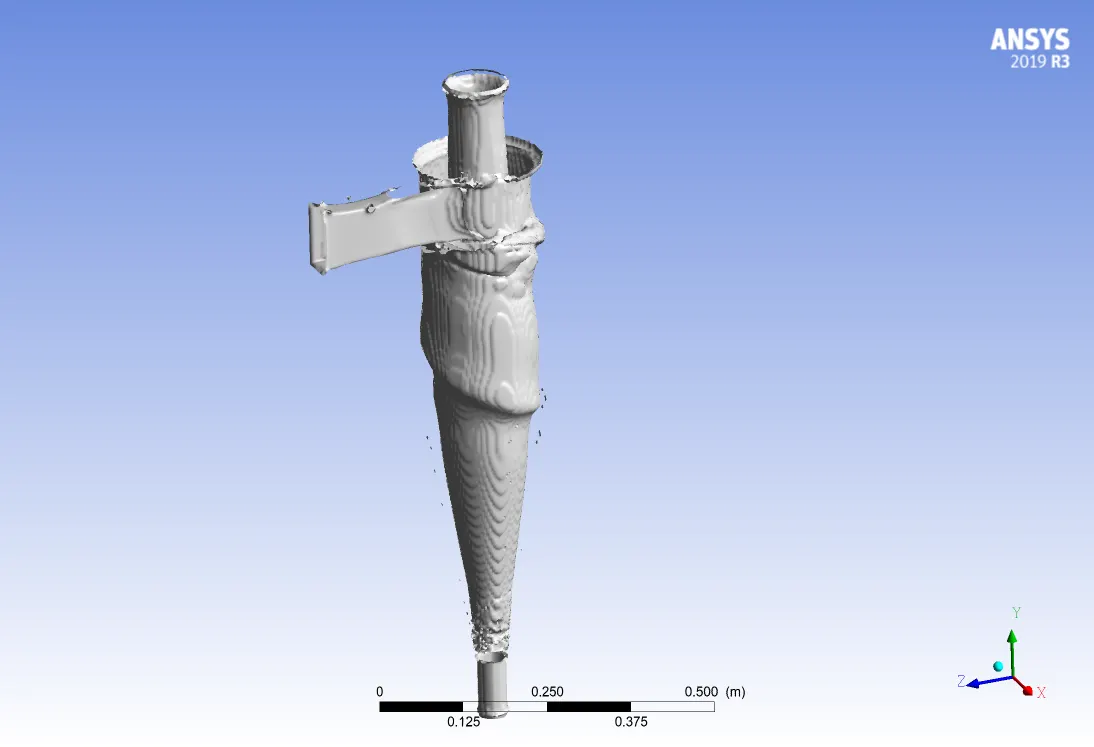
Vortex region
Case 1(part b)
Velocity : 3m/s
particle diameter: 1 micron
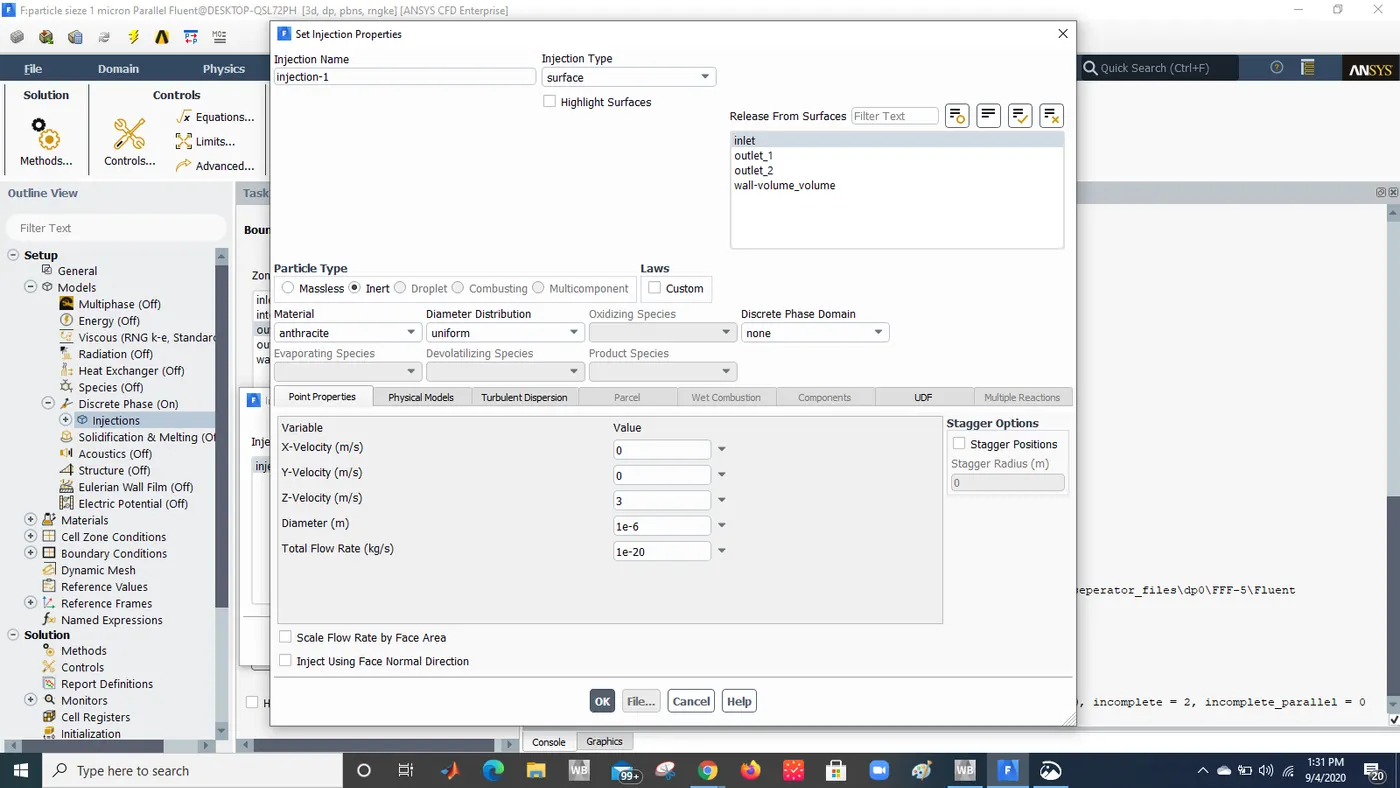

Particle tracing image for 25 particles
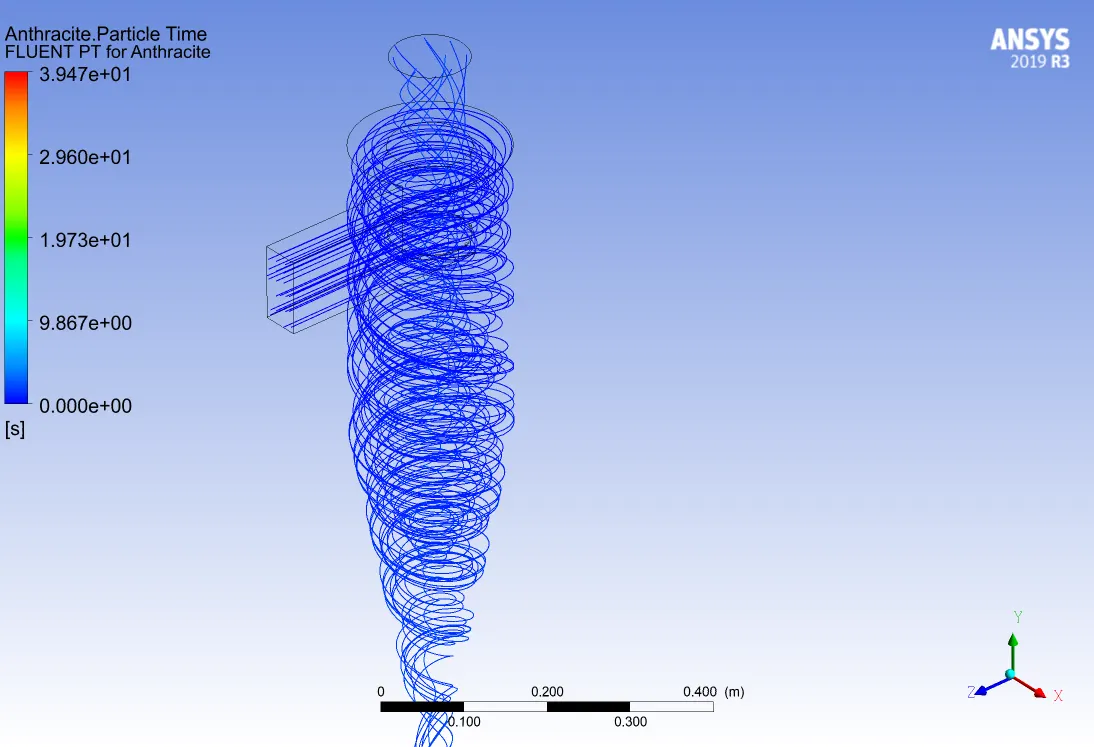
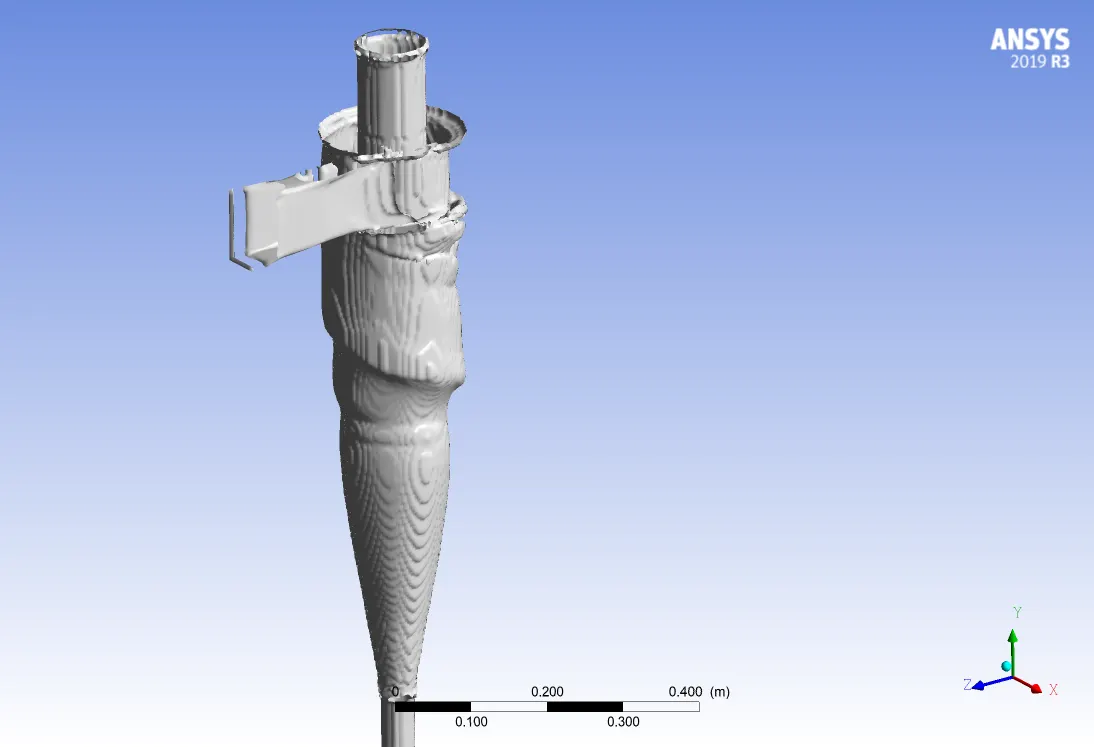
Vortex region
Case 1(part b)
Velocity : 3m/s
particle diameter: 3 micron
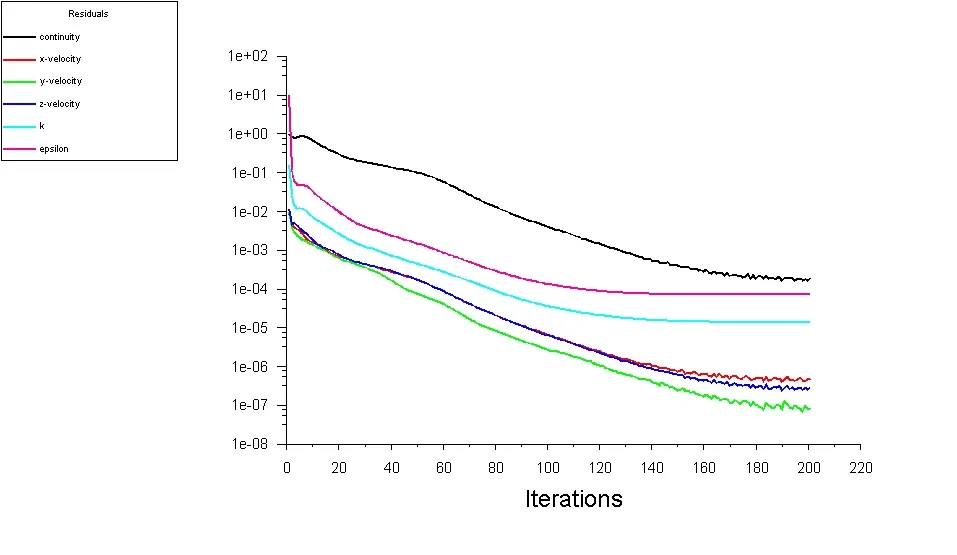
Residuals
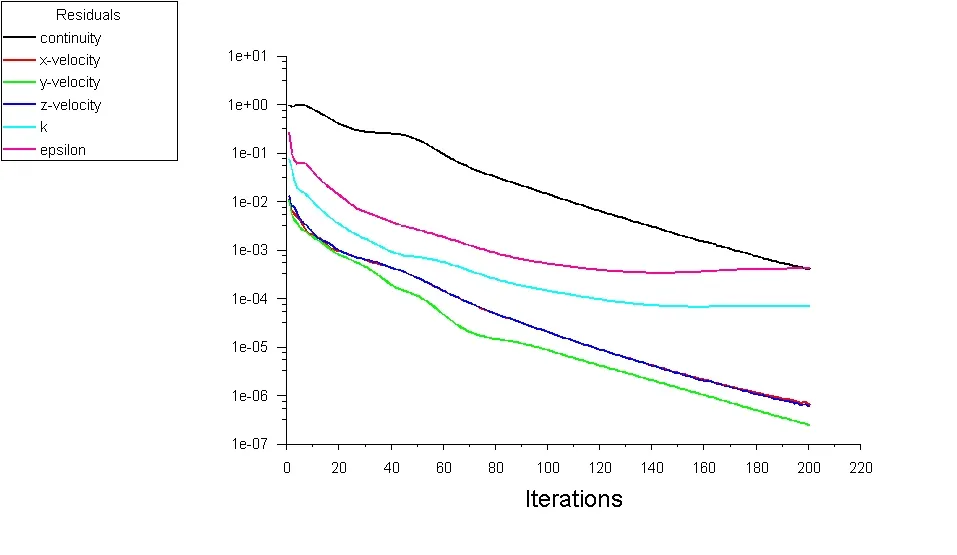
Particle history data:

Vortex swirrling
Particle tracing for 50 particles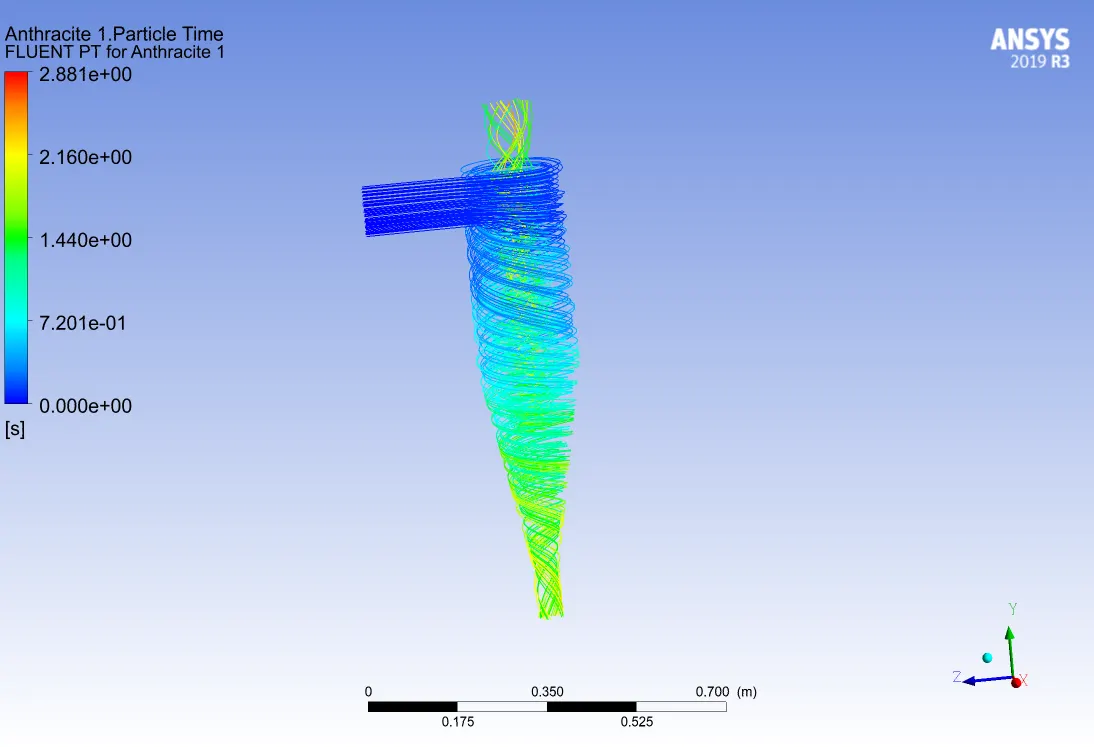
CASE 2(a)
Velocity 1 m/s
particle size: 5 micron
Residuals
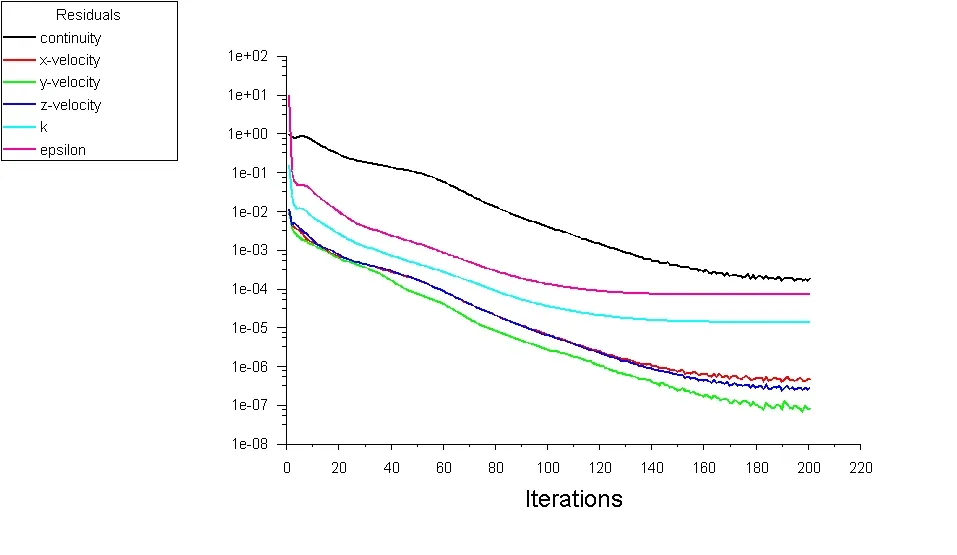
Particle history data

Particle tracing image
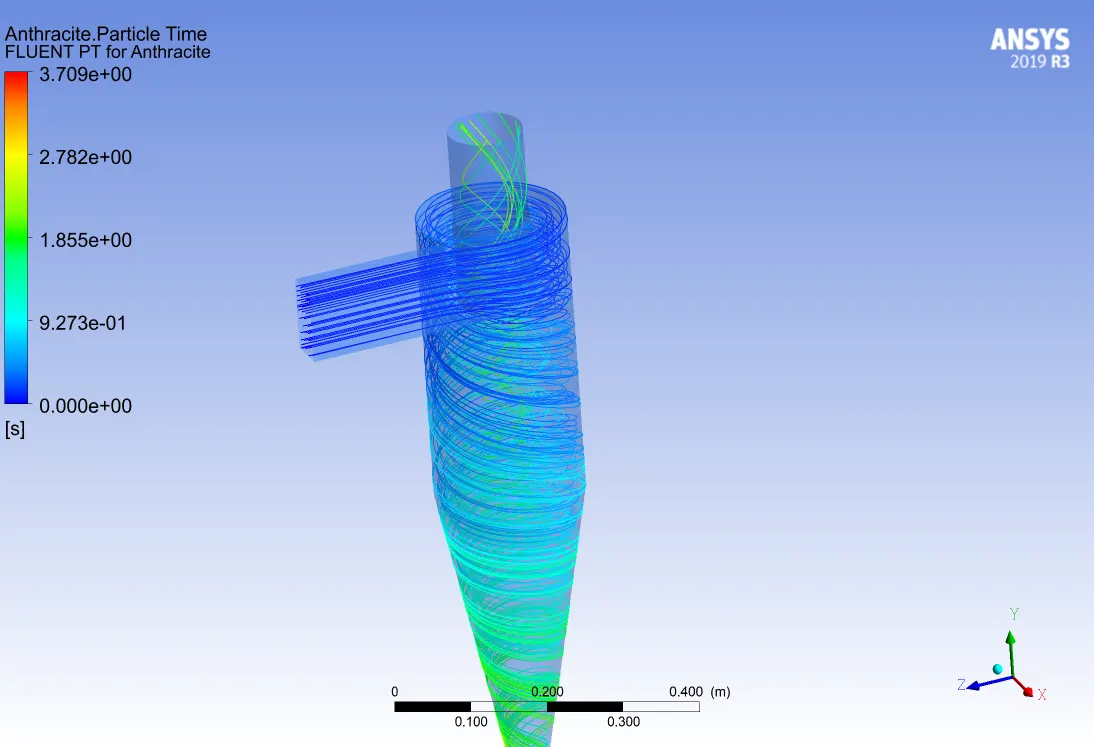
Vortex region
- Case 2 part b is already done as per case 1 part a
Case 2 part 3
particle size 5-micron
velocity 5 m/s
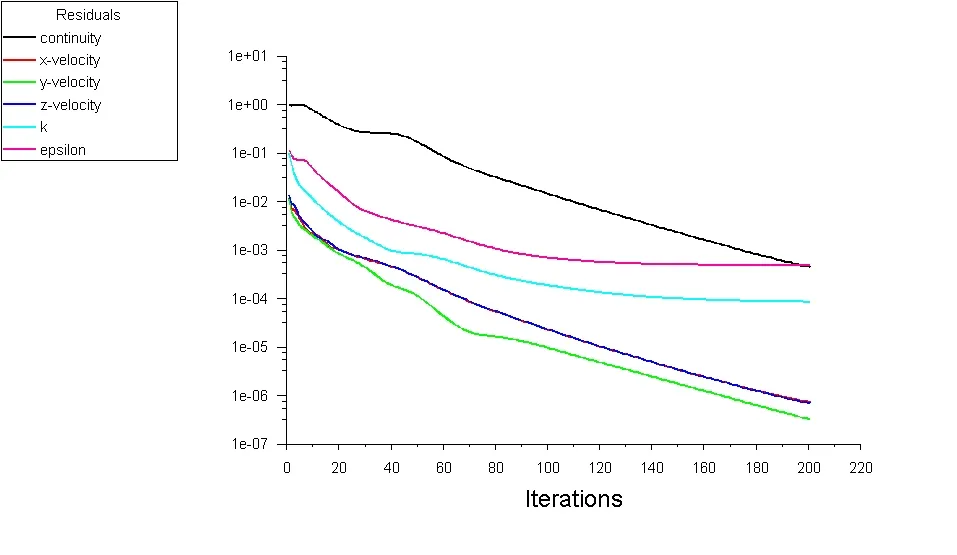
Residuals
Particle tracking data

particle tracing image
vortex shedding image
overall report of all cases

- Far from the result, we can conclude that once we increase the particle size with constant velocity particle trapped will be more as particle sizes are increasing hence efficiency will be increased. cyclone operators are designed for bigger particle size.
- Once you will constant particle size and vary the velocity by increasing the velocity efficiency will be increased. In 4th case, there are 99 incomplete particles.which means the particle has to stop recirculating in the domain due to less inertia or velocity.In this case partially you have to increase to power of blower.
- static pressure decreases radially from wall to center, and a negative pressure zone appears in the center, light particle contains low inertia that is why due to low mass they will travel upward direction. The cyclone separator efficiency depends on particle size, particle velocity and shape of the cyclone.
Learning outcome
- DPM modeling
- partcile tracing by lagrange method
- Different case studies of cyclone seperator
- Various emeprcial models.
Reference paper: https://www.researchgate.net/publication/232747389_A_CFD_Study_on_the_Prediction_of_Cyclone_Collection_Efficiency