Challenge on Combustion
I. Introduction :
In this project a combustion simulation on a combustor model is performed, using Methane-air mixture by Eddy dissipation model using Ansys Fluent. The rate of reaction is controlled by turbulent mixing, after which mass fractions of different species are captured including NOx emisions & soot formation & plotted for different locations in the model.
It is experimented that addition of Water in Fuel inlet or air inlet can lead to reduction in formation of harmful emmision gasses. A parametric study is created for the second part where the effect of addition of water content in the fuel from 5% to 30% is observed on the formation of Nox and soot. It is verified that the results of this project match the experimental expectations of reducing the formation of Nox and Soot by addition of water, and how different amount of it affects the model.
II. Objective
1. Perform Combustion simulation & plot variation of mass fractions of different species.
2. Study the effects of addition of water content (5% - 30%) on the formation of Nox and soot.
III. Geometry Preparation in Spaceclaim
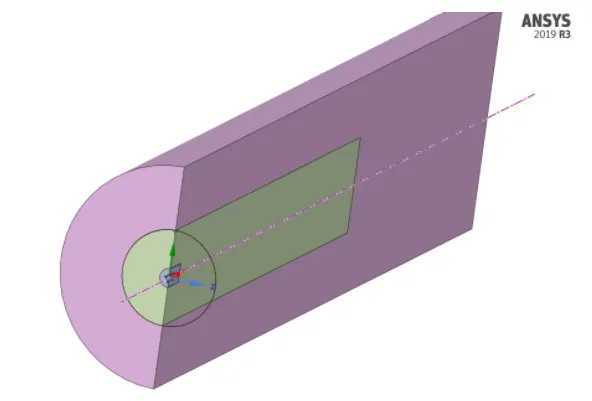
This is Half cross-section of the 3D combuster model, there is one more small circular body inside the green body which is the fuel injector and the upper part is treated as the air inlet.
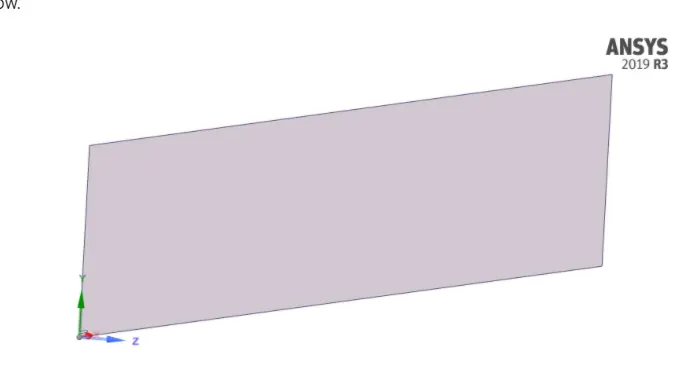
This geometry is Converted to 2D and solved under Axisymmetric condition to save computational time.
2D converted model below.
IV. Meshing
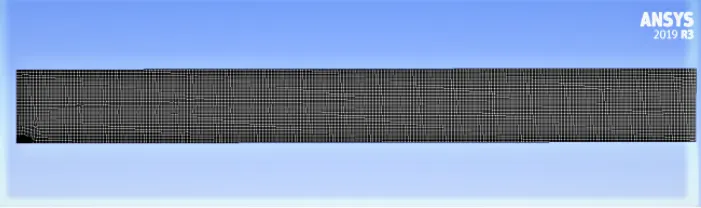
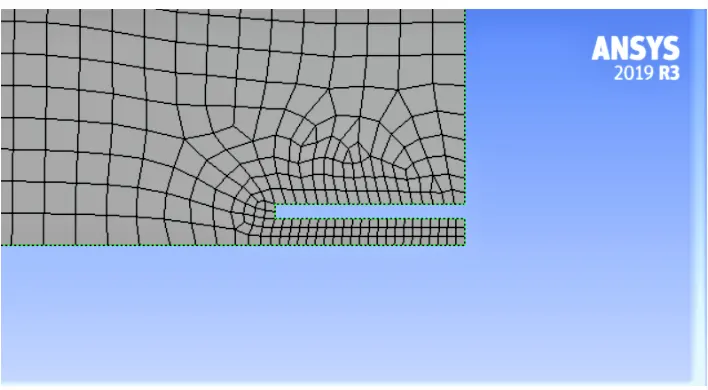
Element size 2 mm with 17183 elements & 17625 nodes. The mesh method is kept default as per Geometry.
Close view near the Fuel Inlet
V. Case Set - up :
V Part 1 :
1. Solver Type : Pressure Based,
2. Velocity Formulation : Absolute
3. Steady state
4. 2D space : Axisymmetric
5. Energy Eqn On
6. Viscous model : K-epsilon 2 eqn (std)
7. Species Model : Species Transport
Reaction : Volumetric
Mixture Properties : Methane - air
Turbulence - chemistry Interaction : Eddy Dissipation
Inlet Diffusion & Diffusion Energy source checked.
8. B.C
Air- inlet : Velocity Inlet : V_mag - 0.5 m/s
Species : O2 : 0.21 - Mole Fractions
Fuel Inlet : Velocity Inlet : V_mag - 80 m/s
Species : CH4 : 1
Pressure Outlet : Standard
9. Coupled Scheme & Hybrid initialization
10. Nox & one step Soot model Activate
V Part 2 :
1. Solver Type : Pressure Based,
2. Velocity Formulation : Absolute
3. Steady state
4. 2D space : Axisymmetric
5. Energy Eqn On 5. Viscous model : K-epsilon 2 eqn (std)
6. Species Model : Species Transport
Reaction : Volumetric
Mixture Properties : Methane - air - 2step
Turbulence - chemistry Interaction : Eddy Dissipation
Inlet Diffusion & Diffusion Energy source checked.
7. B.C
Air- inlet : Velocity Inlet : V_mag - 0.5 m/s
Species : O2 : 0.21 - Mole Fractions
Fuel Inlet : Velocity Inlet : V_mag - 80 m/s
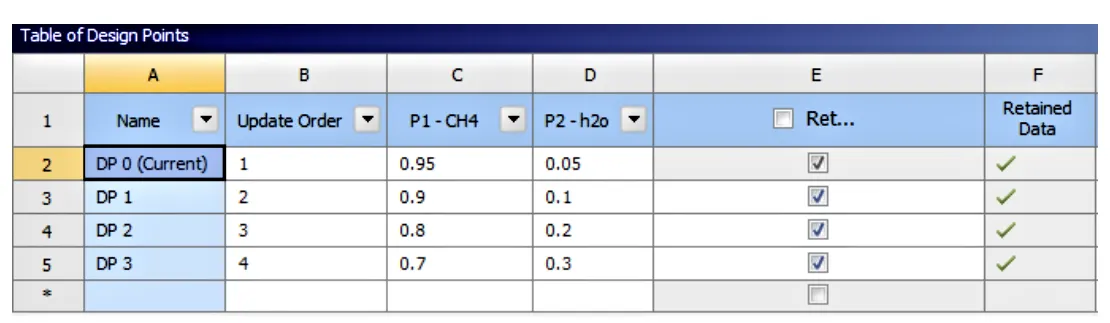
Species : Parametric ( CH4 + H2o (5% - 30%)) - Mole fractions
Pressure Outlet : Standard
8. Coupled Scheme & Hybrid initialization
9. Nox & one step Soot model Activate
VI. Solution & Post Processing :
In this part, The solution & Results for Part 1 i.e without any water content in the mixture is shown and the 2nd part with maximum 30% water content for only soot and Nox is shown. The results for 0.5% - 20 % along with others are tabulated and their comparison charts are shown at the end.
VI.A Part 1 : Mixture Methane - Air
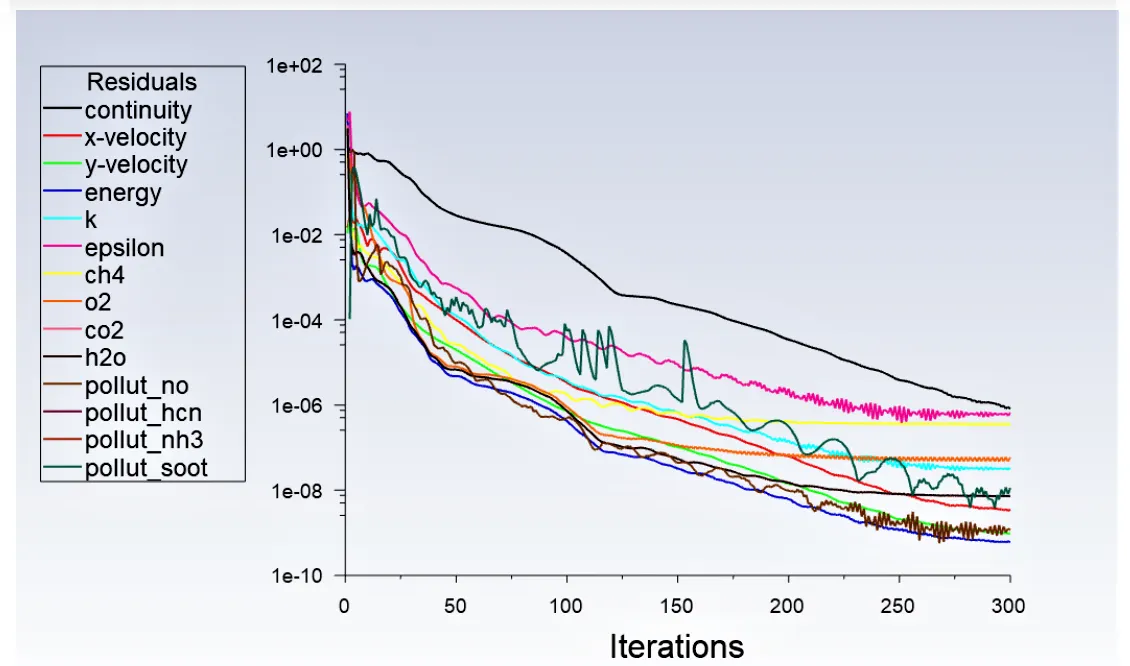
Residual : The solution converges at 300 iterations.
Species :
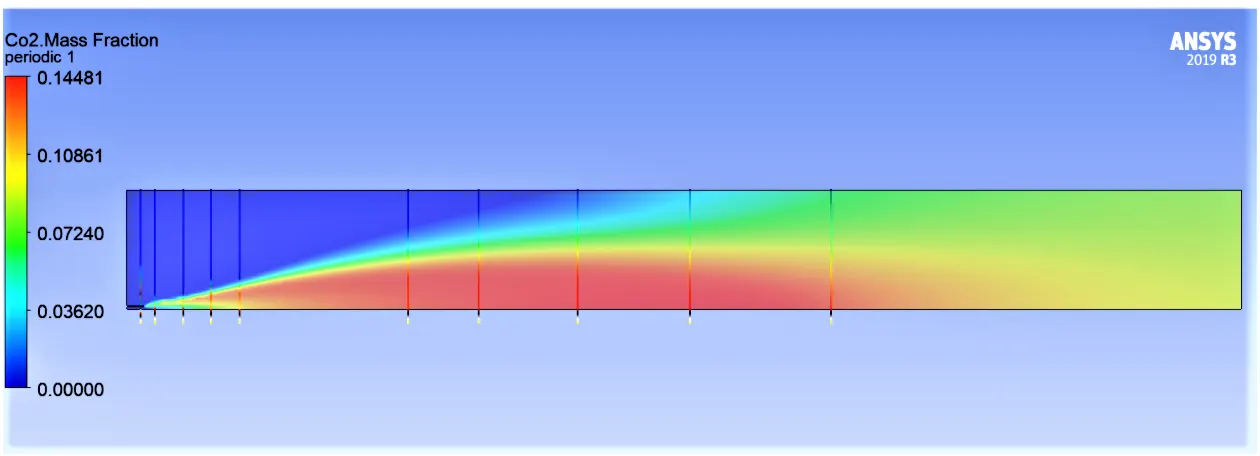
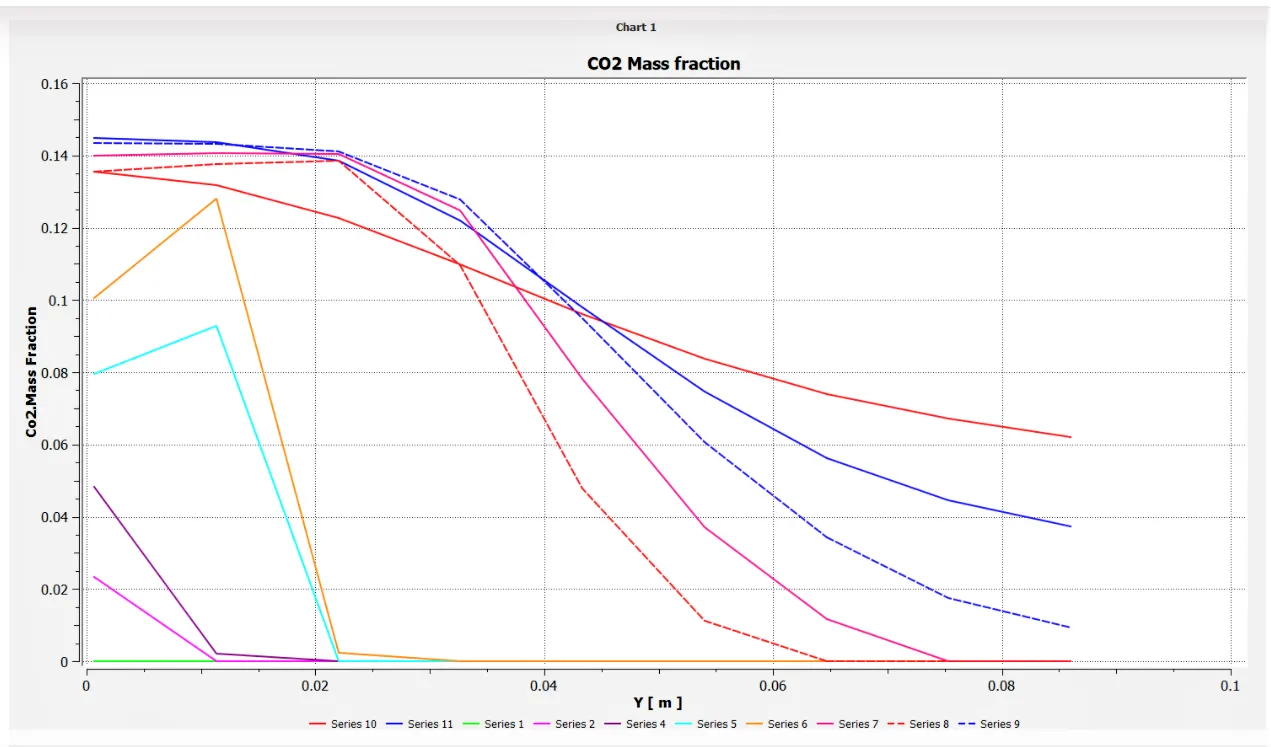
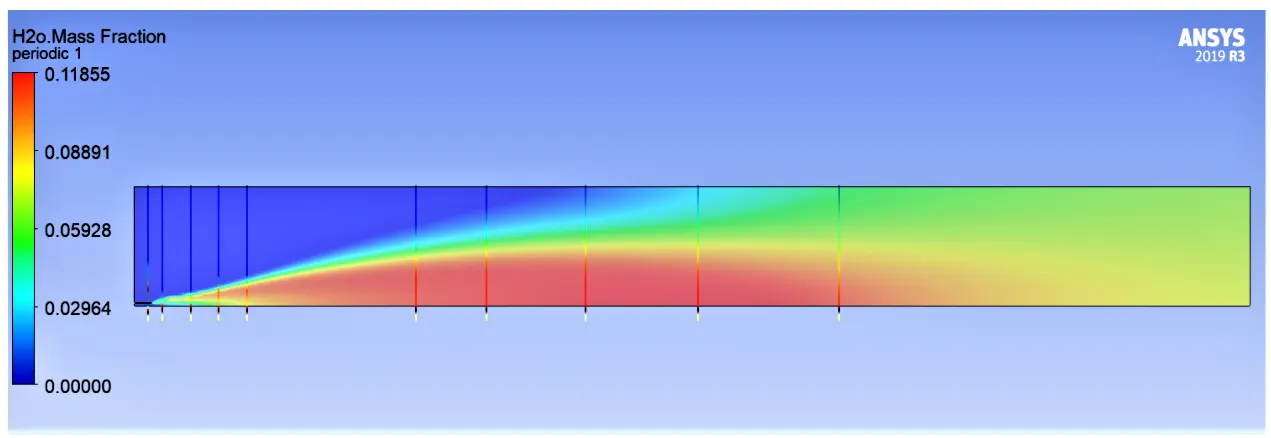
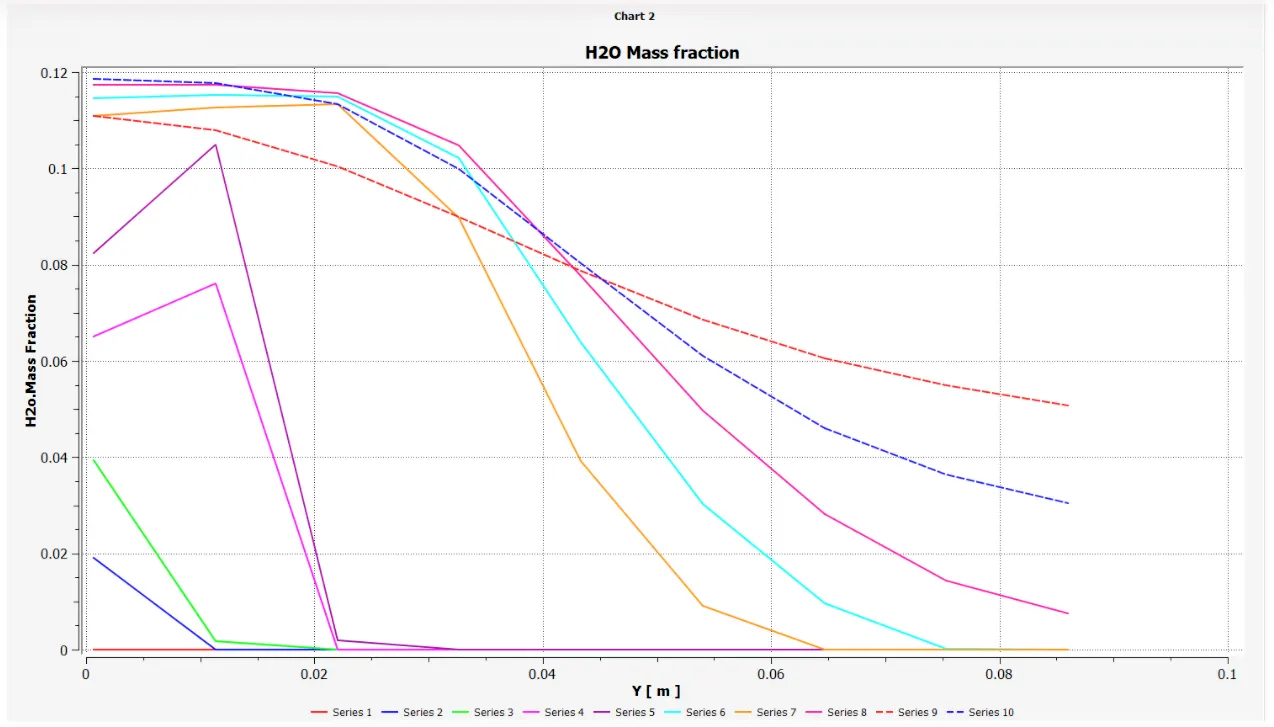
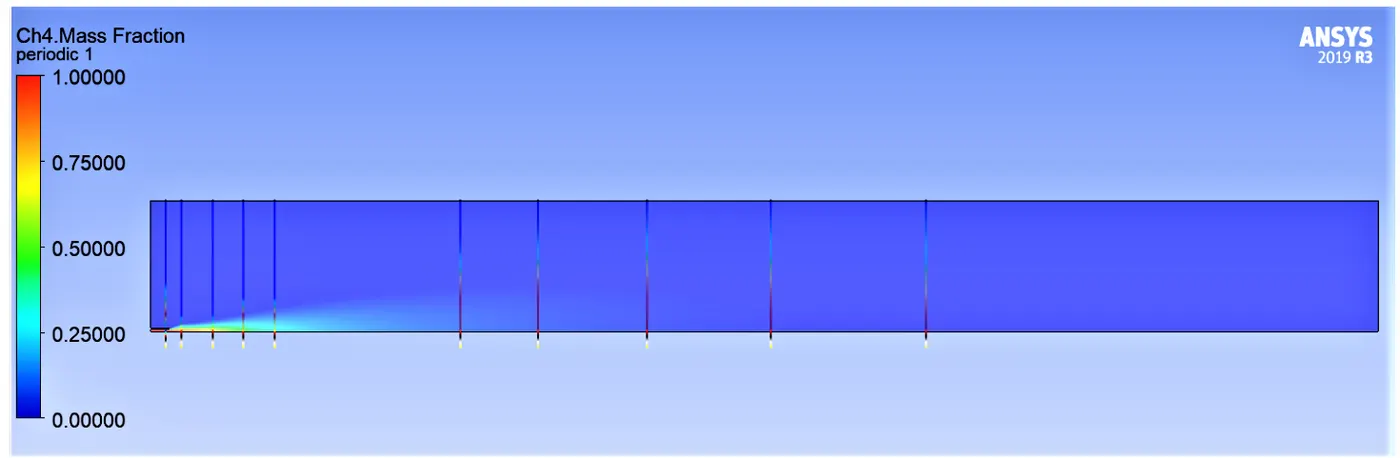
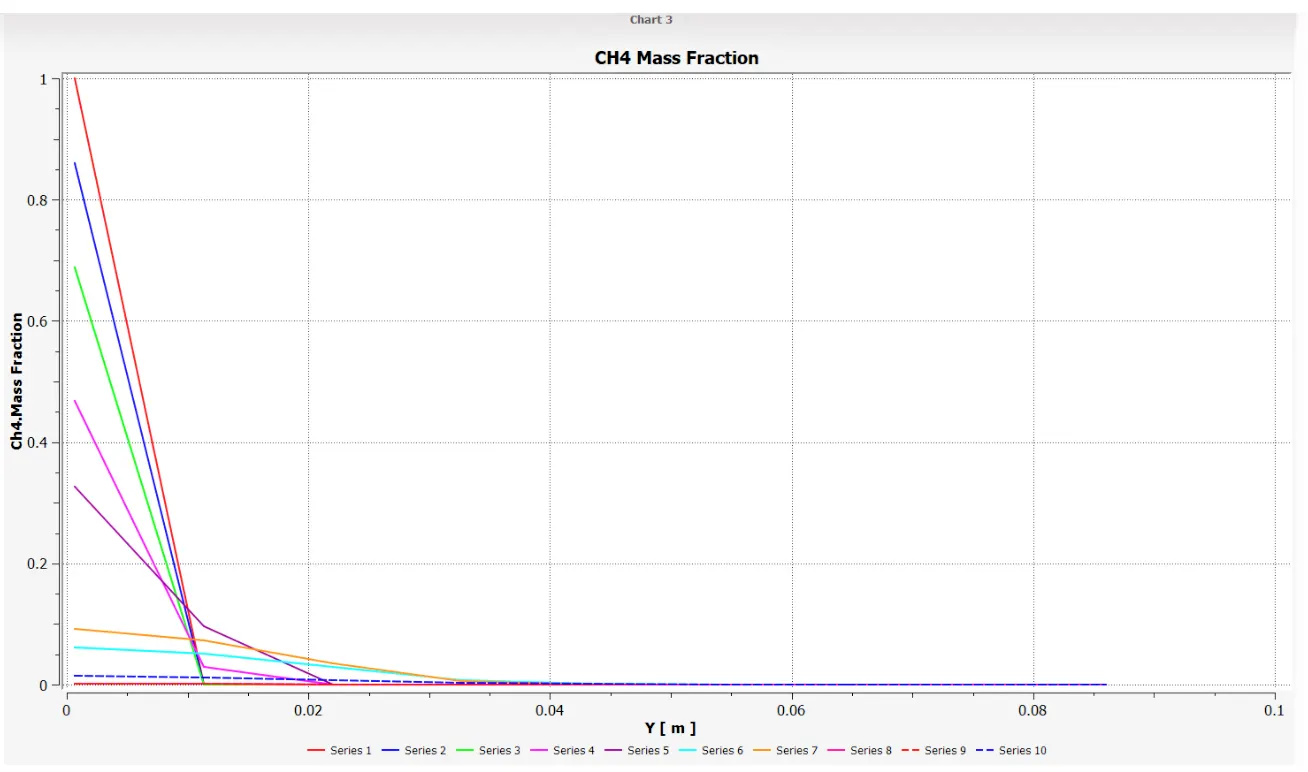
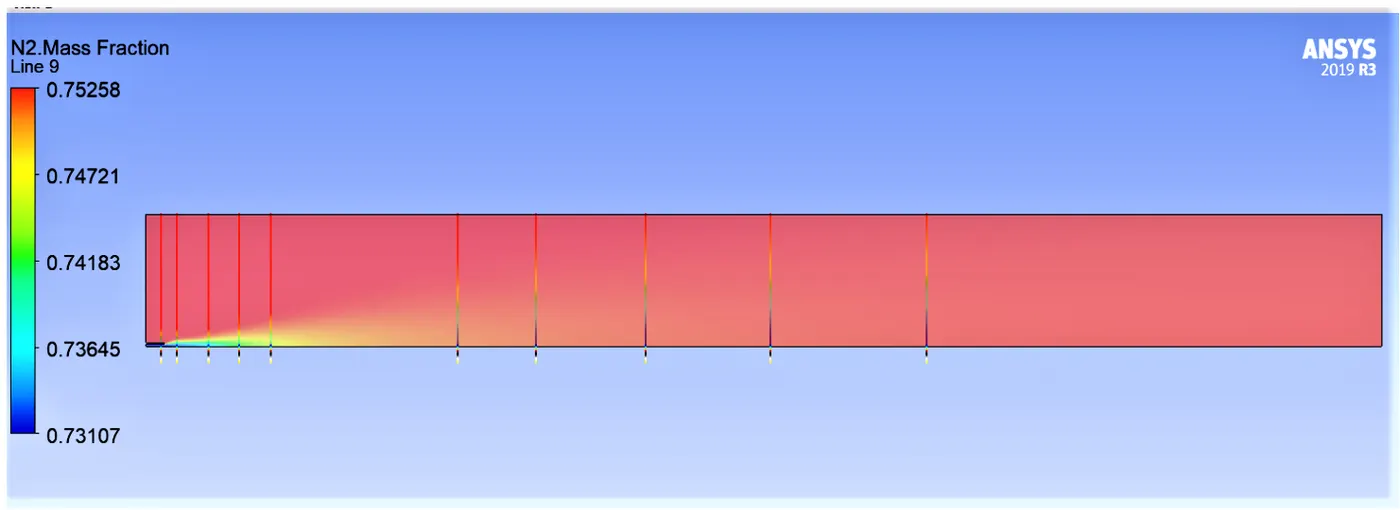
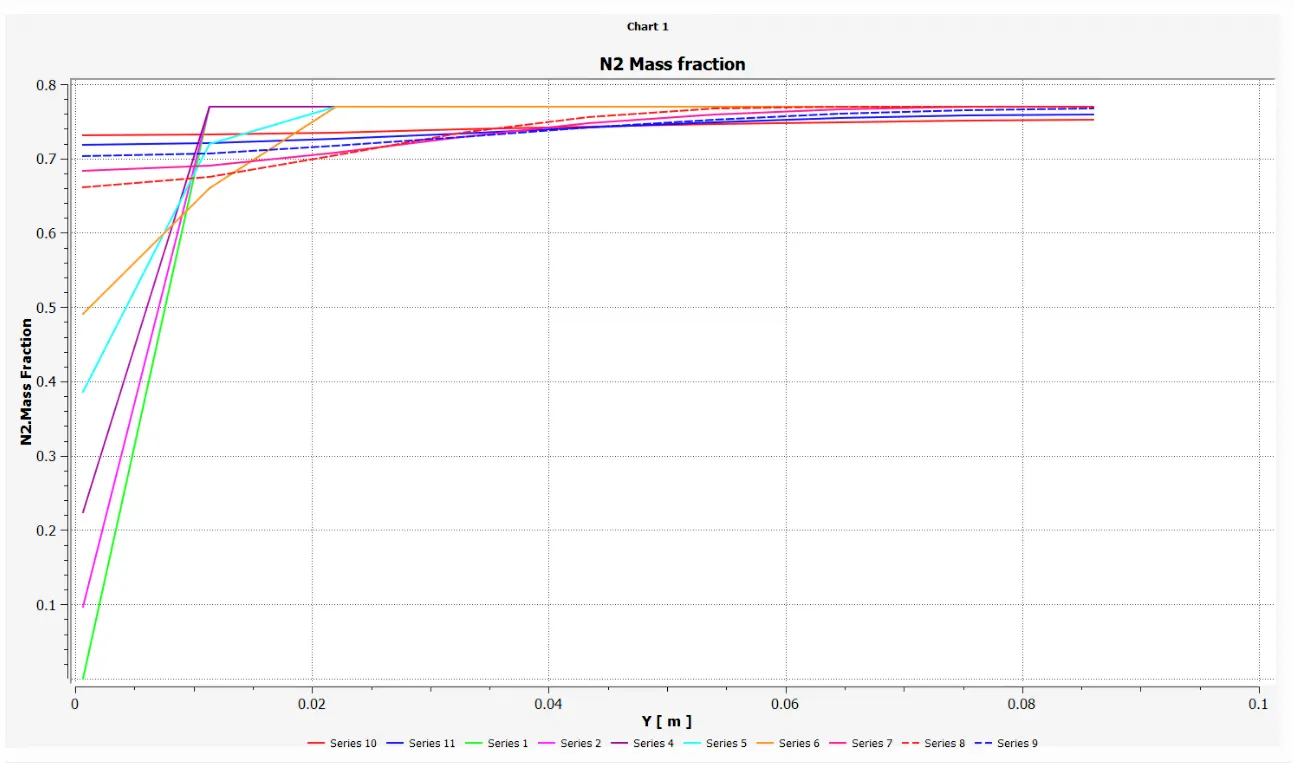
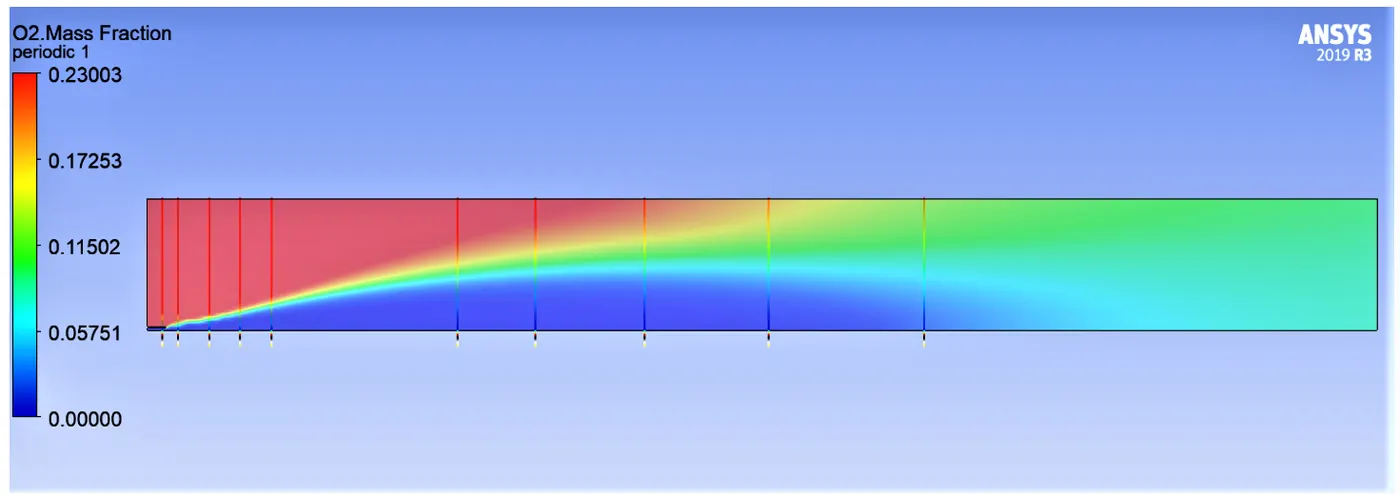
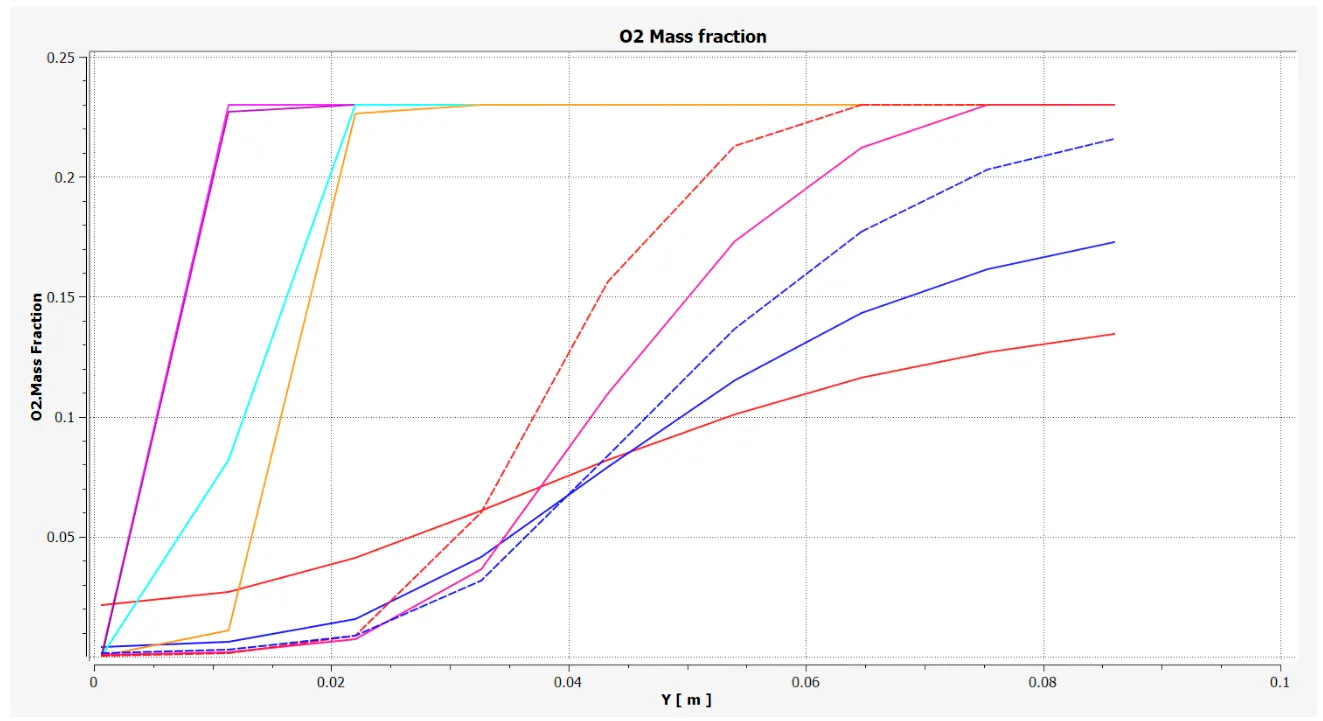
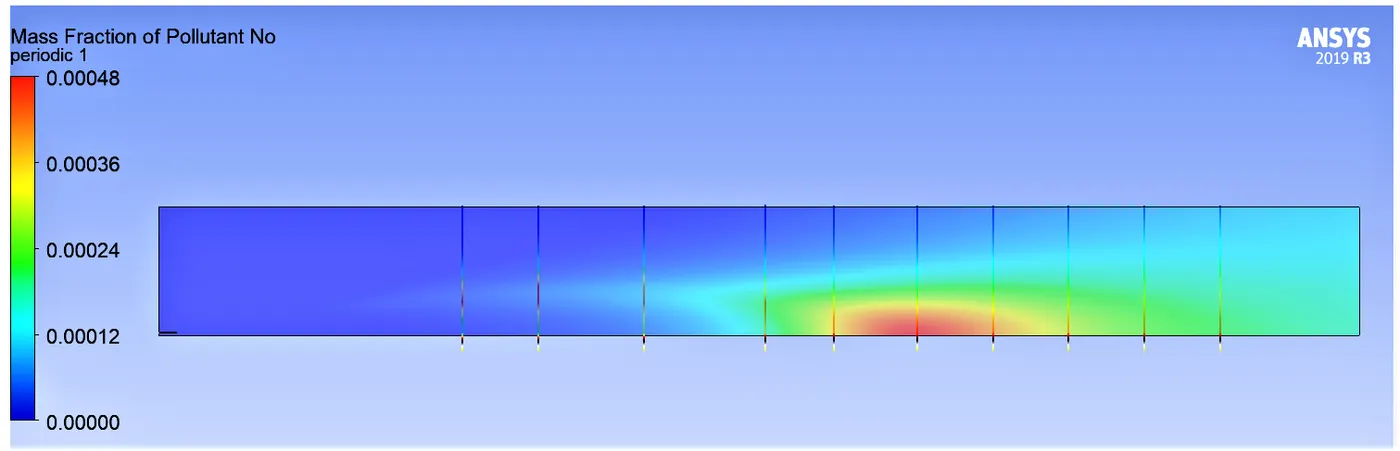
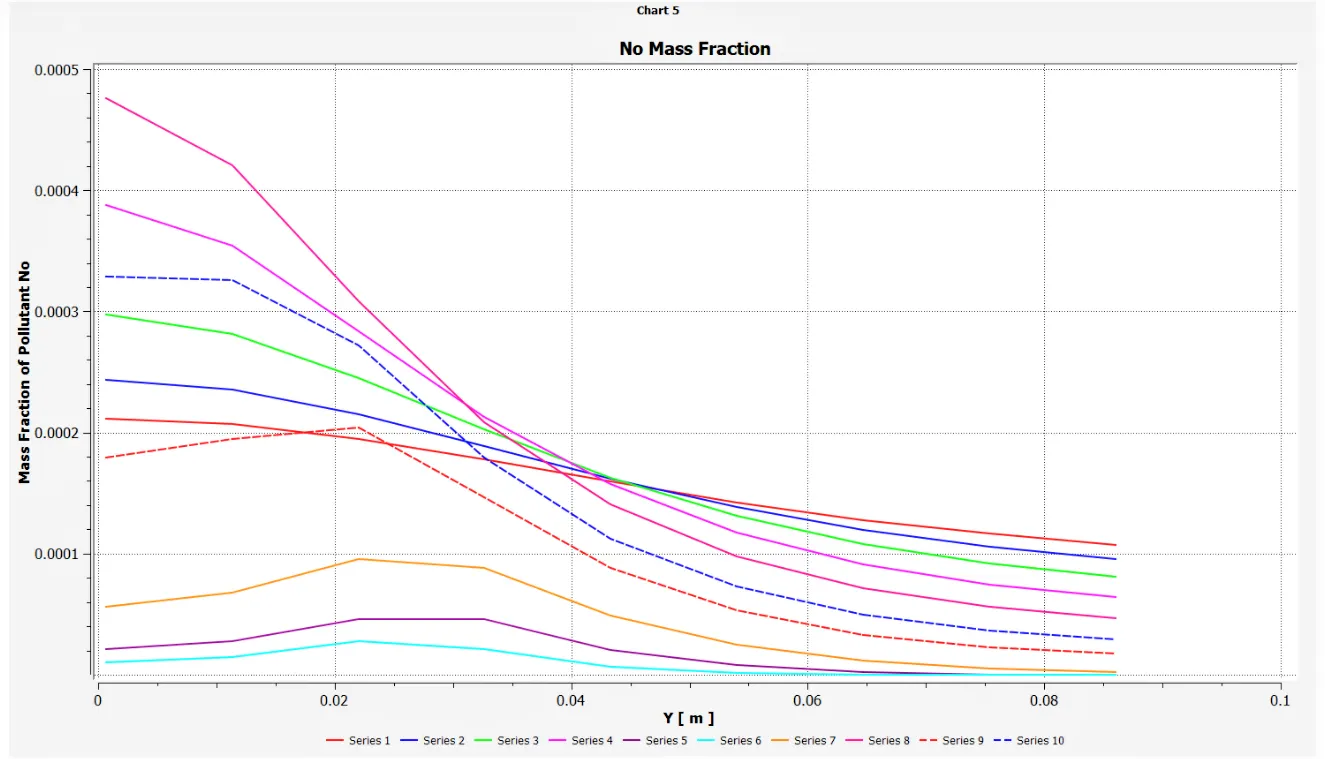
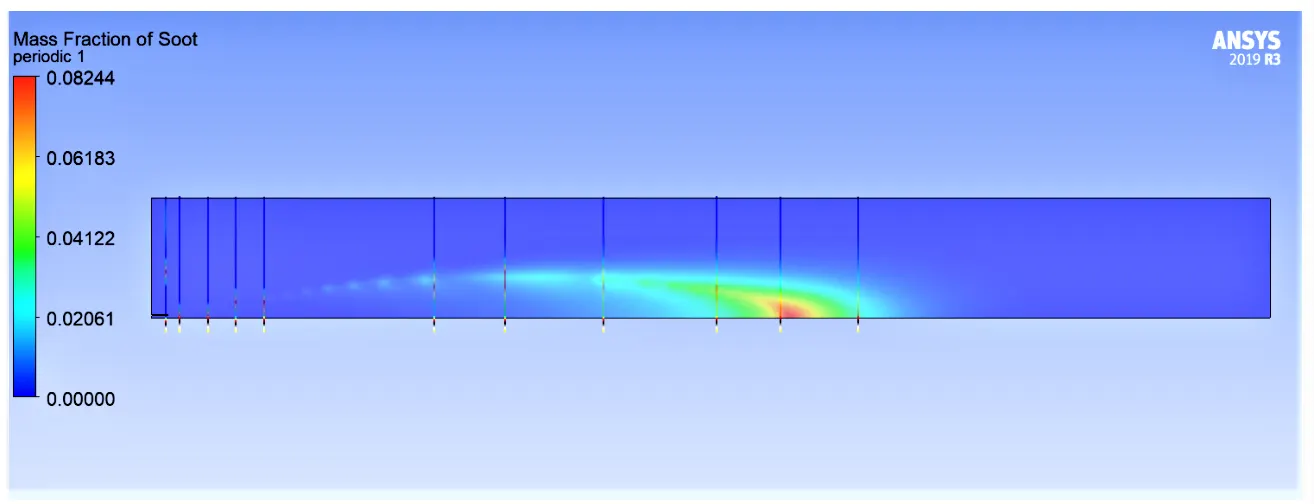
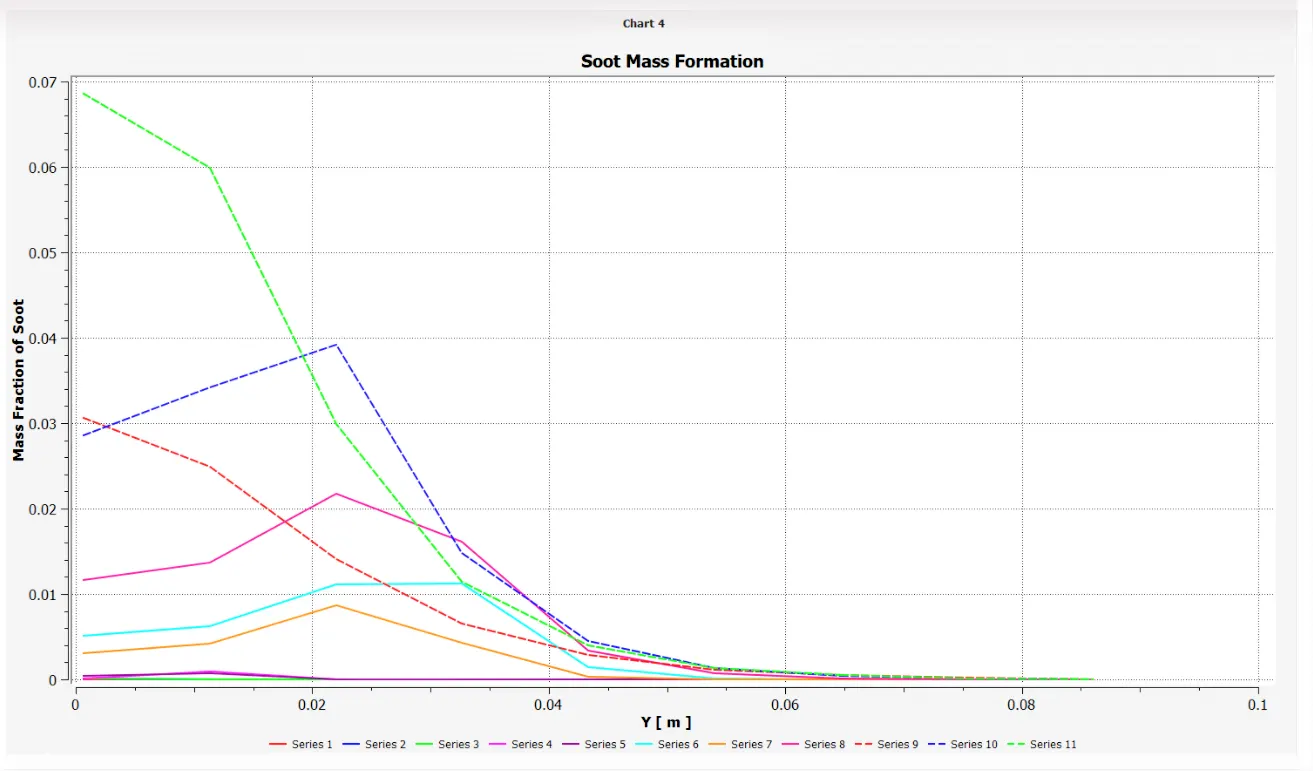
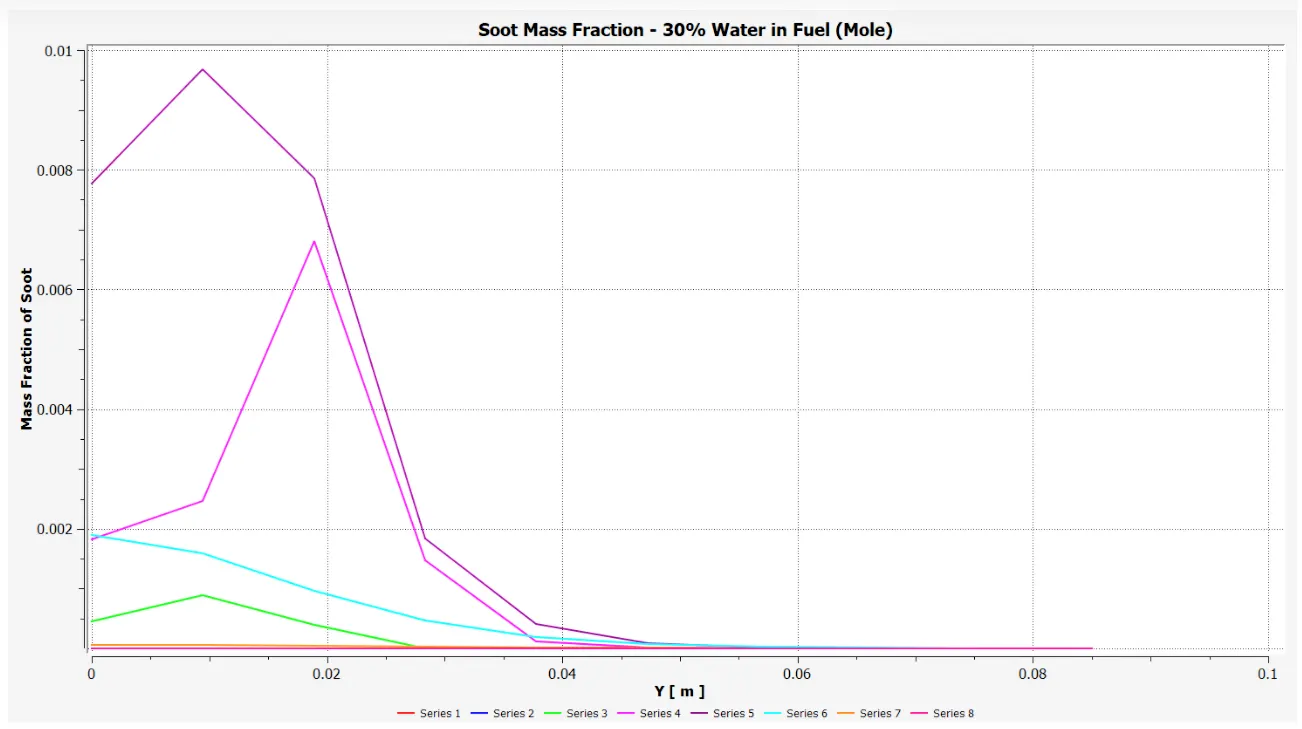
Variations of mass fraction of different species using line probes. The line probes begin from botton to top in Y(m) direction and their variation can be observed in plots below.
CO2 :
H2O :
CH4 :
N2 :
O2 :
Nox : NO
Soot :
VI.B Part 2 : Mixture Methane - Air - 2 step (30% water content)
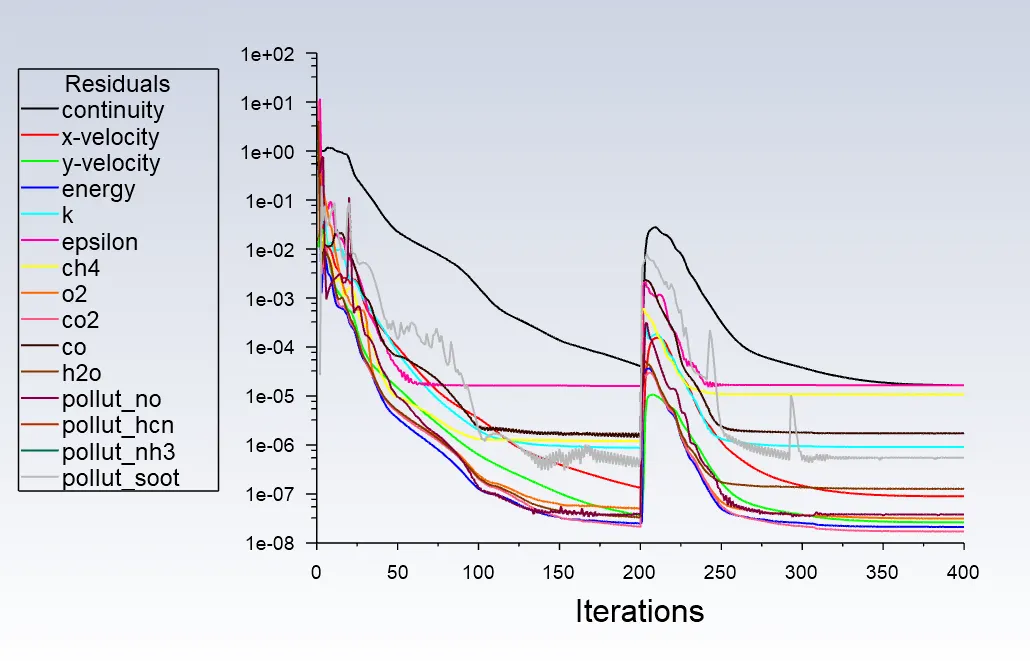
Residual :
The solution converges at 350-360 iterations.
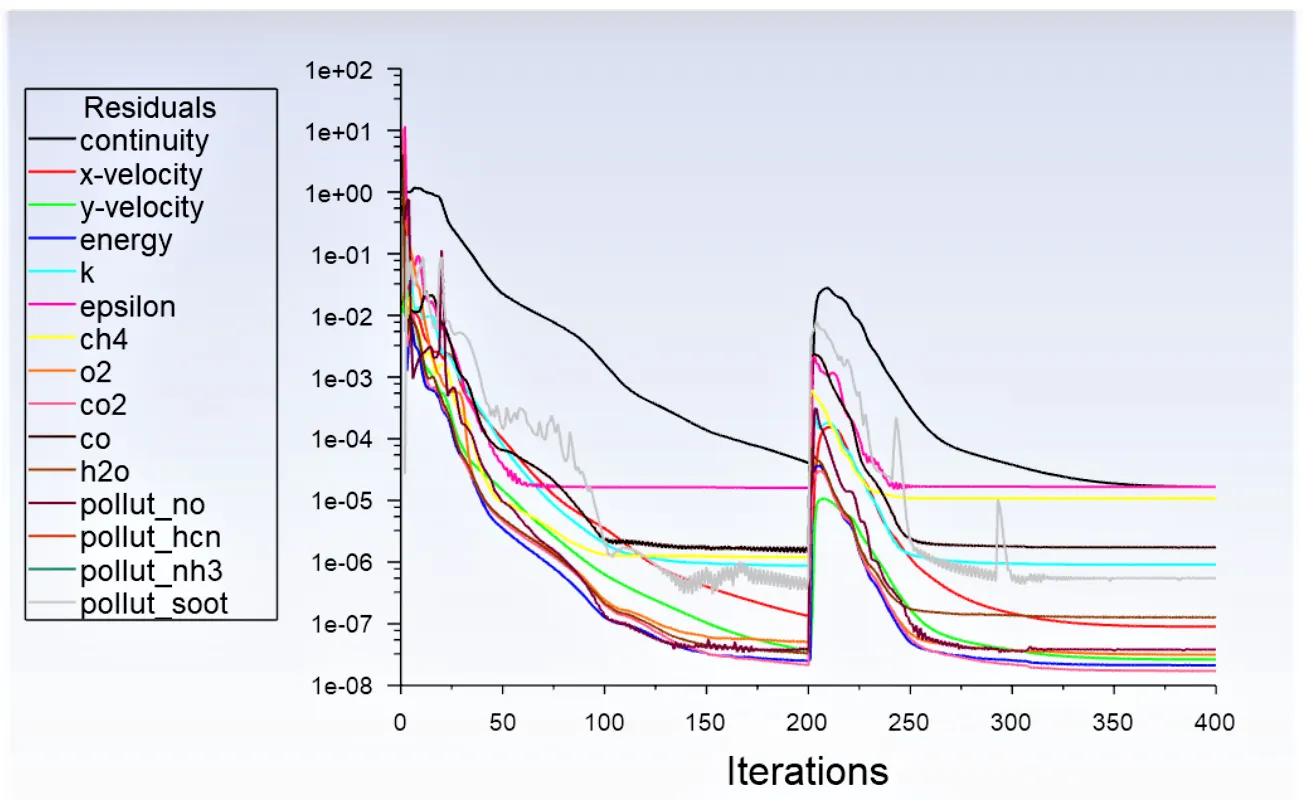
Effect of 30% Water content in Fuel on Formation of Soot & Nox
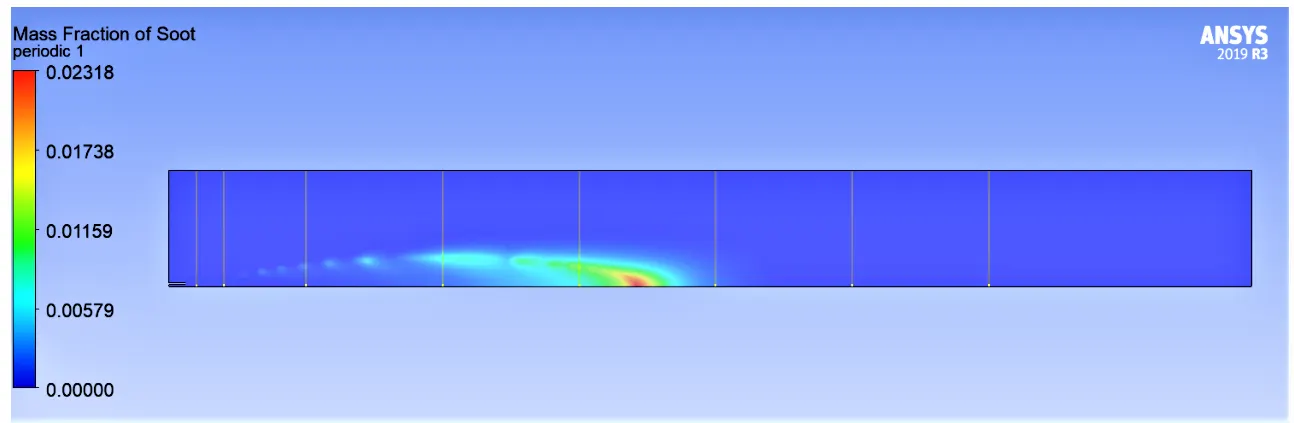
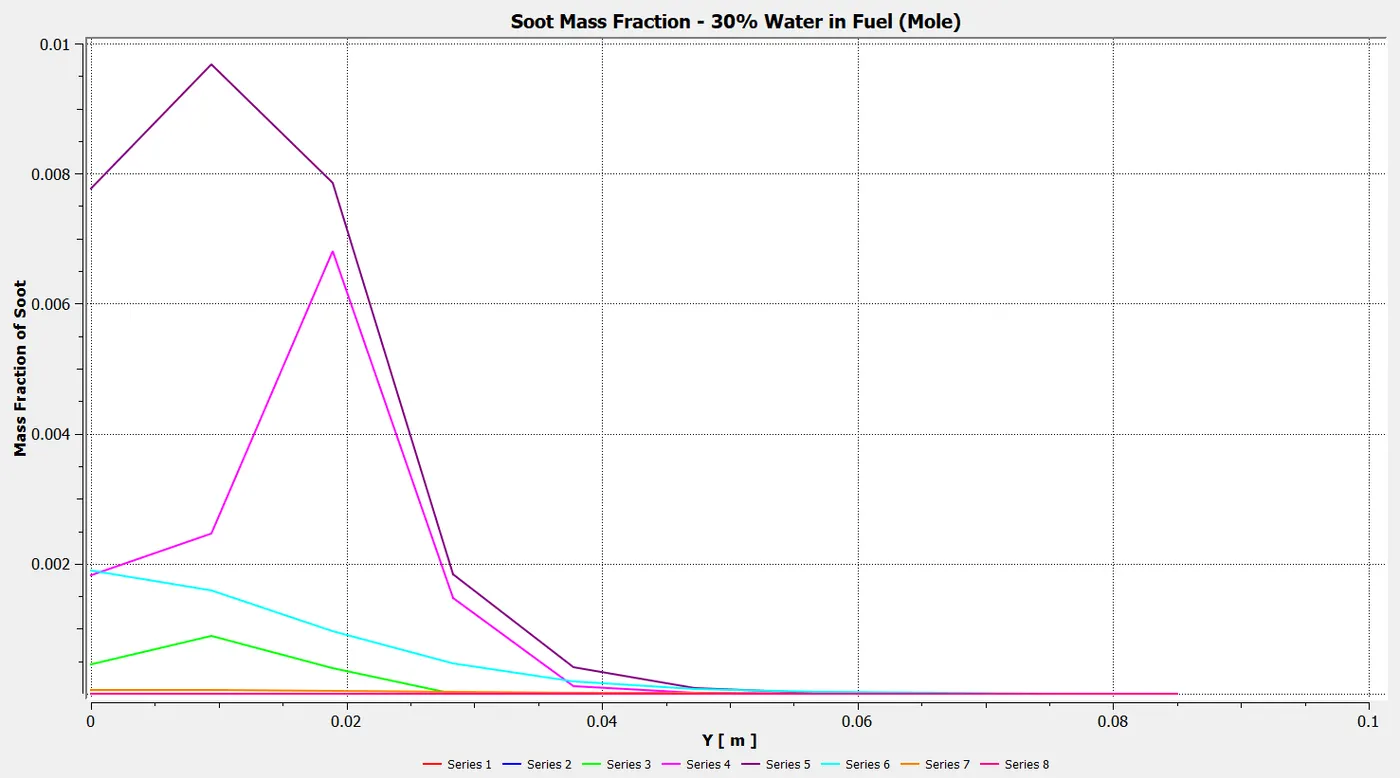
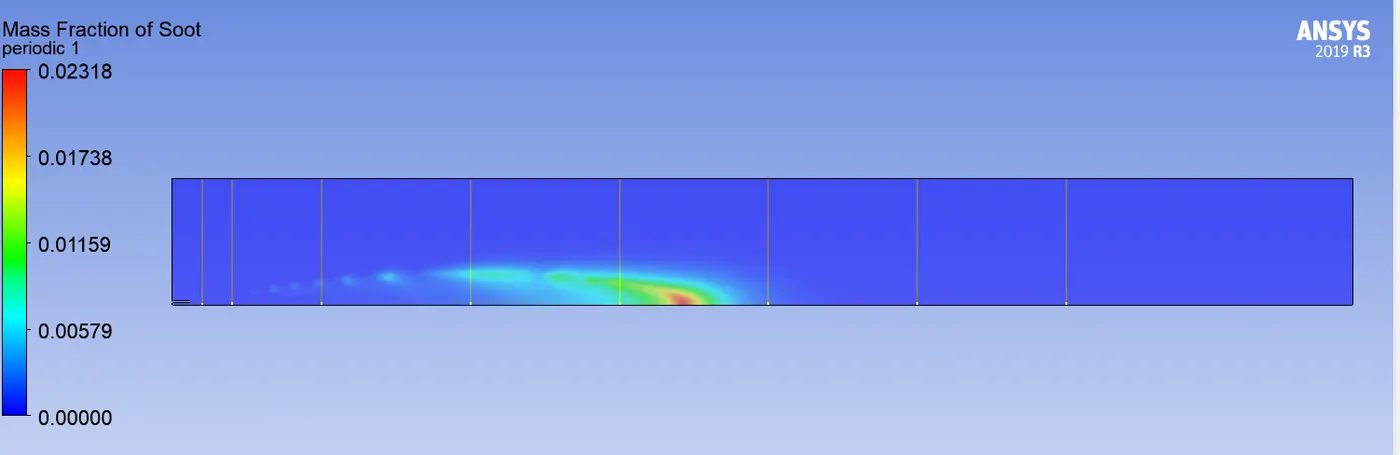
Soot :
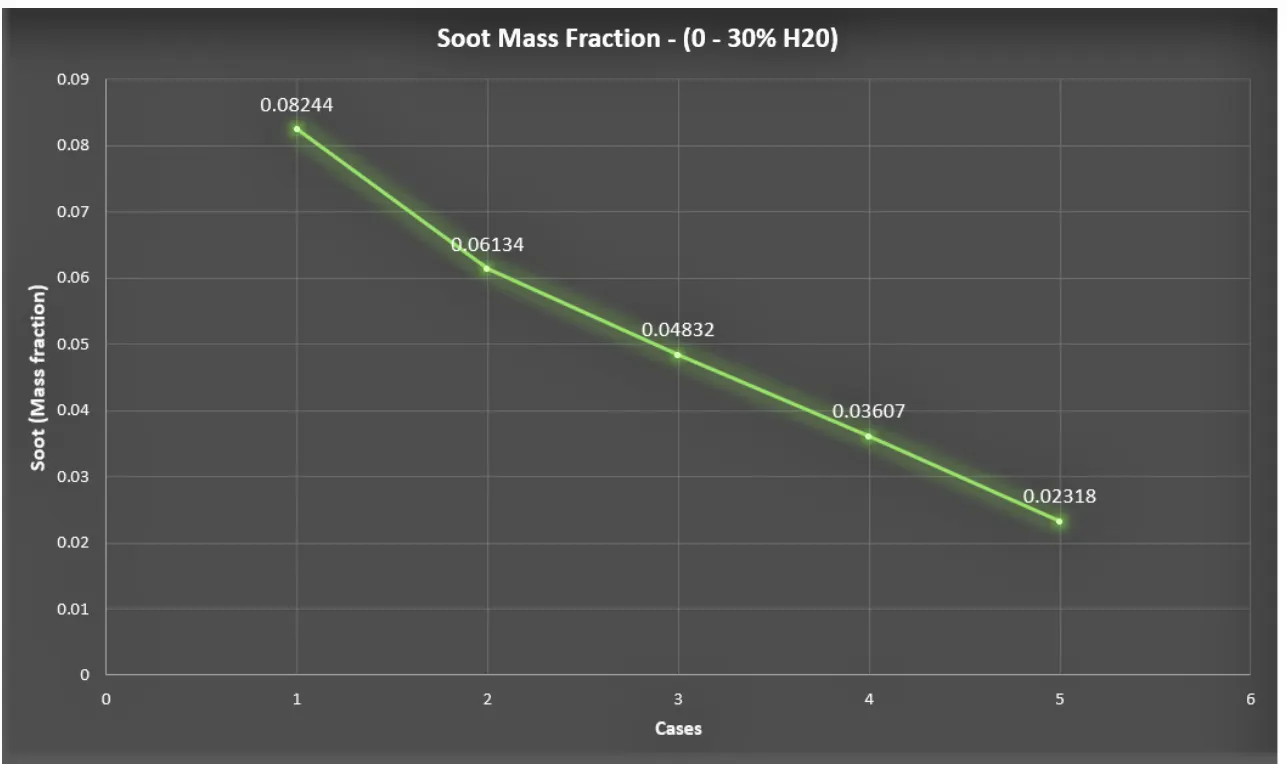
As observed from part 1, the mass fraction of Soot is 0.08244 and now with addition of H2o the mass fraction of Soot decreases to 0.02318 which means less Soot is formed. Below in tabulated values section the values of all mass fractions of soot for all cases is given .
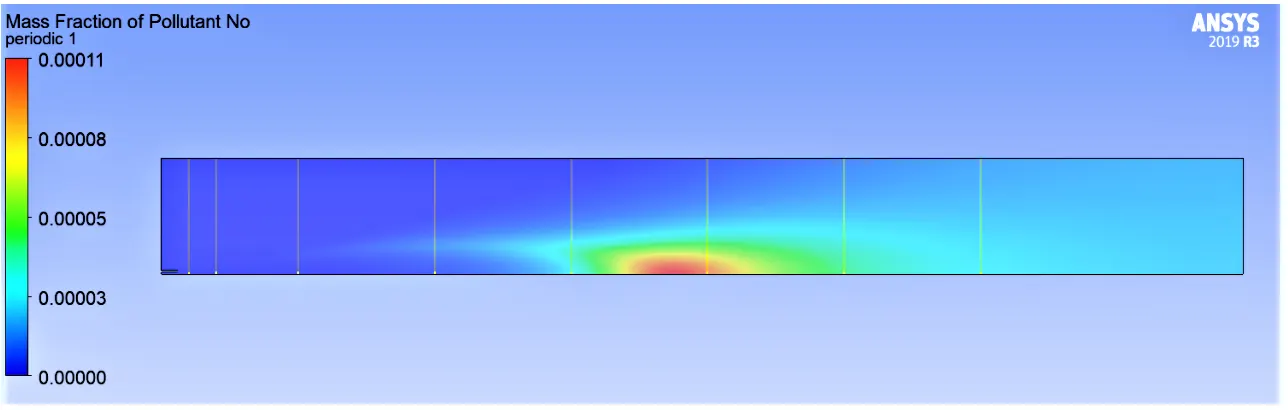
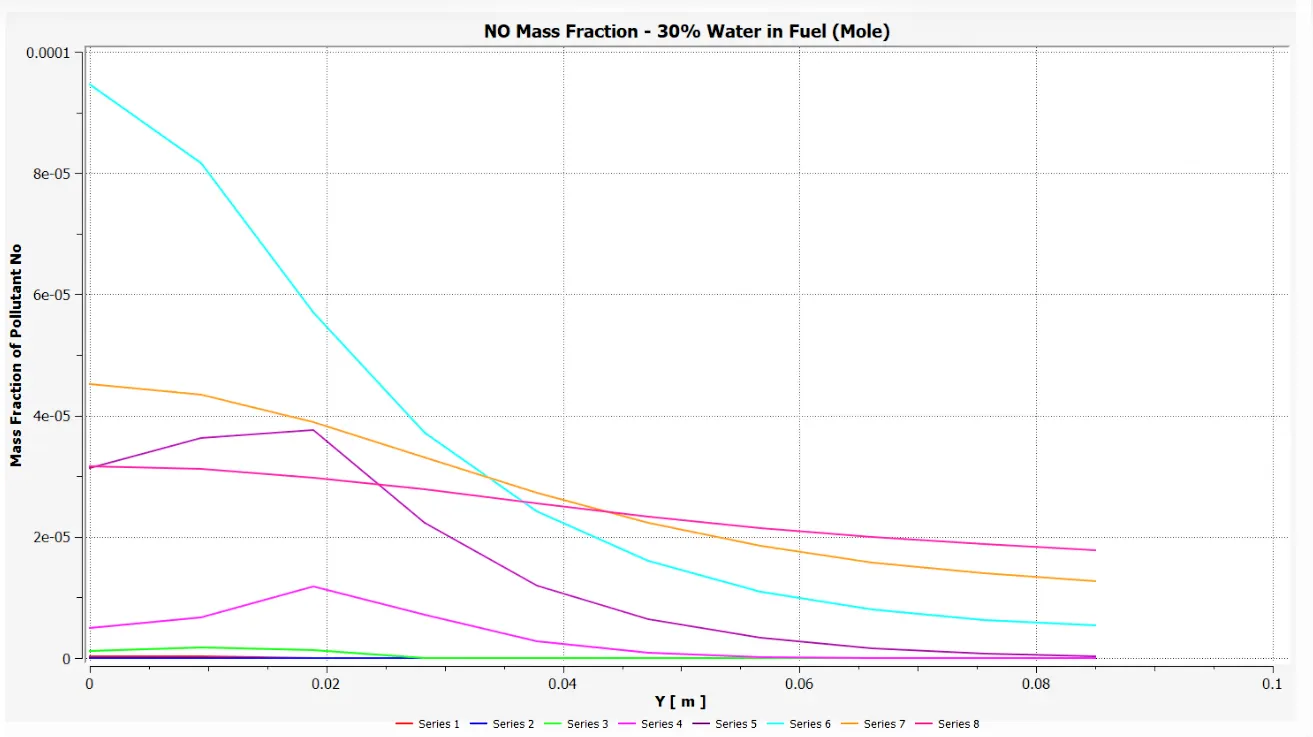
Nox : No
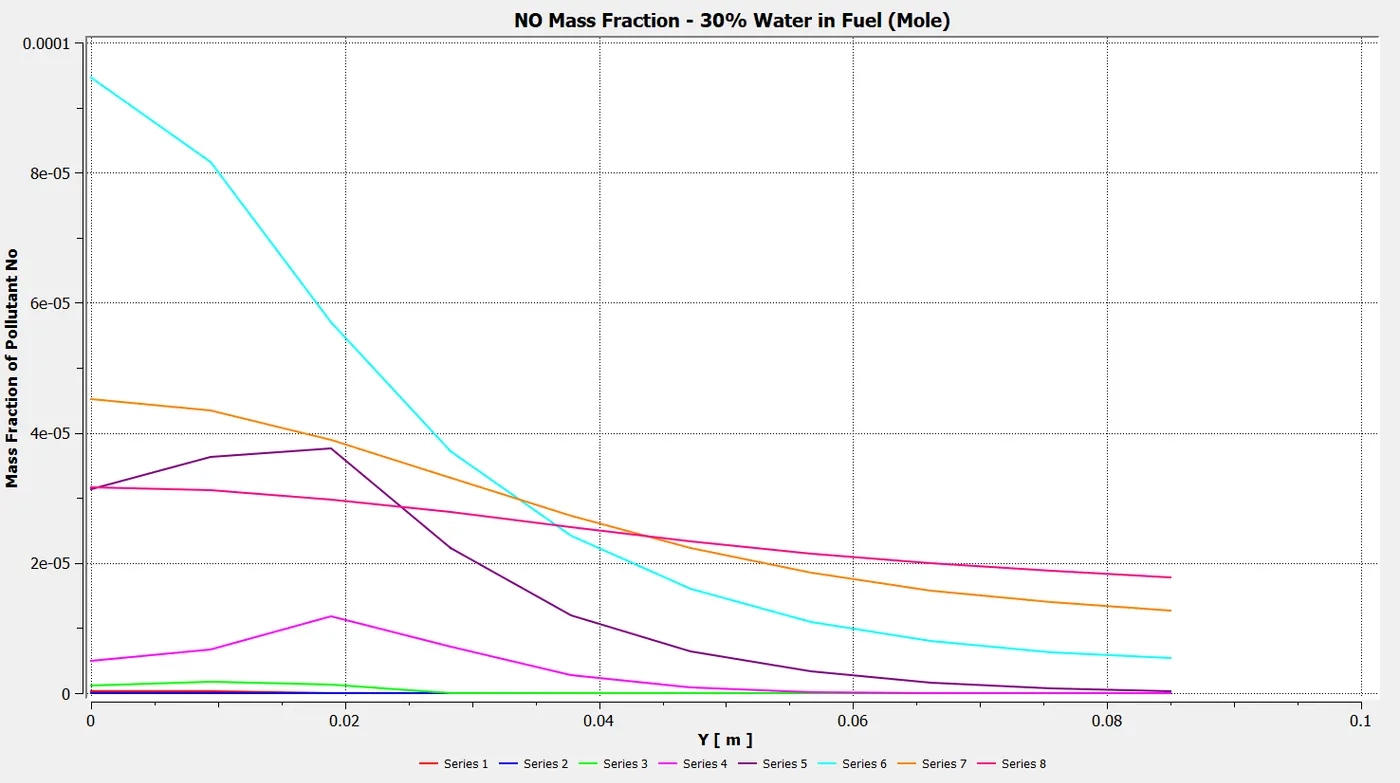
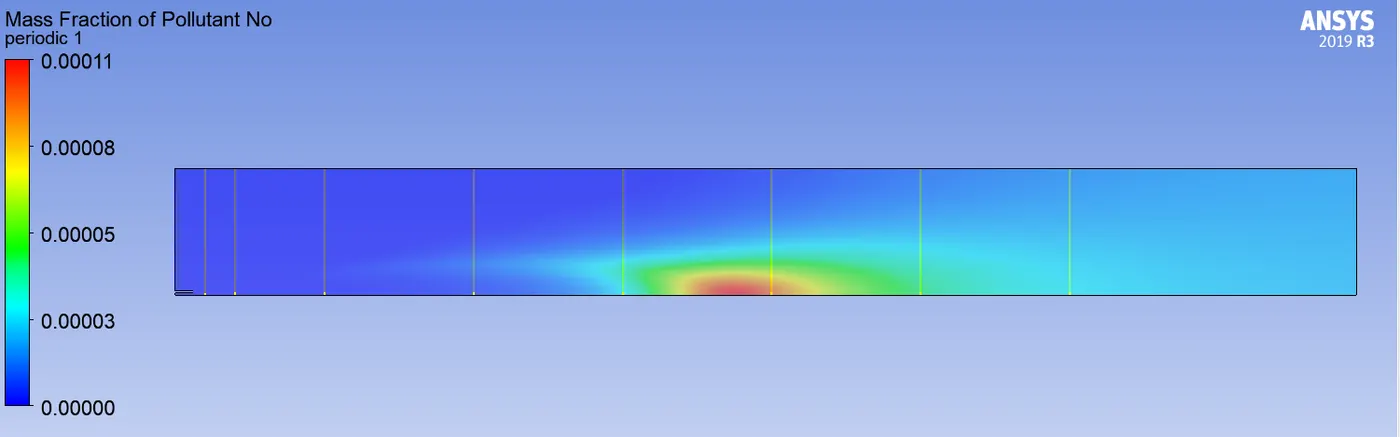
As observed from part 1, the mass fraction of No is 0.00048 and now with addition of H2o the mass fraction of NO decreases to 0.00011 which means less No is formed. Below in tabulated values section the values of all mass fractions of soot for all cases is given .
VII. Temperature Plots for Part 1 & Part 2 :
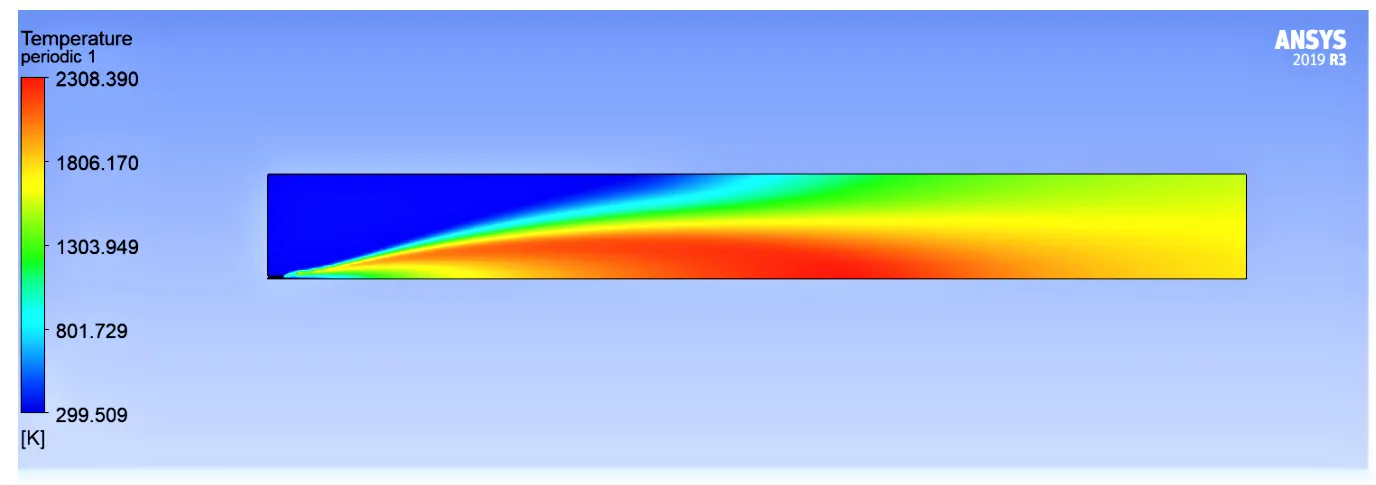
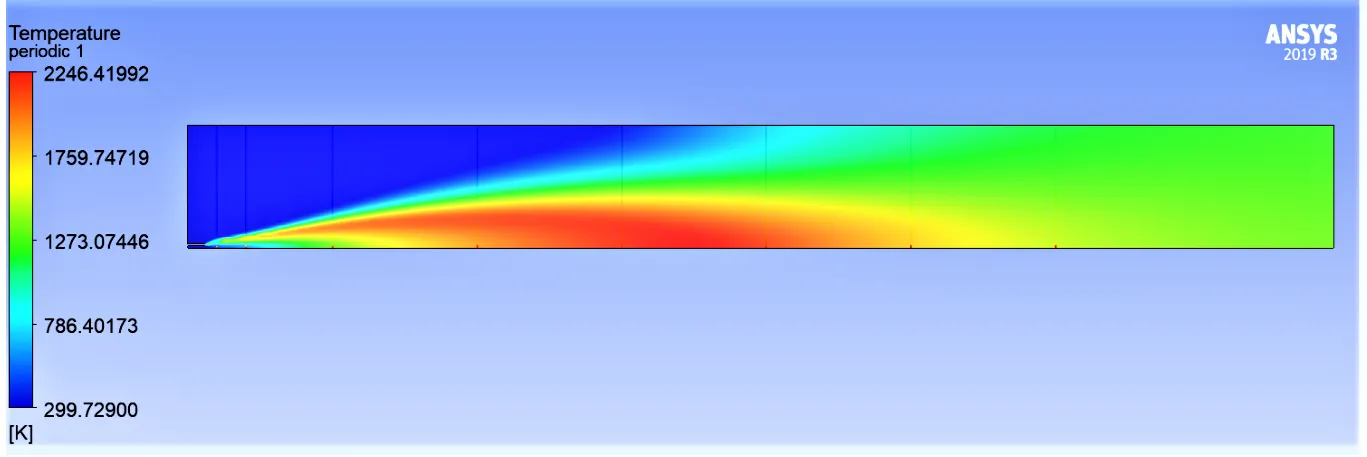
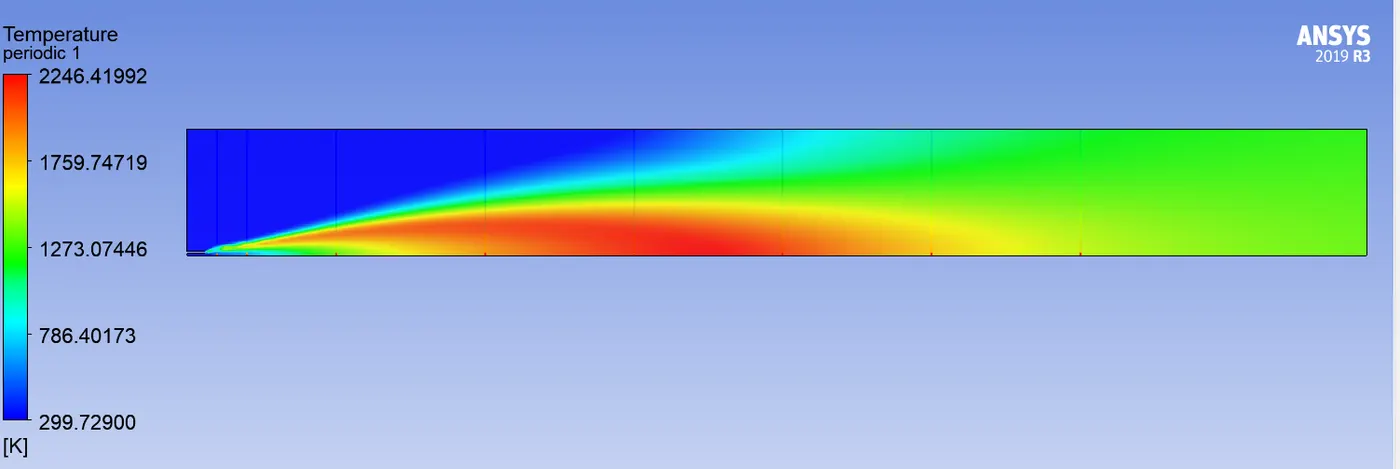
Observation of Temperature difference in Combuster model Without and with water content (30%)
Part 1 :
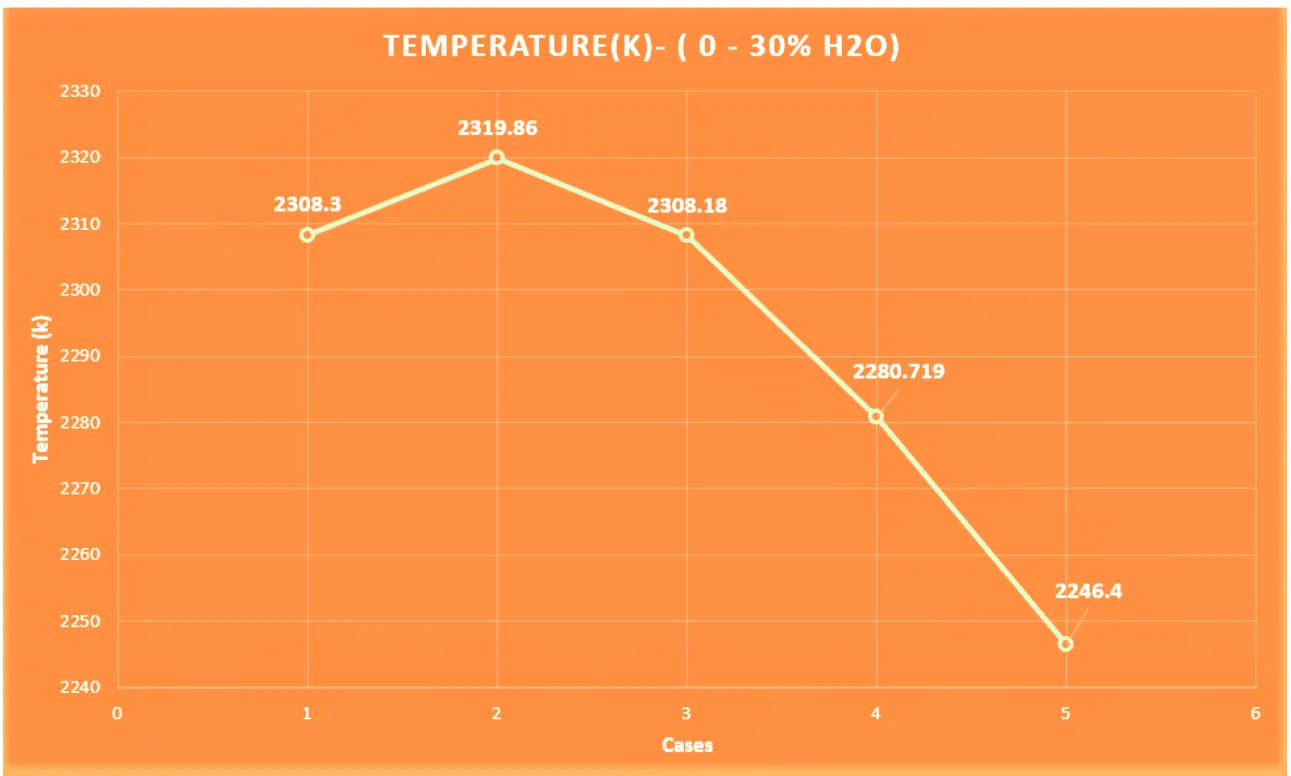
The Temperature for Part 1 is on the higher side to 2308 K, and not just that the combustion model entirely as observed is more on the higher temperature side till the outlet.
Part 2 :
The temperature profile for this part decreases significantly by 60k and can be observed that the entire model is slightly less hotter than part 1 and also near the outlet area, along with the red section.
The temperature plot comparing all cases is shown ahead.
VIII. Tabulated Values Extracted from All cases :
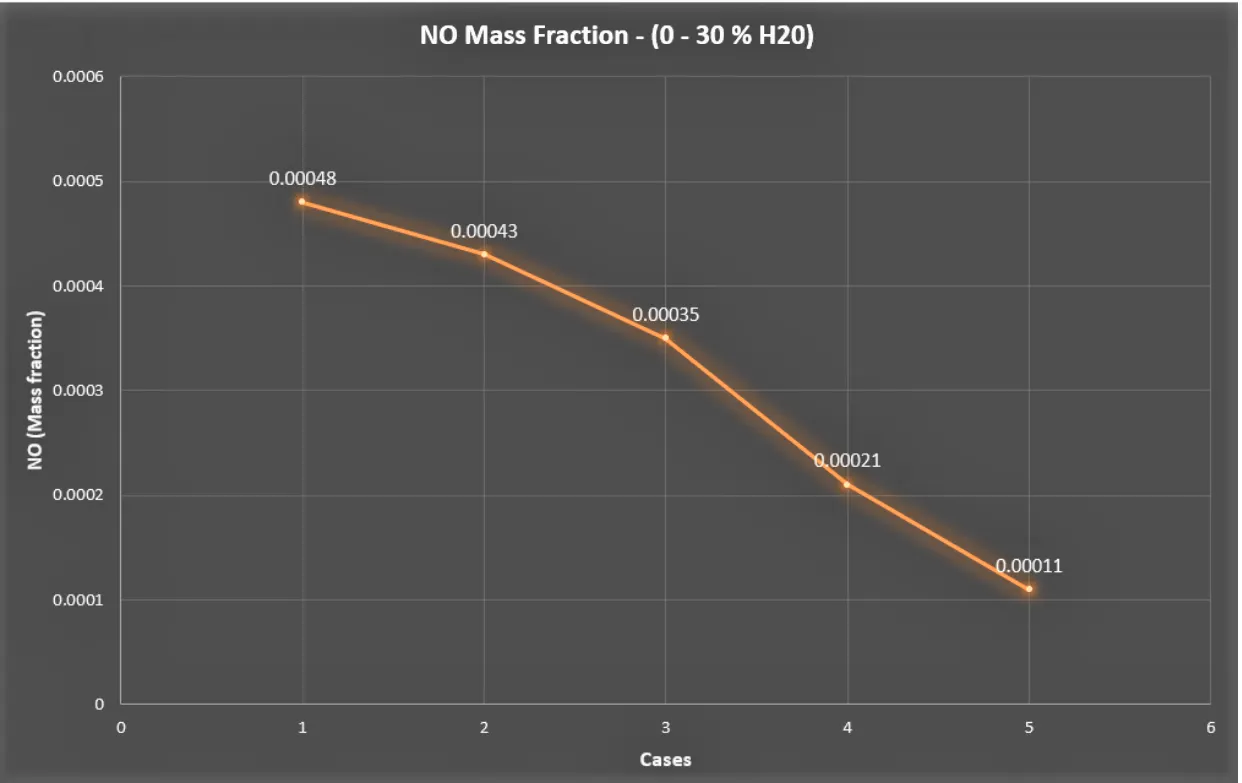
Case 1 is The part 1 above with No additional H2O added.
Case 2-5 are from the parametric study with increasing H2O addition from (0.5 - 30) % .

IX. Effect on formation of NO by injecting H20 in fuel from 0 - 30% for all Cases .
As the water content is increased in the Fuel, we observe the formation of NO is decreasing.
Case 2 - 5 are From parametric study with 0.5 % - 30% H20 added.
X. Effect on formation of SOOT by injecting H20 in fuel from 0 - 30% for all Cases .
As the water content is increased in the Fuel, we observe the formation of Soot is decreasing.
Case 2 - 5 are From parametric study with 0.5 % - 30% H20 added.
XI. Effect of Temperature on the Combustion due to water addition for all cases :
We notice the Temperature of first case is high and slight water addition at 0.5 % actually increased the temperature at 2nd case, but thereby increasing the H2O addition results in decrease in the hottest temperature formed inside the Combustion chamber.
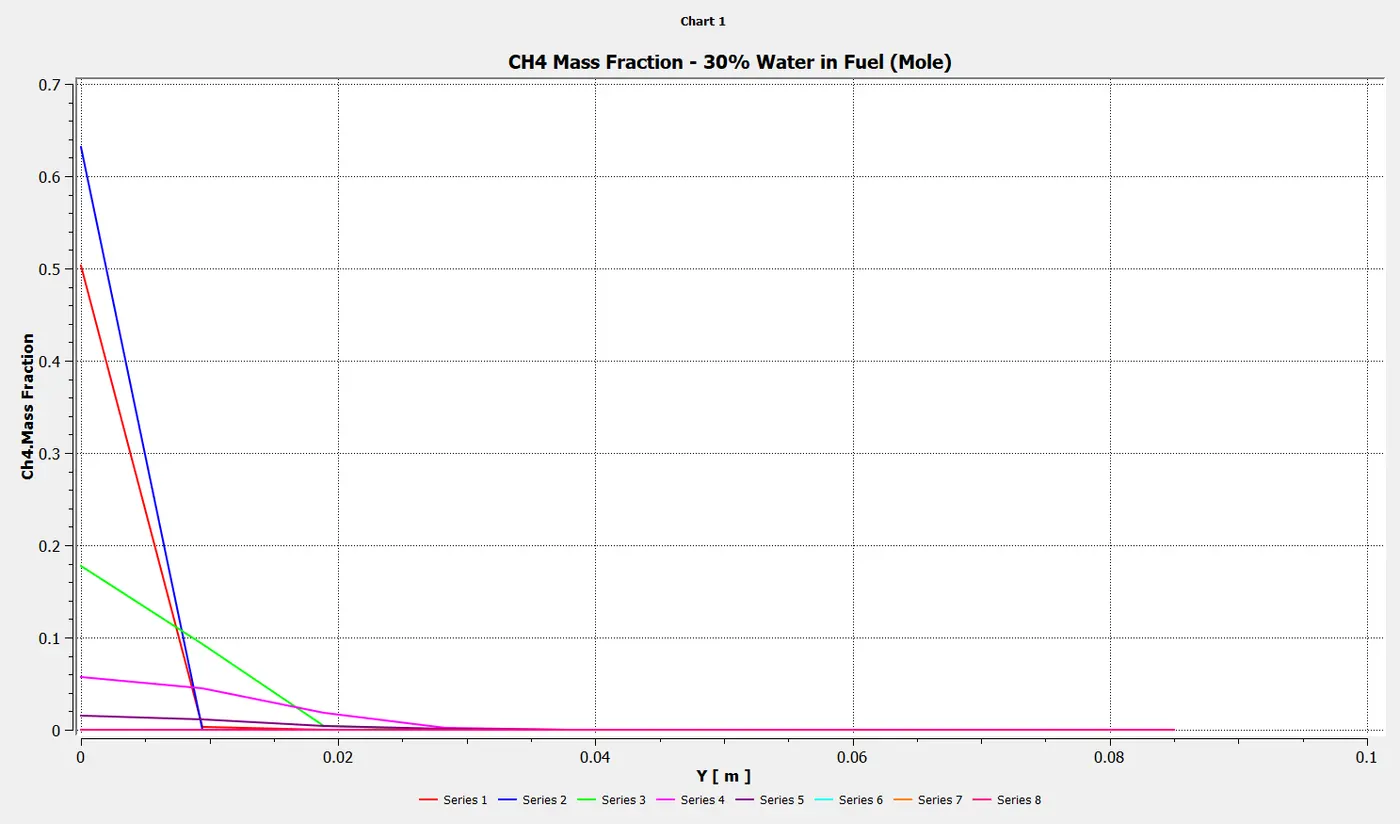
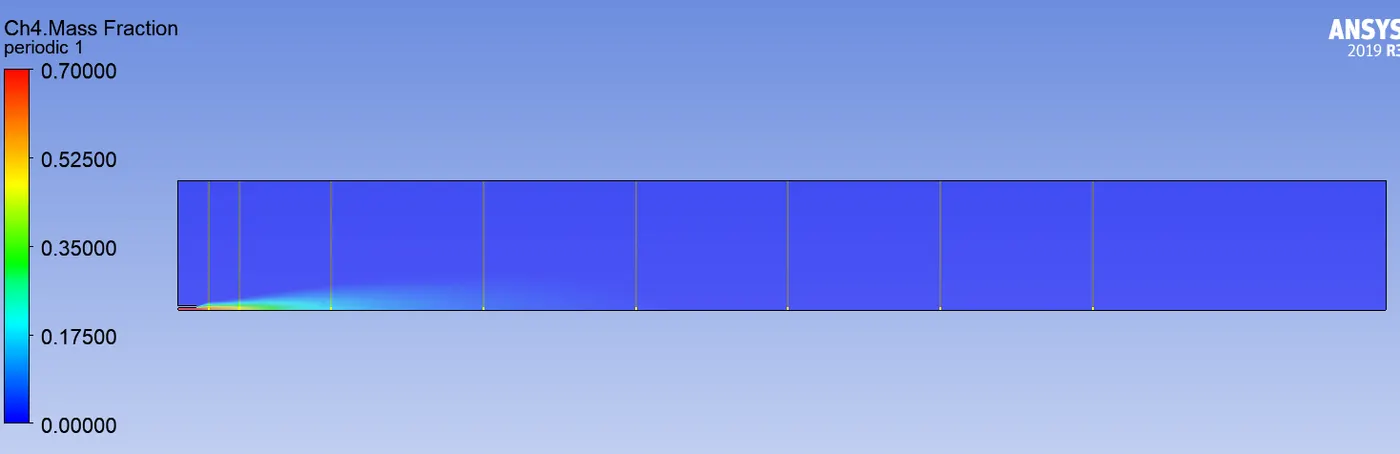
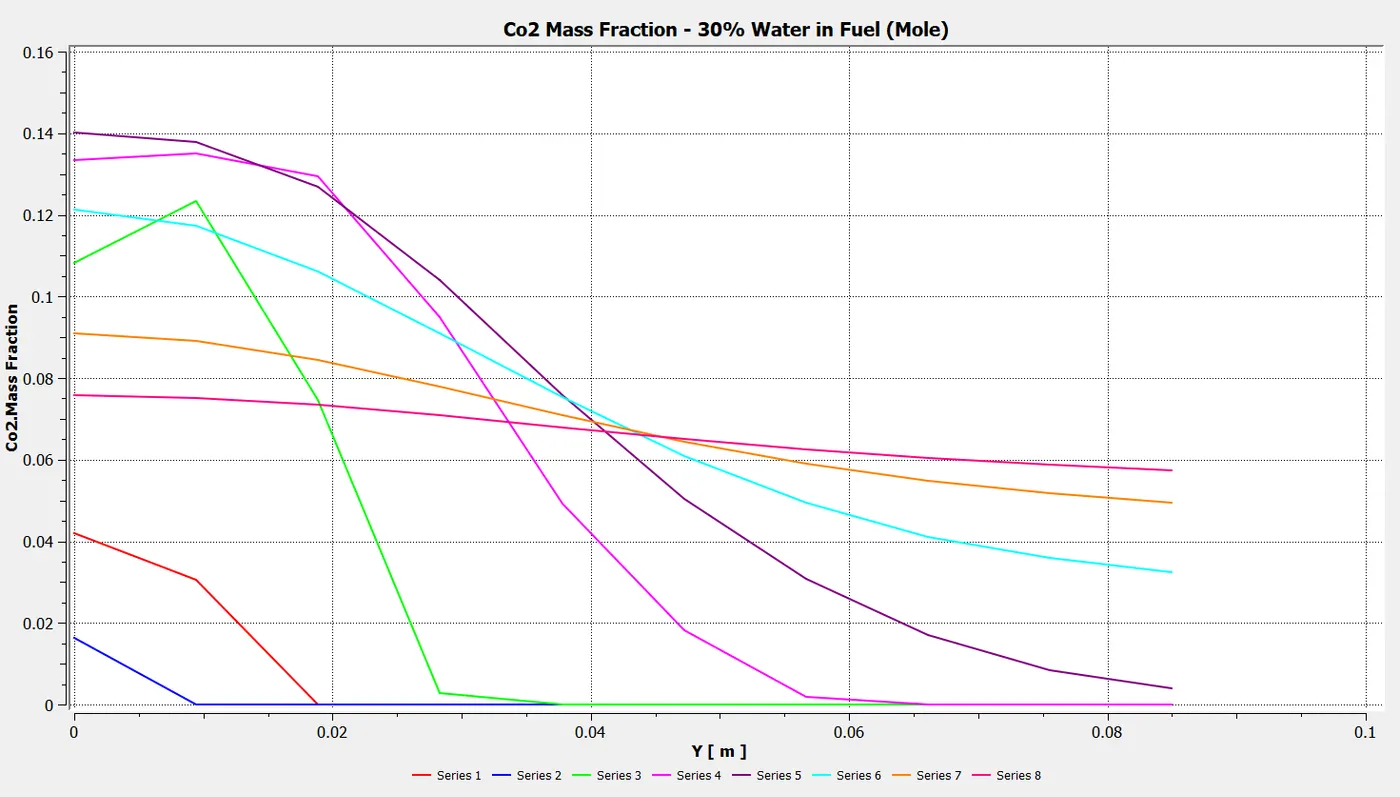
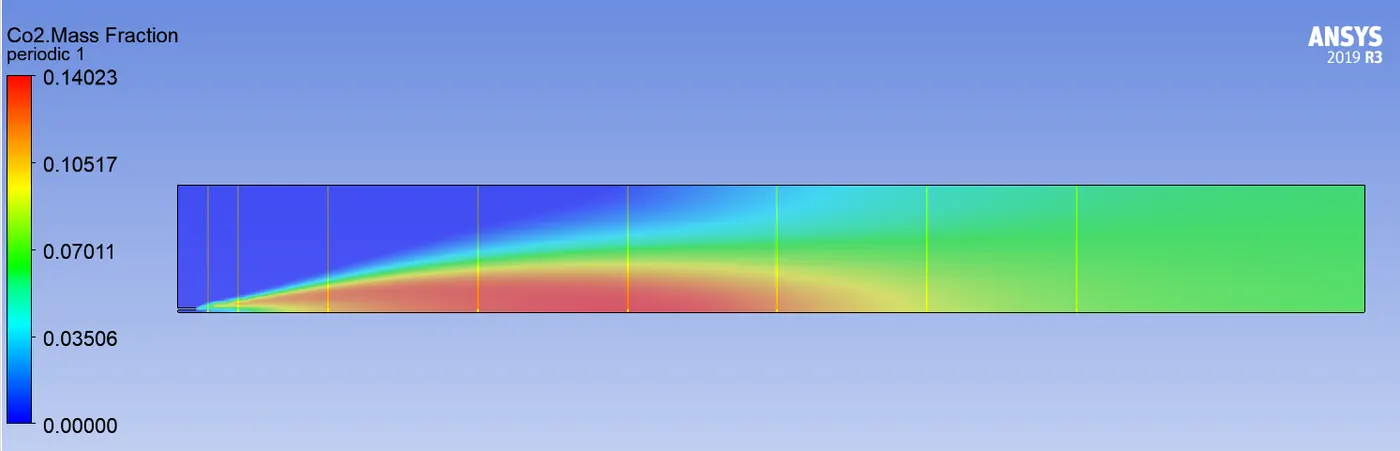
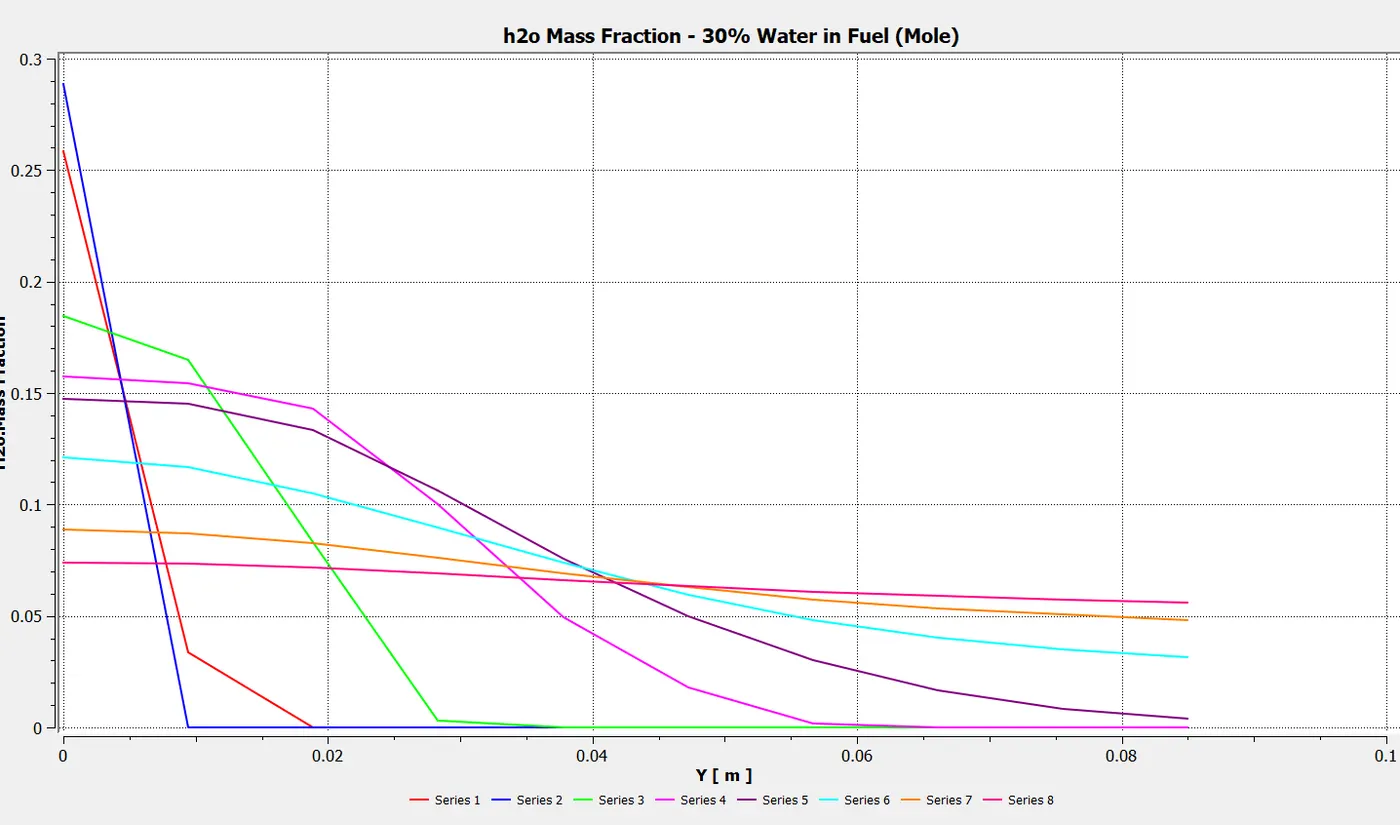
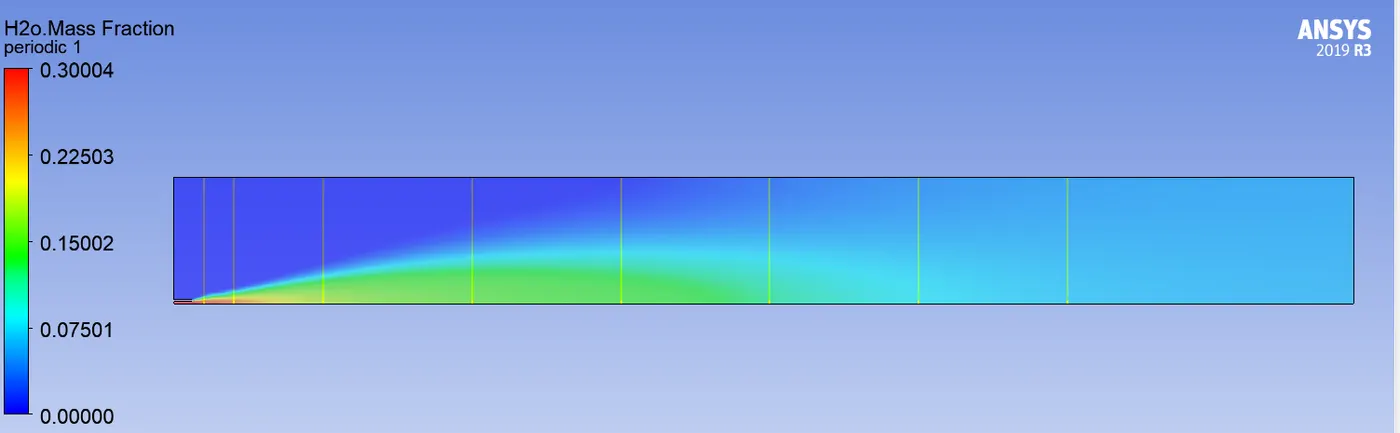
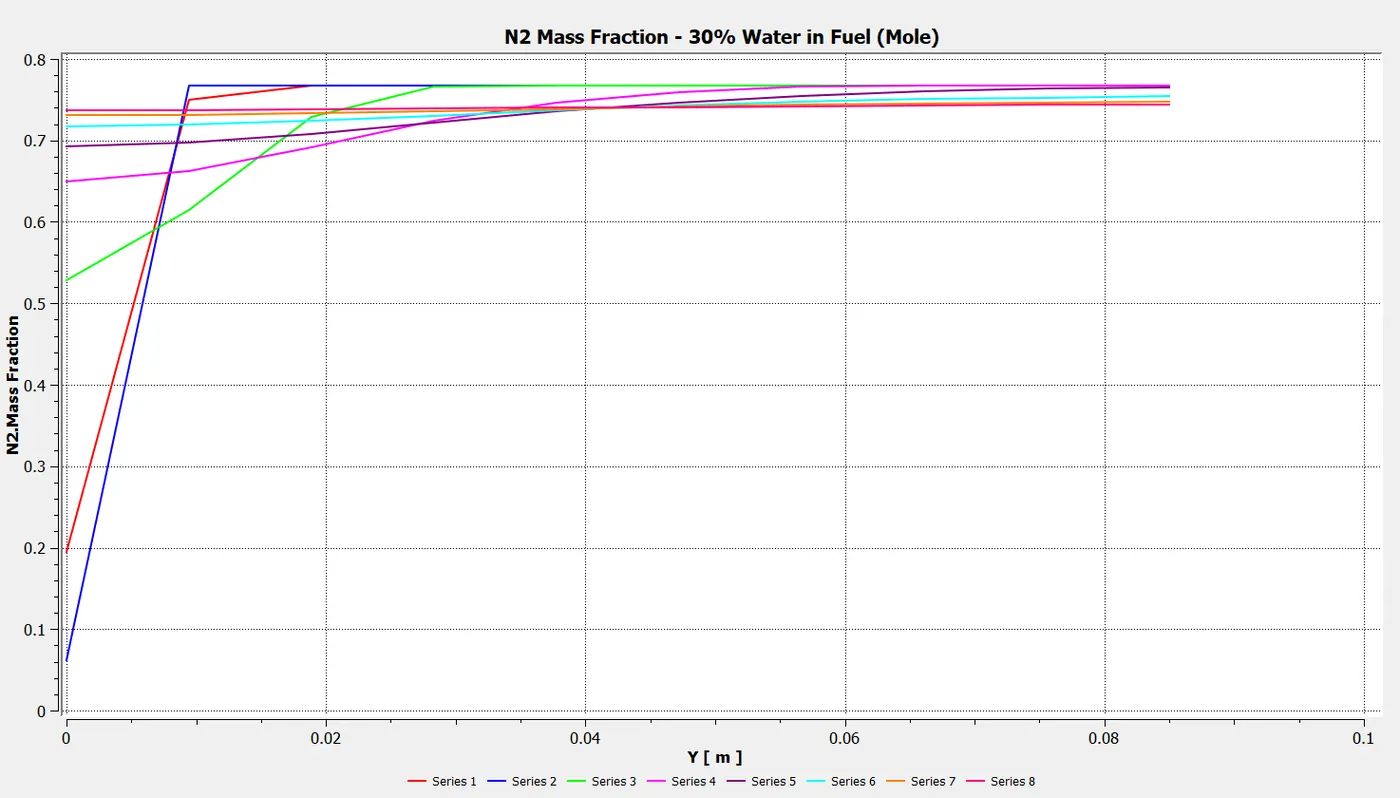
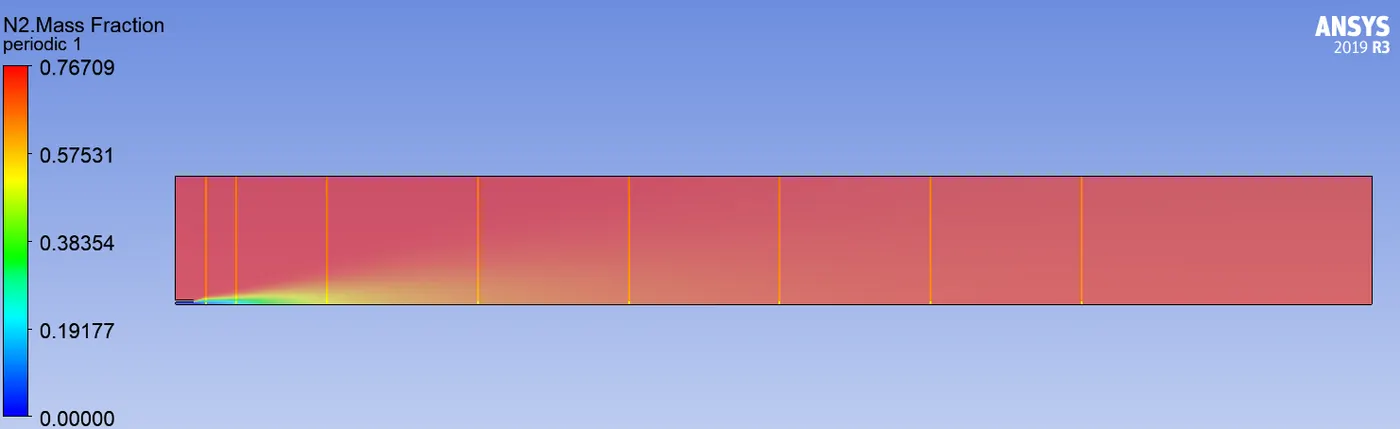
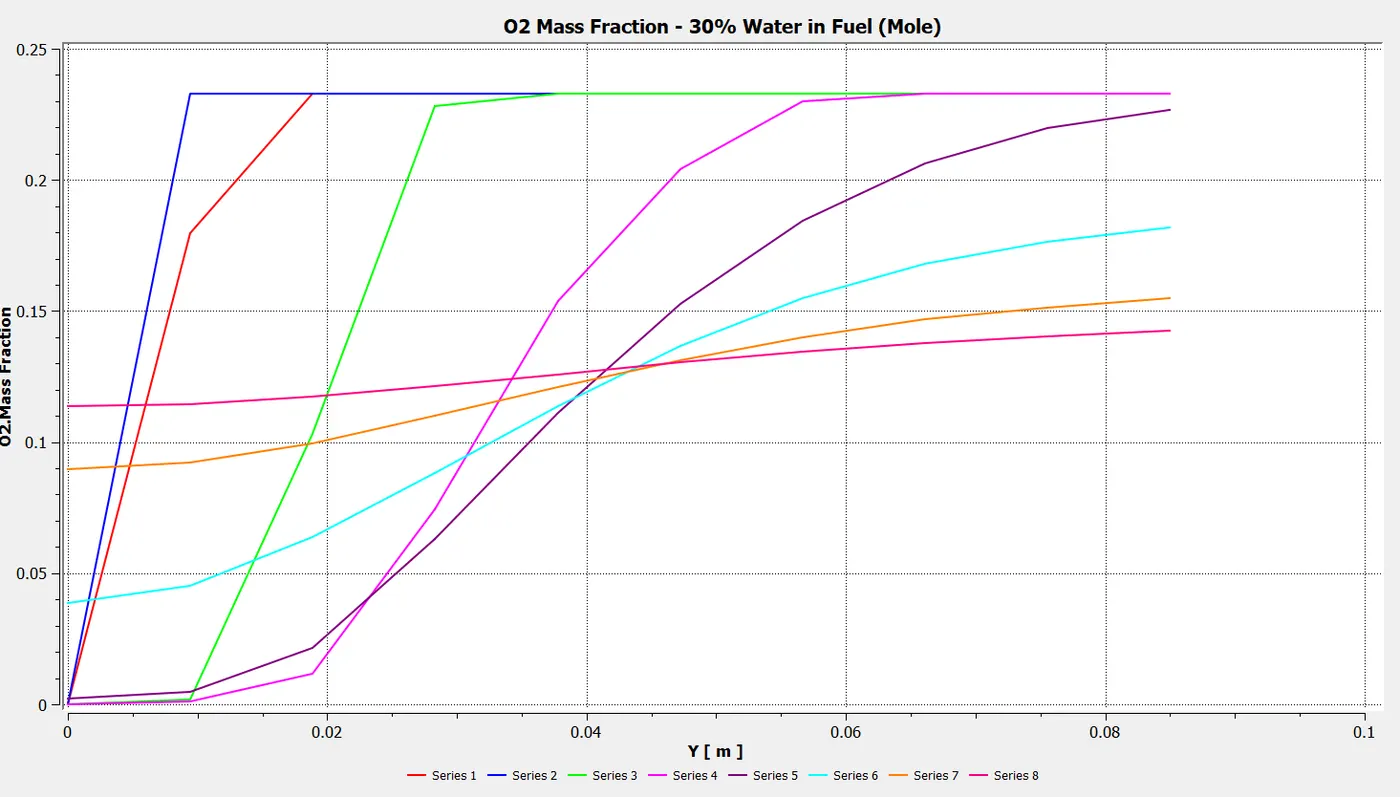
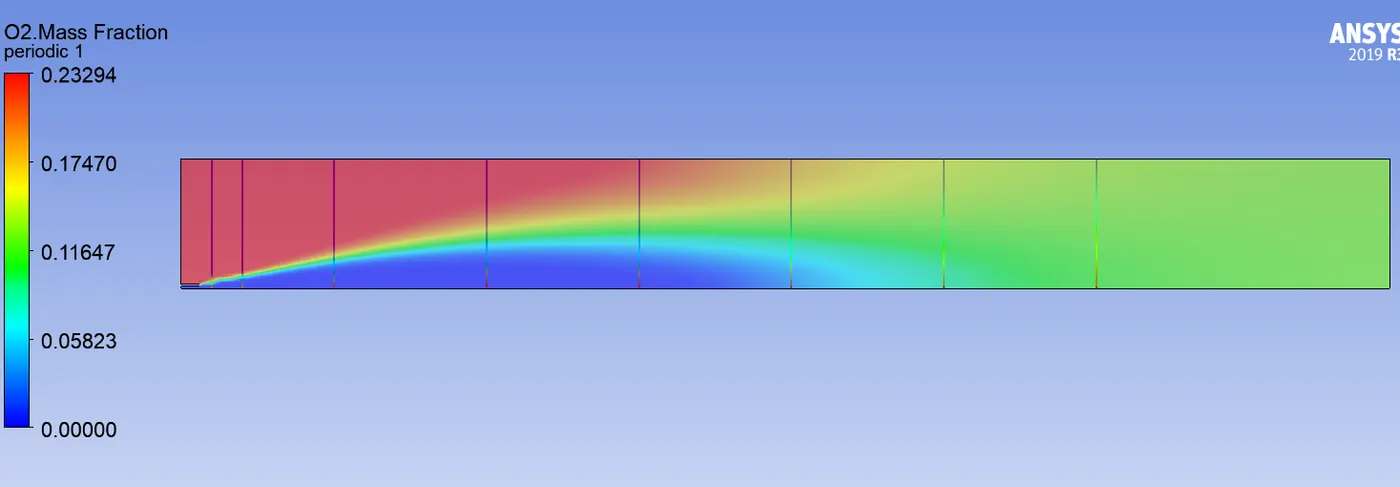
All Species Plots for Part 2 - 30% water content :
XII. Animation :
https://youtu.be/tkt4TbzI7qA
XIII. Conclusion :
1. The eddy dissipation model where combustion proceeds whenever turbulence is present without an ignition source is acceptable model for non premixed flames. For premixed flames finite rate/ edm is considered. But for this case the results of sole Edm model is acceptable and accurate.
2. The formation of Harmful emmisions is present during combustions usually, as validated above the addition of H2o in Fuel reduced the amount of NOx and Soot formation significantly but it has its limitations as to how much H2o content can be allowed additionally or else it will not give desirable results.
3. The Temperature decreased with additional water content, and among species Co2 is observed to be decreasing with increase in water content as well.
4. Thus combustion studies can be carried out using Axisymmetric conditions for various research which will not only save computational time & costs but pave a way for enormous research types to advance the existing studies & create a better world with less and less emissions.