Challenge on Combustion
AIM: To Perform a combustion simulation on the combustor model and plot the variation of the mass fraction of the different species in the simulation using line probes at different locations of the combustor
Theoritical background:
Combustion
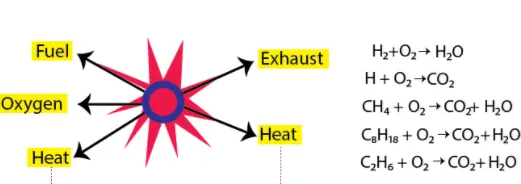
Combustion, or burning is a high-temperature exothermic redox chemical reaction between a fuel(the reductant) and an oxidant, usually atmospheric oxygen, that produces oxidized, often gaseous products, in a mixture termed as smoke. Combustion does not always result in fire, but when it does, a flame is a characteristic indicator of the reaction. While the activation energy must be overcome to initiate combustion (e.g., using a lit match to light a fire), the heat from a flame may provide enough energy to make the reaction self-sustaining.
Combustion of an organic fuel in air is always exothermic because the double bond in O2 is much weaker than other double bonds or pairs of single bonds, and therefore the formation of the stronger bonds in the combustion products CO2 and H20 results in the release of energy. The bond energies in the fuel play only a minor role, since they are similar to those in the combustion products; e.g., the sum of the bond energies of CH4 is nearly the same as that of CO2. The heat of combustion is approximately −418 kJ per mole of O2 used up in the combustion reaction, and can be estimated from the elemental composition of the fuel.
Geometry:
3D geometry of the Combustior is first imported in to the SpaceClaim
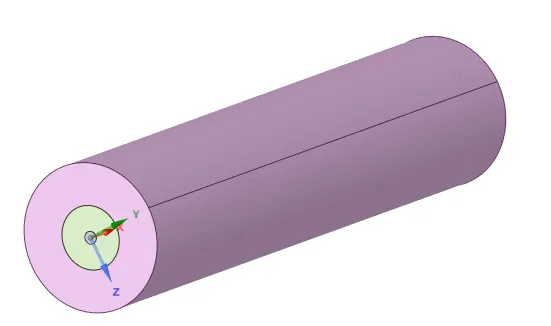
To reduce the computational effort we convert the 3D geormetry in to 2D

Meshing:
Creating the named selections
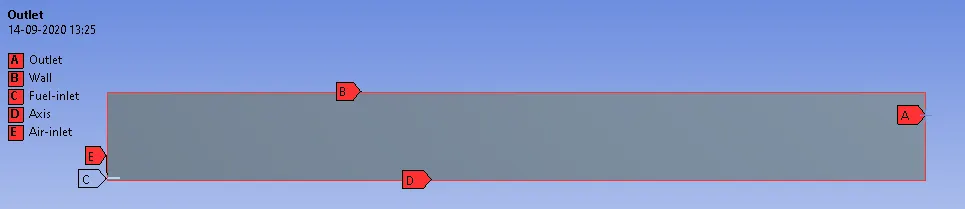
Basic Element size = 5mm, Number of nodes = 3113, Number of elements = 2902

Fluent Setup:
Solver: Steady State solver
Type: Pressure based
Model: k-epsilon RNG, Standard wall function, 2D Axisymmetric Geometry
Air Inlet - Velocity Magnitude = 0.5m/s, Species Mass fraction of O2 = 0.23, Temperature = 300K
Fuel Inlet - Velocity Magnitude = 80m/s, Species Mass fraction of CH4 = 1, Temperature = 300K
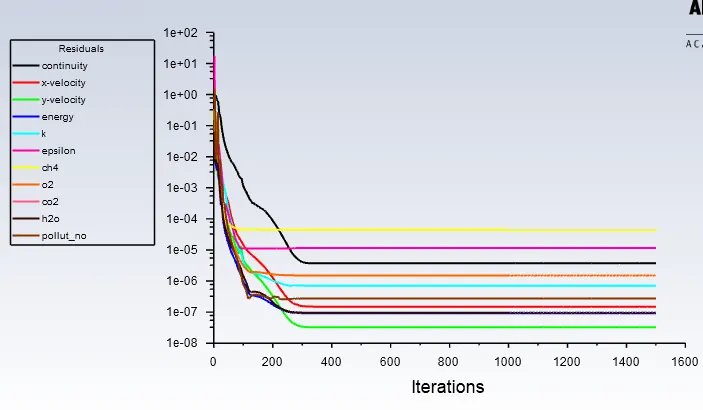
Residual Plots:
Temperature Contour:
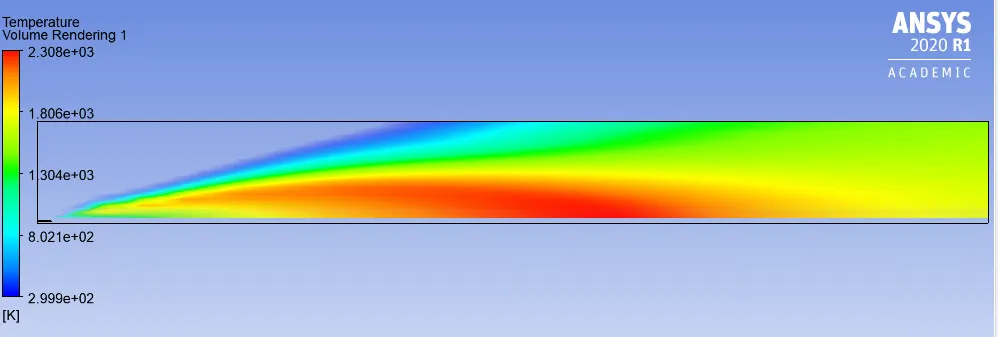
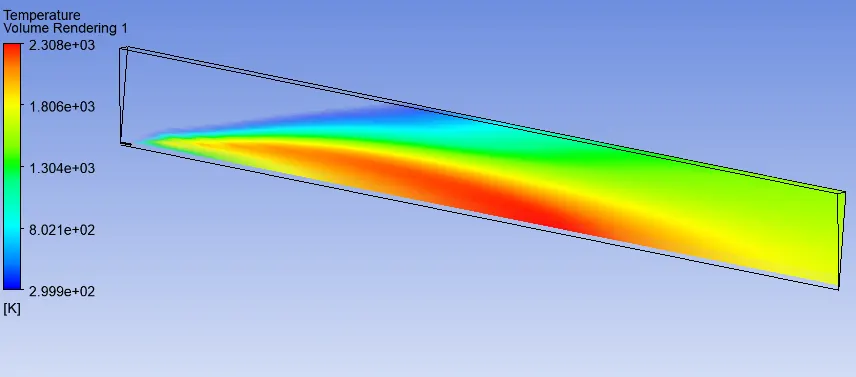
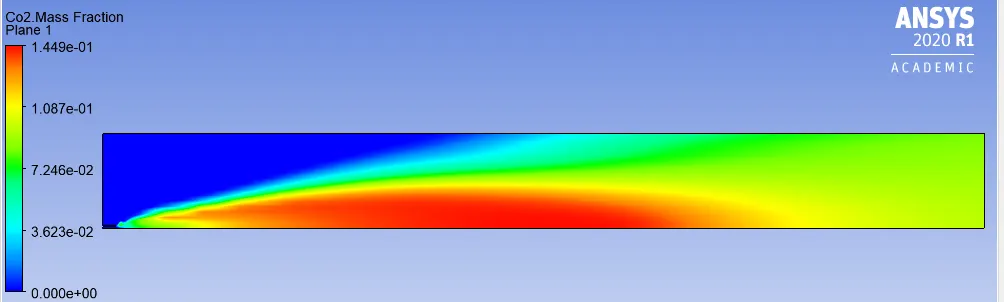
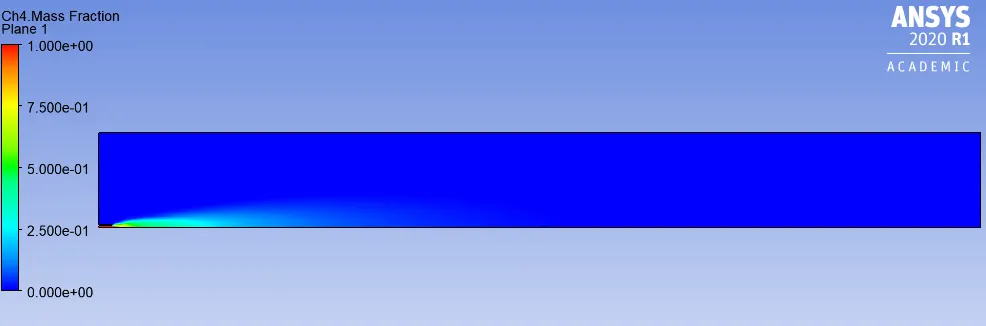
Mass Fractions Contours of different Species
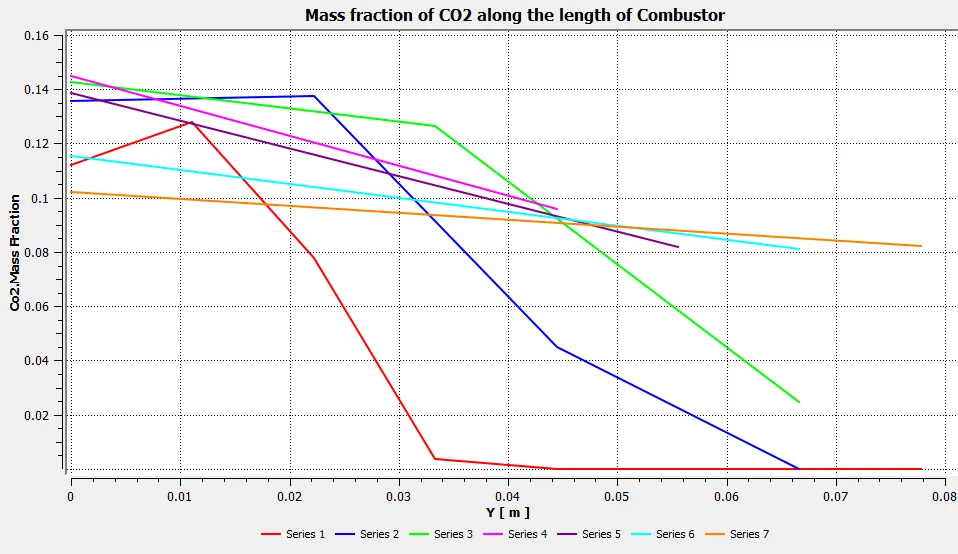
1] Mass Fraction of CO2
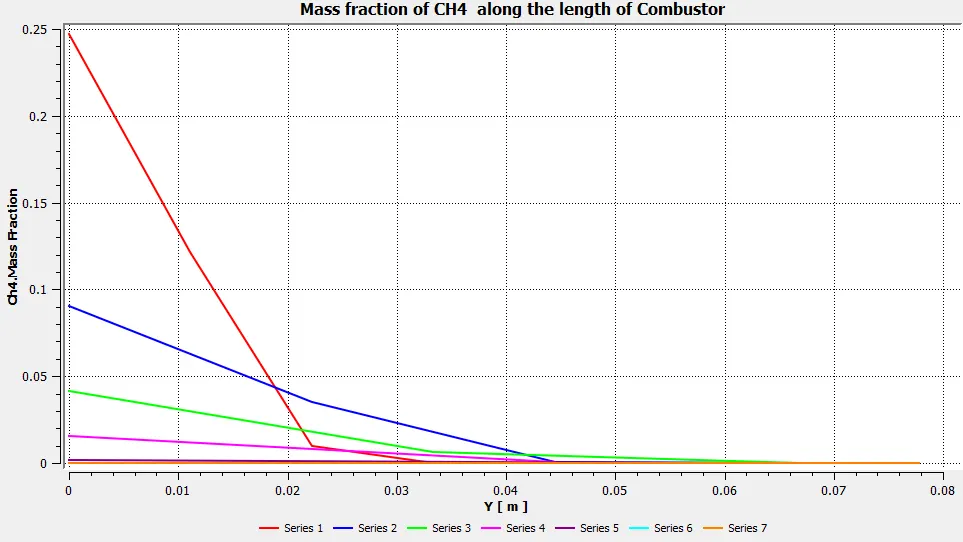
2] Mass Fraction of CH4
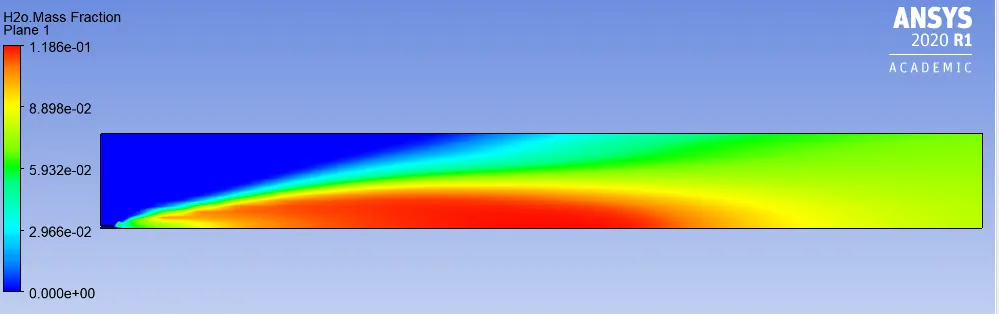
3] Mass Fraction of H2O
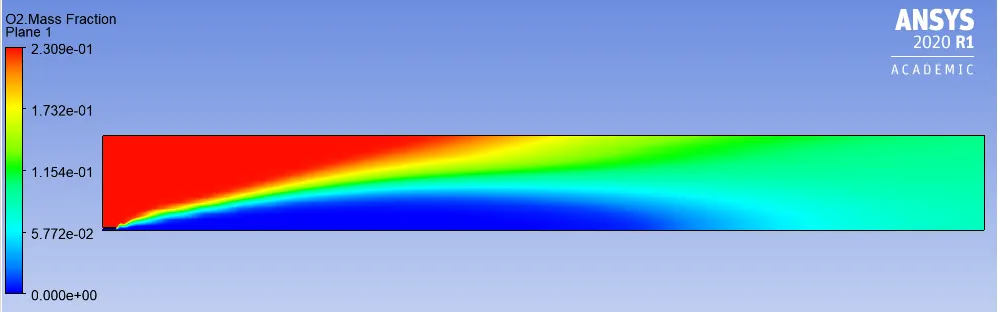
4] Mass Fraction of O2
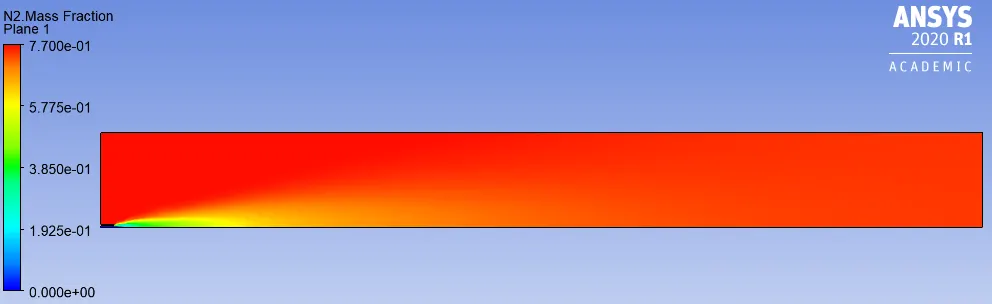
5] Mass Fraction of N2
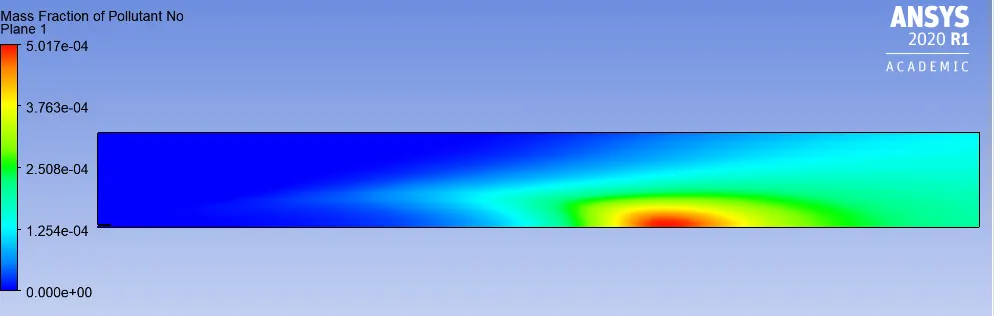
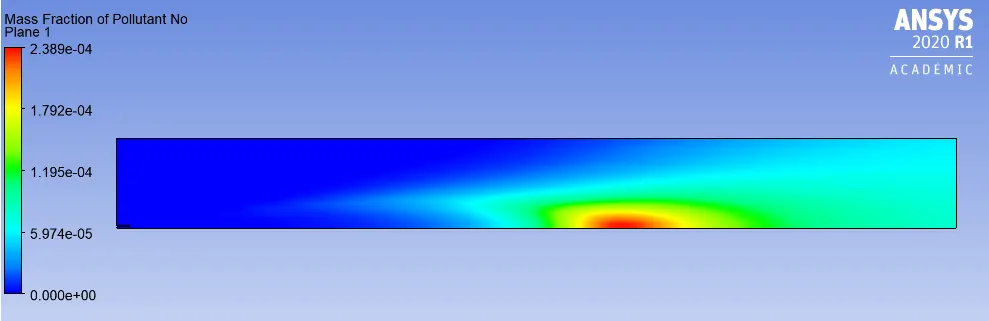
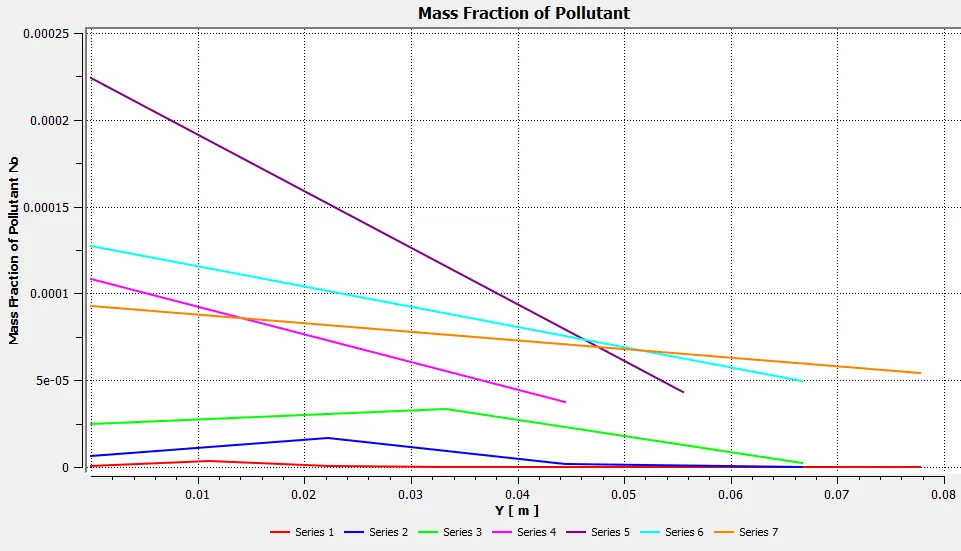
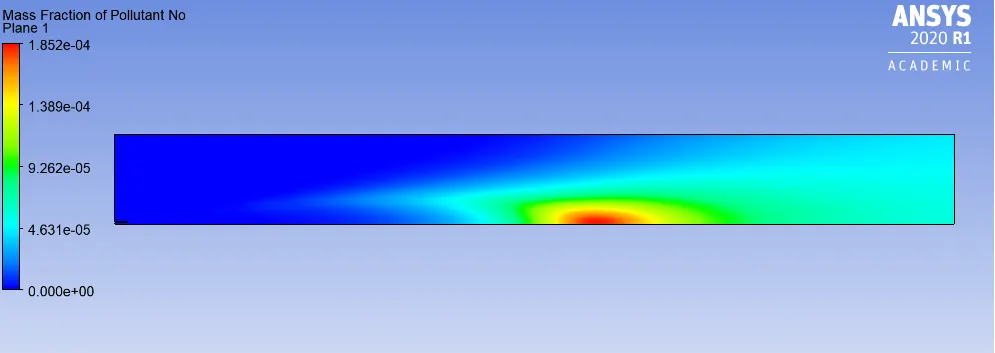
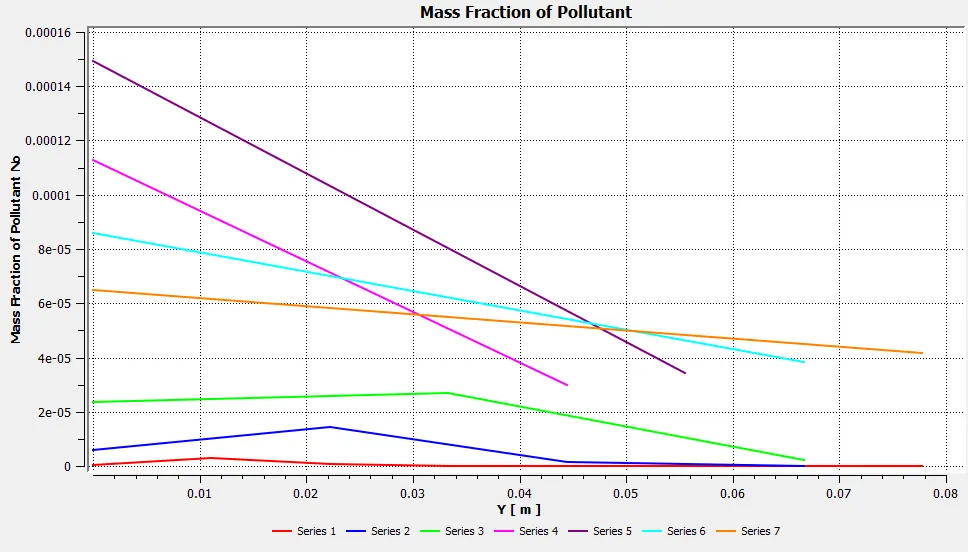
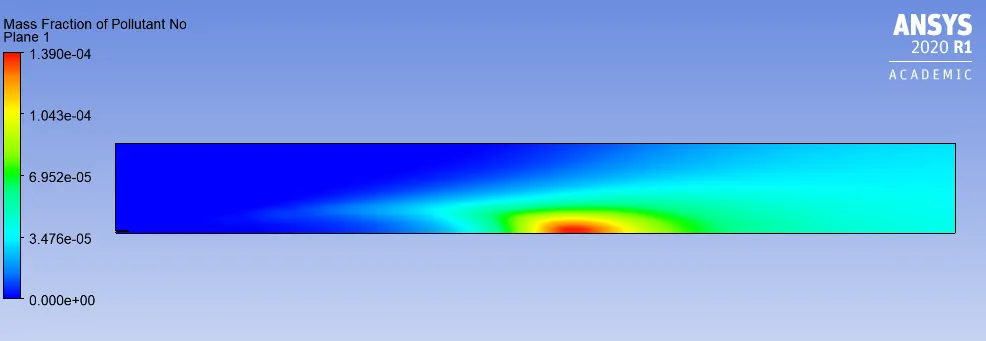
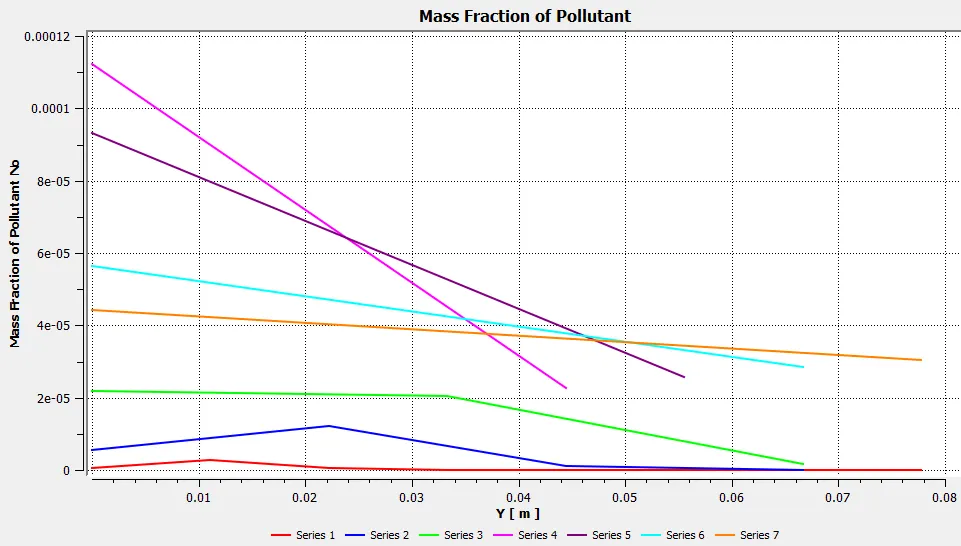
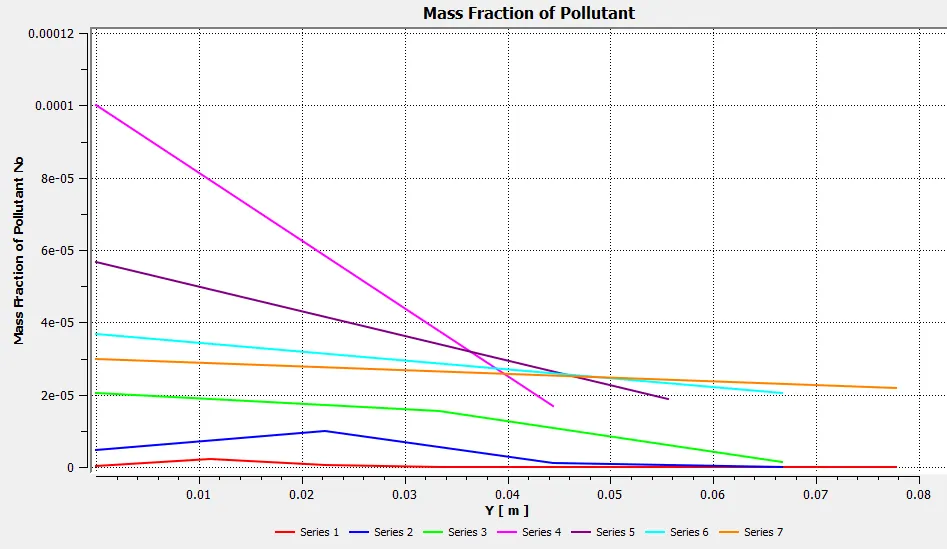
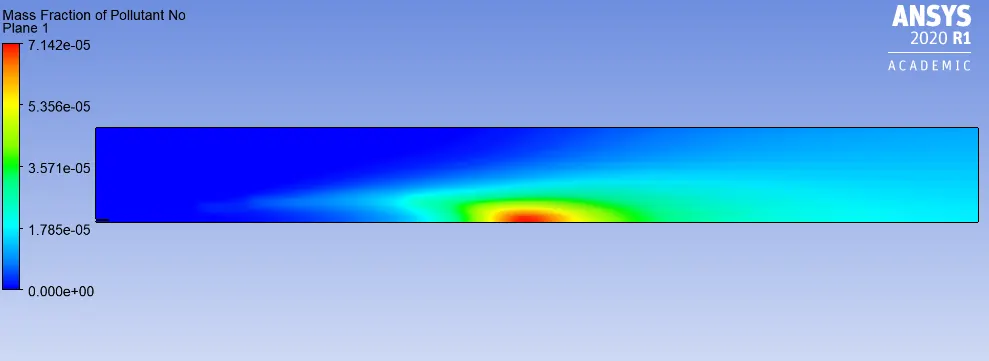
6] Mass Fraction of Pollutant
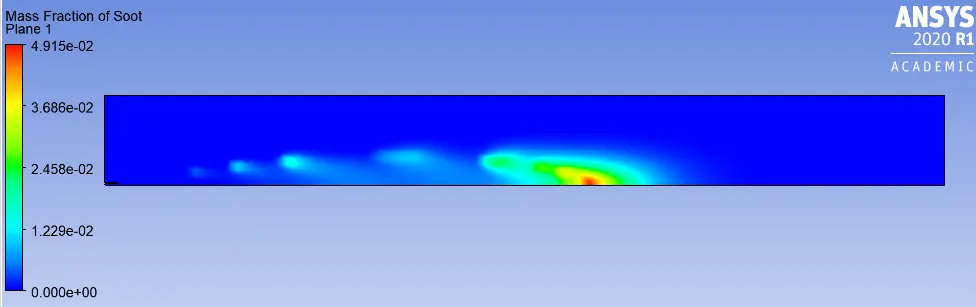
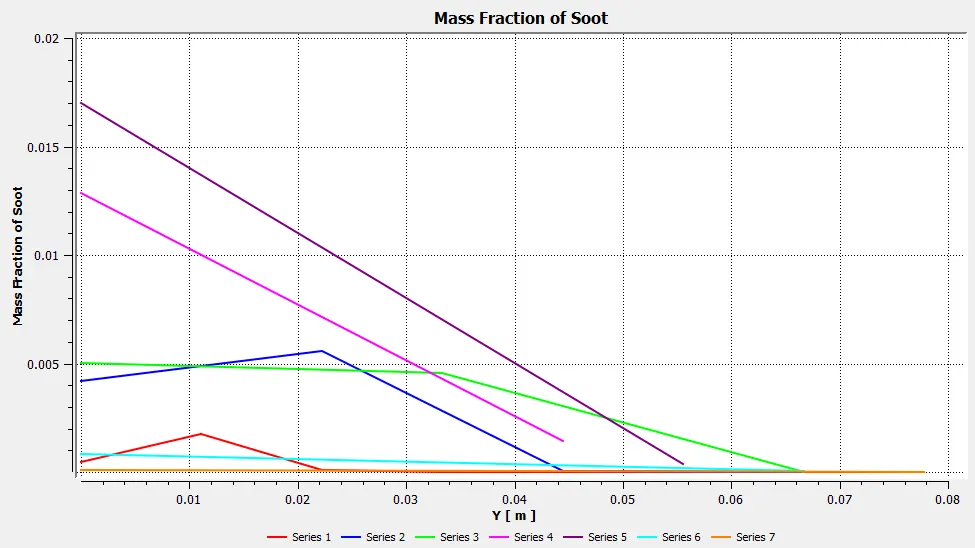
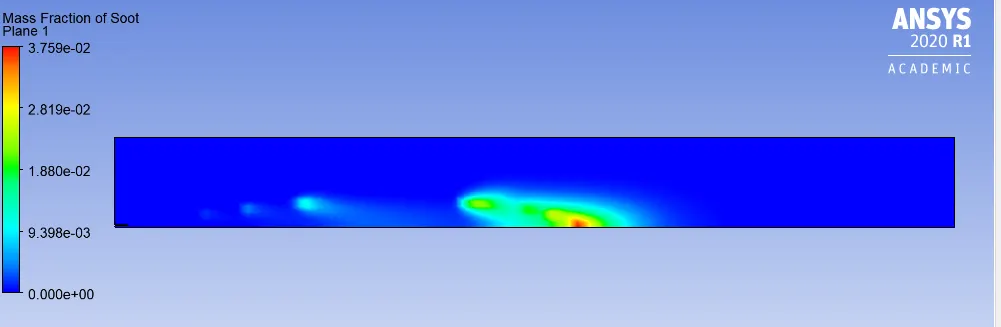
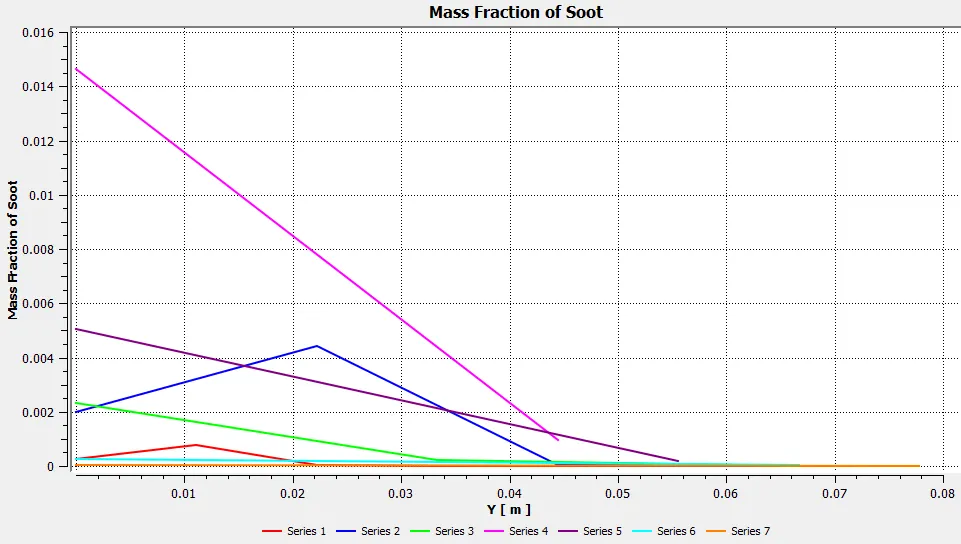
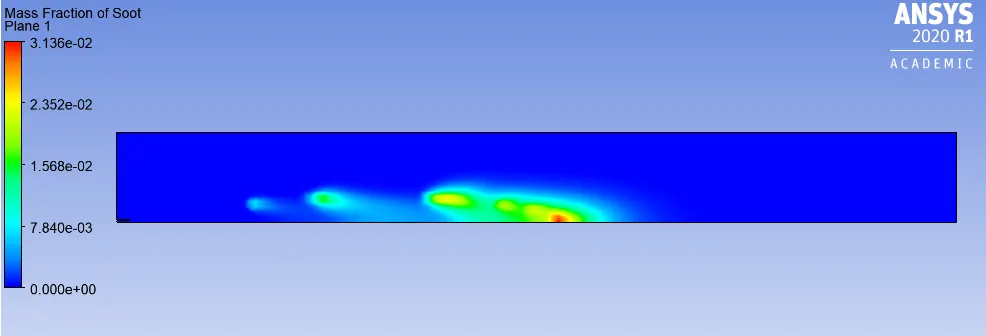
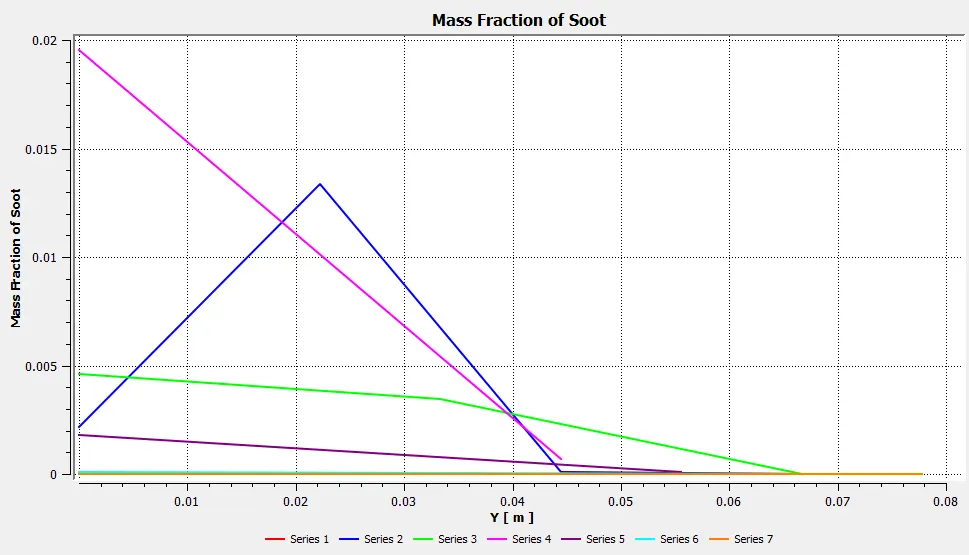
7] Mass Fraction of Soot
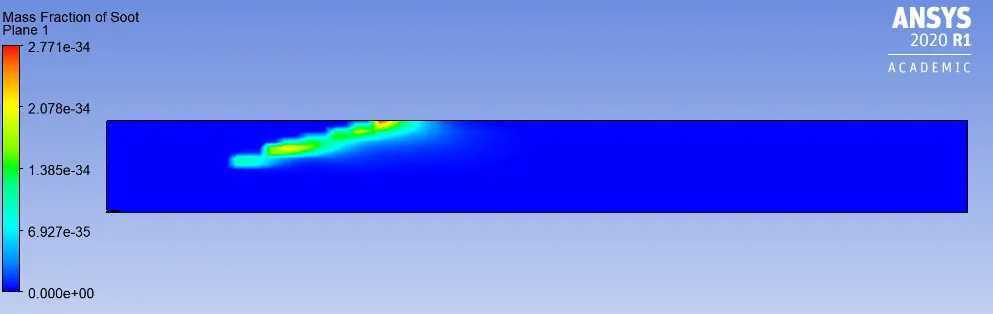
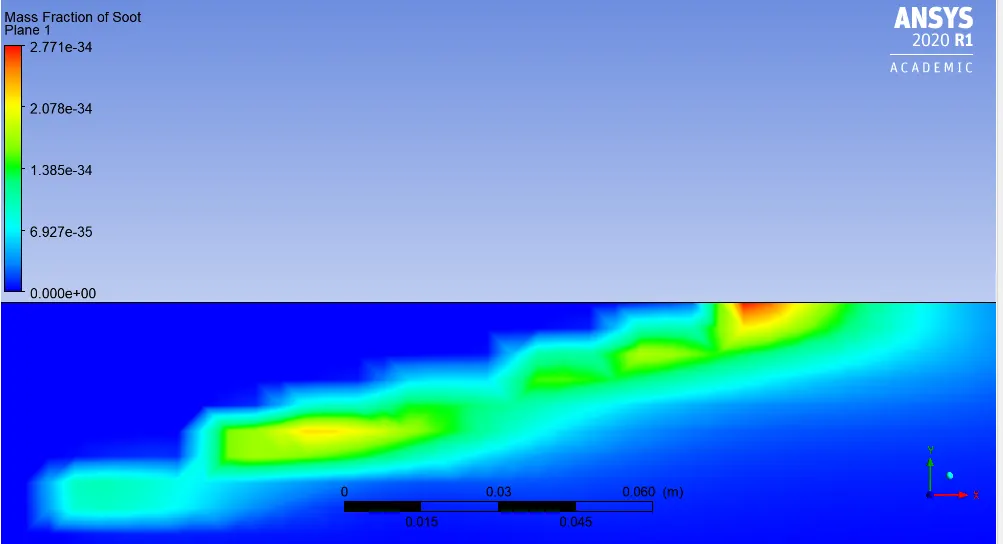
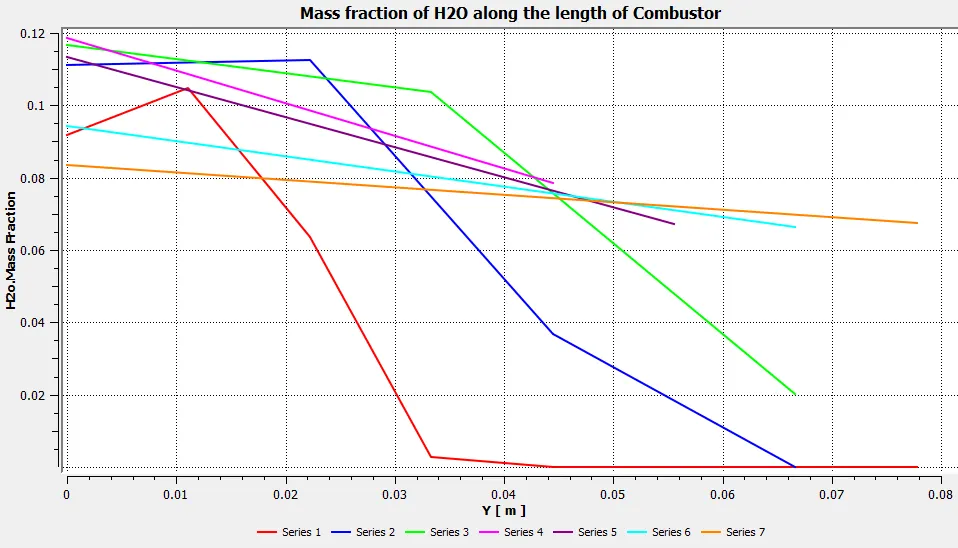
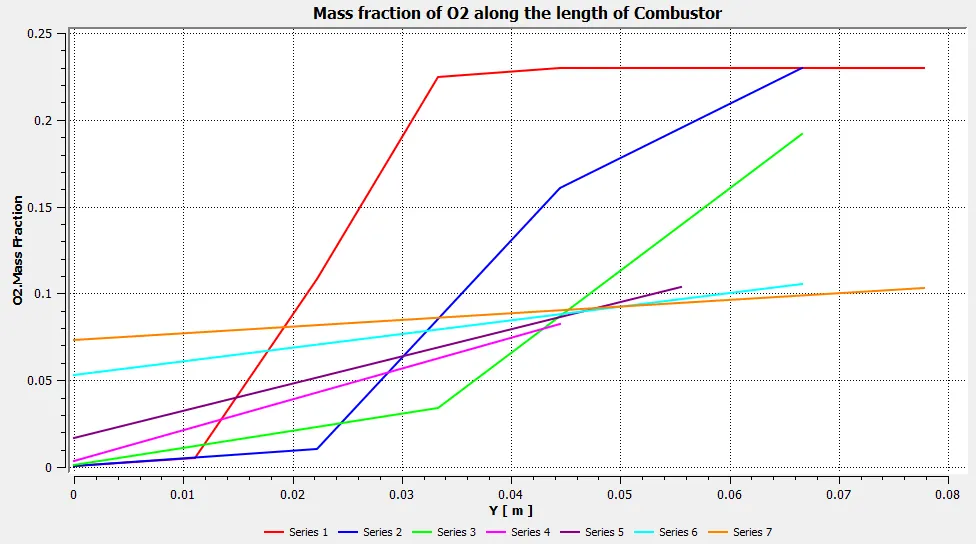
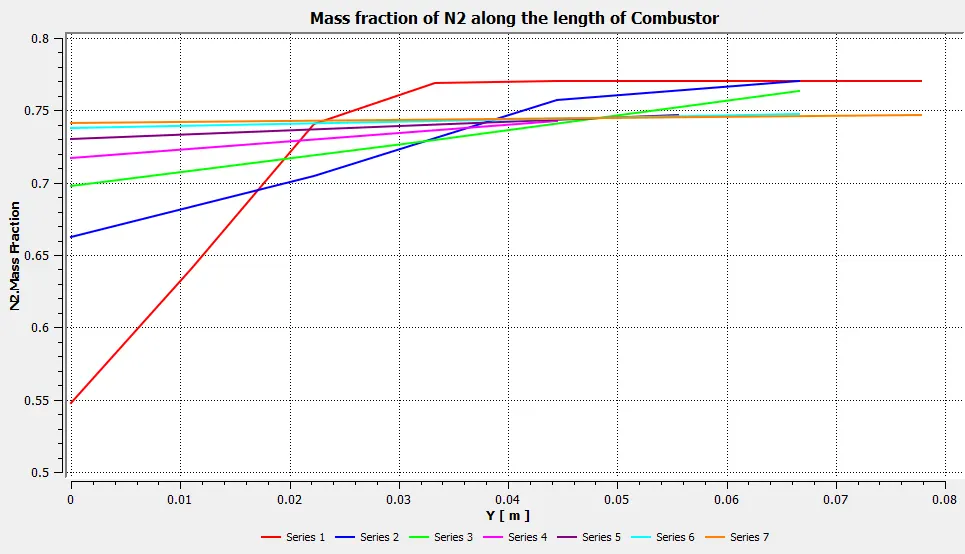
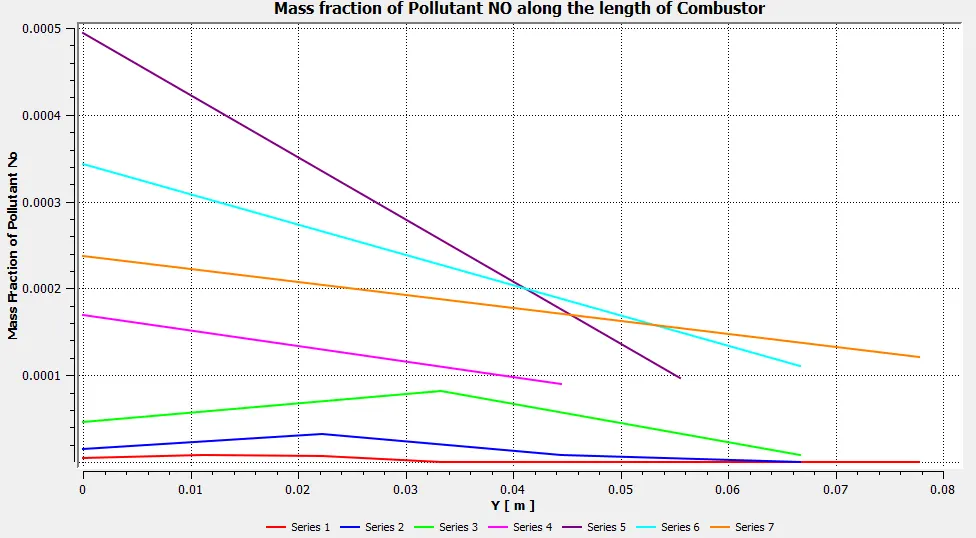
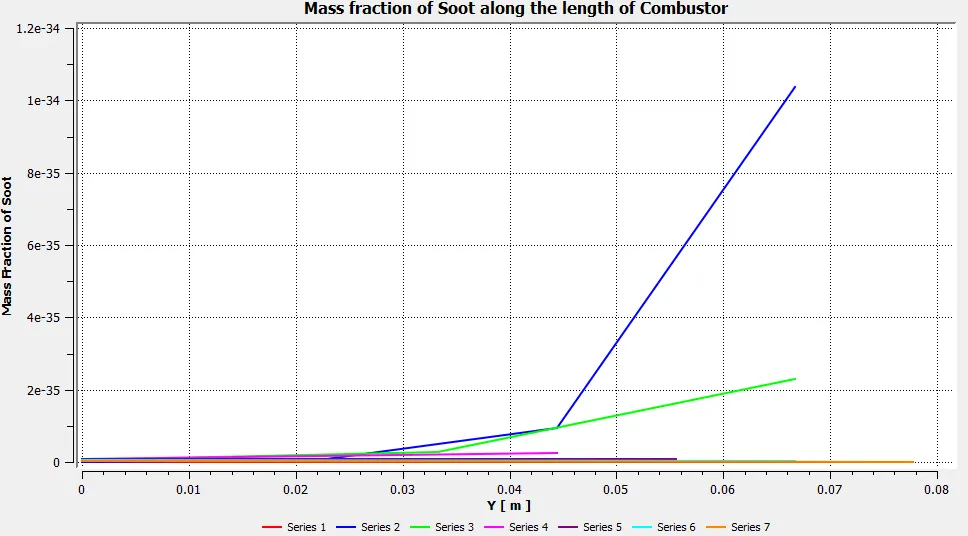
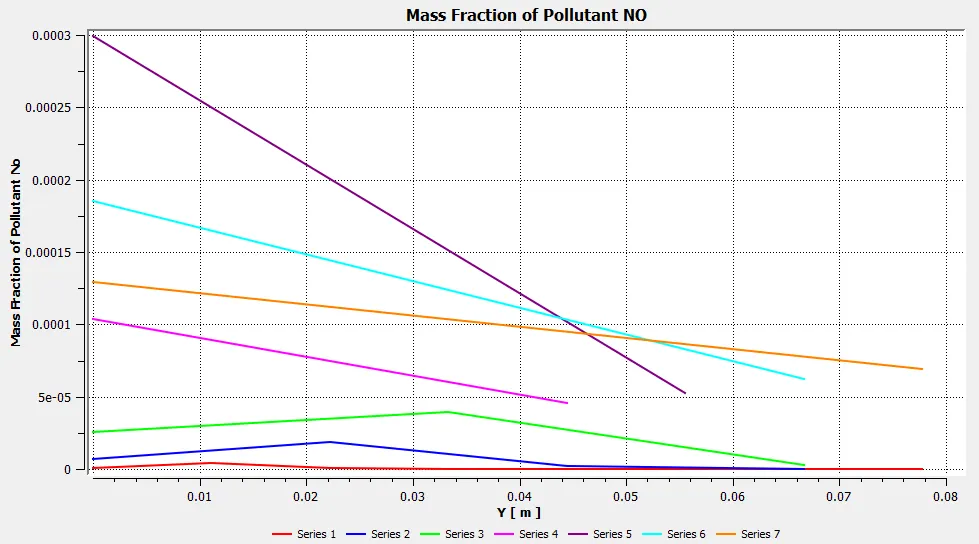
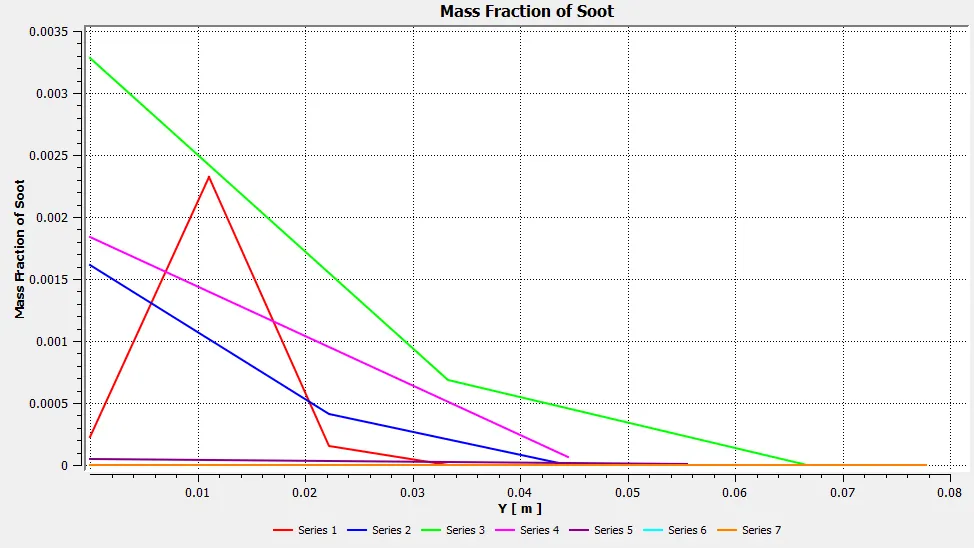
Variation of the mass fraction of the different species in the simulation at different locations of the combustor
Line probes are created at following distance from the origin
Line 1 = 0.1m, Line 2 = 0.2m, Line 3 = 0.3m, Line 4 = 0.4m, Line 5 = 0.5m, Line 6 = 0.6m, Line 7 = 0.7m, Line 8 = 0.8m

PART 2: Checking the effect of adding water in the Fuel
Nitrogen dioxide is an irritant gas, which at high concentrations causes inflammation of the airways. NOx gases react to form smog and acid rain as well as being central to the formation of fine particles (PM) and ground level ozone, both of which are associated with adverse health effects.
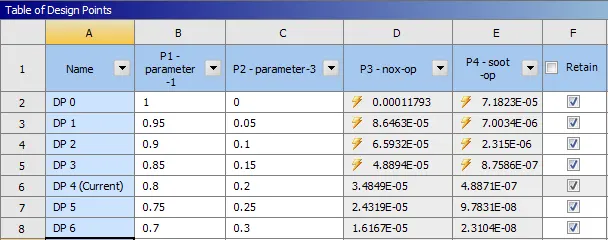
In this part, We are adding the water content in the fuel from 5% to 30% by mole and observe the effect of it on the results. We are conducting parametric study for this.
Parametric table
Case 1: 5% Addition of Water
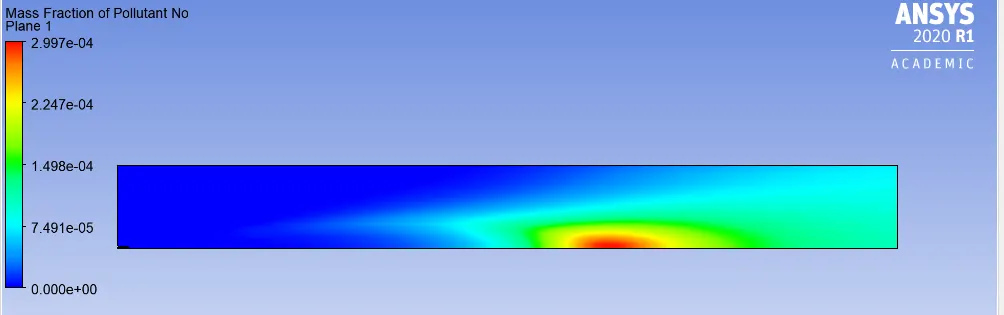
NOx Contour
Soot Contour
Case 2: 10% Addition of Water
NOx contour
Soot Contour
Case 3: 15% Addition of Water
NOx Contour
Soot Contour
Case 4: 20% Addition of Water
NOx Contour
Soot Contour
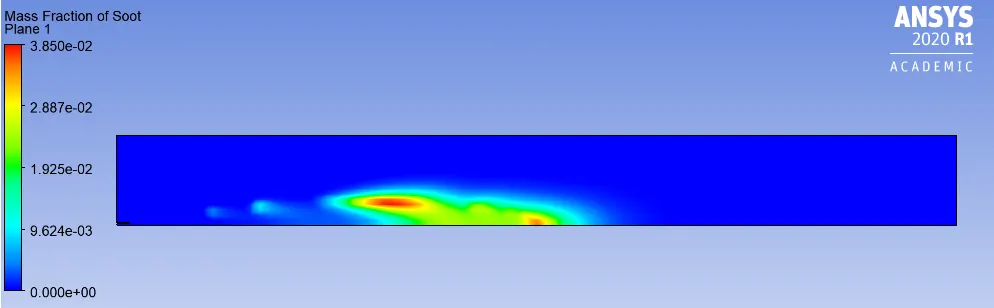
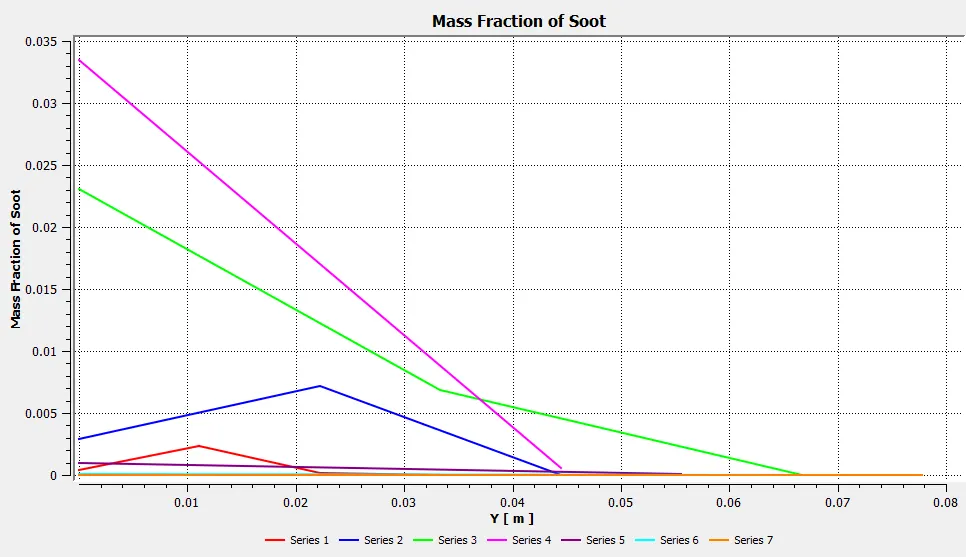
Case 5: 25% Addition of Water
NOx Contour
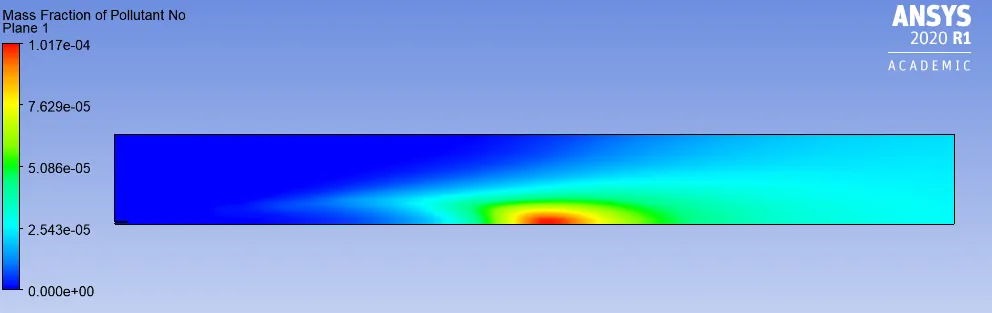
Soot Contour
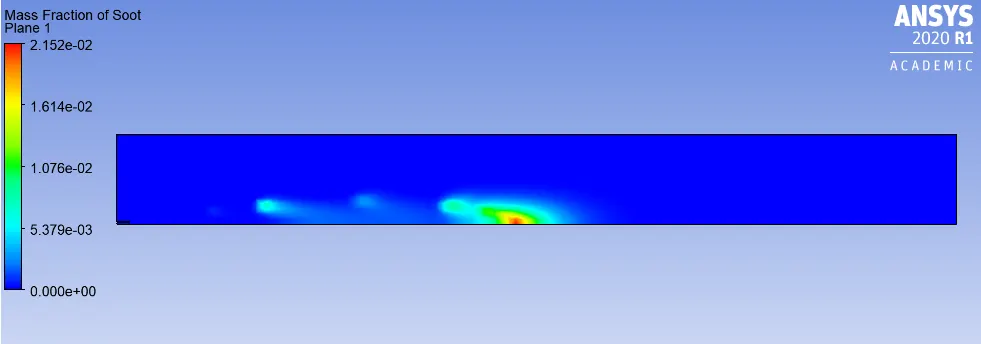
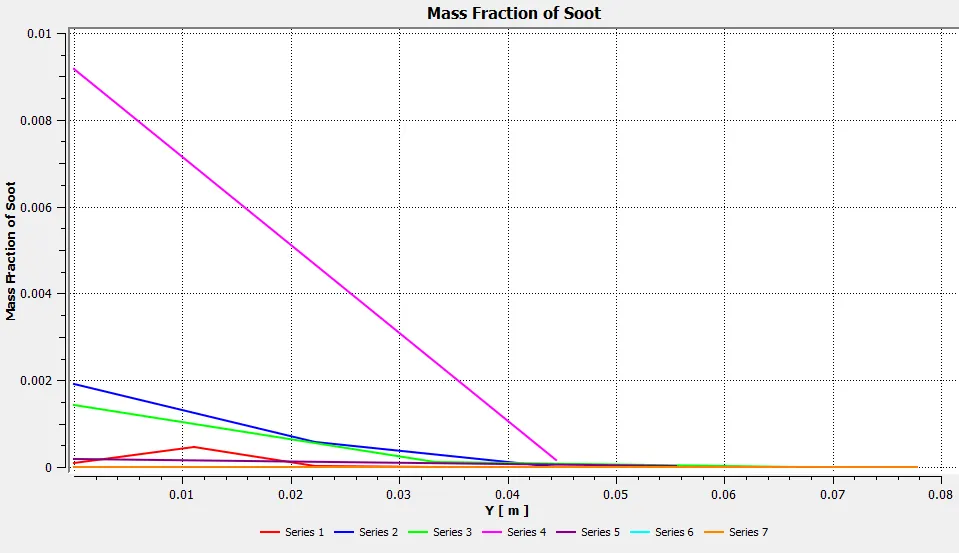
Case 6: 30% Addition of Water
NOx Contour
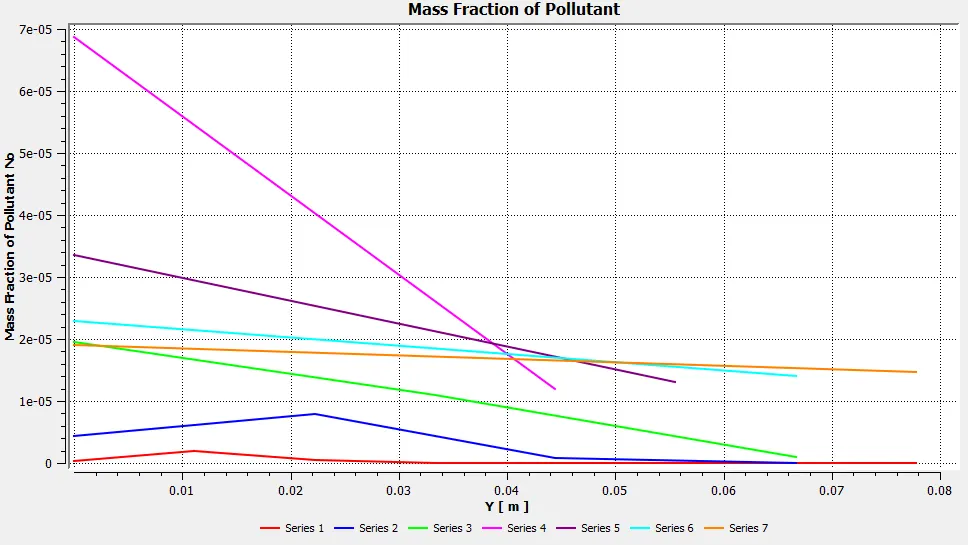
Soot Contour
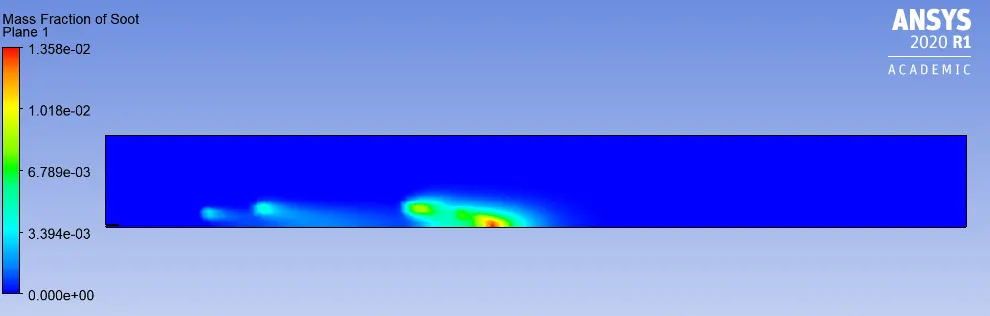
Observations:
1] In Part 1 the mass Fraction contours of differenct species are obtained and also the variation of mass fraction of different species along the length of the combustor are plotted.
2] In Part 2 the parametric study is conducted by varying the mole fraction of Water and CH4 fuel and the results of Mass fraction of Pollutant and Soot are obtained. It was observed that When the amount of water content in the water-fuel mixture increases, the formation of NOx gets reduced.
Refrences:
1. https://www.sciencedirect.com/science/article/pii/S1876610217337724
2. https://link.springer.com/article/10.1007/s00773-015-0303-8