Challenge 5 : Concept Modeling of Car Bumper
Title of the Project: A Surface Creation for Automotive Bumper using Autodesk Alias
Objective:
The primary goal of this project is to utilize Autodesk Alias software to create a sophisticated and aesthetically pleasing surface design for an automotive bumper. The project aims to incorporate advanced surface modeling techniques, ensuring the final design meets safety standards, aerodynamic requirements, and contemporary design trends.
Introduction:
Automotive bumpers are integral components that not only serve as protective features but also significantly contribute to the overall visual appeal of a vehicle. This project focuses on harnessing the capabilities of Autodesk Alias to create a bumper with refined surfaces, emphasizing both form and function.
Design Methodology/Approach:
The design methodology employed in this project follows a systematic approach, as depicted in the flowchart below:
1. Reference and Conceptualization: Initial sketches and design concepts were developed by using given canvas. By using the canvas curve creation will do and check.
2. Surface Modeling Techniques: Autodesk Alias's advanced surface modeling tools were employed to sculpt and refine the bumper surfaces, ensuring a harmonious and functional design.
3. Curvature Analysis and Validation: Curvature analysis tools were utilized to maintain smooth transitions and verify surface quality, guaranteeing compliance with industry standards.
4. Dynamic Surface Adjustments: Dynamic surface modeling allowed for real-time adjustments to the design, facilitating the exploration of various iterations and fine-tuning of the surface contours.
5. Fillet and Blend Features: Fillet and blend tools were applied to create seamless connections between different sections of the bumper, enhancing both the visual aesthetics and structural integrity.
Description:
The project involved the strategic use of specific tools and features within Autodesk Alias software, including but not limited to:
- Wireframe Modeling: Initial wireframe sketches were created to establish the fundamental shape and proportions of the bumper.
- Surface Lofting: Lofting techniques were employed to generate complex surface shapes, ensuring a cohesive and streamlined design.
- Parametric Design: Parametric modeling was utilized to enable quick and efficient adjustments to the design parameters, facilitating flexibility in the design process.
- Visualization and Rendering: High-quality visualization and rendering tools were used to assess the design's visual impact and to present realistic renderings of the final surface model.
Images of Part Files:
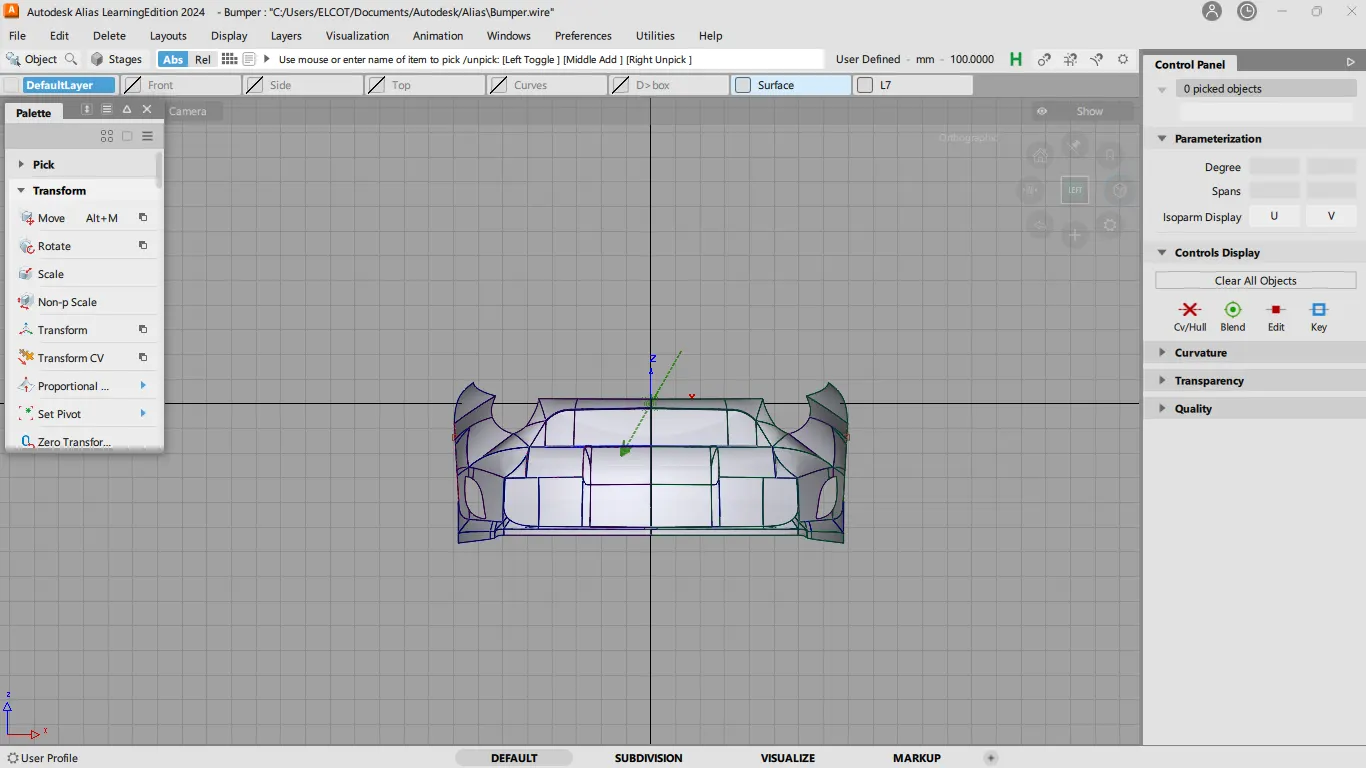
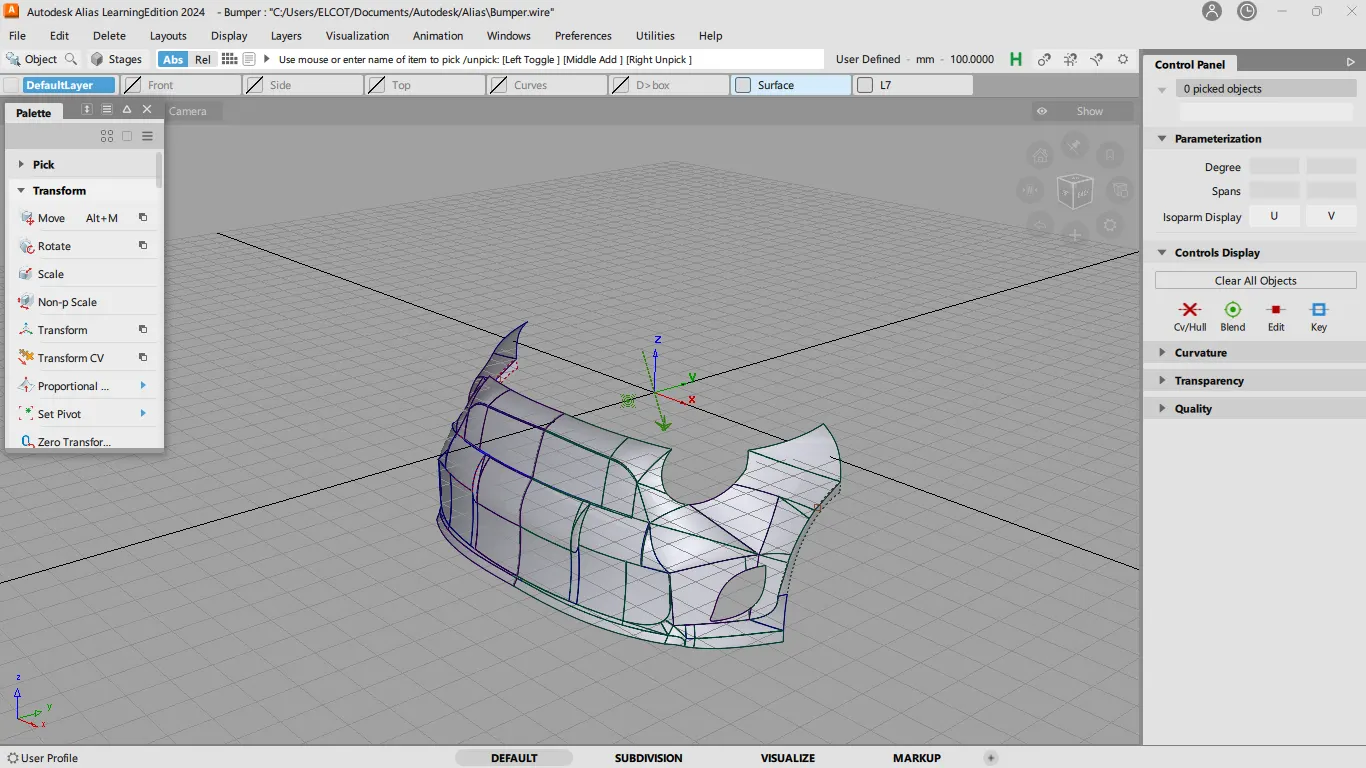
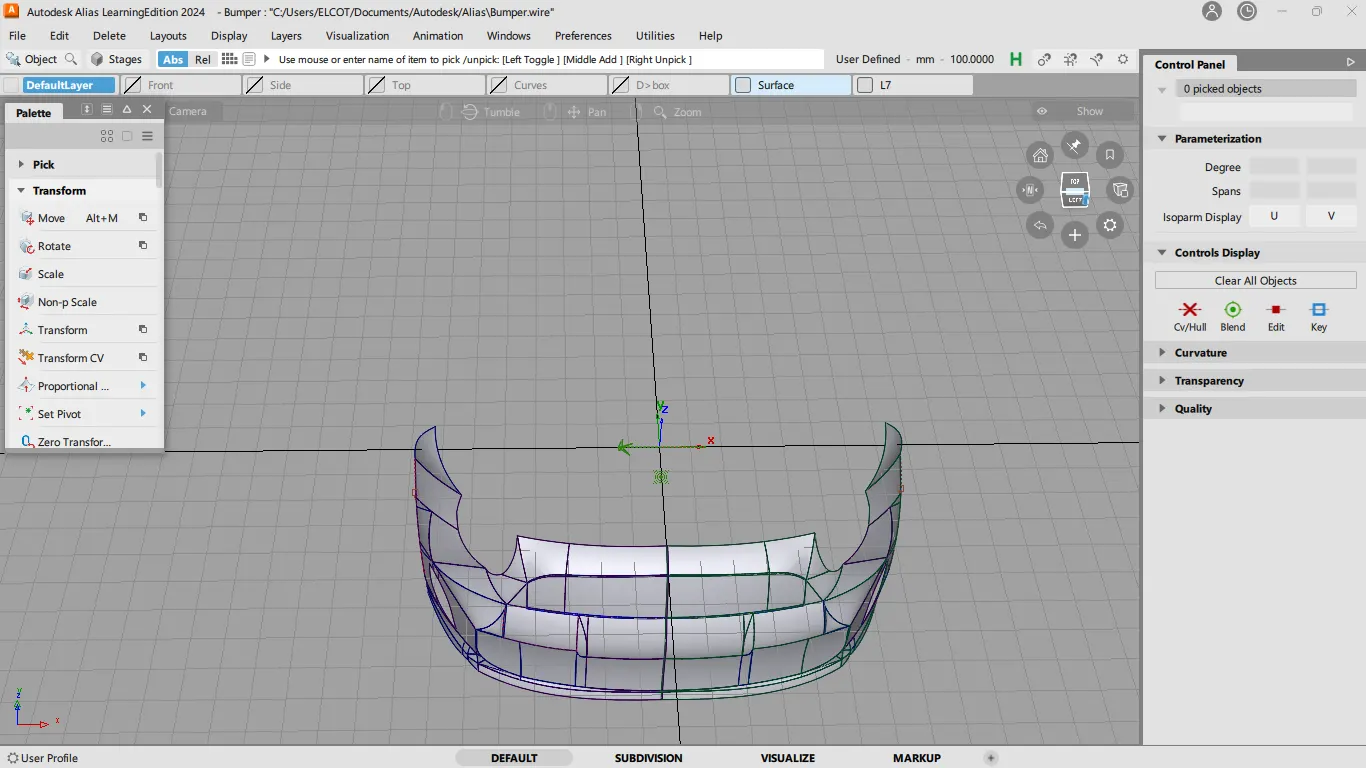
Conclusion:
The creation of the automotive bumper surface using Autodesk Alias software achieved its objectives by integrating advanced surface modeling techniques and design principles. The systematic design methodology ensured a structured approach, resulting in a bumper design that harmonizes safety, aesthetics, and functionality. The screenshots provide a comprehensive view of the final surface model, showcasing the intricate details and refined surfaces achieved using Autodesk Alias. This project contributes to the advancement of automotive design and highlights the software's capabilities in creating complex and visually appealing surfaces for automotive components.