Boeing-747 _ Final_Project of Boeing
Part files link : Gdrive
Title of the Project: Concept Modeling of Boeing 7478 Parts and Assembly in SolidWorks with Photo 360 Rendering
Objective:
The primary objective of this project is to create a comprehensive conceptual model of Boeing 7478 parts using SolidWorks, emphasizing the utilization of various tools for efficient design and assembly. The project aims to showcase the capabilities of SolidWorks in simulating the intricate components of the Boeing 7478 and provide visually appealing renderings using the Photo 360 feature.
Introduction:
The Boeing 7478 is an iconic aircraft, and this project delves into the conceptual modeling of its parts using SolidWorks, a leading 3D computeraided design (CAD) software. SolidWorks offers a robust platform for designing complex mechanical assemblies, making it an ideal choice for aerospace engineering projects.
Design Methodology/Approach:
The design methodology involves a systematic approach to conceptualize and model Boeing 7478 parts in SolidWorks. The following key steps are used to design boeing 747:
1. Define Project Scope
2. Gather Reference Materials
3. Create Part Sketches
4. Utilize SolidWorks Features (Extrude, Revolve, Loft, etc.)
5. Assemble Parts into Subassemblies
6. Apply Materials and Textures
7. Rendering using Photo 360
Description:
The project extensively uses SolidWorks features to model Boeing 7478 parts. Key tools employed include:
1. Sketching Tools: Used for creating 2D profiles of parts.
2. Extrusion and Revolve Features: Applied to convert 2D sketches into 3D components.
3. Loft and Sweep Features: Employed for modeling complex and aerodynamic surfaces.
4.Split line: Used to split the face
5.Combine, split: Combine two bodies split the bodies
6. Assembly Tools: Facilitate the integration of individual parts into a complete aircraft model.
7. Materials and Textures: Applied to enhance the realism of the model.
Rendering Details and Images:
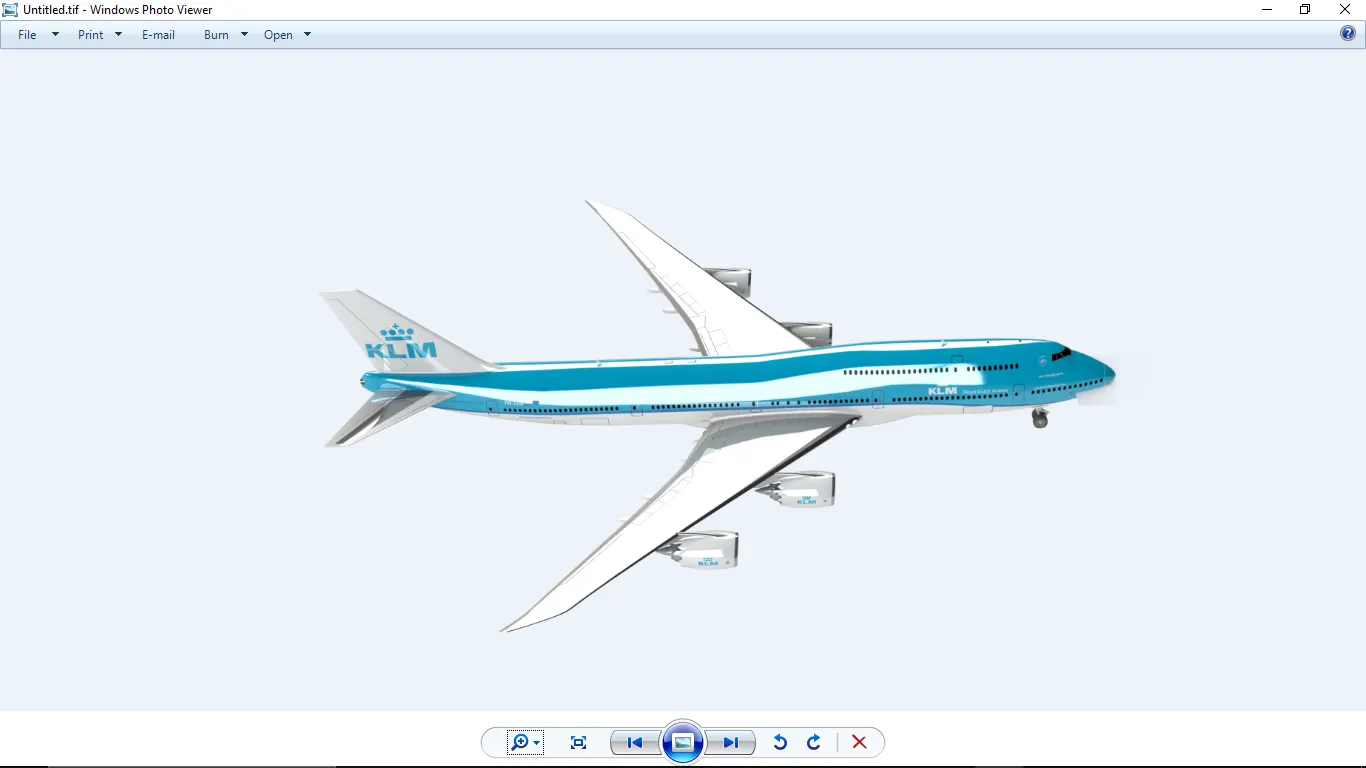
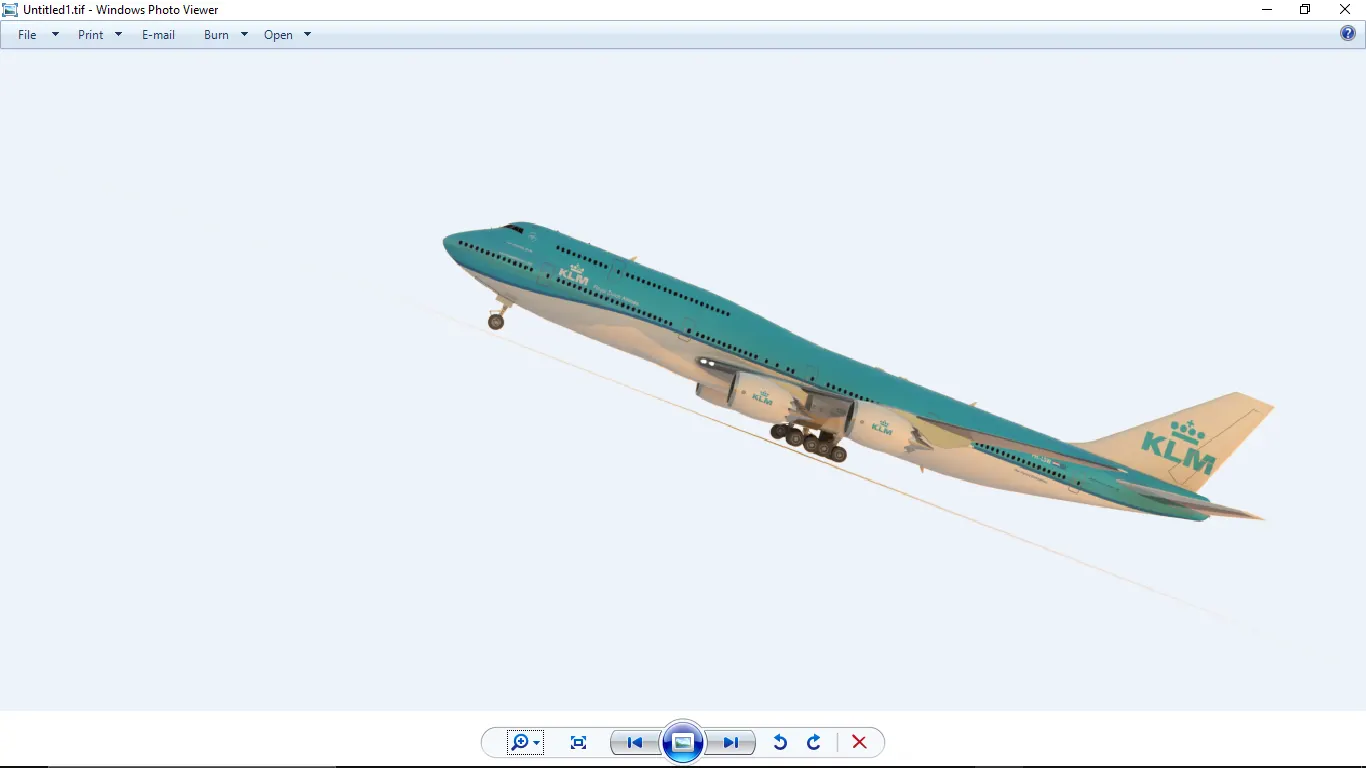
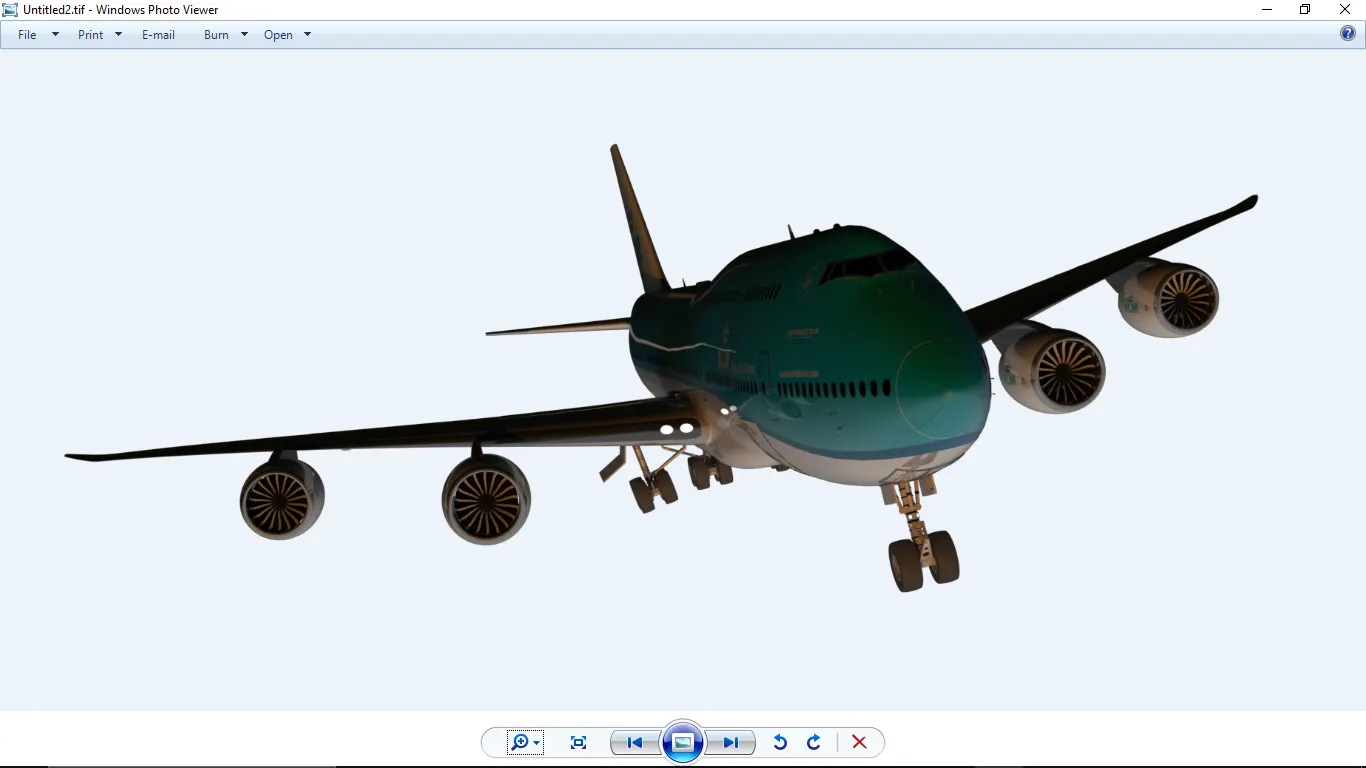
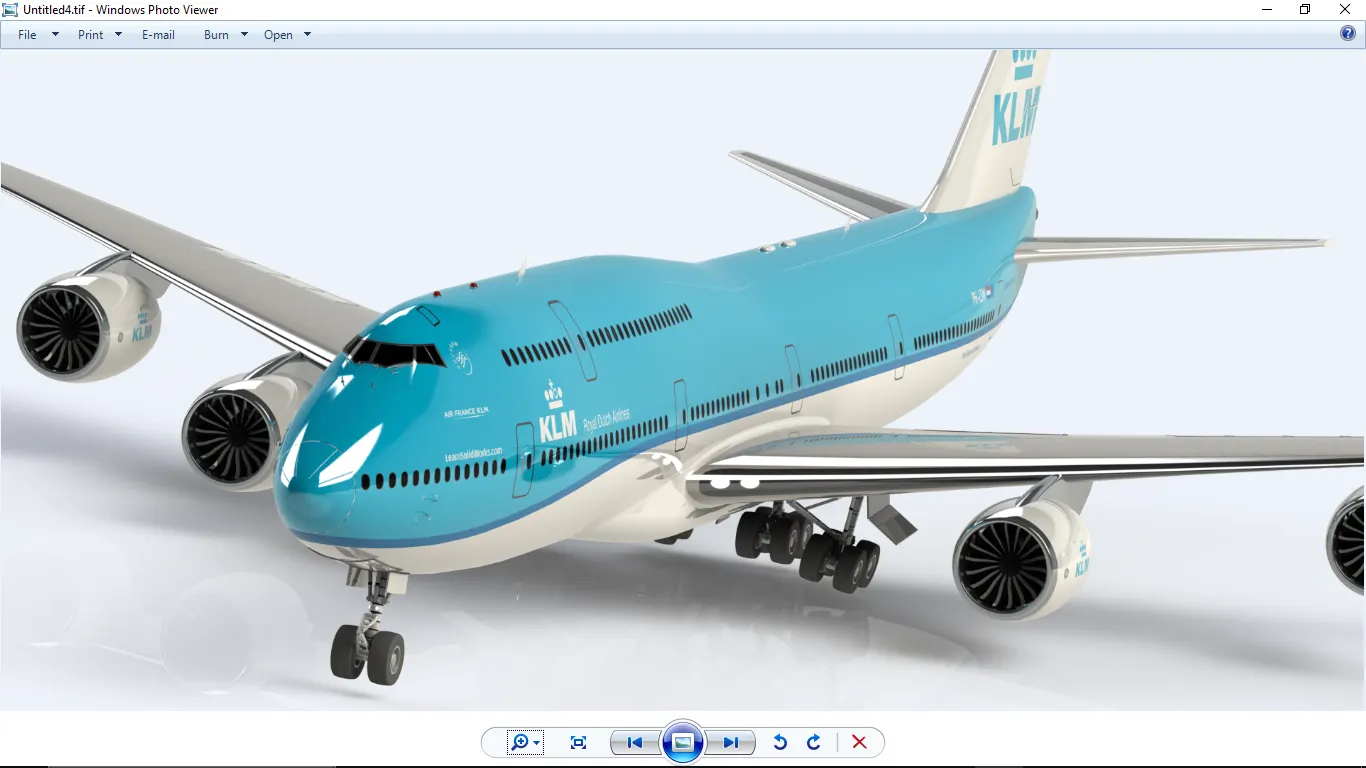
Four renderings have been generated using SolidWorks Photo 360, showcasing different perspectives of the Boeing 7478 model. These renderings highlight the realistic textures, reflections, and shadows applied to the model.
Conclusion:
The project successfully demonstrated the capability of SolidWorks in conceptual modeling of Boeing 7478 parts. The use of advanced features and tools, combined with Photo 360 rendering, resulted in a visually appealing and realistic representation of the aircraft. This project contributes to showcasing SolidWorks as an effective tool for aerospace engineering design and visualization. Future work could involve additional detailing, dynamic simulations, and integration with other engineering software for a more comprehensive analysis.