Bird Strike - Project - 2
Bird Strike
A bird strike is strictly defined as a collision between a bird and an aircraft which is in flight or on a take off or landing roll. The term is often expanded to cover other wildlife strikes - with bats or ground animals.
Bird Strike is common and can be a significant threat to aircraft safety. For smaller aircraft, significant damage may be caused to the aircraft structure and all aircraft, especially jet-engined ones, are vulnerable to the loss of thrust which can follow the ingestion of birds into engine air intakes. This has resulted in a number of fatal accidents.
Bird strikes may occur during any phase of flight but are most likely during the take-off, initial climb, approach and landing phases due to the greater numbers of birds in flight at lower levels. Since most birds fly mainly during the day, most bird srikes occur in daylight hours as well.
Effects
The nature of aircraft damage from bird strikes, which is significant enough to create a high risk to continued safe flight, differs according to the size of aircraft. Small, propeller-driven aircraft are most likely to experience the hazardous effects of strikes as structural damage, such as the penetration of flight deck windscreens or damage to control surfaces or the empennage. Larger jet-engined aircraft are most likely to experience the hazardous effects of strikes as the consequences of engine ingestion. Partial or complete loss of control may be the secondary result of either small aircraft structural impact or large aircraft jet engine ingestion. Loss of flight instrument function can be caused by impact effects on the Pitot Static System air intakes which can cause dependent instrument readings to become erroneous.
Complete Engine failure or serious power loss, even on only one engine, may be critical during the take-off phase for aircraft which are not certificated to 'Performance A' standards. Bird ingestion into one or more engines is infrequent but may result from the penetration of a large flock of medium sized birds or an encounter with a smaller number of very large ones.
In some cases, especially with smaller fixed wing aircraft and helicopters, windscreen penetration may result in injury to pilots or other persons on board and has sometimes led to loss of control. (See the images at the foot of this article.)
Although relatively rare, a higher altitude bird strike to a pressurised aircraft can cause structural damage to the aircraft hull which, in turn, can lead to rapid depressurisation. A more likely cause of difficulty is impact damage to extended landing gear assemblies in flight, which can lead to sufficient malfunction of brakes or nose gear steering systems to cause directional control problems during a subsequent landing roll. A relatively common but avoidable significant consequence of a bird strike on the take off roll is a rejected take off decision which is either made after V1 or which is followed by a delayed or incomplete response and which leads to a runway excursion off the end of the departure runway
Procedure
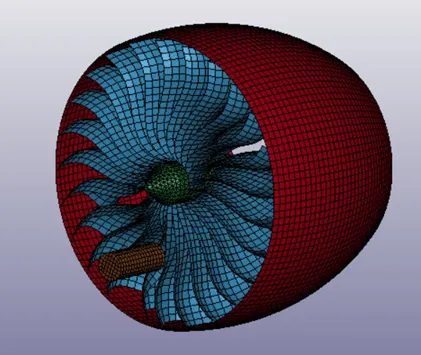
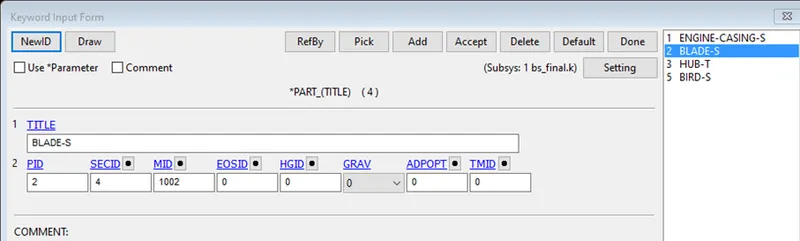
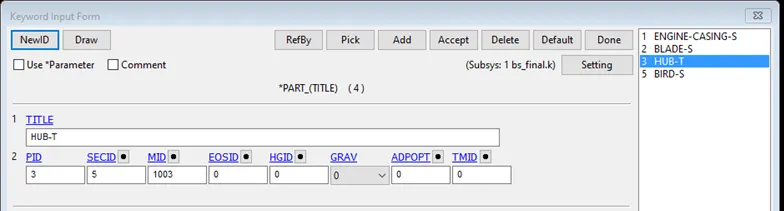
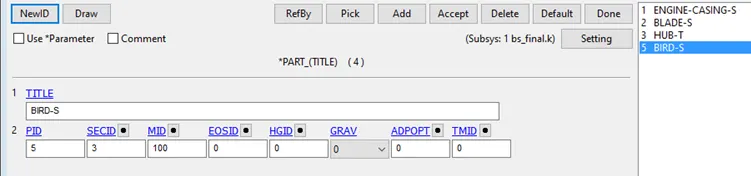
The given keyword file BIRD_STRIKE consists of nodes and elements for all four parts Engine casing, blades,hub and blades
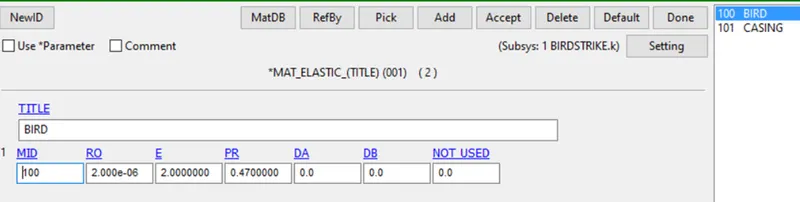
The materials _elastic card is selected bird.
The given properties are density as 2 e-6 ,Youngs modulus as 2 ,Poisson ratio as 0.4700.
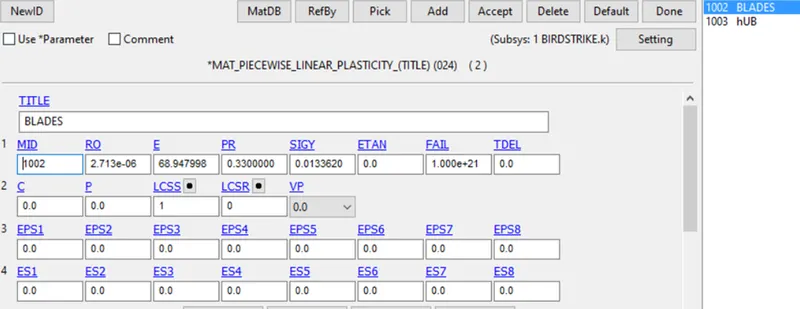
For Blades ,
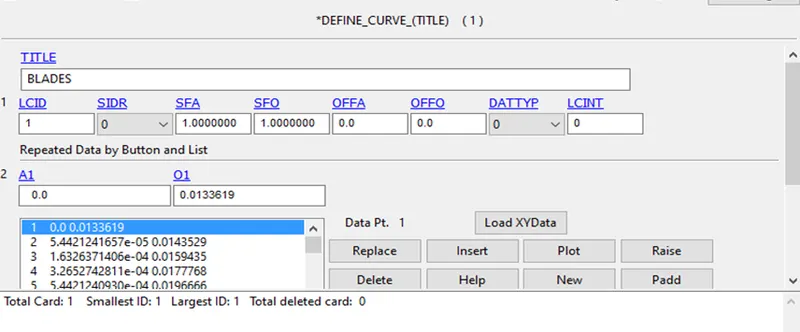
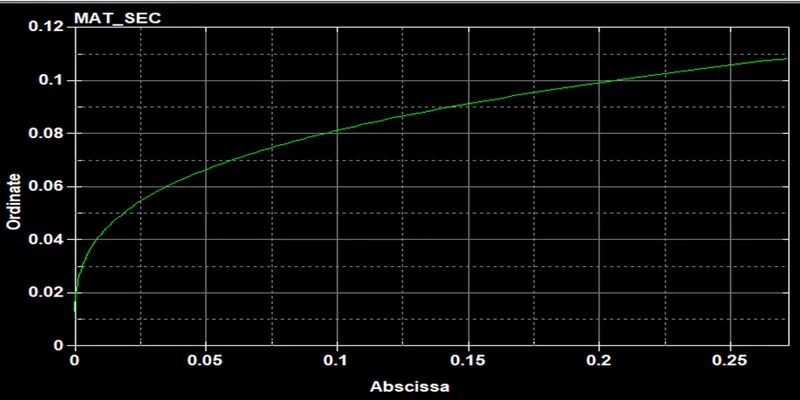
*MAT_24_Piecewise_Linear_plasticity card is given with properties of Aluminium , Density as 2.713e-6 , Young’s modulus as 68.946999,Poisson ratio as 0.3300 and input the load curve ID as plastic strain data behavior
Engine Casing
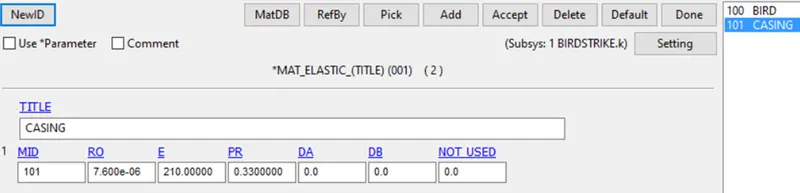
For Engine Casing , *MAT_Elastic card is used
Density as 7.6e-6,Young’s modulus as 210,Poisson ratio as0.33.
Hub
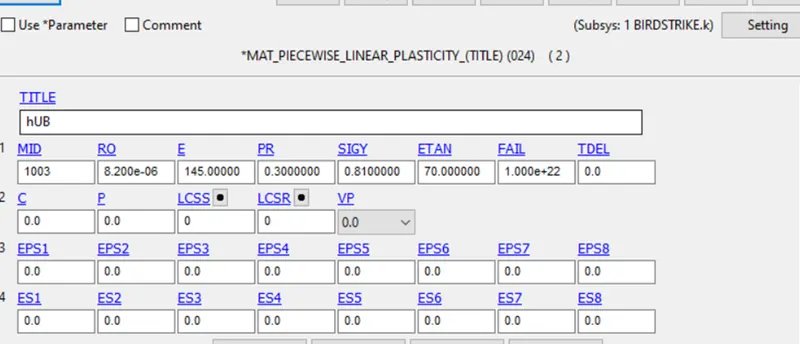
For Hub, *MAT_24_Piecewise_Linear_plasticity card is given with properties
Density as 8.2e-6,Poisson ratio as 0.30 ,Yield stress 0.810 , Tangent modulu as 70.
Section
Section card is created and assigned to the bird , blades , casing and hub
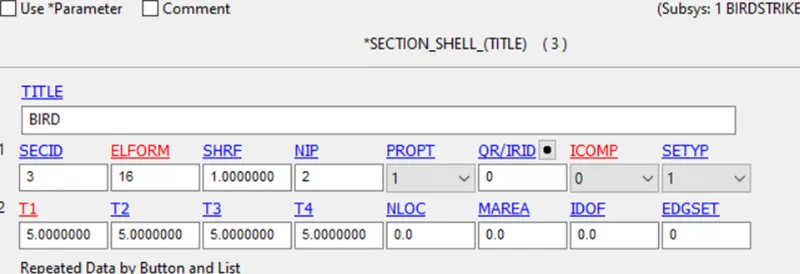
Shell thickness as 5mm for bird
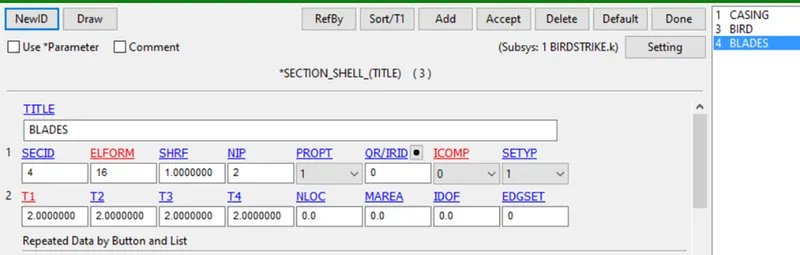
Shell thickness as 2mm for blades
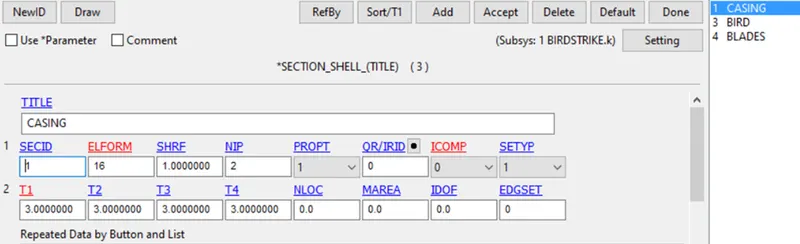
Shell thickness as 3mm for casing
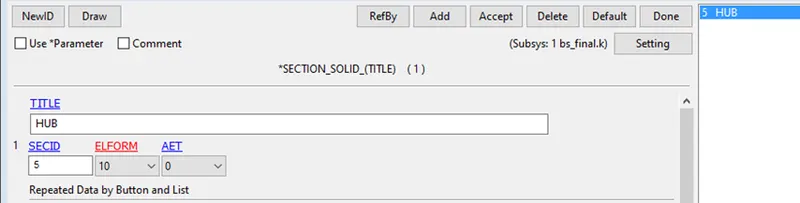
Solid section for hub
Assign all the material and properties according to the parts
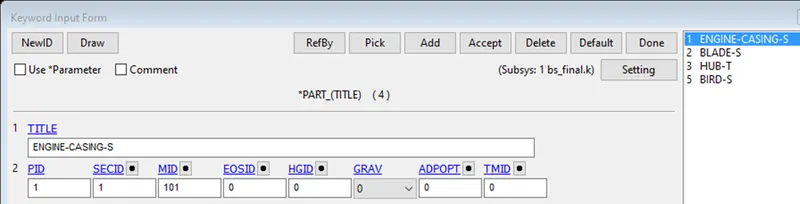
Contact
Contact are created using Part ID type, SS TYPE 3 3.
*CONTACT_AUTOMATIC_SINGLE _SURFACE is used as blade as slave
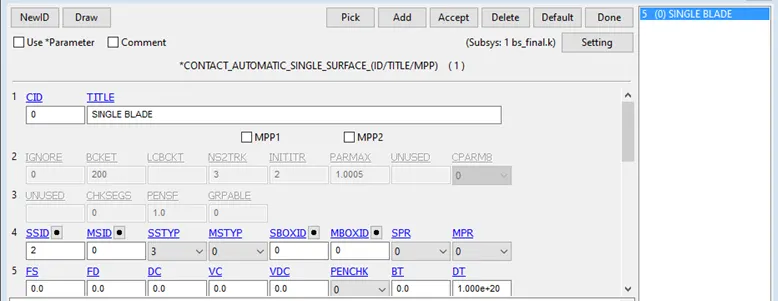
Contact are created using Part ID type, SS TYPE 3 & MS TYPE 3.
*CONTACT_AUTOMATIC_SURFACE_TO_SURFACE is used as the bird to be slave and blade as a master
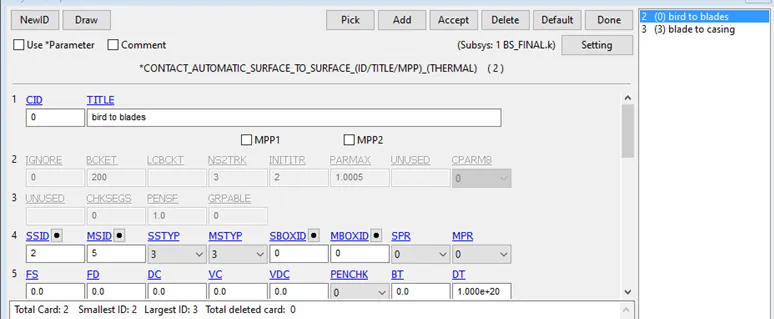
Contact are created using Part ID type, SS TYPE 3 & MS TYPE 3.
*CONTACT_AUTOMATIC_SURFACE_TO_SURFACE is used as the blade to be slave and casing as a master.
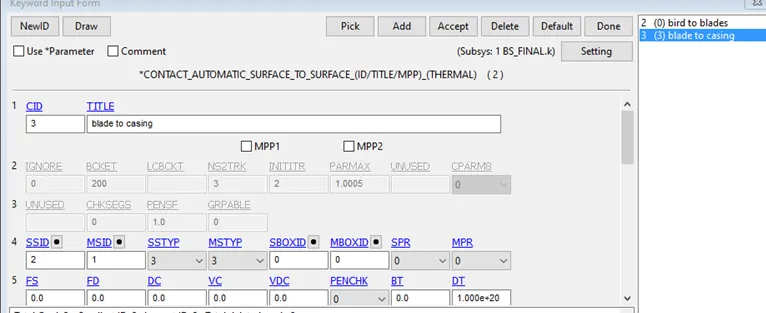
Contacts are created using part ID type, SS TYPE 3 & MS TYPE 3.
*CONTACT_TIED_SURFACE_TO_SURFACE is used to tied the surface with the blades as a slave and hub as master.
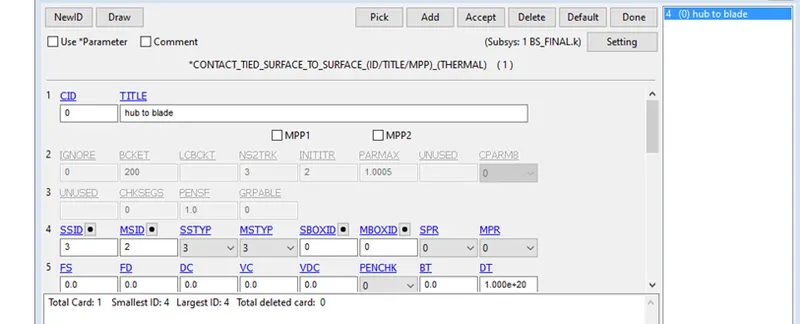
Boundary Condition
SPc
Casing is fixed
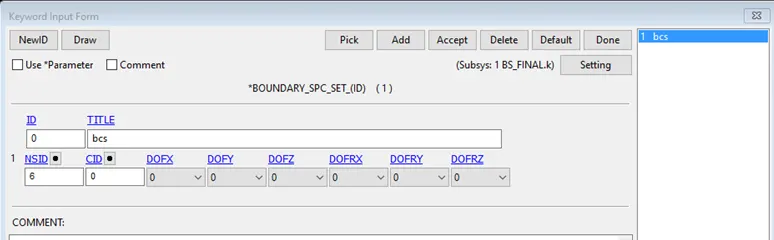
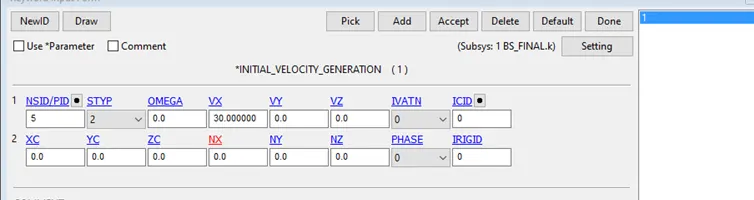
Initial velocity
Here the velocity of bird is assigned to be VX=30mm/ms along the X-axis translative direction
Control termination = end time as 10
Control_timestep = DT2MS -0.001
Database GLSTAT,MATSUM is 0.1
Database_Binary_D3PLOT is 0.1..
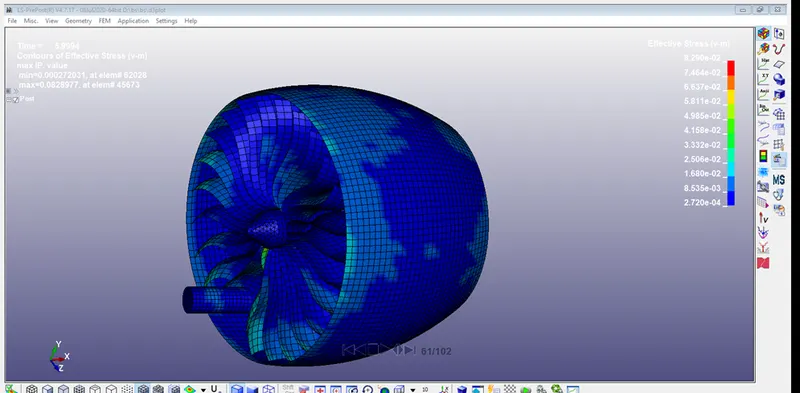
Contour plots _Von Mises stress.
Max stress 0.000272031 at element 62028
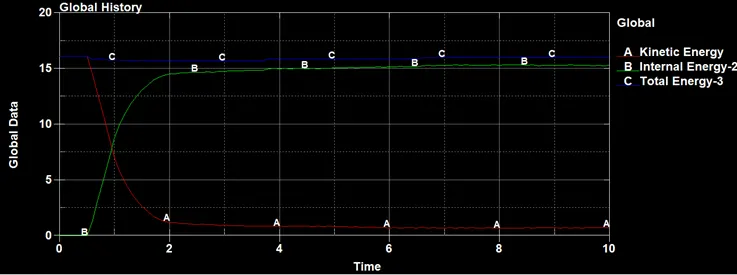
Energy graph
Conclusion
Finally ,the simple birs strike on the Aircraft, simulation was carried out using LS Dyna and results are plotted above.