Bird Strike - Project - 2
OBJECTIVES:
To simulate Bird Strike in Aero Engine, The problem is to be solved using generic explicit solver.
- The blades should rotate at a constant velocity but the casing should remain stationary.
- The cylindrical bird model should travel along its own axis and hit the blades.
- Use elastic material for the bird(2000MPa) and the casing(200GPa).
- Follow a consistent numbering approach 100000+ for nodes, 500000+ for elements, and 1000+ for the parts.
- All keywords should be seperately saved and merged in main Output file.
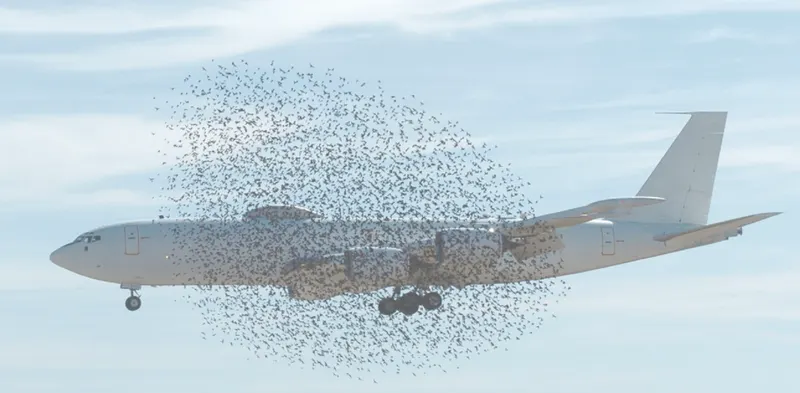
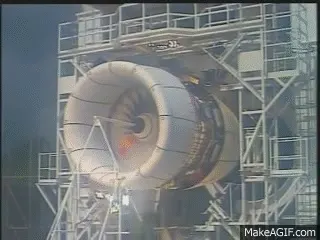
Bird strike on jet engine is a collision, that significant threat to flight safety casualties. Computational methods are performed to analse on structural components, being an efficient tool compared to the expensive physical certification tests with real birds. Bird strike simulations on aircraft structures have been performed and improved since the late 1970s. A large variety of bird impactor geometries, materials, masses, densities, and modeling methods exists in the literature. There are three established techniques for numerical bird impactor modeling are used:
- Lagrangian,
- Eulerian,
- and SPH.
> Create a empty keyword file
> Create seperate keywords for all the parameters to be defined for simulation
> Renumber the nodes, elements & parts
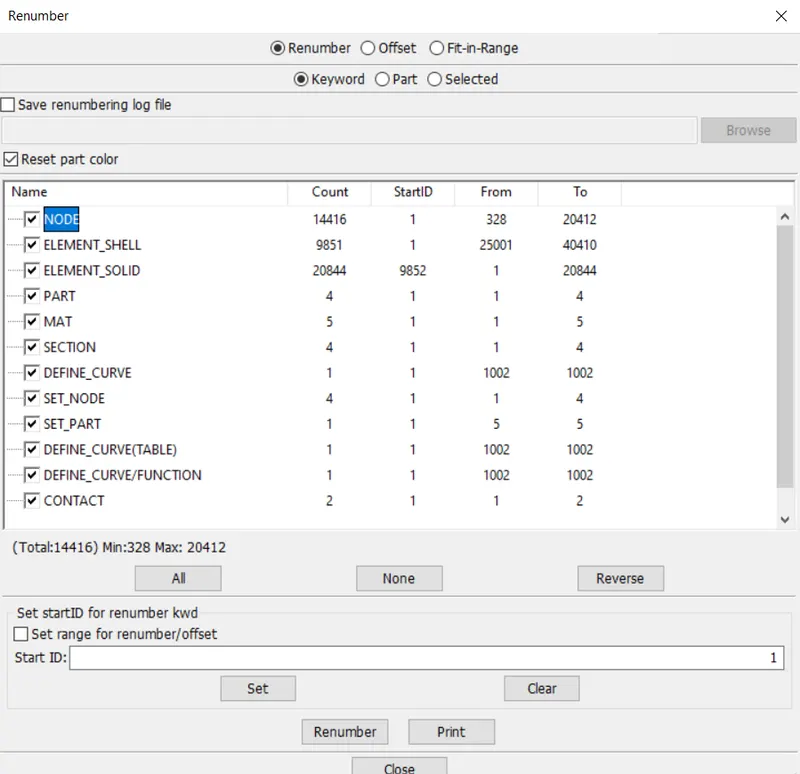
> Open include and include all the keywords
> Edit all the keywords seperately and saved
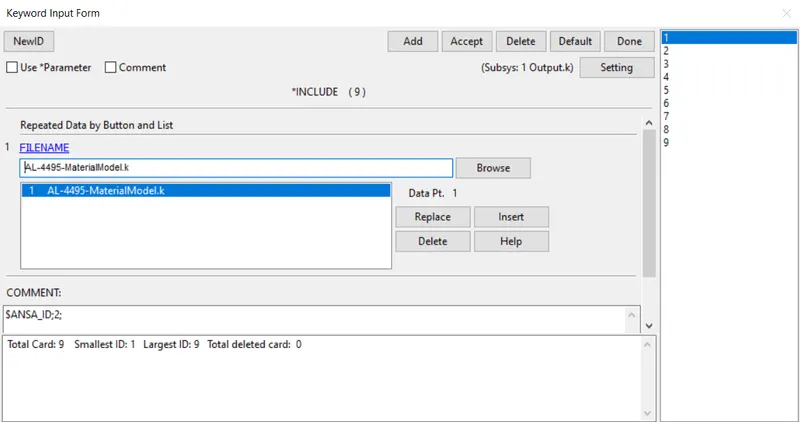
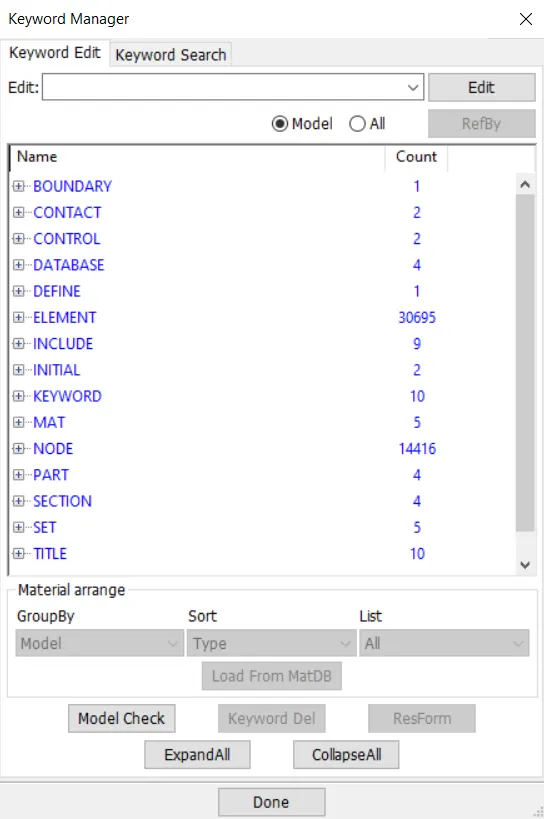
PART
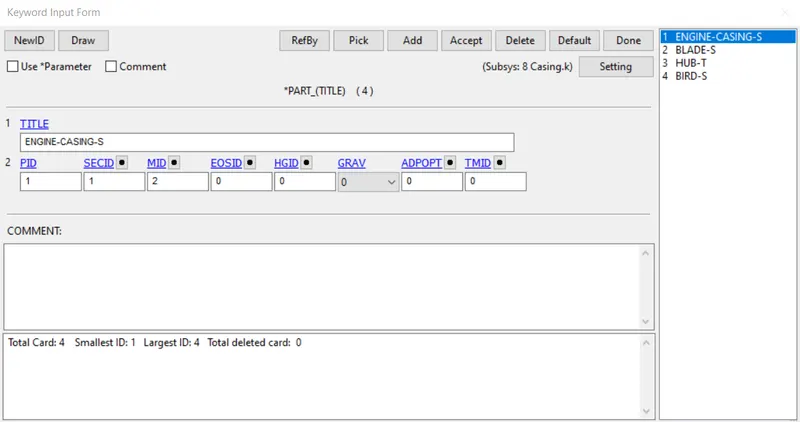
The indivually saved parts are added by using Include > Include
ENGINE_CASING
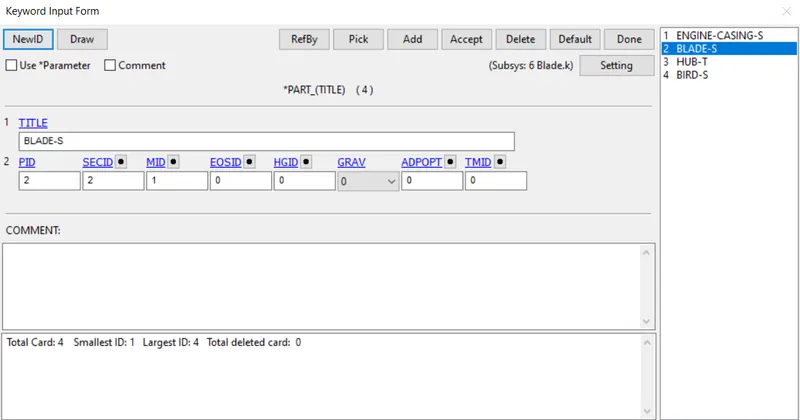
BLADES
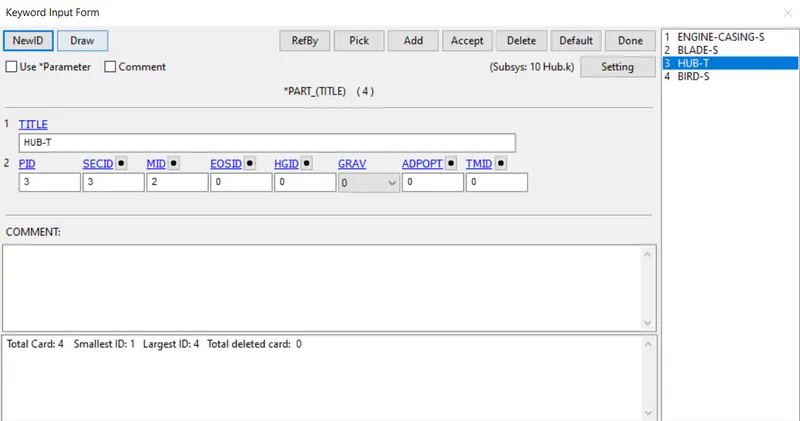
HUB
BIRD
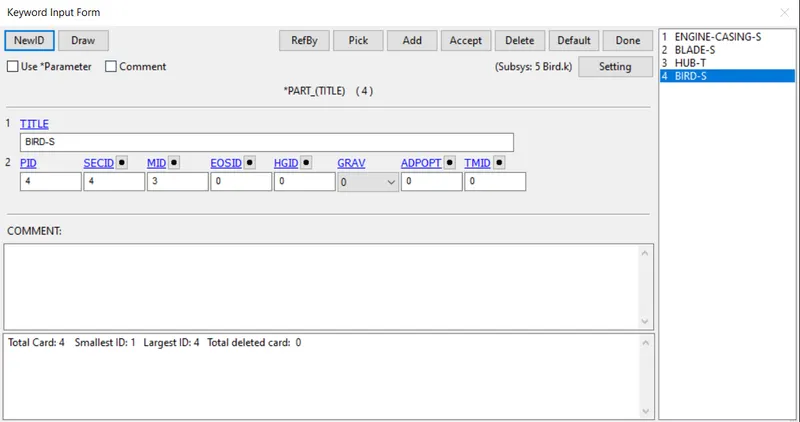
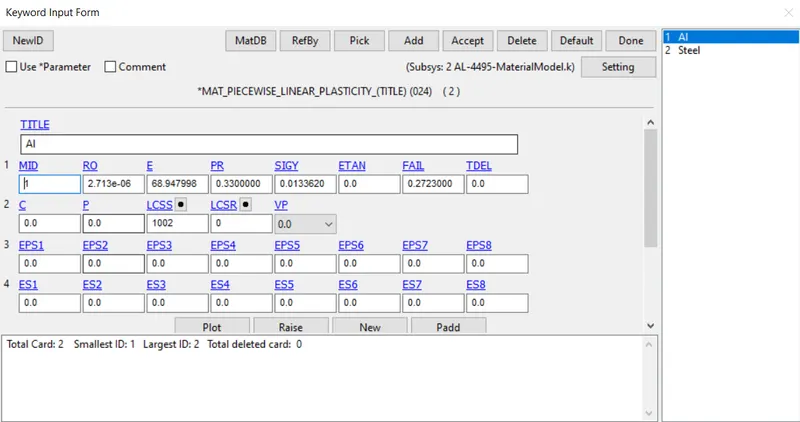
MATERIAL DEFINITION
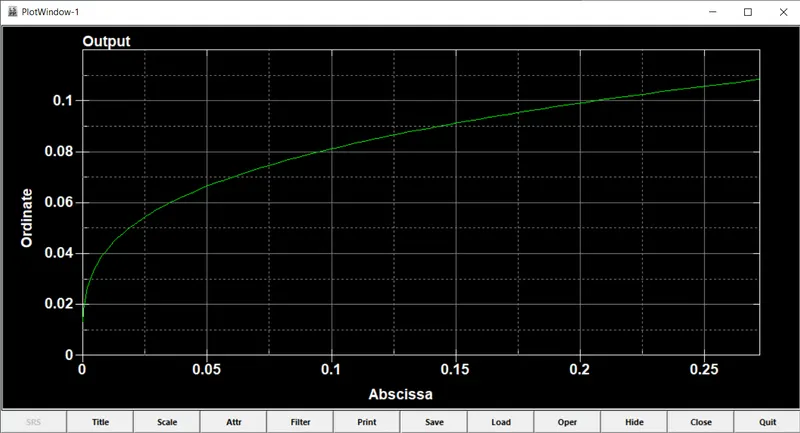
MAT_24 For Blades
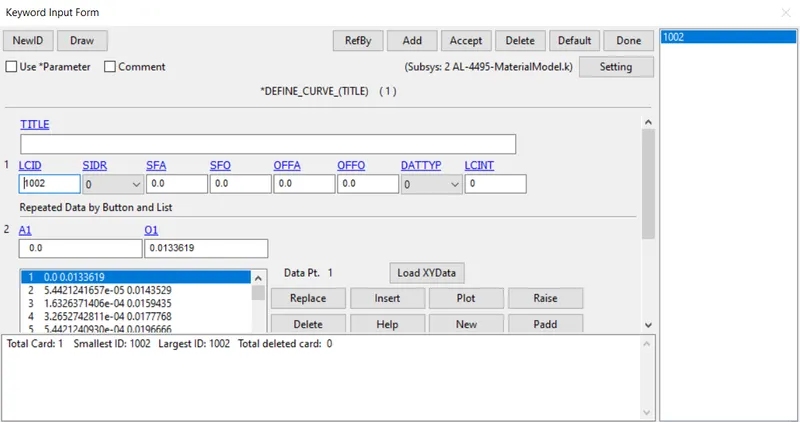
Material_Curve:
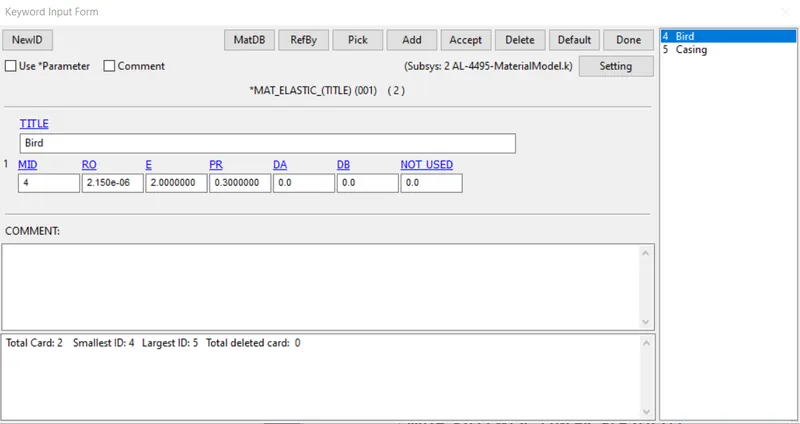
MAT_ELASTIC for Bird & Casing
- Input elastic material for the bird(2000MPa) = 2 Gpa.
- Input elastic material for the casing(200GPa) = 200 Gpa
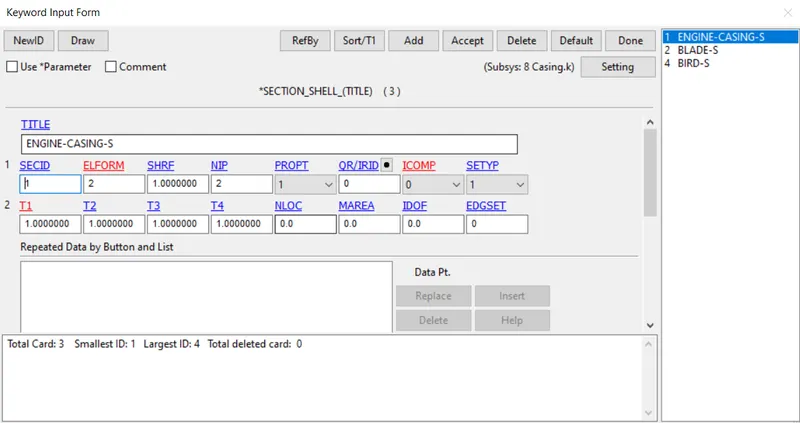
SECTION
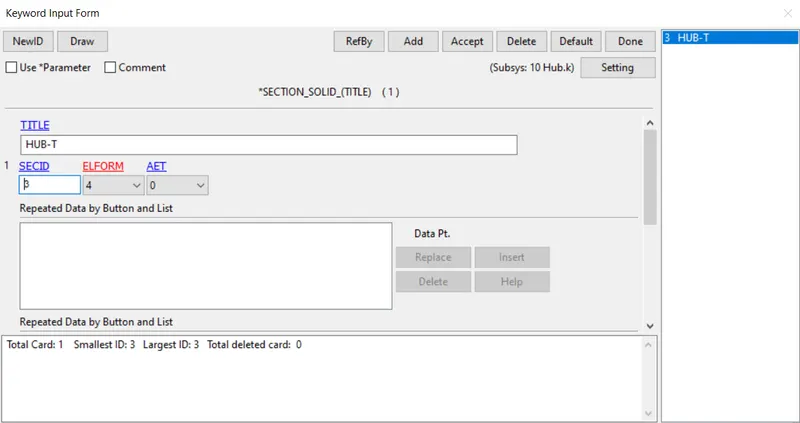
ELFORM:=4 EQ.4: S/R quadratic tetrahedron element with nodal rotations
CONTACTS
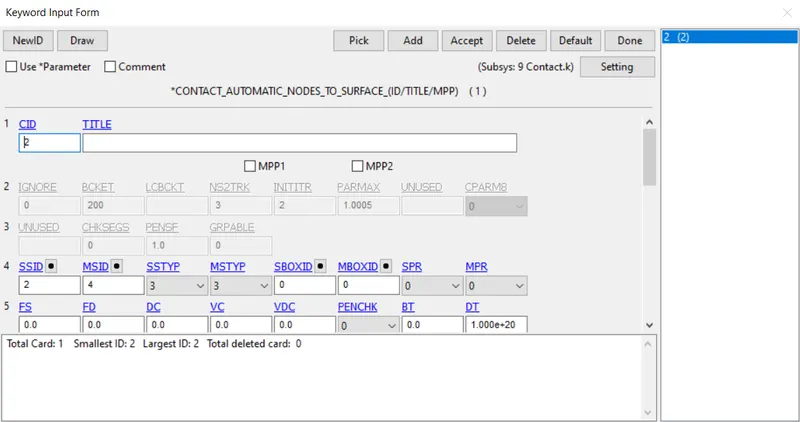
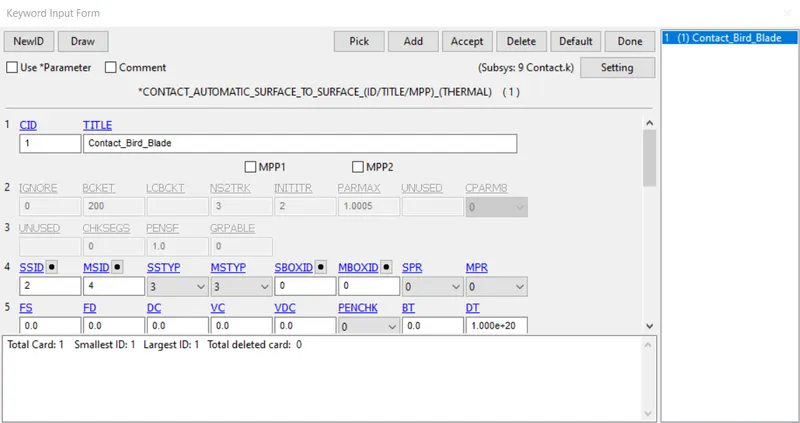
- Automatic Nodes to Surface Contact
It Automatically checks for master and slave with rigids
- Automatic Surface to Surface Contact
It Automatically checks for master and slave with rigids
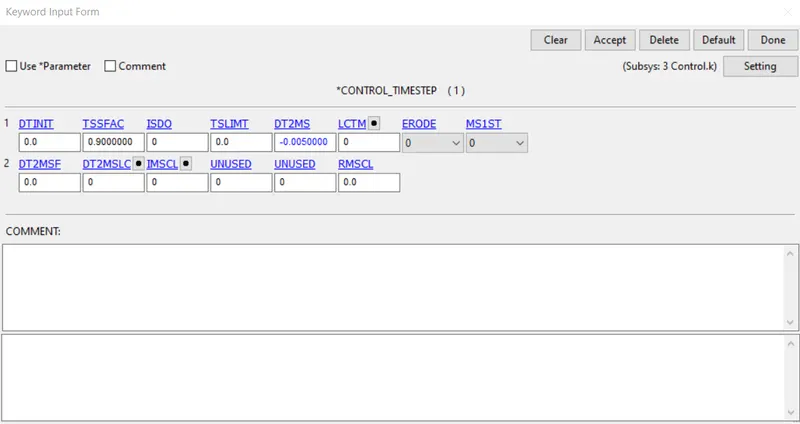
CONTROL
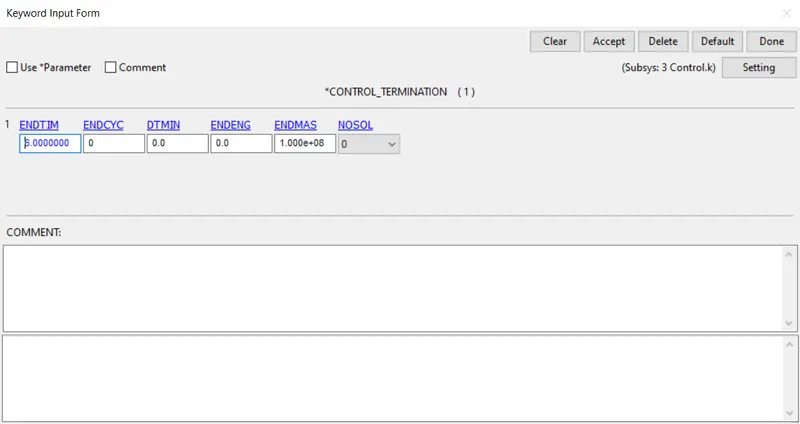
TERMINATION
The End time of 6ms is given
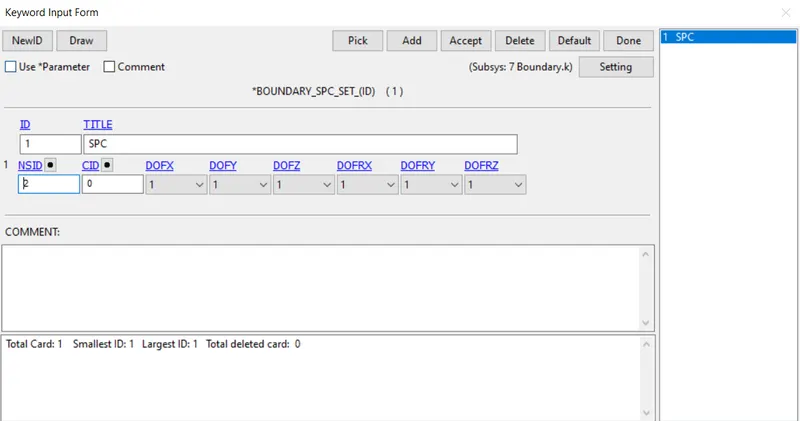
BOUNDARY CONDITIONS:
Casing is constrained in all directions
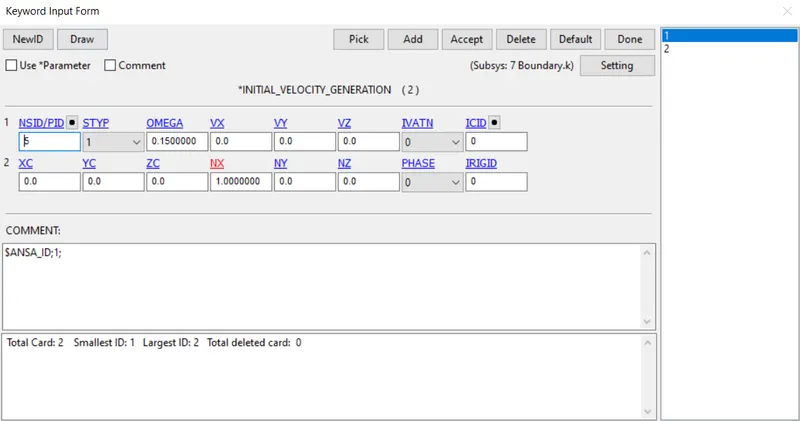
INITIAL VELOCITY
The Blade to be rotated in Nx
DATABASE
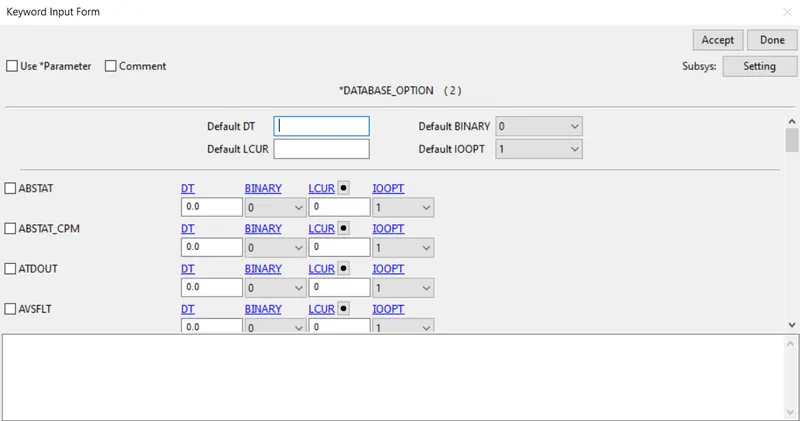
ELOUT:=Element Output Data
GLSTAT:=Global Statistics
MATSUM:=Material Energies
NODOUT:=Nodal Displacement/Velocity/Acceleration data
SLE:=Sliding Interface Energies
Default DT 0.05
For, sleout Binary should be set as 3
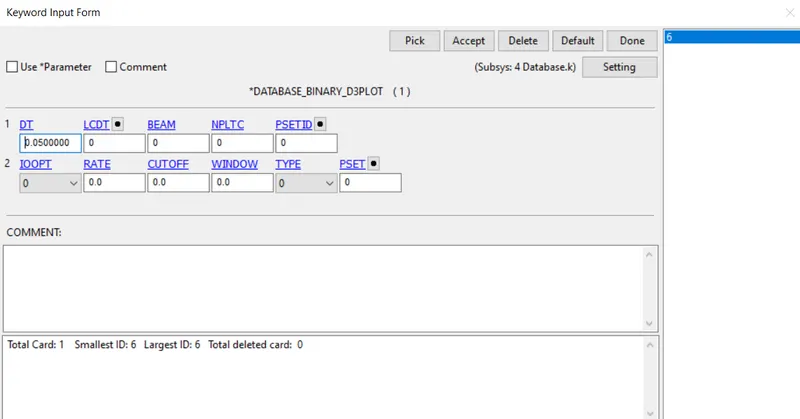
DT:=Time interval between outputs:0.05
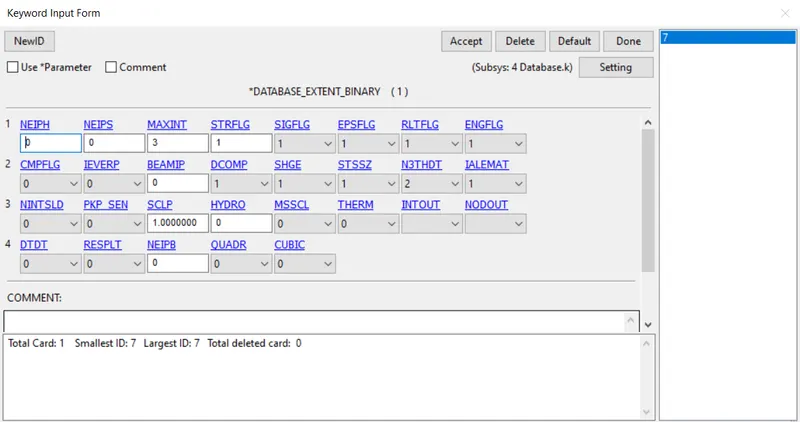
STRFLG-1:=Write plastic strain data to d3plot.
STRFLG-1:=Write thermal strain data to d3plot.
LS RUN >> Simulate
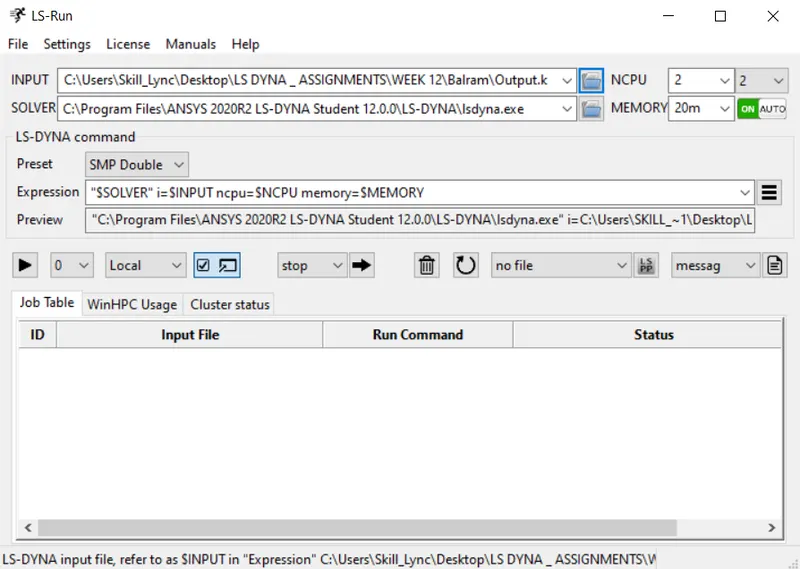
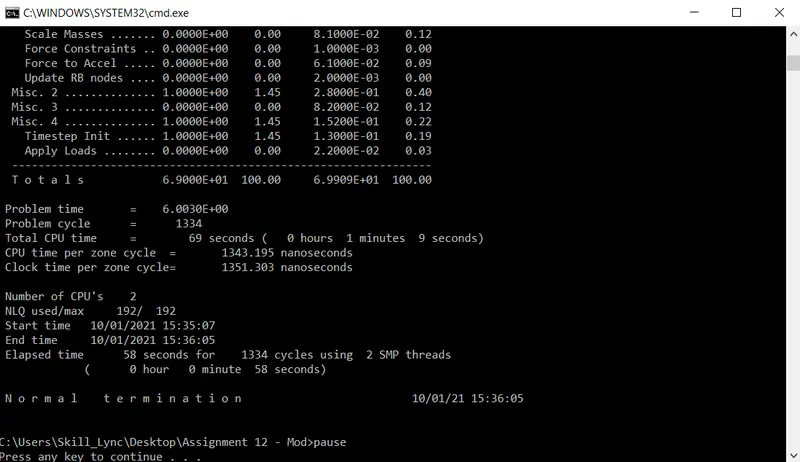
RESULTS & DISCUSSION:
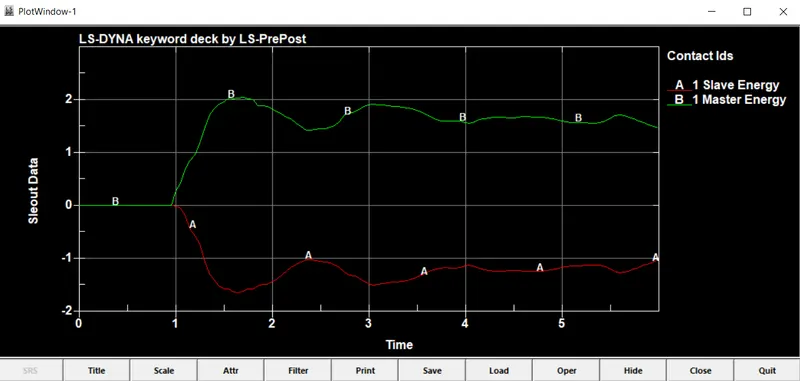
(ii) Global Data gives the energy plots of the simulation
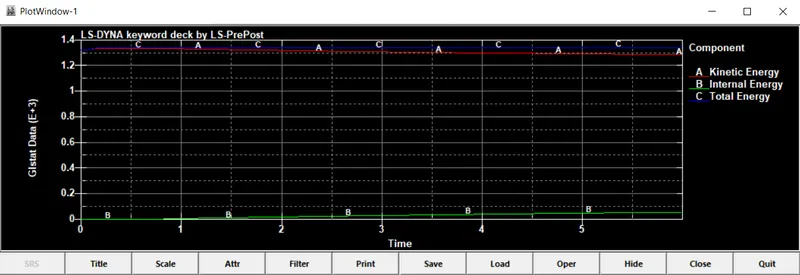
Hereafter the impact, there is still contact between the bird and blades which form sliding energy. In a real case, this will not happen very negligible.
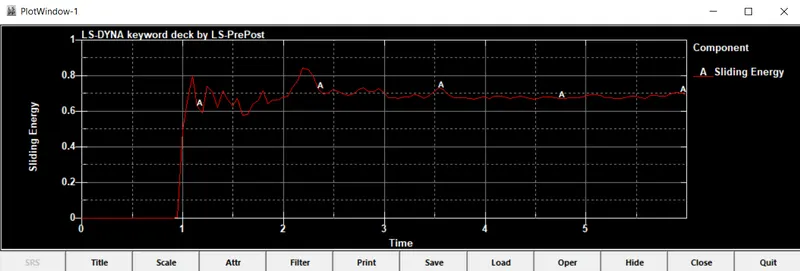
(iii) Sliding Interface Energies: Bird (Slave), and Blade (Master). The contact energy between Blade and Bird is plotted
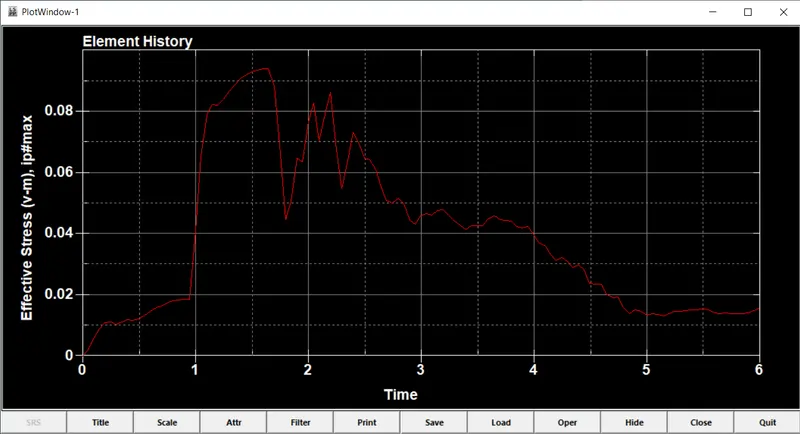
(iv) Time_History of Elements:
1. Effective Stress vs. Time: At the time of 1 ms. The max stress developed is 0.08 Gpa in the blade.
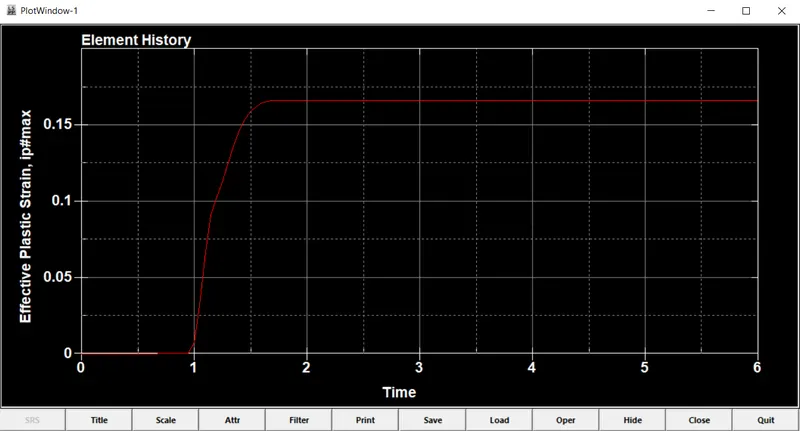
2. Effective Plastic Strain vs. Time: At the time of 1 ms. The max plastic strain developed is 0.115 mm/mm in the blade.
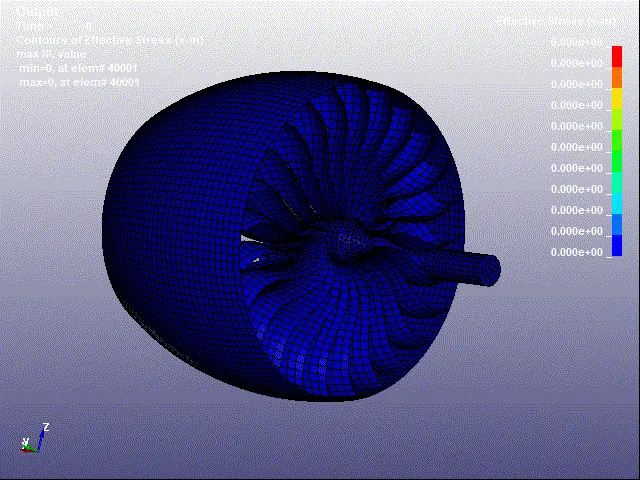
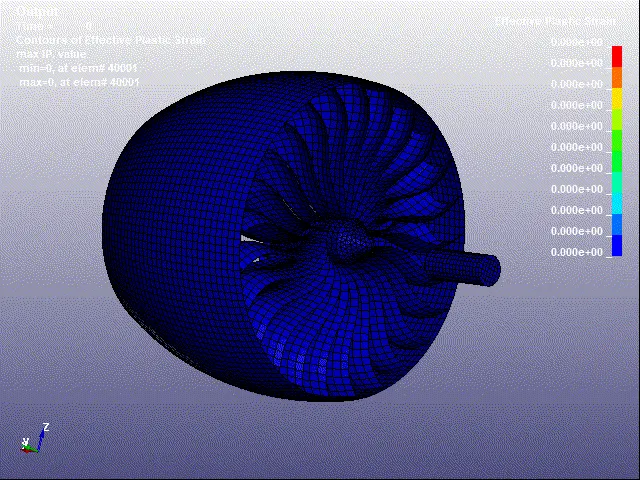
(v) Contour Plots:
1. Effective Stress:
2. Effective Plastic Strain:
CONCLUSION:
Transient-non linear analysis is performed. The bird strike on jet engine model is built and simulated, as per the procedure.The elastic bird model with bone density of bird is induced and the post processing datas are plotted in graphs and in contours.