Benchmarking
- BASICS OF CAR BODIES
The Car Bodies are categorized into two types, based on its initial construction, as shown below,
- Body-on-Frame.
- Monocoque / Uni-Body.
- Body-on-Frame
The Body on Frame was the simple construction of car, which had two segregations, one is the chassis, which forms the lower body of car, which has the engine and drivetrain and the upper body comprises of the covering laid down in support of chassis, which has the pre-assembled side doors, back doors and interiors.
- Although, Body-on-frame, was simple in construction, but had many drawbacks, like heavier weight, Lower fuel economy rating, Rougher rides on normal roads etc.
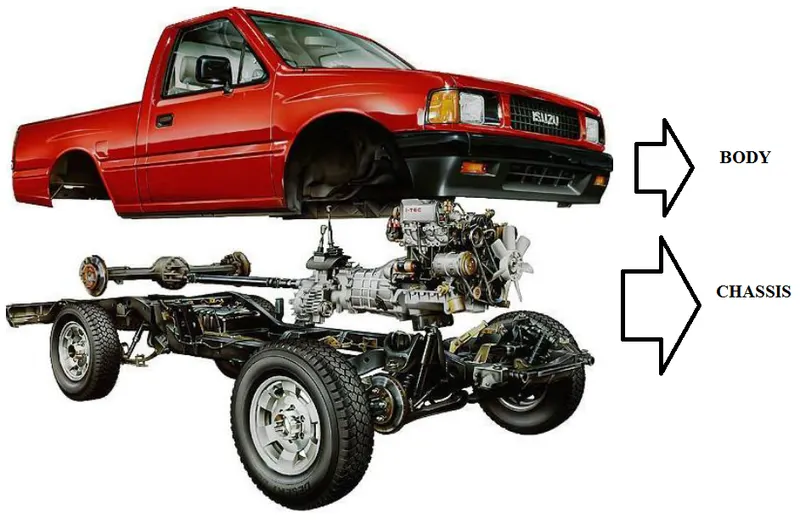
Fig – 1 BODY-ON-FRAME STRUCTURE
- Monocoque / Uni-Body
Monocoque / Uni-Body is a type of body construction in which the body of the vehicle, its floor plan and chassis form a single structure. Such a design is generally lighter and more rigid than a vehicle having a separate body and frame.
- Uni-Body cars have better fuel economy, Smoother ride quality, and stronger internal frame construction.
- Un-Body cars has More expensive design and manufacturing costs and expensive to repair.
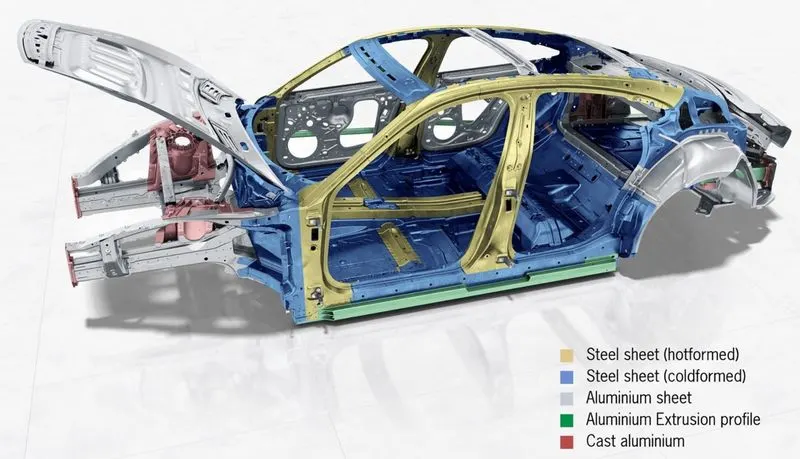
Fig – 2 MONOCOQUE / UNI-BODY STRUCTURE
- VEHICLE DEVELOPMENT PROCESS
Vehicle Development Process is a process in which the design, development and production of a new car is done, in accordance with the customer requirement, in terms of cost, safety ride, efficient mileage and good looking exterior and interior style.
There are four major steps in vehicle development process – namely,
- Pre-Design and Development.
- Design Engineering.
- Development Engineering.
- SOP and Vehicle at market.
- PRE-DESIGN AND DEVELOPMENT
The Pre-Design and Development is the 1st stage of Vehicle Development Process. The main function of Pre-Design and Development is to analyze and understand the customer needs and requirement, for purchasing the vehicle.
Initially, the concept preparation is done, with a view in keeping that the minimum customer requirement is met, in terms of riding, efficient mileage, cost-effective and serving a smooth and safety ride.
- DESIGN ENGINEERING
Design Engineering is the 2nd stage of Vehicle Development Process. The main function of Design Engineering is to picturize, the initial design of the vehicle, based on standard design criteria and generating the same using the necessary / right CAD tool.
The technical aspect plays an important role for designing a new vehicle, which undergoes many modification and changes, with a view to come out as per the set requirements as a final assembly, by collaborating all the sub-parts of vehicle.
Once the design of final assembled vehicle is ready, indicating no necessary modifications / changes, then the design stage freezes.
Finally, the vendor agreements / tie – ups are made, for the supply of necessary components/parts/sub-assemblies for the procurement process.
- DEVELOPMENT ENGINEERING
Development Engineering is the 3rd stage of Vehicle Development Process. The main function of Development Engineering is to manufacture the vehicle as per the set design in a sequential manner from raw material to final assembled product, by using production technology and undergoing a standard quality analysis, so that the deviations are occurred at the minimum rate.
- START OF PRODUCTION and Vehicle at Market
Start of Production and Vehicle at market is the last stage of the Vehicle Development Process. In this Stage, the customers are introduced with the vehicle, where all the features are explained and marketing of the newly launched vehicle is initiated.
The Customer Feedback is received and analyzed, in order to understand the necessary changes and modification that can be done, in order to enhance the customer’s needs and requirements.
JDP, an organization, which rates the vehicle, based on crash test conducted on the vehicle and generates vehicle safety reports / analysis report. The ratings are provided to the vehicle based on damage incurred on the vehicle, post the crash test.
Higher the Score, less is the safety rating and Lower the Score, the rating is high for the vehicle in terms of Crash test conducted.
BENCHMARKING
Benchmarking is a sub-category stage of pre design and development stage. A specific, distinctive vehicle attribute branding is essential to make cars unique and competitive. As a first step on the way, vehicle manufacturers have to benchmark their vehicles in the competitive environment in order to understand and to strengthen or improve the potential of their vehicles.
Benchmarking is the continuous process of measuring products, services and practices against the toughest competitors or those companies recognized as industry leaders with respect to Automobile genre.
Benchmarking is particularly useful when comparing not only performance but also practice – in other words what do the different organizations do to enable that performance to be delivered? And applied in this way it is a powerful tool in process innovation sin e studying how the ‘best’ achieve their performance can provide powerful clues for changing the way processes operate.
Process benchmarking of this kind can operate at several levels:
- Between similar processes in the same factory or service branch.
- Between different factories or service branches.
- Between different competing organizations.
- Between different sectors using the same process.
BENCHMARKING EXERCISE - WEEK 1
Mr. D.S. Pughazhyendhii is a married man who lives in Bangalore which is highly crowded city. His family comprises of 5 members including his wife, 5-year boy, father and his mother. He once in a month visits his native place Madurai which is almost 500 kms away from Bangalore. Also, he will be using his car to commute to his office. His budget falls between 8 lakhs to 10 lakhs on road. Please suggest him with options so that he will buy a good car for his family.
NOTE: PUGHAZHYENDHII is fond of BIG CARS
Exercise Analysis
The Above Exercise is analyzed as shown below,
- D.S. Pughazhyendhii is a married man and has five members in his family. Hence, the requirement of 5-seater/6-seater car is required.
- D.S. Pughazhyendhii, visits once in a month to his native place – Madurai, which is 500kms away from Bangalore and also to travel daily to his work office.
- D.S. Pughazhyendhii likes big cars and wants the budget of the car between 8 lakhs to 10 lakhs on road.
Benchmarking
Based on the exercise analysis made, the conclusion arrives at selection of Compact SUV being the right type of car variant, with respect to the following highlights shown below,
· Difference in Size
Most of the people prefer opting for a full-size SUV while many want to go for a compact vehicle. The compact SUVs tend to provide the best of both worlds. While it gives the feel of a full-size SUV, it doesn’t feel like a bulky ride.
Compact SUVs turn out to be the perfect ride in the city and on the highways. Whereas SUVs doesn’t turn out to be a car, you want to get stuck with, in traffic. The size makes it difficult to handle and ride until and unless you eventually get used to it.
· The Mileage of a Compact SUV
When it comes to mileage, SUVs aren’t the best bet. However, compact SUVs are here to solve that problem.
While the big powerful engines gulp down fuel, compact SUVs have better mileage. To give you a perspective, Maruti Vitara Brezza’s diesel engine gives a mileage of 24 kmpl. Whereas, the Toyota Fortuner has a mileage of 10.1 kmpl. The difference is massive.
· Better Ride and Handling of Compact SUVs
SUVs are good at doing all the sporty stuff. However, in that hunger for achieving the sportiness tag, it lacks the handling quality. Driving around in a big brawny car isn’t something easy to do.
Whereas, compact SUVs actually drive around like a car. The main reason is the way they are built. The SUVs are actually built on a platform which can be built for actual trucks. However, the compact SUVs are built on platforms which are meant for actual cars.
- COMPACT SUV’S COMPARISON
The Compact SUV’s selected for the comparison is shown below,
- Hyundai Venue – S 1.5 CRDi
- Mahindra XUV300 – 1.5 W4
- Kia Sonet-HTE 1.5.
- Tata Nexon – XE Diesel.
Selection Criteria
- The four Compact SUV’s selected for comparison is of Deisel Variants.
- The Transmission of four Compact SUV’s is of MANUAL TYPE.
- The Four Compact SUV’s fall under the price range starting from 8 Lakhs to 10 Lakhs.
- The Total Seating Capacity of all the Four Compact SUV’s is 5, including Driver.
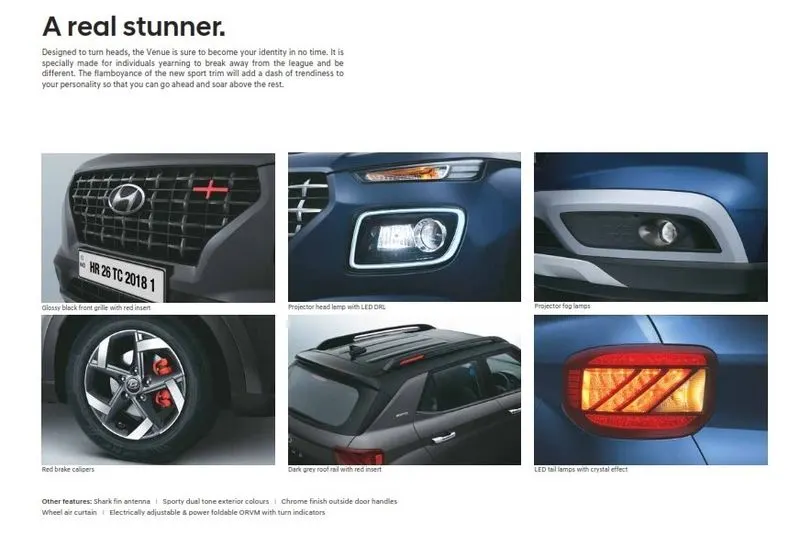
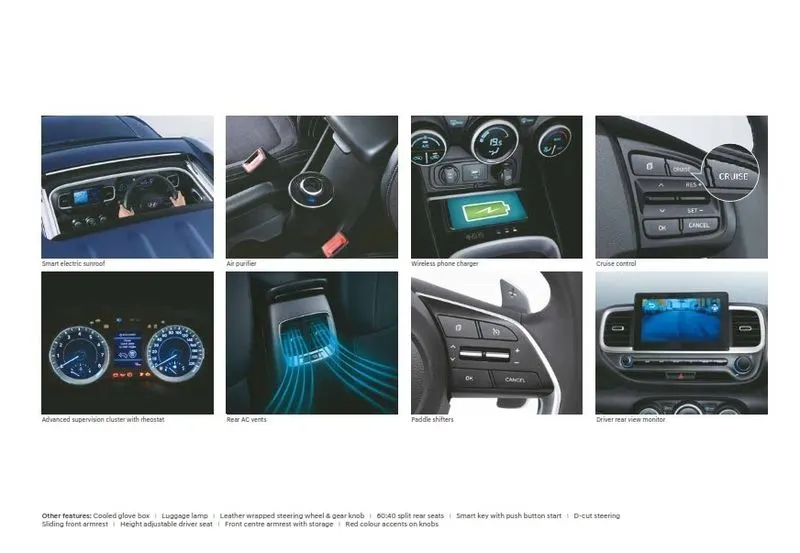
- HYUNDAI VENUE – S 1.5 CRDI
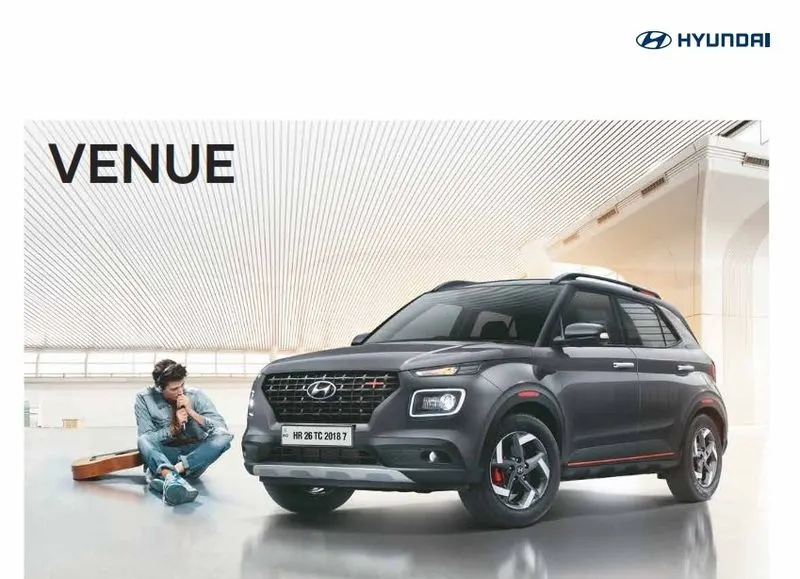
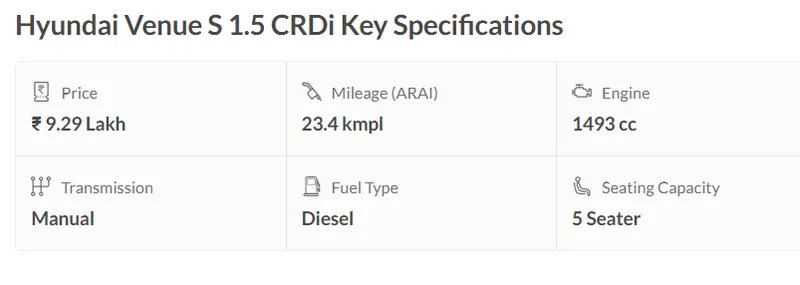
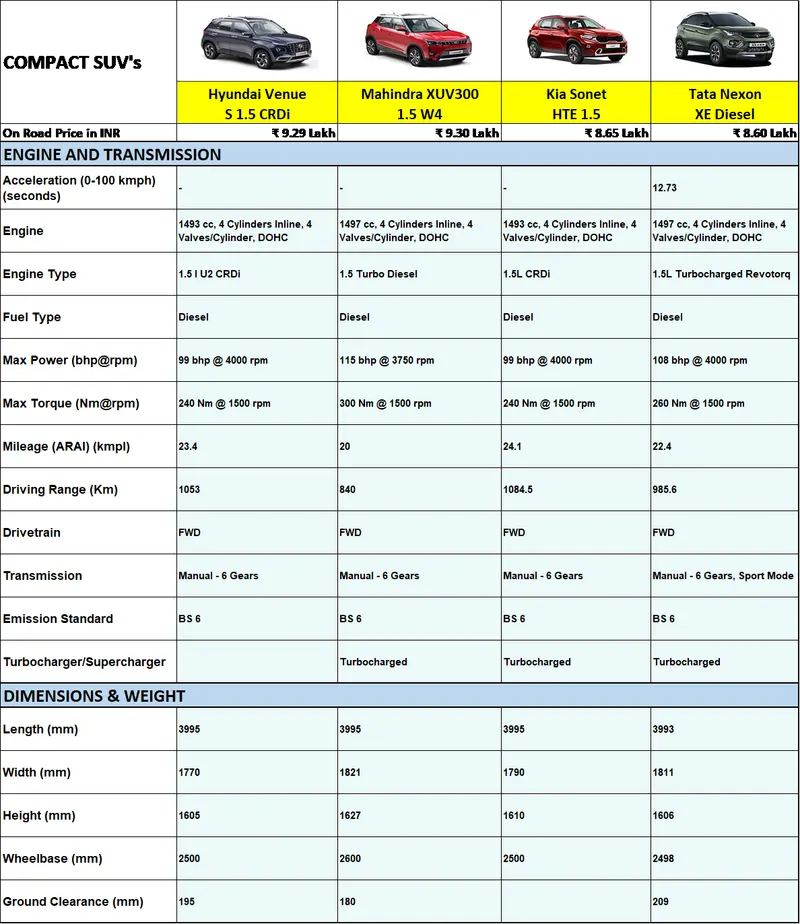
Hyundai Venue S 1.5 CRDi is the diesel variant in the Venue lineup and is priced at ₹ 9.29 Lakh.It returns a certified mileage of 23.4 kmpl.
This S 1.5 CRDi variant comes with an engine putting out 99 bhp @ 4000 rpm and 240 Nm @ 1500 rpm of max power and max torque respectively.
Hyundai Venue S 1.5 CRDi is available in Manual transmission and offered in 5 colours: Denim Blue, Deep Forest, Typhoon Silver, Fiery Red and Polar White.
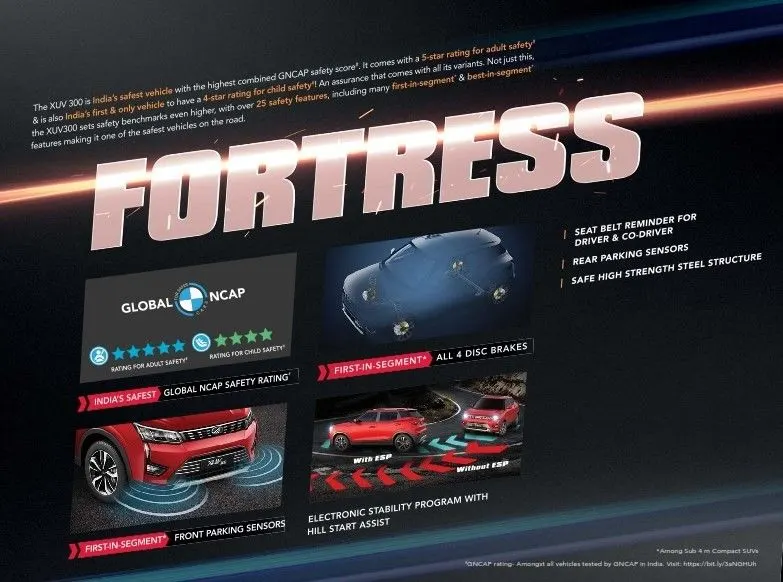
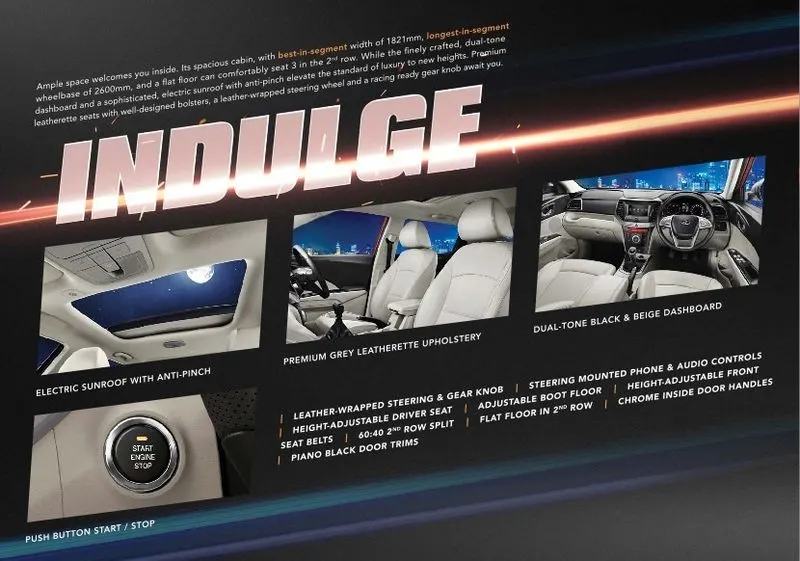
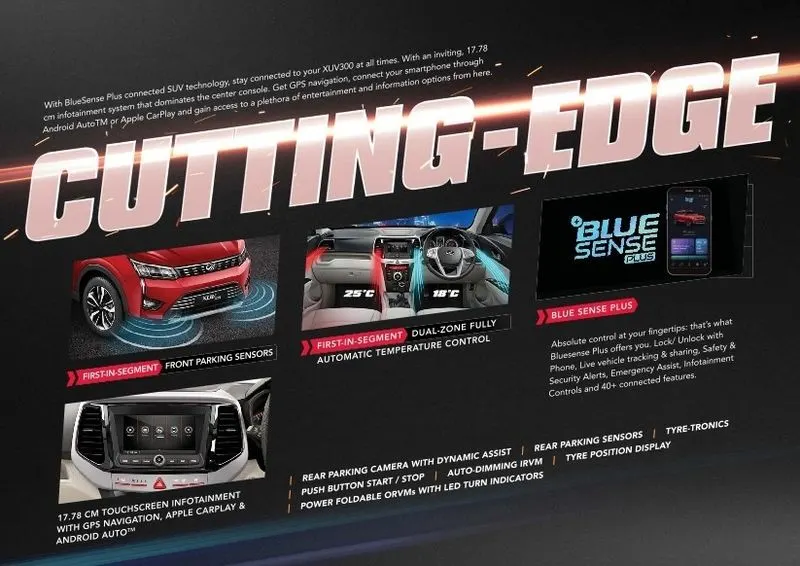
- MAHINDRA XUV300 – 1.5 W4
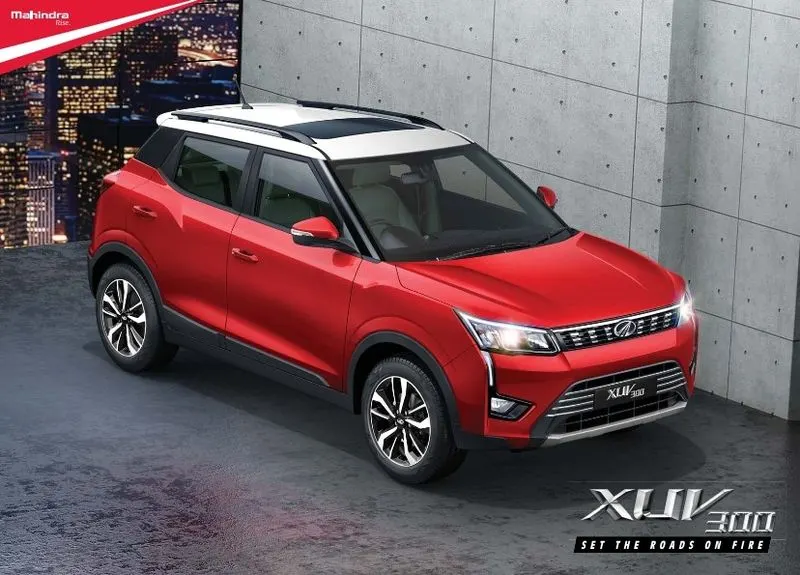
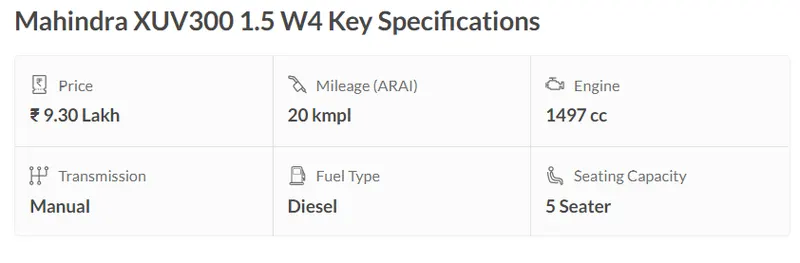
Mahindra XUV300 1.5 W4 is the diesel variant in the XUV300 line up and is priced at ₹ 9.30 Lakh. It returns a certified mileage of 20 kmpl.
This 1.5 W4 variant comes with an engine putting out 115 bhp @ 3750 rpm and 300 Nm @ 1500 rpm of max power and max torque respectively.
Mahindra XUV300 1.5 W4 is available in Manual transmission and offered in 5 colours: Napoli Black, Aqua Marine, Dsat Silver, Red Rage and Pearl White.

- KIA SONET-HTE 1.5
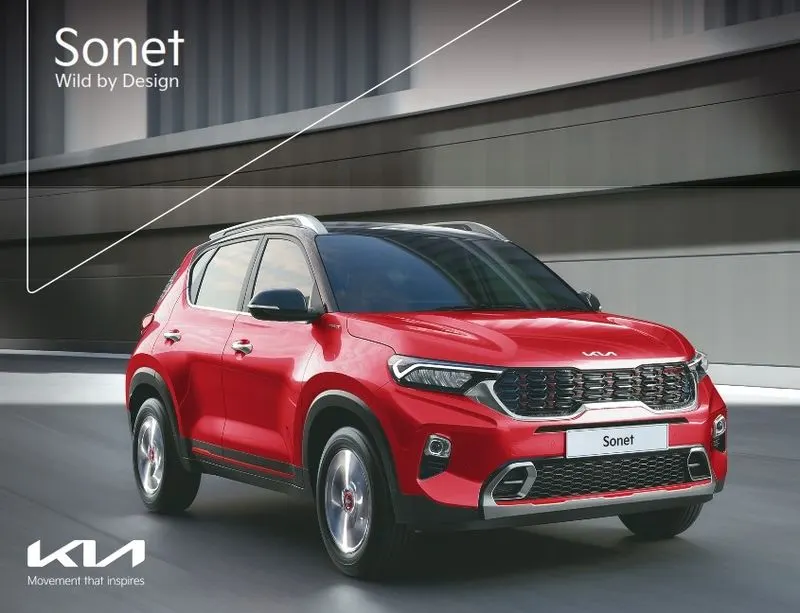
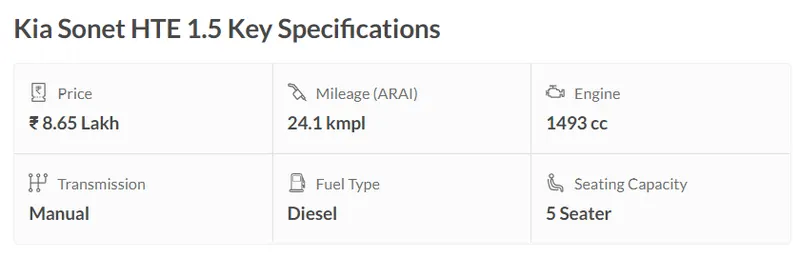
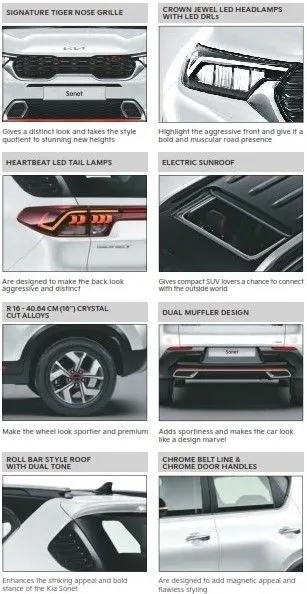
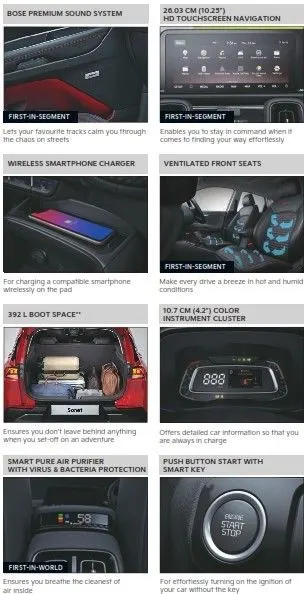
Kia Sonet HTE 1.5 is the diesel variant in the Sonet line up and is priced at ₹ 8.65 Lakh. It returns a certified mileage of 24.1 kmpl.
This HTE 1.5 variant comes with an engine putting out 99 bhp @ 4000 rpm and 240 Nm @ 1500 rpm of max power and max torque respectively.
Kia Sonet HTE 1.5 is available in Manual transmission and offered in 4 colours: Gravity Grey, Steel Silver, Intense Red and Clear White.
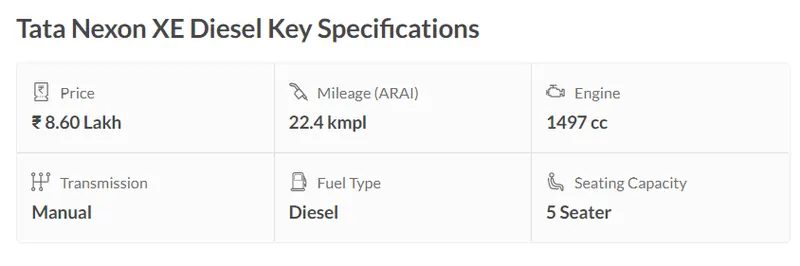
- TATA NEXON – XE DIESEL
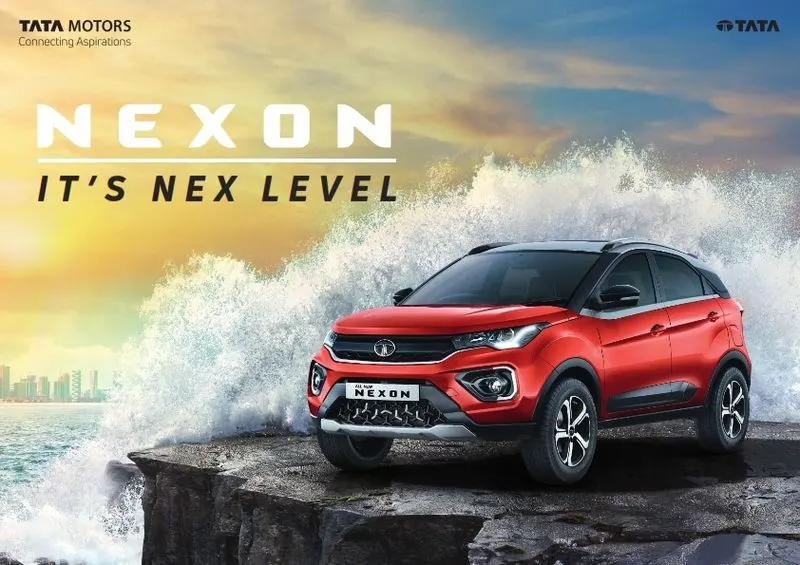
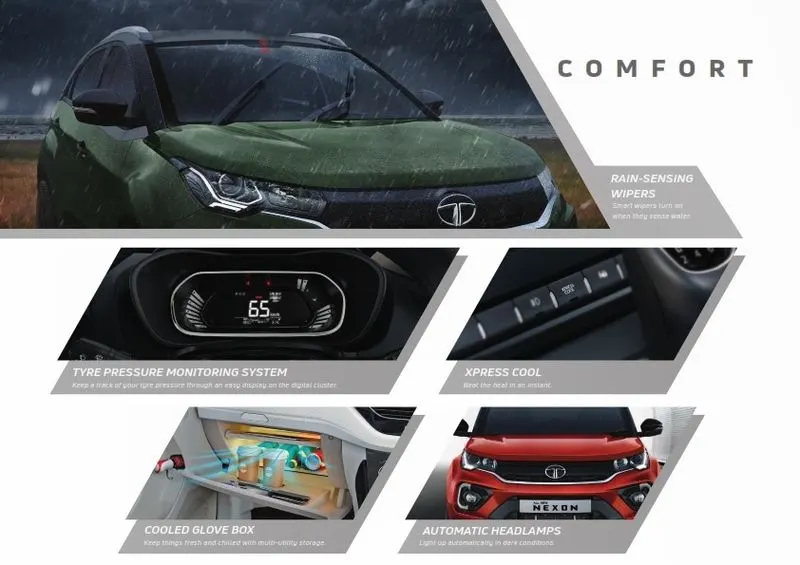
Tata Nexon XE Diesel is the diesel variant in the Nexon line-up and is priced at ₹ 8.60 Lakh. It returns a certified mileage of 22.4 kmpl.
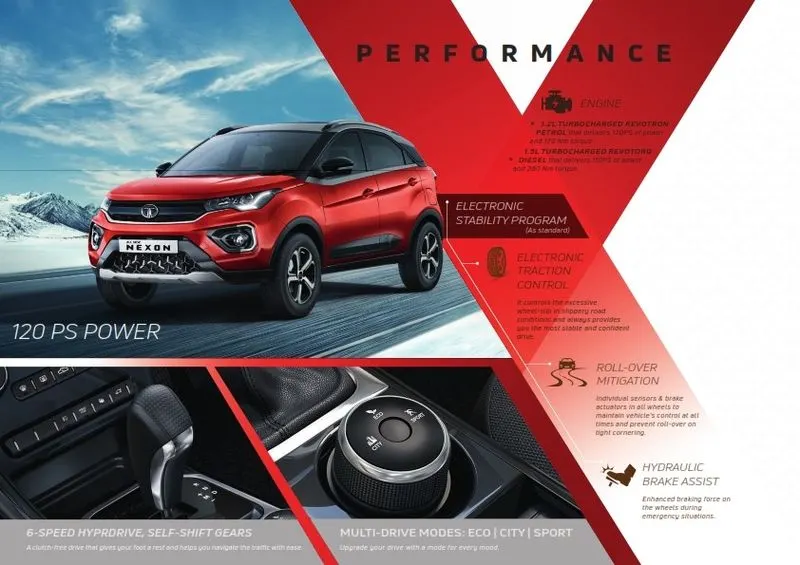
This XE Diesel variant comes with an engine putting out 108 bhp @ 4000 rpm and 260 Nm @ 1500 rpm of max power and max torque respectively.
Tata Nexon XE Diesel is available in Manual transmission and offered in 3 colours: Daytona Grey, Foliage Green and Calgary White.
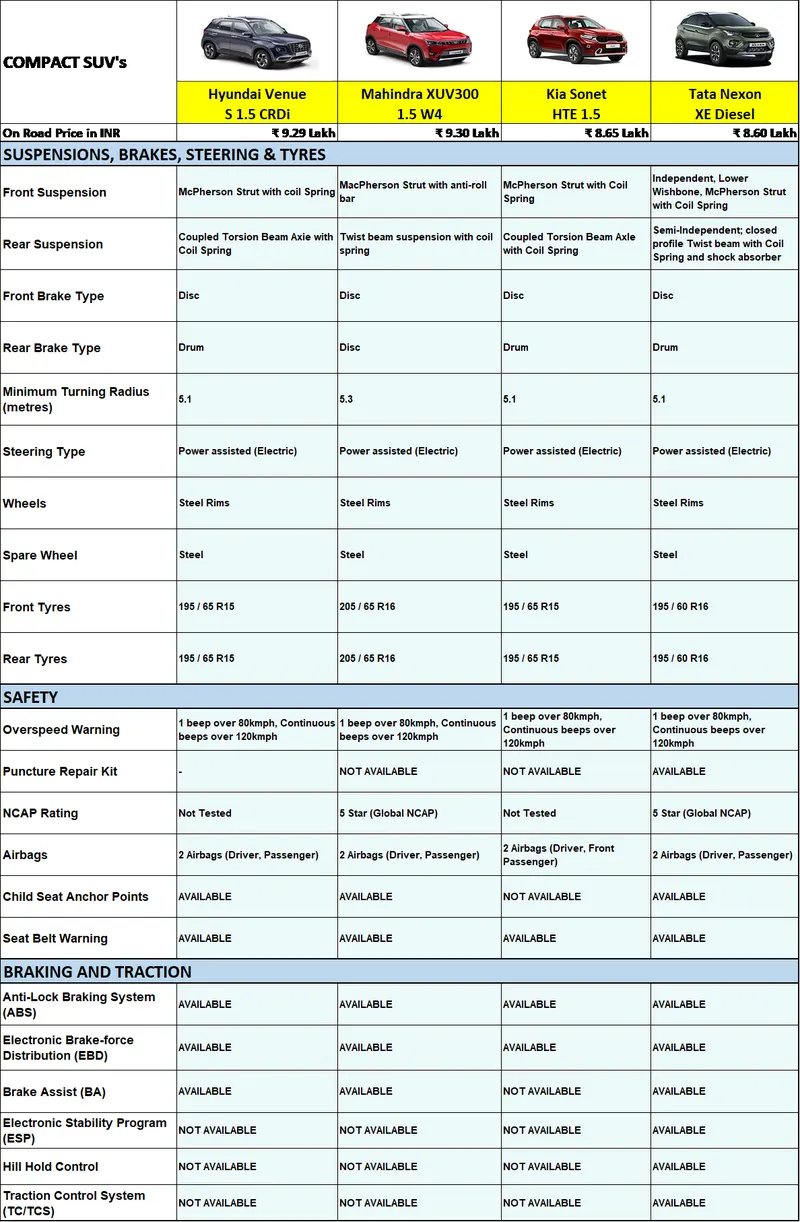
OVERALL COMPARISON OF FOUR COMPACT SUV’S
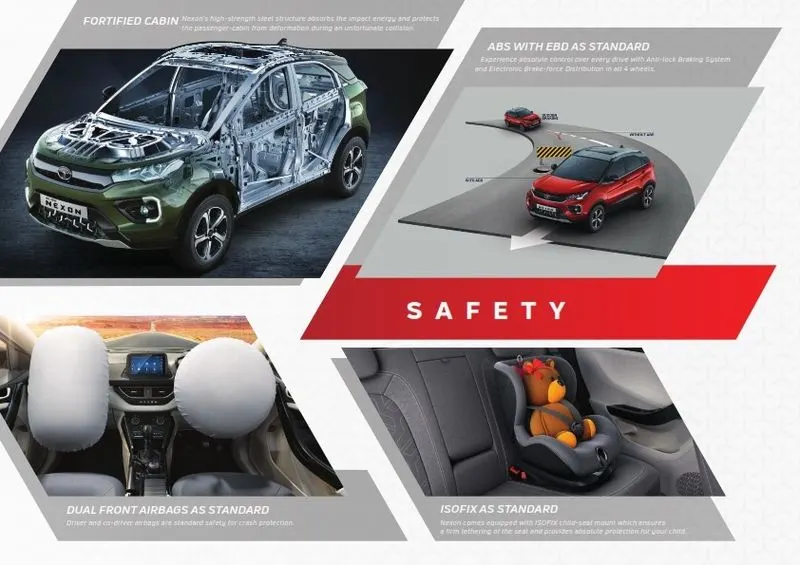
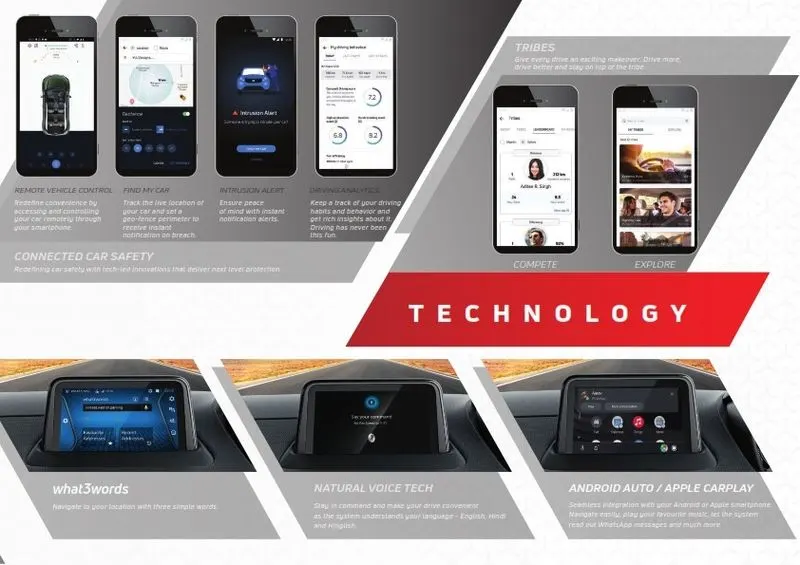
- The Important parameters considered for comparison of four compact SUV’s are – 1.) Engine and Transmission 2.) Dimensions & Weight 3.) Suspension, Brakes, Steering & Tyres 4.) Safety 5.) Braking and Traction.
REPORT CONCLUSION
The Conclusion of the report for the Compact SUV’s comparison, to suggest a suitable car for Mr. D.S. Pughazhyendhii as follows,
- The Best Car for Mr. D.S. Pughazhyendhii is TATA NEXON –for the following reasons as under,
- Price of TATA NEXON is 8.60 lakhs, which is the lowest priced car between the three compact SUV’s of Diesel variant.
- In TATA NEXON, the transmission comes with an additional feature of ‘SPORTS MODE’, which is not available in the other 3 compact SUV’s.
- TATA NEXON comes with Electronic Stability Program (ESP), Hill Hold Control and Traction Control System (TC/TCS) features which is not available in the other 3 compact SUV’s under Braking and Traction Section.
- TATA NEXON has Puncture Repair Kit, which is not available in the other 3 compact SUV’s.
Henceforth, the TATA NEXON is the best car, which can be suggested to Mr. D.S. Pughazhyendhii for having the lowest price and with additional segments as shown above, while compared to Hyundai Venue – S 1.5 CRDi, Mahindra XUV300 – 1.5 W4 and Kia Sonet-HTE 1.5.