Benchmarking
Benchmarking
BENCHMARKING:
Benchmarking is a way of discovering what is the best performance being achieved – whether in a company, by a competitor, or by entirely different industries. This information can then be used to identify gaps in an organization’s processes to achieve a competitive advantage. Thus, it is important for practitioners to:
Understand fully the purpose and use of benchmarking.
Understand the difference benchmarking techniques.
Gain insight to ensure that benchmarking is in alignment with the company’s management objectives.
Three ways to use Benchmarking, whether internal or external, is used in three key ways. They are:
Process benchmarking- This is all about better understanding your processes, comparing performance against internal and external benchmarks, and finding ways to optimize and improve your processes. The idea is that, by understanding how top performers complete a process, you can find ways to make your processes more efficient, faster, and more effective.
Strategic benchmarking-This compares strategies, business approaches, and business models to strengthen your strategic planning and determine your strategic priorities. The idea is to understand what strategies underpin successful companies (or teams or business units) and then compare these strategies with your own to identify ways you can be more competitive.
Performance benchmarking- This involves collecting information on how well you’re doing in terms of outcomes (which could mean anything from revenue growth to customer satisfaction) and comparing these outcomes internally or externally. This can also refer to functional performance benchmarking, such as benchmarking the performance of the HR team (using metrics like employee net promoter score or staff engagement surveys) or the marketing team (measuring net promoter score or brand awareness, for instance).
Now if we fully understand the concept of benchmarking, let me put the use of benchmarking with an example.
Example question -Mr. D.S. Pughazhyendhii is a married man who lives in Bangalore which is a highly crowded city. His Family comprises five members including his wife, a five-year-old boy, his father, and his mother. He visits his native place Madurai which is 500kms away from Bangalore once in a month. Also, he will be using his car to commute to his office. His budget falls between 8 to 10 lakhs on road. Please suggest to him with options so that he will buy a good car for his family.
Note: Pughazhyendhii is fond of big cars
So now if we understand the needs of Mr D.S. Pughazhyendhii for the perfect car which is
A five-seater car with a baby compartment.
A good mileage car to visit his native place which is 500 Km away.
City compatible car for local commute.
A car price ranges from 8 to 10 lakhs.
Cars such as SUV or Sedan because he is fond of big cars.
According to his needs and interests here are my suggestions-
based on SUV
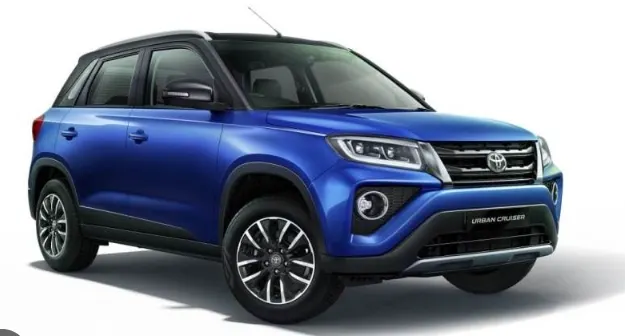
Toyota - Urban Cruiser
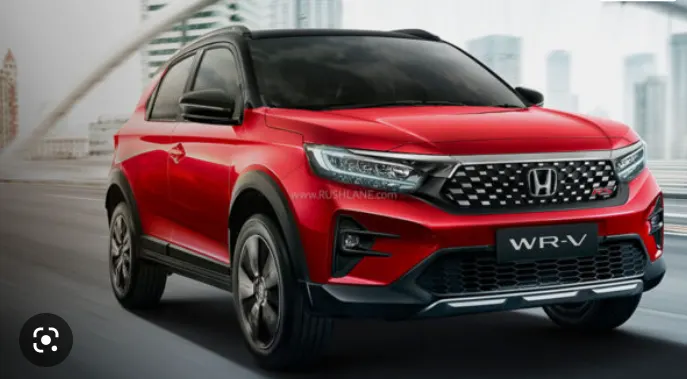
Honda WR-V
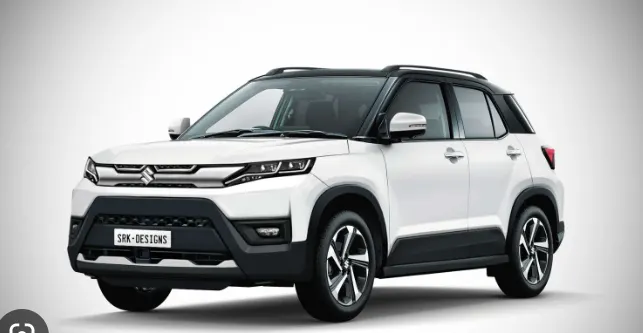
Maruti Vitara Brezza
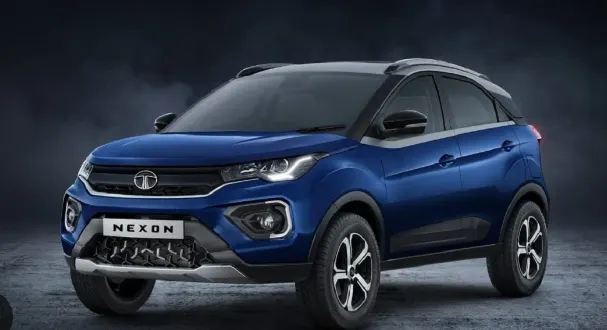
Tata Nexon
Let us benchmark all these cars so that we can select the best for Mr D.S. Pughazhyendhii. And also I want to suggest to him that to go for Indian origin Cars to give pride to our country.
Table - 1: Comparison between different types of SUV Vehicles of petrol Variant:
|
Toyota - Urban Cruiser |
Honda WR-V |
Maruti Vitara Brezza |
Tata Nexon |
|
|
Length |
3995 mm |
3999mm |
3995mm |
3993mm |
|
Width |
1790 mm |
1734mm |
1790mm |
1811mm |
|
Height |
1640 mm |
1601mm |
1640mm |
1606mm |
|
Boot Capacity |
328 Litres |
363 Litres |
328 Litres |
350 Litres |
|
Fuel Tank |
48 Litres |
40 Litres |
48 Litres |
44 Litres |
|
Wheel Base |
2500 mm |
2555mm |
2500mm |
2498mm. |
|
Displacement |
1462 cc |
1498 CC |
1462 CC |
1499 cc |
|
Power |
103.56@6000rpm |
97.89@3600rpm |
103.26@6000rpm |
108.5@4000rpm |
|
Torque |
138nm@4400rpm |
200nm@1750rpm |
138nm@4400rpm |
260Nm@1500-2750rpm |
|
Manual Gearbox |
4-Speed |
6-speed |
4-Speed |
6 Speed |
|
Mileage |
18.76 kmpl |
23.7kmpl |
18.76 kmpl |
21.5 kmpl |
|
Price |
8.6-9.63 Lakhs |
8.76- 9 lakhs |
8.67-9.42 Lakhs |
7.39-11.39laks |
Conclusion:
In this comparison, we made a benchmarking between them now after manufacturing. It will be done before manufacturing at beginning of design itself will be happen. As per the benchmarking results, we will suggest the Honda WR-V or Tata nexon for regular lifestyle people use them for official and personal commuting because of the main advantages of mileage, price and larger boot space. We may suggest Toyota urban cruiser for long travel and better performance. Toyota has a good aesthetic appeal and high volume of fuel tank capacity, but as per pughazhyendhi point of view, Honda WR-V or Tata nexon suits better when considering about mileage and boot space for a family. As he travels to Madurai around 500km once in a while, he doesn’t need more torque and power. A best choice of small family around 5 people, Honda WR-V or Tata nexon comes pughazhyendhi’s budget and his requirement.