Bench-Marking
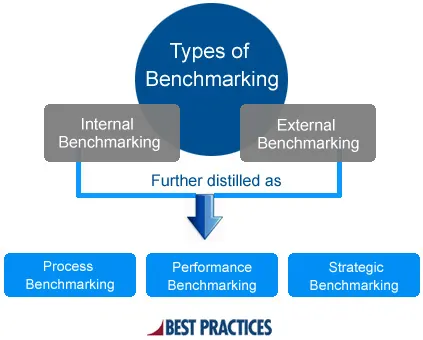
Benchmarking is a process of measuring the performance of a company's products, services, or processes against those of another business considered to be the best in the industry, aka “best in class.” The point of benchmarking is to identify internal opportunities for improvement.
Purpose of Bench-Marking
Benchmarking is a way of discovering what is the best performance being achieved – whether in a particular company, by a competitor or by an entirely different industry. This information can then be used to identify gaps in an organization's processes in order to achieve a competitive advantage.
There are five main types of benchmarking: internal, external, performance, strategic and practice
Internal Benchmarking
Internal benchmarking is a process in which a company or an organisation looks within its own business to try and determine the best practice or methodology for conducting a particular task. The aim is to find the best practice available to get the job done with minimum effort or resources.
External Benchmarking
External benchmark implies banks following interest rate anchor set by an independent entity that is outside the bank. For example, RBI's repo rate or FBIL's MIBOR rate are external benchmarks. In 2019, the RBI instructed banks to follow external benchmarks for setting their floating rates.
Performance Benchmarking
Performance benchmarking is the process of measuring and analyzing an organization's performance of products, services, operations, and other business processes against other companies, competitors, or industry leaders. It helps businesses identify and understand areas for improvement.
Strategic Benchmarking
Compares the strategies of successful businesses with those of your own, It helps you define strategic goals and steps forward for better results.
Practice Benchmarking
Practice benchmarking involves gathering and comparing qualitative information about how an activity is conducted through people, processes, and technology. What you need: A standard approach to gather and compare qualitative information such as process mapping.
Pro's and Con's of Bench-Marking
Pro's
Internal benchmarking allows you to repurpose something without reinventing the wheel.
Competitive research can get the creative juices flowing.
Con's
You could miss out on a better solution.
It can also be a distraction and lead to a tangent in your creative process.
Future
The future of benchmarking combines internal comparisons and external sensing to identify more meaningful insights. External sensing is the ability to collect and act on real-time empirical evidence and research-driven perspectives on leading practices in the context of the world outside your organization.
There are four cars suggested which he will buy for his family. These four cars are
Maruti Suzuki Dzire

Ex showroom price: ₹6.24 lakhs - ₹9.18 lakhs
Fuel economy: 23-31 km/l combined
Fuel tank capacity: 37 to 55 L
Curb weight: 880 to 990 kg
Engine: 1.2 L 4-cylinder, 1.2 L 4-cylinder natural gas
Maruti Suzuki Dzire is easily the most popular compact sedan in India. Class-leading cabin space and features as well as a well-proportioned design in addition to the peace of mind of buying a Maruti sure seem to have worked in the car’s favour. The Maruti Suzuki Dzire is a petrol-only model and can be had with either a manual transmission or an AMT auto.
Honda City
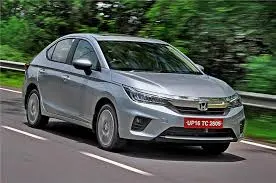
Ex showroom price: ₹11.9 lakhs - ₹15.7 lakhs
Dimensions: 4,549 mm L x 1,748 mm W x 1,489 mm H
Warrenty: 3 yr/10,000,000 km
Engine: 1.5 L 4-cylinder, 1.5 L 4-cylinder diesel
The all-new Honda City e:HEV’s complex yet incredibly clever hybrid technology makes it the most fuel efficient internal combustion engine (ICE) vehicle we have ever tested. How efficient? The real-world numbers are 19.8kpl in the urban environment and 22.5kpl on the highway. For any car, that real-world figure would be good, and from a midsize sedan, it’s even more impressive.
TATA Nexon
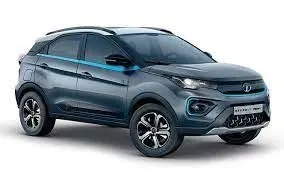
Ex showroom price: ₹7.7 lakhs - ₹12.3 lakhs
Dimensions: 3,993 mm L x 1,811 mm W x 1,606 mm H
Curb weight: 1,179 to 1,315 kg
Engine: 1.2 L 3-cylinder, 1.5 L 4-cylinder diesel
The Tata Nexon holds the distinction of being the first Indian car to be rated 5 stars for safety by Global NCAP. 2020's update brings in revised styling and BS6-spec engines. The Nexon is well proportioned, high on style and looks very fashionable. It’s smartly done on the inside too and the good thing is that it’s a lot more spacious and practical than the looks would have you expect. Overall comfort is impressive but where the cabin is a bit lacking is in overall finesse. Of the engines, the 110hp, 1.2-litre turbo-petrol unit is refined but performance isn’t lively. It’s a bit jerky at low speeds too, especially in Eco mode.
Hyundai Creta

Ex showroom price: ₹10.6 lakhs - ₹18.5 lakhs
Dimensions: 4,300 mm L x 1,790 mm W x 1,620-1,635 mm H
Curb Weight: 1,230 to 1,344 kg
Fuel Economy: 17-21 km/l combined
Cargo Volume: 433 L
Hyundai has consistently made some of the most refined diesel engines and this one is no different. The refinement isn’t in just how smooth it sounds and feels, but also in the smooth way that the torque is delivered, which just adds to a gentle, calming driving experience.
My suggestion for him to buy for his family is TATA Nexon. The Nexon is Tata’s swanky sub-four-metre compact SUV. And there’s a lot more to it than just show-car looks. Available across a wide price range, the Nexon can be had in multiple engine-gearbox options. On offer are petrol-manual, petrol-AMT auto, diesel-manual and diesel-AMT auto versions. The Tata Nexon holds the distinction of being the first Indian car to be rated 5 stars for safety by Global NCAP. 2020's update brings in revised styling and BS6-spec engines. The Nexon is well proportioned, high on style and looks very fashionable. It’s smartly done on the inside too and the good thing is that it’s a lot more spacious and practical than the looks would have you expect. Overall comfort is impressive but where the cabin is a bit lacking is in overall finesse. Of the engines, the 110hp, 1.2-litre turbo-petrol unit is refined but performance isn’t lively. It’s a bit jerky at low speeds too, especially in Eco mode. The 110hp, 1.5-litre diesel has a wider breadth of abilities. It’s refined and pulls well from low speeds; but again, doesn’t excite. The Nexon’s manual gearboxes come allied to well-weighted clutches. Both petrol- and diesel-AMTs are fine for average town use but fumble in on-off throttle applications. That said, the diesel Nexon’s AMT unit is more in sync with the engine’s characteristics. The Nexon changes direction with confidence and the suspension also absorbs bumps and potholes with ease. It rides quite flat at speed too, and makes for a good long-distance vehicle. There’s a pretty steep price walk between the petrol and diesel versions of the Nexon. However, it’s still the diesels that we’d recommend. Opt for the diesel-AMT model if you can make peace with the fact that the gearbox isn’t the most sophisticated of the type. Else, the diesel-manual works just fine. Our pick of the range is the diesel-manual in top-spec XZ+ trim. It is expensive in absolute terms but also gets lots of equipment including keyless entry and push-button start in addition to a 7-inch touchscreen infotainment system.