Benchmarking
Aim: To prepare a report explaining what is benchmarking, Compare at least 4 vehicles and provide a proper conclusion for the report and suggest a suitable vehicle among the comparison made.
Theory:
- What is Benchmarking?
It compares one's business process and performance metrics to the industry's bests and/or best practices from other industries. Process benchmarking includes studying process flows, operating systems, process technologies and the operations of target firms and departments.
Benchmarking is the process of comparison of similar products on some dimensions of performance. Automotive Benchmarking is the process of analyzing the choices of similar products based on the selection factor and deducing it to final conclusion.
Also, it can be defined as the way of discovering the best performance being achieved- whether in a particular company, by a competitor or in an entirely different industry. This information can then be used to identify gaps in an organisation's processes to achieve a competitive advantage.
Three Primary Classifications of Benchmarking:
Although there are many forms of benchmarking, they can be classified into three categories- internal, competitive and strategic.
- Internal Benchmarking: is used when a company already has established and proven best practices and simply needs to share them. Internal benchmarking also may be necessary if comparable industries are not readily available.
- Competitive Benchmarking: is used when a company wants to evaluate its position within its industry. Also, competitive benchmarking is used when a company needs to identify industry leadership performance targets.
- Strategic Benchmarking: is used when identifying and analysing world-class performance. This form of benchmarking is used most when a company needs to go outside of its industry.
Benchmarking is defined as the comparison of products, services, and processes across divisions that carry out similar operations in the same organization, among competing firms in the same industry, and among firms with similar processes across different industries. The purpose of benchmarking is to explore why and how organizations achieve higher levels of efficiency and to identify the methods and processes driving that performance. Benchmarking identifies an organizations' relative cost position and recognizes opportunities for improvement. Strategic advantage is achieved by concentrating on the competences required to upgrade to new performance levels. Benchmarking has its origins in engineering as part of process improvement programs. It is traced back to Xerox's efforts at the end of the last century, when it analyzed how Japanese firms could be selling products at a price lower than its own production costs. Organizations engage in benchmarking exercises that focus of the performance of strategic management, competitive strategy, financial management, products, services, core business process and functional processes. The most popular methods of analysis used in metric benchmarking are data envelope analysis (DEA) and regression analysis.
CASE
Mr. D.S. Pughazhyendhii is a married man who lives in Bangalore which is a highly crowded city. His Family comprises five members including his wife, five-year-old boy, his father, and his mother. He visits his native place Madurai which is 500kms away from Bangalore once in a month. Also, he will be using his car to commute to his office. His budget falls between 8 to 10 lakhs on road. Please suggest to him with options so that he will buy a good car for his family.
Note: Pughazhyendhii is fond of big cars
Procedure:
Comparing the Cars in every sector and finalising a suitable car for Mr D.S. Pughazhyendhii Family.
Things we know about Mr D.S. Pughazhyendhii Family:
- His family consist of 5 members.
- He lives in Banglore which is a crowded city.
- He visits Madurai his village once in a month which is 500km away.
- He will be using this car to commute to his office.
- He has a budget of 8-10 lakhs.
- He is fond of big cars.
Taking the above points into consideration I think the cars from the Compact SUV, Compact Sedan and MUV sector will be a perfect fit for Mr D.S. Pughazhyendhii Family.
1 . HYUNDAI VENUE
The Hyundai Venue offers a long list of features that were previously seen only in luxury cars. If you are an urbanite, looking for a compact SUV, the Hyundai Venue is an option that is hard to look past. Hyundai Venue comes packed with features such as a cooled glovebox, air purifier, wireless phone charger, 8-inch infotainment screen, steering wheel-mounted controls, and many more. The Hyundai Venue is powered by three engine options. The base 1.2-litre petrol engine produces 81.86 bhp and 116 Nm of torque, whereas the 1.5-litre diesel unit produces 98.63 bhp and 245 Nm of torque. Finally, the 1.0-litre turbocharged petrol engine produces 118.35 bhp and 175 Nm of torque.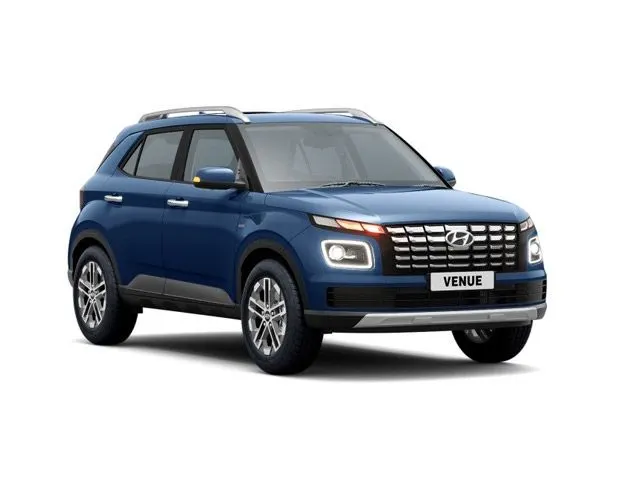
2. Tata Nexon -
The Tata Nexon is available in 79 variants and 3 colours. Here are more Tata Nexon details such as prices, specifications and mileage. You can also check out the Tata Nexon on-road price and EMI. Our detailed Tata Nexon comparison further helps you compare the SUV with its rivals. DriveSpark brings you every Tata Nexon information you would ever need.
3. Kia Sonet -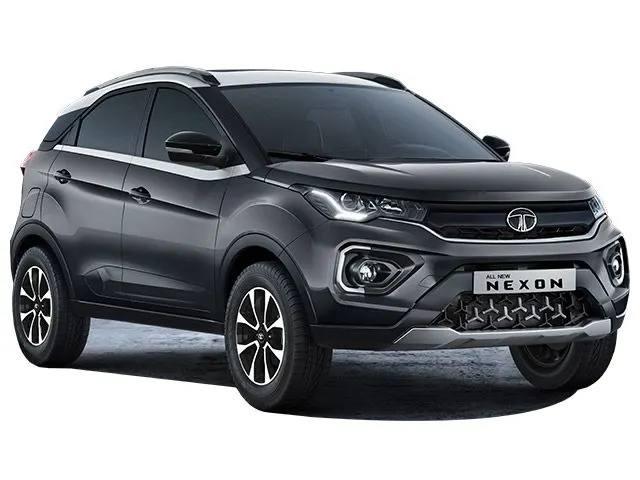
Kia Sonet is a stylish and tech-packed compact SUV. It is a great value-for-money product once you consider the number of standard features it offers for the price.
4. Nissan Magnite -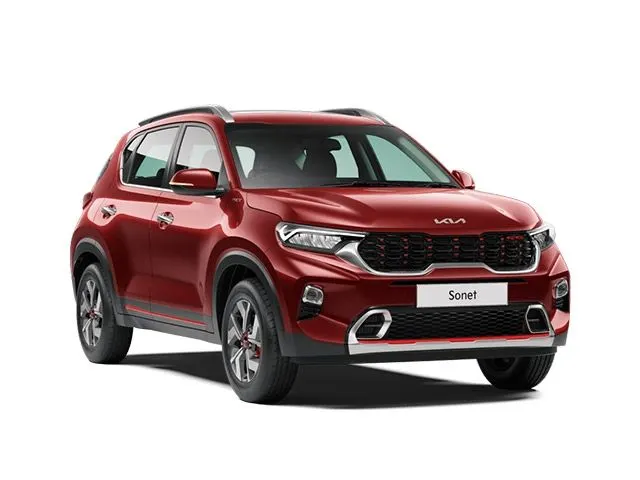
The Nissan Magnite is a great car if you are looking for an ultra fuel-efficient sub-4m SUV and on top of that, it comes with one of the lowest starting prices in its segment. The compact SUV from the Japanese carmaker also comes with a long list of features and offers good interior space. The base 1.0-litre naturally-aspirated model produces 71.05 bhp, whereas the more potent 1.0-litre turbocharged variant pumps out 98.63 bhp. While the sole gearbox option on the naturally-aspirated variant is the 5-speed manual transmission, the turbocharged variant gets both the 5-speed manual transmission and the CVT automatic transmission.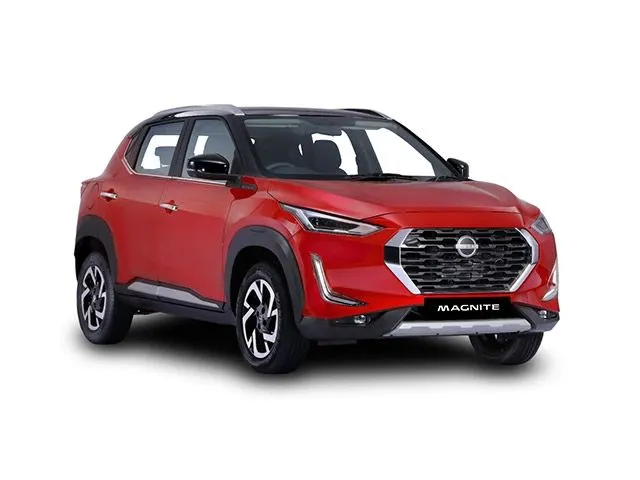
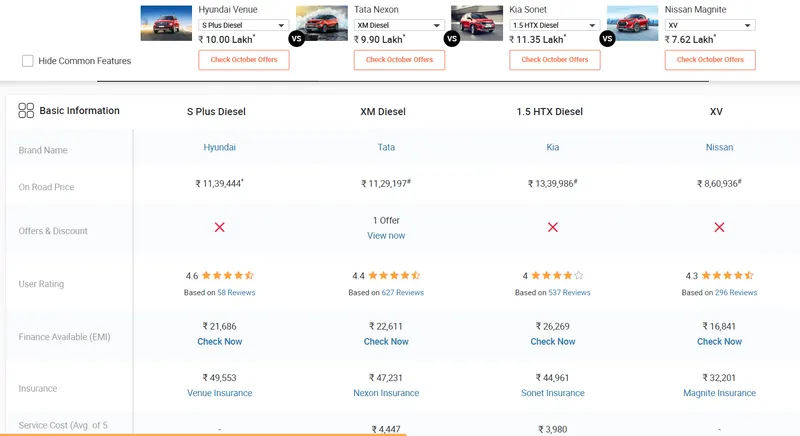
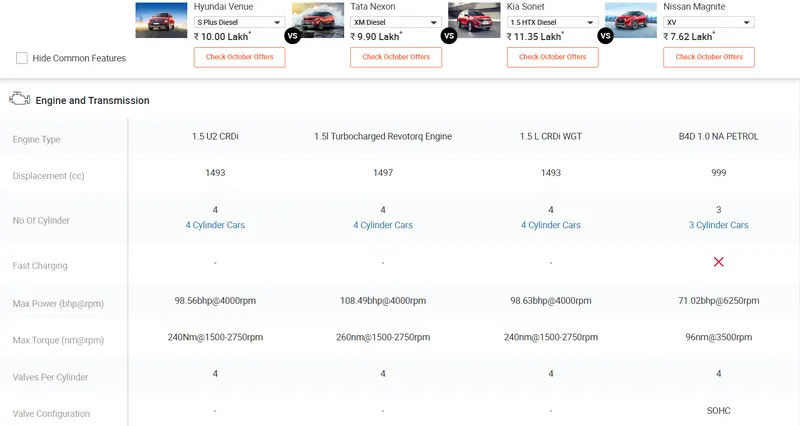
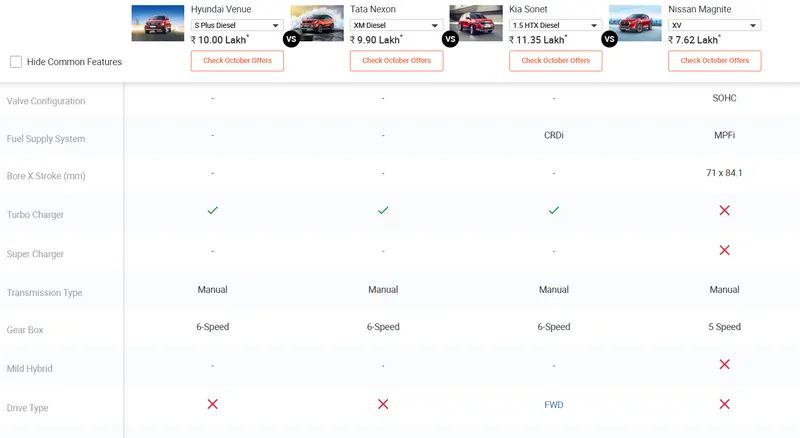
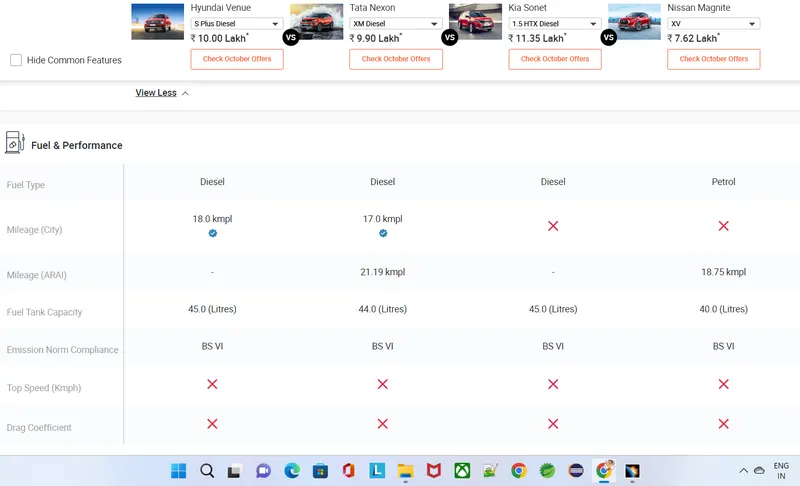
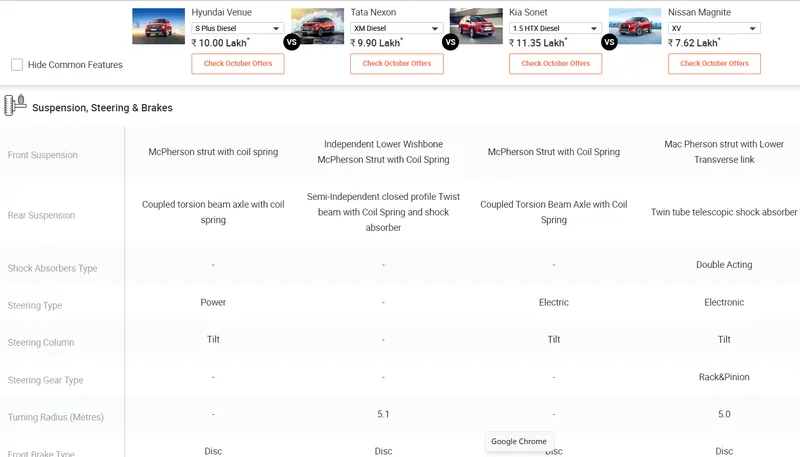
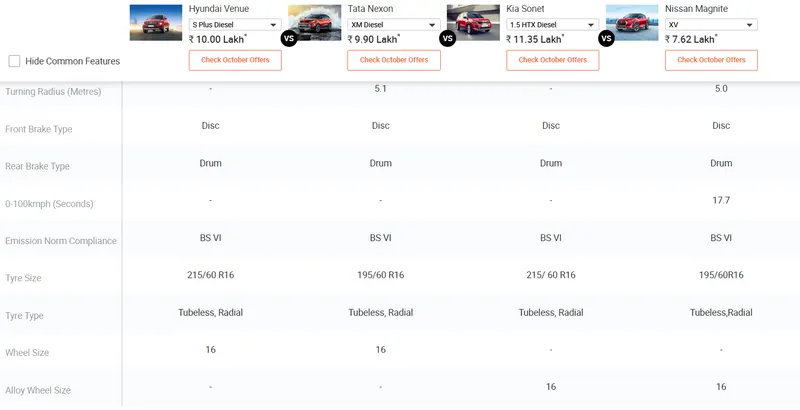
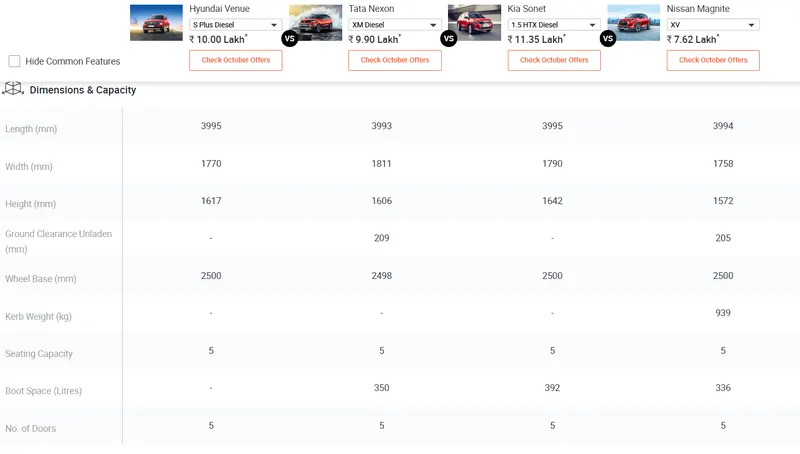
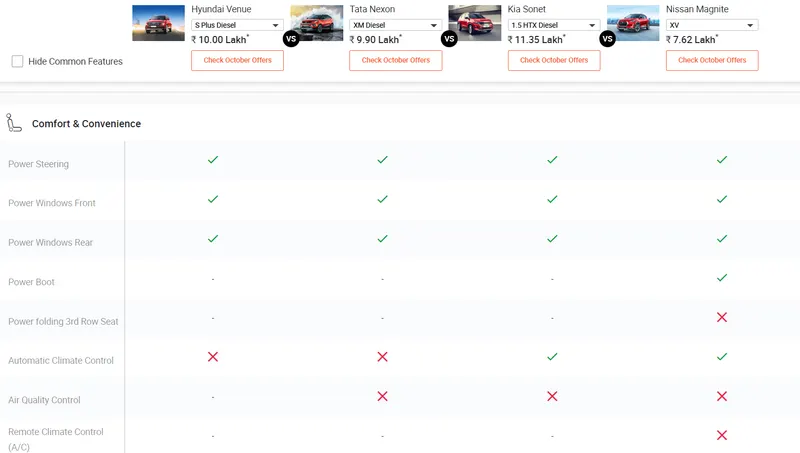
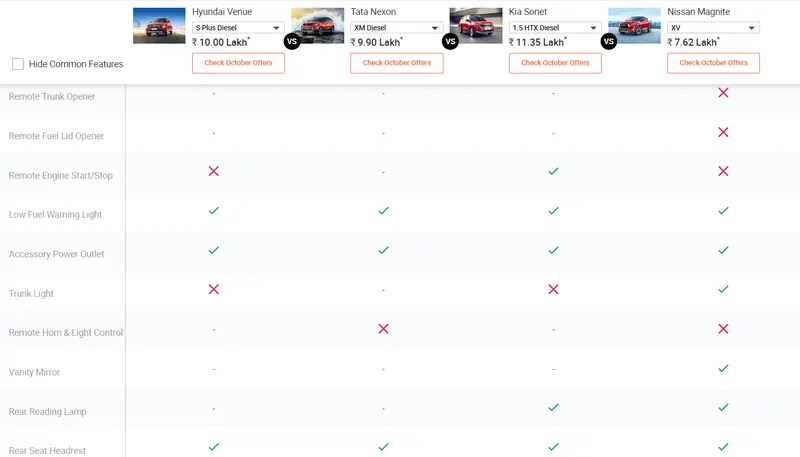
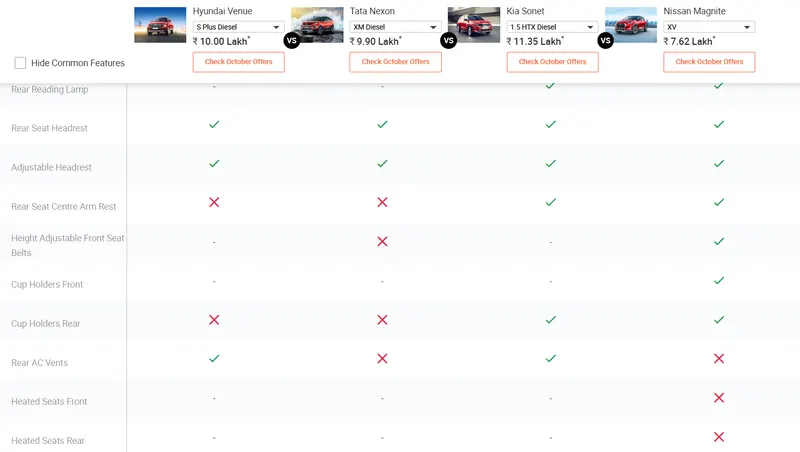
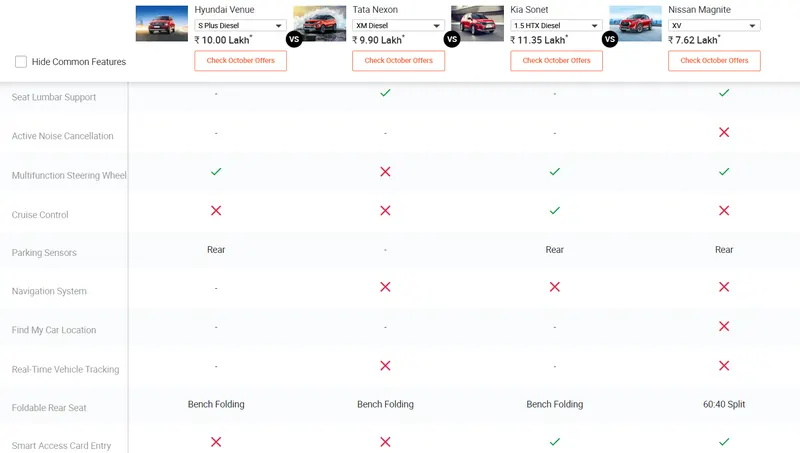
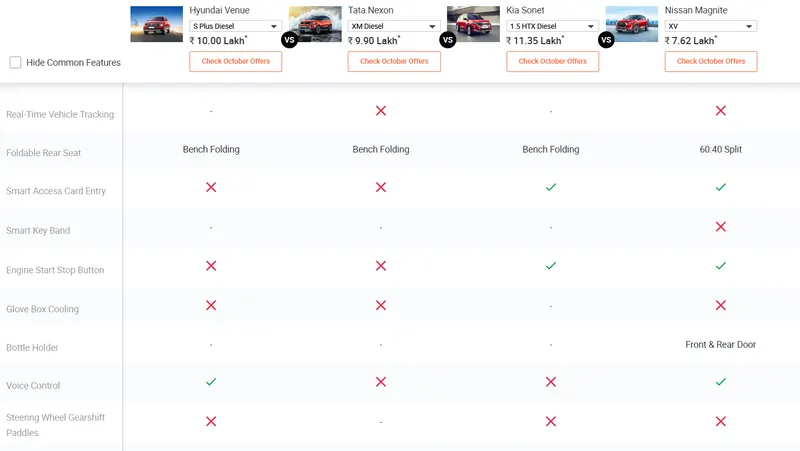
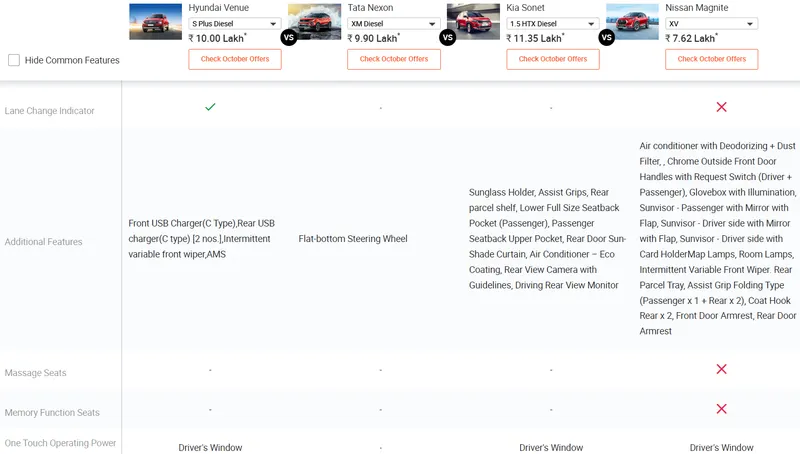
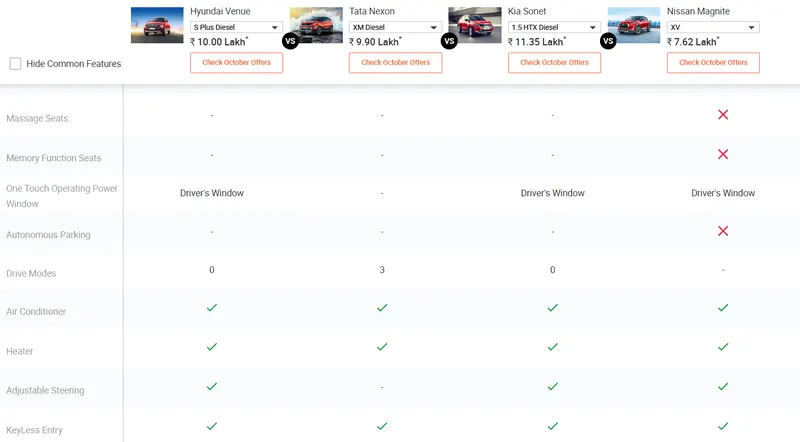
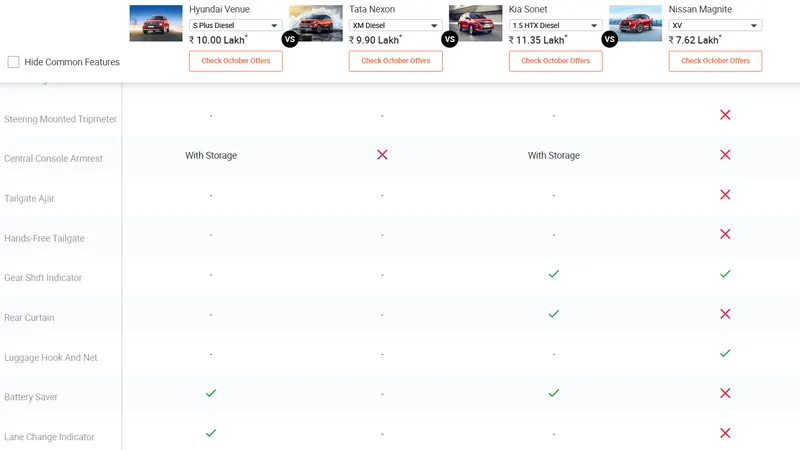
From the above compression, I will shortlist Tata Nexon as it has a better Engine, Mileage, bigger Boot space and 5 stars in NCAP Safety.
Tata Nexon Verdict
It is hard not to recommend the Nexon, especially after its comprehensive update. The stand-out exterior changes make it much more handsome, the cabin is still comfortable and there’s a long list of features. Apart from that, the diesel motor and well-judged suspension make this compact SUV an enticing buy.
How is it on the outside?
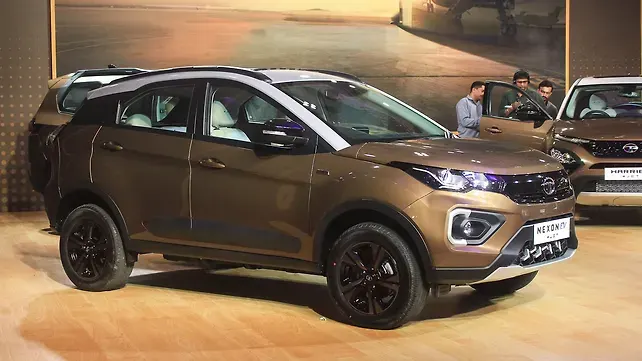
The first thing you notice in the Tata Nexon Jet Edition range (including the ICE and EV versions) is the exclusive dual-tone paintjob in a new shade of what Tata calls Starlight. The latter essentially combines an Earthy Bronze body colour with a platinum silver roof. Depending on the lighting in the surroundings or excess brightness, one might even mistake the roof to be finished in a white shade.
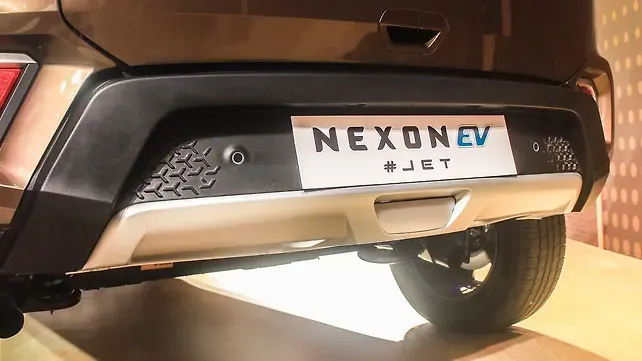
To contrast the new paintjob, the Tata Nexon and Nexon EV get alloy wheels finished in Jet Black, matte black lettering on the boot lid, and silver skid plates adorning the front and rear bumpers. Also on offer are Granite Black roof rails and Satin Granite Black belt line on either side. The alloy wheel design and size, meanwhile, have been carried from their respective standard versions. Both the models get a ‘#Jet’ badging on the front fender, while the Dark Chrome EV badging, as the name suggests, is limited to the EV variant.
How is it on the inside?
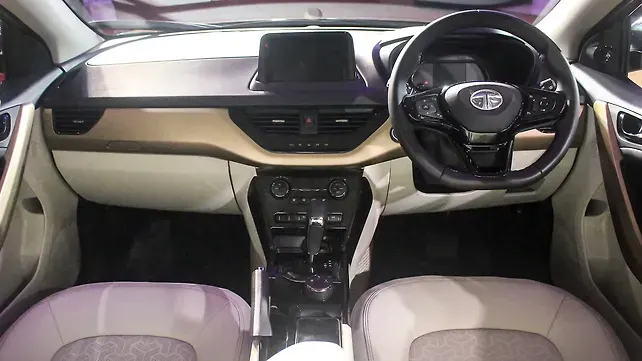
The Tata Nexon and Nexon EV Jet Editions receive a minor update to the interior in the form of a dual-tone Oyster White and Granite Black, a bronze finish for the dashboard, with the latter being carried over to the door handles as well. All five seats are finished in a shade of Oyster White with contrast bronze stitching, while the ‘#Jet’ embroidery is limited to the front row headrests.
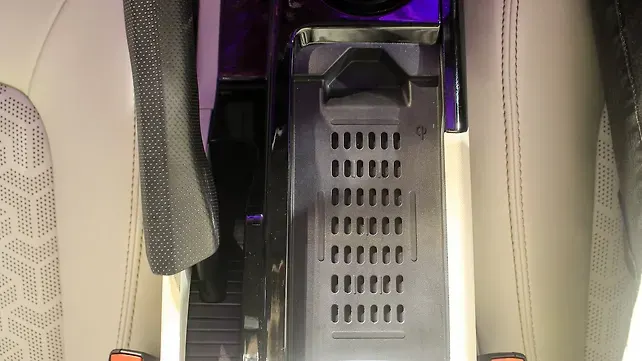
In terms of features, both, the ICE, as well as the EV variants of the Nexon Jet Edition get wireless charging located on the centre console, positioned in front of the arm rest. A few other notable features include an air purifier with AQI display, an electric sunroof, and ventilated front seats.
What’s under the hood?
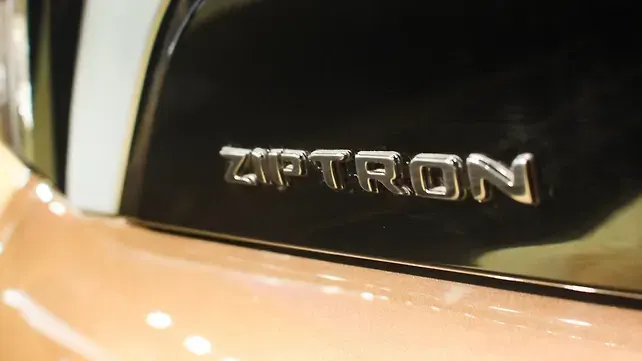
Powertrain options on the Tata Nexon Jet Edition include the same 1.2-litre turbo-petrol engine and 1.5-litre diesel engine as the regular Nexon. These motors are paired with six-speed manual and automatic units. The Nexon EV, on the other hand, produces 127bhp and 245Nm in the Prime trim and 141bhp and 250Nm in the Max trim.
Conclusion:
Considering all the factors of Mr D.S. Pughazhyendhii Family I think the perfect car for the Pughazhyendhii Family will be from the Compact SUV sector.
There are many cars in this sector but only a few are there with all the features required, with better mileage, engine, etc.
By comparing every aspect I suggest TATA NEXON will be a better fit for the Pughazhyendhii Family as this car has everything they need, Ample amount of Space, Good Mileage, Great Boot Space, TATA's Power Full Engine and Safety.
References: