Benchmarking
1). Hai, sir
i heard about that you are looking for good car that have at a price range of 8 to 10 lakhs also , i noted your needs that once in a month you wants to travel to your native place madurai about 500km from Bangalore so not only ina city drive but also ina long drive ,so here is my opinion is"TATA PUNCH".
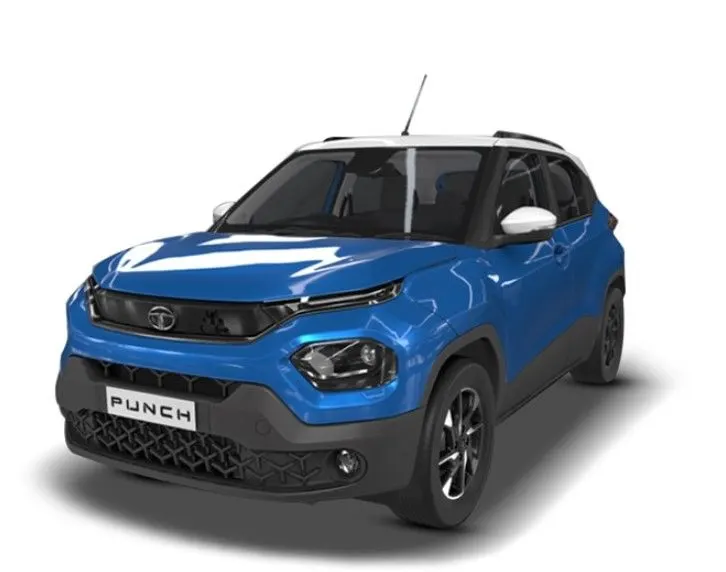
WHY TATA PUNCH ?
- Tata Punch is a popular mini SUV Segment car & the Prices for this SUV start from Rs. 5.93 Lakh to Rs. 9.49 Lakh and you can pick from as many as 22 different versions.. The transmission options on the Tata Punch include both Manual and Automatic gearbox.
- It's a budgeted mini SUV.
- If a turbo engine is an available means it would be the completeness of the vehicle ,A value-for-money micro SUV, especially regarding drive comfort, space, and seat position.
-
Fuel efficiency(petrol) is a major concern. Perhaps 50kg less weight and a 4-cylinder engine instead of 3 cylinders,
will increase fuel efficiency and also pick up. -
safety is too good, and it looks good. The mileage is fine, in City you will get 17kmpl and on highway is 20kmpl.
-
The main advantage is car parking needs less space because of cars size is not too big.
-
Punch has been accredited with NCAP Rating of 5 (Adult Safety Rating) & 4 (Child Safety Rating)so you and your family can enjoy the safe ride .
2). BENCH MARKING
Businesses are expected to deliver good quality products and services which are not only defect free, but also which are being manufactured or developed more efficiently (more cost effective and faster) than before. Hence there is a constant need for continuous improvement of overall performance within an organization.There is always a need to improve previous performance metrics of one’s own organization, or a competitor’s performance or that of the whole industry. We can achieve this continuous improvement in performance through the process named “Benchmarking”.
Benchmarking is a way of discovering what is the best performance being achieved so far and use that as the starting reference for raising the performance targets for future. This information can then be used to identify gaps in an organization’s processes and improving them in order to achieve a competitive advantage.
In a Vehicle Developing Process benchmarking technique are of some objectives
- To improve its performance
- To understand relative cost position and to identify opportunities for improvement
- To gain strategic advantage by focusing on capabilities critical to building strategic advantage
- To increase the rate of VDP learning since the benchmarking exercise brings new ideas and facilitates experience sharing
There are three broad classification of benchmarking namely:
Internal benchmarking -Improving against own previous standards of performance
Competitive Benchmarking - Comparing and raising the performance bar in comparison to competition
Strategic Benchmarking -Comparing world class performance and setting that as the reference for raising future performance parameters
Benchmarking involves the following five phases:
1. Planning
It is imperative that the organization does adequate planning before embarking into the process. It includes planning the following:
- Identify the activities that need to be benchmarked prior to engaging in benchmarking.
- Identify the techniques to be used for data collection from a range of research techniques available such as informal conversations with customers, employees or suppliers, exploratory research techniques, re-engineering analysis, process mapping, quality control variance reports, financial ratio analysis, or simply reviewing cycle times or other performance indicators.
- Identify and baseline the benchmark performance, a point against which improvement effort can be measured.
2.Collection of information Information needs to be collected which include the primary data and secondary data.Primary data refers to collection of data directly from the benchmarked organization/organizations itself, while secondary data refers to information generated from the media, publications or internet. Data can be collected suitable techniques as planned.
3. Analysis of data
All collected data is analysed to understand the gaps in actual and expected performance. The root causes of all such gaps are analysed and ascertained for finding appropriate solutions for the root causes.
4. Implementation
Actual solutions steps are designed for each root cause of the gaps. And such actions and solutions are being implemented for achieving the improvement in expected performance. This will involve actual changes incorporated into the benchmarked activities and processes so that the gaps are not only narrowed down, but are also eliminated leading to the expected performance target achievement.
5. Monitoring
A regular and systematic evaluation of progress made and improvements achieved in the key performance indicators from the above implementation has to be carried out through the benchmarking process. If required, there will be a need to adjust the overall benchmarking strategy of planning, data collection and implementation of new changes in the benchmarked activities until expected improvements are achieved
3) COMPARISON OF VEHICLES
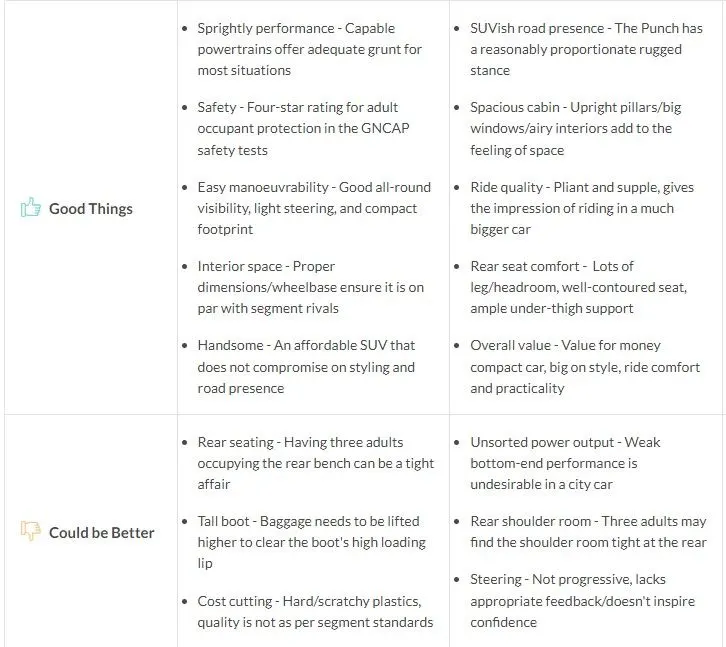
1. RENAULT KIGER VS TATA PUNCH
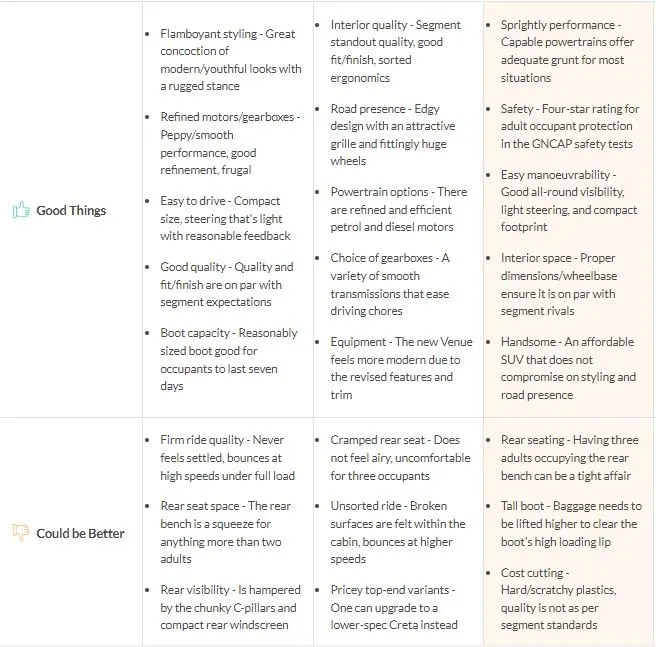
2. KIA SONET VS HYUNDAINVENUE
3. TATA NEXON VS MAHINDRA XUV 300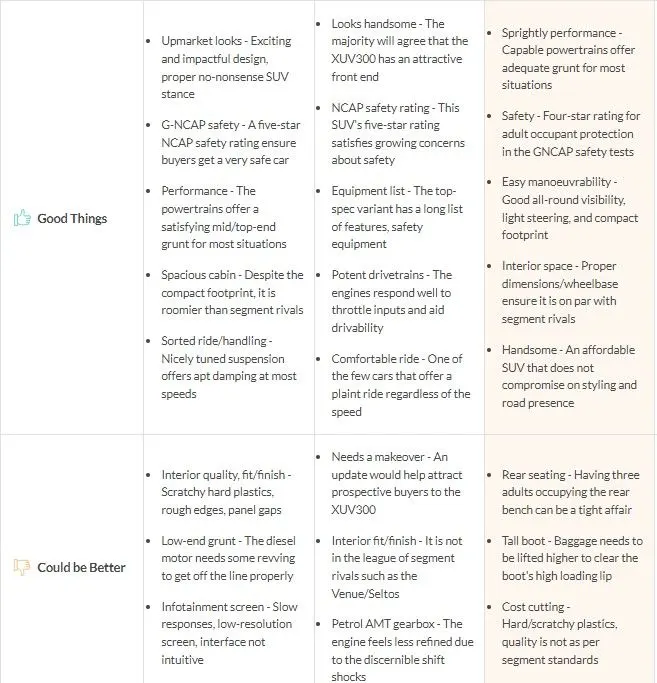
CONCLUSION
Among the comparison of vehicle having same price range ,same segment are of different from each manufactures with out any compramise in there builtup qulity they lead the market,
Each manufactures maintain a unique technologies where make up in there manufacturing section.
every one shows that the price range & with inthe price range they show how the can bulit a quality assured product to the market