SI Engine Modelling Techniques - IC-Engine Calibration Using GT-Power and GT-Suite
IC-Engine Calibration Using GT-Power and GT-Suite
Assingment:2 (SI Engine Modelling Techniques)
Q. Run the case at 1800 rpm for SI Engine(From tutorials) and categorize various parameters.
A.
Procedure :
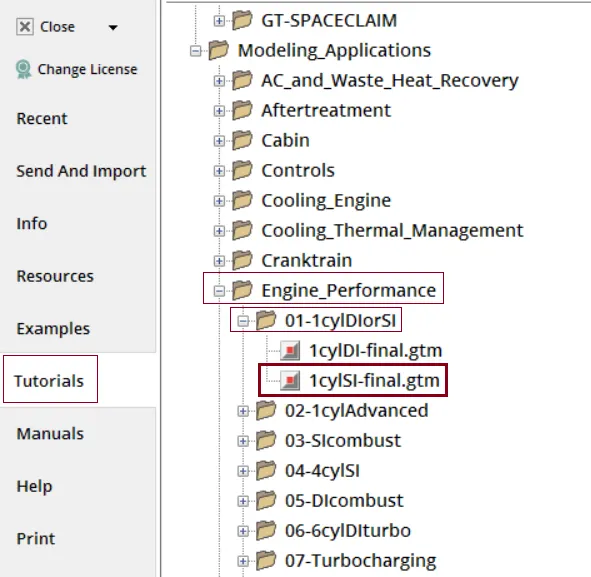
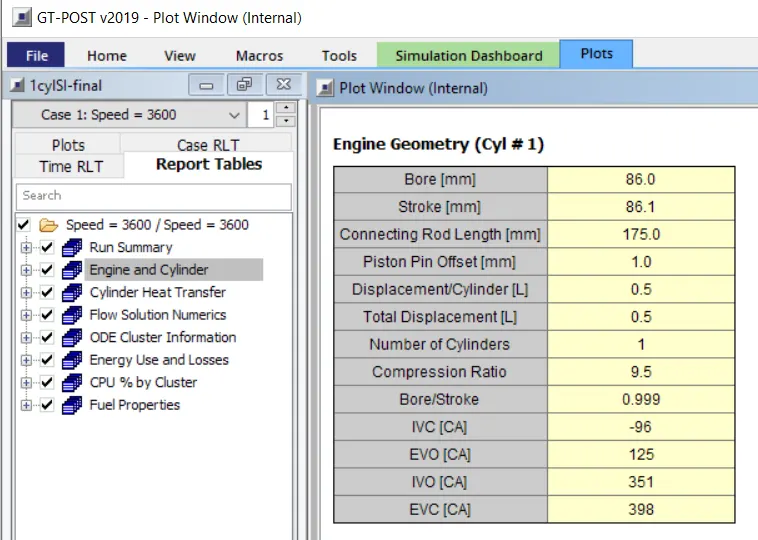
In order to import the Single Cylinder SI Engine > navigate to TUTORIALS > go to ENGINE _PERFORMANCE > select " 01-cylDIorSI " > double tap on "1-cylSI-final.gtm". Navigating to the folder opens the SIEngine model in GT-ISE.
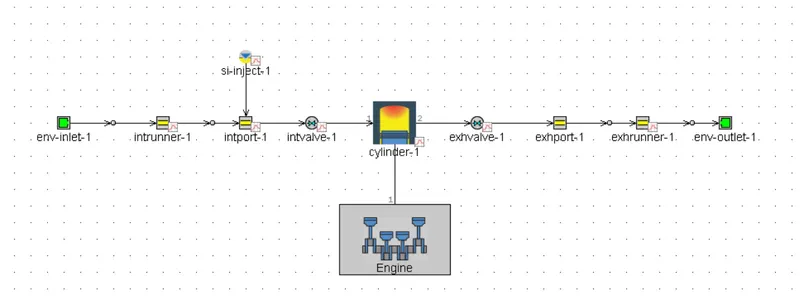
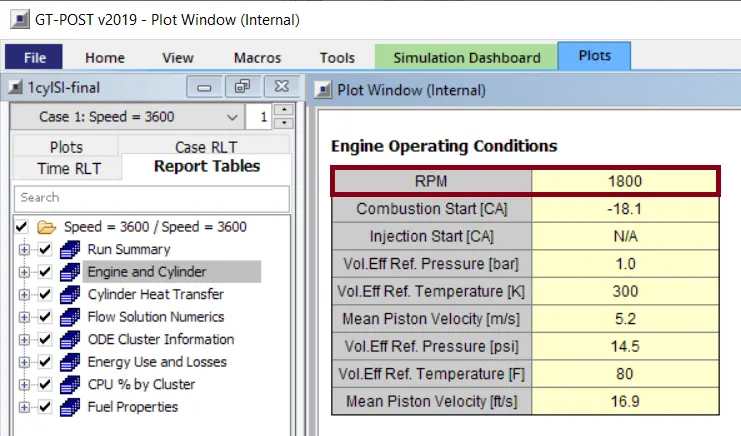
As we have to run the case for 1800rpm,
Step-1
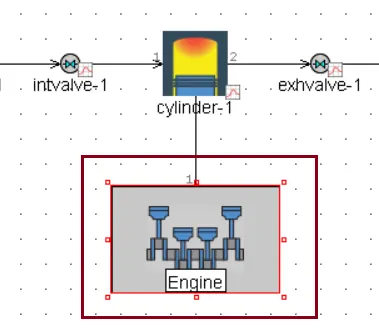
Double tap on Engine Template to open the settings.
Step-2
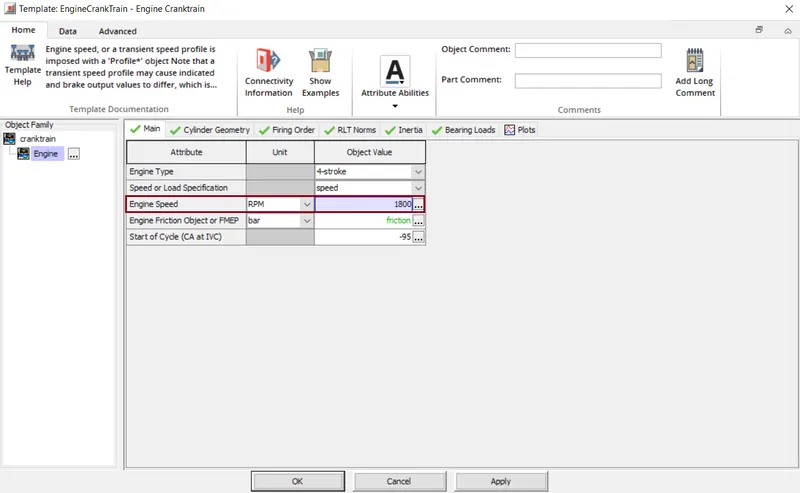
Change the value of Engine Speed to 1800RPM > click Apply.
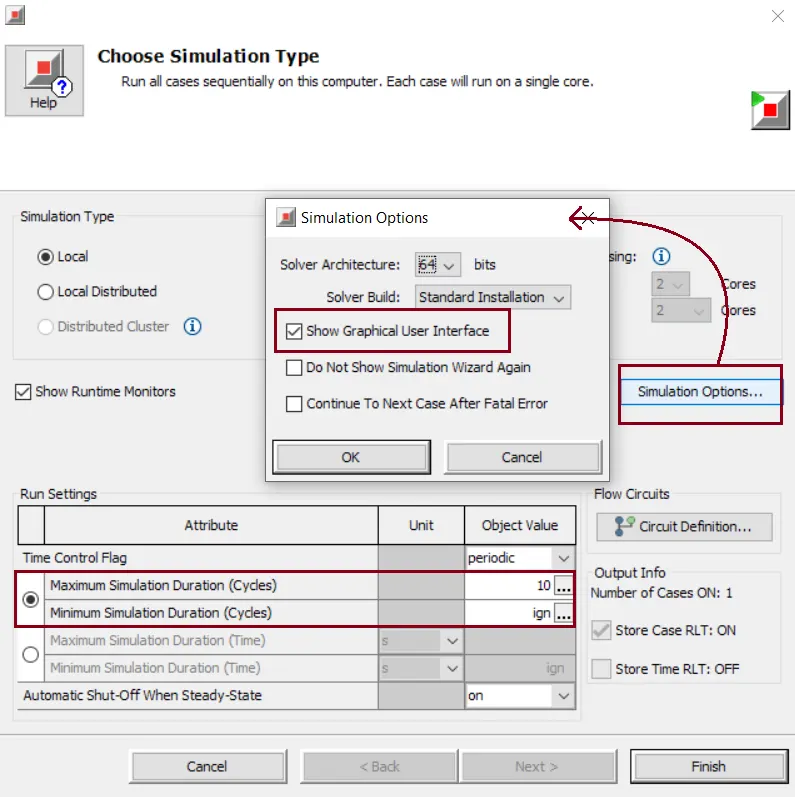
Run the simulation by entering the simulation duration and also unable 'Show Graphical User Interface '.
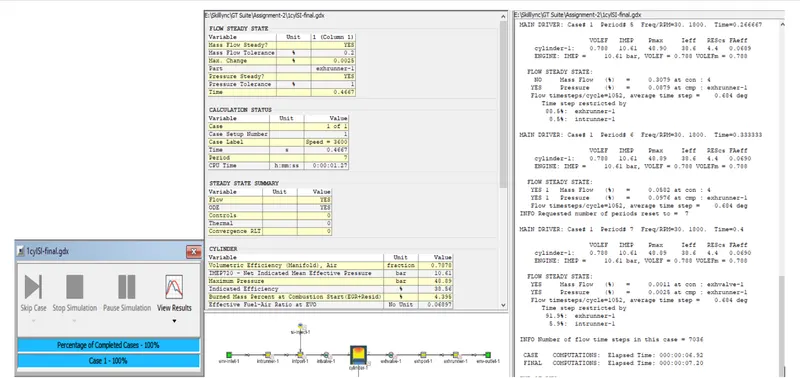
Outputs:
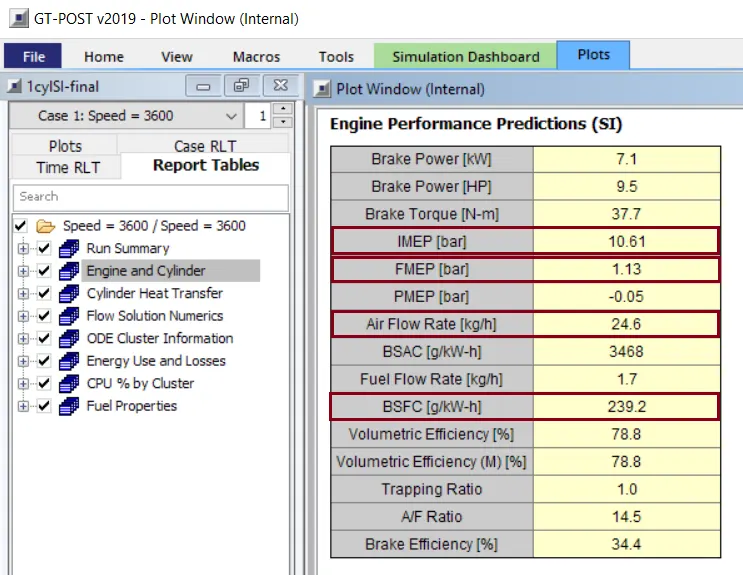
Therefore,
Air Flow Rate = 24.6 [kg/h]
Break -Specific Fuel Consumption (BSFC) = 239.2 [g/kW-h]
From the above report,
IMEP (INDICATED MEAN EFFECTIVE PRESSURE):
It is defined as the average pressure produced in the combustion chamber during the operating cycle.
FMEP (FRICTION MEAN EFFECTIVE PRESSURE):
It is defined as the Mean Effect Pressure lost due to the friction. This can be calculated from the Net Mean Effective Pressure and the Brake Mean Effective Pressure.
PMEP (PUMPING MEAN EFFECTIVE PRESSURE):
The differencebetween the Net Indicated Mean Effective Pressure and the Gross Indicated Effective Pressure will give the Pumping Mean Effective Pressure.
BMEP(BREAK MEAN EFFECTIVE PRESSURE):
We can calculate the Mean Effective Pressure from the torque generated at the crankshaft. The torque generated at the crankshaft is called the Brake Torque. So the Mean Effective Pressure calculated from the Brake Torque is called the Brake Mean Effective Pressure.
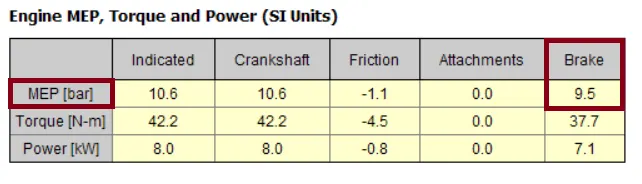
BMEP = IMEP -FMEP
>> BMEP = 10.61 -1.13
>> BMEP = 9.48 bar
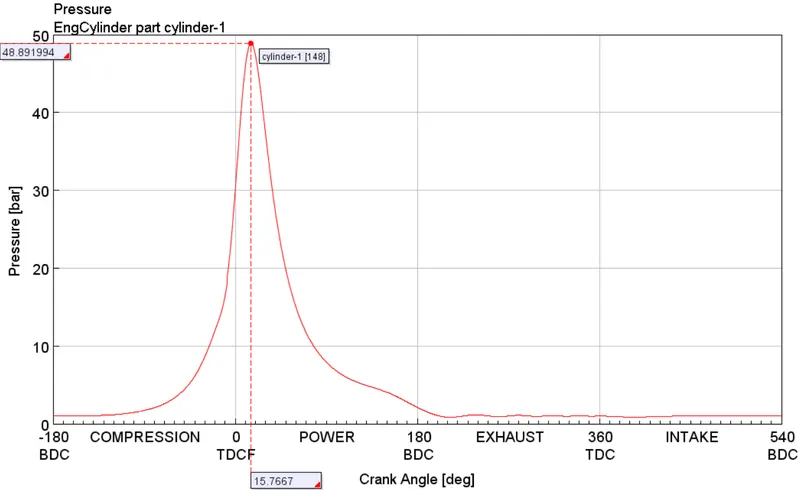
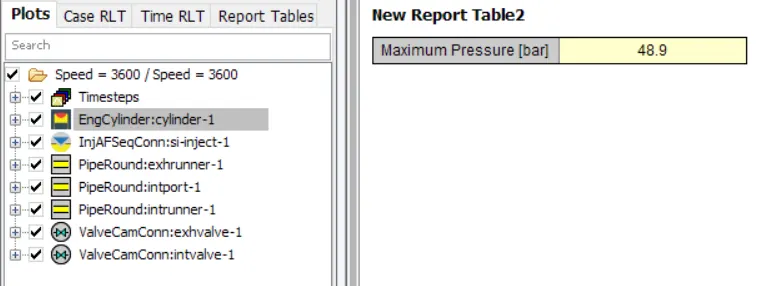
In-cylinder Pressure plot:
In-cylinder pressure = 48.89bar.
Q. Increase the power output of the SI Engine at 3600 RPM by 10%.
A.
Initially import the setup from the tutorials. Without changing the settings run the case at 3600 rpm.
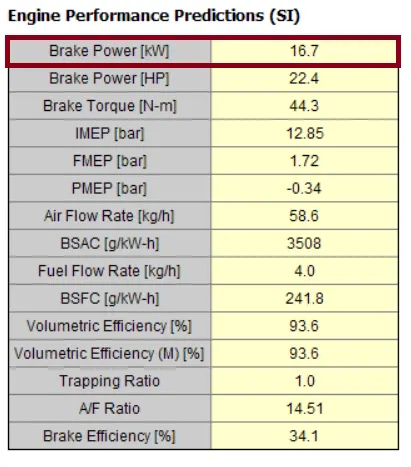
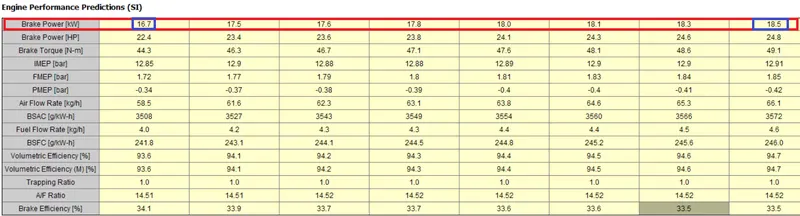
>> So, here consider Brake Power= 16.7 kW.
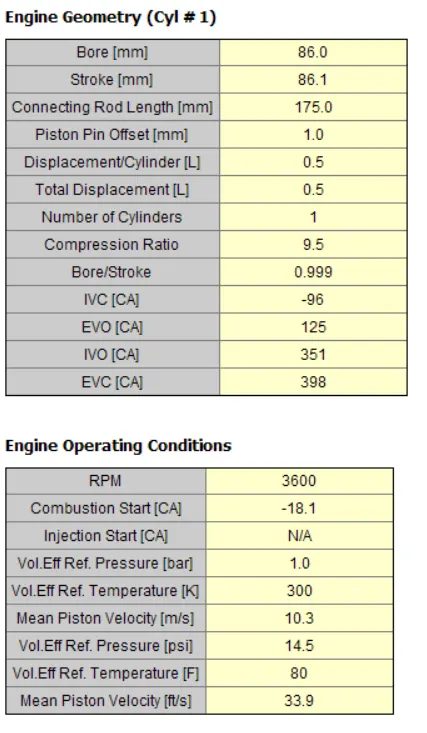
Generally power output can be increased by various factors like changing Air-Fuel ratio, compression ratio, geometry parameters etc.
Case-1:
Increasing Stroke Length:
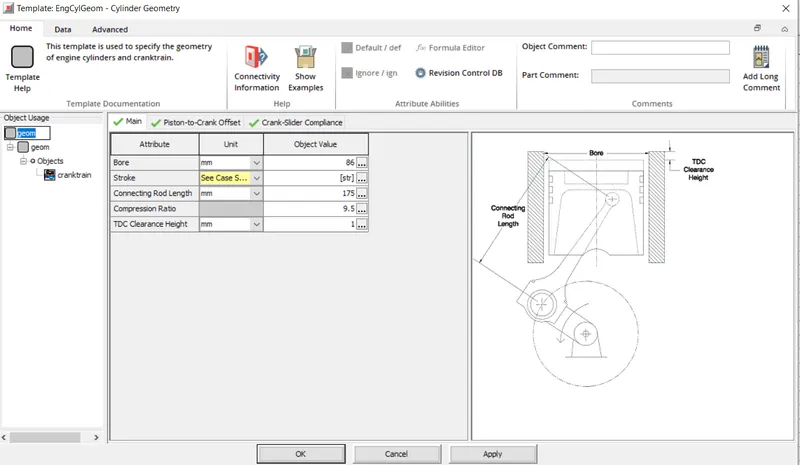
Go to ENGINE > select CYLINDER GEOMETRY > choose Cylinder Geometry Object -Attribute > select and double tap on "geom" > now it is directed to Template- EngCylGeom > set the parameters as required and tap Apply.
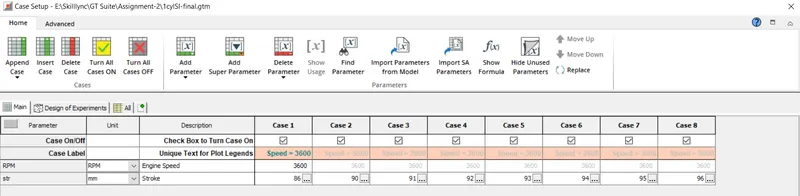
Go to Case Setup > set the values of Stroke for different cases by keeping speed as constant.
Output:

Results:
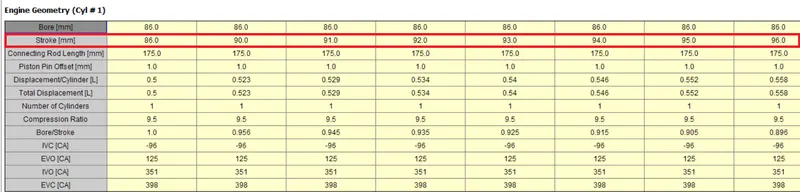
In this case, we have considered to increase the value stroke length which helps to increase the power by 10%. Here stroke length is varied between 86mm to 96mm inorder to observe the variation in the Break Power at the output. The above tabulated data clearly shows how the Power is varying w.r.t.o the change in stroke length.
By using the tabulated data we can check which case is suitable for finding the increase in power by 10%.
For Stroke length= 86mm :
Increase in Break Power = 16.7kW
For Stroke length= 90mm :
Increase in Break Power = ((17.5-16.7)/16.7)*100
Increase in Break Power = 4.7%
For Stroke length= 93mm :
Increase in Break Power = ((18.0-16.7)/16.7)*100
Increase in Break Power = 7.7%
For Stroke length= 96mm :
Increase in Break Power = ((18.5-16.7)/16.7)*100
Increase in Break Power = 10.77%
Hence, it is concluded that by increasing the stroke length by 10mm(86mm-96mm) the results show that there is 10% increase in Break Power for stroke length of 96mm.
Case-2:
Increasing Compression Ratio:
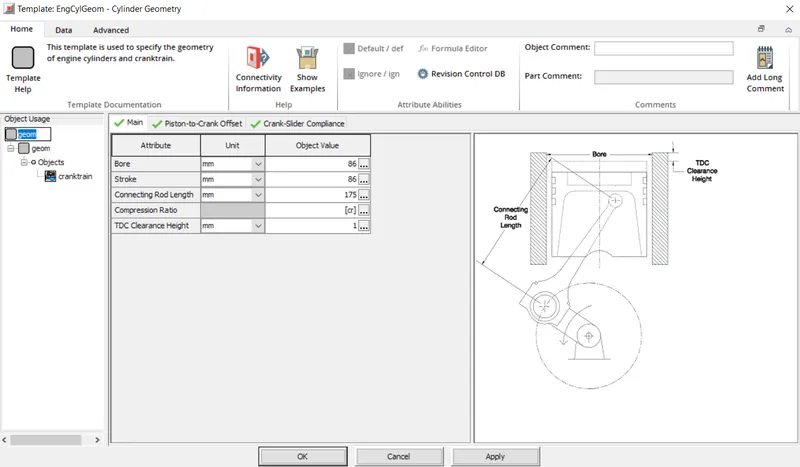
Go to ENGINE > select CYLINDER GEOMETRY > choose Cylinder Geometry Object -Attribute > select and double tap on "geom" > now it is directed to Template- EngCylGeom > set the parameters as required and tap Apply.
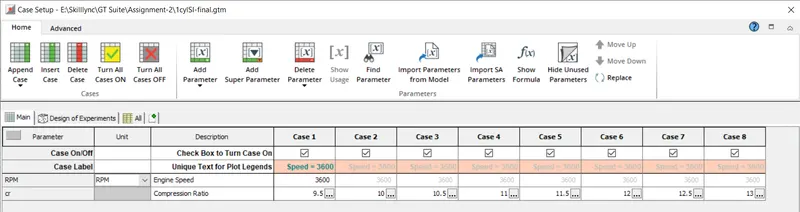
Go to Case Setup > set the values of Stroke for different cases by keeping speed as constant.
Output:
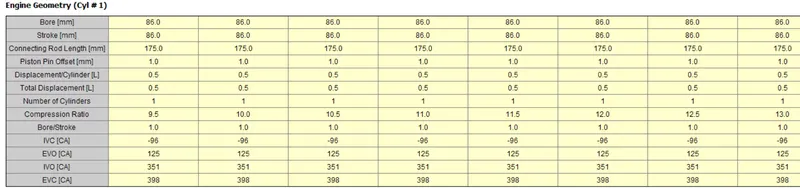

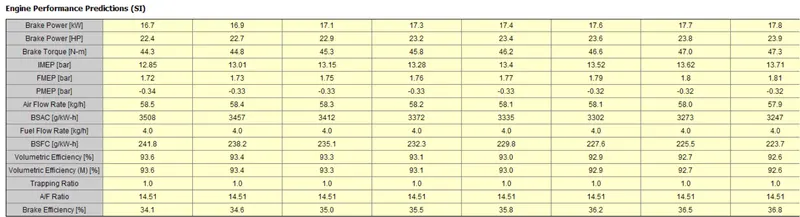
Similar to the above case,on increasing compression ratio the power also increased. For gasoline engine we use a low compression ratio. If we increase the compression ratio then their will be a problem of knocking which is not at all good for engine efficiency as well as effect the engine life. Hence increasing the compression ratio to higher rate is not good to generate higher power output.
Similarly, there are various methods to find the increase in the power by varying the parameters of the engine. In that way we can increasae the power but it drastically effects the engine life cycle as well as consumes more amount of fuel which is generally not prefered. Also we can change the piston geometry or adjust the swept volume in order to obtain the max power output.
Conclusion:
- In the first part engine is made run at 1800 rpm without changing the values and various parameters are generated.
- Therefore, by changing various parameters it is observed that the power out of the engine has increased by 10%.