To perform the side crash analysis of neon BIW model on the rigid wall and to analysis forces on B piller, fuel tank, hinge piller.
To perform the side crash analysis of neon BIW model on the rigid wall and to analysis forces on B piller, fuel tank, hinge piller.
Objective:
Neon side crash -BIW
- Check unit system and either follow [Mg mm s] or [Kg mm ms].
- Create appropriate interface ,friction 0.2 and recommended parameters.
- Make sure of no penetration and intersections.
- Create rigid wall with friction 0.1 as per referance model.
- Compare the model weight with the referance model and use added masses to reach target weight 700kg while getting CG about the required range.
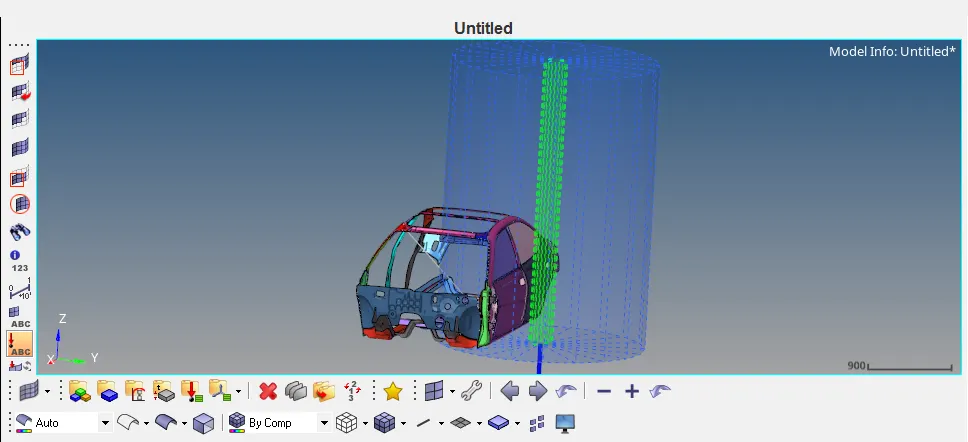
- Initial velocity as shown in picture.
- Use model checker to ensure good quality.
- Timestep :0.5 to 0.1 microseconds.
- Run 80ms.
Output requests:
- Sectional force in the cross member.
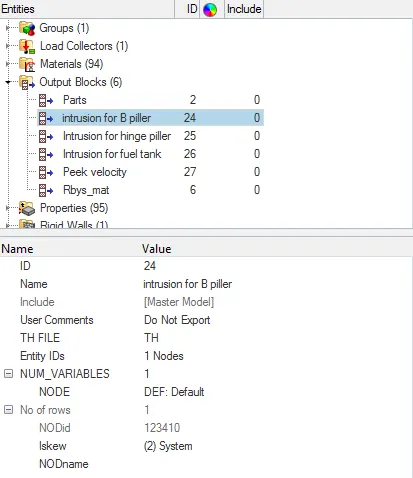
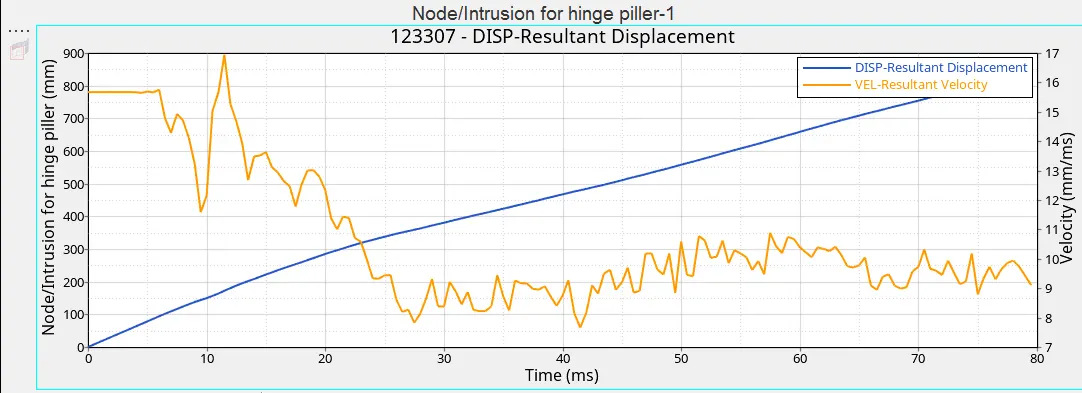
- Intrusion at B pillar,hinge pillar and fuel tank region.Provide recommendation on what can help to reduce Fuel tank intrusion.
- Peak velocity of inner node of the door.
Procedure:
Masses are added in such a way that COG is located in the middle as shown in the picture.
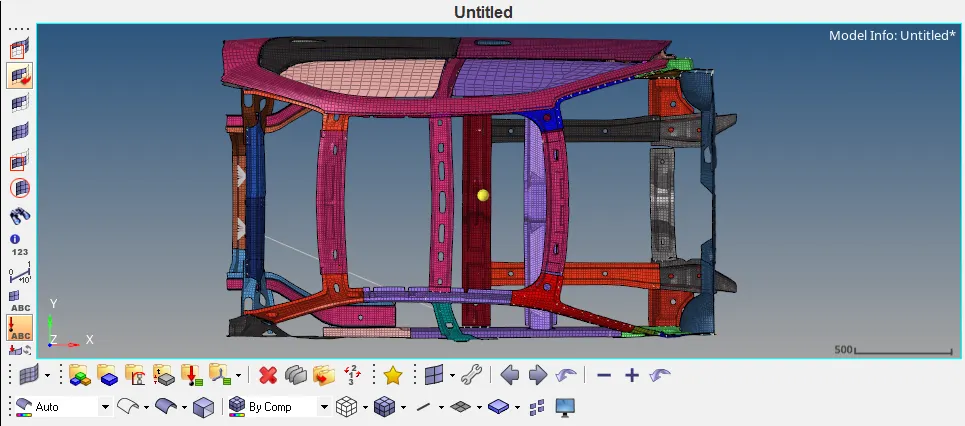
Add mass card is used to distribute the mass on the floor and on the piller to increase the overall weight
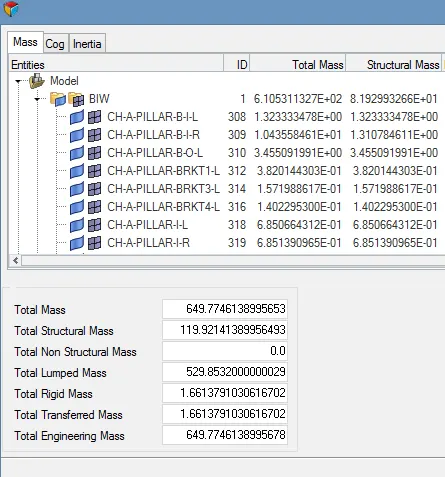
Type 7 Contact interface
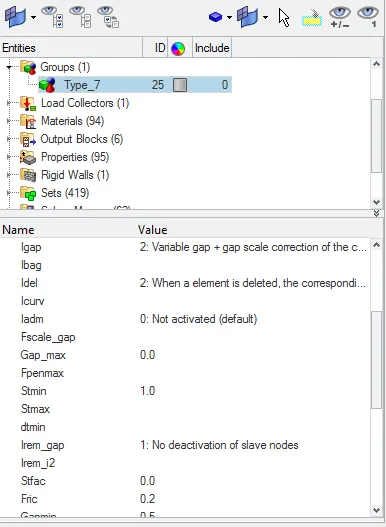
Recommended Parameters
Istf = 4 initial stiffness
Igap = 2 variable gap thickness
Iform = 2 sliding force are calculated using stiffness and friction
Gapmin = 1 min gap around surfaces
Stmin = 1 min penalty stiffness in KN/mm
Fric = 0.2 friction factor
Idel = 2 Master segments deleted even if one master element fails.
InActi = 6 Gap is reduced and scaled if initial penetration is deleted.
Create rigid wall with fric=0.1 and Dsearch=1000
Output requests:
- Sectional force in the cross member.
- Intrusion at B pillar,hinge pillar and fuel tank region.Provide recommendation on what can help to reduce Fuel tank intrusion.
- Peak velocity of inner node of the door.
Results & Conclusion:
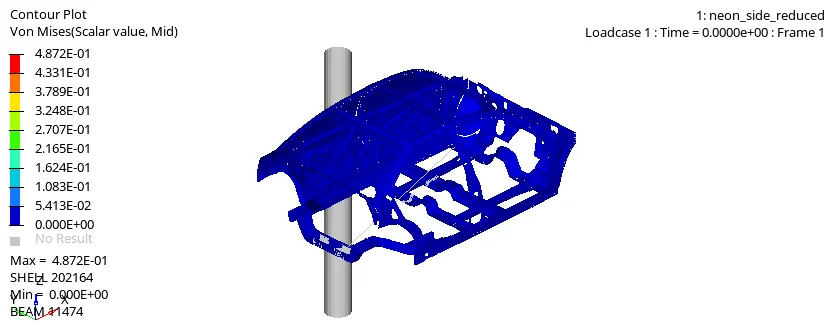
Overview of analysis (Von Mises)
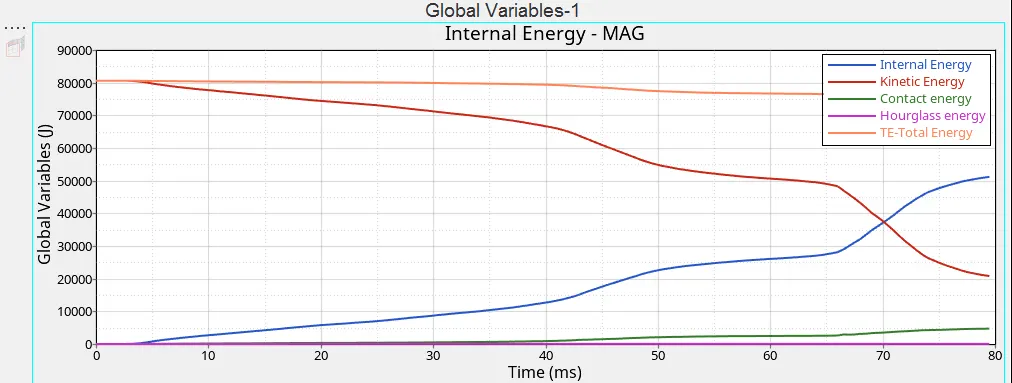


- Initially KE was around 80590 Joules after imapact reduced to 20590 Joules
- This is converted into Internal enegy 51320 J
- Energy Error is -7.4% which is acceptable
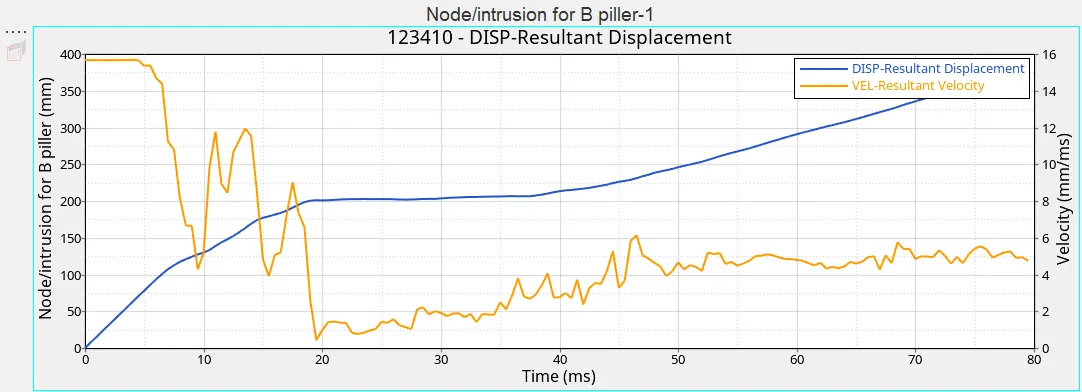
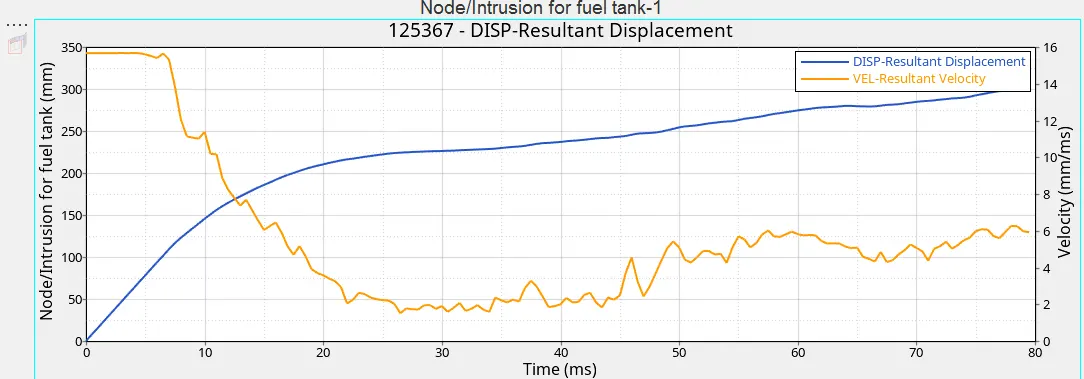
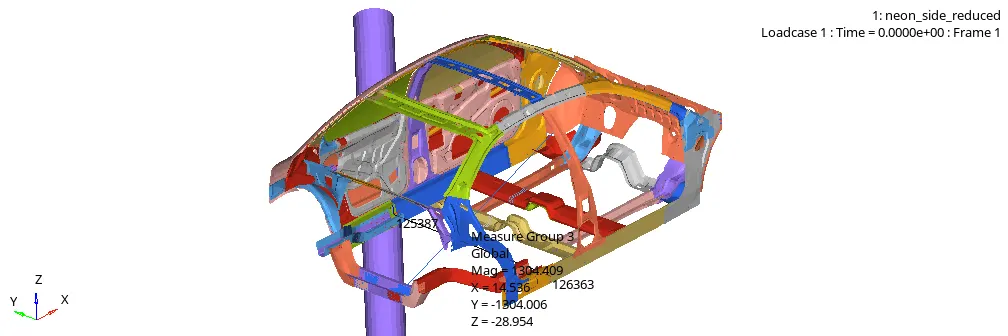
Intrusion at the fuel tank is 1304-304=1000mm
Intrusion at the B piller is 1318-517=801mm
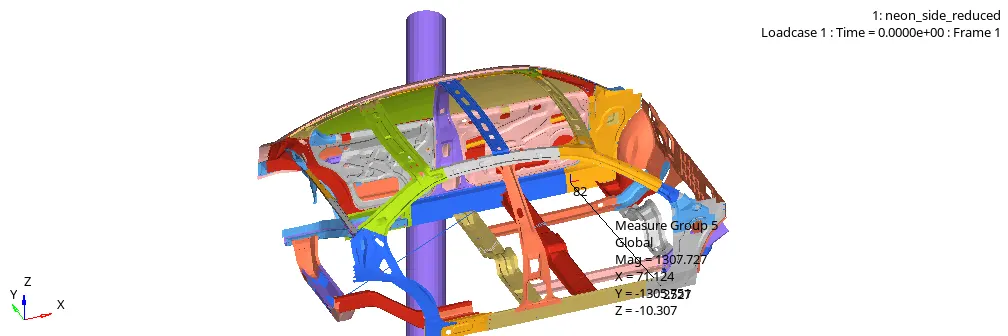
Intrusion at Hinge is 1307-1027=280mm
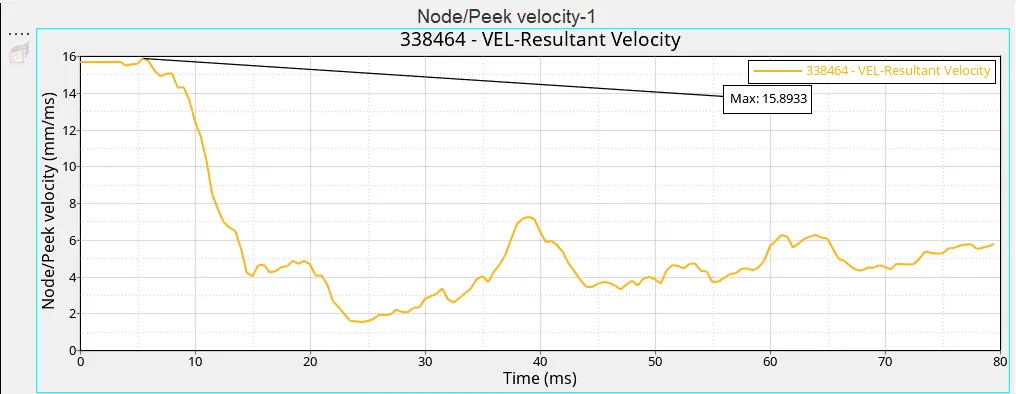
- We can see peek velocity is maximum at 6 ms which is 15.8933 mm/ms after this sudden decrease in velocity
Conclusion:
- Successfully performed neon side crash analysis and following observations are analysed
- created Type7 Contact interface with recomended properties
- distributed mass to increase the overall weight of car to get COG at the center