Side Crash– BIW – Using Radioss (Explicit)
Side Crash– BIW – Using Radioss (Explicit)
Objective
- Simulate a side crash into a rigid cylindrical pole using the given parameters.
- Drive Link - https://drive.google.com/file/d/1Cv_86Ur9fJab1dgE2eU4rPCuatDebbvB/view?usp=sharing
Given
- Check unit system and either follow [Mg mm s] or [Kg mm ms].
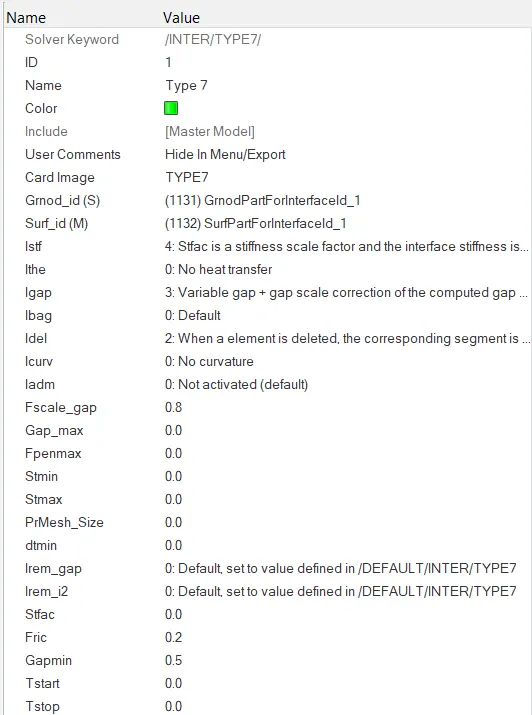
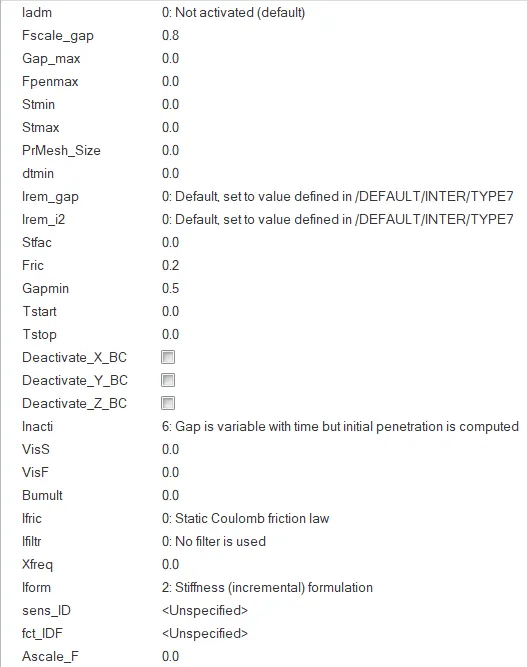
- Create appropriate interface, friction 0.2 and recommended parameters.
- Make sure of no penetration and intersections.
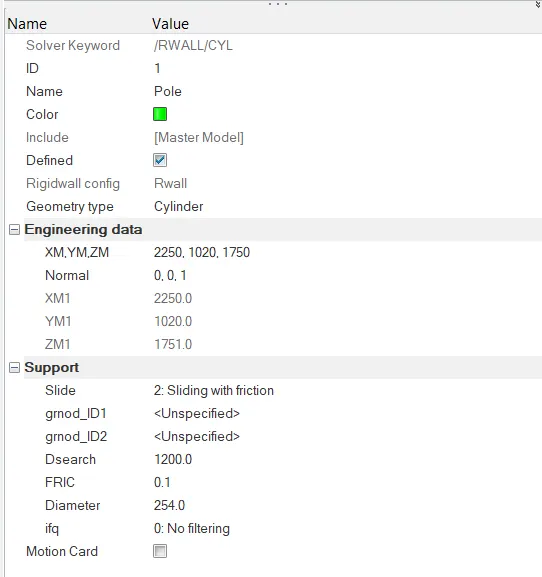
- Create rigid wall with friction 0.1 as per reference model.
- Compare the model weight with the reference model and use added masses to reach target weight 700kg while getting CG about the required range.
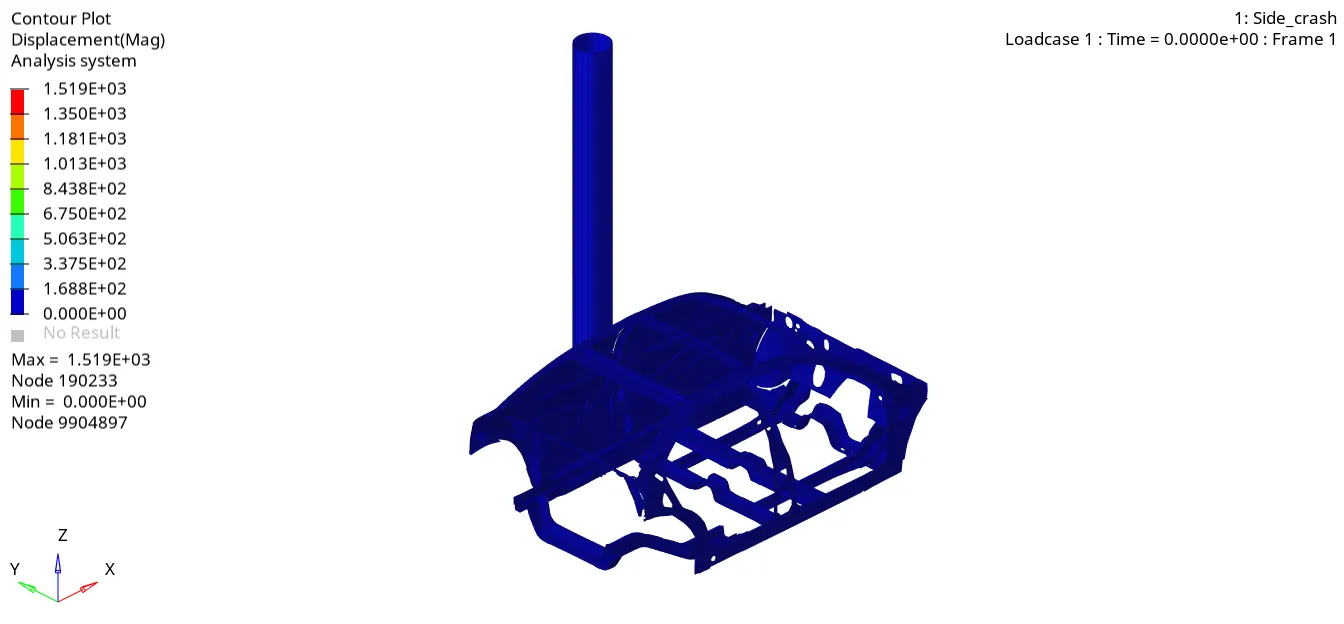
- Initial velocity as shown in picture.
- Use model checker to ensure good quality.
- Time step: 0.5 to 0.1 microseconds.
- Run 80ms.
Output requests:
- Sectional force in the cross member.
- Intrusion at B pillar, hinge pillar and fuel tank region. Provide recommendation on what can help to reduce Fuel tank intrusion.
- Peak velocity of inner node of the door.
Procedure
- Import the reduced model into Radioss block. For this simulation Unit system followed is [Kg mm ms KN Gpa KN-mm].
- Create a contact interface of type 7 with recommended parameters for the model.
- Create a rigid wall of type cylinder with Friction of 0.1 and Dsearch of 1200 (Slave nodes) (Diameter of the pole is 254mm)
- A Rigid Wall is a Kinematic Condition, if a slave node penetrates the rigid wall surface a new velocity is computed. From this velocity, the impulse and rigid wall force are determined
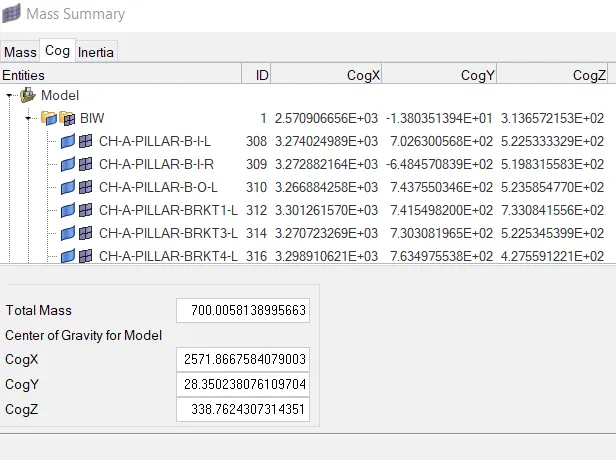
- Mass balancing – it is very important to balance the mass for positioning the COG of the car. In this case the vehicle is assumed to be 700kg.
- Initial velocity of 35 mph (15.56mm/ms) is applied in +ve y axis direction.
- Sections are created for Rails (cross members) this activity helps to measure the force transfer from the point of impact. Measurement of energy absorption by the crumple zone and how much energy is coming towards the cabin. For the sections local coordinates (Frames) are called.
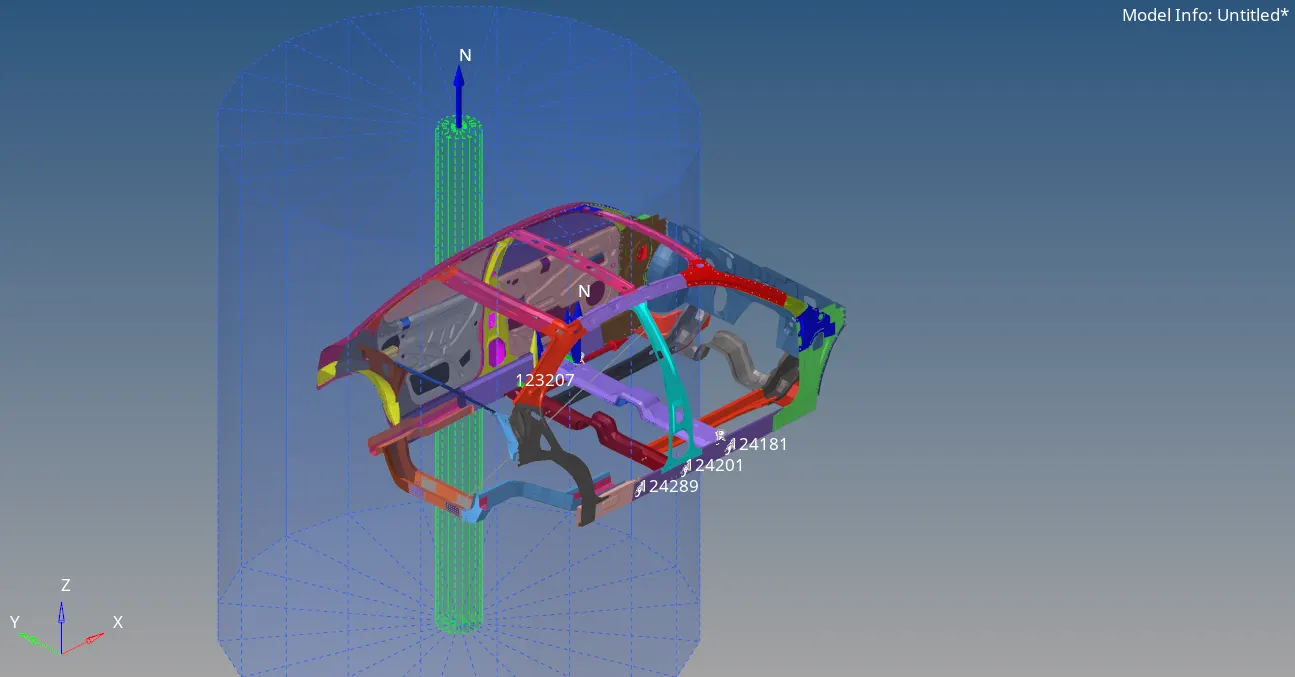
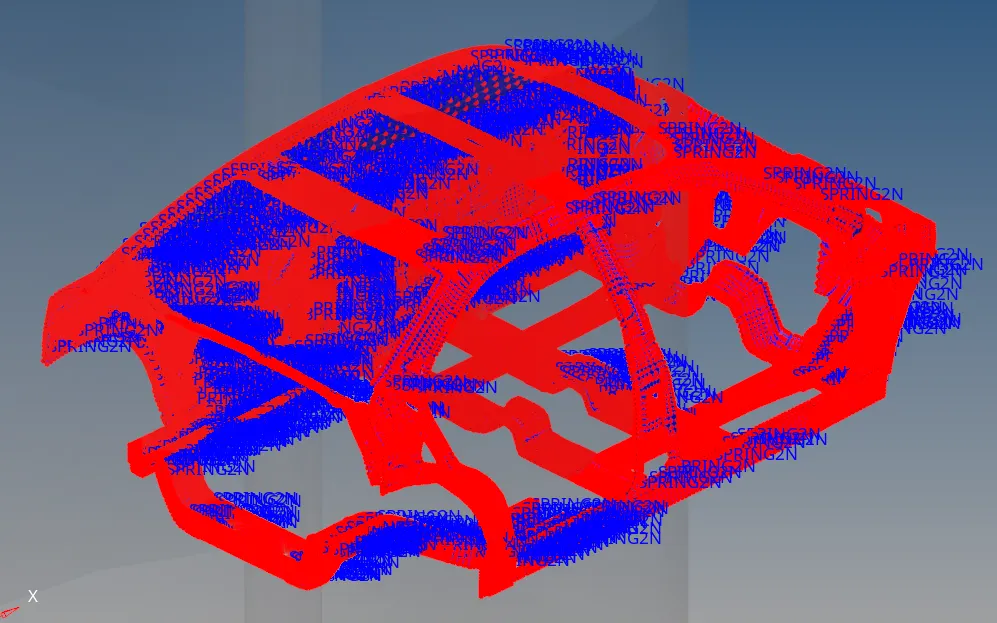
- Intrusions near the B pillar, hinge pillar and fuel tank region are measured by requesting TH/NODE which will give the displacement of the nodes.
- Output request are placed for the sectional forces, Intrusion nodes, TH/RWALL and TH/Part
- Checks – Connectivity checks are done to find any free parts in the model
- Penetration and Intersection checks are also done to find out that there are no collisions.
- Last Model checker is run to find any incompatible kinematic conditions, errors and warnings in the model.
- Energy error and Mass error are -2.6 % and 0.

Results
Global Energy
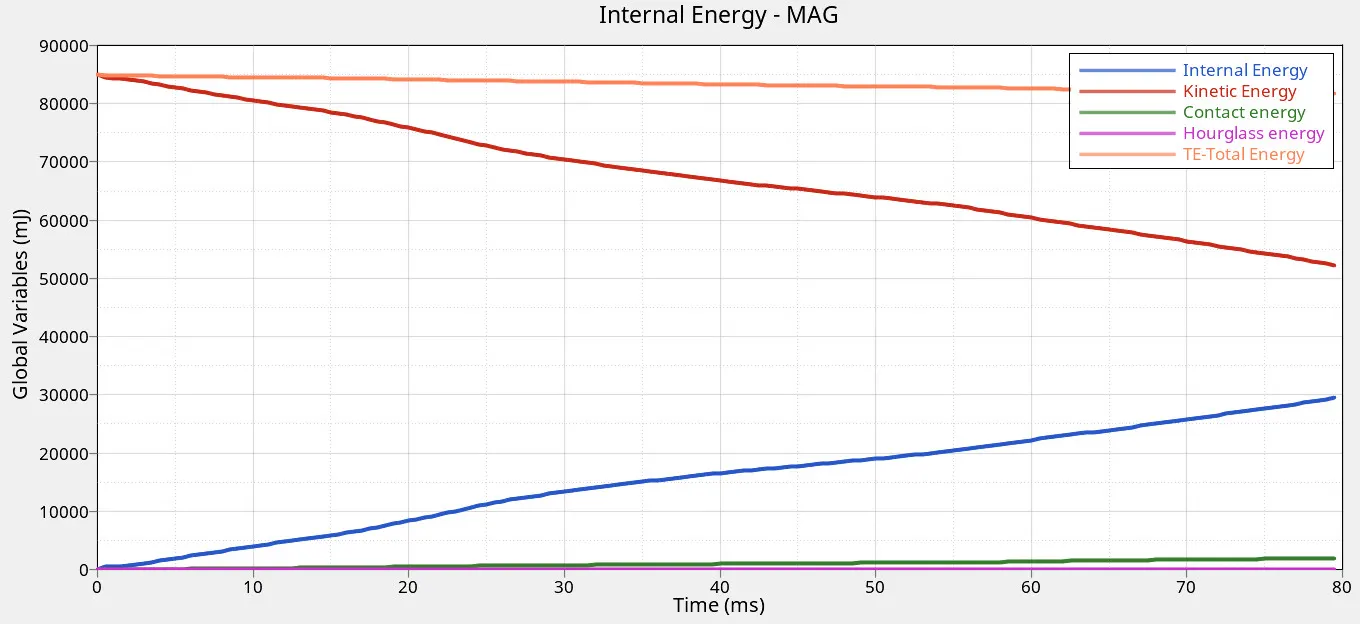
- Hour glass energy remains almost zero and we can see contact energy increasing towards the end of the simulation due to contact definition coming into action.
- Total energy remains constant throughout the simulation. IE increases after the impact with the pole. KE decreasing as the vehicle comes to a stop after the collision.
Sectional Forces at the Front Rails ( Driver seat)
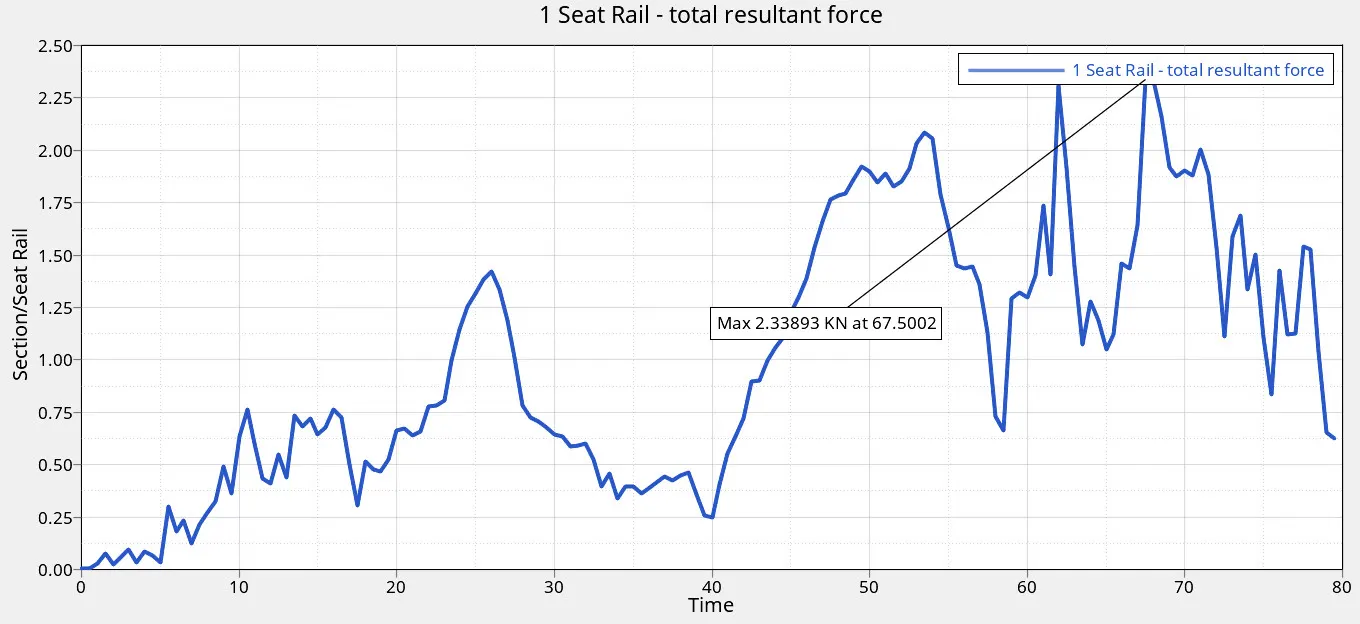
- A maximum of 2.33KN force can seen at the rails. If EURO NCAP (for side impact abdomen peak force has to be less than 1KN )is used to compare this case - then it fails.
Sectional Forces at the Second Rails member ( Attached to the B pillars)
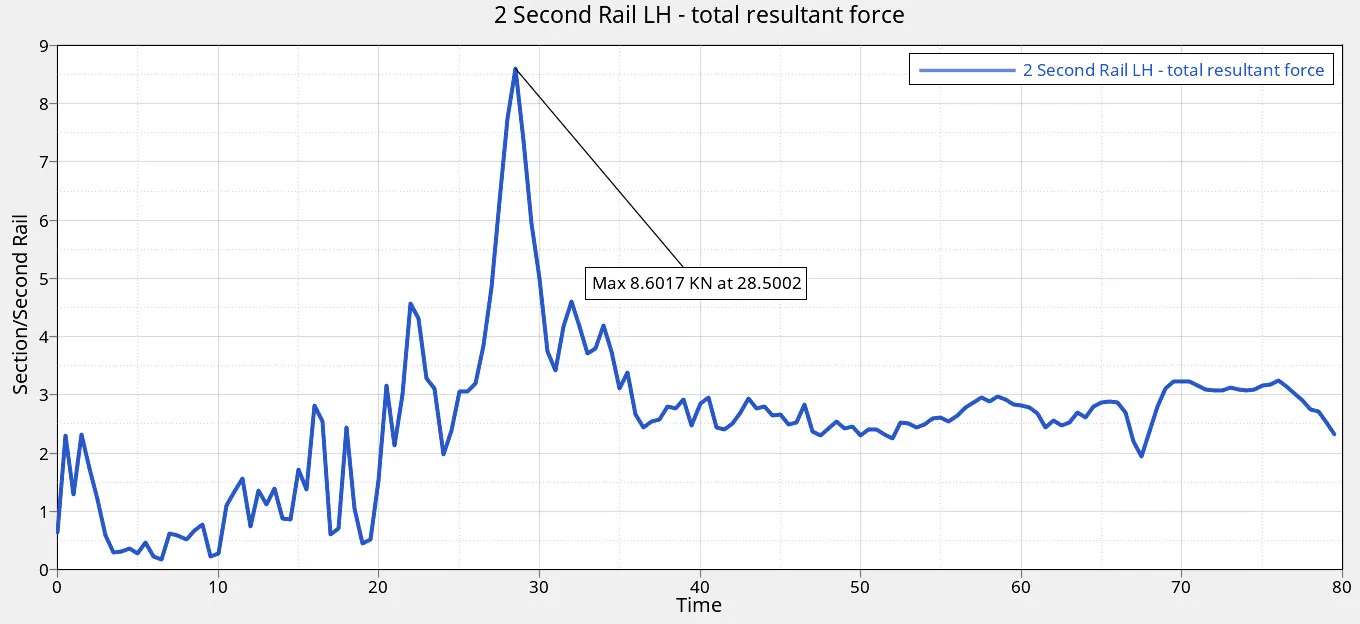
- A maximum of 8.6017 KN force can be seen at this rail. As the car impacts the pole, B pillar makes contact and a part of those forces are travelling through this member.( thus avoid the force transfer through the driver and Co - driver lane)
Intrutions
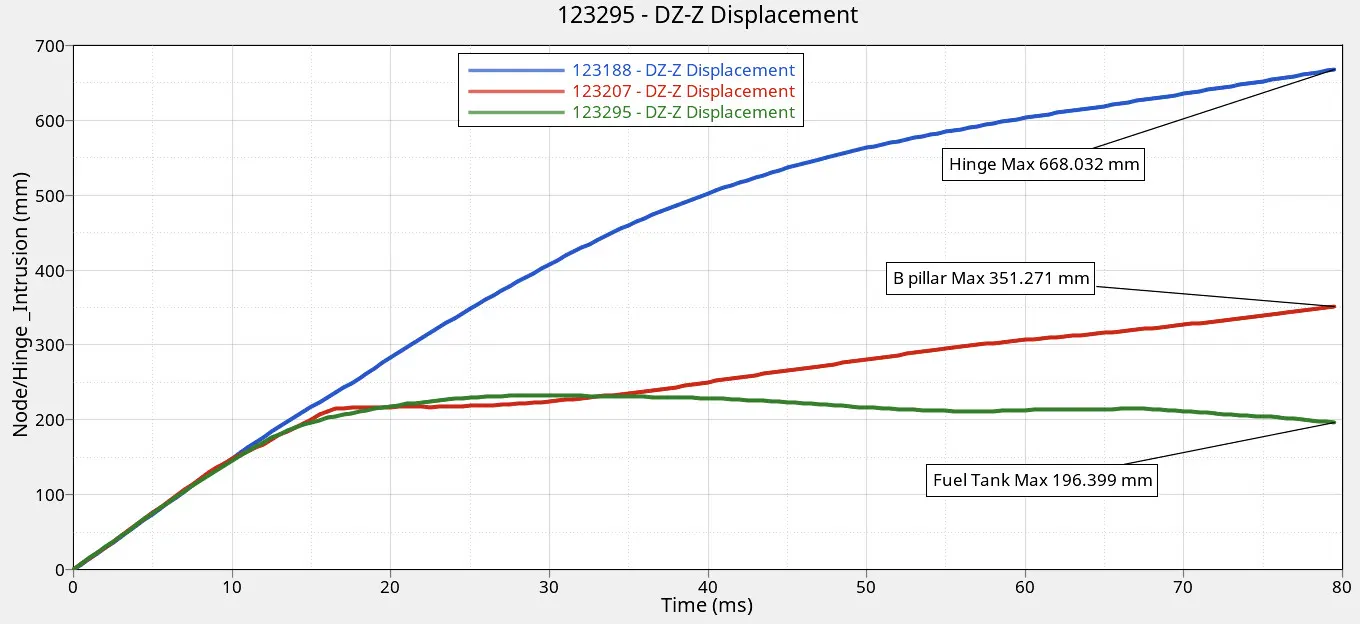
- We can see a max of 351.271mm displacement at the B pillar.
- Hinge has a displacement of 668.030mm
- Fuel tank has a displacement of 196.39mm
These intrusion measurements gives a general idea where strenghtening is needed and where design changes has need to made to prioritise passenger safety.
These are also important for validating the NCAP or other crash ratings.
Peak Velocity of the Inner Panel.
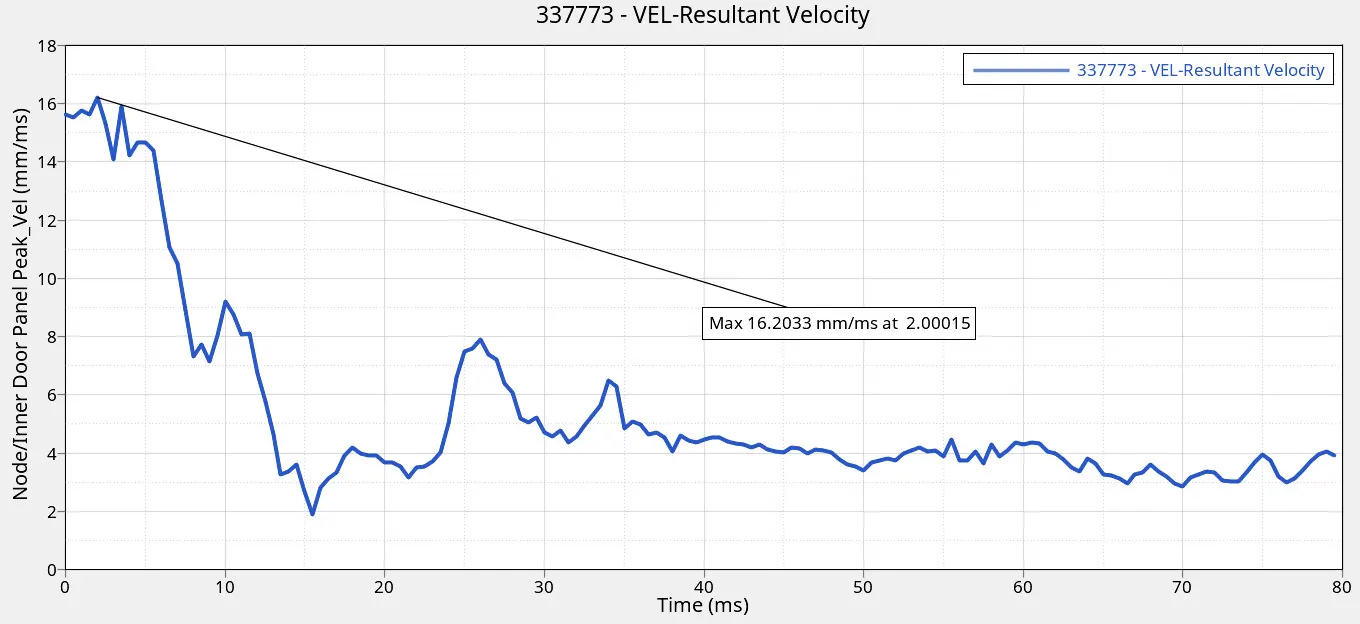
Peak velocity of 16.20 mm/ms is seen the inner door panel were driver sits. These measurements forms the inputs for curtain, shoulder airbag designs and Inner panel and outer panel strength.
For this case we can observe a cross rod reinforement beween the inner and outer door panels.
Von mises and Rigid wall forces
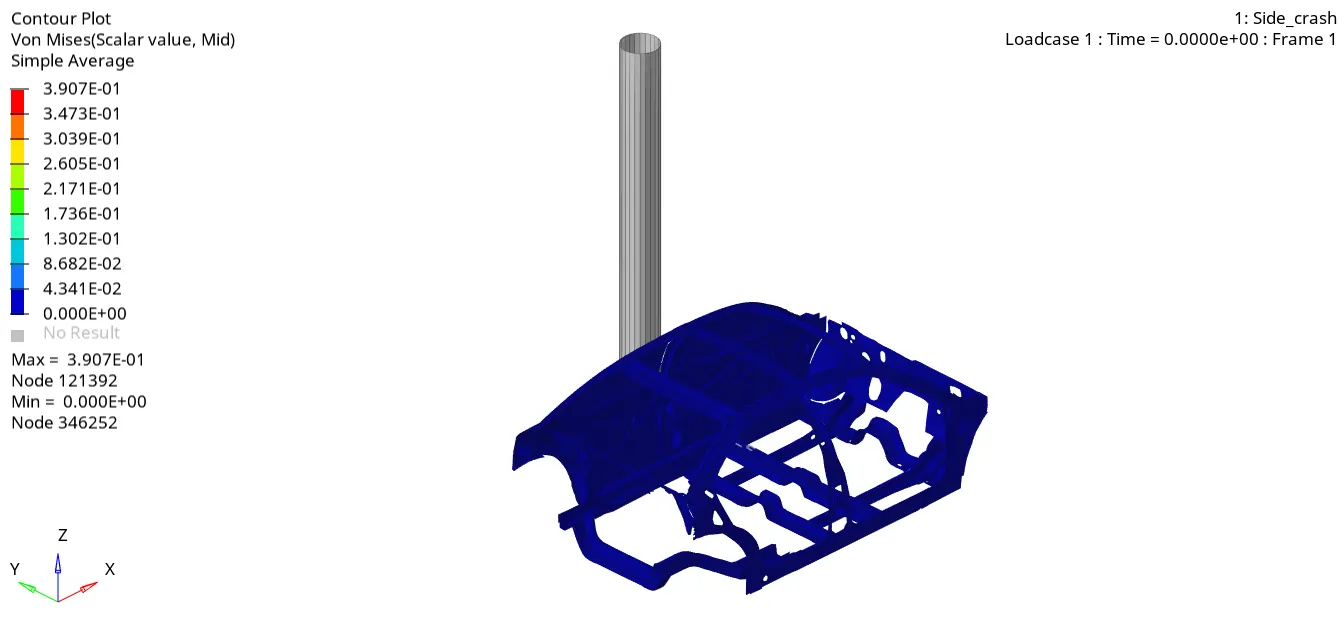
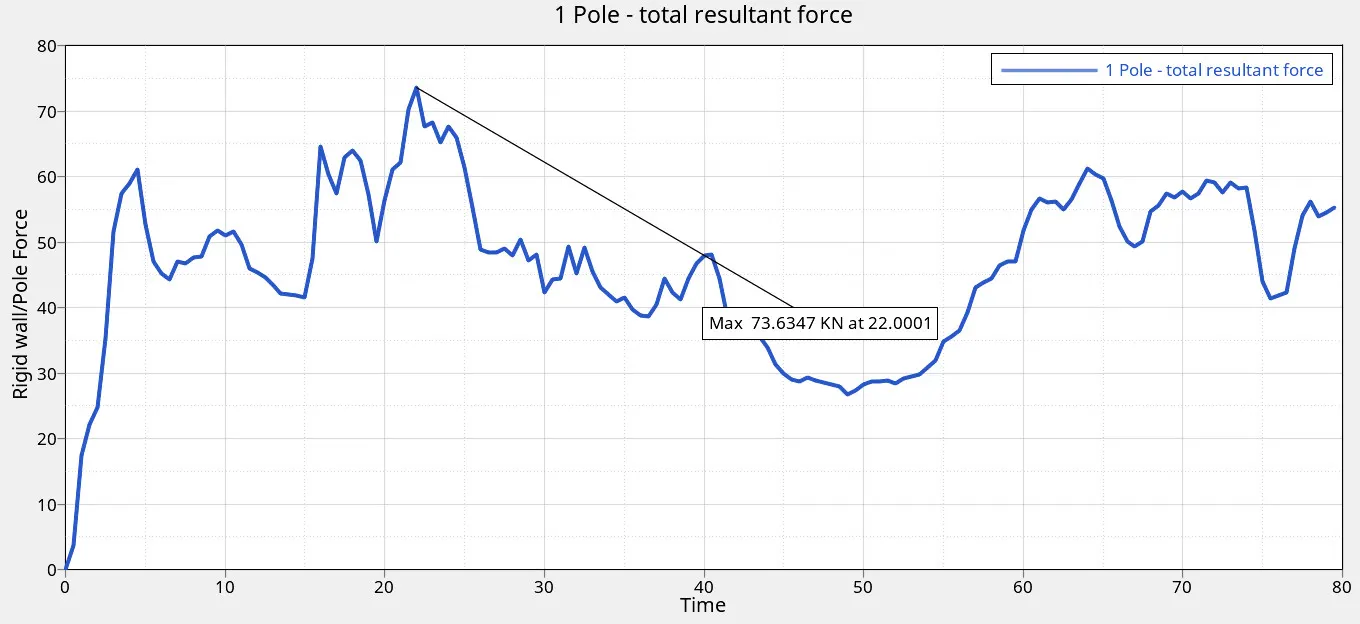
We can observe a max of 3.907E-01 GPa von mises and rigid wall force of 73.63 KN in this side crash simulation
Conclusion
- Sectional forces at the Cross member rails were measured to get a force transfer taking place.
- Intrutions were measure near the hinge, b pillar and fuel tank to see the displacements taking during the impact.
- Debugging of the model before the run needs to be done properly and all errors are needs to taken care of , since amount time invested in solver deck and a run time of 3 hrs should not be wasted.
- Run time in this case - 3:09 hrs.