Assignment 7
Aim:
To check the process for the neon side crash and output request.
Check unit system and either follow [Mg mm s] or [Kg mm ms].
Create appropriate interface ,friction 0.2 and recommended parameters.
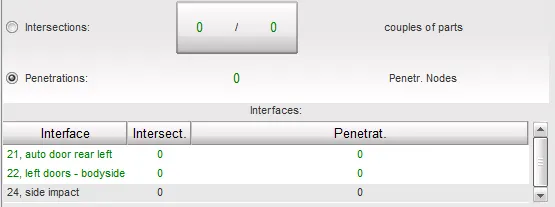
Make sure of no penetration and intersections.
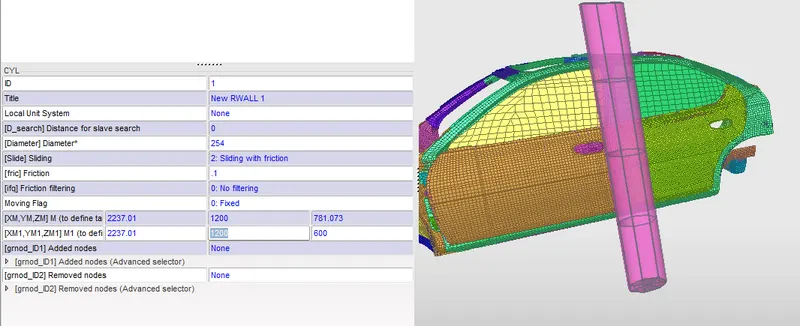
Create rigid wall with friction 0.1 as per referance model.
Compare the model weight with the referance model and use added masses to reach target weight 700kg while getting CG about the required range.
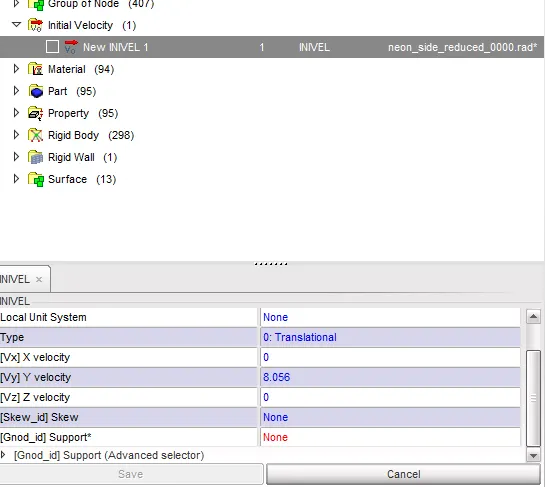
Initial velocity as shown in picture.
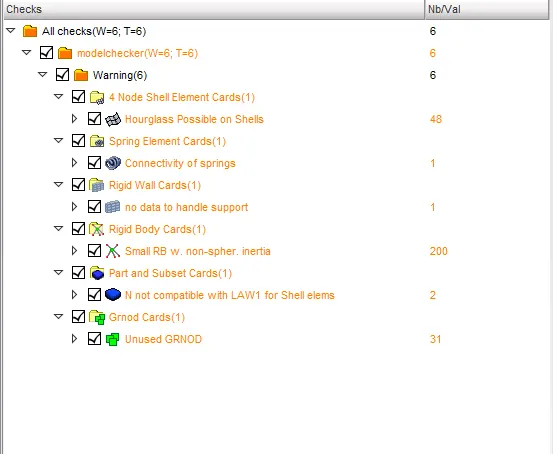
Use model checker to ensure good quality.
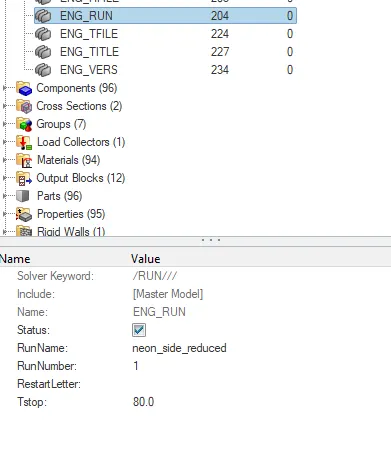
Timestep :0.5 to 0.1 microseconds.
Run 80ms.
Procedure:
In hypercrash.
Importing the rad file for the process. The unit system is set as kg mm ms.
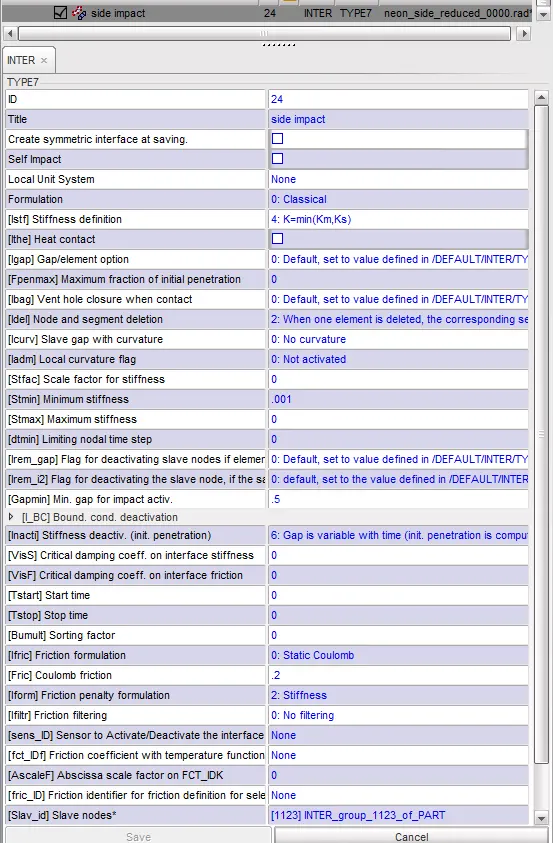
Now create the new contact-> A-C->Contact interface ->card image as type 7.
To create the interface go to the group-> neon side(which was created)-> Gmod_id(S)(slave node)-> select the part to be slave node and ->Surf_id(M)(master node)-> select the part to be master node-> click ok.
Even the friction 0.2 value is placed.
Recommended parameter is saved.
Make sure of no penetration and intersections.
To check the penetrations and intersection go to hypercrush-> Quality-> check all contact interface.
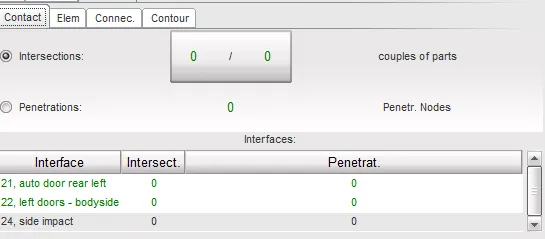
Create rigid wall with friction 0.1 as per referance model.
To create the rigid wall go to Browser-> Right click-> M-R-> Rigid wall-> Cylinderical.
Model weight:
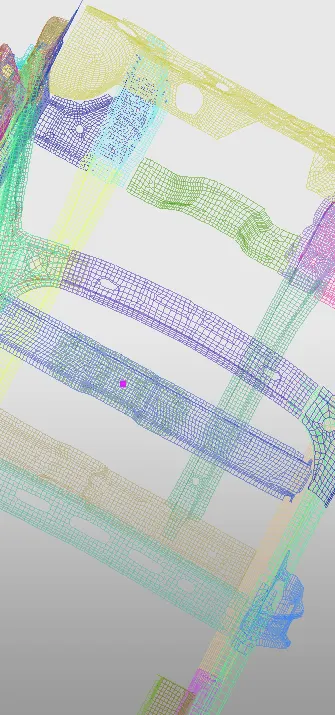
For adding the mass go to hypercrash-> load case-> Added mass->Click(type 1)-> select the areas separatly to give a distributed mass.
For balancing the mass go to Mass-> Balancing-> once mass is loaded for checking the balancing click  to check the balancing.
Type 1 is mass distributed to each node separately.
In this model four equal mass is created to each node to produce a perfect balancing.
Intial velocity:
To create a initial velocity right click-> Create new-> I-L-> Intial velocity.
For the initial velocity the value on the y axis is given with the reference of the website for the value given during the side impact.
For initial velocity the value given was 29km/hr which is converted into m/s i.e., 8.056m/s.
Use model checker to ensure good quality.
To check the model checker in hypercrash go to Quality-> Model Checker-> Run.
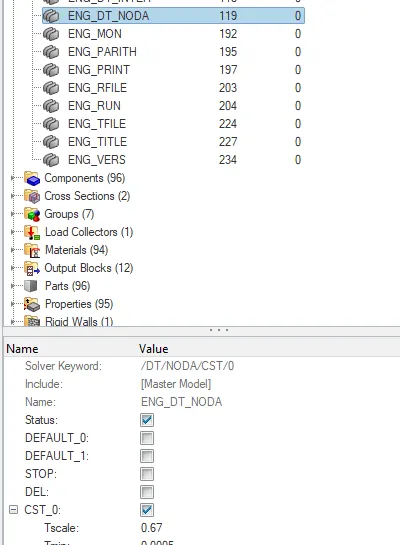
Timestep :0.5 to 0.1 microseconds.Run 80ms.
Output requests:
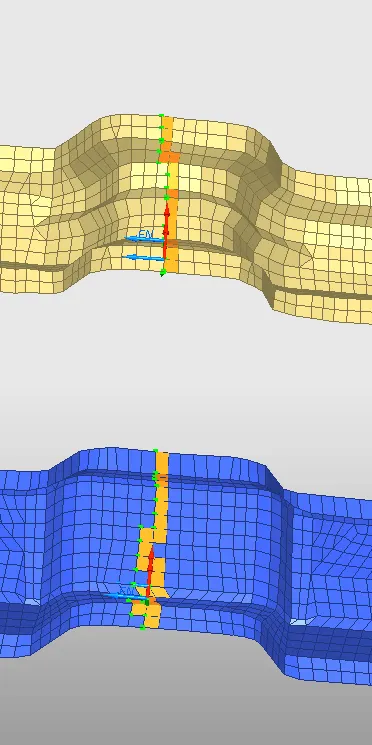
Sectional force in the cross member.
For creating a sectional force right click-> create new-> S-Z-> Section.
After clicking the section there opens a block in that click the Frame_id as create a frame-> after clicking that see type click in that as a moving frame.
Now select the point that has to be framed. After selecting the frame using the node point values to use in main block.
And click on grshell_id select the plot and click ok.
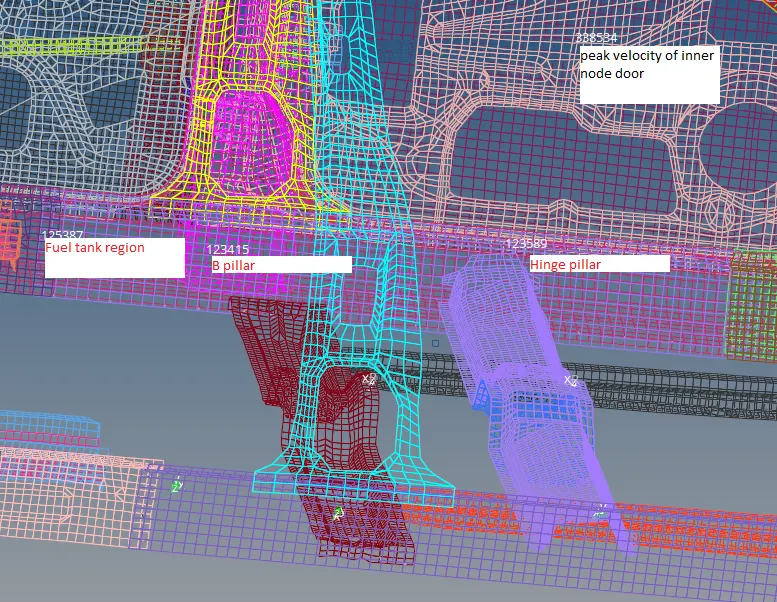
Intrusion at B pillar,hinge pillar and fuel tank region.Provide recommendation on what can help to reduce Fuel tank intrusion.
To create a node right click TH-> Node-> now select the respective node.
Now node number is identified.
To create a skew right click skew. The skew is created just opposite to the node that have created.
The skew is created because to show the impact in one node to another node in opposite direction.
Result:
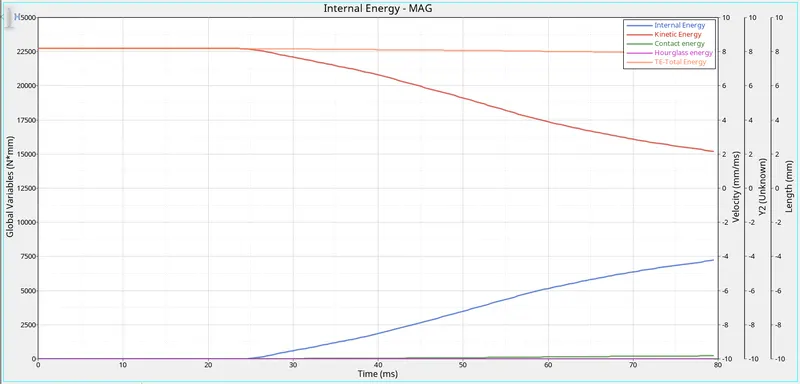
Total energy:
The total energy of the system remains where the kinetic energy decreases and internal energy increases. Contact energy is less interface due to slave and master node and has less contact interface due to type 7.
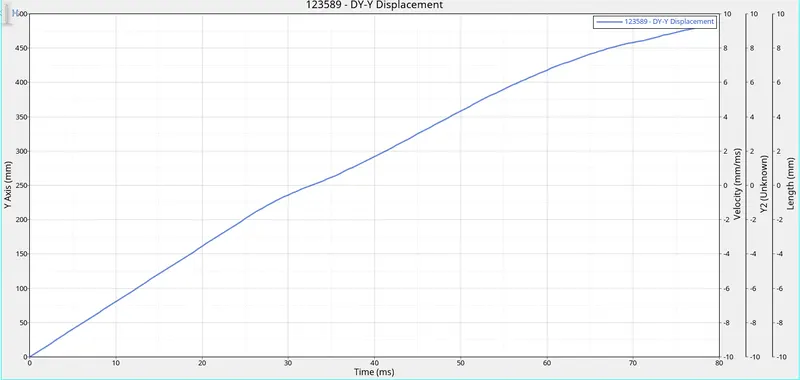
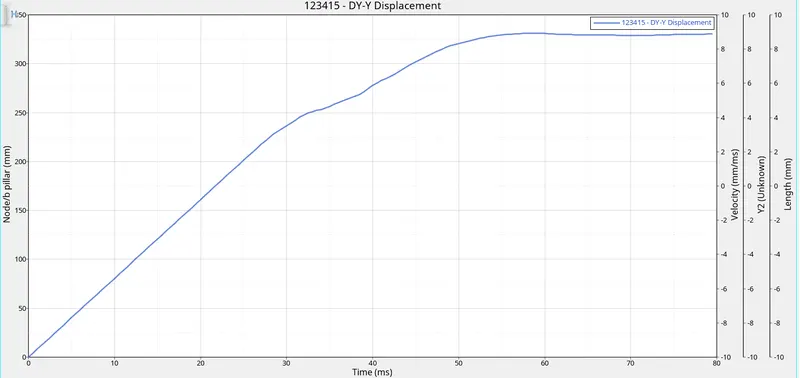
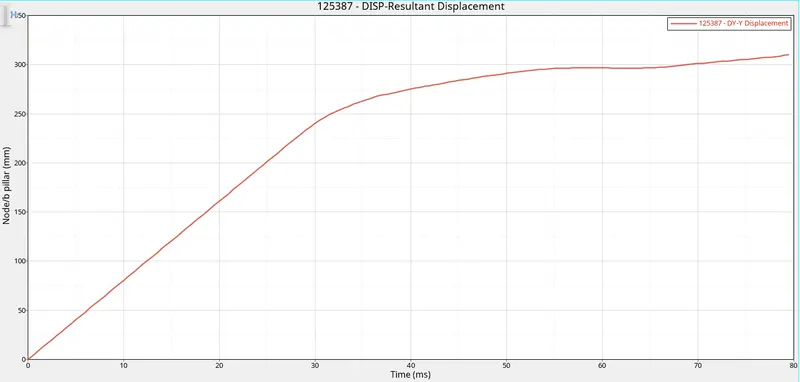
Hinge pillar and B pillar:
Due to the initial velocity when the vehicle impacts the pole it is displaced, the movement of the car is in y axis
at ceratin point it collides with the pole.
Sectional force:
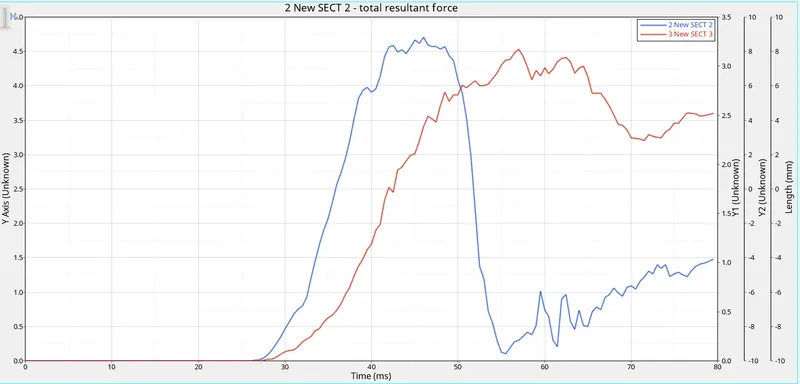
At the initial condition there is no deformation occring. After the time of 27ms it gets raises 4.55KN and drops down after the impact.
The other graph of red initally has no movement after the time of 27ms it raises because the deformation occurs quickly in that place and at 3.52kN it occurs at constant.
Peak velocity:
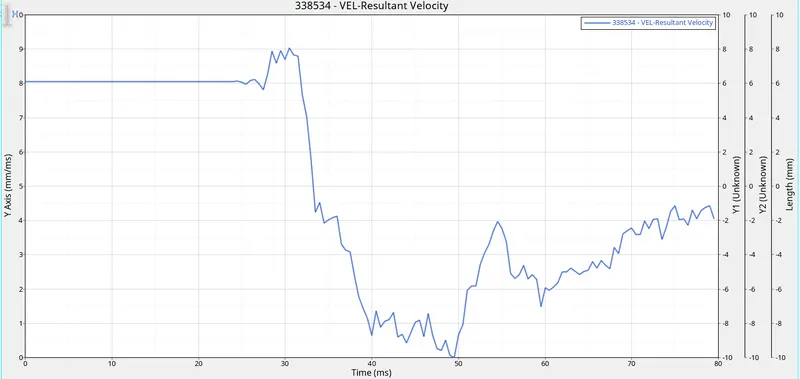
At the initial condition the graphs shows a constant line after the 28ms there occurs a peak value of 9kN it is due to the impact of the door to the pillar. After it drops down to zero again raises due to impact in other parts.
Fuel tank region:
The fule tank which is connected to the hinge pillar and B pillar causes damage. Before the impact it stays which constant after 35ms and 253kN the deviation occurs due to the impact and raises at full impact to the wall.
Von Mises:
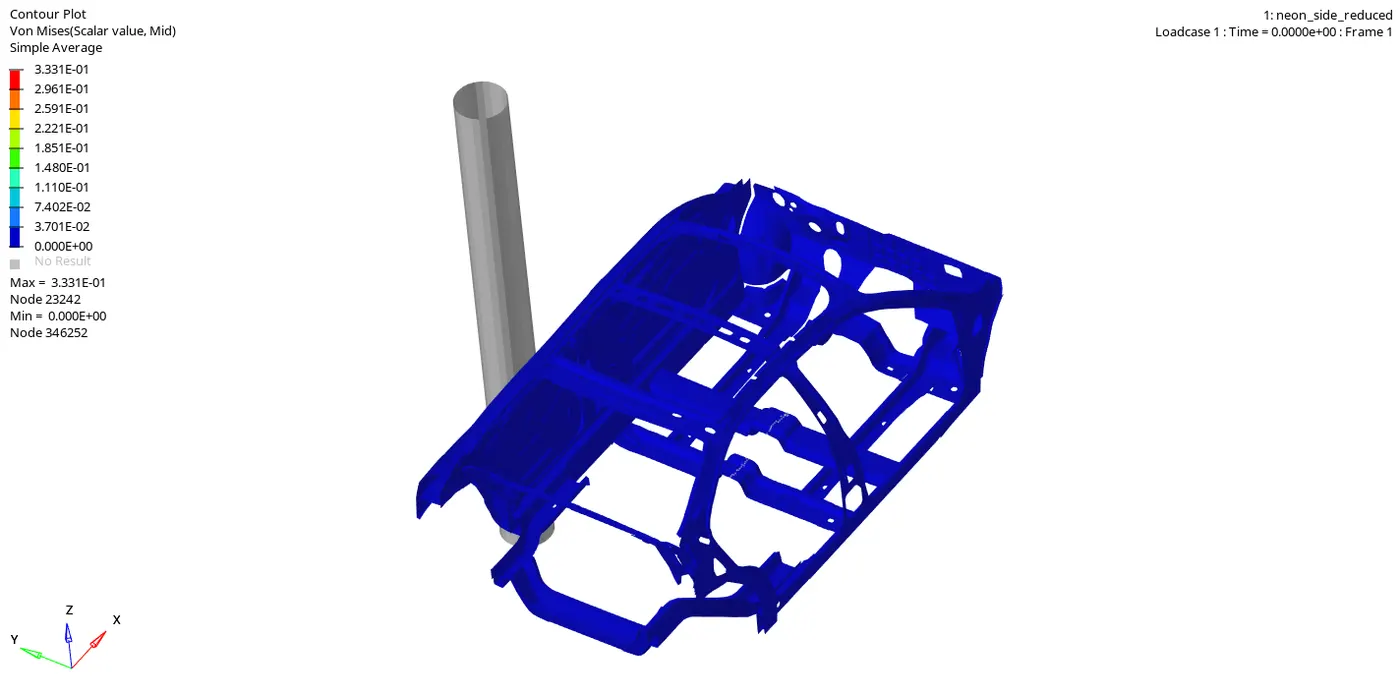
Mass Error and Energy error:

Mass error - 0.4541e-04
Energy error - -1.1%
Conclusion:
The conclusion occured which is to the parameter we have installed. The fuel tank can be improved with high steel material with high yield strength.