Frontal Crash – BIW – Using Radioss (Explicit)
Frontal Crash – BIW – Using Radioss (Explicit)
Objective
- Simulate a frontal crash into a rigid wall using the given parameters.
- Drive Link - https://drive.google.com/file/d/1D-79kV7QVZqjTxHWN3JOzLnCgXr2yYjn/view?usp=sharing
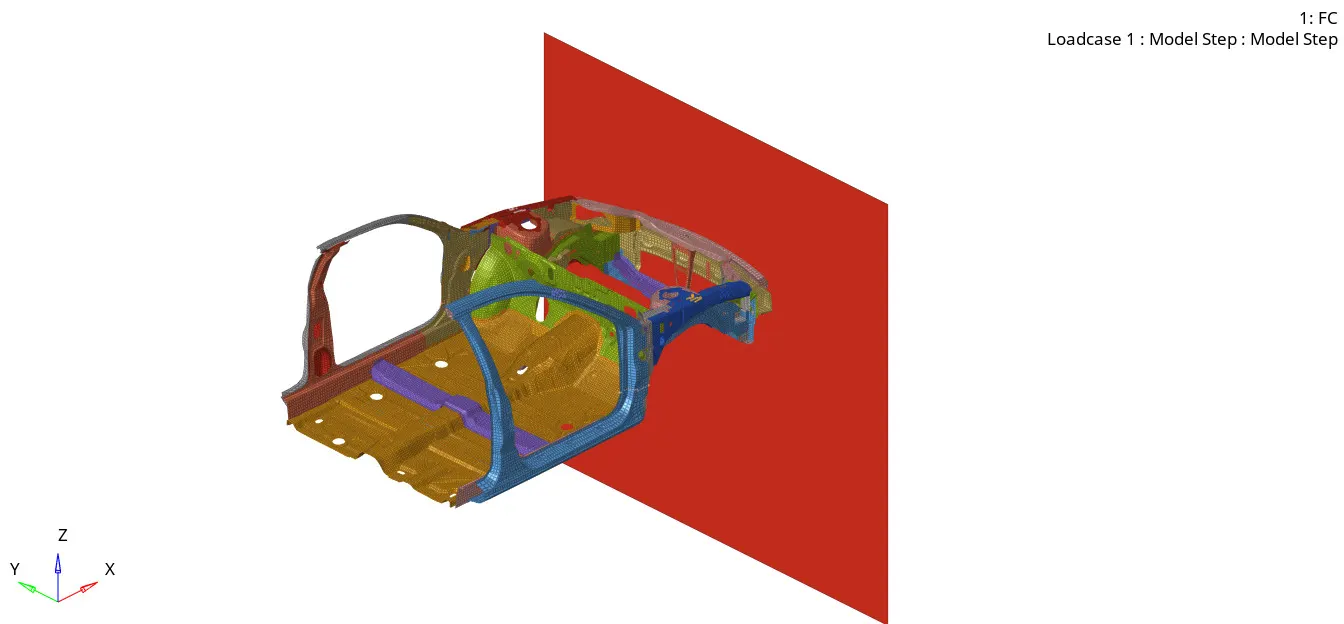
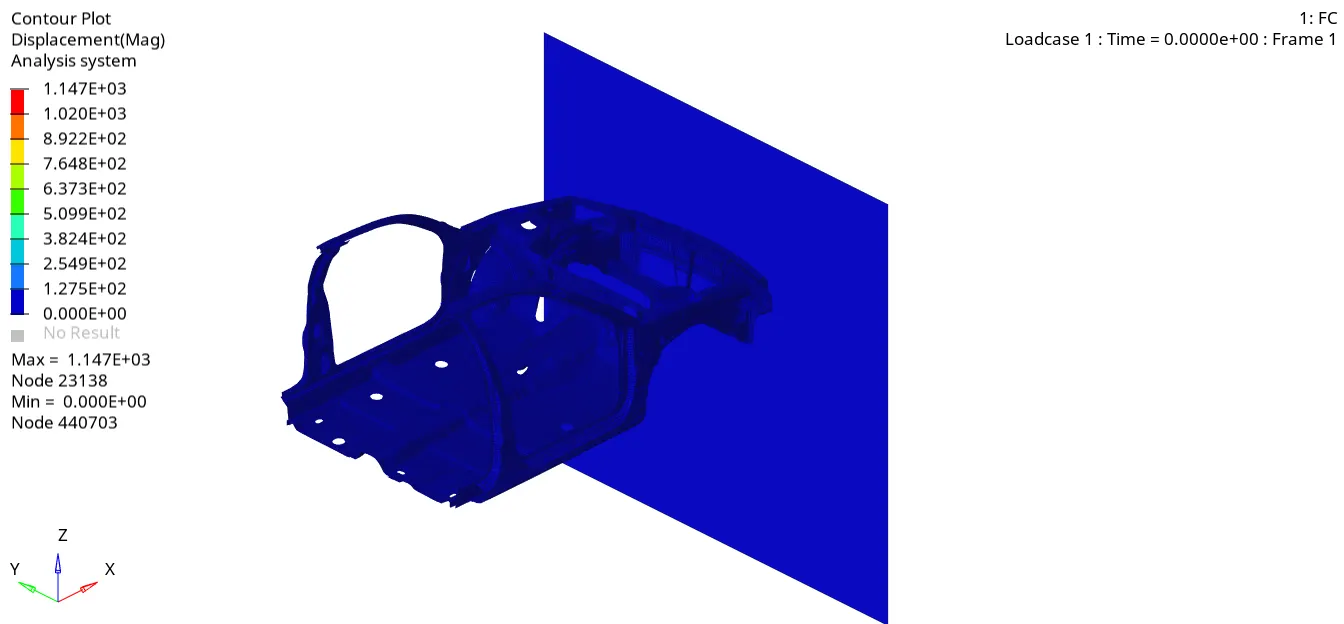
- Check unit system and either follow [Mg mm s] or [Kg mm ms].
- Create appropriate interface, friction 0.2 and recommended parameters.
- Make sure of no penetrations and intersection.
- Correct rigid bodies if any issues.
- Create rigid wall with friction 0.1.
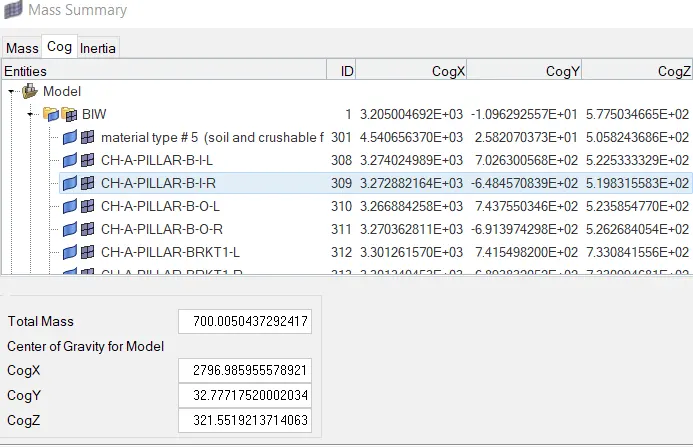
- Compare the model weight with the full scale 300k nodes model and use added masses to reach target weight 700kg while getting CG about the required range.
- Initial velocity 35 mph.
- Use model checker to ensure good quality.
- Time-step: 0.5 to 0.1 microseconds.
- Run 80 ms
Output requests:
- Sectional force in the rails at location of indicated node 174247.
- Axial force received on the rails from bumper.
- Shotgun cross sectional forces.
- A pillar cross section.
- Acceleration curve received on the accelerometer at base of B pillar (on B pillar rocker).
- Intrusions on the dash wall 66695, 66244.
Procedure
- Import the reduced model into hypermesh. For this simulation Unit system followed is [Kg mm ms KN Gpa KN-mm].
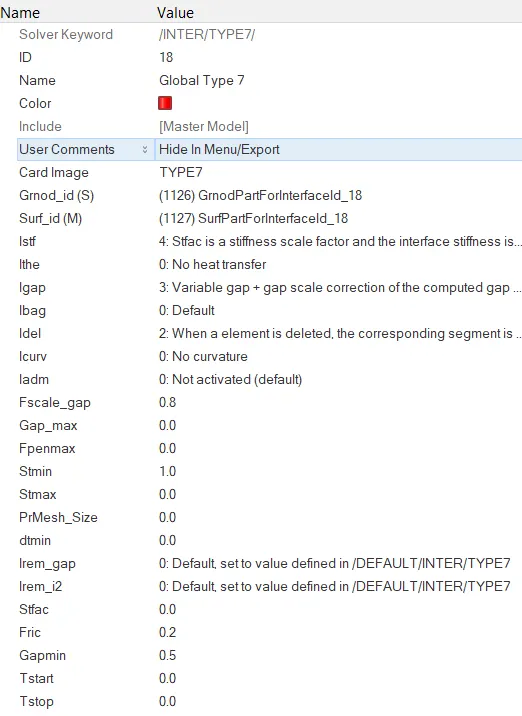
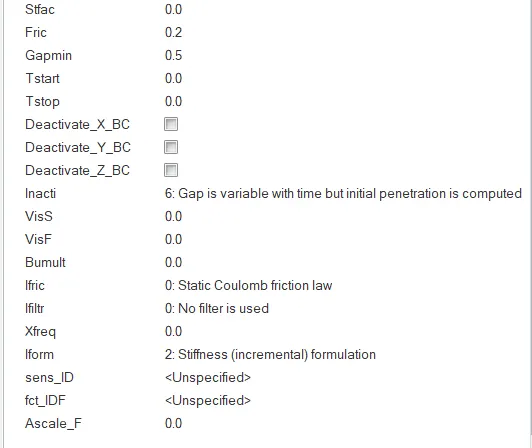
- Create a contact interface of type 7 with recommended parameters for the model.
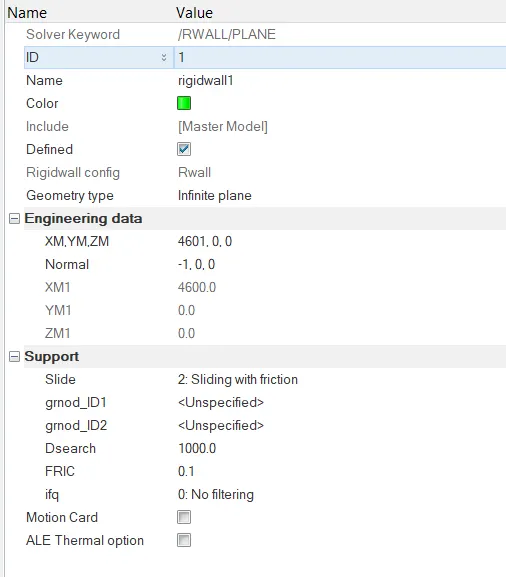
- Create a rigid wall of type infinite wall with Friction of 0.1 and Dsearch of 1000 (Slave nodes)
- A Rigid Wall is a Kinematic Condition, if a slave node penetrates the rigid wall surface a new velocity is computed. From this velocity, the impulse and rigid wall force are determined.
- Mass balancing – it is very important to balance the mass for positioning the COG of the car. In this case the vehicle is assumed to be 700kg.
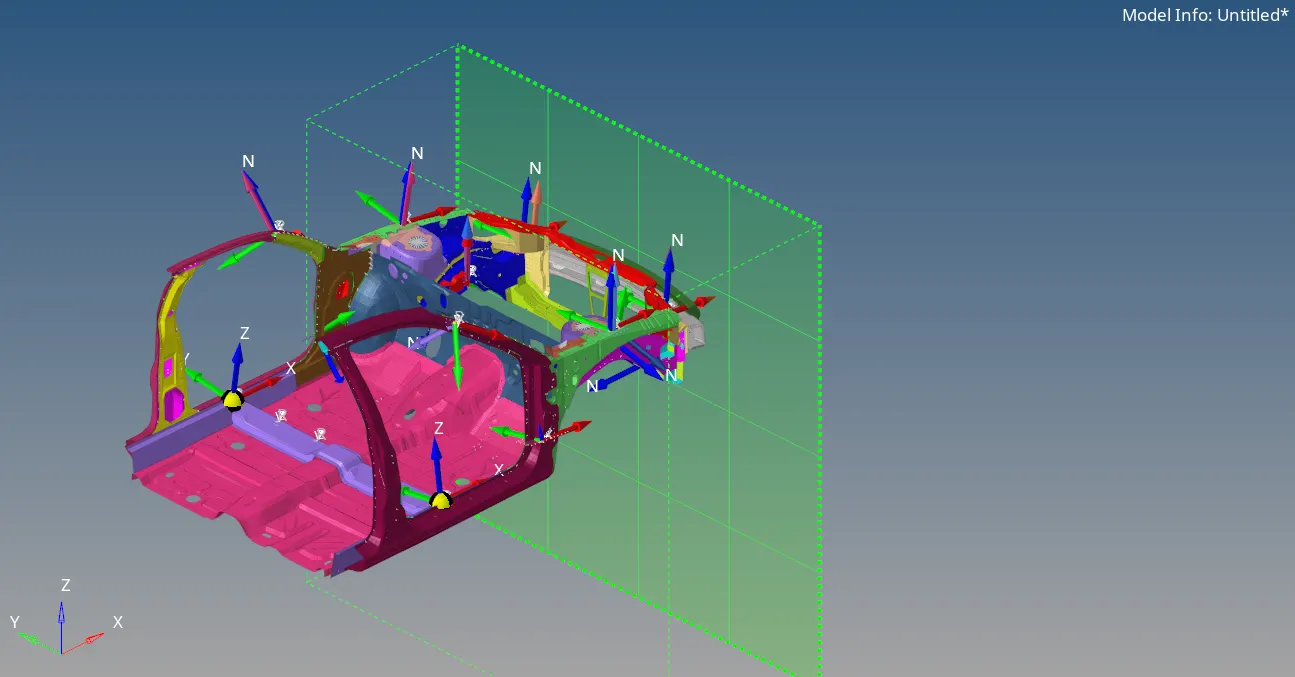
- Initial velocity of 35 mph (15.56mm/ms) is applied in +ve x axis direction.
- Sections are created for A pillar, Shotgun, Bumper, Rails this activity helps to measure the force transfer from the point of impact. Measurement of energy absorption by the crumple zone and how much energy is coming towards the cabin. For the sections local coordinates (Frames) are called.
- Accelerometers are placed on the rockers at the bottom of the B pillars , it helps to measure the acceleration experienced by the passengers.
- Intrusions near the pedal areas are measured by requesting TH/NODE which will give the displacement of the nodes.
- Output request are placed for the sectional forces, accelerometers, Intrusion nodes, TH/RWALL and TH/Part
- Checks – Connectivity checks are done to find any free parts in the model, if any free parts are present weld together using P13 card.
- Penetration and Intersection checks are also done to find out that there are no collisions.
- Last Model checker is run to find any incompatible kinematic conditions, errors and warnings in the model.
- Energy error and Mass error are -2.7% and 0.13 %. These values are within the limits for a acceptable explicit analysis.

Results
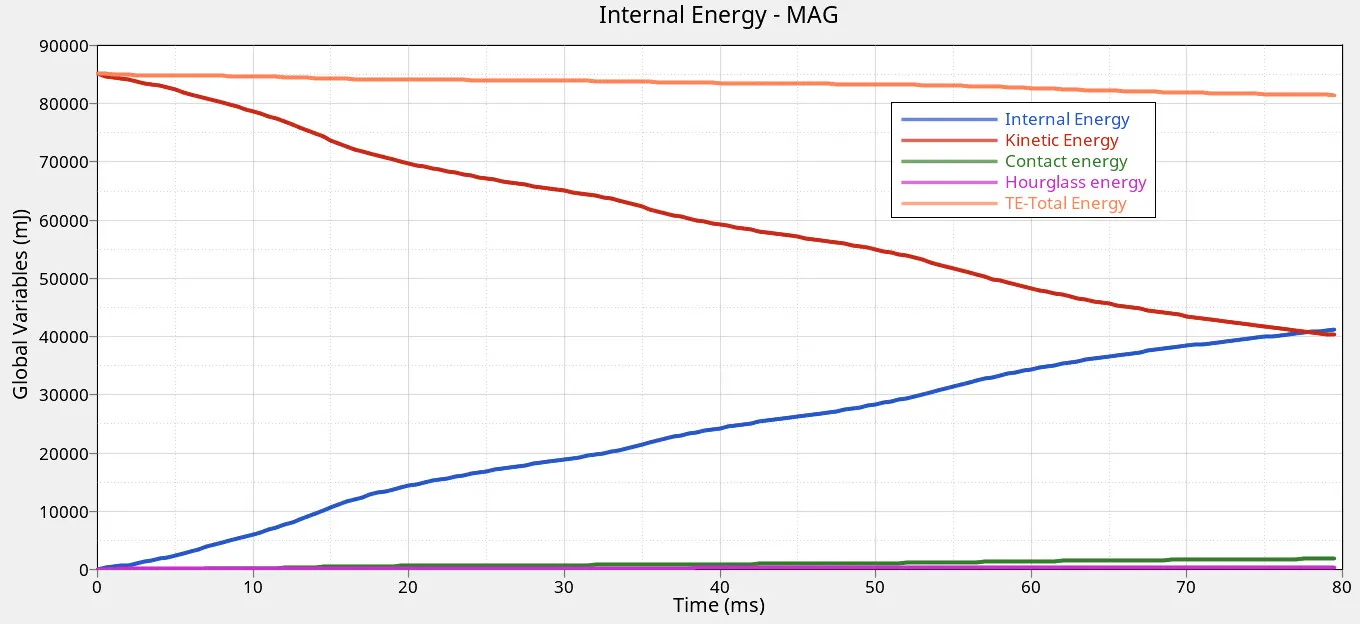
Global Energy
- Hour glass energy remains almost zero using the simulation due to usage of recommended element formulations.
- KE decreases towards the end of the crash whereas the Internal Energy increases.
- A small increase of contact energy can be noticed.
Intrusions Measurement
- Helps to understand if the engine and other components have penetrated into the dashboard or pedal areas
- Near dash section a magnitude of intrusion is 142.82mm
- Near Pedal area a magnitude 126.5mm is seen.
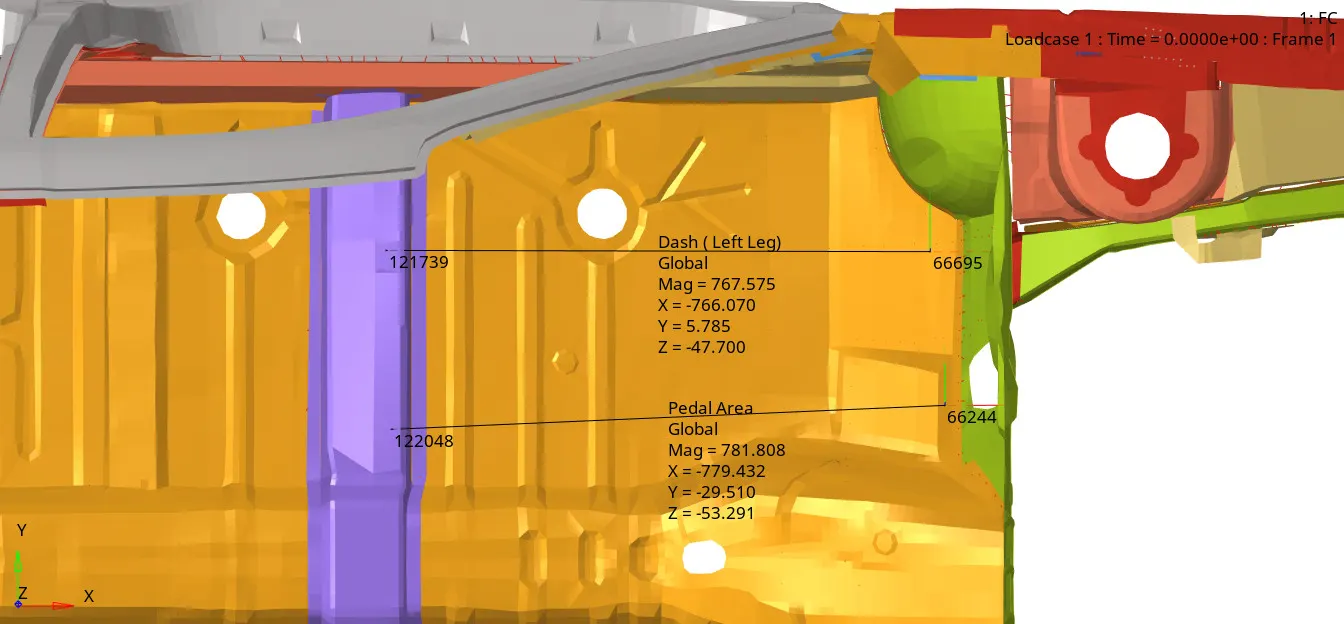
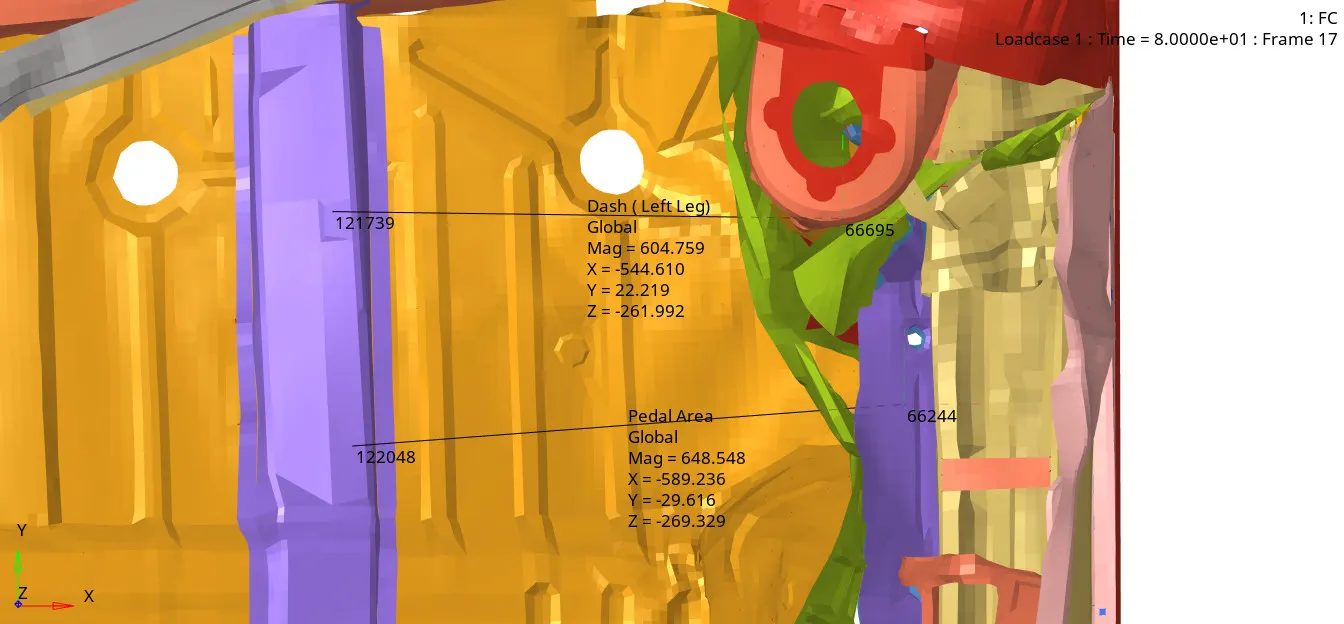
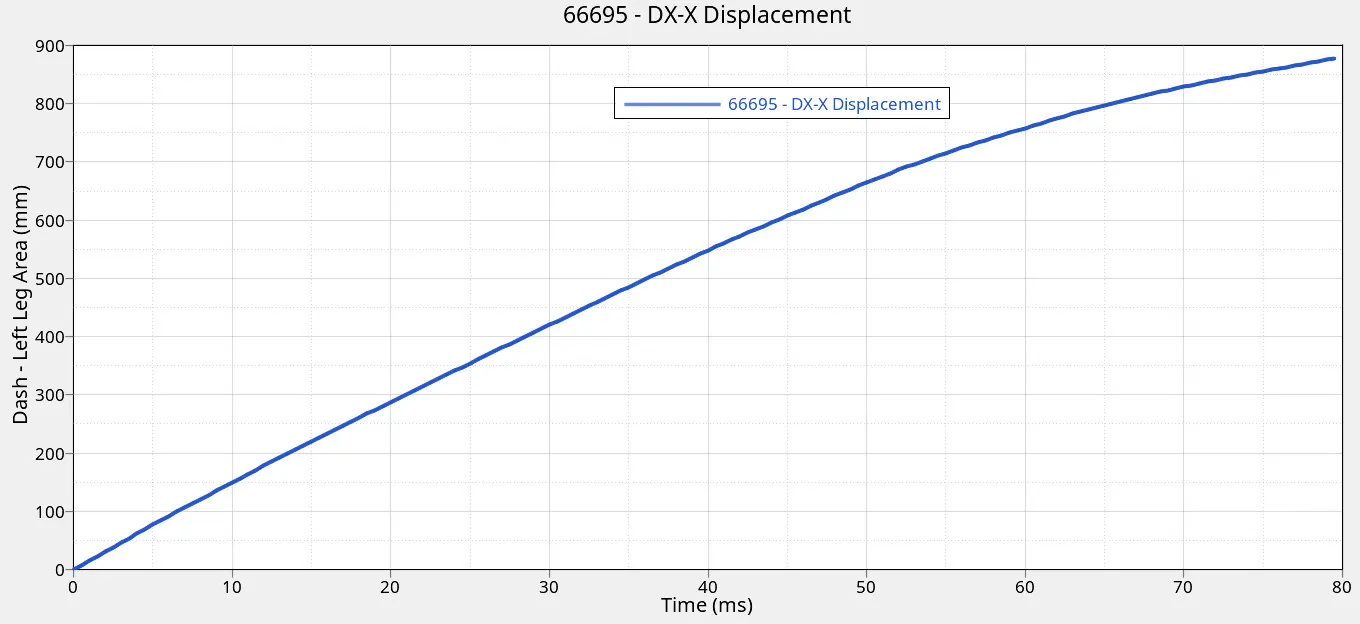
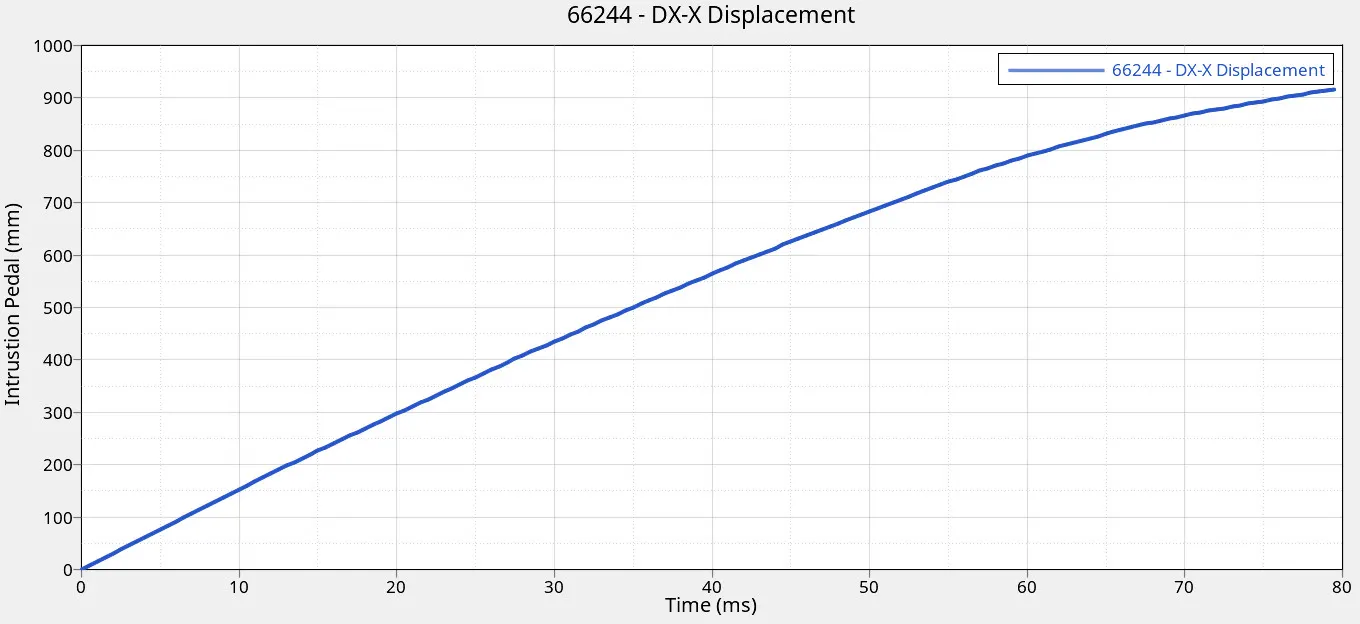
- This graph is the displacements of nodes 66695 and 66244.
Sectional Forces in the Rail
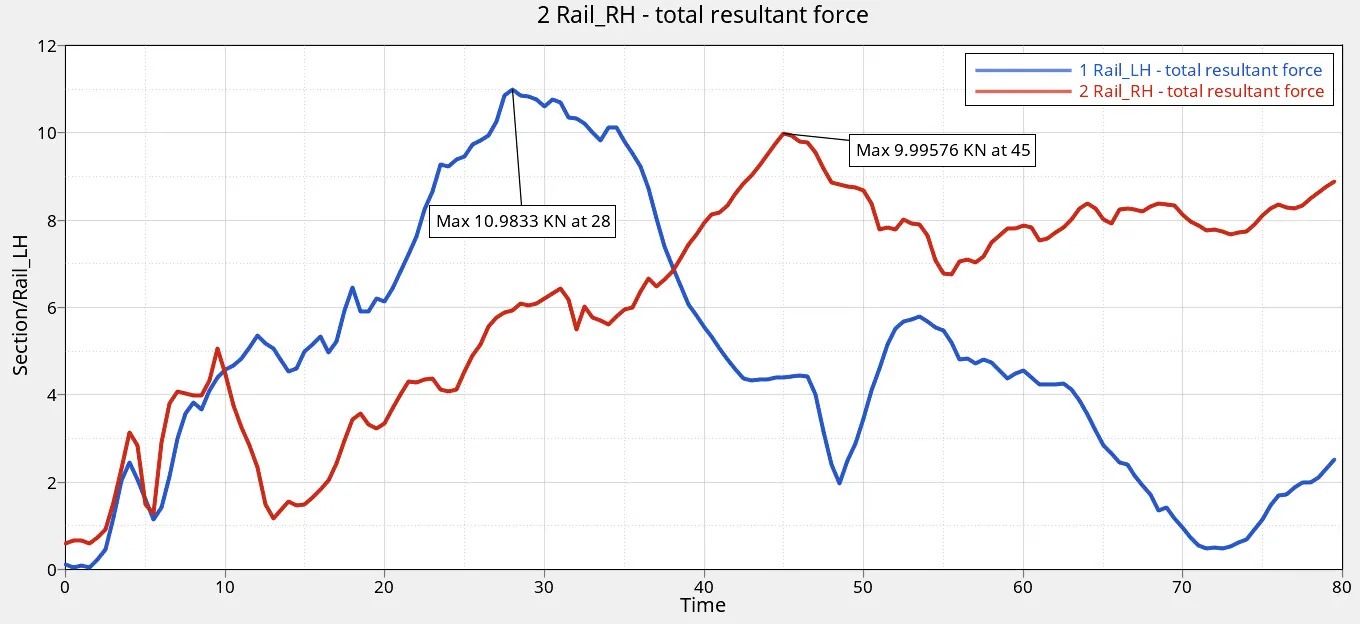
- At the rails a maximum of 10.98 KN and 9.99 KN forces can be seen in the LH and RH rails respectively. A large portion of the reaction forces are taken up by the rails.
Sectional forces in the bumper area
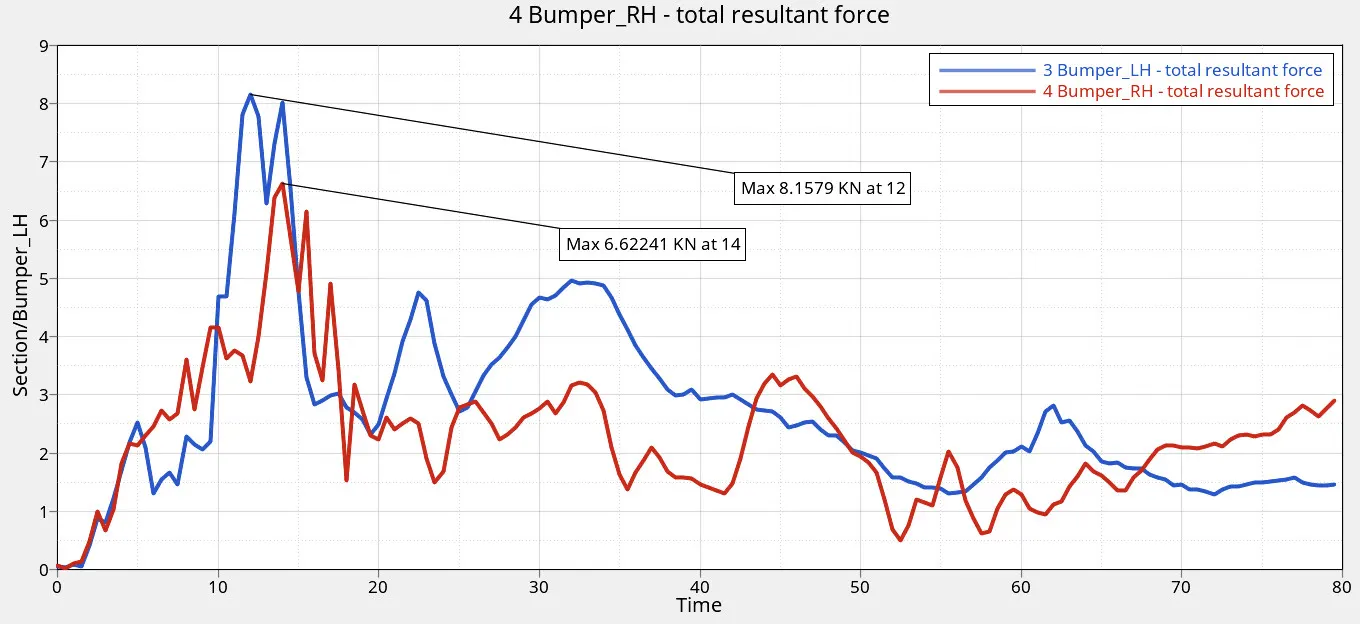
- At the headlight bracket section which sits behind the bumper a maximum of 8.15 KN and 6.62 KN Forces can be observed in the LH and RH respectively. This part helps to navigate the forces towards intended areas and not into the engine compartment.
Sectional forces in the Hinge area below A pillar
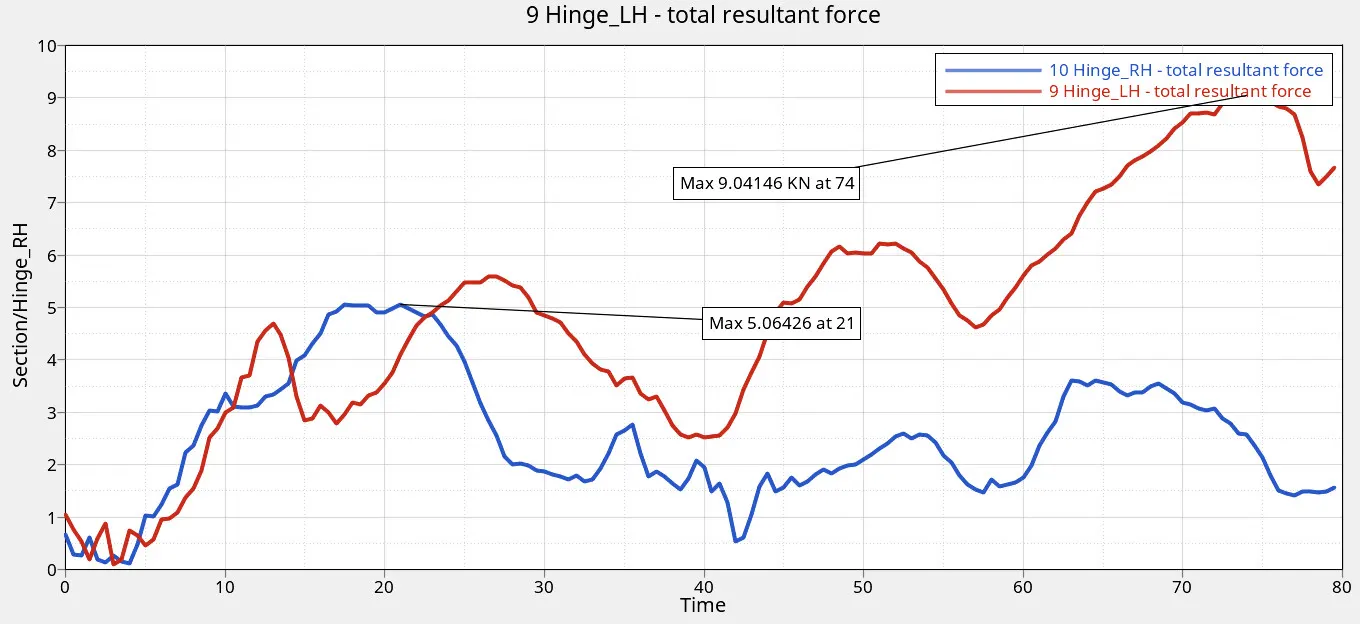
- At the Hinge section a maximum of 5.06 KN and 9.04 KN Forces can be observed in the LH and RH respectively.
- Driver Side has more forces compared to the co driver side these forces reached max values relatively later than Rails.
Sectional forces in the shotgun area
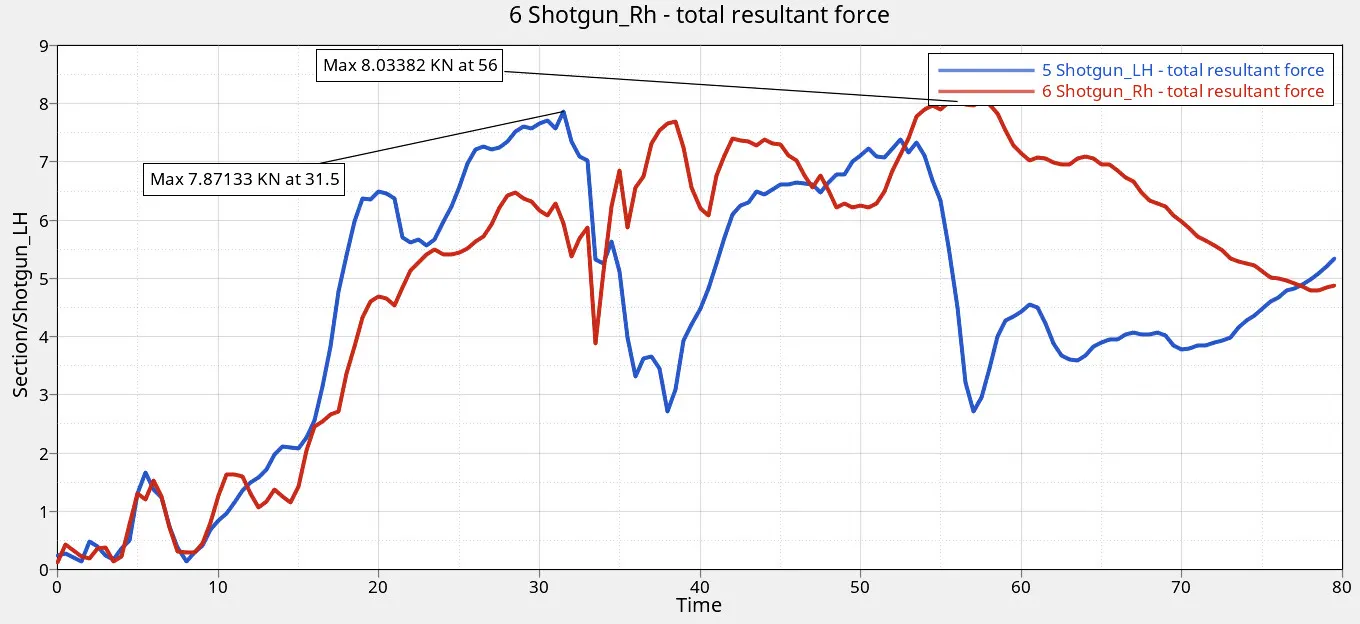
- At the Shotgun section a maximum of 7.87 KN and 8.03 KN Forces can be observed in the LH and RH respectively.
- Along with rails , shotgun take in large portion of the forces/
Section forces in the A pillar
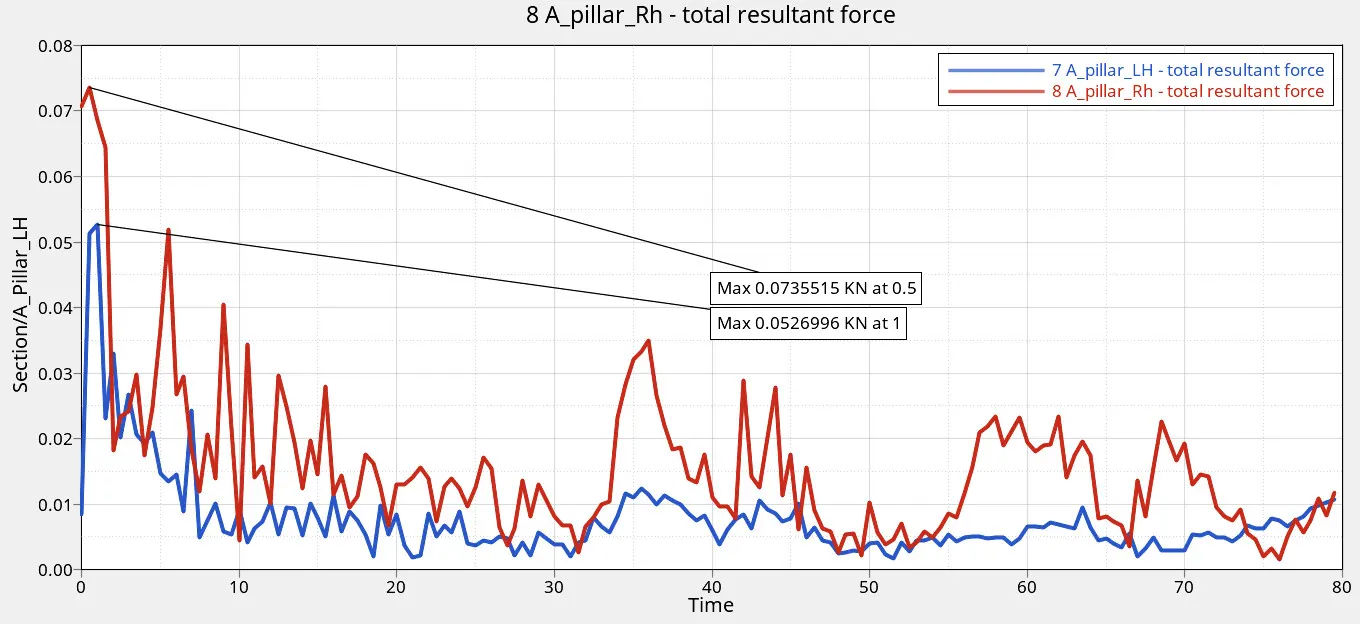
- At the Shotgun section a maximum of 0.052 KN and 0.073 KN Forces can be observed in the LH and RH respectively.
- Most of the forces are going through the structure below and mass were mostly added to the floor portion for keeping COG near the driver seat rails.
Acceleration
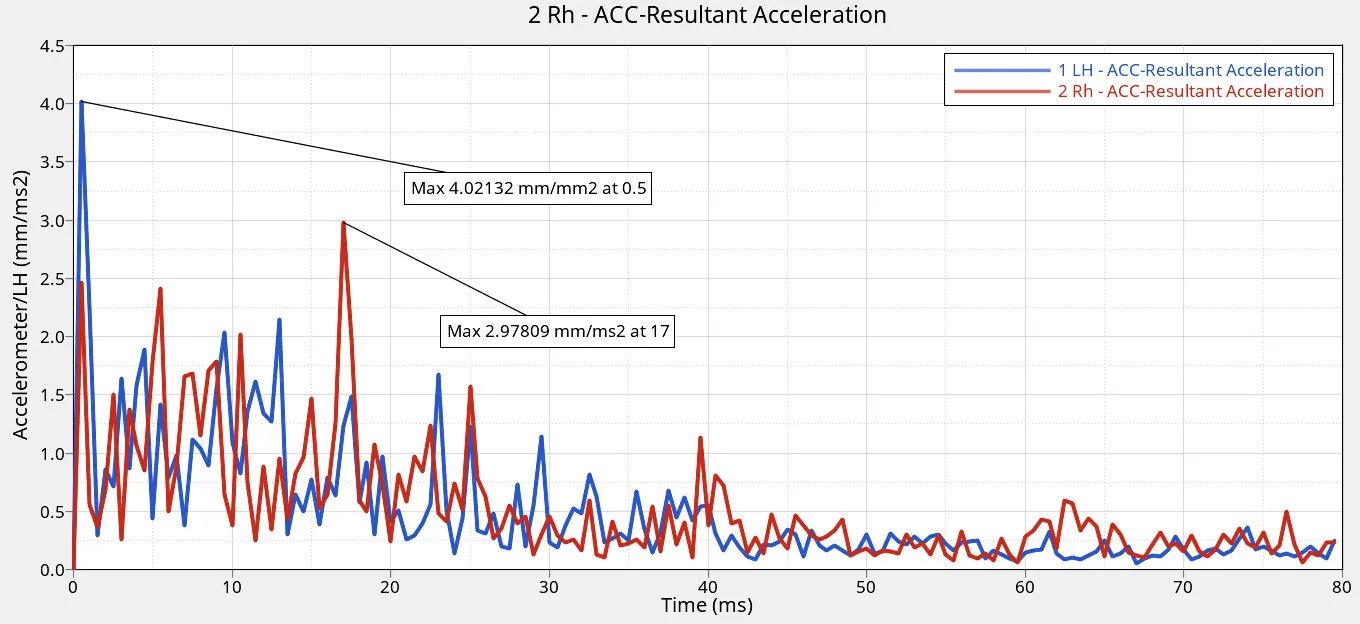
- The accelerometers placed at the rockers of the model gives a general idea about the sudden g forces which is going to be experienced by the passenger.
- The resultant accelerations measured are 4.02 mm/mm2 and 2.97 mm/ms2 in the LH and RH respectively.
Rigid wall forces
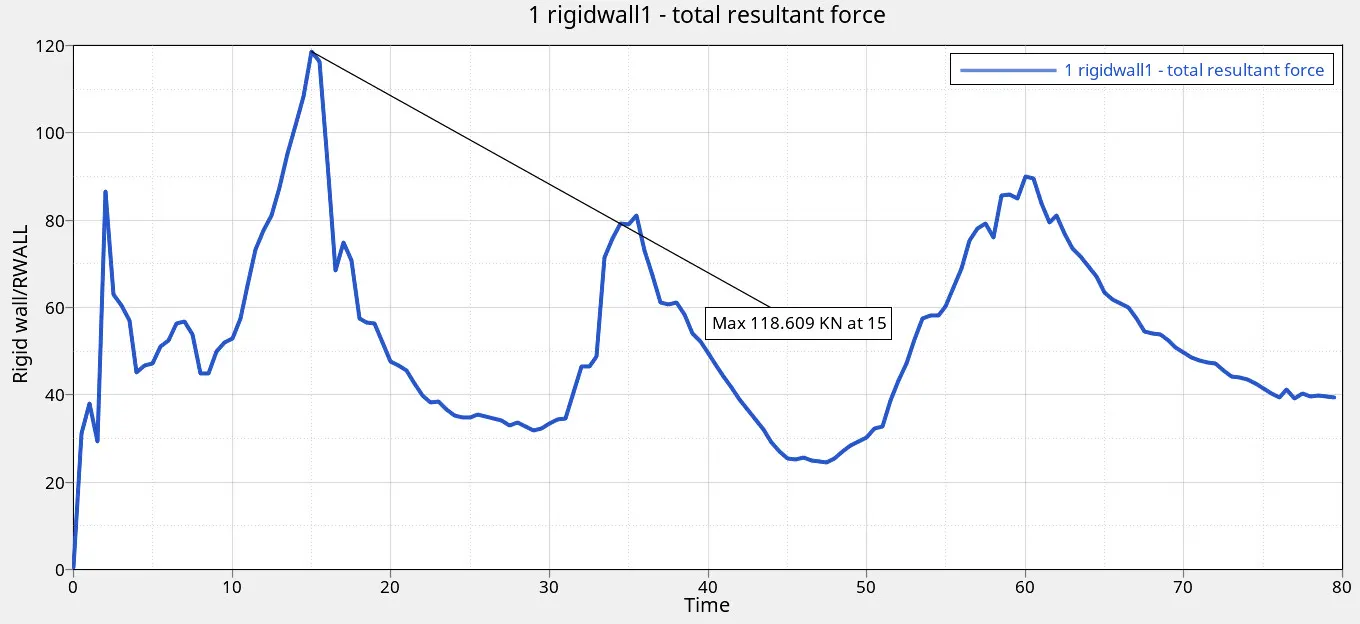
- Maximum of 118.609KN forces is observed on the rigid wall.
Von Mises Stress
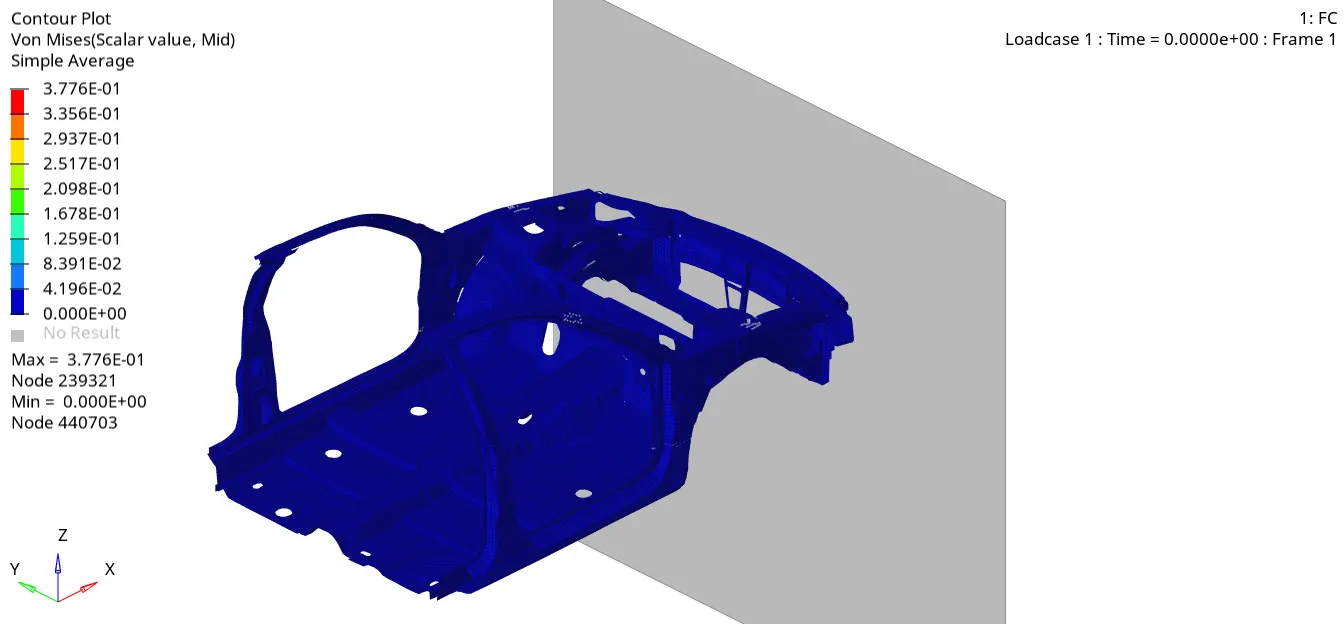
- We can observe von mises stress of max value 3.776E-01 GPa.
Conclusion
- In this simulation sectional forces, intrusion and accleration were the output for this Frontal crash with inputs inital velocity.
- Nodal, elemental, interface time step DT cards were defined.
- Simulation Run time - 1:32 Hrs
- Maximum sectional forces were experinced in the Rails compared to other sections measured.
- Acclerations experienced are very high in this simulation with values of around 400G. (4.02 mm/mm2 and 2.97 mm/ms2)