Crash Tube Analysis using Radioss
HYPERCRASH :
- Run the crash tube model as it is.
- Change the Inacti=6 and run.
- Create the type 11 contact and run.
- Remove both notches and remove boundary condition on rigid body node then run.
- Create a new notch in the middle ,select the whole section and run.
- Create a new notch with nodes only from opposing 2 faces and run.
CRASH TUBE :
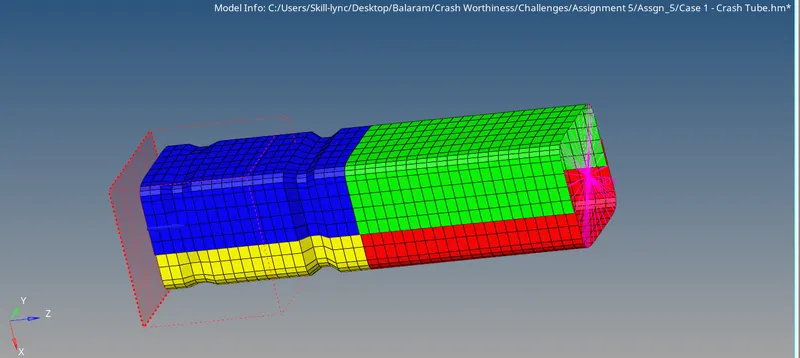
CASE I :
Run the crash tube.
- Import Crush_tube_0000.RAD
- Analysis > Radioss > Radioss
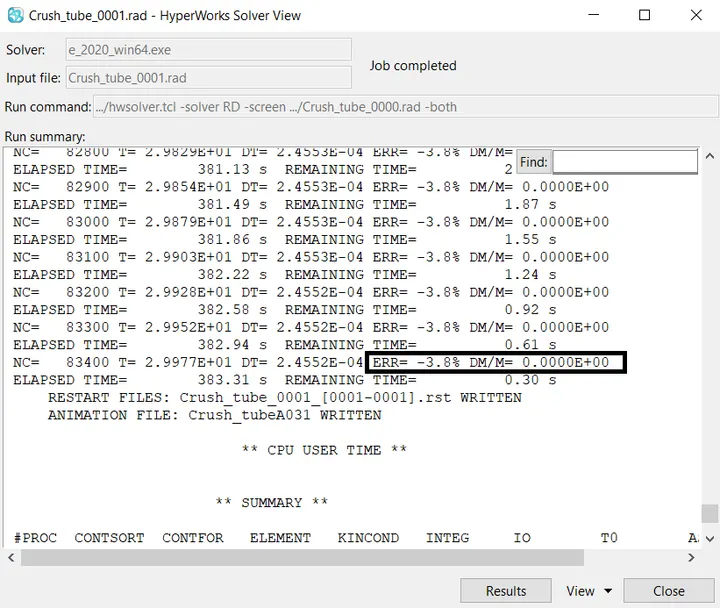
Errors:
Energy Error : -3.8% ( Acceptable Range upto -10% ~ -15%)
Mass Error : 0
HYPERVIEW SIMULATION:
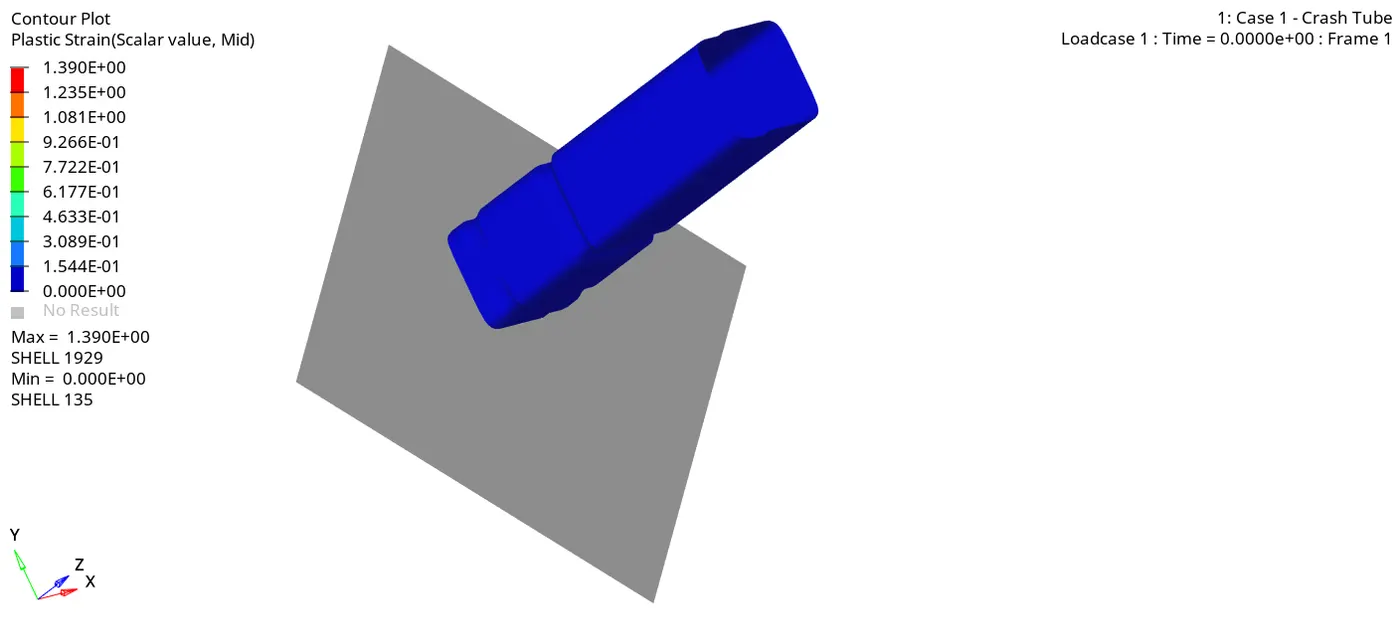
SOLVER ANALYSED DATA:
Hyperview 2D > Global Variables > Select Required Energies > MAG > Apply

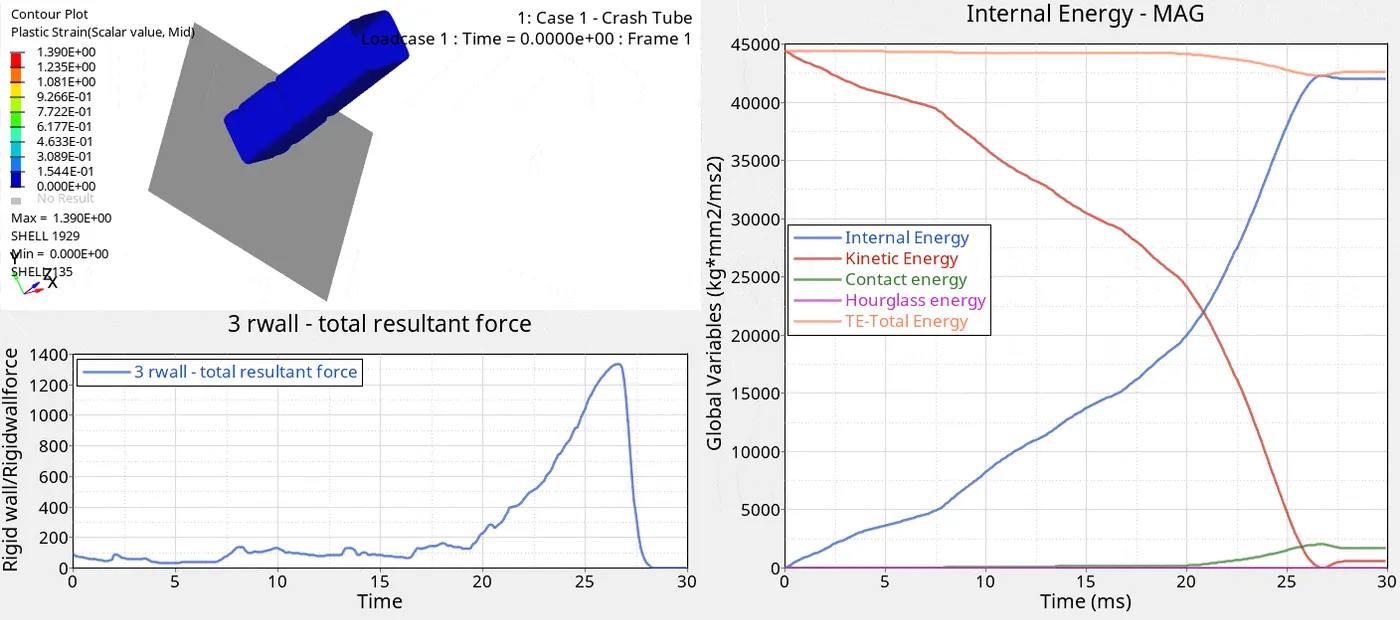
> Part > Select all the components > Internal Energy

TIME HISTORY - PART
DESCRIPTION:
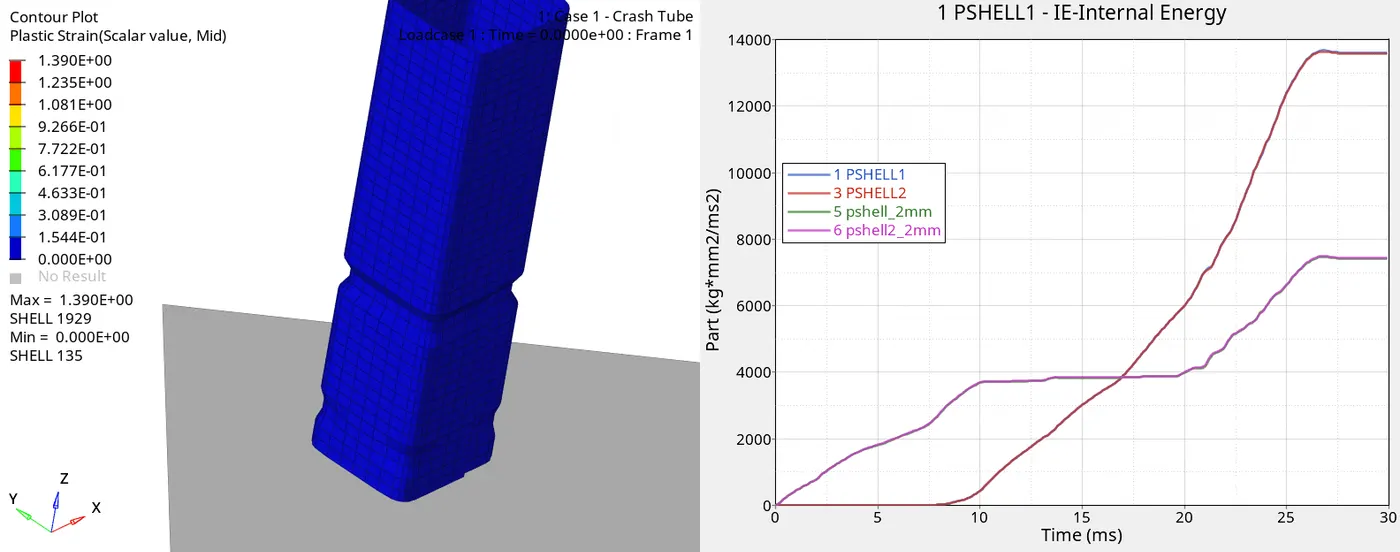
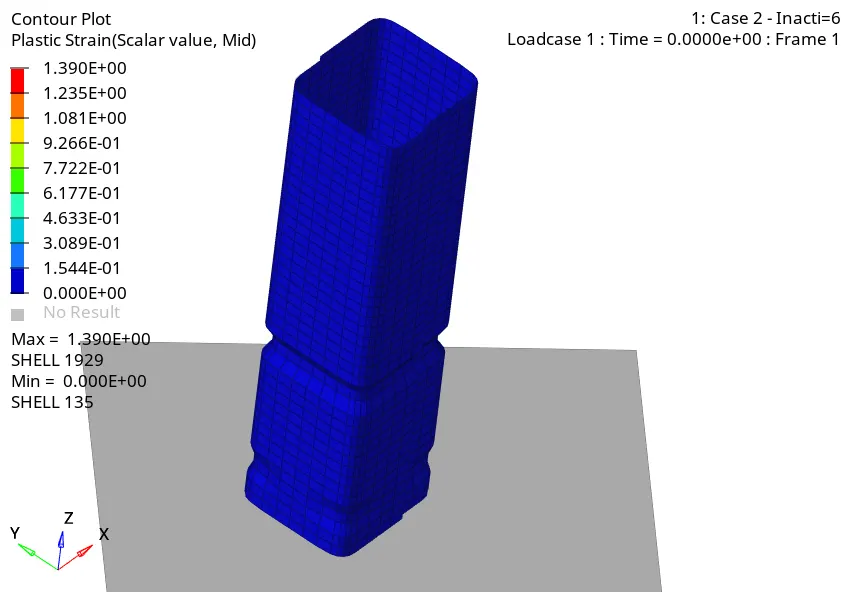
- The Crash Tube consists of Two Grooves, Grroving is used to shape the path of deformation to occur, when crashes, The grooves exhibit deformation that occurs.
- Maximum plastic strain occurs at 1.39, with total time of 30ms.
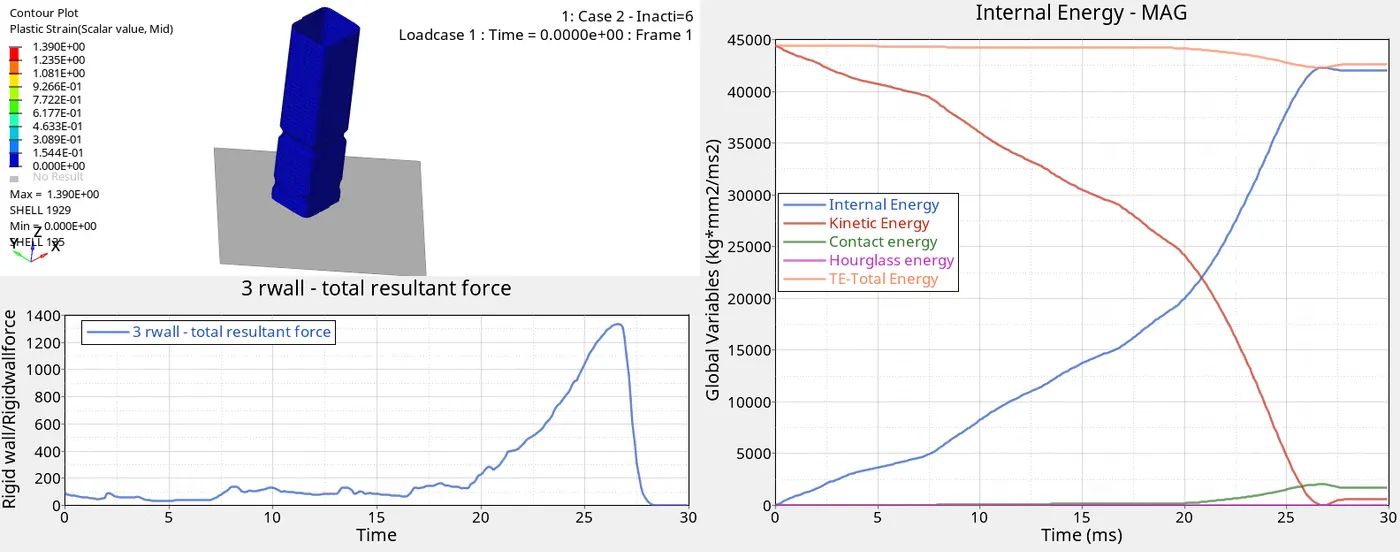
- Kinetic Energy is maximum at 45000, it decreases with the time and reaches zero point, due to rebound that occurs as an after in any component, Kinetic enegy is observed at the end.
- Groove absorbs and acts as the forming area and first undergoes deformation.
- Internal energys starts from zero, due to the deformation that occurs, the internal energy raises steady till the rebound condition and becomes steady.
- The component comes into contact of self at 20th ms which enables contact energy that tends be dissipative, which reduces the total energy.
- There is no hour glass energy observed in the crash.
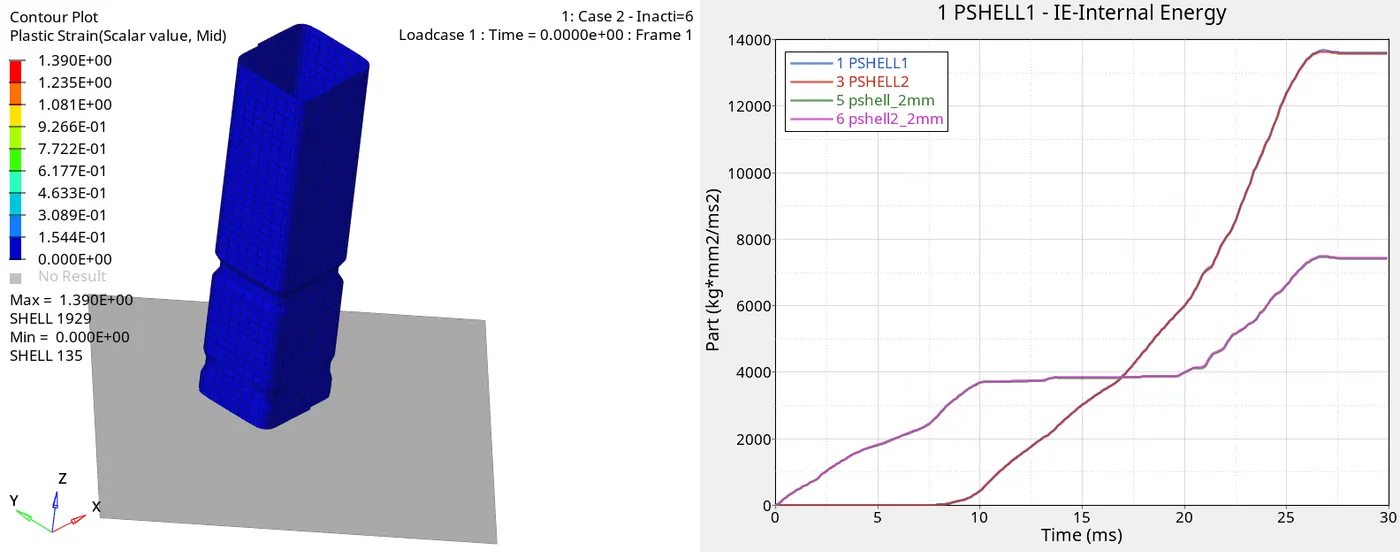
- Time history for all the four parts is depicted on other graph,5 is combined with 6 & 1 with 3
- When initial velocity acts on 1&3, it induces the groove to deform and initiates 5&6 , later approx 8ms the deformation in 1 & 3 occurs
- Upto 10ms the component 5&6 getting deformed, stabilized induces the deformation in 1&3.
- Internal energy induced in component 5&6 is of approx 7500 J
- Internal energy induced in component 1&3 is of approx 13500J
- Total resultant force on the wall is of 1300kN
CASE II
Change the Inacti=6 and run.
INACTI : Actions to take if initial Penetrations exist.
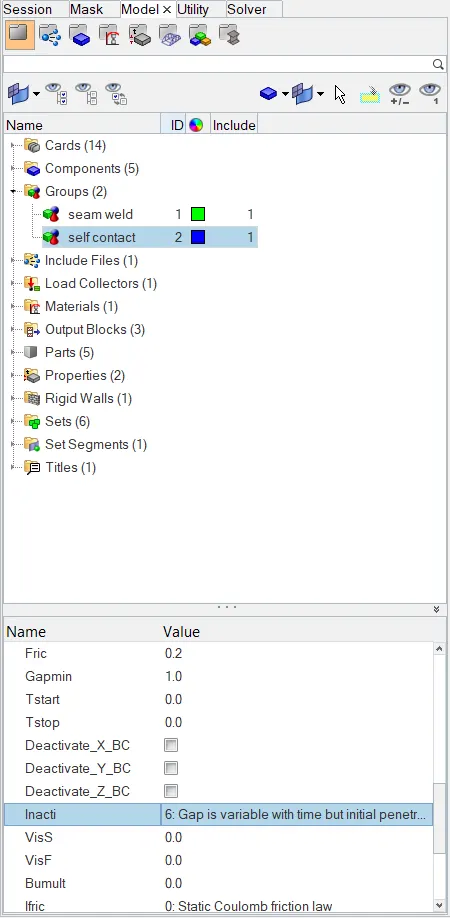
If slave nodes are present closer to the Master segment than the calculated gap, the system induces reulsive force, which will give error in energy balance.This can be avoided by using inacti parameter.
Here we assign inacti as 6, which will reduce the gap and scale the distance.
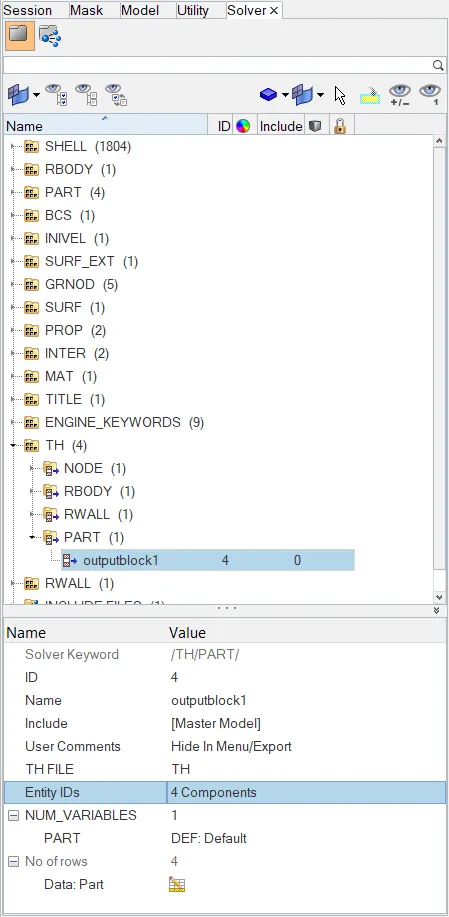
- Run the crash tube.
- Analysis > Radioss > Radioss
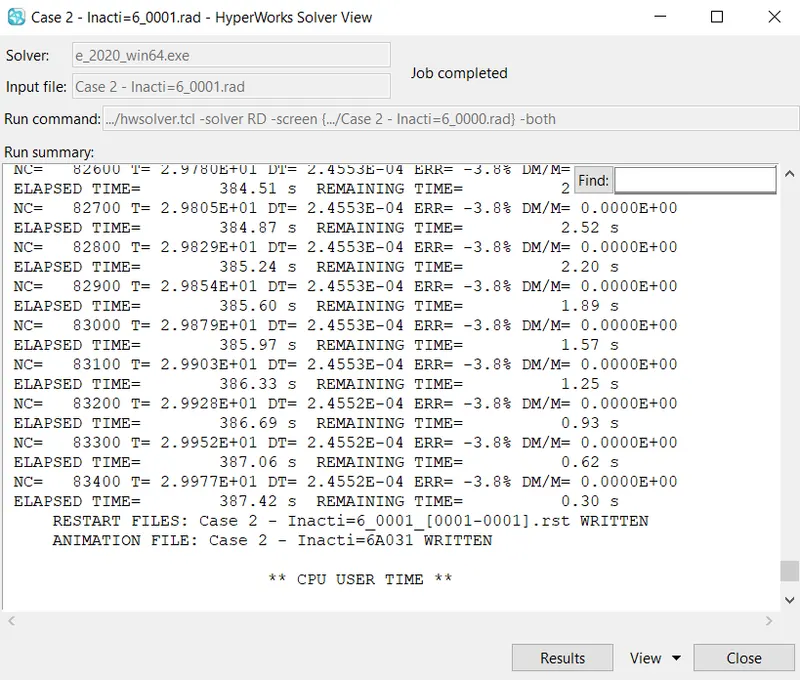
Errors:
Energy Error : -3.8% ( Acceptable Range upto -10% ~ -15%)
Mass Error : 0
HYPERVIEW SIMULATION:
SOLVER ANALYSED DATA:
TIME HISTORY - PART
DESCRIPTION:
- Similar to first case, in this initial penetrations are avoided by activating inacti as 6, all other data is same as observed in case 1.
- R wall force peak of 1300.
CASE 3
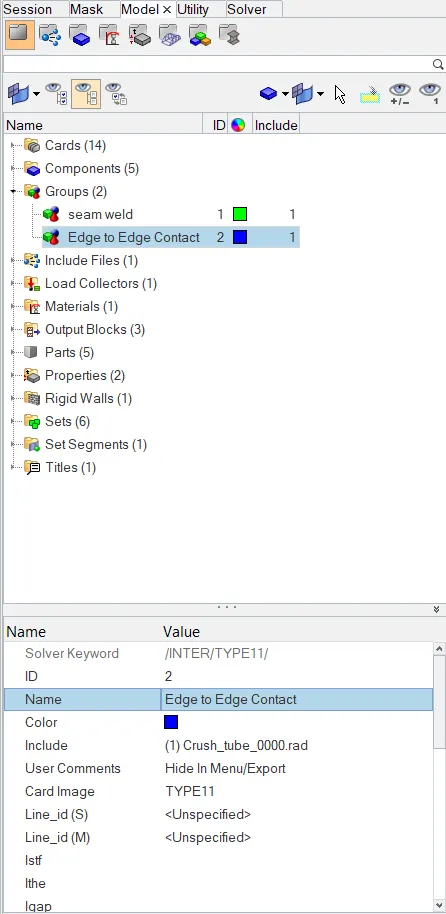
Create the type 11 contact and run.
- Run the crash tube.
- Analysis > Radioss > Radioss
Errors:
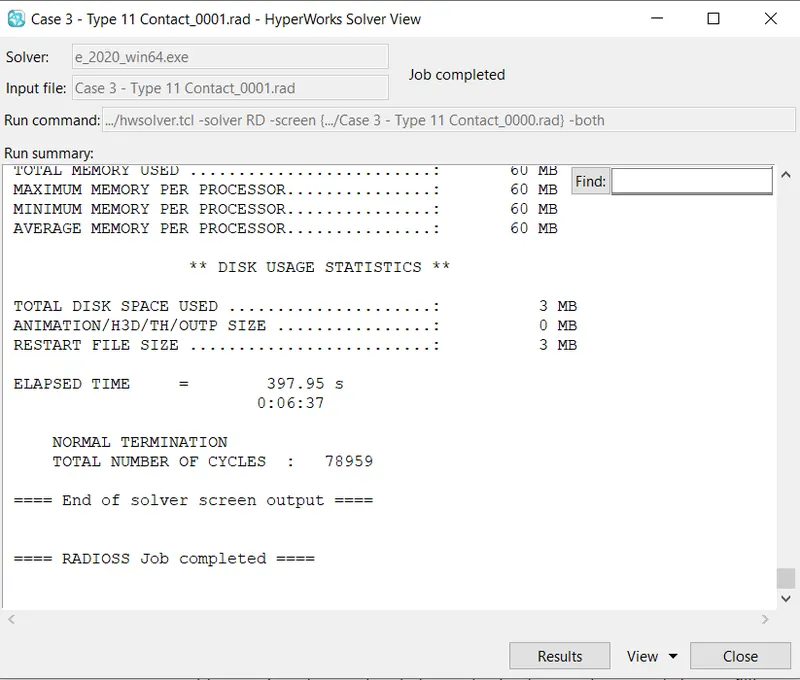
Energy Error : -3.8% ( Acceptable Range upto -10% ~ -15%)
Mass Error : 0
HYPERVIEW SIMULATION:
SOLVER ANALYSED DATA:
TIME HISTORY - PART
DESCRIPTION:
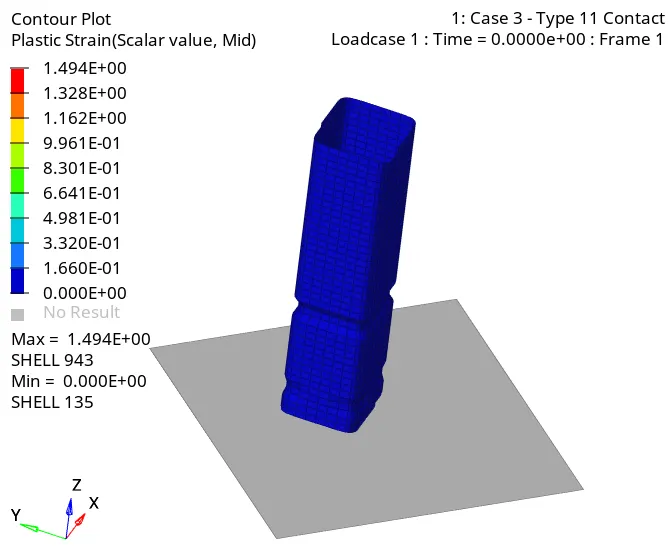
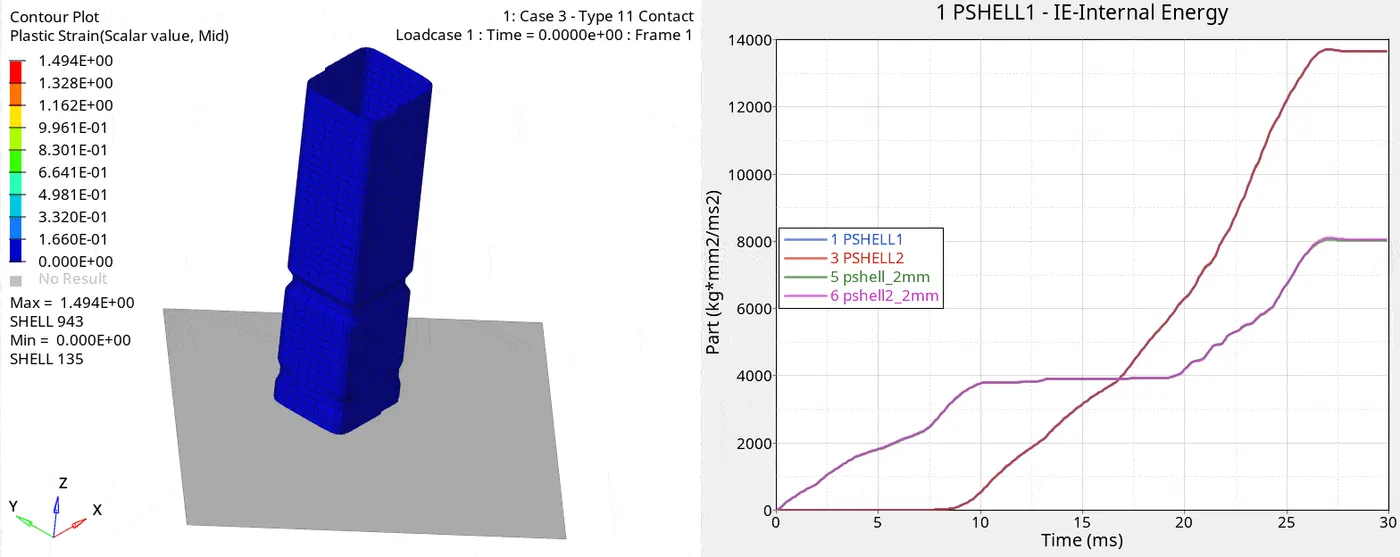
- In type 11 interface, node to node contact in the component, is applied to the card.
- The deformation can be identified that the flow is linear in which the the element with respect to nodes is properly deflected.
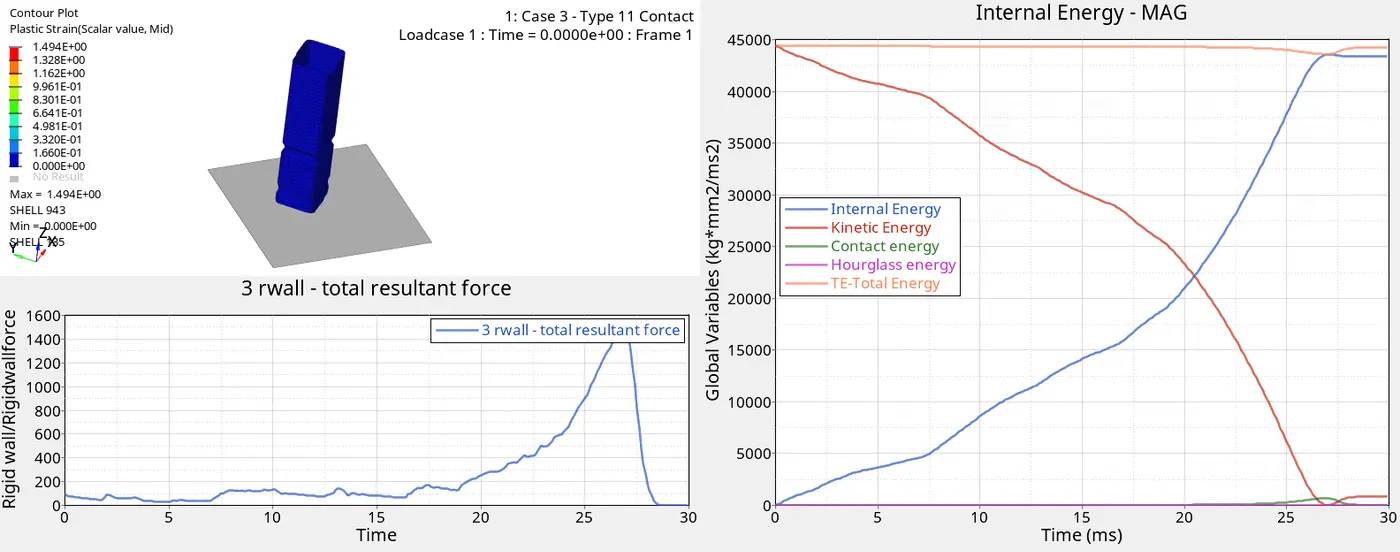
- The contact energy is lesser than all the cases.
- R wall force is of 1600.
CASE IV :
Remove both notches and remove boundary condition on rigid body node then run.
- Import Crush_tube_0000.RAD
Removing both the notches:
Go to Geometry > Node edit
- Select node 1 & 2, as traceable path
- Then select the nodes to align, click align.
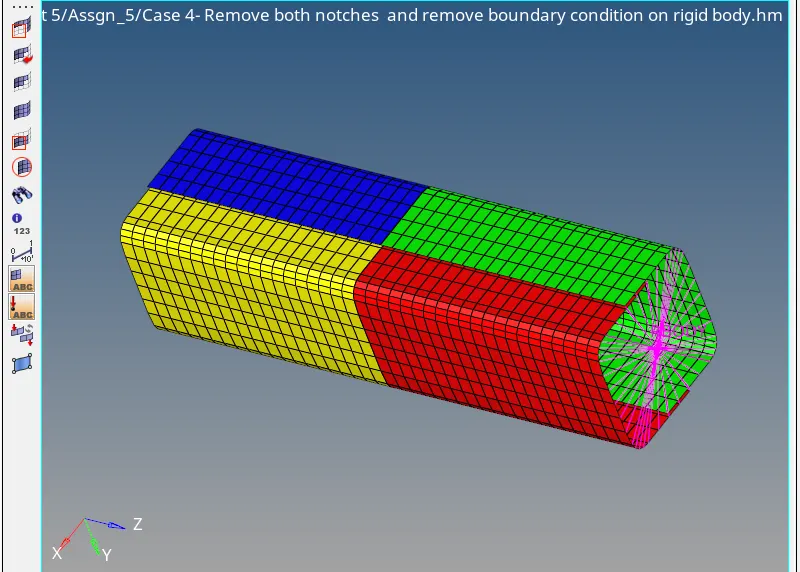
Removing boundary condition on rigid body node:
- Solver > BCS > Right click on BCS > Delete
- Analysis > Radioss > Radioss
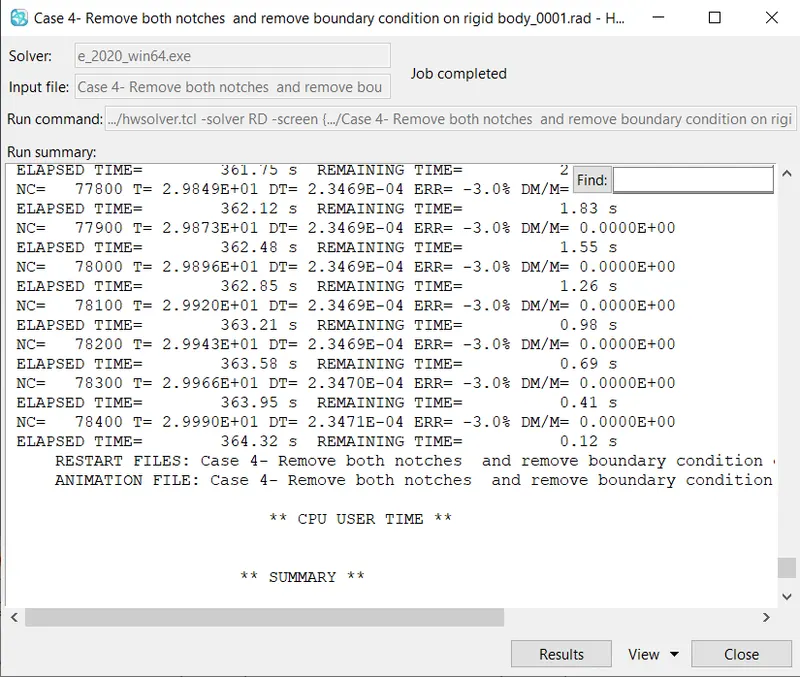
Errors:
Energy Error : -3.0% ( Acceptable Range upto -10% ~ -15%)
Mass Error : 0
HYPERVIEW SIMULATION:
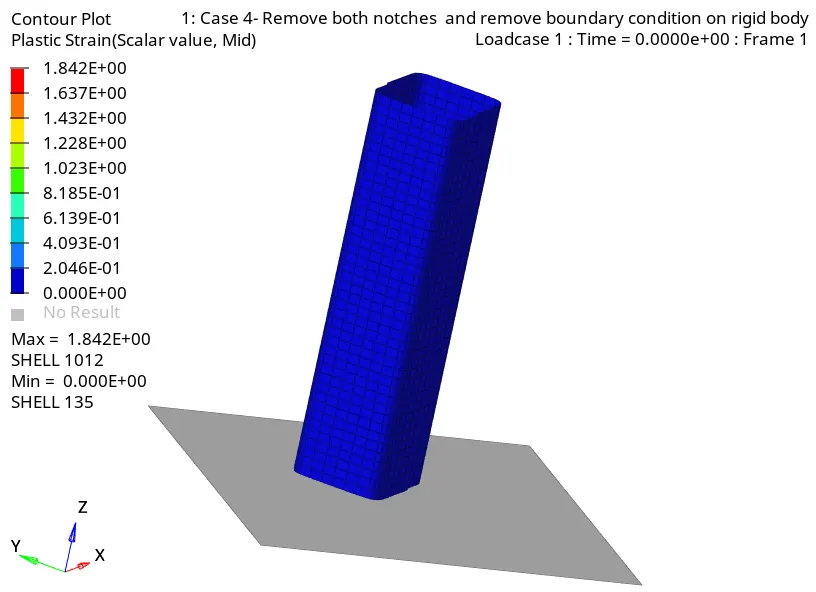
SOLVER ANALYSED DATA:
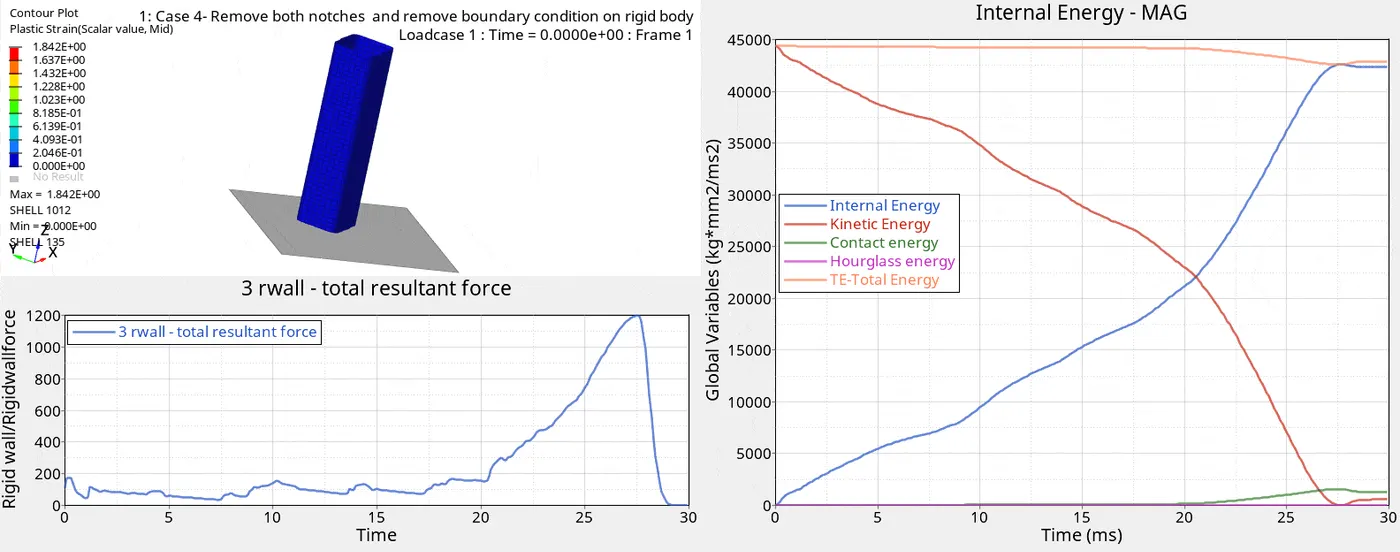
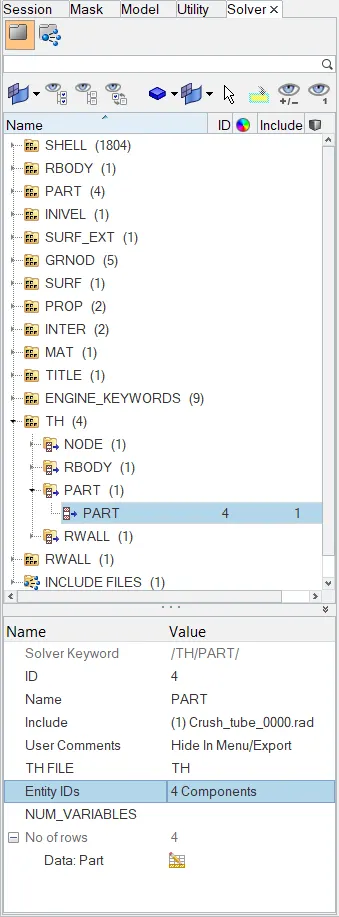
TIME HISTORY - PART
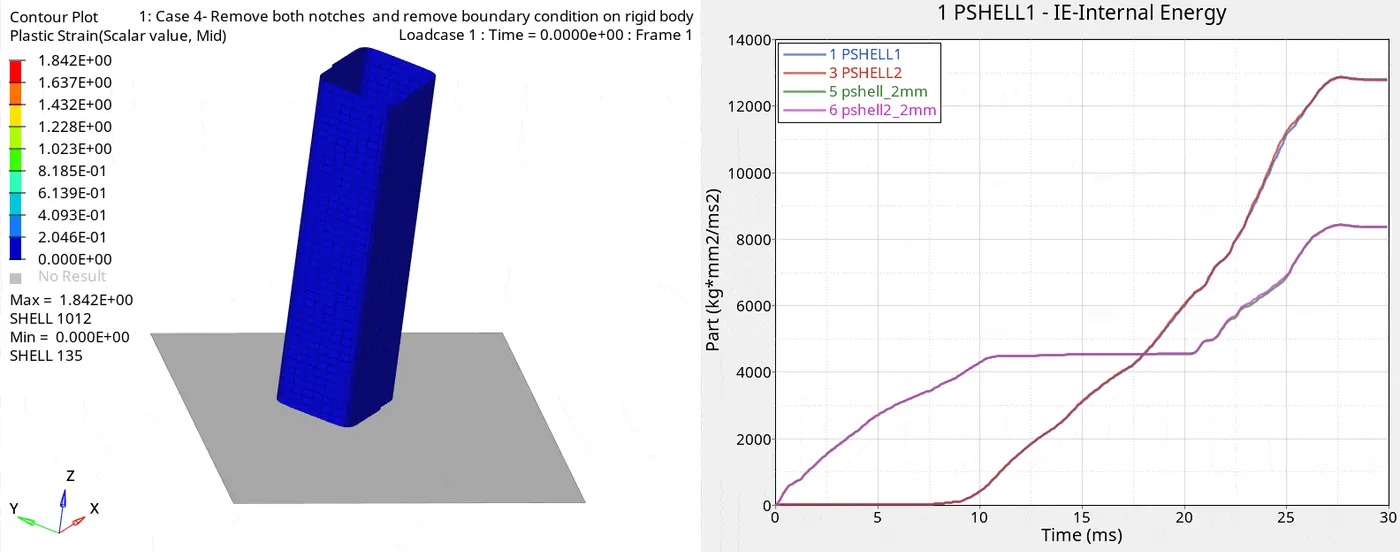
DESCRIPTION:
- When both grooves are removed the component is stiffer than the previous cases, in which when the initial velocity is given, the components gets deformed first at the bottom and then it is getting deformed as usual.
- The component is getting deformed, since the stiffer the component the max stress is about 1.842.
- R wall force is of 1200.
CASE V
Create a new notch in the middle ,select the whole section and run.
- Open Case 4- Remove both notches and remove boundary condition on rigid body.Hm
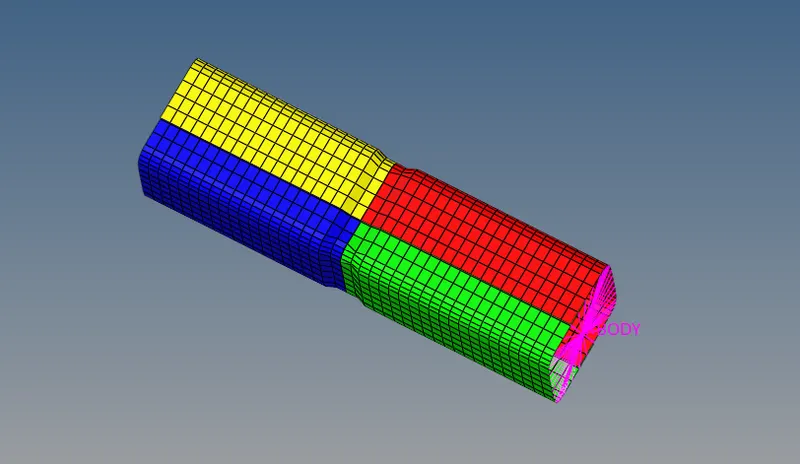
Creating a new notch in the middle:
Go to Tools > Translate
- Select node 1 & 2, as traceable path
- Then select the nodes to align, click align.
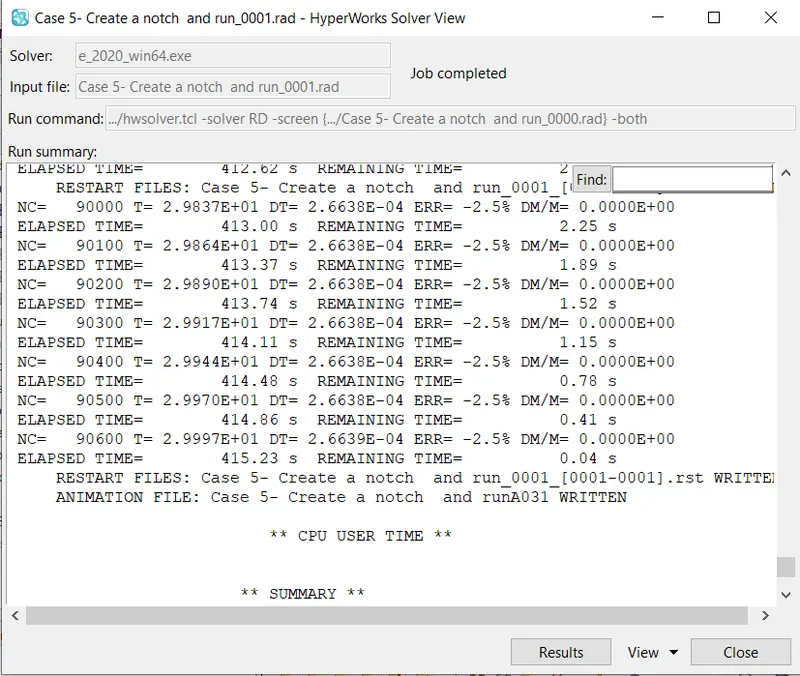
- Analysis > Radioss > Radioss
Errors:
Energy Error : -2.5% ( Acceptable Range upto -10% ~ -15%)
Mass Error : 0
HYPERVIEW SIMULATION:
SOLVER ANALYSED DATA:
TIME HISTORY - PART
DESCRIPTION:
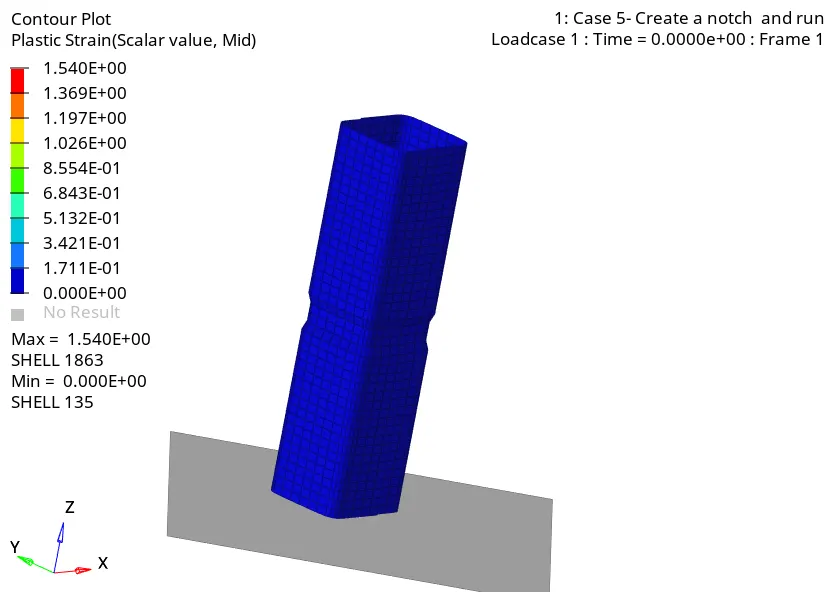
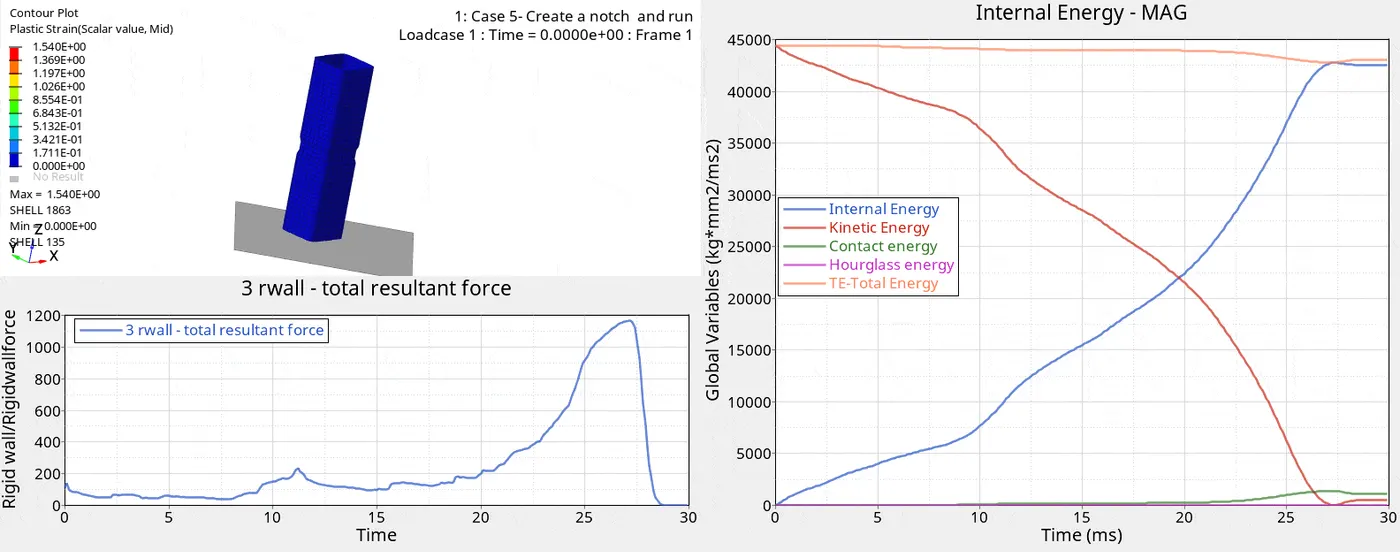
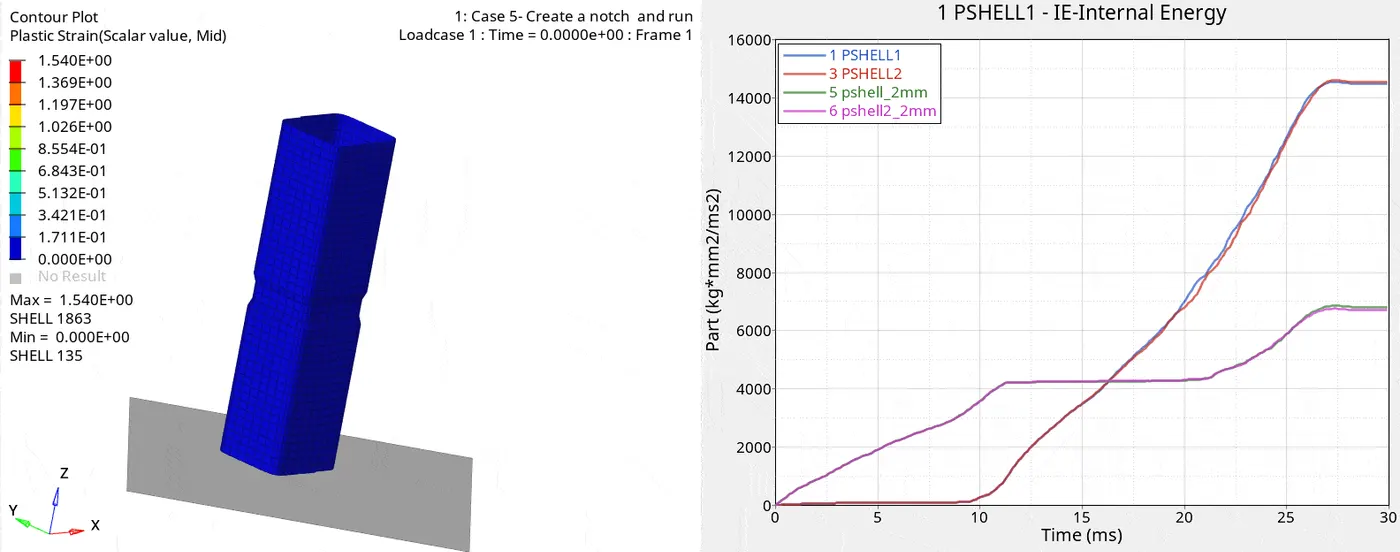
- The grooving is getting deformed first, in which it acts as flexible part for the tube.
- The component is less stiffer than the previous case without grooves.The energy level of the components are almost similar in all the cases.
- R wall force is of 1200
CASE VI :
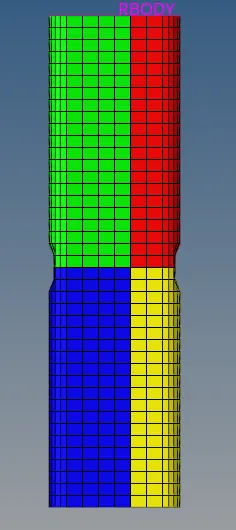
Create a new notch with nodes only from opposing 2 faces
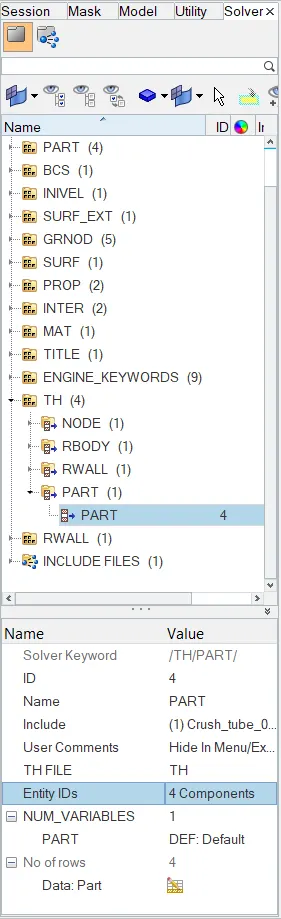
- Analysis > Radioss > Radioss
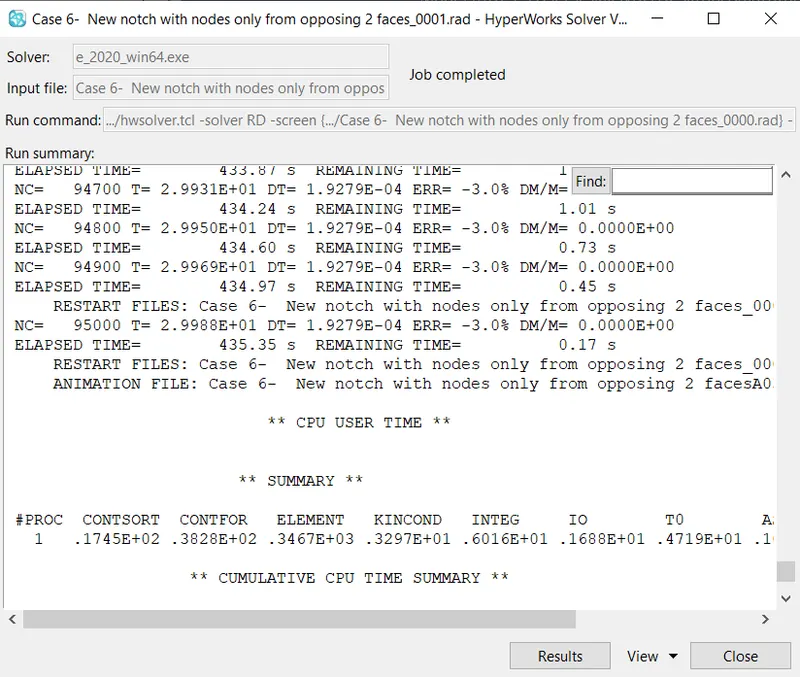
Errors:
Energy Error : -3% ( Acceptable Range upto -10% ~ -15%)
Mass Error : 0
HYPERVIEW SIMULATION:
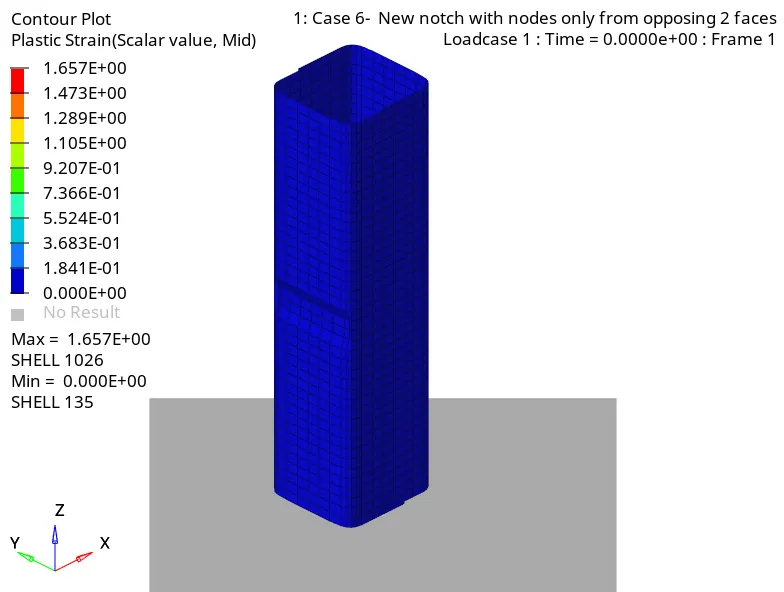
SOLVER ANALYSED DATA:
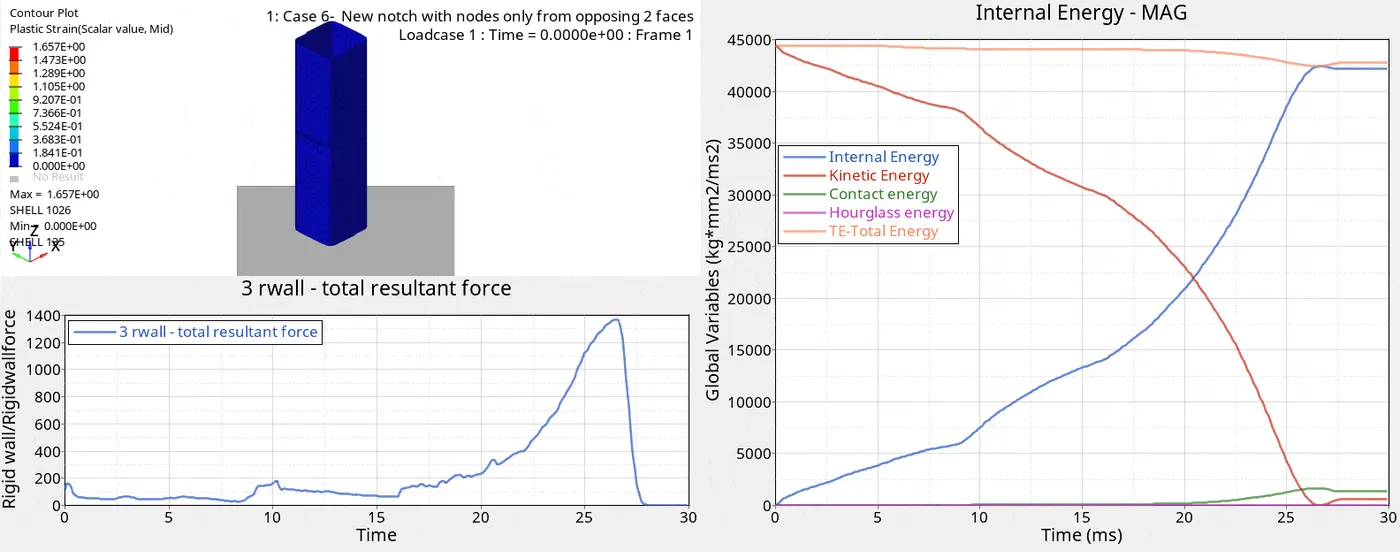
TIME HISTORY - PART
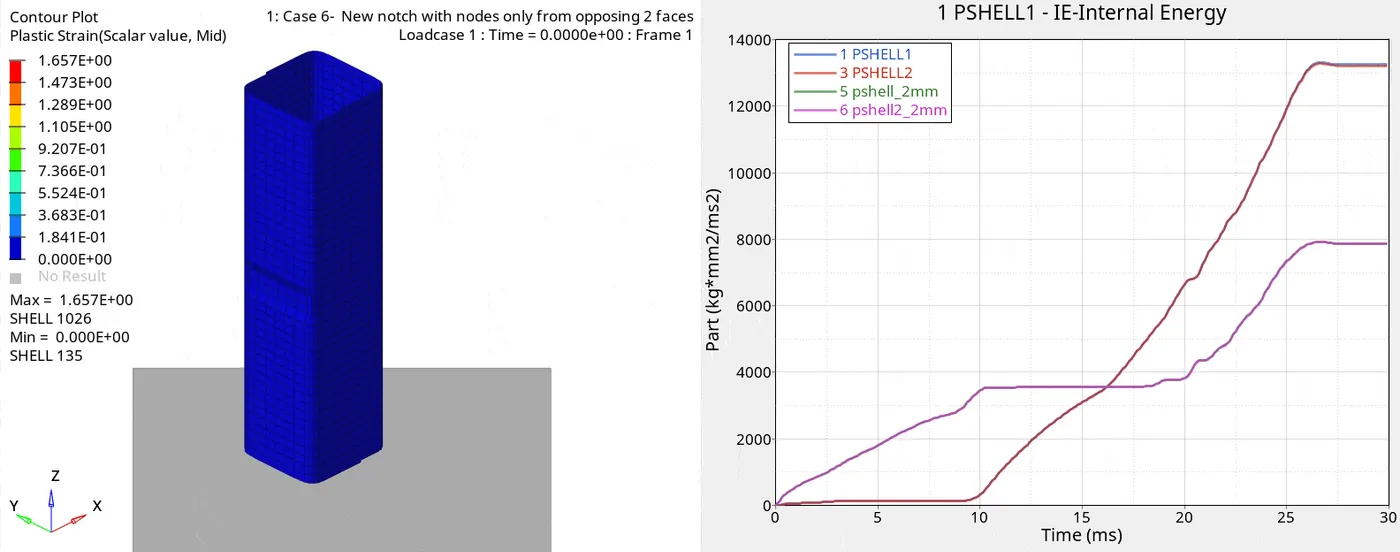
DESCRIPTION:
- The plastic strain value is of 1.65.
- The Grooving region attracts the flow direction of the force.
- Energies plots are similar to all the cases.
- R wall force is of 1400.
---------------------------------------------------------------------------------------------------------------------------