Assignment 4-RADIOSS Material Laws Challenge
Objective:-
- To apply different material types to the simulation model and compare the behavior of the material with a different element and failure formulations.
PROCEDURE:-
CASE 1:-
- Import the provided 0000.rad file into the HyperMesh workspace and change the properties to the recommended properties for shell elements.
- Save the model and run the simulation without changing the failure card.
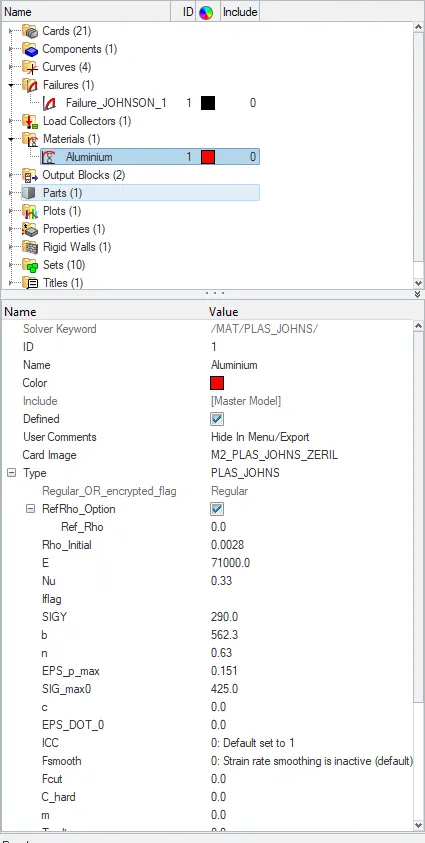
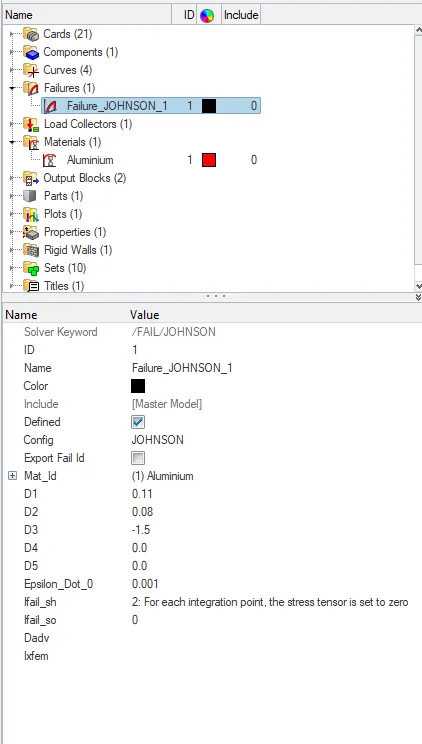
- Material and failure cards for the simulation.
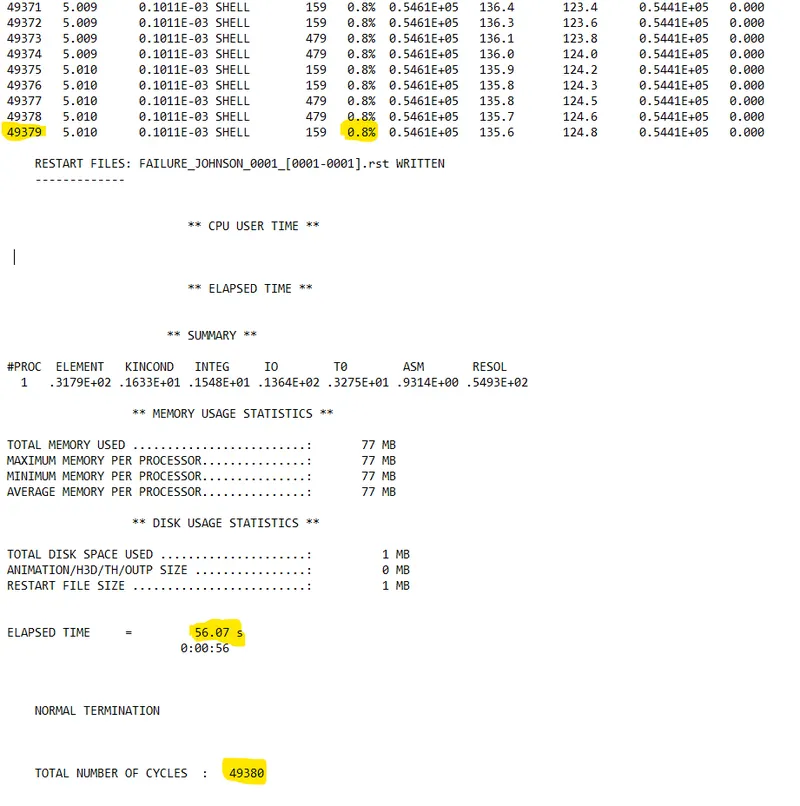
- 0001. out file at the end of the simulation.
- From the above image, the total number of cycles at the end of 5ms is 49380 and the energy error is 0.8% which indicates that the simulation is stable and there is
no energy is created in the simulation and mass error is 0.0.
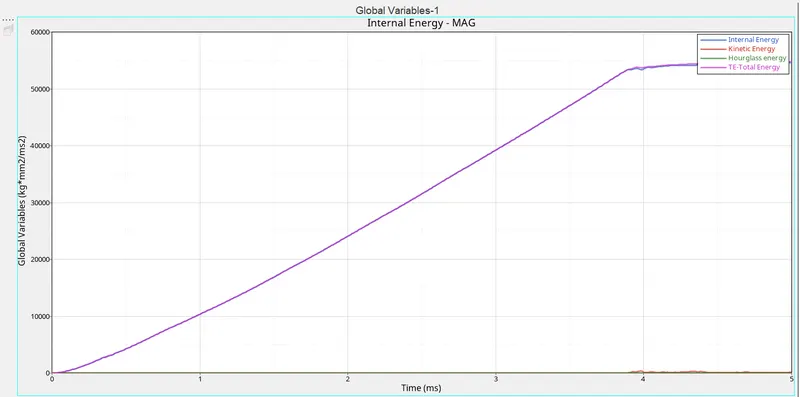
Energy graph
- The above graph shows the internal, kinetic, hourglass, and total energy in the simulation.
- From the graph, it can be seen that there is no hourglass energy produced in the situation, the internal energy increases as time increases this is because of elements absorbing the forces acting on them.
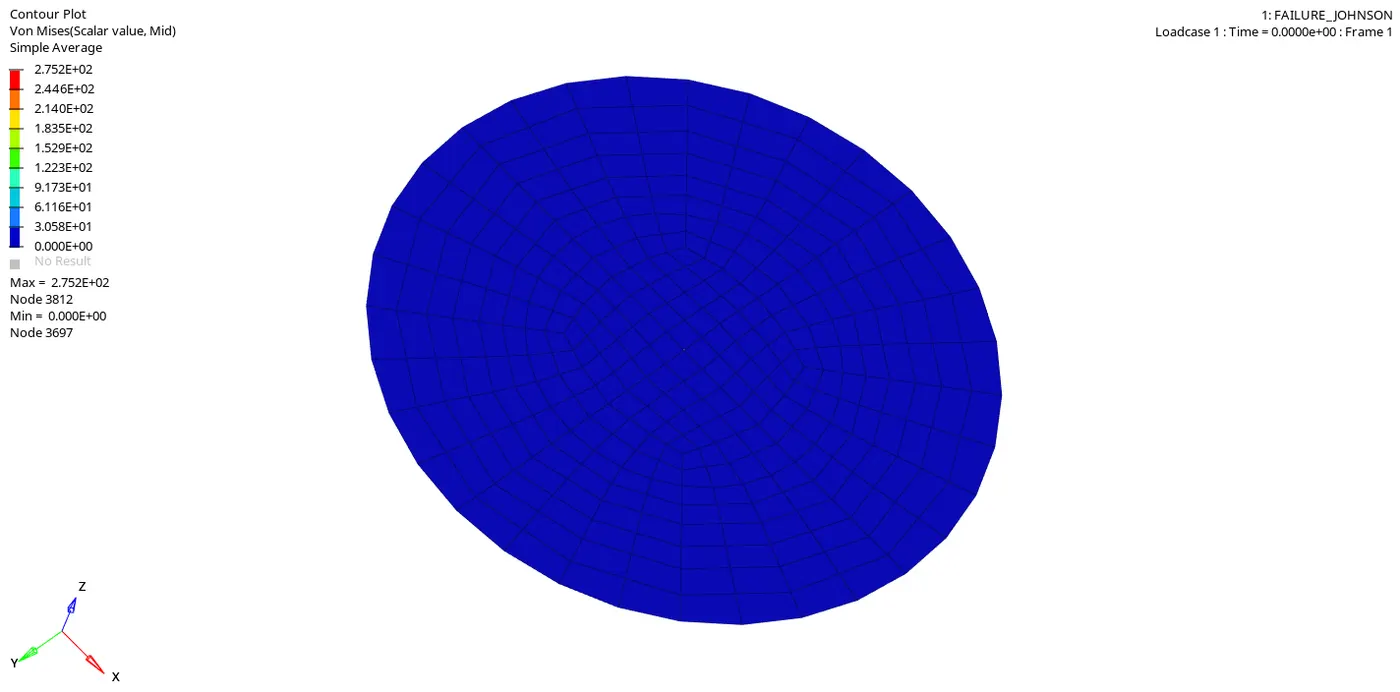
- In the above image, we can see that the elements are deleted when they reach 15% plastic strain after the yield stress value.
- it can be seen that the elements are being deleted when they reach the 15.1% plastic strain area after the yield stress of 275Mpa, the maximum stress in the simulation is 275.24MPa.
- Elements break because the Johnson-Cook failure criteria model is applied to the simulation model which considers both tensile and compressive failure into account, when the element plastic strain reaches the Eps_p_max value they are deleted from the simulation, which is seen in the model above.
Case 2:-
- change the failure card as shown below.
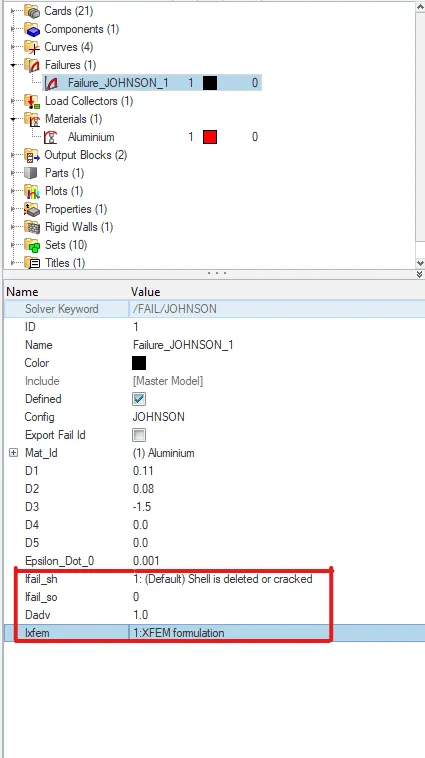
Edited failure card
- Here Ifail_sh is Shell failure flag set to 1 which will generate a crack in the shell element when Ixfem is set to 1, Dadv is the criterion for the crack advancement.
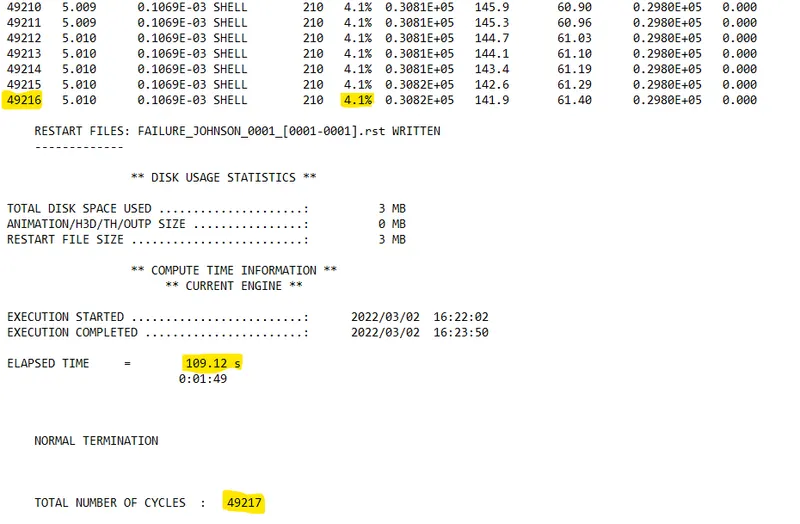
- The images above show the energy error, mass error, number of cycles, and time.
- Energy error is +4.1% which is an acceptable result. the simulation time taken is 109.12s.
Plastic strain contour plot.
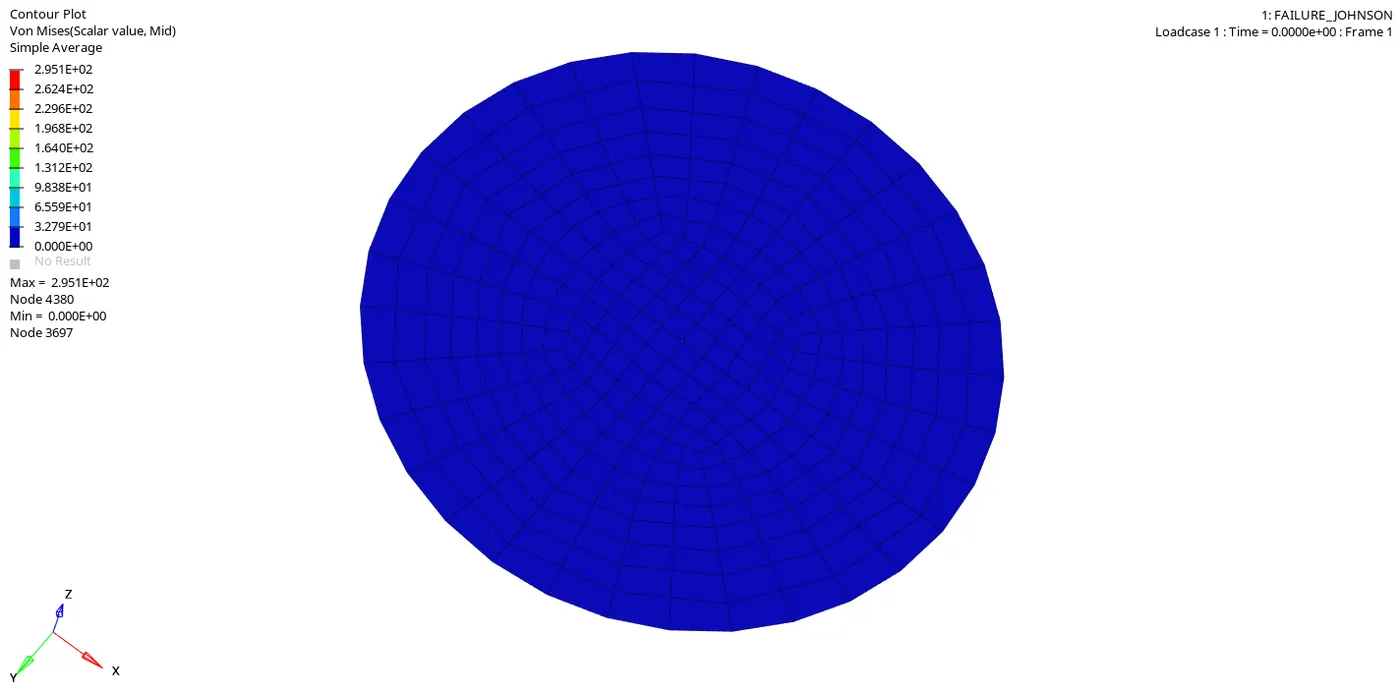
- The image above shows elements being cracked at the center before getting deleted.
- The maximum stress in the simulation is 295.7MPa which is higher than the previous simulation. crack development can be seen in the simulation.
- since the crack advancement is set the maximum value of 1 and Ifail_sh is activated for shell elements, we can see the crack is generated in the simulation.
CASE 3:-
- Delete the failure card from the simulation and run the simulation.
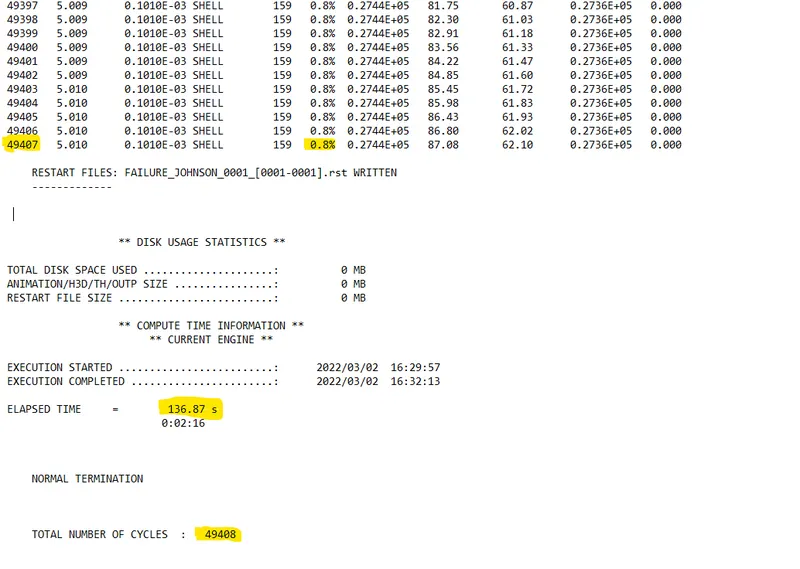
- Energy error is at 0.8% which is less than 15%, hence the result is acceptable. time elapsed for this case is more than the previous two simulations.
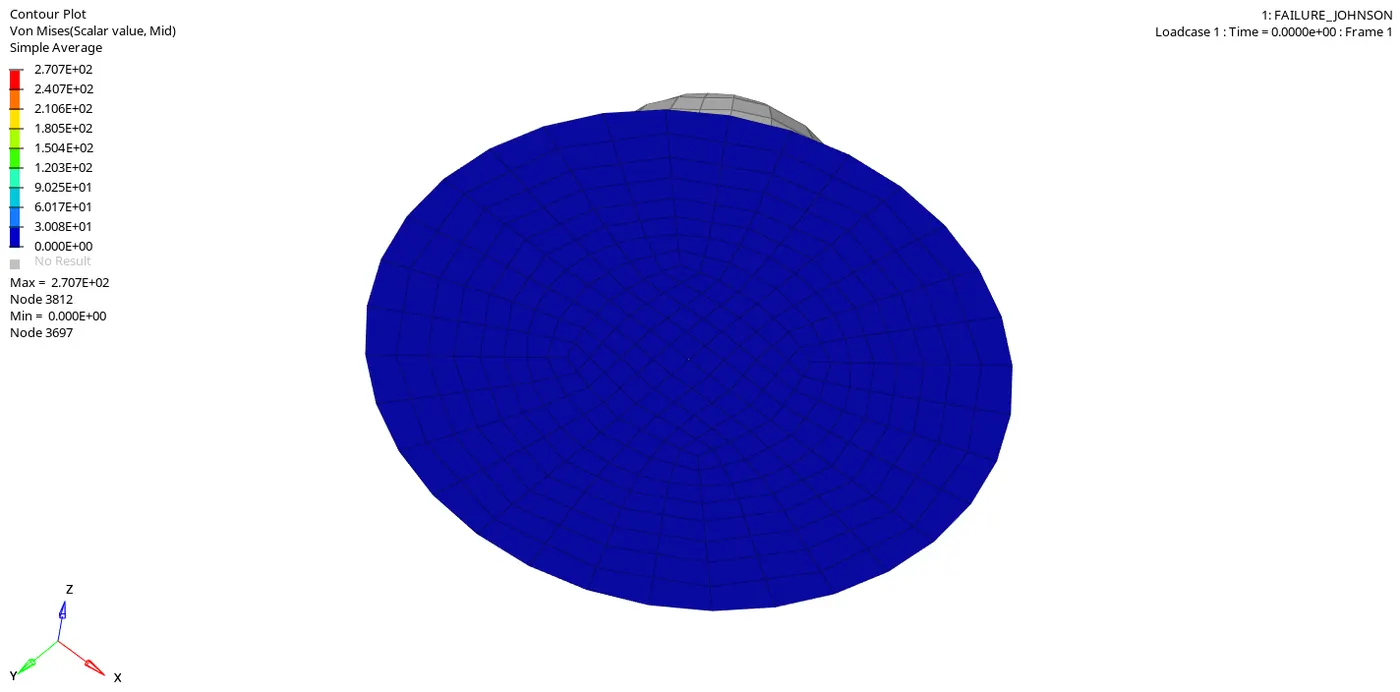
Plastic strain contour Plot
- The elements are deleted in this simulation.
- The maximum stress in the model is 270.7MPa, and there is no crack observed in the simulation.
CASE 4:-
- Running the model with zero EPS_p_max value.
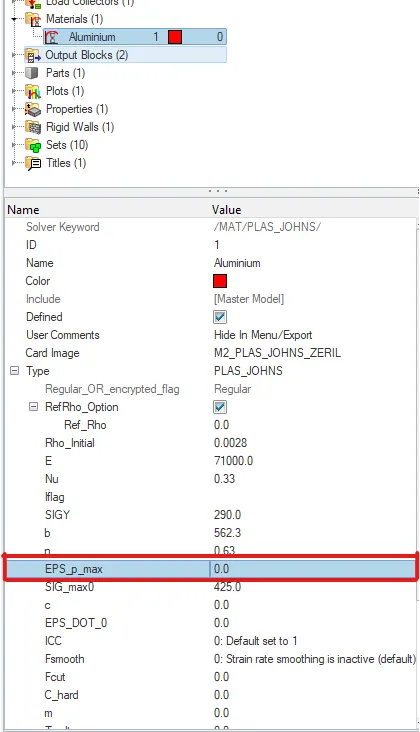
- Material card image.
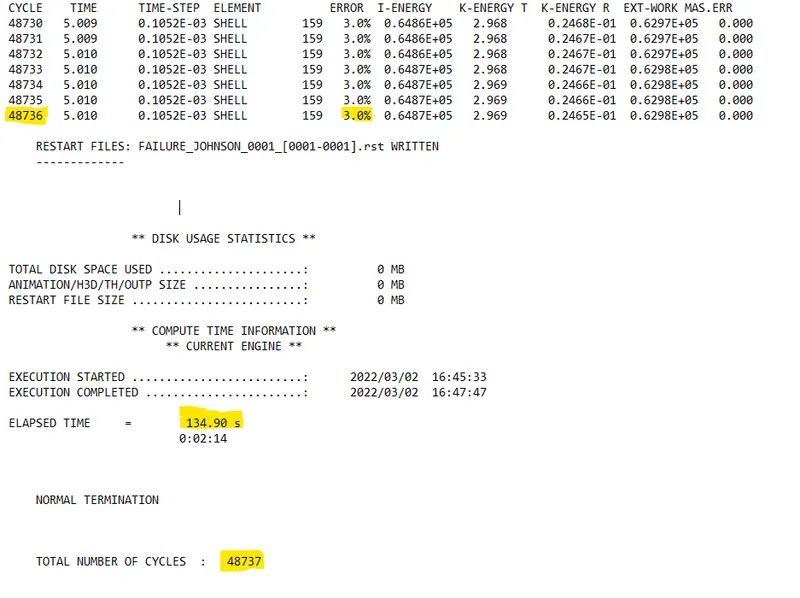
- Energy and mass errors are in an acceptable range.
- Time for the simulation is less than the other three simulations.
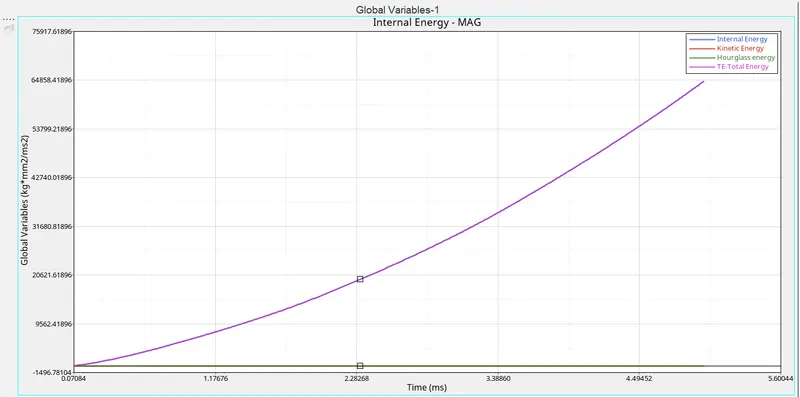
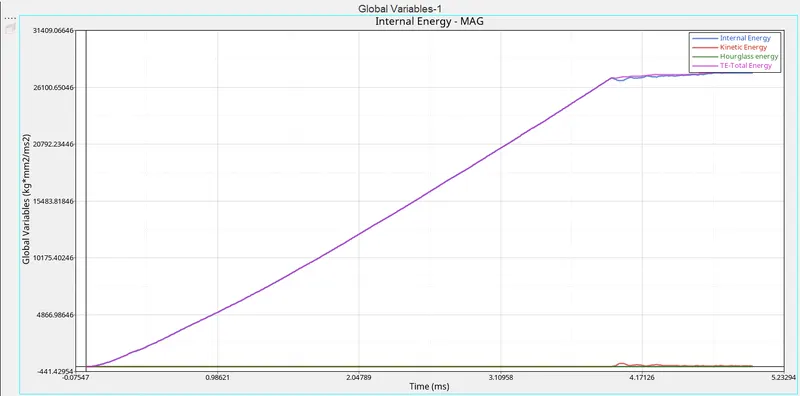
- The above images show that there is no hourglass energy generated in the simulation and the internal energy and total energy of the simulation model intercepts
each other and increase with time.
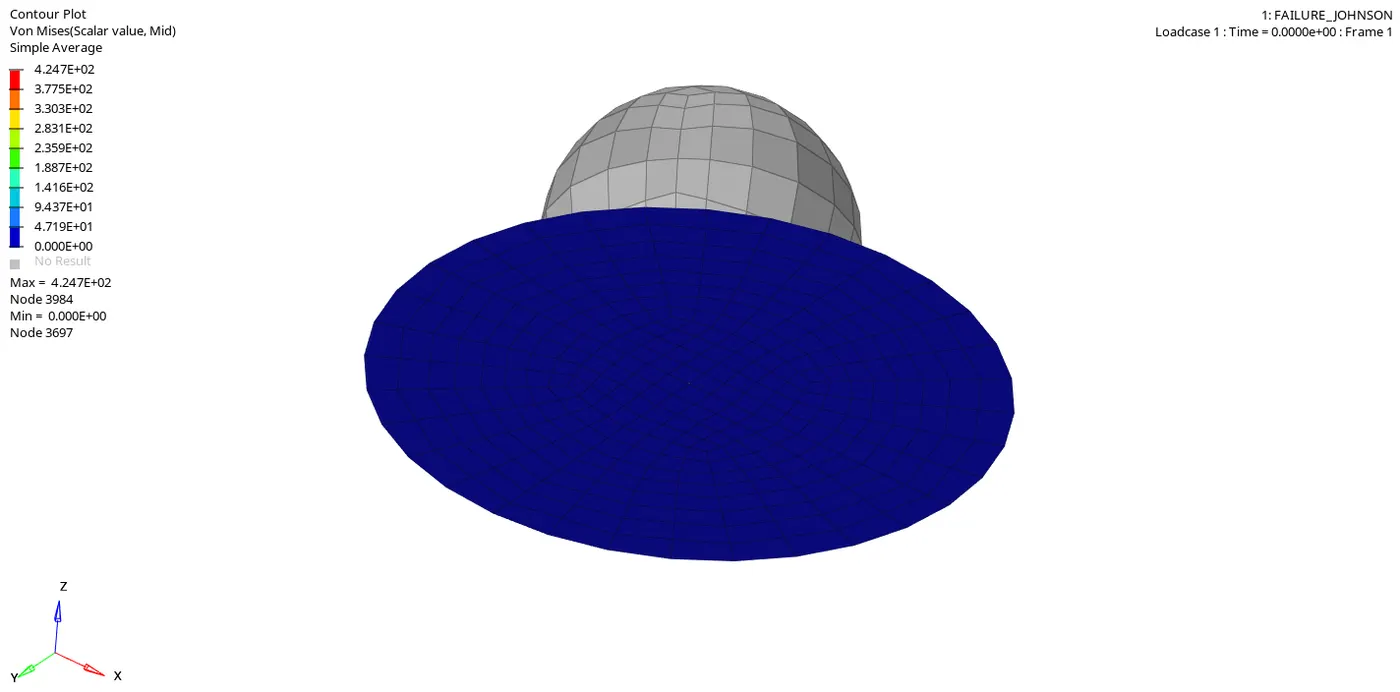
- In this simulation model, the elements do not fail as there are no failure criteria applied to the model, and Eps_p_max (Failure plastic strain) value is deleted.
- which sets it to the default value of 10^30, and the maximum stress value is set to 425MPa due to which the maximum stresses in the model is seen to be
424.7MPa and there are no elements deleted in the model.
CASE 5:-
- Changing law 2 (elastoplastic material) to law 1(linear elastic material)with the same values of E (Young's modulus), density, and Poisson's ratio.
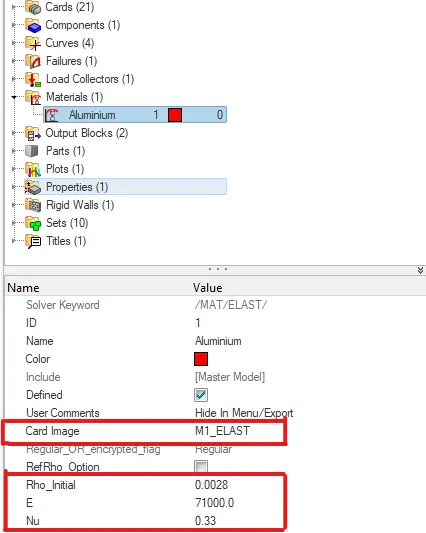
- Material card for the simulation.
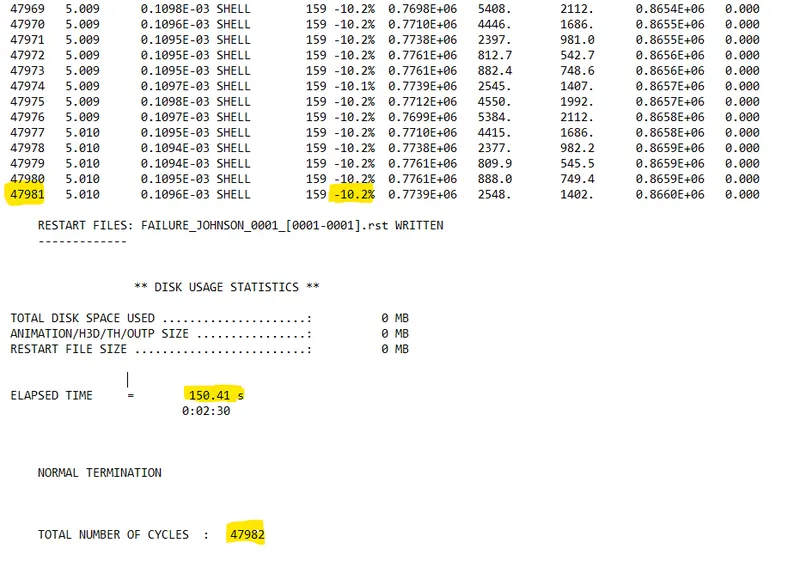
- Energy error and mass error are in the acceptable range, and the time elapsed for the simulation is 150.41s which is the least compared to the previous four cases.
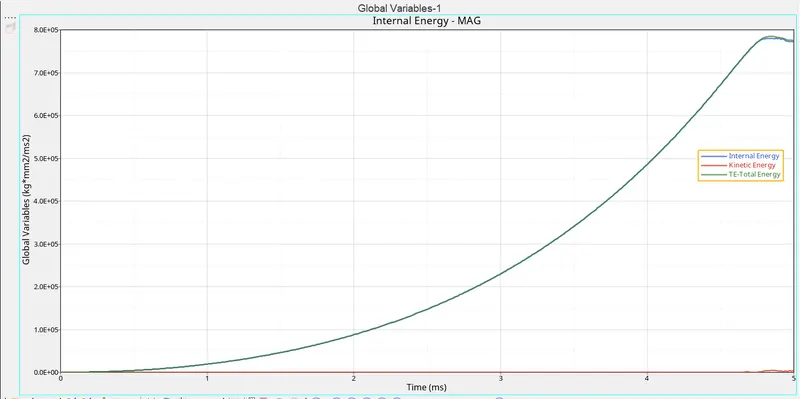
- No hourglass energy is generated in the simulation and the internal energy and total energy of the simulation model intercept each other and increase exponentially
with time. - since the material law applied is linear elastic, there is no plastic region in the material hence no elements fail and no plastic strain is recorded in the simulation.
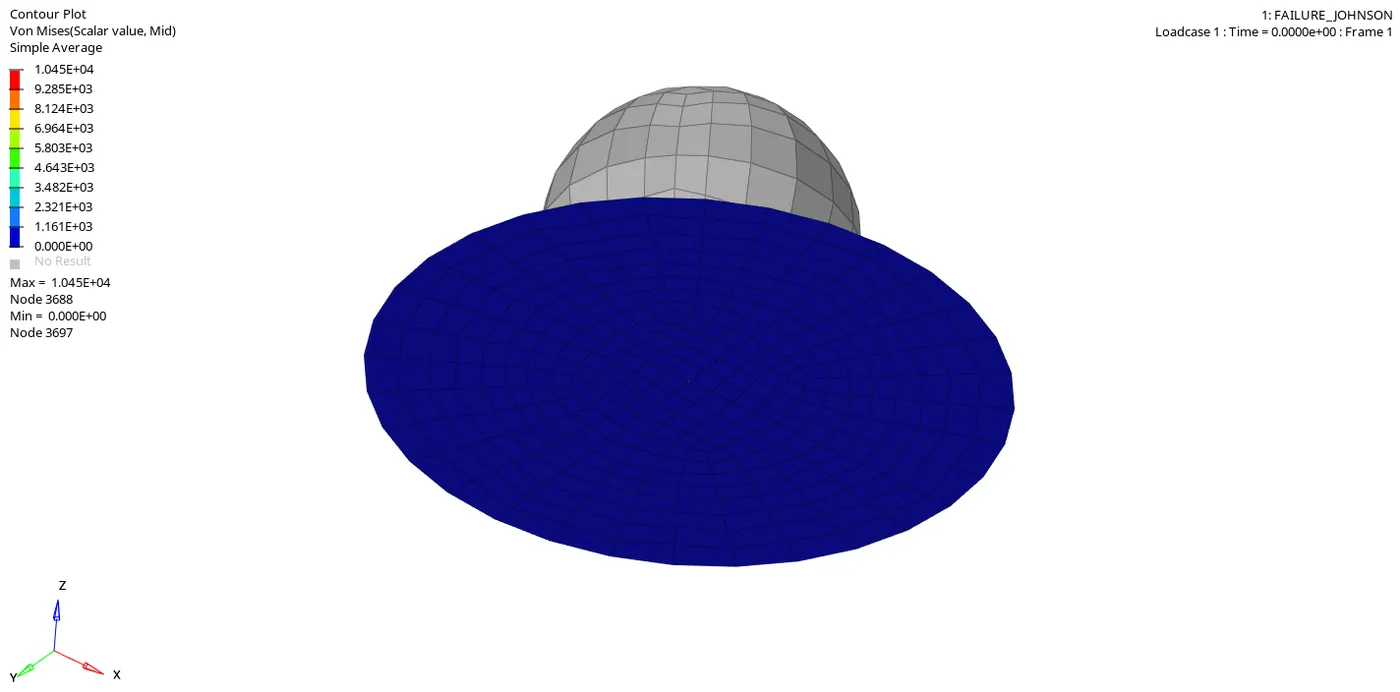
- The material has no maximum stress defined and the stress-strain relation is linear, hence there is no failure of the elements.
CASE 6:-
- change the material card to Law 27 ( elastoplastic Johnson-Cook material model with an orthotropic brittle failure model )
- This law combines johnson cook material with the brittle failure method, this law is applicable only for shell elements.
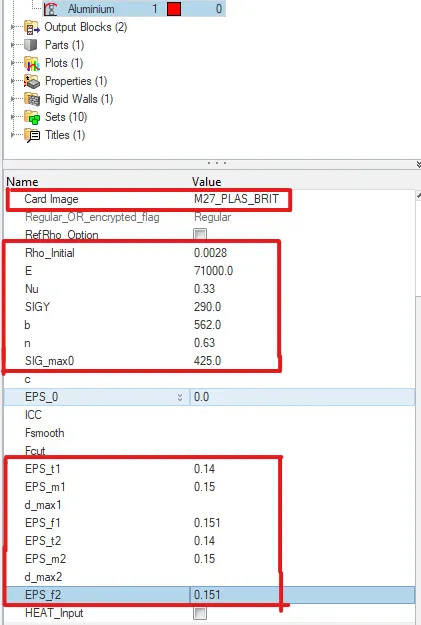
- material card for LAW 27.
- where EPS_t1 is tensile failure strain at which stress starts to reduce in the principal strain direction 1.
- EPS_m1 is maximum tensile failure strain in principal strain direction 1 at which the stress in the element is set to a value dependent on dmax1
- EPS-f1 is a maximum tensile strain for element deletion in principal strain direction 1
- dmax1 is the maximum damage factor in principal strain direction 1 which is at the default value of 0.999.
- EPS_t2, EPS_m2 and EPS_f2 are for direction 2.
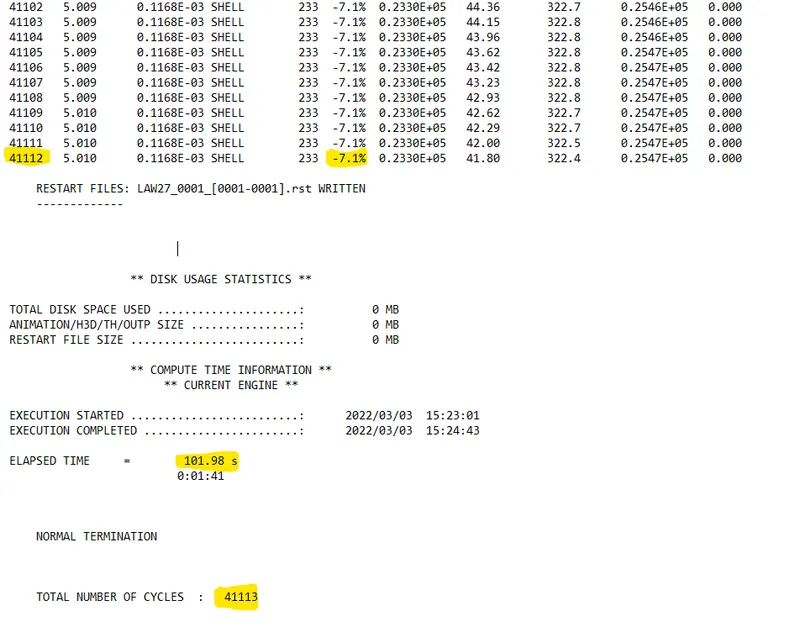
- Energy error and mass error values are in the acceptable range for the simulation, the time for elapsed for the simulation is 101.98s.
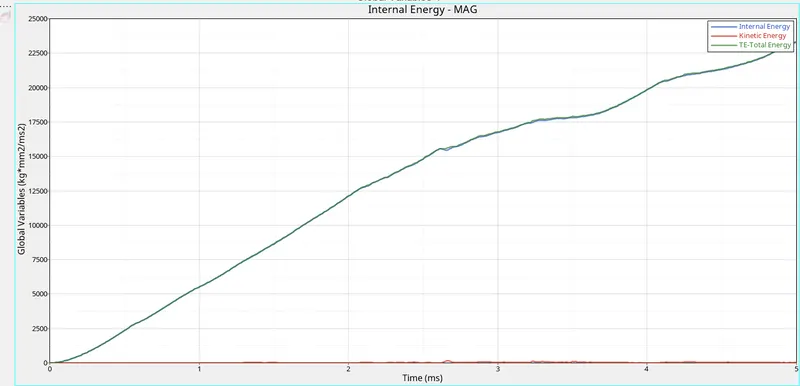
- There is no hourglass energy in the simulation model, the internal energy and total energy increase with time and then tend to flatten after 4ms as seen in the
image above. - Elements are deleted in the simulation due to EPS_t, EPS_m, and EPS_f values.
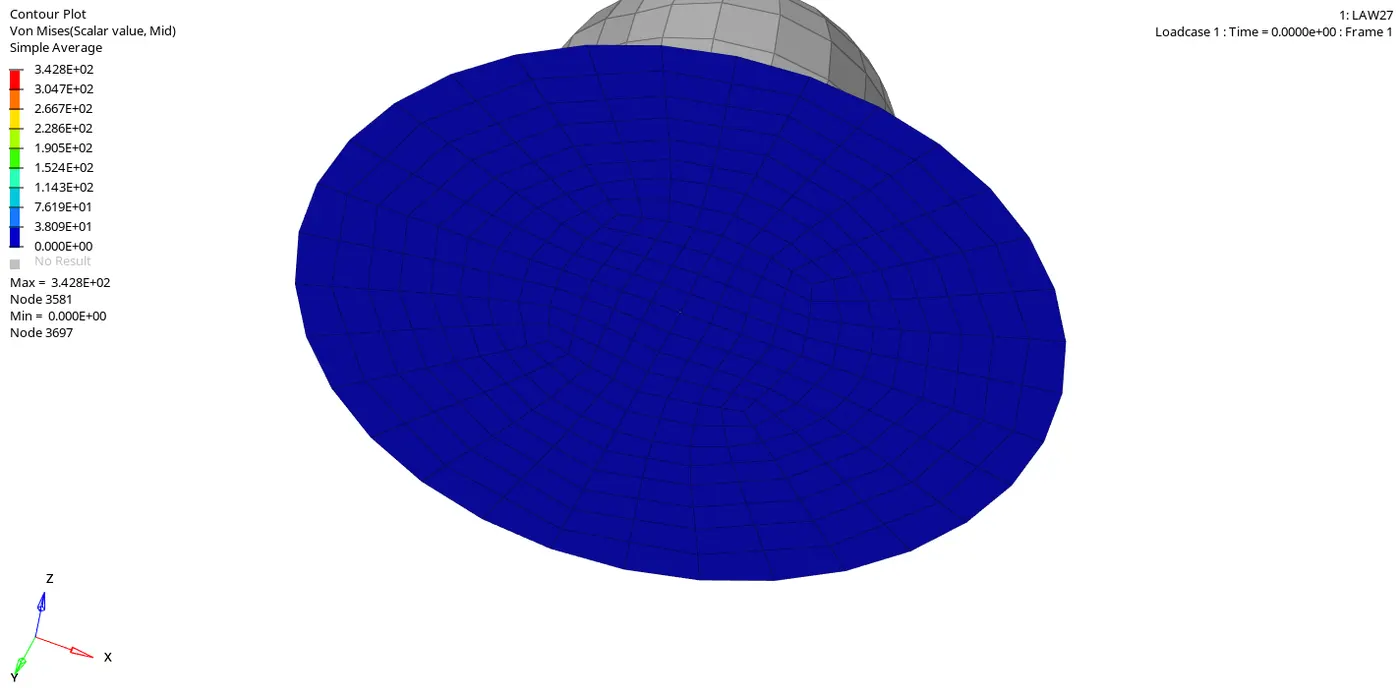
- The maximum stress developed in the simulation is at 342.8 MPa, which is below the Plasticity yield stress value of 360 MPa.
- The material breaks after the cracks reach the end of the material boundary as seen in the simulation image.
CASE 7:-
- Law 36 is an isotropic elastoplastic material using user-defined functions (curve).
- create a curve with to apply in the material model N_funct.
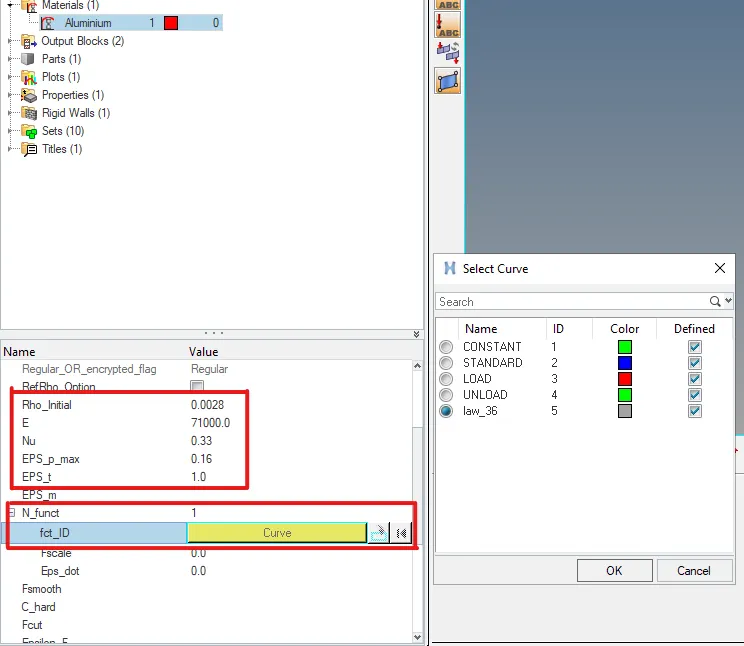
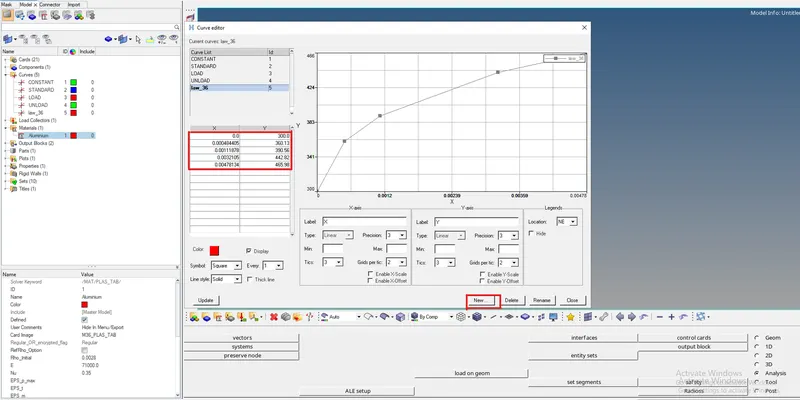
- Material card selection and curve selection.
- N_funct is the Number of functions that can be between 1 and 100 depending on the requirements of the simulation.
F scale default value is 1.
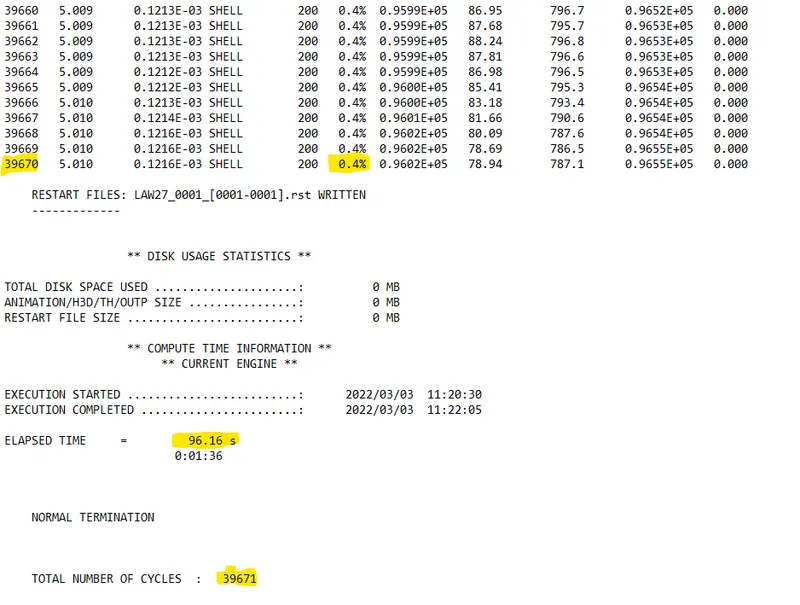
- Energy error and mass error are in the acceptable range for the simulation, and the time elapsed is 96.16 s.
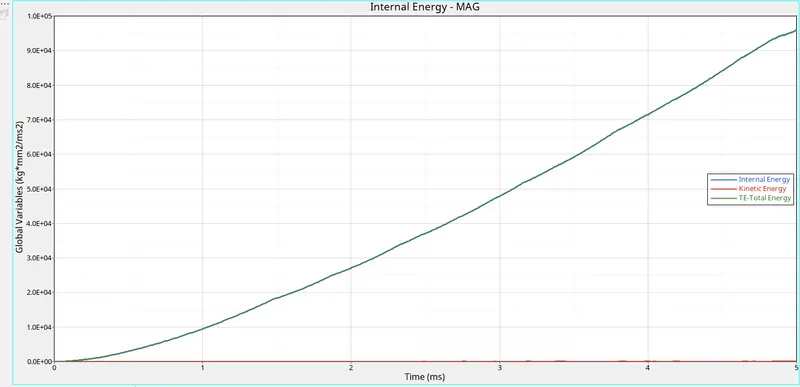
- There is no hourglass energy generated in the simulation model, the internal energy increases with time as seen in the image.
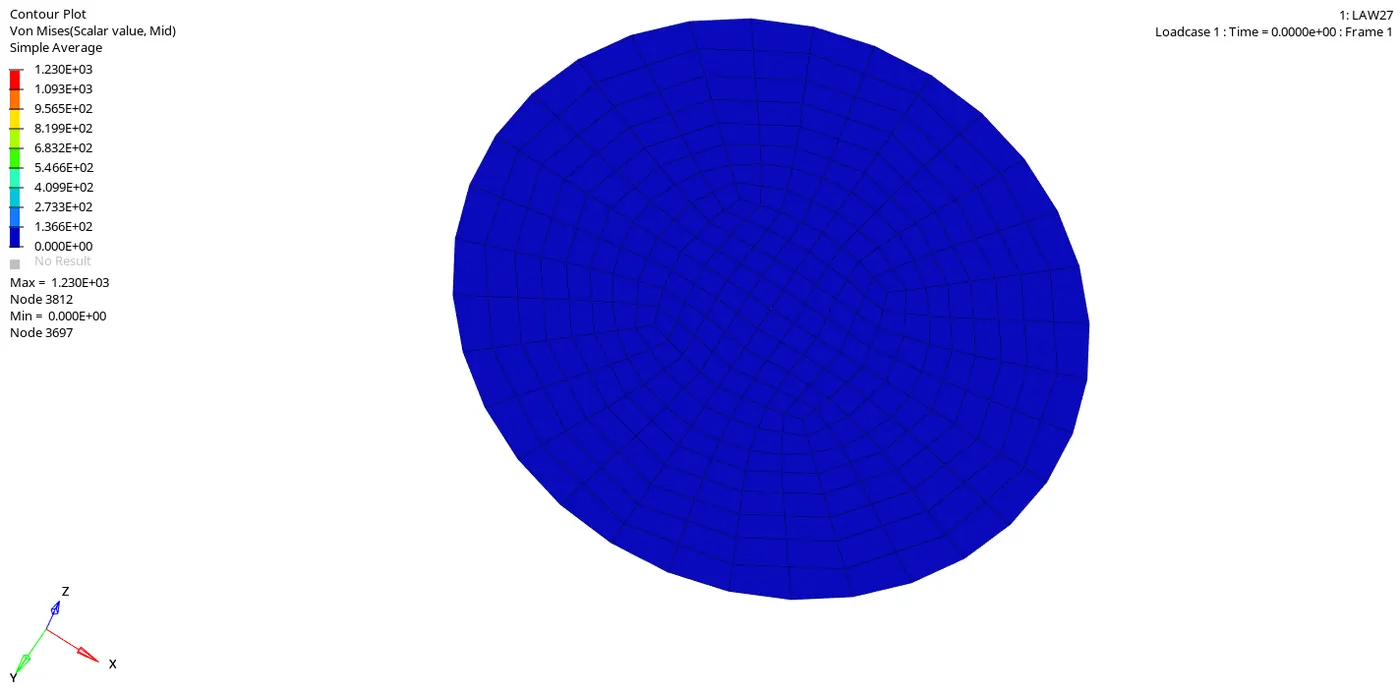
- Once the EPS_p (plastic strain) reaches EPS_p_max, in one integration point, the element is deleted.
| Case | Material law | Simulation name | Energy error (%) | Simulation time (s) | Number of cycles |
Maximum stress value (MPa) |
Element behavior |
| 1 | Law 2 (Johnson-Cook model) | EPS_max_failure | 0.8 | 56.07 | 49380 | 275.24 | Deleted |
| 2 | Law 2 (Johnson-Cook model) | EPS_max_failure_Crack | 4.1 | 109.12 | 49217 | 295.71 | Cracks first then deleted |
| 3 | Law 2 (Johnson-Cook model) | EPS_max_nofail | 0.8 | 136.87 | 49408 | 270.74 | Deleted |
| 4 | Law 2 (Johnson-Cook model) | Law_2 | 3.0 | 134.90 | 48737 | 425.01 | Preserved |
| 5 | (linear elastic material) | Law_1 | -10.2 | 150.41 | 47982 | 104.51 | Preserved |
| 6 | ( brittle failure model) | Law_27 | -7.1 | 101.98 | 41113 | 342.81 | Deleted |
| 7 | (elastoplastic material) | Law_36 | 0.4 | 96.16 | 39671 | 123.21 | Deleted |
elements behavior in different cases.
component Law_2 Law_2 Law_2
Law_2 Linear elastic material Brittle failure Elastoplastic material