Assignment 4
We will be comparing the SI and CI engine model for a single-cylinder engine.
Basic differences we can observe through these models are
1)The Spark Ignition (SI) engine, as its name indicates uses spark to ignite the fuel. And in Compression Ignition (CI) engine, the air is compressed within the cylinder and the heat of this compression air is used to ignite the fuel.
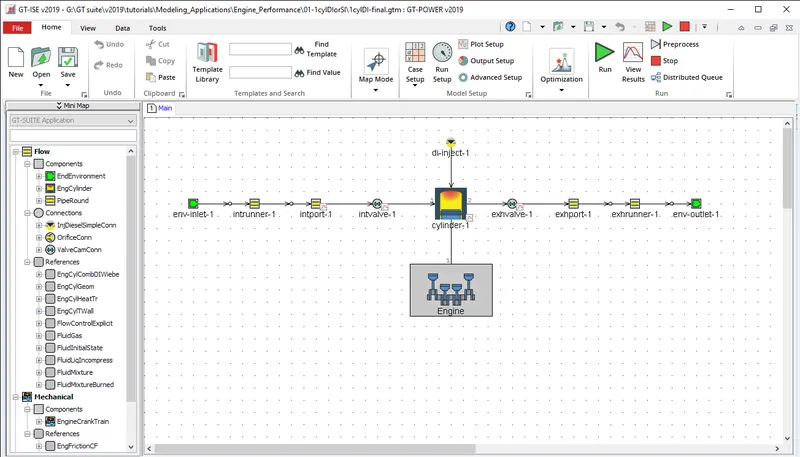
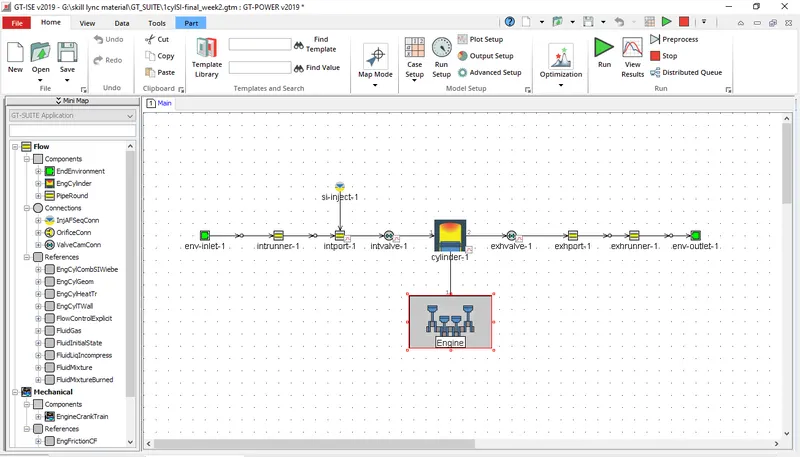
2) Fuel is directly injected to the cylinder for combustion in case of CI engine model and in SI engine the fuel is connected to the inlet port.
3) compression ratio for SI engine is lower compare to CI engine.
4) SI engines produce less noise compared to CI engines.
5) SI engine produces less hydrocarbons than CI engine.
CI engine model
SI engine model
now we will run both SI an CI engine at same RPM in default conditions and compare the differences in the performance of both these engines
Below are the following results of the CI engine at 3600 RPM.
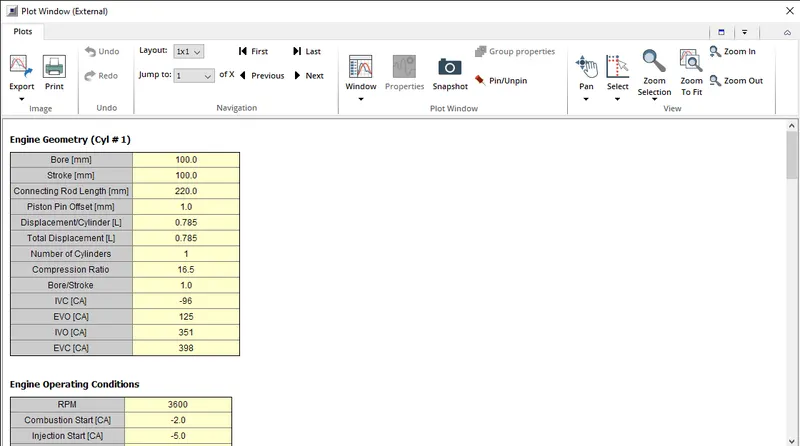
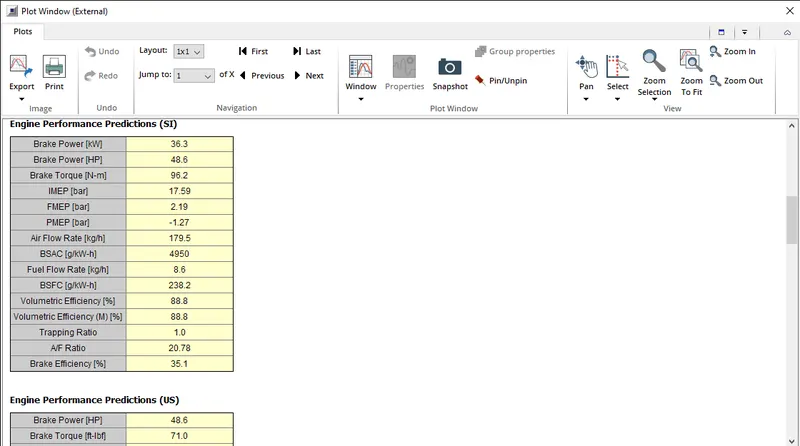
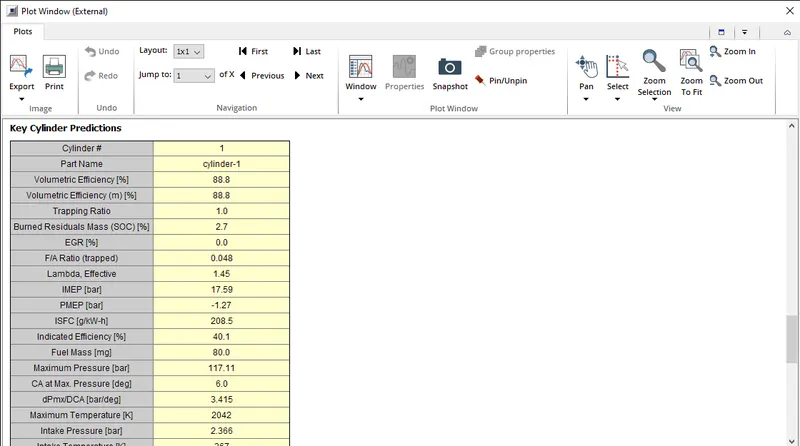
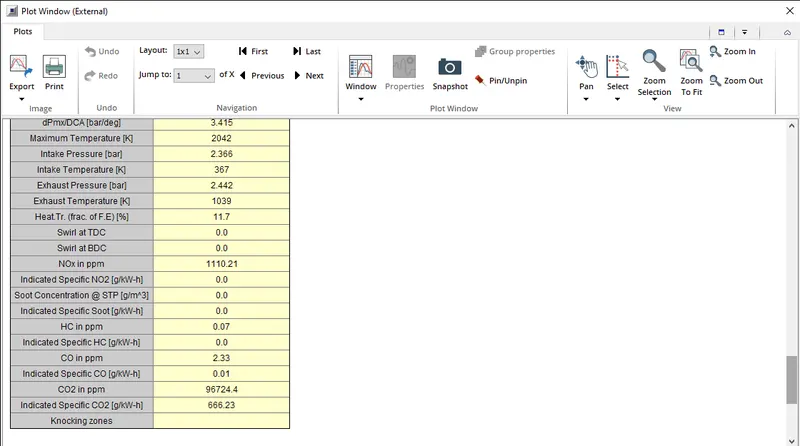
some key parameters we can note
Power = 48.6 HP
torque = 96.2 N-m
volumetric efficiency = 88.8
BSFC = 238.2
A/F ratio = 20.78
NOx = 1110.21
CO2 = 96724.4
Below are the results for the Si engine:
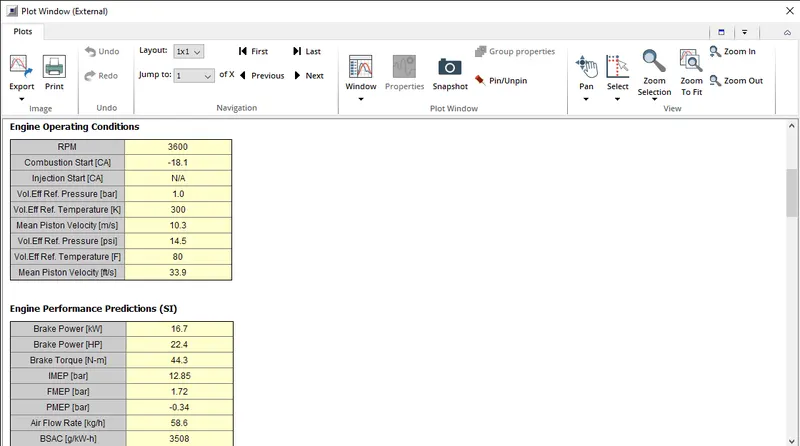
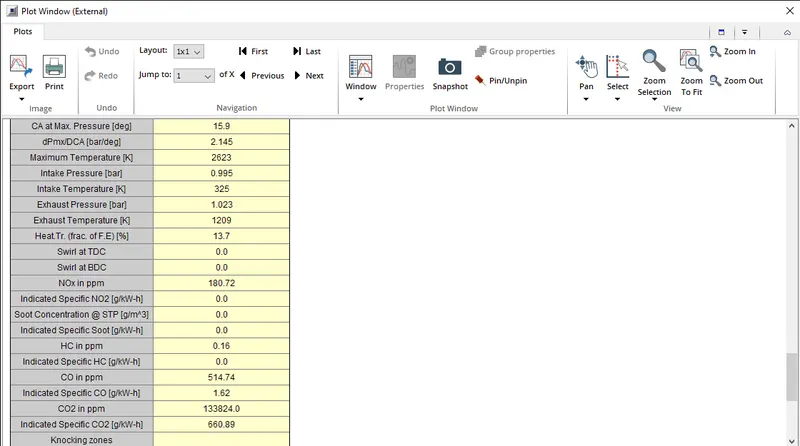
Power = 22.4 HP
torque = 44.3 N-m
volumetric efficiency =93.6
BSFC = 241.8
A/F ratio = 14.51
NOx = 180.72
CO2 = 133824.0
From the above figures, we can see that the power and torque for the CI engine are higher than the SI engine.
brake-specific fuel consumption is lower for CI engine and SI engine hence CI engine consumes less fuel compared to SI engine.
Volumetric efficiency is higher for SI engine and CI engine.
CO2 emission is higher for SI engine than CI engine, NOx emissions are higher for CI engine than SI engine.
2)Comments on the following parameters
- BSFC
- Exhaust Temperature
- A/F ratios
BSFC = At higher loads, the turbulence and in-cylinder temperature inside the combustion chamber will be high which helps in the atomization and proper mixing of fuel resulting in higher combustion efficiency. Also, the engine will be running with a richer air-fuel ratio at lower loads compared to full load conditions. But if you are not using a constant speed engine, then BSFC will be affected by the torque-speed characteristics.
`BSFC = (BP)/(CV.FC)`
BP = Brake power
CV= calorific value
FC= fuel consumption
Exhaust Temperatures: the temperature of the gases coming out of the cylinder can be considered as the exhaust temperature and these temperatures can vary depending on the type of fuel size of engine , Ignition, Compression ratio and other factors.
Diesel engine exhaust gases vary with speed and load. High loads and high speeds result in the highest temperatures. Generally, temperatures of 500–700°C (932–1293°F) are produced in the exhaust gases from diesel-cycle engines at 100% load to 200–300°C (392–572°F) with no load. Exhaust gases normally discharges at a temperature of around 420°C (788°F).
Air/Fuel ratio - A/F ratio for diesel engines are always higher than that of gasoline engines.
A/F is controlled to 14.64 (near lambda=1) during closed-loop control of most SI gasoline engines to allow 3-way exhaust catalytic reactions. A/F ratio is constantly varied during diesel combustion since it is primarily diffusion-controlled combustion.
Diesel combustion is characterized by lean overall A/F ratio. The lowest average A/F ratio is often found at peak torque conditions. To avoid excessive smoke formation, A/F ratio at peak torque is usually maintained above 25:1, well above the stoichiometric (chemically correct) equivalence ratio of about 14.4:1. Therefore, excess air present in the cylinder after the fuel has combusted continues to mix with burning and already burned gases throughout the combustion and expansion processes.
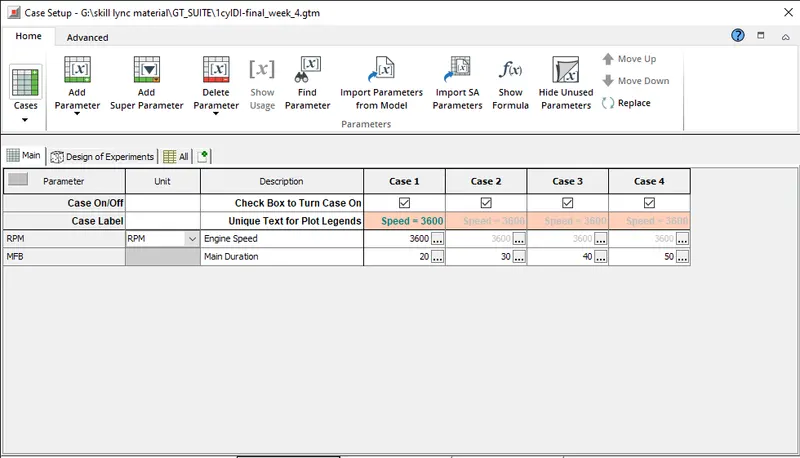
MFB 50:
Combustion control has always played a crucial role in the automobile industry, which helps to drive mobility towards a greener and efficient engines. when 50% of fuel mass is burned over an engine cycle, this method is very useful to obtain crucial data about efficiency and burning rate. MFB50 can retain performance through combustion conditions.
Case setup:
conclusion:
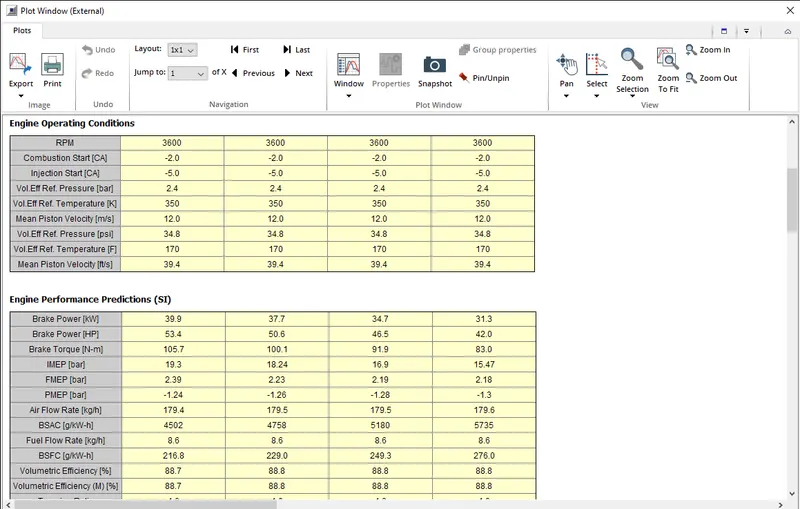
1)Lower MFB's has higher power and torque
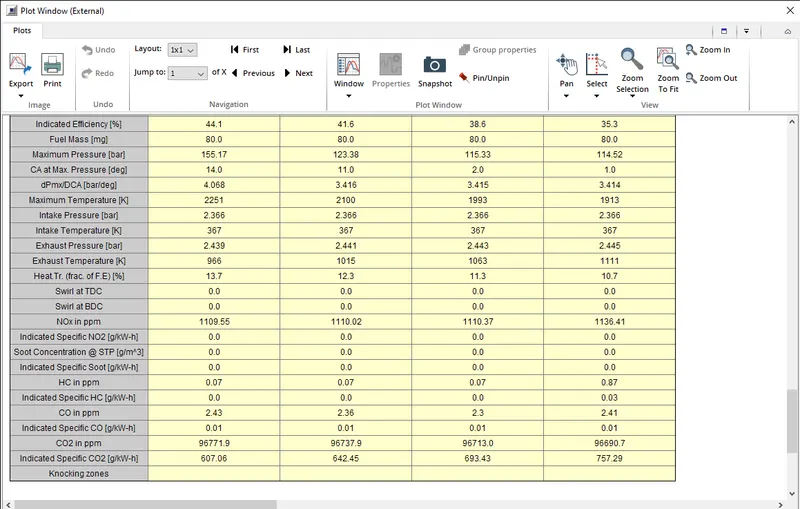
2)Cylinder pressures are seen to be higher in case of lower MFB's
3)BSFC gets lower with low MFB50
4) indicated CO2 emissions are seen to be higher when the MFB increases
5)Maximum temperature and Maximun pressure are higher in case of lower MFB values