Assignment 4
OBJECTIVE:
To compare the results with law 2, failure mode and law 27. Open FAILURE_JOHNSON_0000.rad. Notice the properties and change it to recommended values if need be.
- Run the model as it is and name it Law2_epsmax_failure
- In /FAIL/JOHNSON, change Ifail_sh = 1, Dadv = 1, Ixfem = 1. Run the model as Law2_epsmax_crack.
- Delete the /FAIL/JOHNSON card. Run the model as Law2_epsmax_nofail.
- Delete the value of EPS_p_max and run the model with name Law2.
- Convert this material model to Law1 elastic with same density, E, nu and run. Check the results.
- Convert the card to a LAW36 elasto-plastic based on the details in the next slide.
- Open Law27_0000.rad. Change the shell properties to recommended shell properties. Notice the material card. Johnson cook parameters but different values for EPS based failure. Run the model with the name Law27.
Compare the above 7 cases and tabulate the results on the basis of:
- Total number of cycles, energy error and mass error and simulation time.
- Observe the animations and describe them in brief and check if the elements are deleted or cracked.
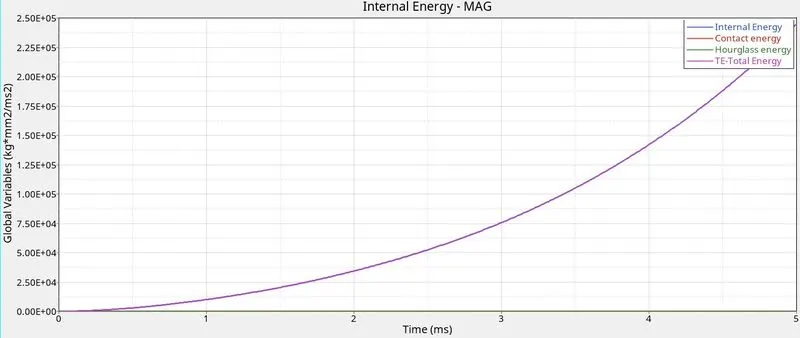
- Plot energies and notice any difference.
- Discuss which case would represent the best on field scenario.
- Discuss why the failure happened and give conclusions.
SOLUTION:
The objective of the project was to run the given radioss file with seven different parameter settings and compare the results. The results obtained is tabulated with respect to the number of cycles, energy error, mass error, simulation time and max magnitudes of energies obtained. Further, the animations obtained are compared for differences and the best case for a field scenario is discussed. Also, the reason for failure is studied and appropriate conclusions are made.
Case 1: Law2_epmax_failure
The given file was run as it is, without any change. Some important parameters were noted for carrying out meaningful comparisons with the following cases.
Ifail_sh = 2 – the shell is deleted or cracked only when all the layers in the shell are in the failure zone.
Dadv – not set
Ixfem – not set
Eps_max = 0.151
The shell element formulation was already set to recommended values:
Ishell = 24, Ismstr = 2, Ish3n = 2, N = 5, Ithick = 1, Iplas = 1
The material card is defined as per Law2, which is the Johnson Cook material model for a isotropic elasto plastic material.
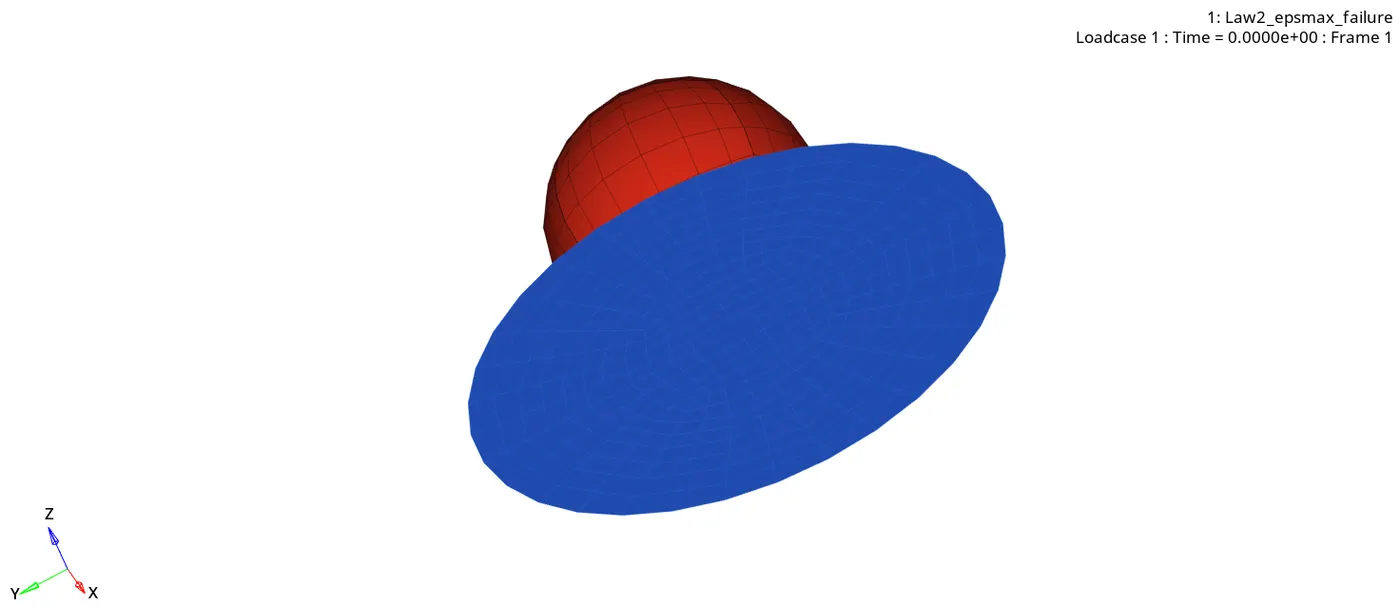
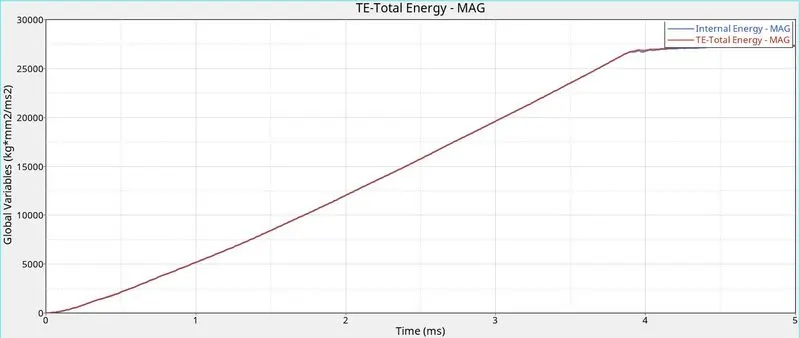
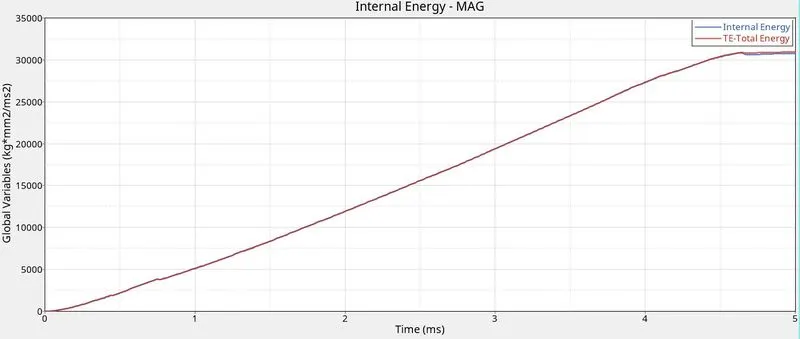
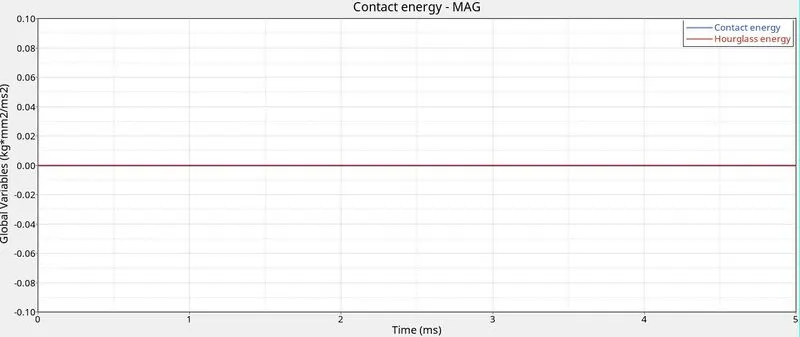
Case 2: Law2_epmax_crack
In the above given starter file, the following parameters were changed to:
Ifail_sh = 1, Dadv = 1, Ixfem = 1
These can be changed in the failure card in the model tree.
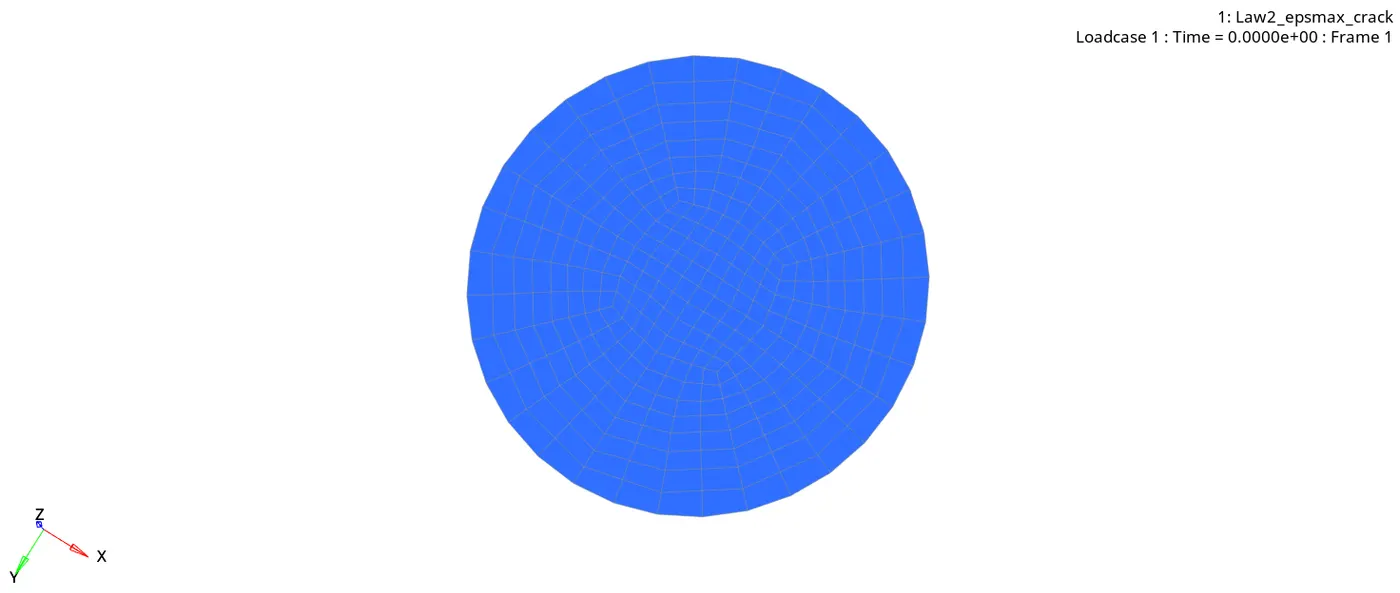
Case 3: Law2_epmax_nofail
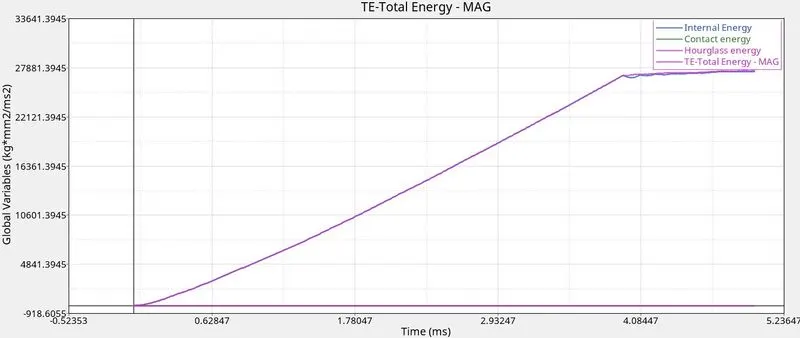
In this case, the failure card was deleted and the model was run. This eliminates any setting defined for cracks and crack advancements.
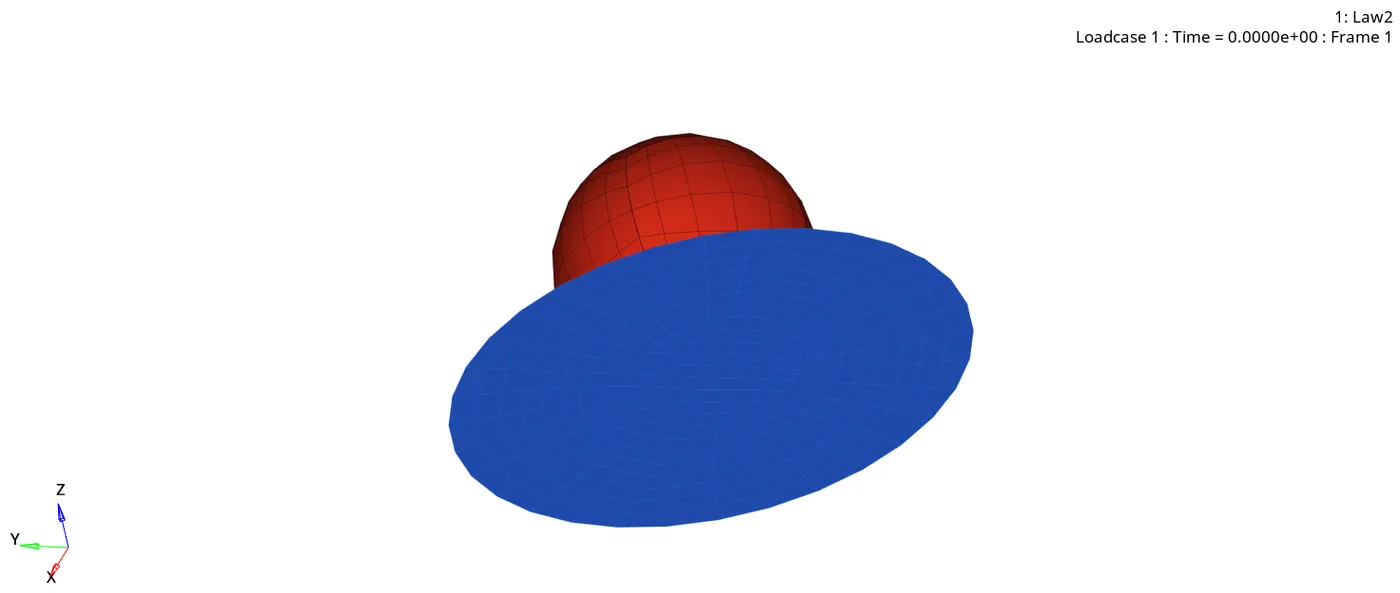
Case 4: Law2
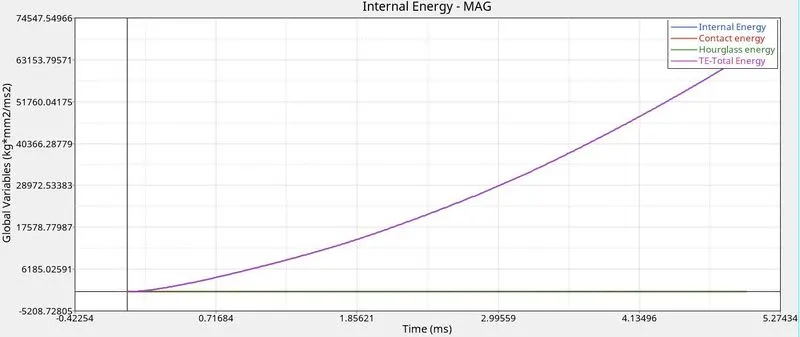
In this case, the Eps_max value was deleted. This implies that failure plastic strain can take infinite value. Hence the stress will keep increasing and no failure will be generated. This value can be changed in the material card.
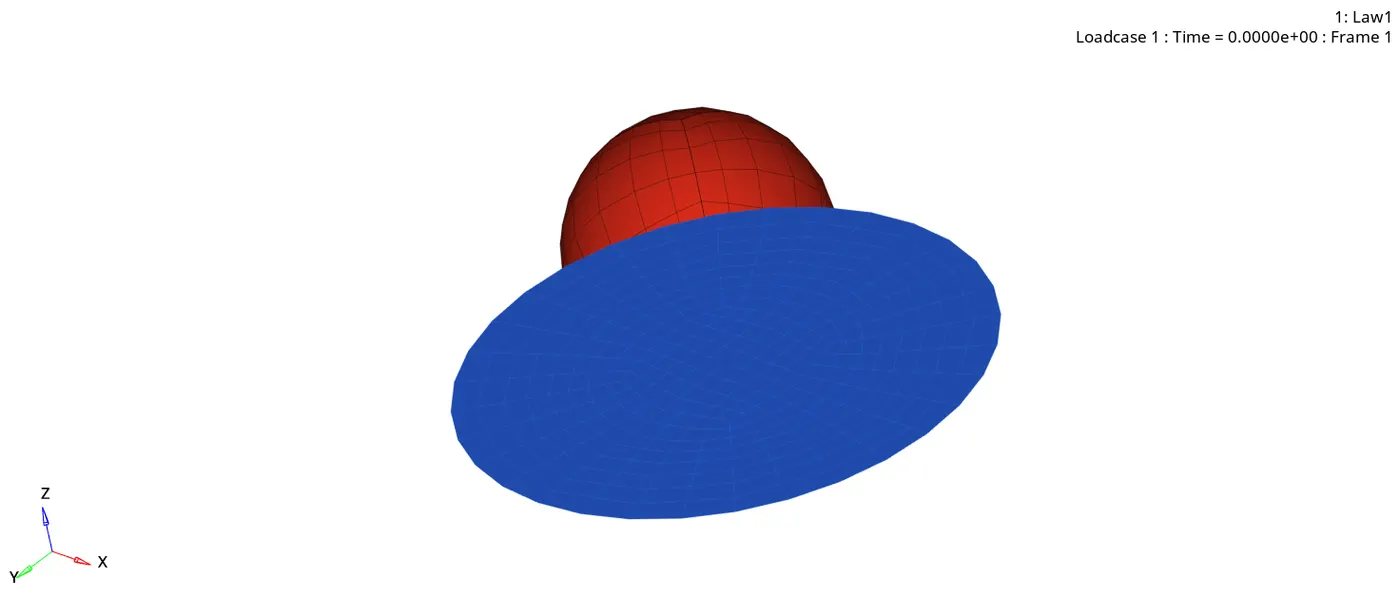
Case 5: Law1
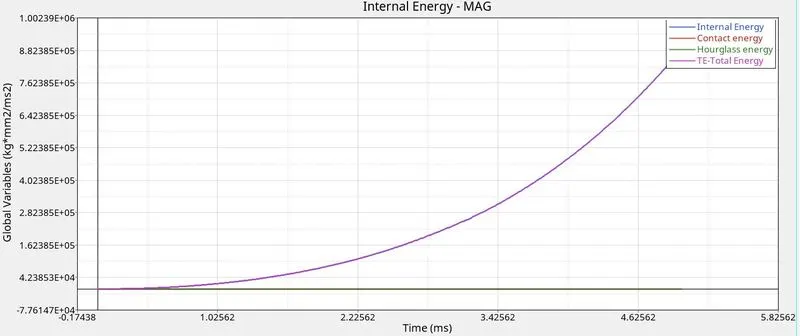
In this case the material card was changed to Law 1, which is the elastic material as per Hooke Law. It defines an isotropic linear elastic material.
Case 6: Law36
The material model was changed to Law36, elastic plastic piecewise linear material.
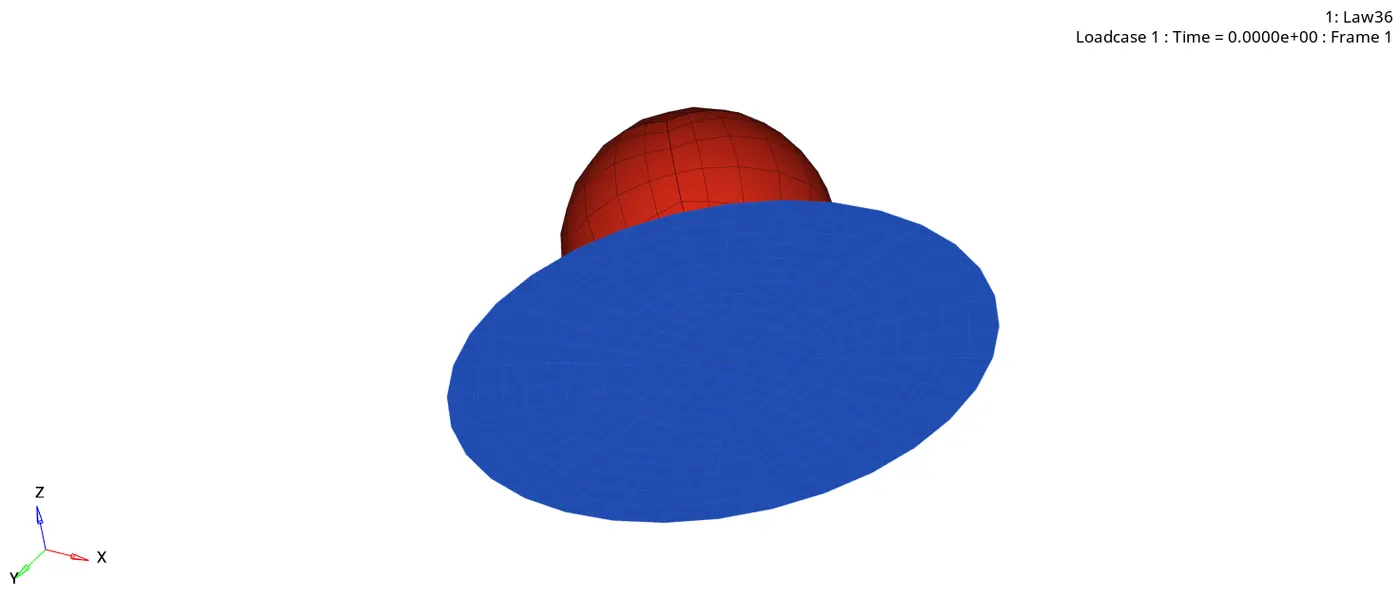
Case 7: Law27
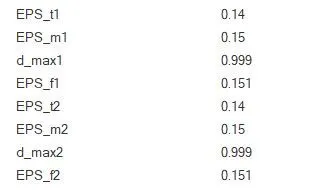
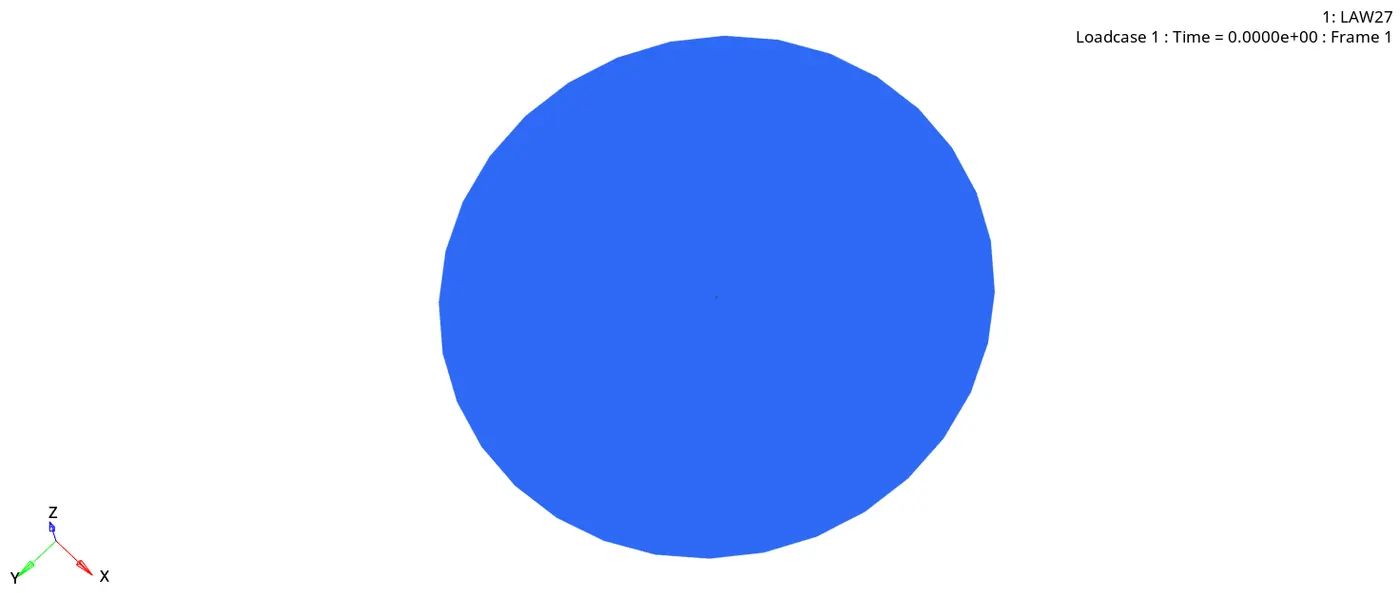
In this case, the file named Law27_0000.rad was opened and the shell properties were changed to recommended values. Also, the given file had different values defined for Eps_max. The material model is law27, which is elasto plastic material with brittle failure. This combines Johnson cook model with orthotropic brittle failure.
RESULTS
|
Cases |
Total no. of cycles |
Energy error |
Mass error |
Elapsed time (sec) |
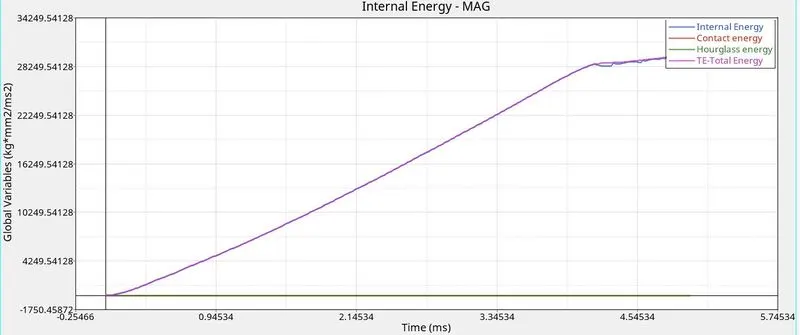
Approximate max magnitude of energies |
|
Law2_epmax_failure |
49379 |
0.8% |
0 |
246.13 |
27,500 |
|
Law2_epmax_crack |
49216 |
4.1% |
0 |
242.71 |
31,000 |
|
Law2_epmax_nofail |
49407 |
0.8% |
0 |
245.54 |
27,880 |
|
Law2 |
48736 |
3.0% |
0 |
145.14 |
63,200 |
|
Law1 |
47968 |
1.3% |
0 |
233.92 |
8,82,385 |
|
Law36 |
47768 |
4.0% |
0 |
240.79 |
2,50,000 |
|
Law27 |
49506 |
0.8% |
0 |
248.11 |
28,300 |
OBSERVATIONS & CONCLUSIONS
- The number of cycles for all cases were found to be in similar range. But the number of cycles was found to decrease in cases 4-6. This might be due Eps_max value is missing in these cases.
- The energy error for all cases was found to be in the acceptable range below 5%. The best cases were 1, 3 and 7. The mass error was found to be 0 for all cases.
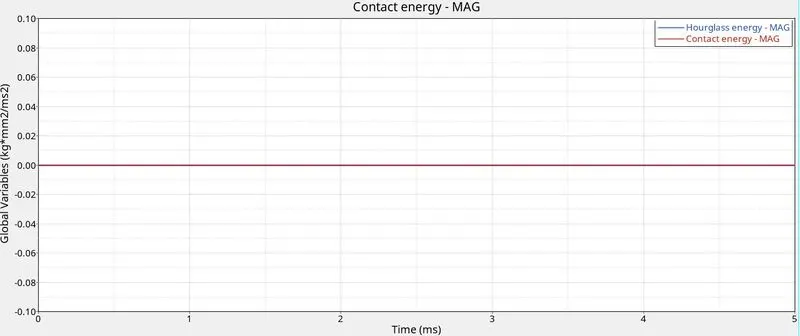
- The hourglass energy for all the cases was found to be 0 for all cases.
- The simulation time was found to be comparable for all cases.
- The maximum energies was found to be very high for cases 4-6. This might be due to the absence of Eps_max values.
- In the animations, for cases 4-6, no failure was observed in the sheet. This is because Eps_max is missing for these cases and the model can take infinite values for plastic strain without any failure.
- In case 2, cracking was observed in the element because crack propagation parameters were defined.
- The best case scenarios from the above are case1, 2 and 7. Case 1 and 2 can be used in cases were minimal data is available for brittle failure. These cases have Eps_max values defined which will give a realistic output. If crack propagation is important, then case 2 is ideal. If data for orthotropic behaviour is available, then the ideal case is case7 as this combines the best of all previous cases.