Analysis on member for different Properties and infer
Aim : To do Explicit Analysis on given component and infer by changing properties
Procedure
Given rad files
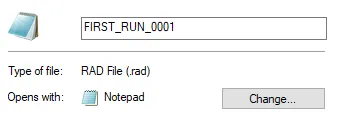
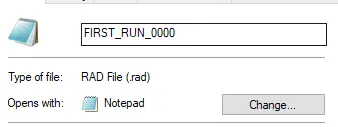
Imported file using Import Solver deck
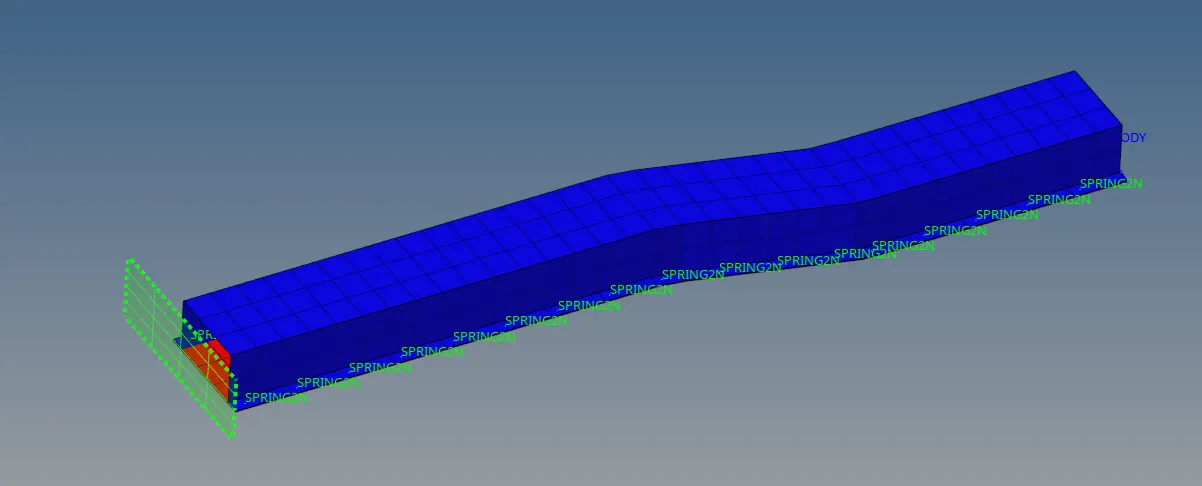
In ENG_ANIM_DT
based on given values average was take `T fre``Tf req = (Time)/(Animations )`
`55/50 =1.1`
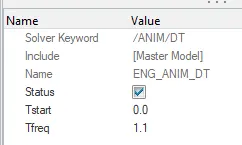
As given change Tfreq as to obtain 50 Animation files
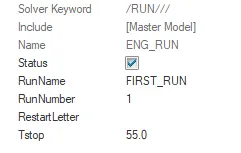
In ENG_RUN
Run time changed to 55ms
In Properties -> Hat-section -> Recommended Properties are changed
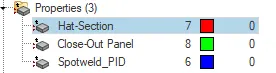
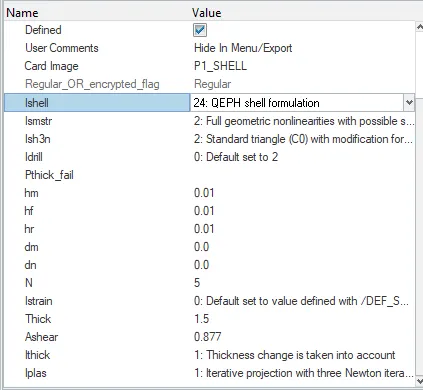
Before Applying Recommended Properties
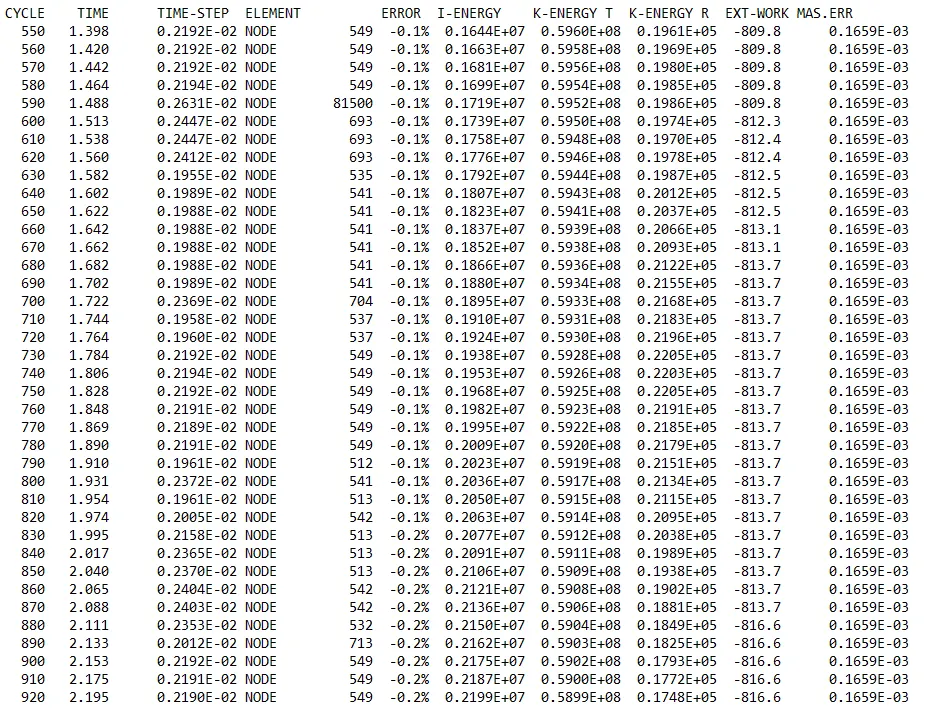
After Applying Recommended Properties
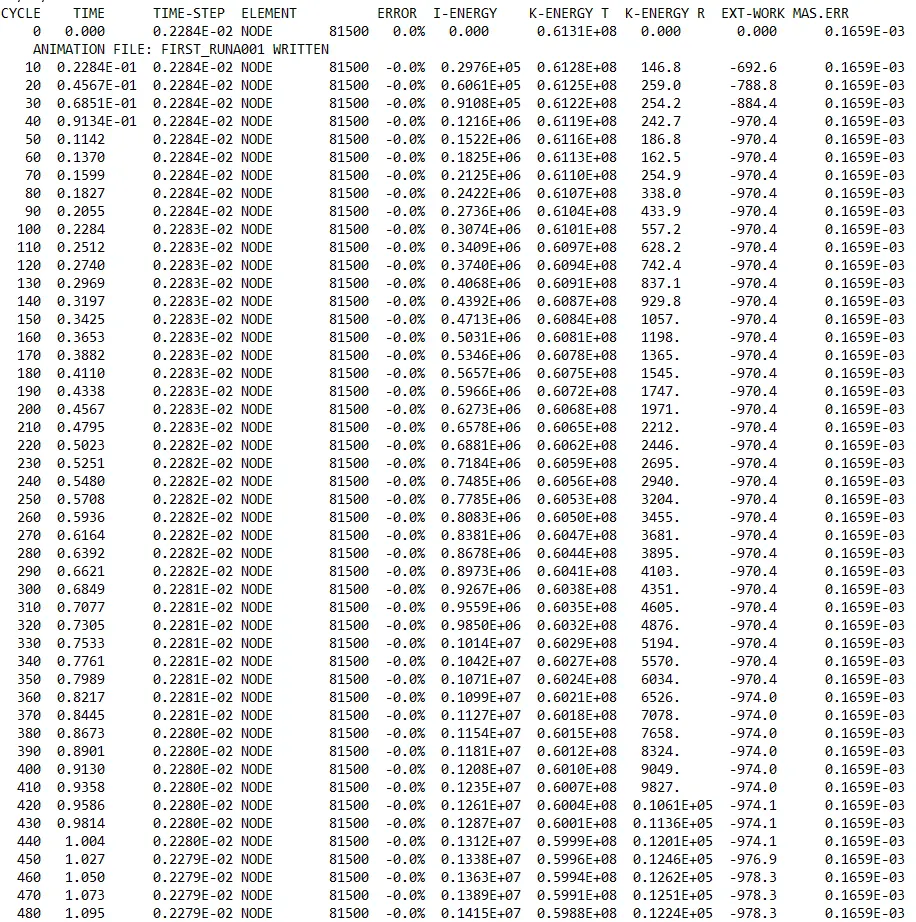
Inference :
Energy Error
It is Radioss Percentage
If the error is negative, it means that some energy has been dissipated.
The normal amount of Hourglass energy is about -10% to -15%.
In case of using QEPH shell formulation (Ishell=24) or fully integrated elements, the Energy Error can be slightly positive since there is no Hourglass energy and the computation is much more accurate. An error of +1% or +2% is acceptable
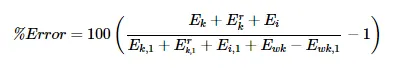
The Hourglass energy is not counted in this energy balance, so that a negative energy error generally occurs (except if using Ishell=24 (QEPH) or Ishell=12 (BATOZ) shells, and fully integrated solids, for which there is no Hourglass).
If we look into above data Energy error has become -0.1 to -0.0 there has been decrease in energy errror
There is also drastic change in Cycle as cycle starts from 550 then increases where as after applying recommended changes the cycles values are periodic; Cycle time value has reduced simulation was fast after applying changes
Before Applying Recommended Properties
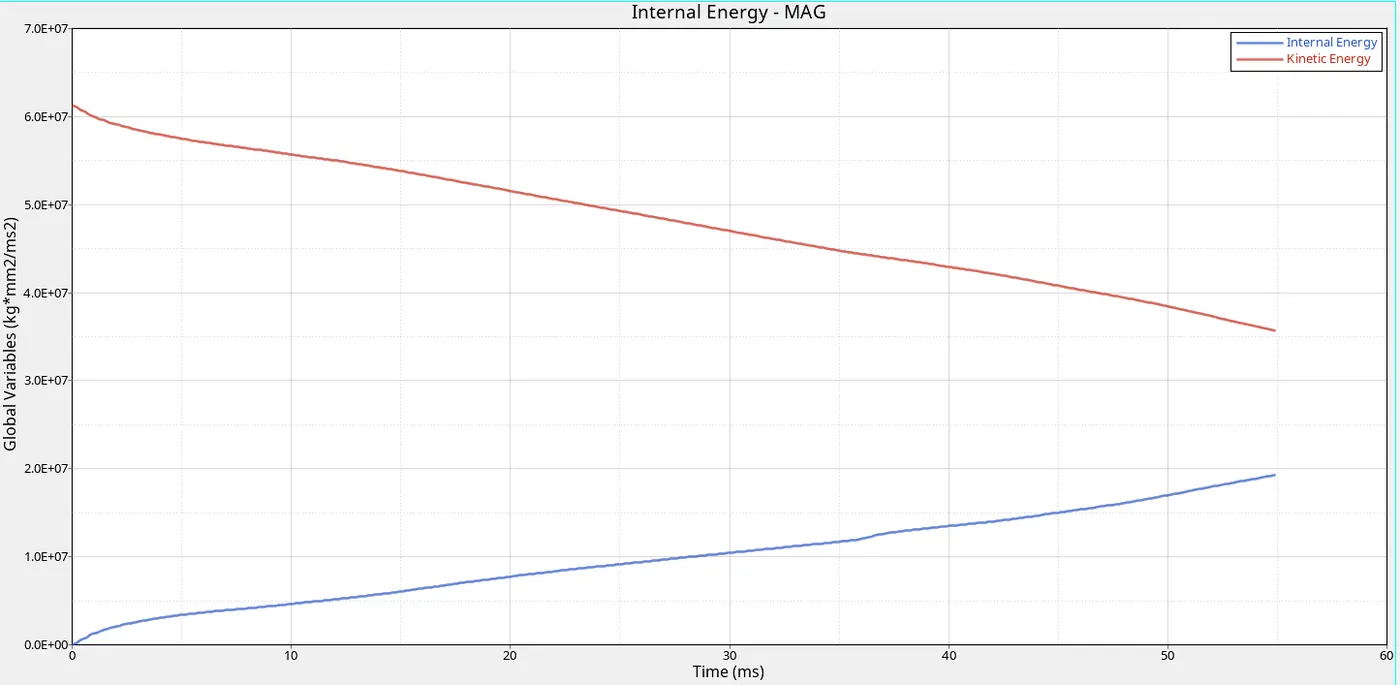
After Applying Recommended Properties
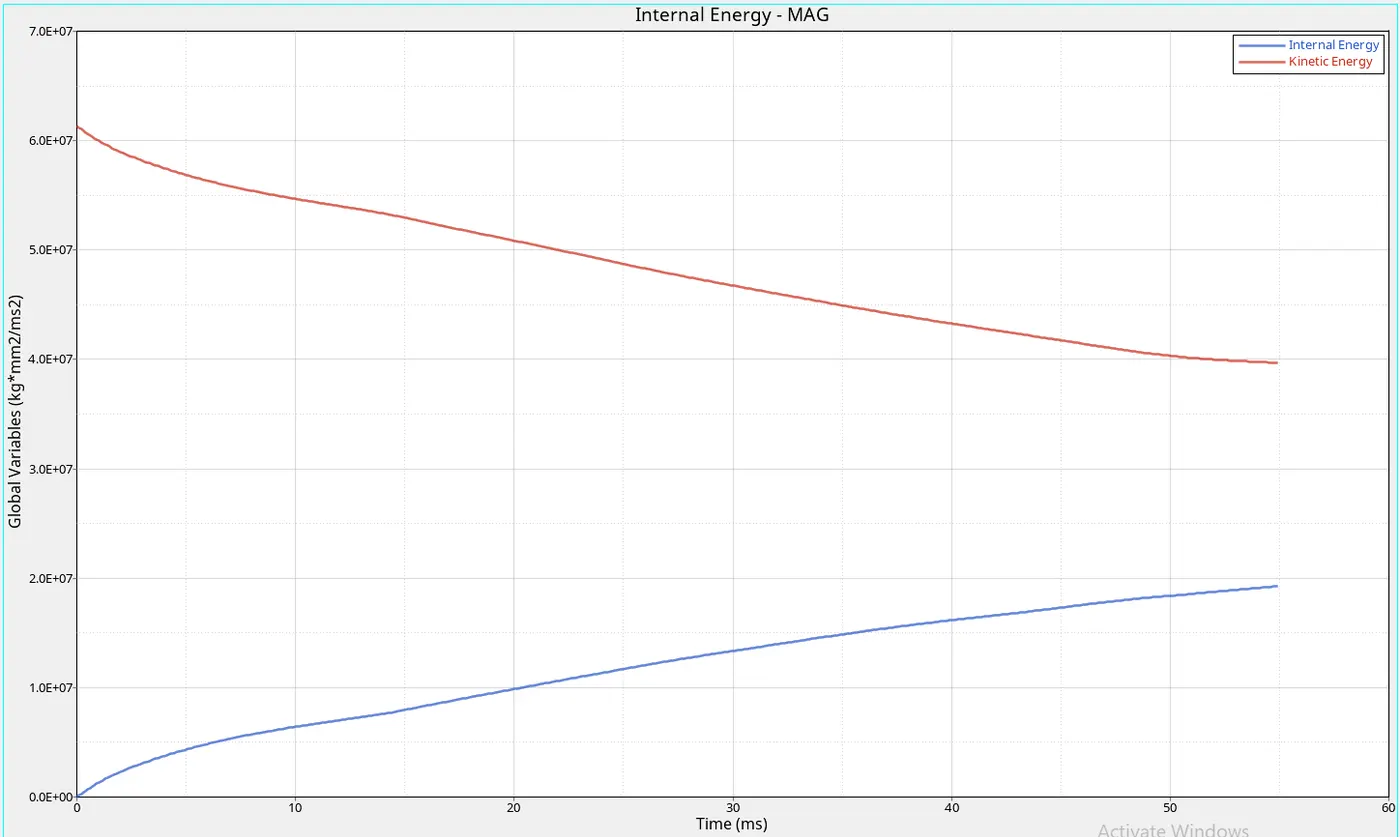
Inference :
Kinetic Energy is high in both the cases
Internal Energy is 0 for both the cases
In case 1
it seems like the K.E and I.E curves are going steeper where I.E looks like it'll cross with K.E but K.E becomes after certain path; we can see that if we can increase Tstop value
Whereas in Case 2
Both the curves are going steeper at 53- 55 ms they become parallel.
Before Applying Recommended Properties
After Applying Recommended Properties
Inference :
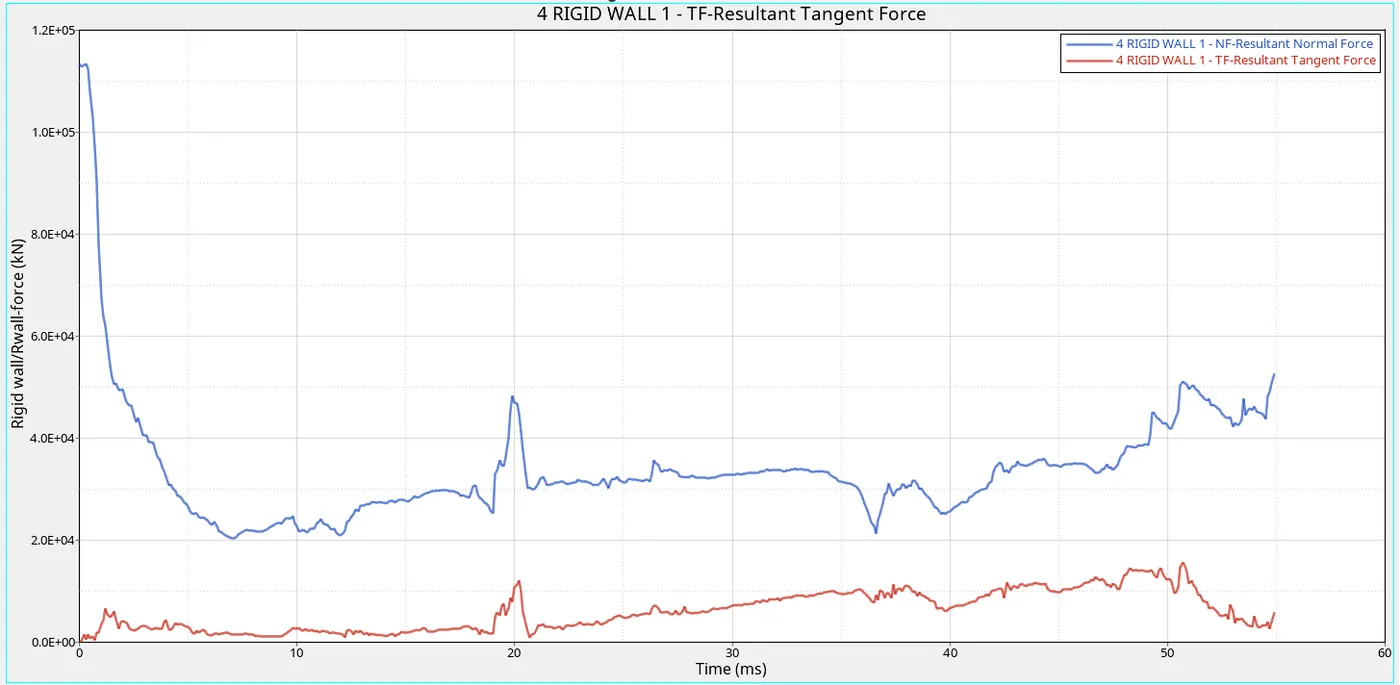
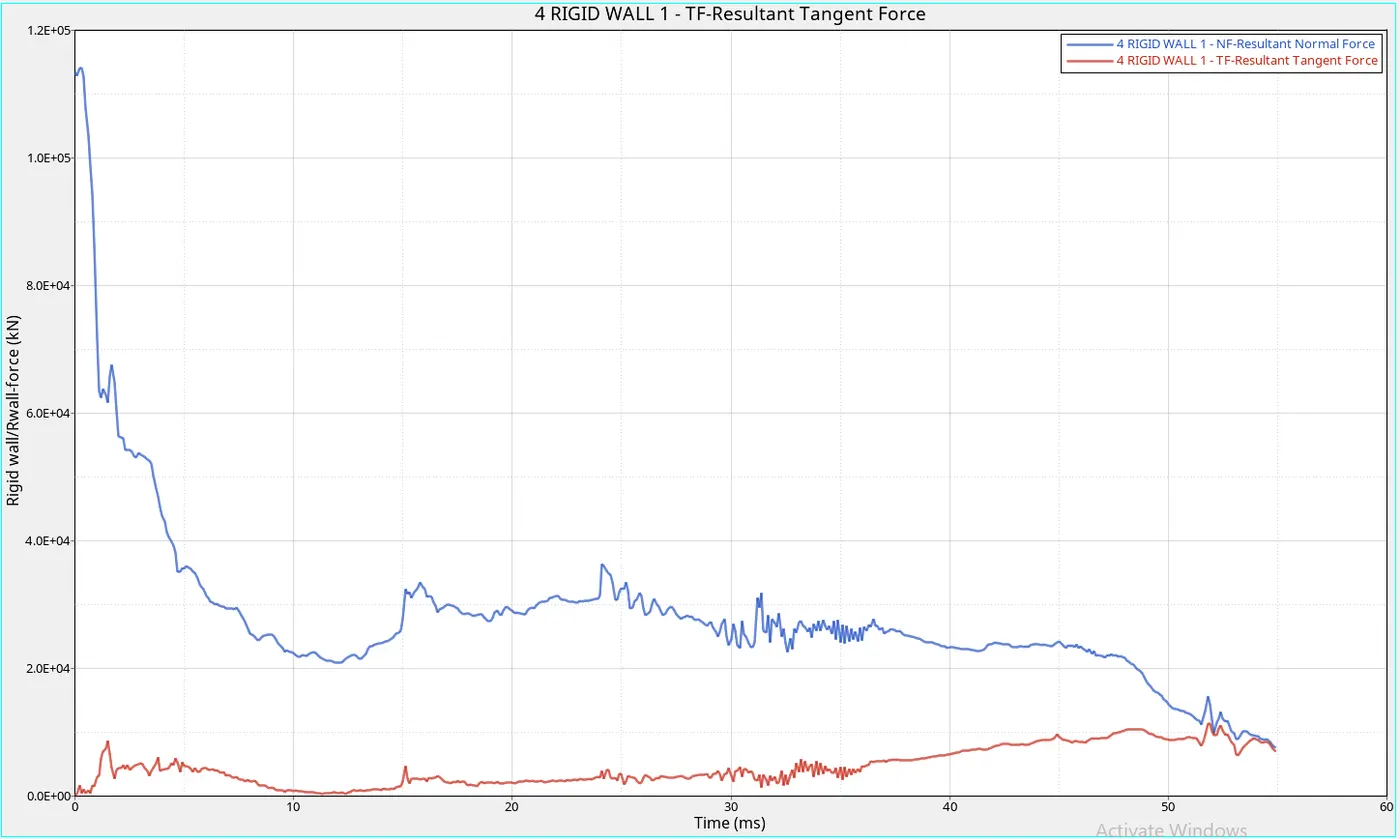
Normal Force and Frictional Force
Case 1 and Case 2
We can see that the load impact was high in both the cases
In Case 1 the Normal force and Frictional force are in a way parallel starting at 10ms with load impact on various nodes
In Case 2 the the both curves meet at 54ms and the curve is based on Impact force is varied with respect to time
Before Applying Recommended Properties
After Applying Recommended Properties
Inference :
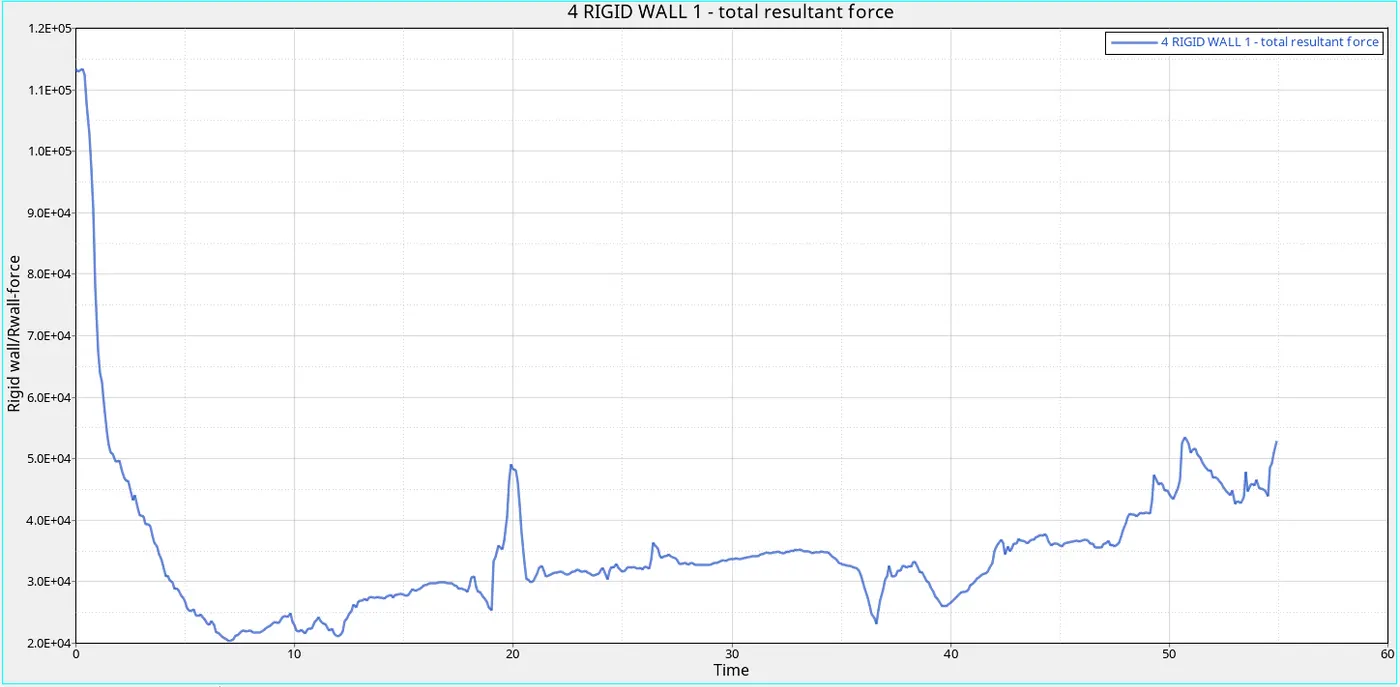
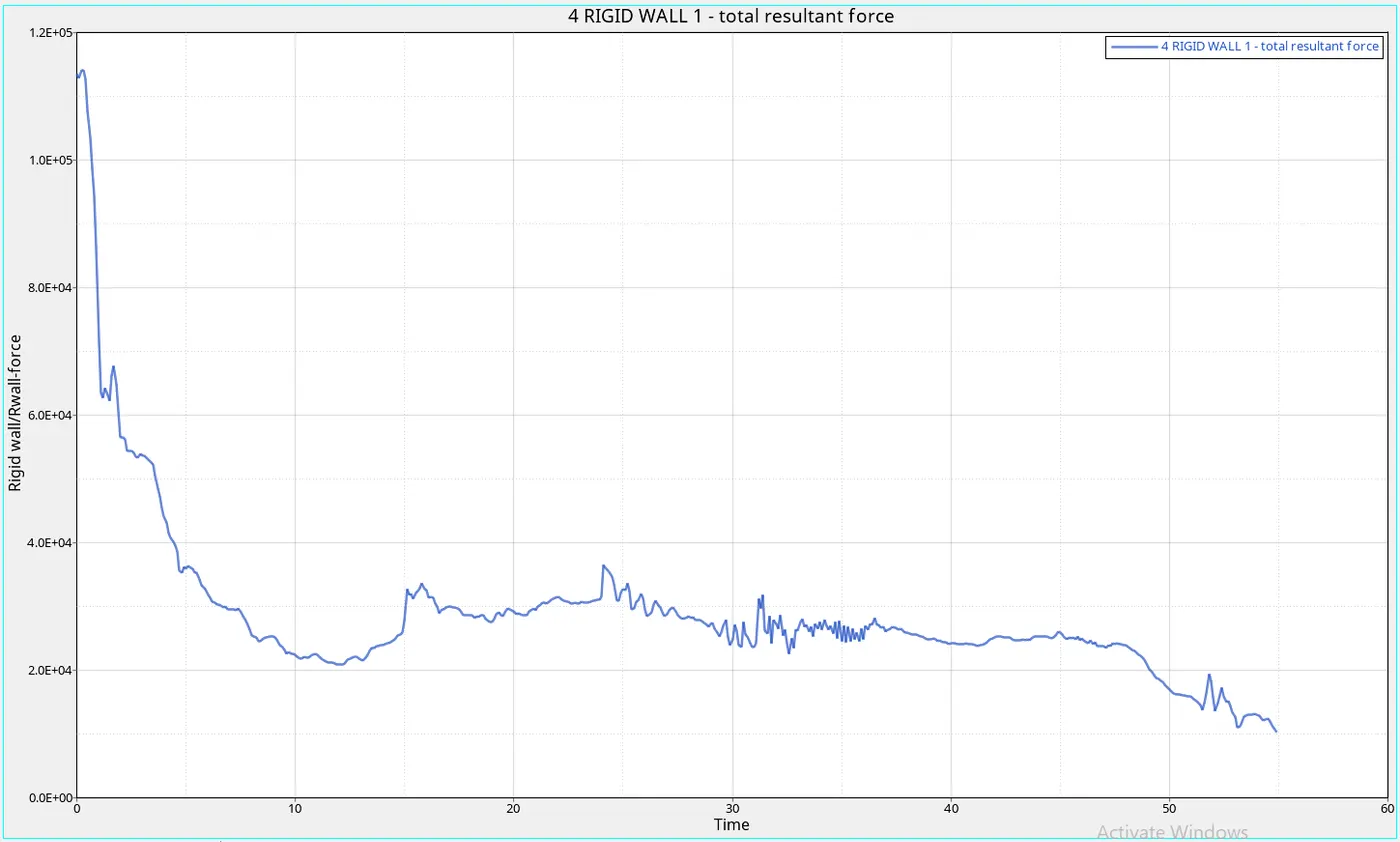
Case1 and Case2
In both the cases the Resultant force was higher at the start
In case 1 there is increase and then with fluctuations there is again rise in Resultant force after 50ms
In Case 2 the fluctuatuion starts at 10ms then the curve goes steeper down there is decresse in Resultant force after applying Qeph 24
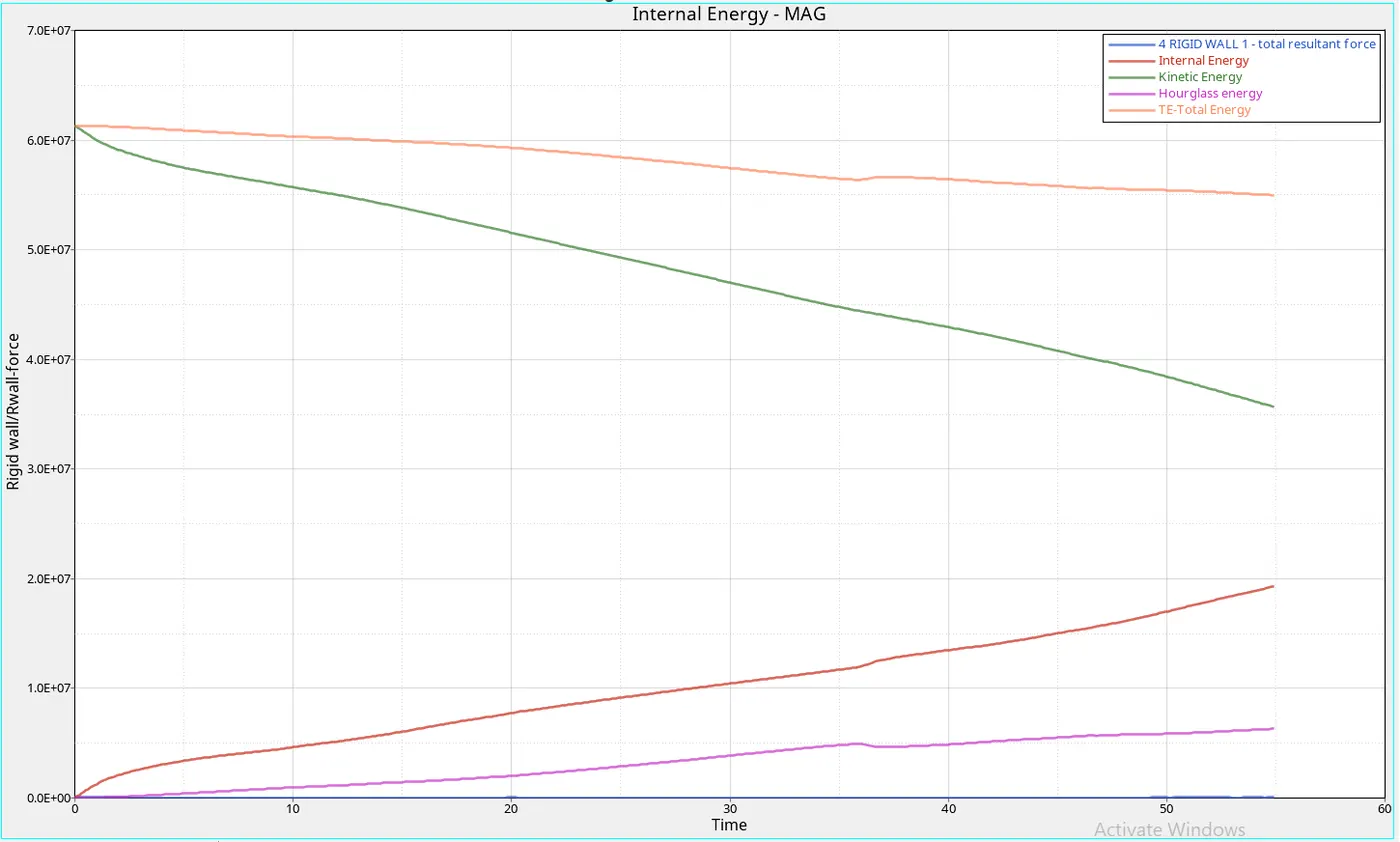
Before Applying Recommended Properties
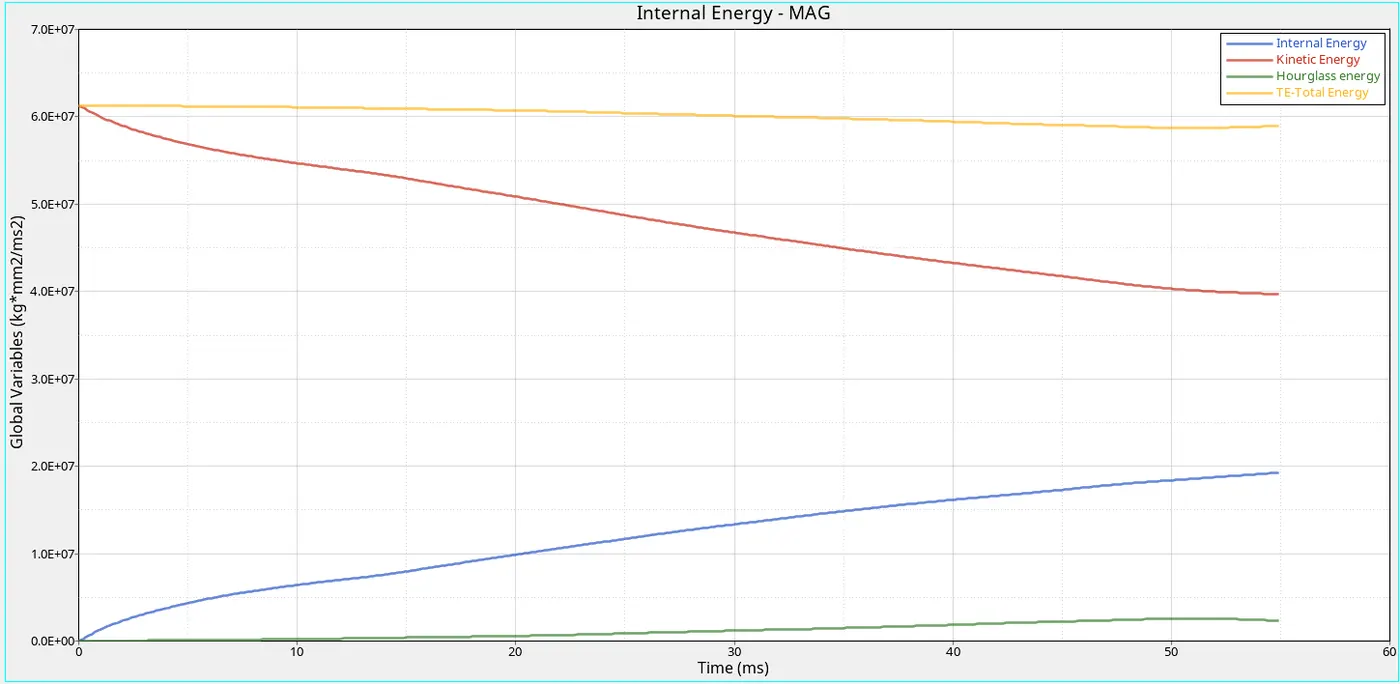
After Applying Recommended Properties
Inference :
In both the cases there curve are almost similar but there is difference in Hourglass Energy
In Case 1 there is increased Hourglass Energy from starting due to which there was more unsual deformation in Von mises Stress and Displacement
In Case 2 there is reduced Hourglass Energy, controlled the H.E using Node Integration and Qeph 24 values
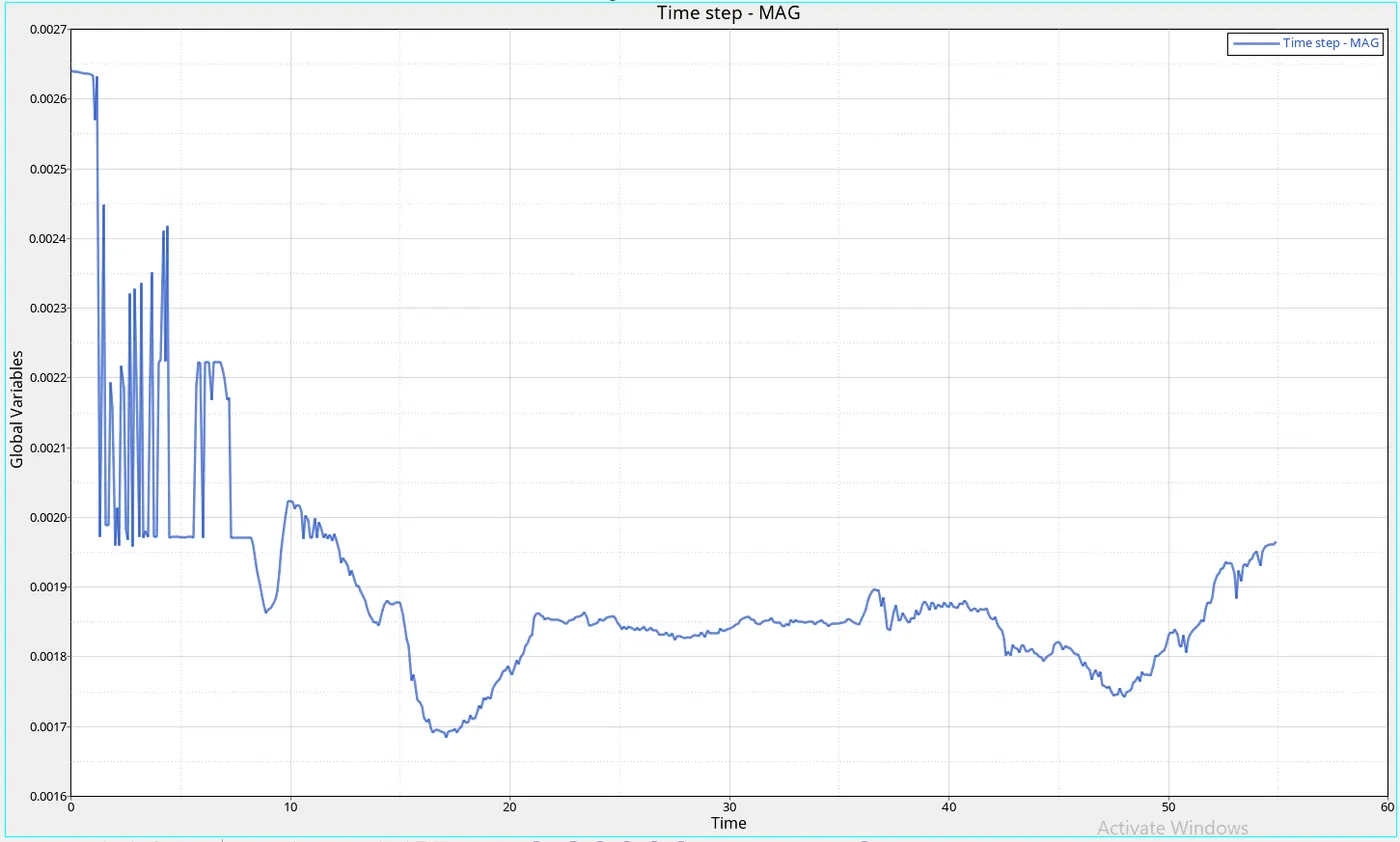
Before Applying Recommended Properties
After Applying Recommended Properties
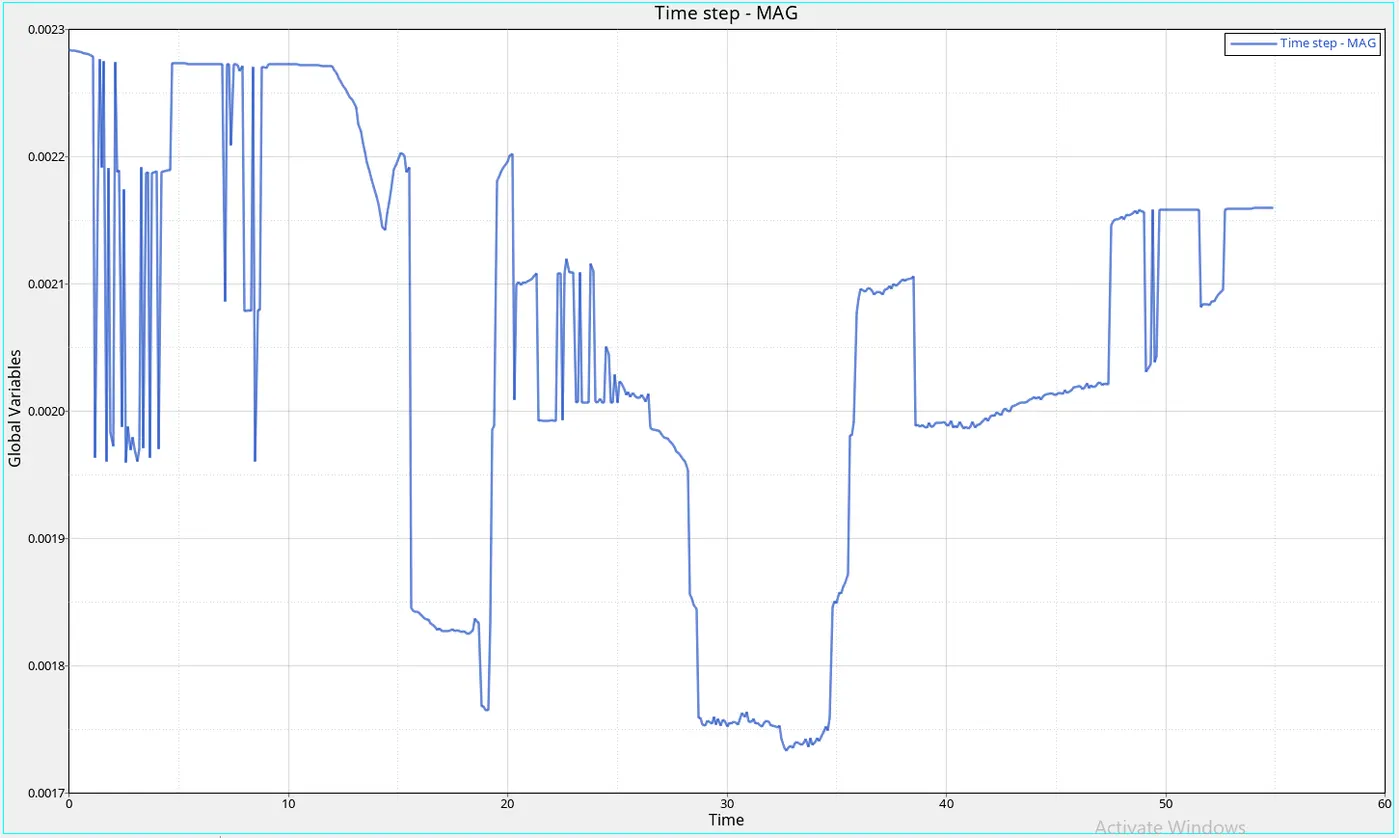
Time Step
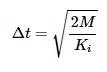
The time step at the master node of the rigid body is computed by reporting stiffness at slave nodes to the master node.
It's also based on rigid body properties
The change in mesh elements due to impact there has been delay in time step
Von mises Streses Before Applying Recommended Properties
Von mises Streses After Applying Recommended Properties
Von Mises Stress
In Contour we can visualize the both the cases of deformation due to impact
Compact to case 1 the time of impact varies in both cases
Simulation completed faster in Case 2 compared to case 1
Results
As we used qpeh hourglass energy was reduced
Q4 reduced the displacement in nodal issues
Integration points set was good to obtain accurate reults
Iterative plasticity was good to observe time steps