Assignment 3-2D Element Formulation Challenge
Aim: simulate the model aganist the wall with default property and modified property and comapre the result with base simulation and modified simulation.
1.import the radios file
Using import > import the solver deck >s select the engine file 0000.rad file.
2. Modify the run time :
Here given runtime to change from 60 to 55 and animation steps chosen is 32 ,here this value 32 is depends suppose at every 32 sec it gives animation if keep on increasing the value 40,50 the animation drawn from the simulation gets increase. Tfeq= 55/32=1.718.
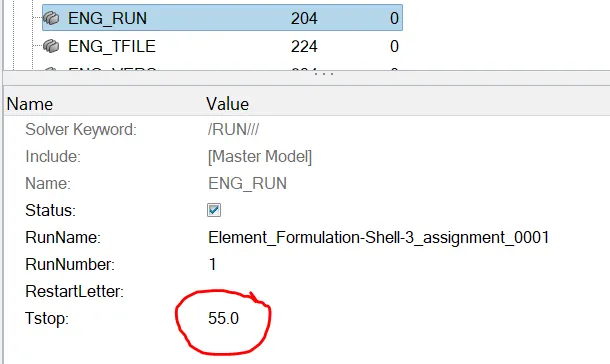
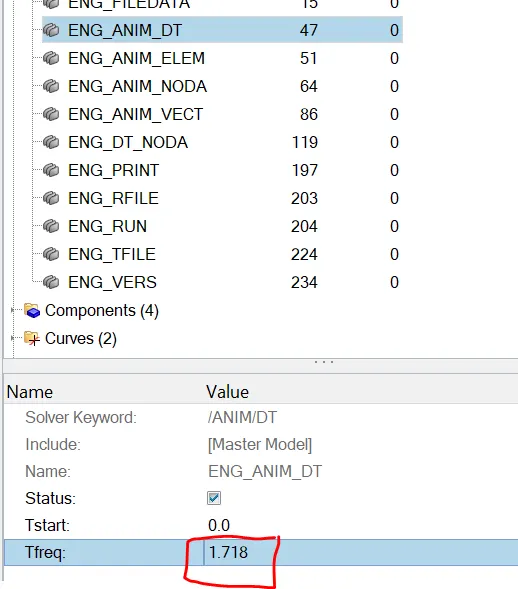
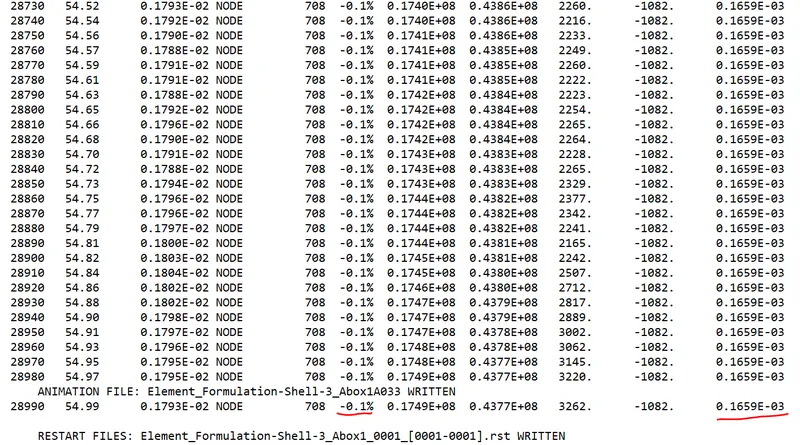
Once I entered the runtime and frequency value as per the challenge did not edit any of the property values and using analysis >radios >save the file In respective folder and in the options -nt 4 > Radioss. Once hit the button it will run the simulation for 55 sec and frequency of 1.718. Result as shown below.
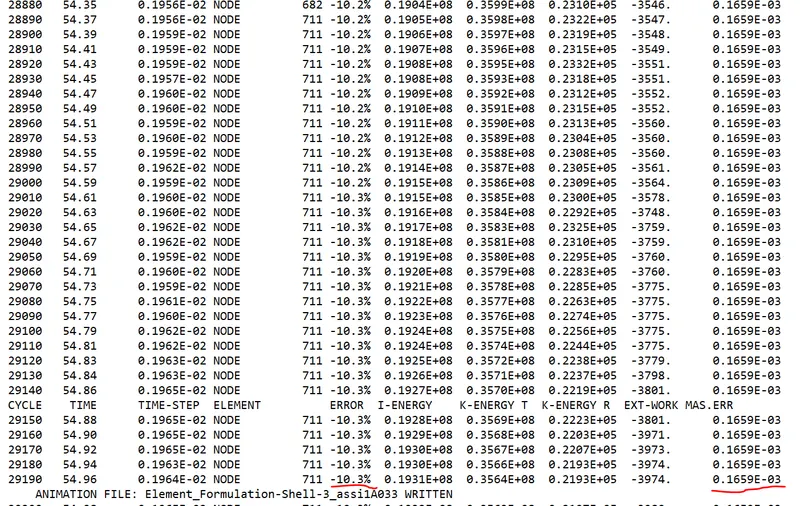
As per theory -15% to +5% for the energy error and mass error is +2%, as per this which are in acceptable rage for the base simulation.
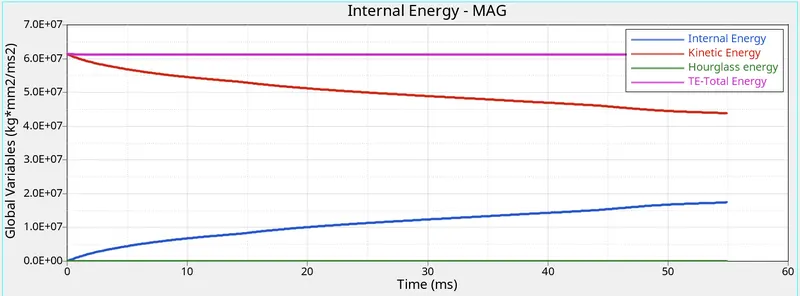
and once shift to hyper view in we can see the contours and plots , in the challenge requested for the internal energy, hourglass energy , kinetic energy , Total energy (K.E+IE).
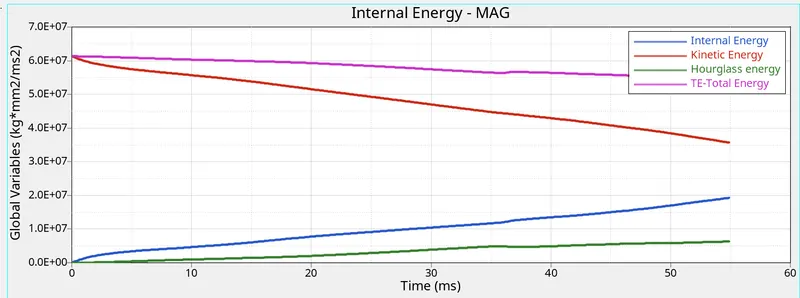
Here the Default simulation uses the Q4 shell element which results in Hour glass energy detected while running base simmulation.
From the plot if we observe the kinetic energy value is decrease from the initial start of the deformation start as the movement of the beam towards the wall decrease. And the Internal energy plot also decrease as the deformation starts at every stage the energy loss is shown plot.
There is hour glass energy because its shown because of this energy loss which about (-10.3%) this loss because it use the default the Q4 shell element it follow perturbation viscous method and Hour glass deformation happening and it add damping(stiffness) to the node . because of this deformation is stabilized it try to control the speed at which deformation happening. The force constitute(form) the energy which is hour glass energy. To balance this QEPH is used because its integrated element with physical hourglass stabilization and low cost and good accuracy.
Rigid wall forces
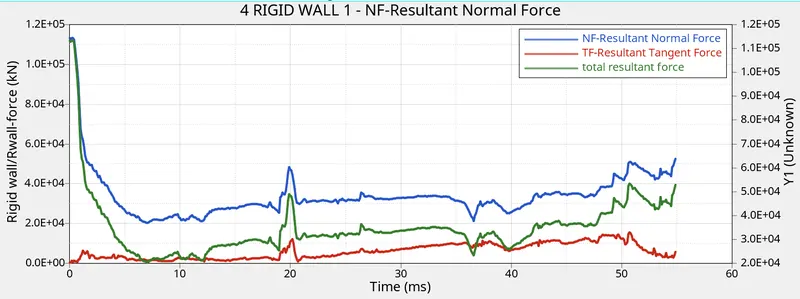
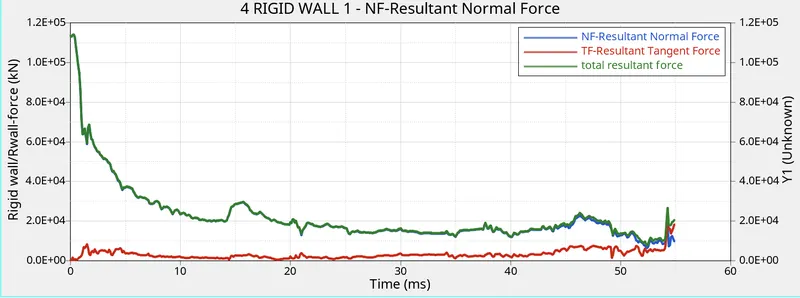
If we look at the base simulation the resultant force at the start of the simulation the curve is almost linear path when it comes to end of the simulation there is surge curve the beam is touching the wall .
And in the modified simulation we can observe the surge in curve before the simulation gets end because zero strain deformation detected and the displacement is transferred through the each node so that elements touches the wall before the simulation only.
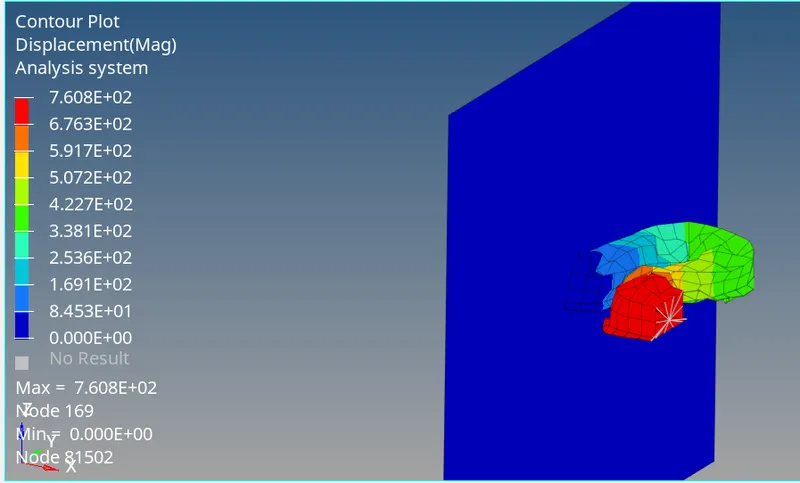
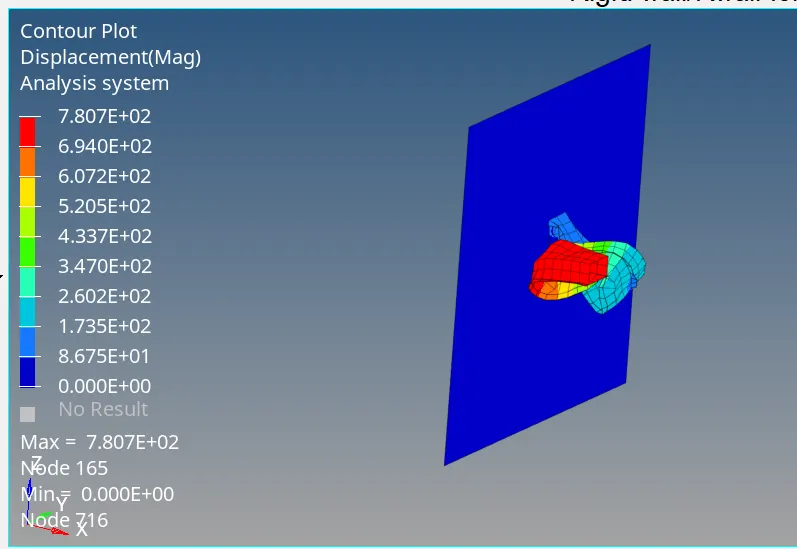
Displacement Plot
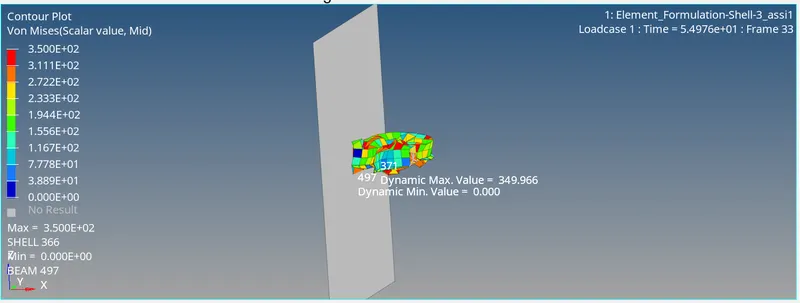
Vonmises stress plot
After Editing the recommended property card which is
Ishell =24(Integrated element with hour glass control)
I smstr =2(std triangle with modification for large rotation)
Ish3n =2(for the large displacements strains computed based on the current element shape with derivative of the shape function.
N=5(Its number of integration points for accuracy in bending)
Ithick =1(Initial thickness used to compute strains and to integrate stress but the thickness variation still computed)
Iplas =1 (This value update the strain through the thickness value and number of integration points over the thickness)
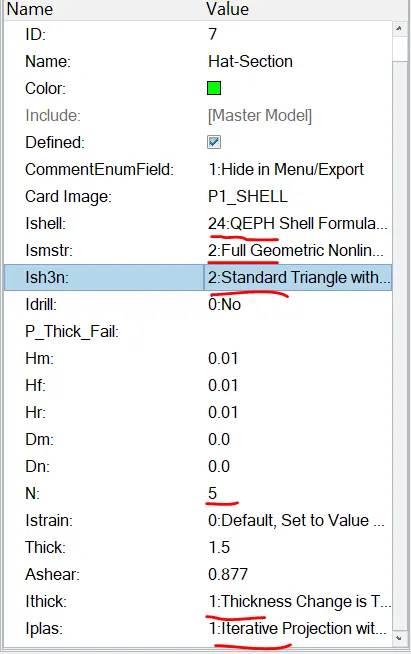
In the model tree properties select the geometrical properties and change as mentioned above we would not change the any of the weld properties. And after this run the simulation result as shown below. The result of the simulation we would get in 0001.out file. As shown below.
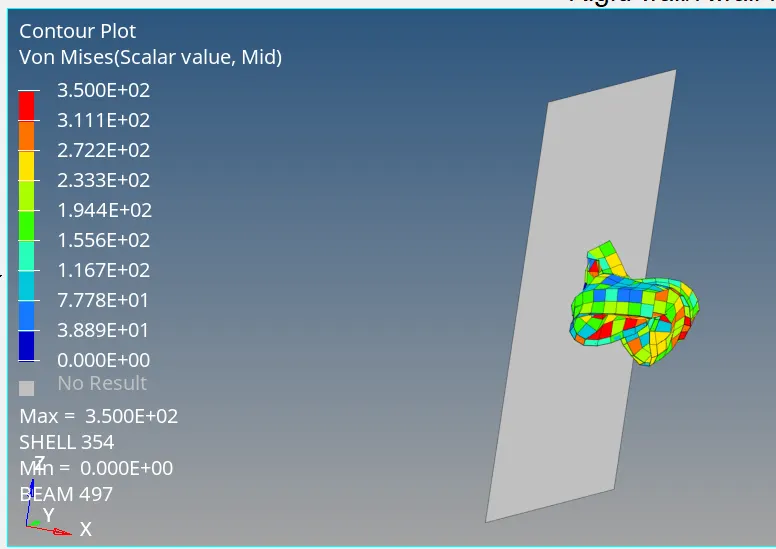
Comparision of the results:
If we look at the base simulation the resultant force at the start of the simulation the curve is almost linear path when it comes to end of the simulation there is surge curve the beam is touching the wall .
And in the modified simulation we can observe the surge in curve before the simulation gets end because zero strain deformation detected and the displacement is transferred through the each node so that elements touches the wall before the simulation only.
Hour glass energy:
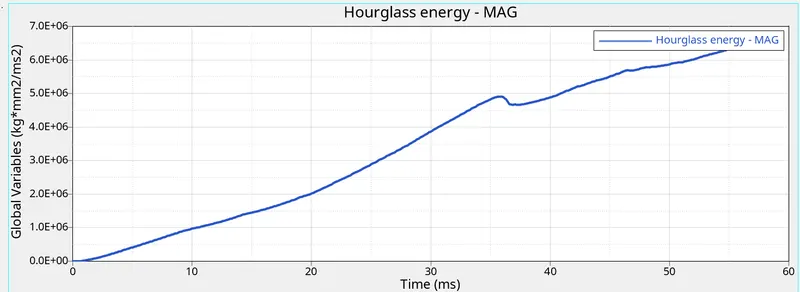
Hour glass plot for base simulation
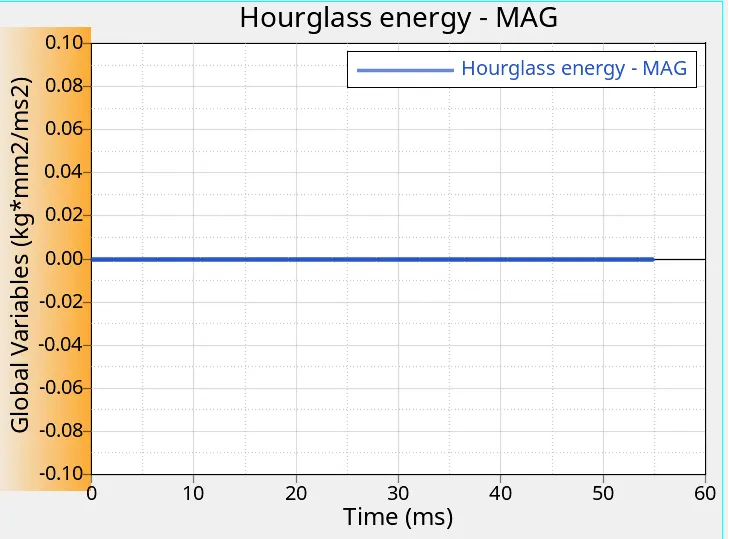
Hour glass plot for Modified simulation
If we see above graphs the for the base simulation the we have used the Q4 shell element by default we see the hour glass energy (zero strain deformation) at every stage till the beam elements reaches the wall the hour glass is is increasing.
And if we observe the modified simulation there is almost zero hour glass energy is detected in the above graph. In this we use QEPH shell element which is integrated zero hour glass stabilization and cost and accuracy which is good here when it compare to Q4 shell element.
Total Energy :
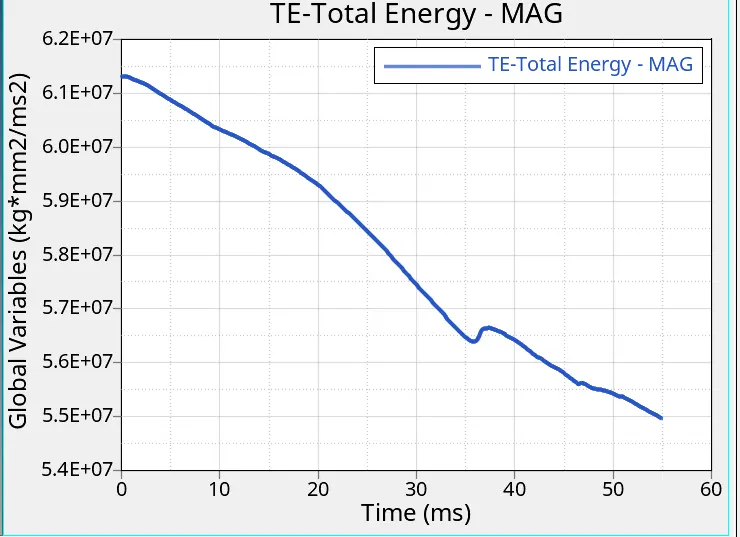
For the base simulation
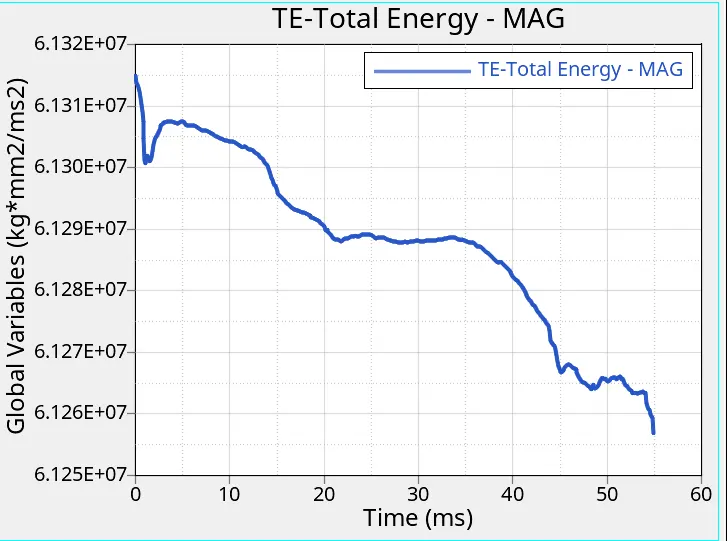
Modified simulation
In the base simulation the energy not observed thats why the curve is liner and In the modified simulation the energy is observed is more and in the curve we can see corrugation in the curve because of the absence of the hour glass energy. And used the QEPH shell element.
Conclusion:
1.It helps to differentiate the default simulation which is Q4 and modified simulation QEPH .And selecting the 2D elment formulation for the right problem in terms of cost and accuracy Here from the results QEPH which gives better result.
Result:
simulation of the model aganist the wall with default property and modified property and comapre the result with base simulation and modified simulation has been done.