Assignment 2
In this challenge, we will be focusing on the SI engine simulation and make changes accordingly to observe changes in the curves or how different parameters affect the simulation
first from the tutorials model we need to open the 1 '1cylSifinal' tutorial and we will make the following changes
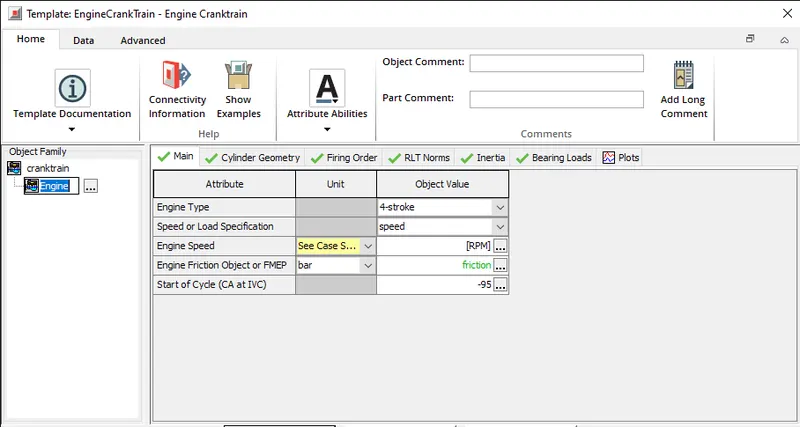
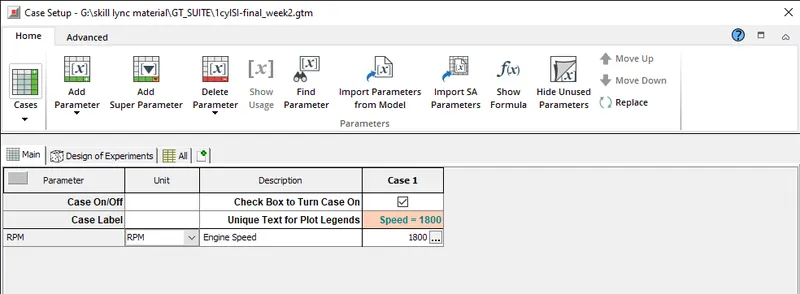
1) we need to change the default RPM setting from 3600 to 1800, we can do by opening the engine cranktrain setup and we will see the engine speed is defines as [RPM], this means that the speed has been setup through case setup where the user can define the variables and use the name of the variable which can be used as a calling function
so we need to locate the RPM variable in case setup option and change it from 3600 to 1800 RPM and observe the following parameters and make not of it
- air flow rate
- BMEP
- BSFC
- In-cylinder pressure
1) air flow rate: This can be defined as the amount of air that flows into the engine or any medium.
2) BMEP: This is a quantity relating to the operation of a reciprocating engine and is a valuable measure of an engine's capacity to do work that is independent of engine displacement. Brake mean effective pressure (BMEP) is the mean effective pressure calculated from the dynamometer power (torque). This is the actual output of the internal combustion engine, at the crankshaft.
3) BSFC:
Brake-specific fuel consumption (BSFC) is a measure of the fuel efficiency of any prime mover that burns fuel and produces rotational or shaft power. It is typically used for comparing the efficiency of internal combustion engines with a shaft output.
It is the rate of fuel consumption divided by the power produced. . BSFC allows the fuel efficiency of different engines to be directly compared, as it may also be thought of as power-specific fuel consumption.
4) in cylinder pressure: as the name suggests it indicates the total pressure in the cylinder of the engine and with different RPM the pressure inside the cylinder will vary.
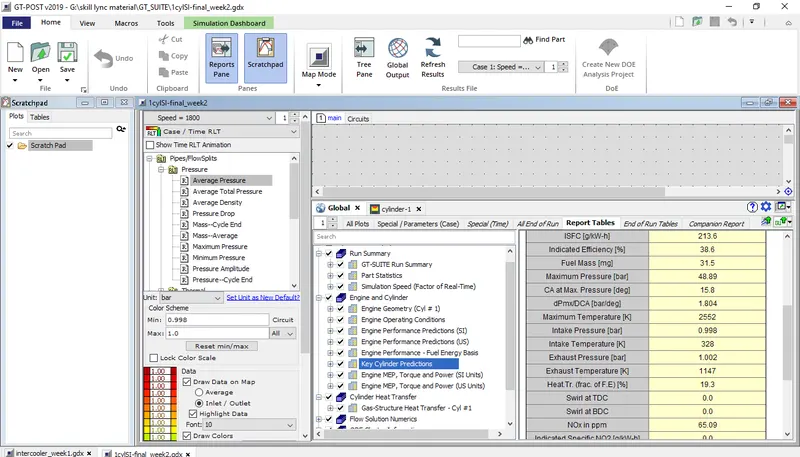
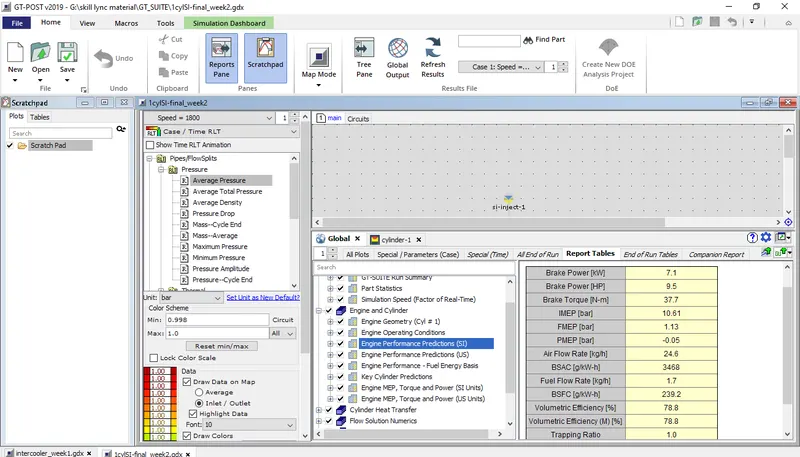
at 3600 RPM we can see that the total brake power is 16.7
now we need to do some test runs by changing the parameters to increase the power output by 10% at the same 3600 RPM this can be done by
1) changing the engine configuration from the default square engine to a more rectangular shape cylinder so the swept volume increases and can produce more power by increasing the pressure in the cylinder to maintain 3600 RPM.
2) increasing the values of air-fuel ratio and check for changes, by making the mixture rich we can maybe increase the power by increasing the rate of burn and run some case setups to observe the actual changes
3) changing the bore or stroke values to check for any viable improvement in the performance of the engine.
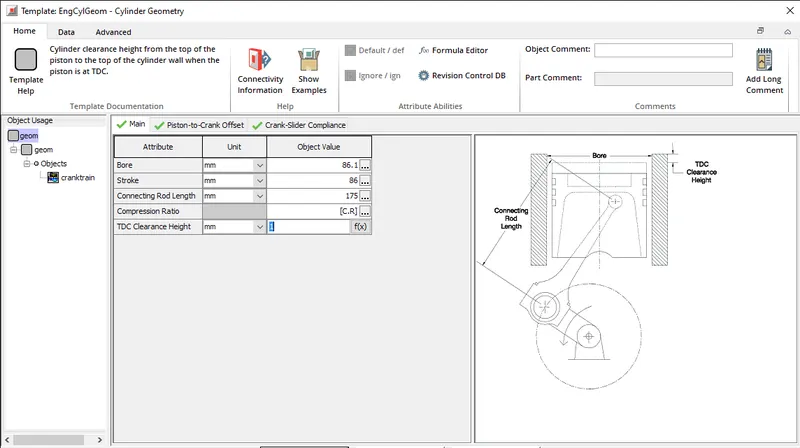
changes are made to this model and different results are observed
case 1)
here we change the bore settings and check for the following data to check if it is compatible,
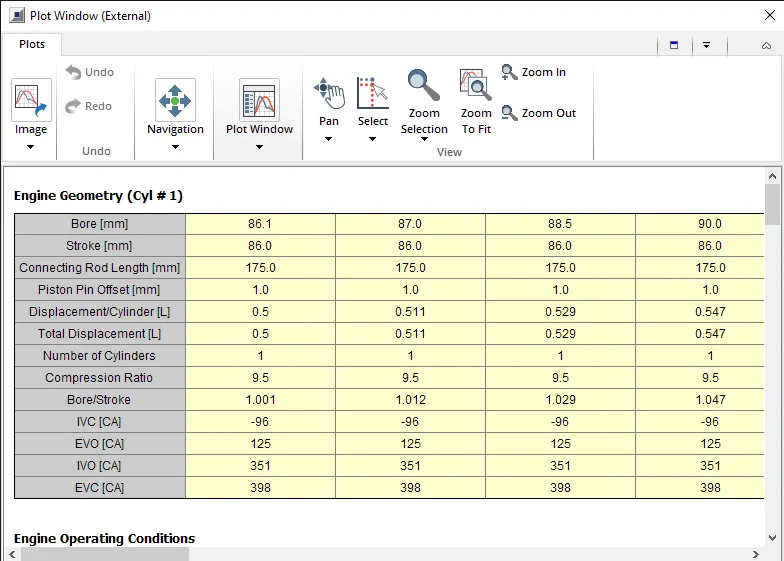
keeping the stroke length same and increasing the bore values we can check how the engine reacts to the increase in bore length, Total displacement will increase due to higher swept volume of the engine as the difference in TDC and BDC will be higher in each case. The compression ratio is kept same in all cases
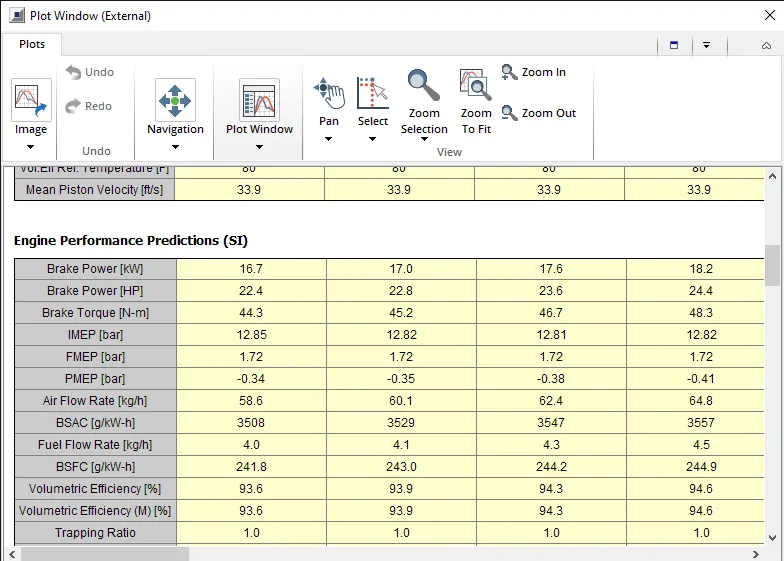
from the above picture we can observe that the volumetric efficiency increases which and brake power increases from 16.7 to 17.6 at bore length 88.5 from 86.1. But with the increase in bore length the BSFC rate also increases as more fuel is required to burn but the rate is not very high to be alarmed about.
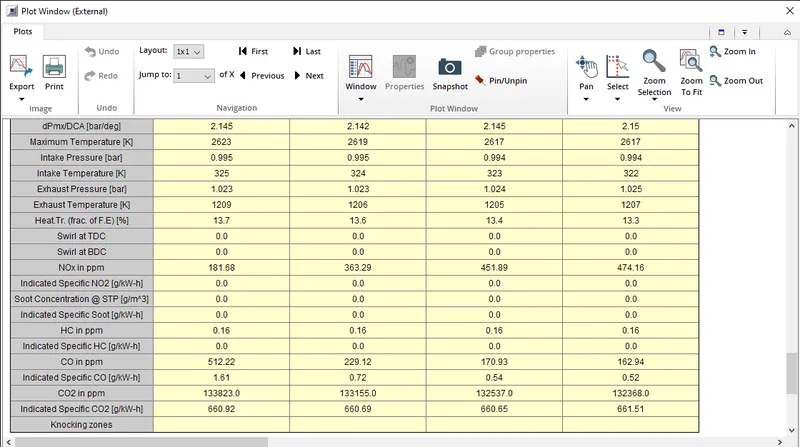
we can see that the COx emissions reduce but the NOx emissions increase drastically from 181.68 to 451.89 where the required output is calculated.
we can conclude that increasing bore length seems to a viable option to increase the power of the engine at same RPM.
case 2)
now we will keep all parameters same and check for the change in power with changes in the values of compression ratio and check how compression ratio affects the performance of an engine.
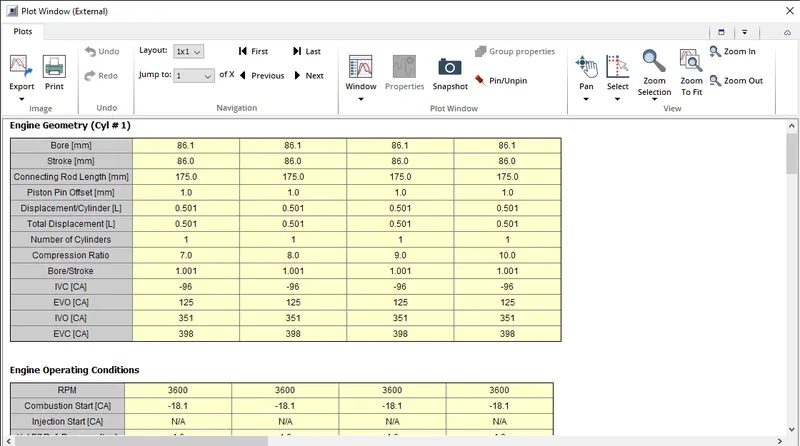
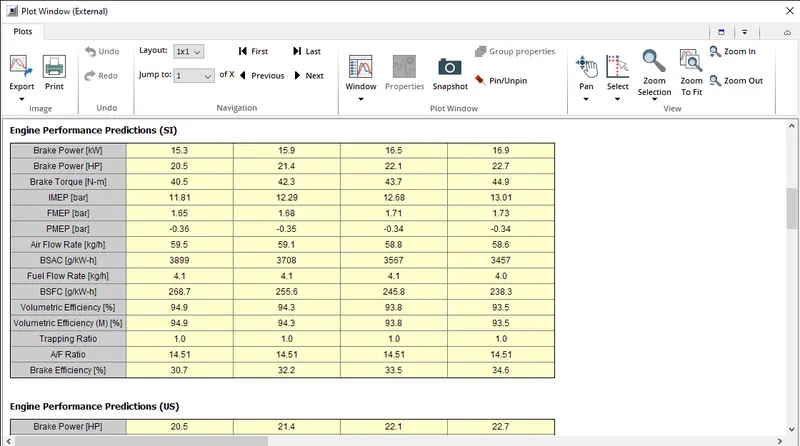
As the compression ratio increases the fuel requirement decreases hence we can see a decrease in the BSFC rates as the compression ratio increases, but we can see a decrease in volumetric efficiency which makes this model not viable as the efficiency of the engine decreases with an increase in compression ratio. Brake torque increases but volumetric efficiency decreases.
Hence we can see that changes in Bore of the cylinder seem more viable option compared to changing the compression ratio.