Ahmed Body Challenge
Aim – Three dimensional CFD analysis of flow over an Ahmed body using Ansys 2020 R2.
Introduction –
The wake flow behind a car is the major contributor to the drag and also poses severe problems during numerical and experimental investigations. The point of separation of the flow determines the size of the wake and consequently the drag force acting on the body. Thus, exact simulations of the wake flow are essentially for correctness of drag predictions. The complexity of a real life automobile shape makes it very complex to study experimentally and numerically. Thus, Ahmed body is used to study the external car aerodynamics and optimize a design accordingly.
Modelling and Solving approach –
Solid Model – A 3D CAD model was imported in Ansys Spaceclaim.
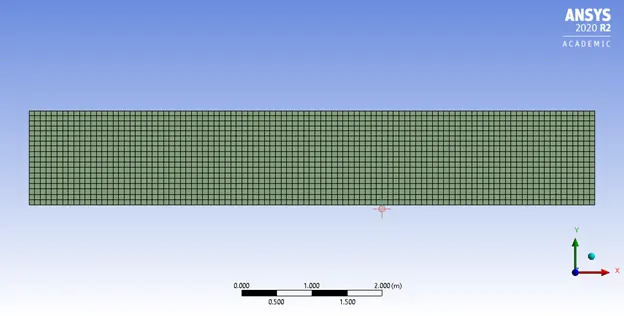
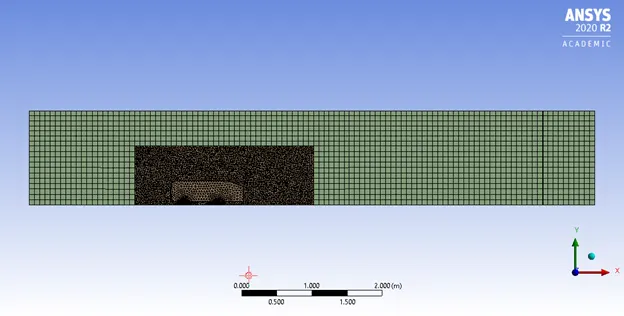
The enclosure feature of Spaceclaim was utilized both for creating a wind tunnel domain and also for the local mesh refinement zone. The interference in both the domains was removed using the Interference function of Spaceclaim. Also, to make the study computationally less expensive, the Ahmed body was split in two halves using the split body function of space claim. The below figures highlight the two different designs used. The first design was used for a baseline mesh generation while the second one was used for mesh refinement cases. The second design consisting of two enclosures was used for mesh refinement studies. The slant angle at the rear of the Ahmed Body is 20o.
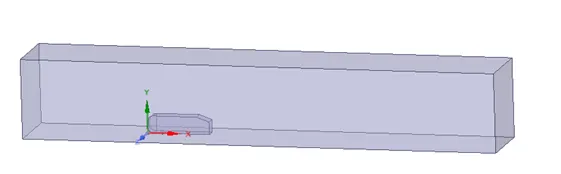
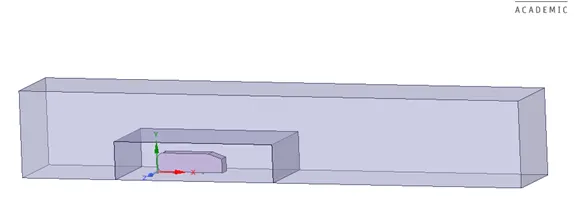
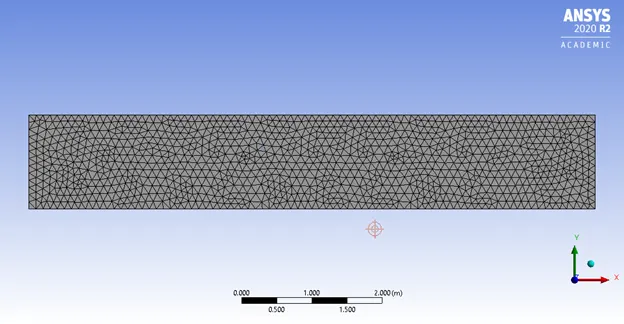
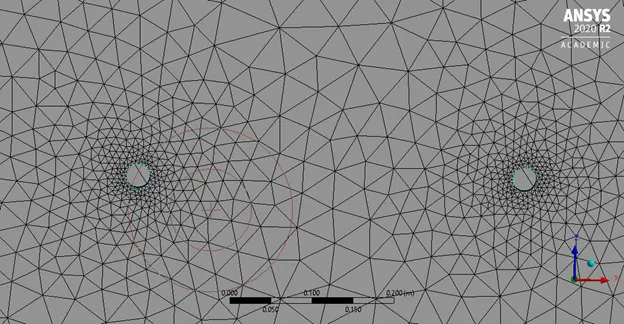
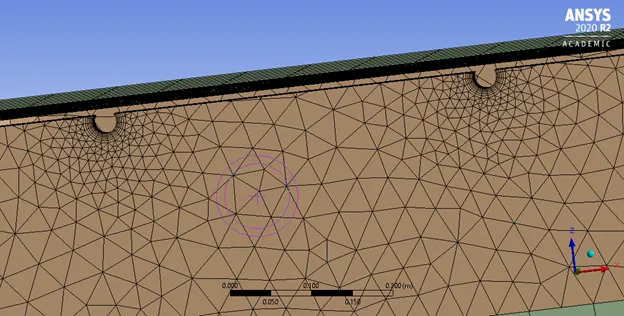
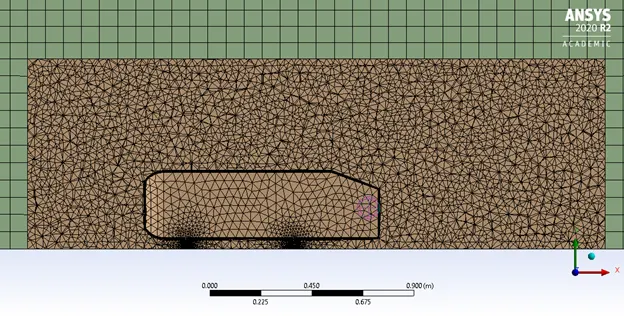
Meshing – Two different meshing strategies were utilized. For the baseline mesh no tweaks were made in the Ansys mesher and an automatic mesh generated was utilized in Fluent. When refining, hexahedral elements were used for the outer enclosure, tetrahedral elements were used for the inner enclosure. The body sizing and face sizing features were utilized. Apart from this to get an accurate flow around the Ahmed body, inflation layers were also used around the body.
The mesh statistics for all the cases are given in the below table.
|
|
Element size (mm) in outer enclosure [element type] |
Element size (mm) in inner enclosure [element type] |
Inflation layers used |
Number of elements |
|
Case 1 |
100 [Tetrahedral] |
- |
No |
106766 |
|
Case 2 |
100 [Hexahedral] |
50 [Hexahedral] |
Yes |
128956 |
|
Case 3 |
80 [Hexahedral] |
40 [Hexahedral] |
Yes |
256106 |
|
Case 4 |
80 [Tetrahedral] |
35 [Tetrahedral] |
Yes |
352152 |
The mesh near the body must be fine enough to capture the boundary layer. This is achieved using appropriate inflation layers. The first cell height using a recommended y+ value of around 1 for k-omega-SST models is 1.4e-05 m for inlet velocity of 25 m/s. However, this can’t be achieved due to license and compatuational limitations. Thus the first cell height of 5 mm has been used for all the computations.
The images of the mesh domain for all the 4 cases are given below –
Case 1
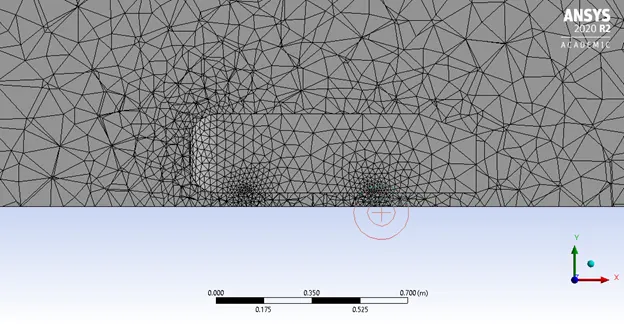
Case 2
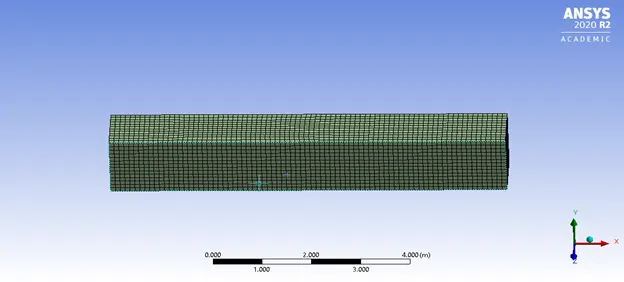
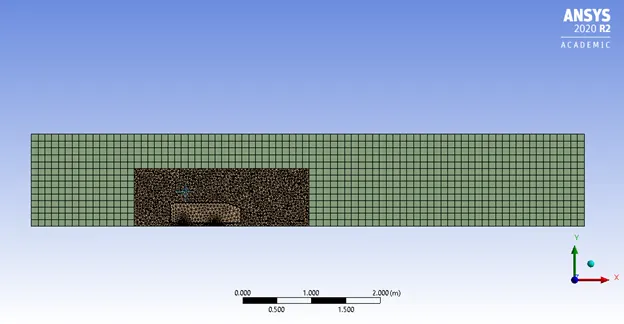
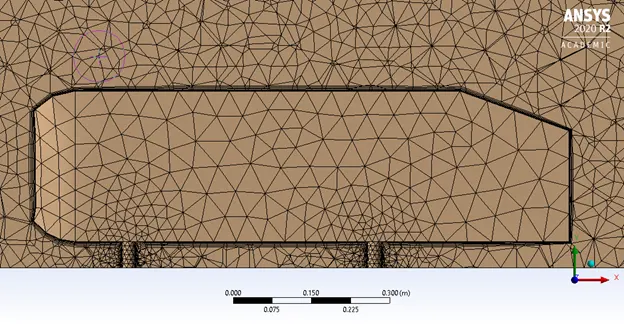
Case 3
Case 4
Solver Settings – Ansys Fluent was used as the solver and steady state simulations have been performed using a density based solver. Air was used as the fluid. The inlet velocity was 25 m/s.
Boundary conditions – Reynolds number was varied by changing the inlet velocities. The below table highlights the different velocities used.
|
Name |
Boundary conditions |
|
Inlet |
Velocity inlet (25 m/s) |
|
Outlet |
Pressure outlet (0 Pa) |
|
Car |
Wall |
|
Bottom face of the enclosure |
Wall |
|
All other faces of the enclosure |
Symmetry |
Reynolds Number –
`Re= (ρVL)/μ=(1.225*25*1.044)/(1.7894e-05)≈1786772`
Clearly the flow is turbulent as evident by Reynolds number.
Computational model – As per literature and Ansys Fluent documentation, k-omega-SST model has been used for all the computations.
Spatial Discretization Method – SIMPLE Pressure velocity coupling scheme was used to solve the Navier Stokes Equations. The methods used for spatial discretization of each of the terms is given in the below table –
|
Term/Equation |
Method |
|
Gradient |
Least Squares Cell based |
|
Pressure |
Second Order |
|
Momentum |
Second Order Upwind |
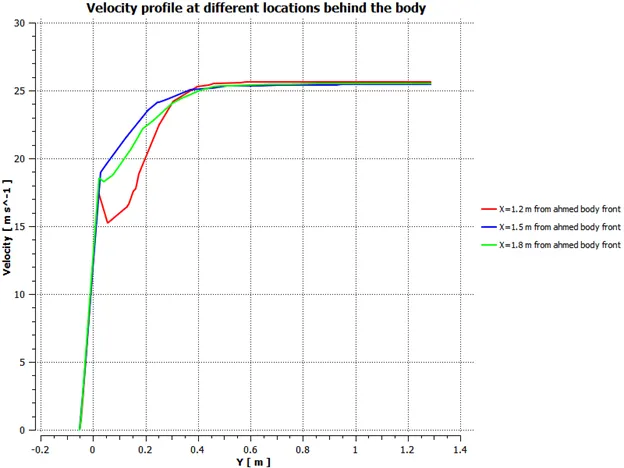
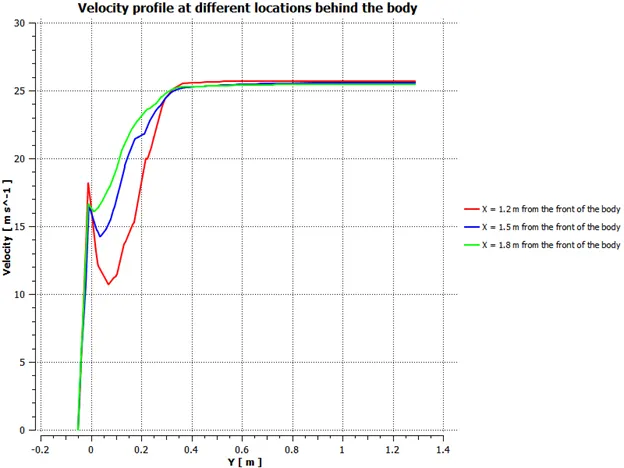
Results and Discussion – The size of the wake flow determines the drag force on the body. Thus accurate predictions for the region is needed for optimal design.
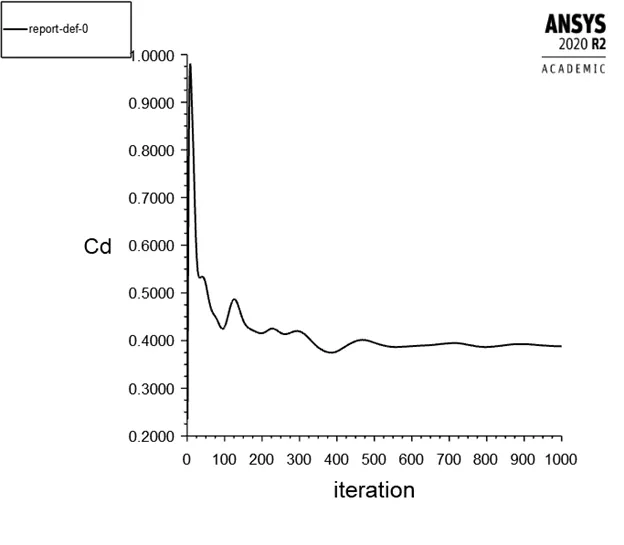
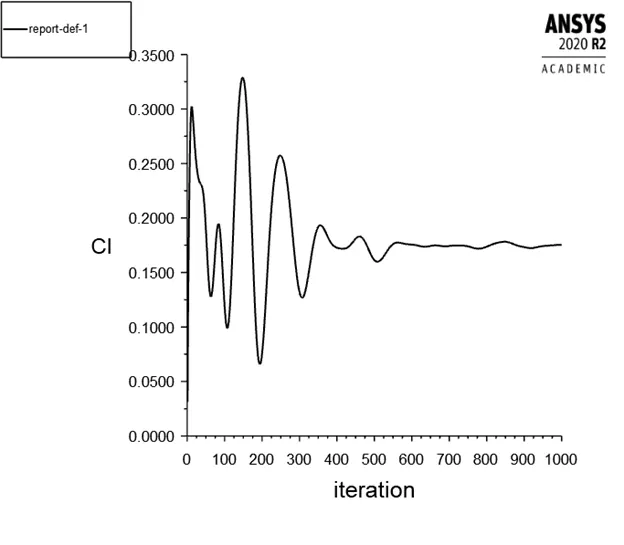
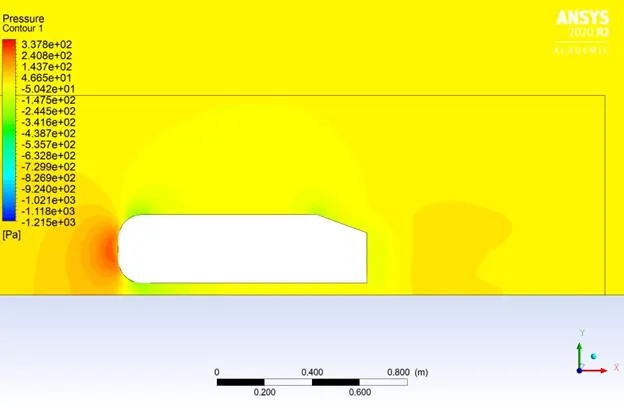
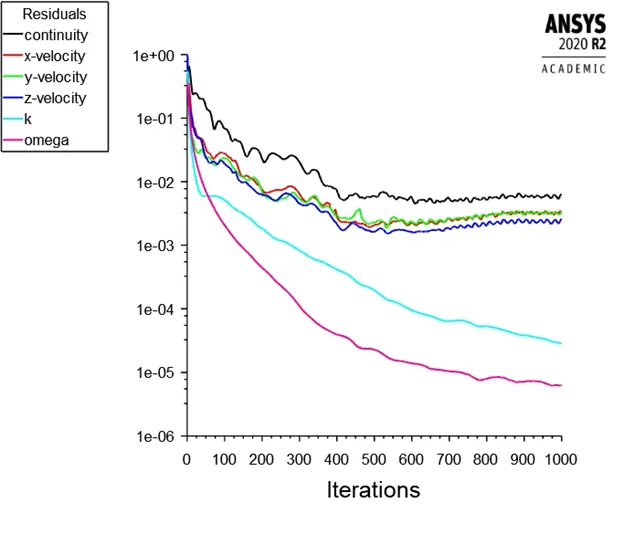
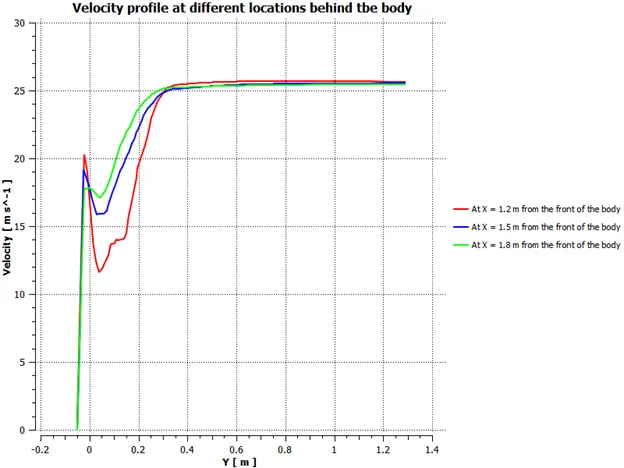
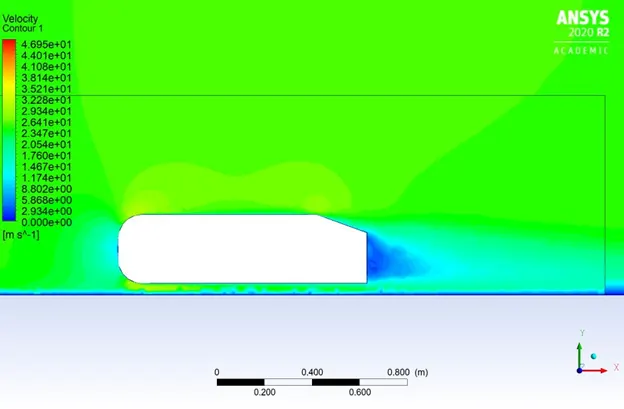
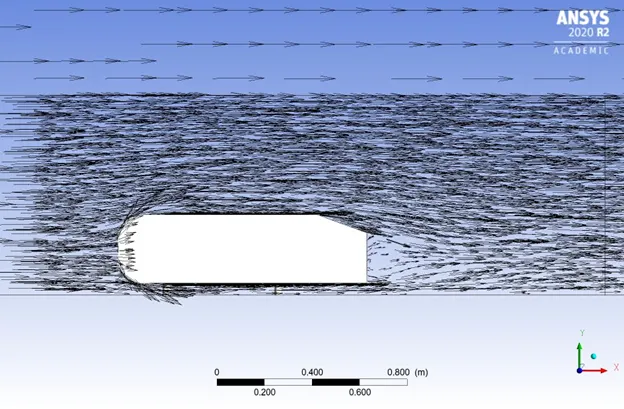
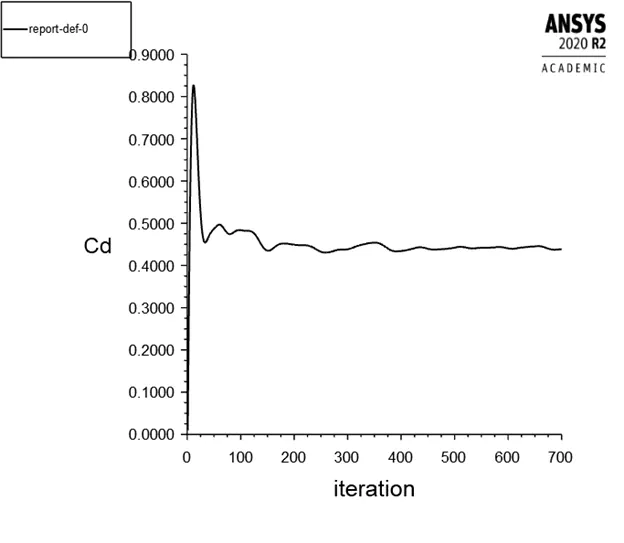
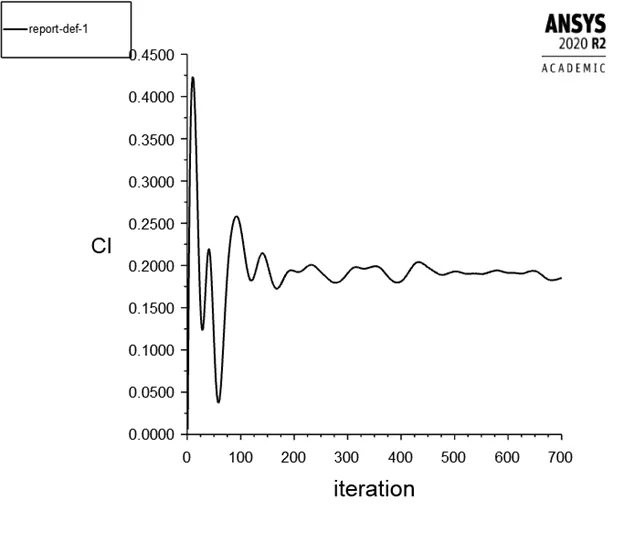
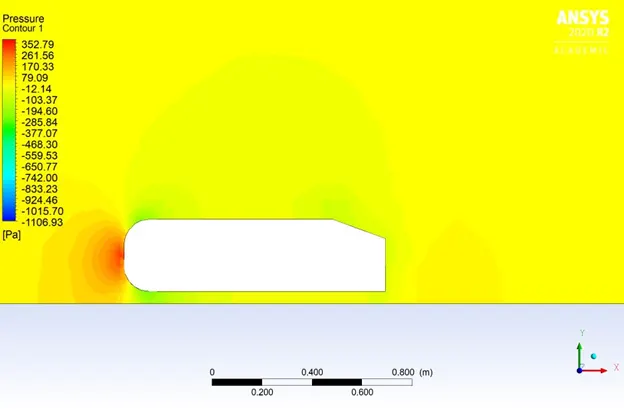
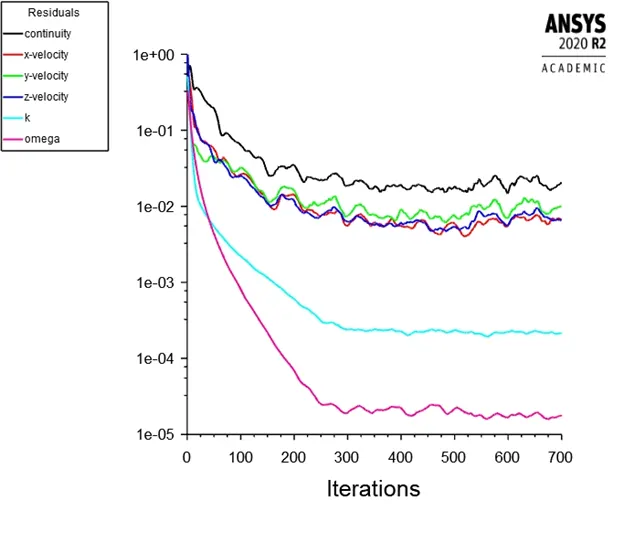
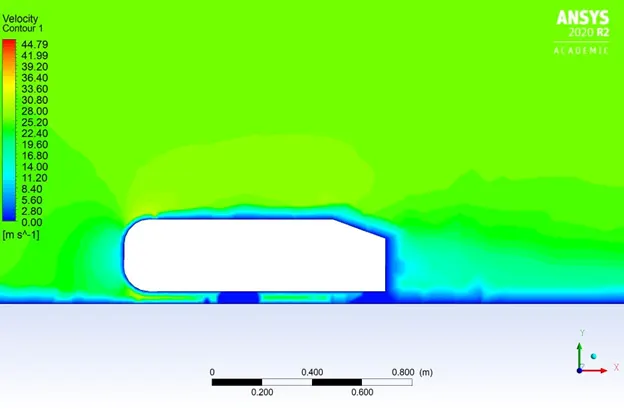
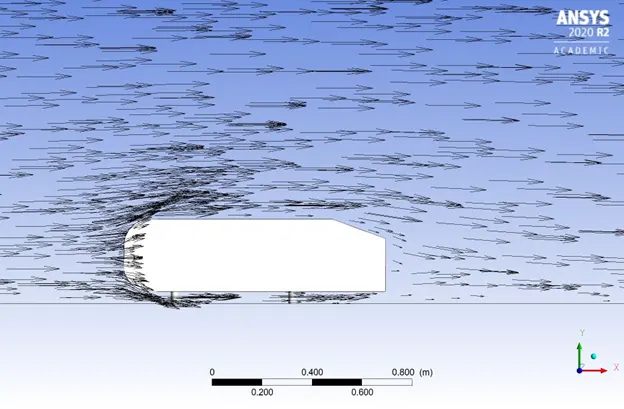
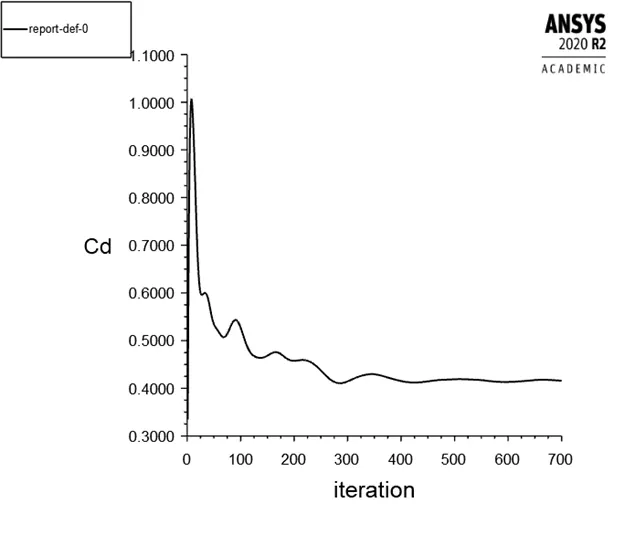
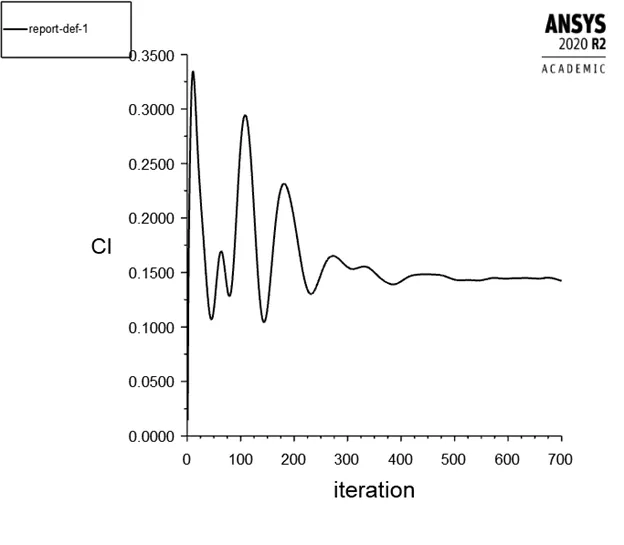
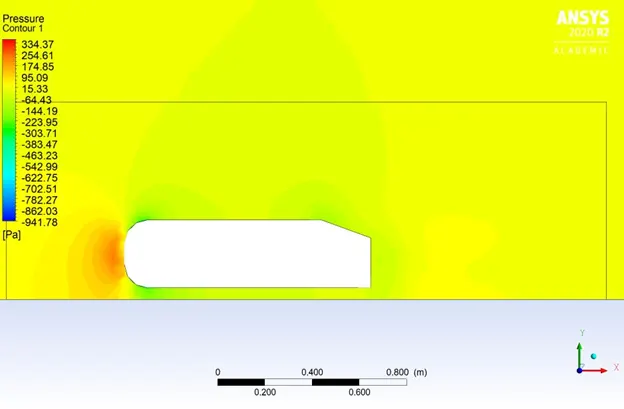
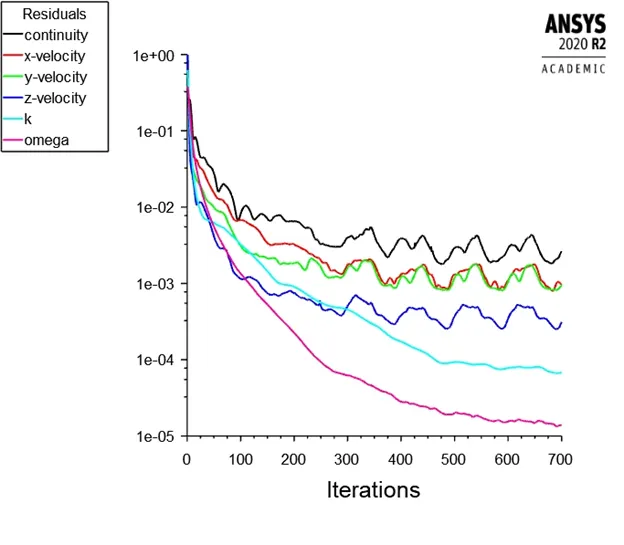
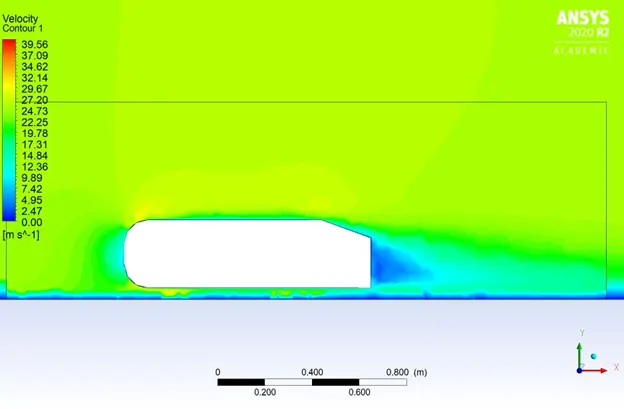
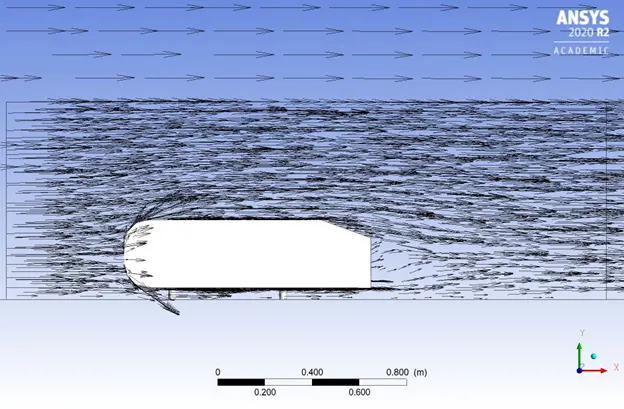
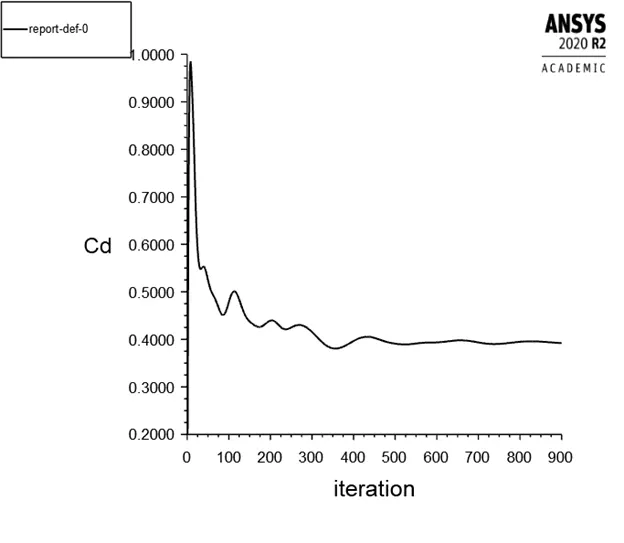
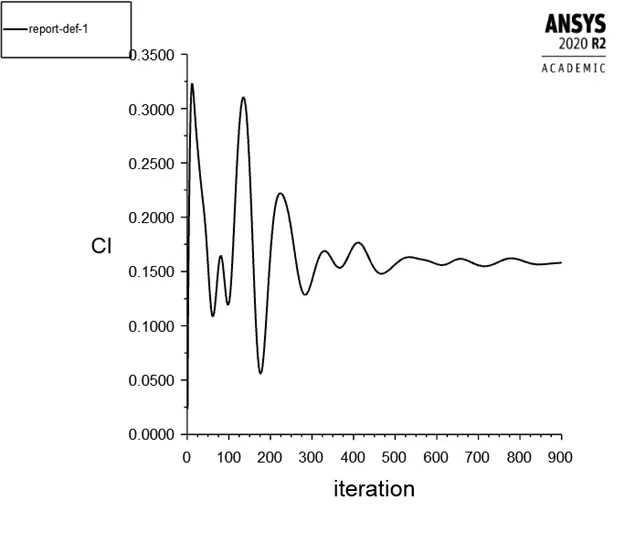
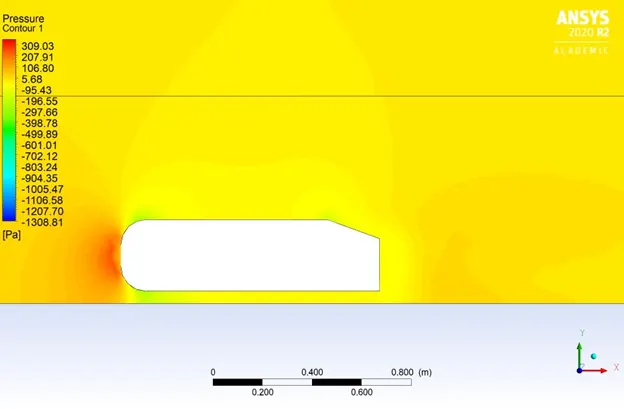
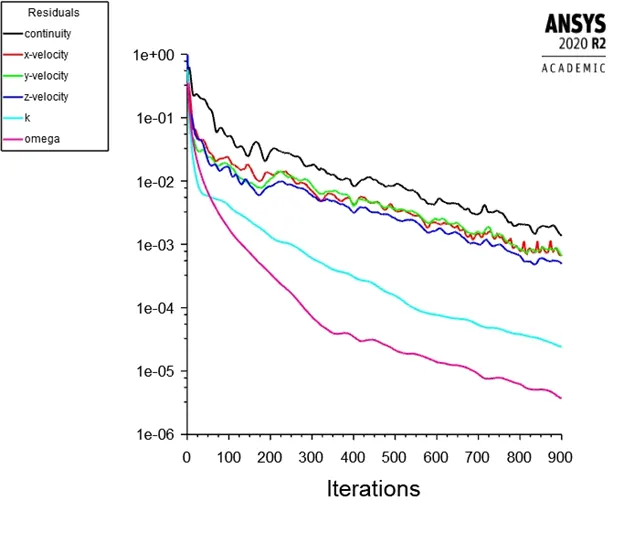
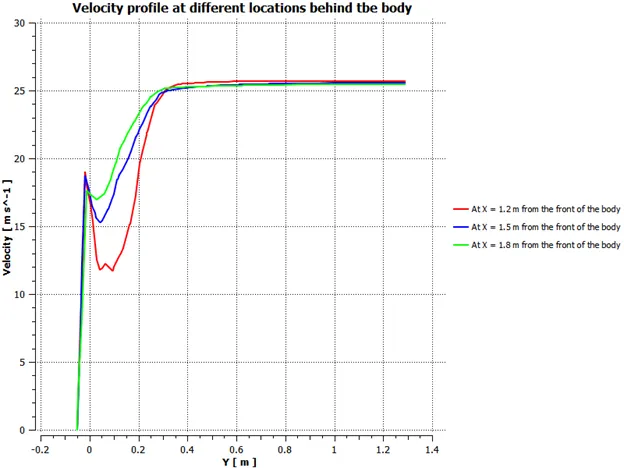
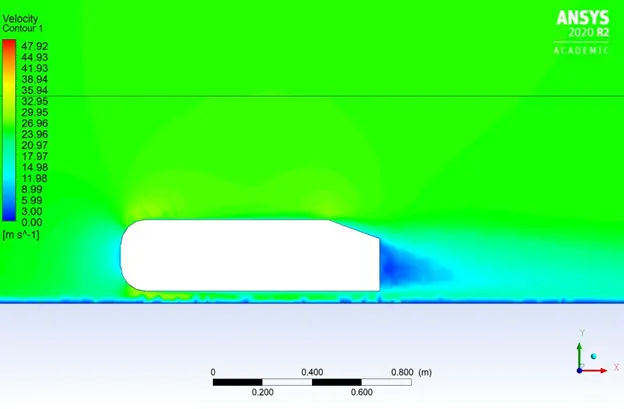
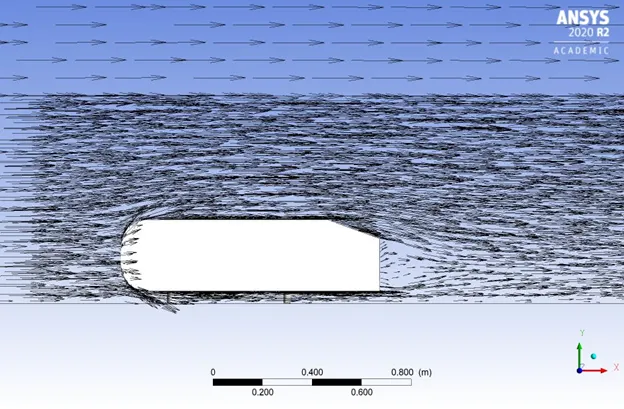
Velocity and pressure contour, velocity vectors, velocity profile behind the body, residuals, and drag and lift coefficient plots have been shared below for all the cases.
Due to computational limitations, the mesh couldn’t be refined further. A drag coefficient value of 0.38 is observed from the final refinement case. This is in fair agreement with the value in literature for a velocity of 25 m/s (0.33).
The velocity contour plots clearly highlight the wake formation behind the body. Also, it can be observed that flow separation starts near the beginning of the slant on the body. This phenomenon is captured more effectively only when the mesh is refined. Apart from this, there are vortices and low pressure zones behind the leg of the body due to local high pressure zones at the upstream side of the legs. Low pressure zones are also observed in the wake region and behind the supports due to local flow separations.
It can also be observed from the velocity and pressure contours that there is local acceleration beneath the body which can be attributed to the decrease in flow area.
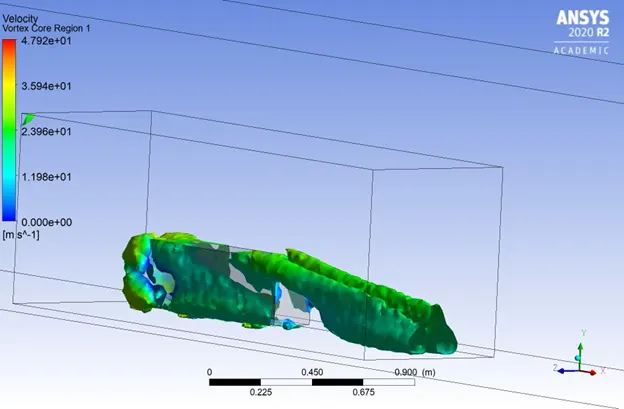
From the vortex core plots shown in Case 4, it can be observed the 3D nature of vortices developed due to three effects. First is due to curvature on the leading edge of the body, second is due to the flow separation behind the body supports and the third (which is the strongest) is due to flow separation from the trailing edge of the body.
The variation of drag coefficient with mesh refinement has also been shown here.
|
|
Coefficient of Drag |
|
Case 1 |
0.45 |
|
Case 2 |
0.41 |
|
Case 3 |
0.39 |
|
Case 4 |
0.38 |
Case 1
Case 2
Case 3
Case 4