Aftertreatment Modelling 1
Aim:
- List down for Gasoline vs Diesel engine
- the pollutants
- aftertreatment devices with catalyst materials
- the example files
- Strategies used for reducing tail pipe emissions
- List down one set of chemical reactions for TWC and SCR from example files
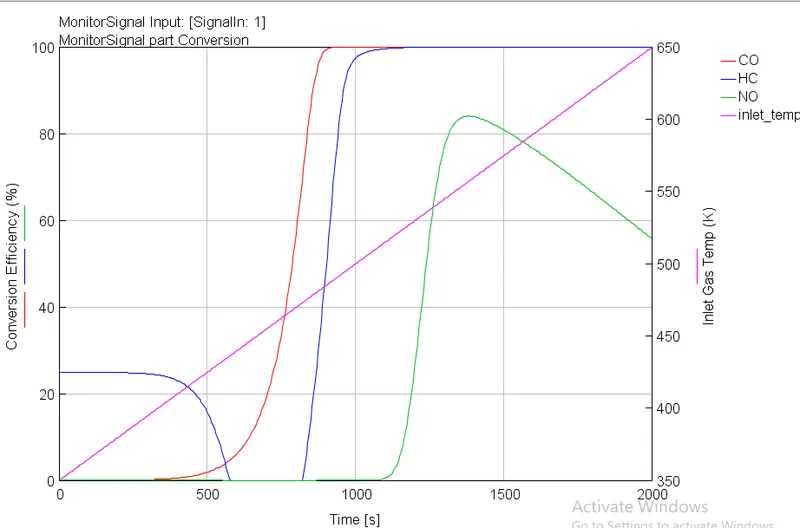
- Explore -Example-aftertreatment-DOC-sampara & Bisset and write a detailed report
Gasoline vs Diesel engine:
In a gasoline engine, the fuel mixes with air compressed by pistons. The spark plugs ignite this mixture to move the vehicle. On the other hand, in a diesel engine, the air is first compressed. This makes the air hot. The fuel then ignites when it hits the hot air.
In a diesel engine, the fuel is injected directly into the cylinder.Whereas in Gasoline engine,fuel injection can occur two ways: a port injection system or a carburetor. The port injection system injects air into the fuel right before the intake stroke. In contrast, a carburetor mixes the fuel and air together before sending it into the cylinder to compress.
In a Gasoline engine, Lean conditions always give better fuel efficiency, but lean run increases the temperature of the chamber and the high temperature gives rise to Nox emissions . But Rich mixture in SI gives fewer Nox emissions but bad fuel efficiency. So as gasoline runs on both the rich and lean conditions, the common emissions will be CO, HC, NOx(No2, No).
Diesel engines always require a high Compression ratio, to get a good air and fuel mixture . And also the diesel has a high cetane number(45-55) and so it has good burning characteristics. And so the diesel engines always run in the lean condition to control the dynamics, thus here the diesel is injected in less amount and the air is more in quantity. And so the temperature is high always in diesel engines, as the temperature is high, the "NOX emissions" are the major components of the emissions. Also, there will be the contents of CO and HC in less amount.
AFTERTREATMENT DEVICES:
GASOLINE ENGINES : 3 WAY CATALYTIC CONVERTER
DIESEL ENGINES : DOC,DPF,SCR
Examples of Aftertreatment devices in GT-Power:
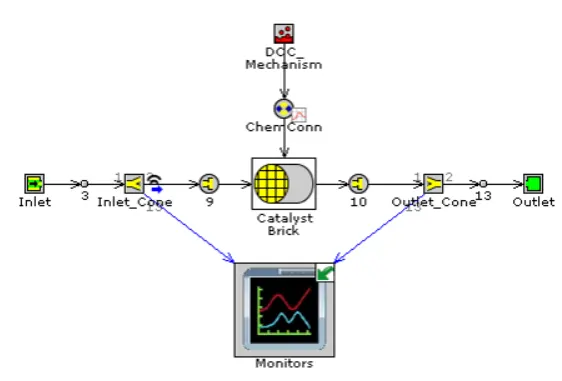
1) Diesel Oxidation Catalyst (DOC)
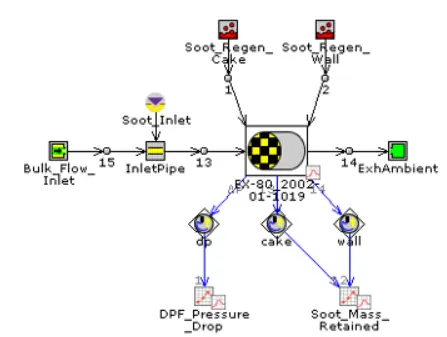
2) Diesel Particulate Filter (DPF)
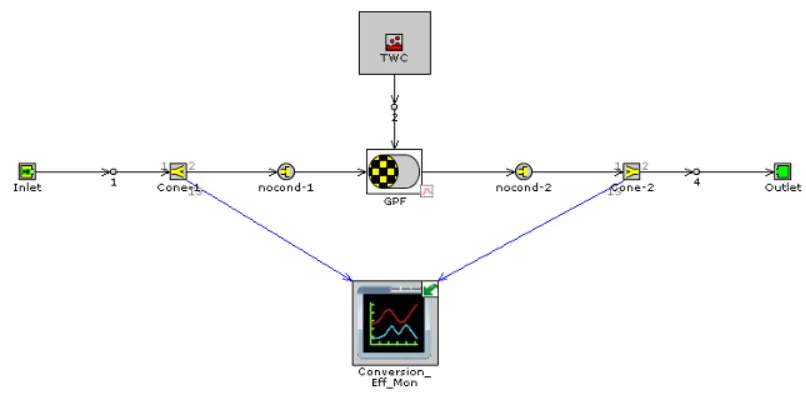
3) Gasoline Particulate Filter (GPF)
 1
1
4) Lean NOx Trap (LNT)
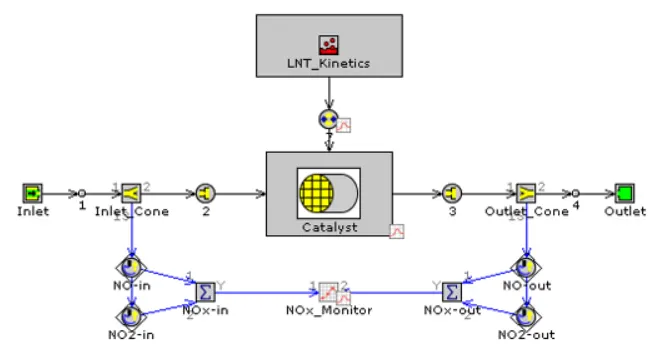
5) Selective Catalyst Reduction (SCR)
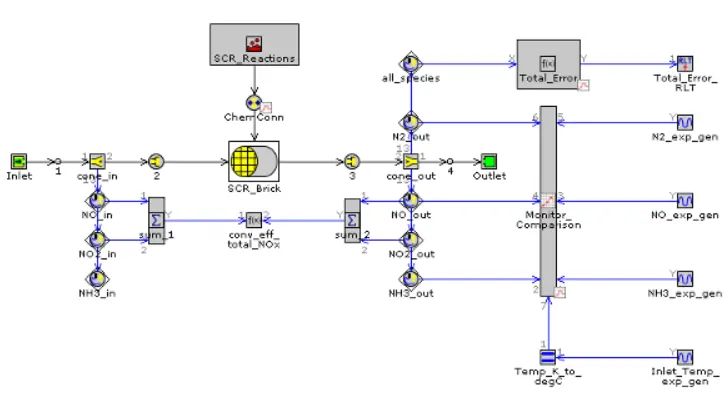
6) Three-way Catalytic Convertor (TWC)
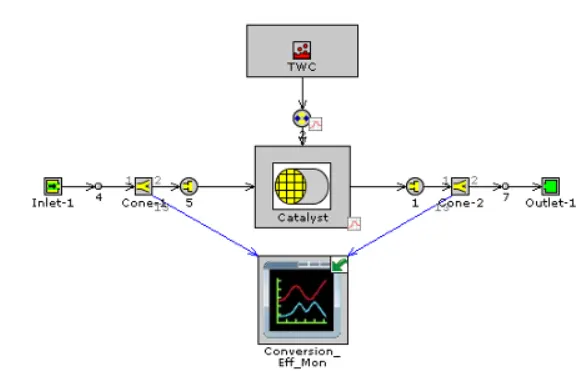
7) Urea Decomposition:
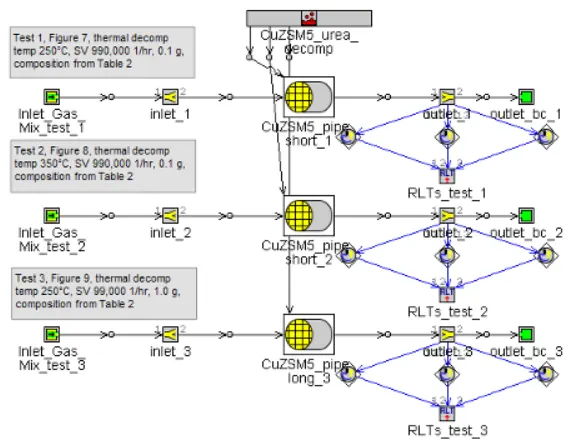
Strategies used for reducing tail pipe emissions:
- In cylinder strategy
- Aftertreatment strategy
Chemical reactions:
Example from TWC:
- CO+0.5O2 ⇒">⇒⇒ CO2
C3H6+4.5O2 ⇒">⇒⇒ 3CO2+3H2O
C3H8+5O2 ⇒">⇒⇒ 3CO2+4H2O
H2+0.5O2 ⇒">⇒⇒ H2O
CO+NO ⇒">⇒⇒ CO2+0.5N2
C3H6+9NO ⇒">⇒⇒ 3CO2+3H2O+4.5N2
H2+NO ⇒">⇒⇒ H2O+0.5N2
CO+H2O ⇒">⇒⇒ CO2+H2
C3H6+3H2O ⇒">⇒⇒ 3CO+6H2
2Ce2O3+O2 ⇒">⇒⇒ 4CeO2
Ce2O3+NO ⇒">⇒⇒ 2CeO2+0.5N2
CO+2CeO2 ⇒">⇒⇒ Ce2O3+CO2
C3H6+12CeO2 ⇒">⇒⇒ 6Ce2O3+3CO+3H2O
C3H8+14CeO2 ⇒">⇒⇒ 7Ce2O3+3CO+4H2O
H2+2CeO2 ⇒">⇒⇒ Ce2O3+H2O
Example from SCR: Fe & Zeolite
- Z + NH3 ⇒">⇒⇒ ZNH3
ZNH3 ⇒">⇒⇒ Z + NH3
4ZNH3 + 3O2 ⇒">⇒⇒ 2N2 + 6H2O + 4Z
4ZNH3 + 4NO + O2 ⇒">⇒⇒ 4N2 + 6H2O + 4Z
NO + 0.5O2 ⇒">⇒⇒ NO2
4ZNH3 + 2NO + 2NO2 ⇒">⇒⇒ 4N2 + 6H2O + 4Z
8ZNH3 + 6NO2 ⇒">⇒⇒ 7N2 + 12H2O + 8Z
Example-aftertreatment-DOC-sampara & Bisset:
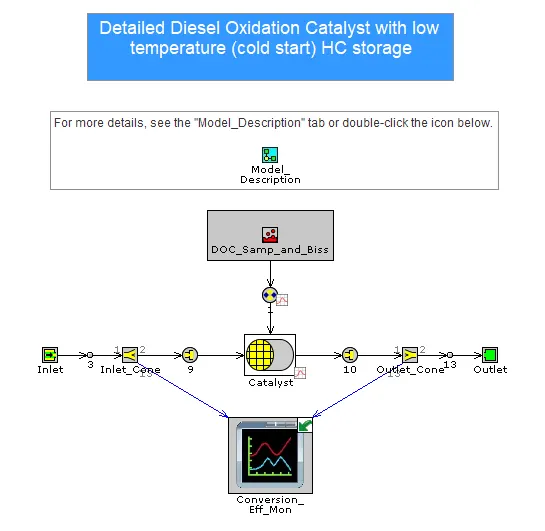
Reactions:
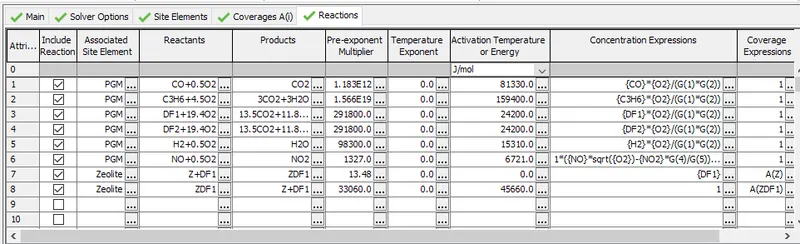
Results: