ADAMS - Project - Hardpoint tuning to achieve pitch gradient targets using suspension “anti” characteristics
Aim:
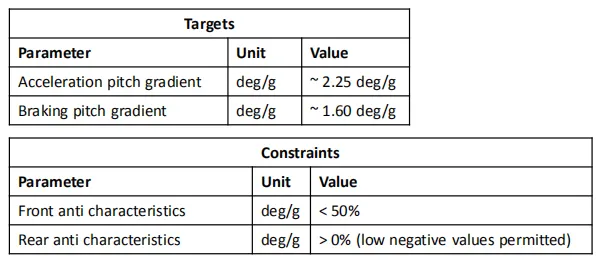
To perform hardpoint tuning to achieve the target acceleration and braking pitch gradients.
Procedure:
- The manual calculation is carried out in excel sheet.
The link for the excel sheet :
https://docs.google.com/spreadsheets/d/1lyMC19YkiWU0ivFK9GGbibEFwpkHiV78C0K4jCzij4Q/edit?usp=sharing
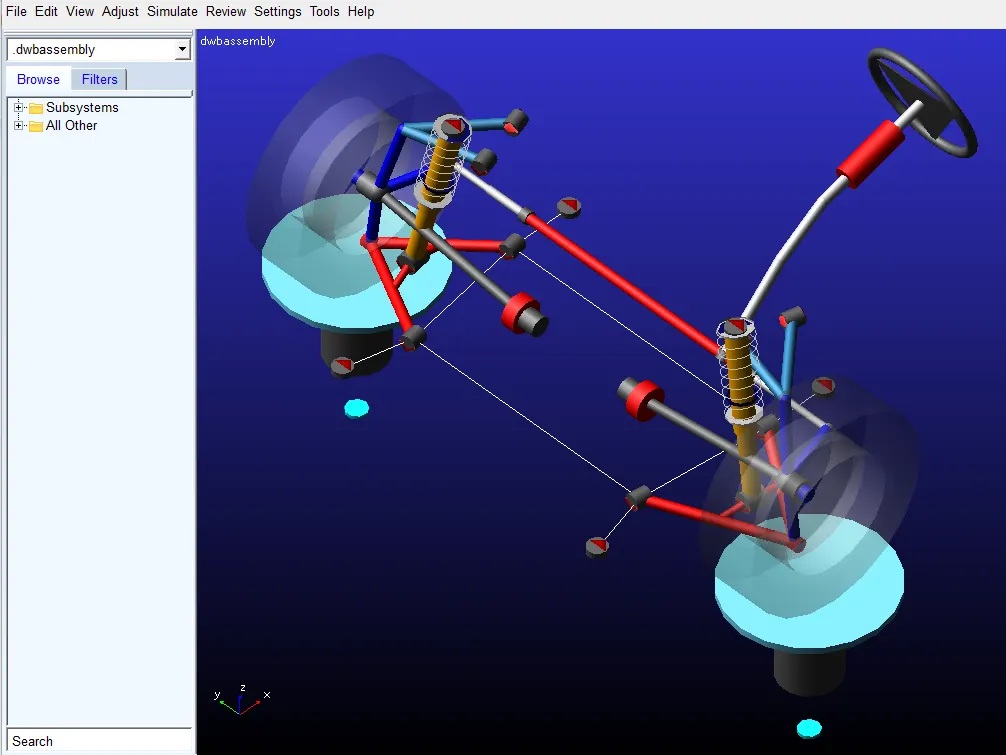
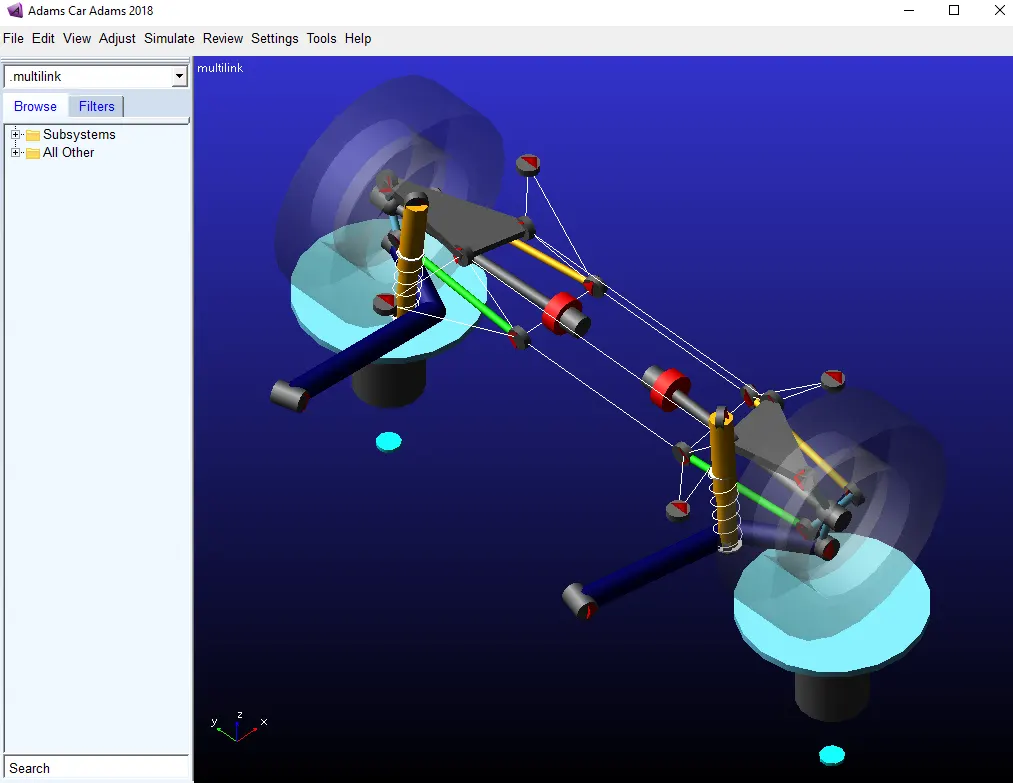
- In the adams for the simulation, SLA suspension at the front and multilink suspension at the rear is imported.
Double Wishbone Assembly:
Multi-link Suspension-Rear:
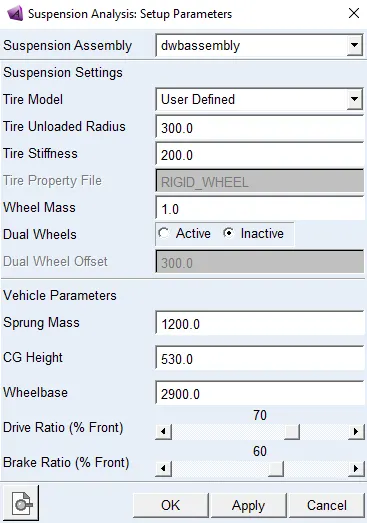
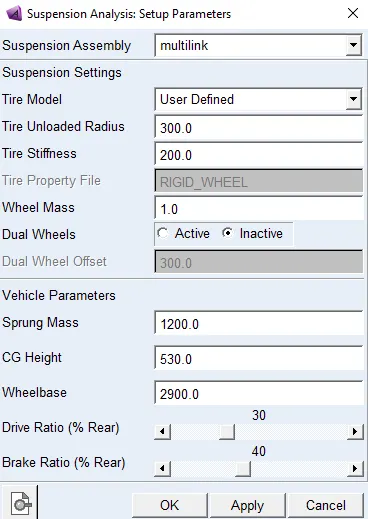
Wheel base, drive ratio, brake ratio and Cg height are specified:
Before Hardpoint tuning:
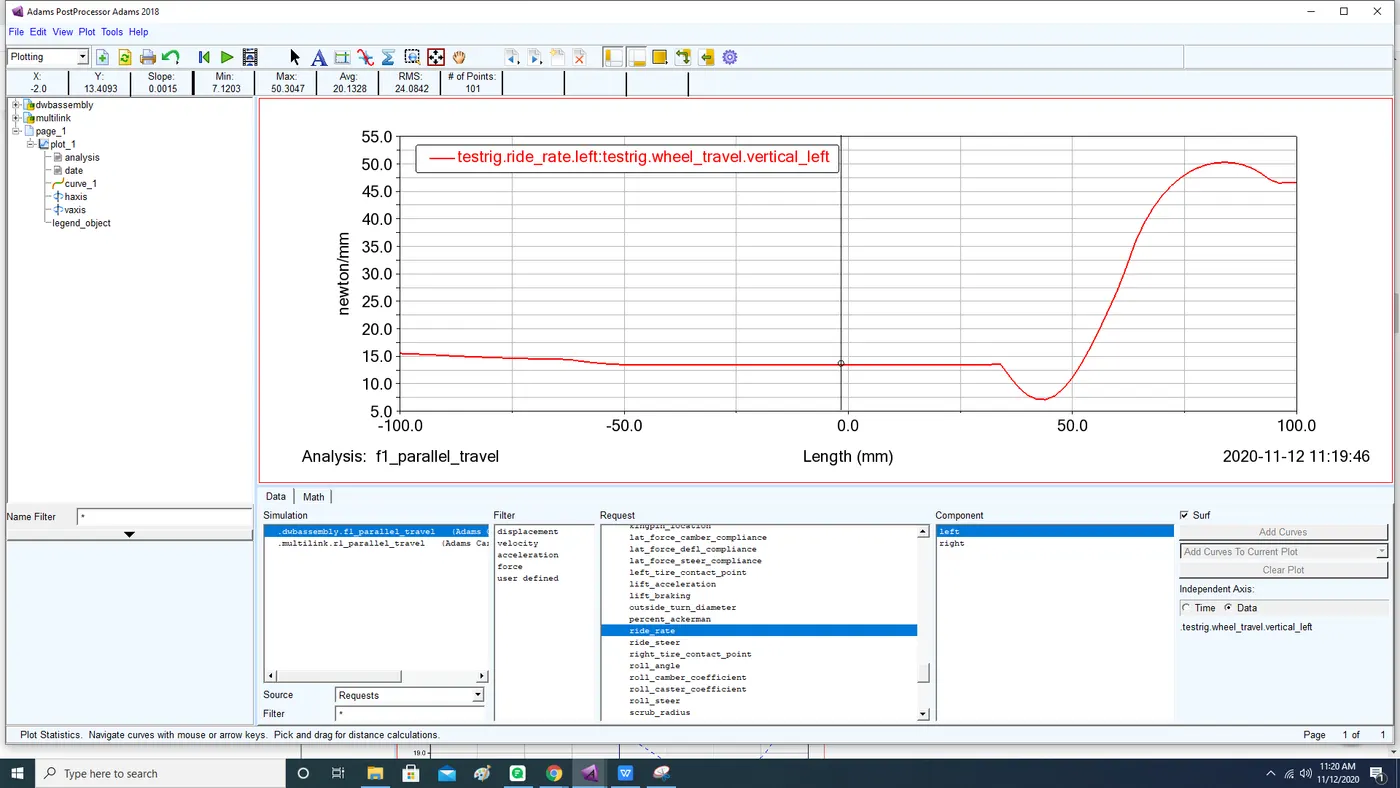
On running a parallel wheel simulation on SLA front,
Front Ride rate : 13.41 N/mm
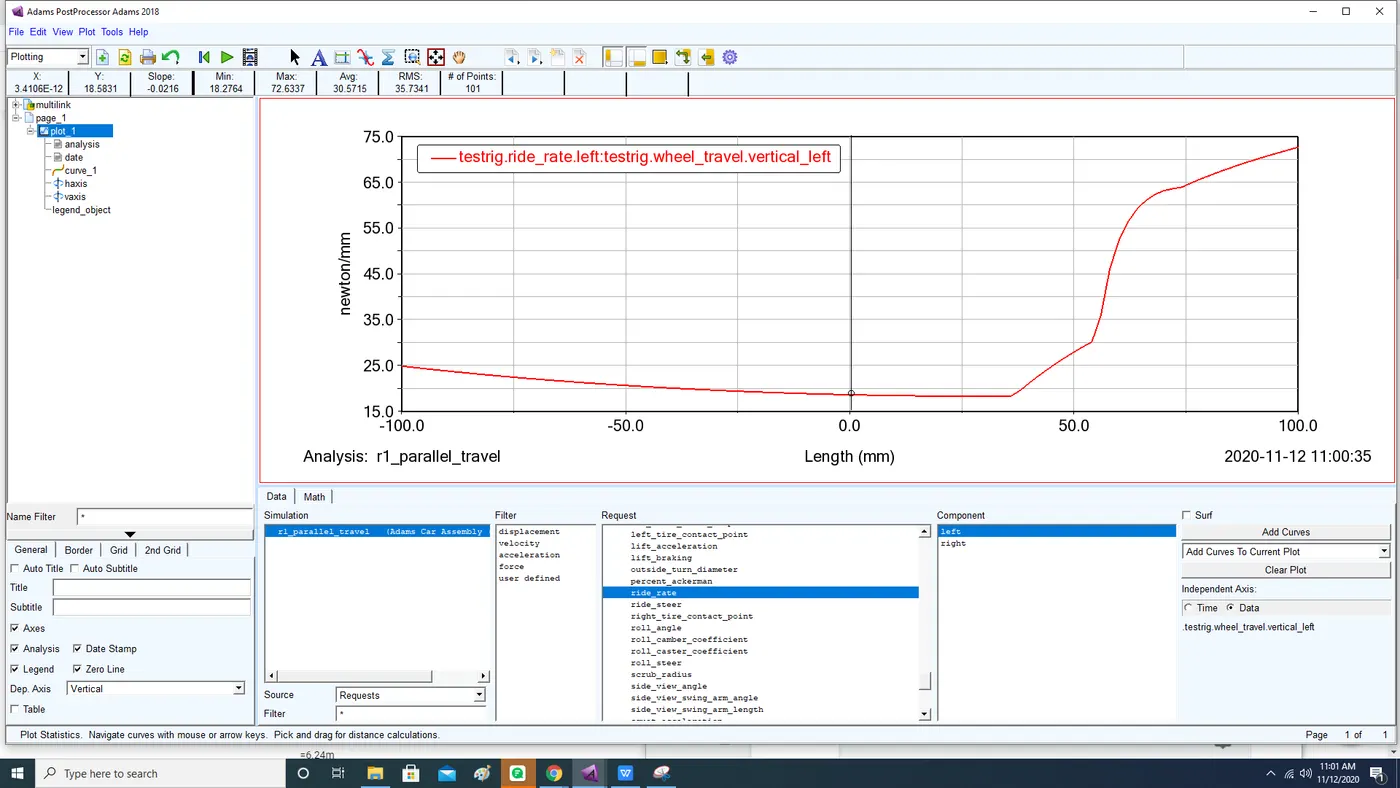
On running a parallel wheel simulation on Multilink rear,
Rear Ride rate :18.5 N/mm
After Hardpoint tuning:
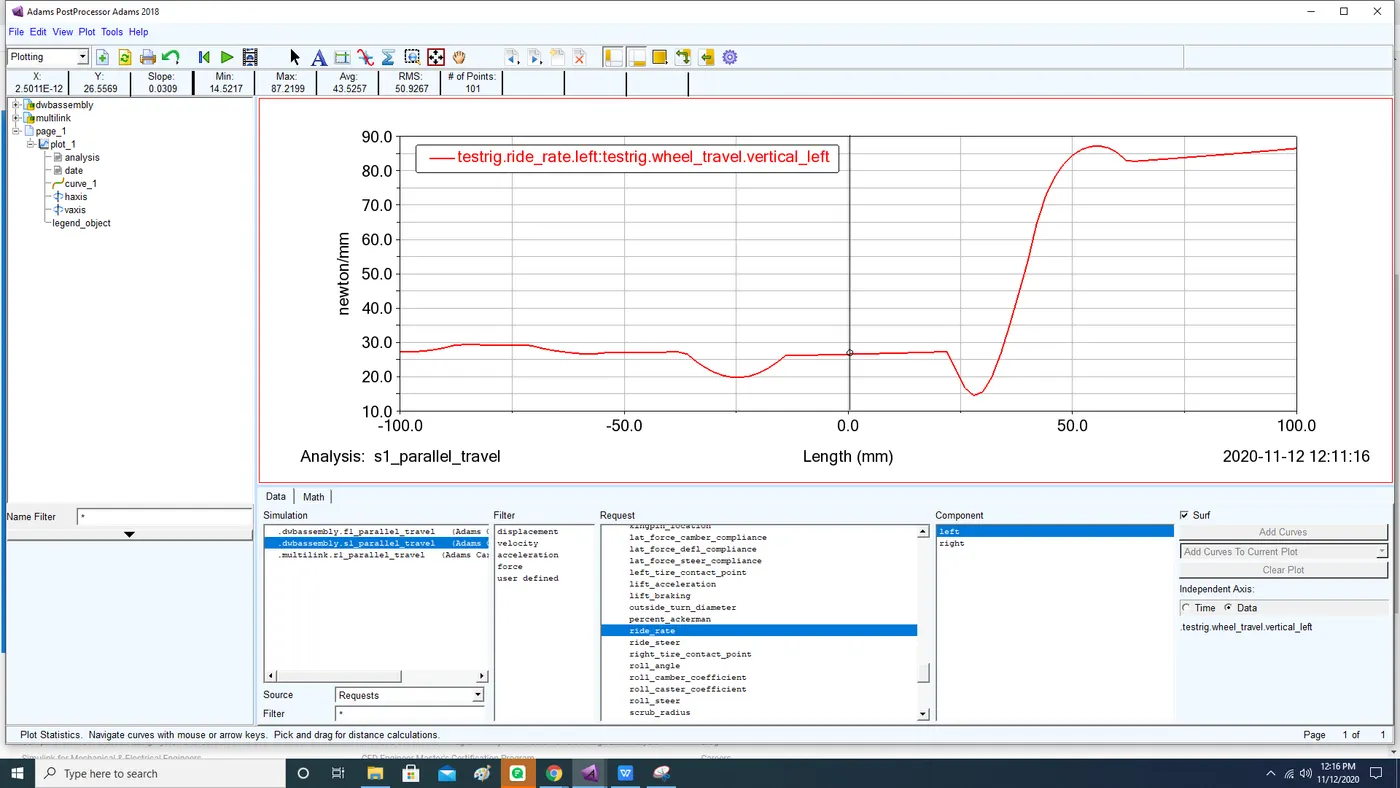
On running a parallel wheel simulation on SLA front,
Front Ride rate : 27 N/mm
Before Hardpoint tuning:
On running a parallel wheel simulation on Multilink rear,
Rear Ride rate :18.5 N/mm
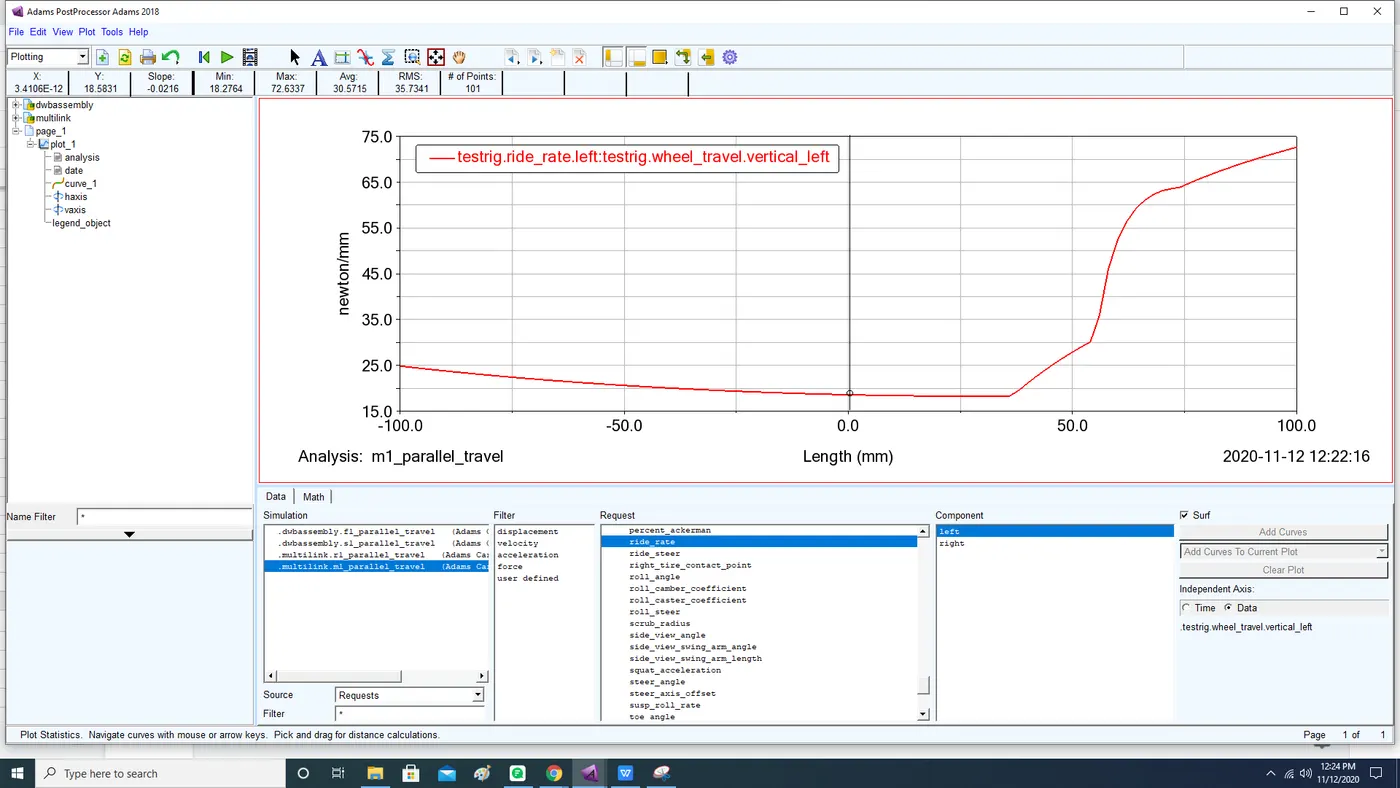
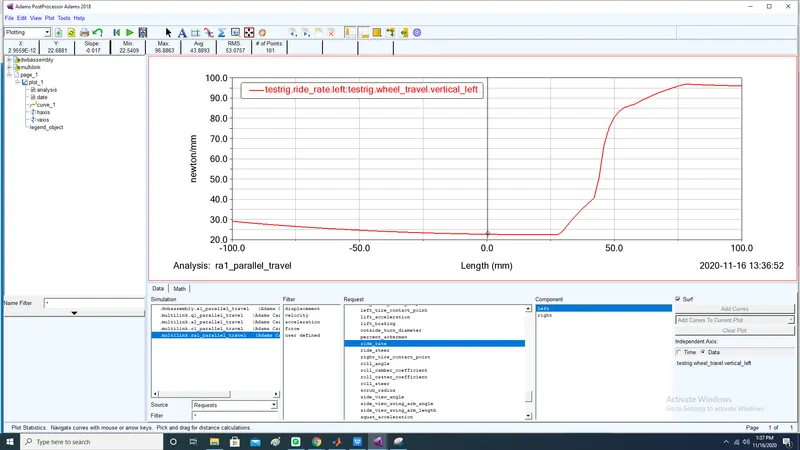
After Hardpoint tuning:
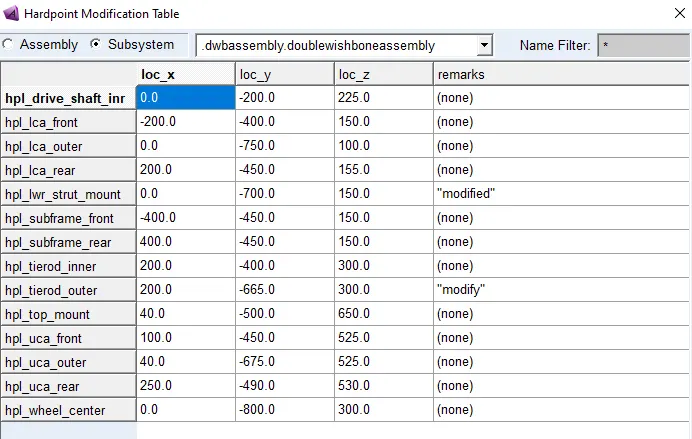
Damper and spring lower and upper hardpoints are modified to increase the ride rate.
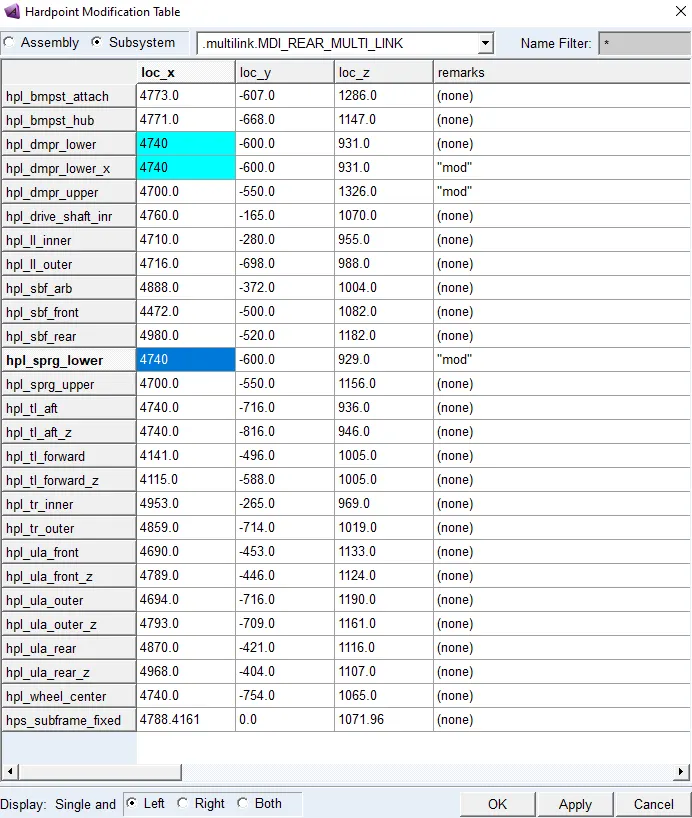
Rear Ride rate :23 N/mm
So far, by tuning the damper and spring hardpoints pitch gardient of 2.84 deg/g is acheived.
Inorder to get the target Braking pitch gradient and Accelration pitch gradient,
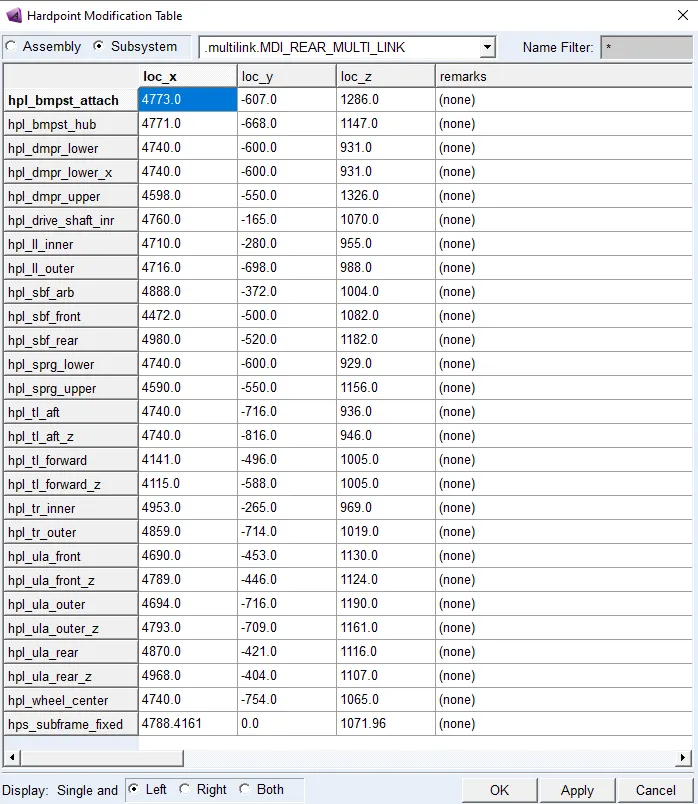
ball joints of lower and upper control arm are varied.
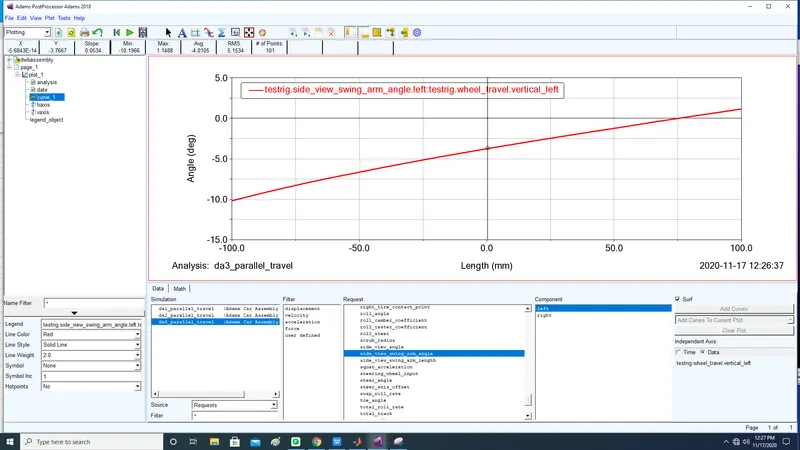
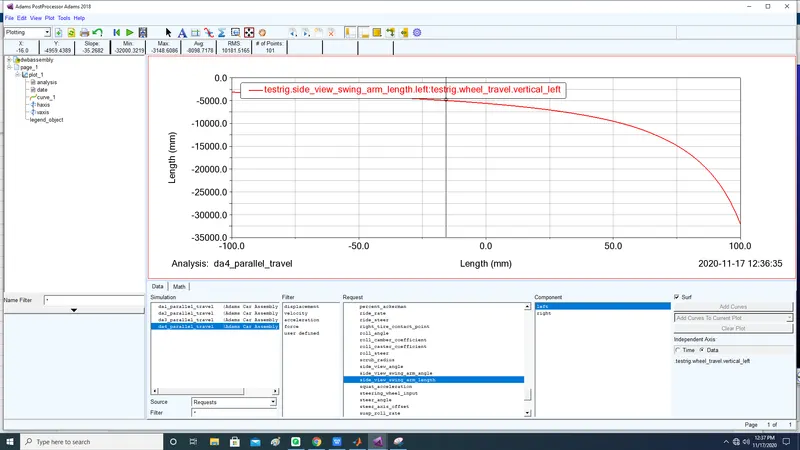
Hardpoint after Tuning for front-SLA:
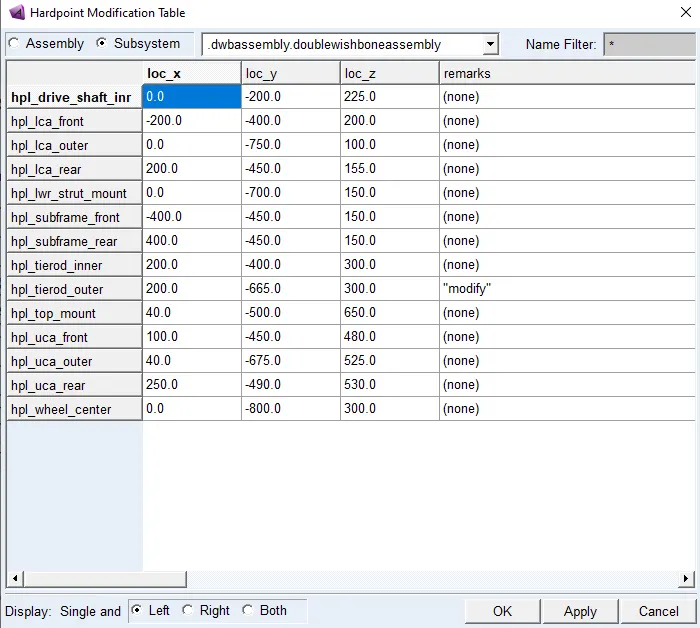
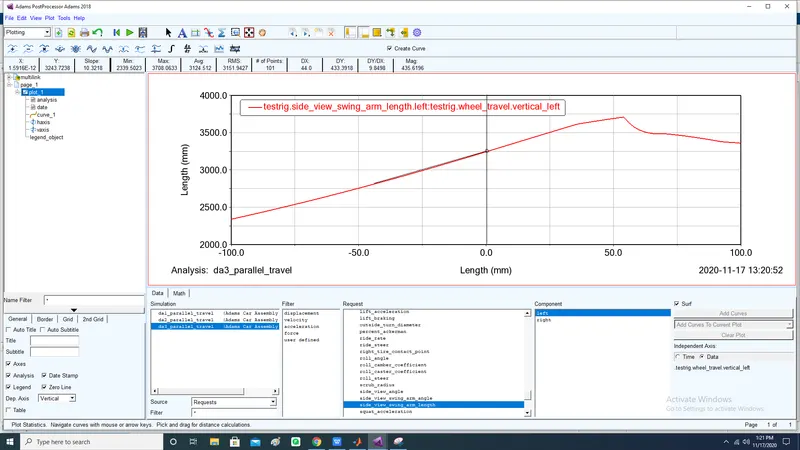
Swing arm angle: 3.7 deg
Swing arm length: 5600 mm
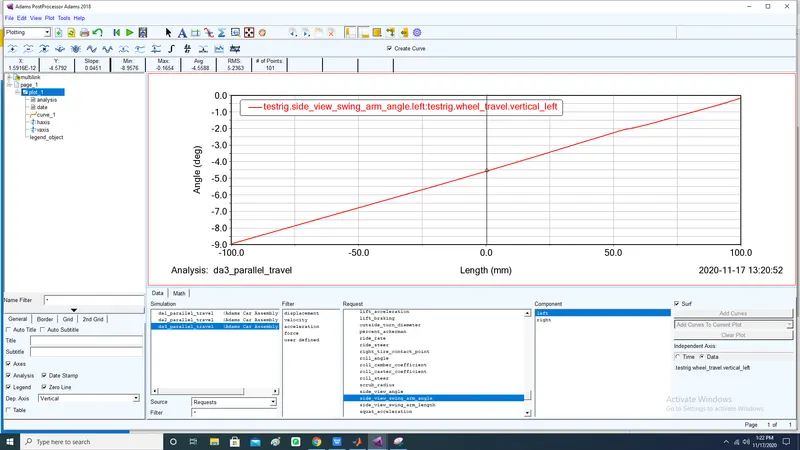
Hardpoint after Tuning for Rear-Multilink:
Swing arm angle: 4.57 deg
Swing arm length: 3200 mm
Conclusion:
Hence by tuning the hard-points of the front SLA nad rear Multilink , the below mentioned targets are acheived.
- Sandeep PrajapatiHello. What is the coursename??
- Sandeep PrajapatiIndividual course name to be precise