Adams Assignments – Problem 5 – Compliance
Aim:
To perform appropriate simulations and find out the following compliance related parameters (on-center gradients).
Models : Rear Multilink (created from Acar library using the multilink template)
Part 1: Baseline analysis
1.Brake steer (deg/m). State whether the suspension toes in or out under braking.
2.Traction steer (deg/m). State whether the suspension toes in or out under braking
3.Longitudinal wheel center recession under traction (mm/kN). Find out the same number under braking and state why the two are different
4.Lateral force compliance steer (deg/kN). Explain whether this is an understeer or an oversteer effect
5.Lateral force compliance camber (deg/kN). Explain whether this is an understeer or an oversteer effect
6.Perform appropriate simulations and find out the bump steer. State whether it is an understeer or oversteer effect
Part 2: Tuning
You are required to tune only one parameter at a time to understand the effects of tuning correctly. Also remember this is a multilink suspension. Any change you make affects a lot of parameters. So when asked to tune a parameters, you will have to find out the right tuning knob.
Optimize the hardpoints to achieve a bump steer of +2.6 deg/m. Is this now an understeer or oversteer effect?
Optimize the bushings (one bushing at a time) to achieve the following. For both cases, explain which bushing you changed and why
Traction wheel center recession – stiffness of ~500 N/mm
Camber compliance of 0.45 deg/kN.
Procedure:
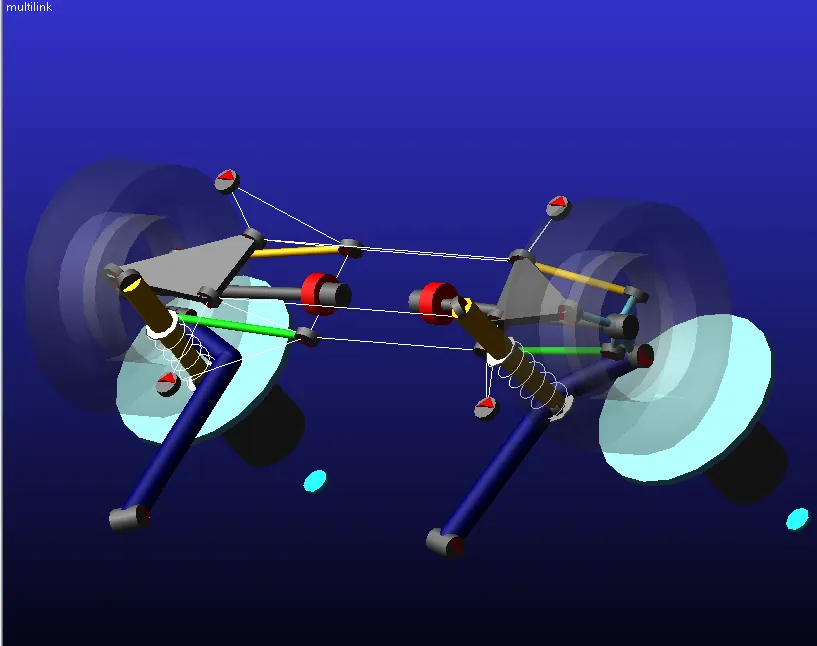
Rear multi-link assembly is imported in Adams and the simlations are carried out. The below image shows the rear-multi link suspension.
1.Brake steer (deg/m). State whether the suspension toes in or out under braking.
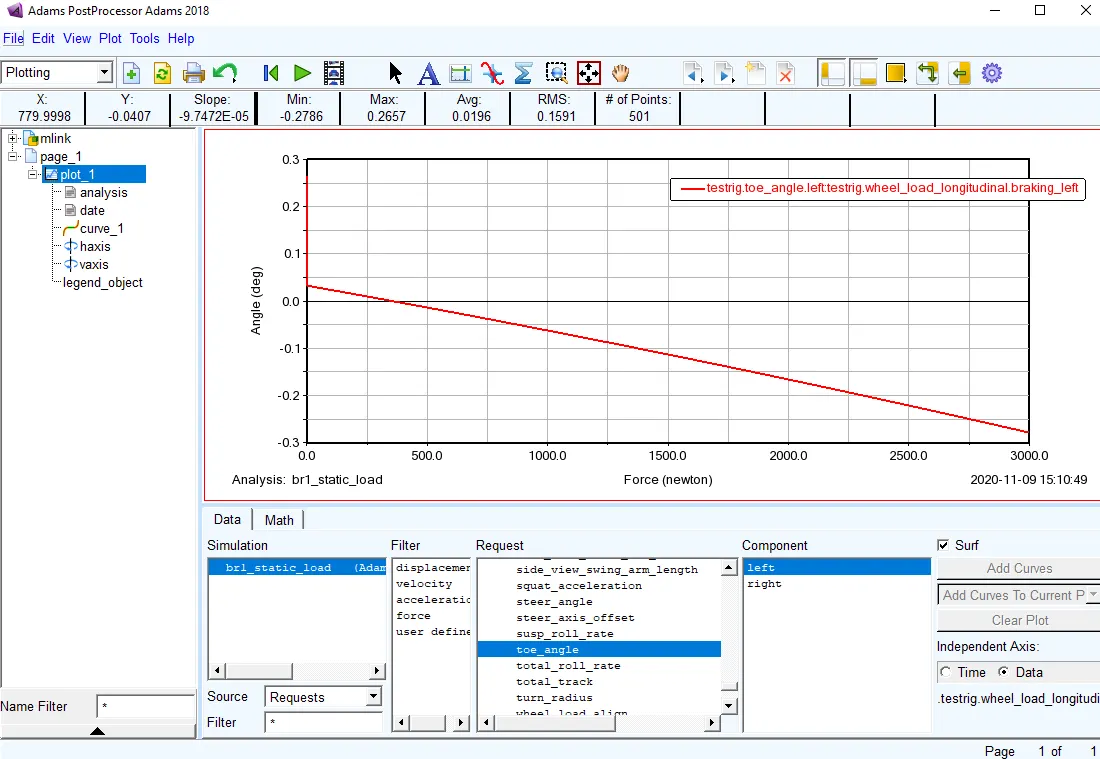
==> Brake steer = 0.06 (deg/KN)
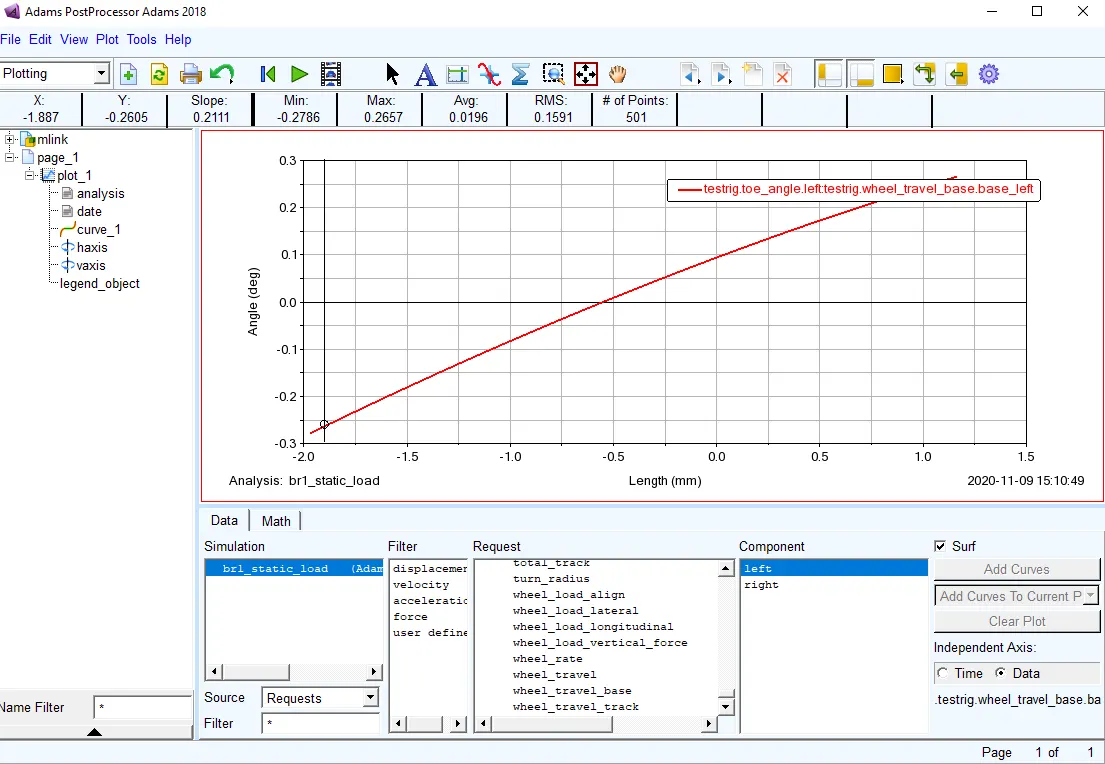
==> Brake steer = 0.16 (deg/mm)==>160 (deg/m)
==> From the study, it is found that suspension toes out while braking, hence it makes the car oversteer.
2.Traction steer (deg/m). State whether the suspension toes in or out under braking
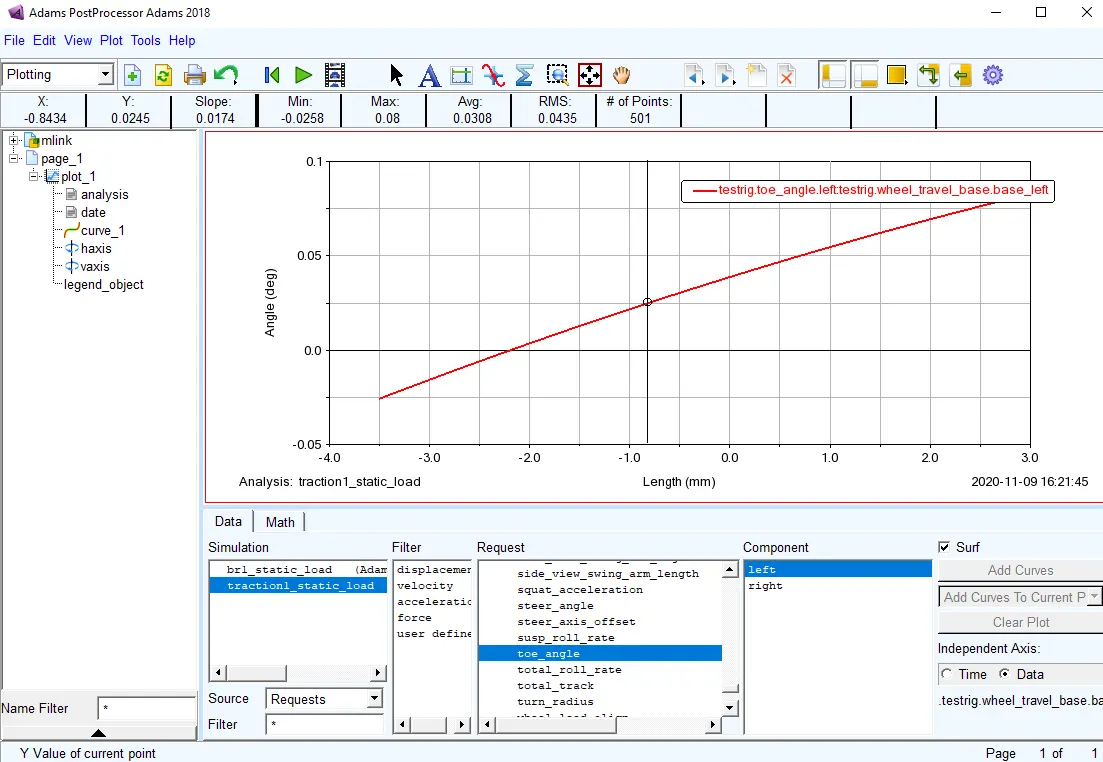
Traction steer==> 0.016 deg/mm = 16 deg/m
==> From the study, it is found that suspension toes out while braking, hence it makes the car oversteer.
3.Longitudinal wheel center recession under traction (mm/kN). Find out the same number under braking and state why the two are different
Longitudinal wheel center recession under traction=0.6915mm/kN
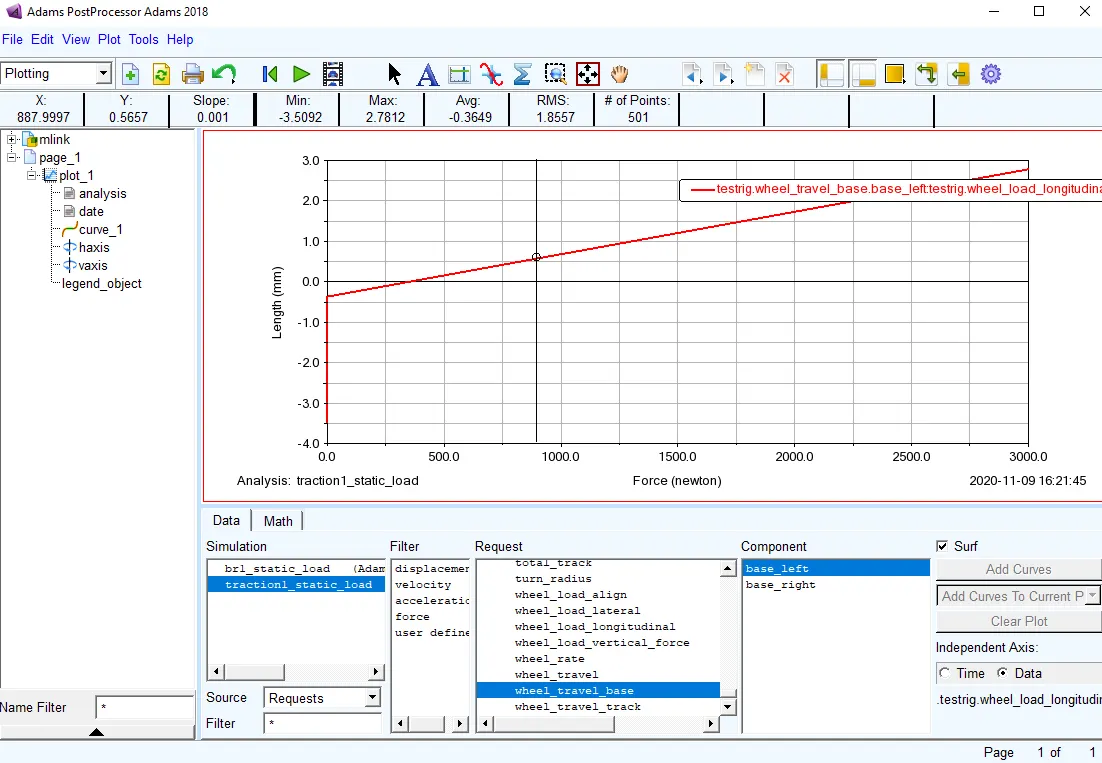
Longitudinal wheel center recession under bracking=0.89mm/kN
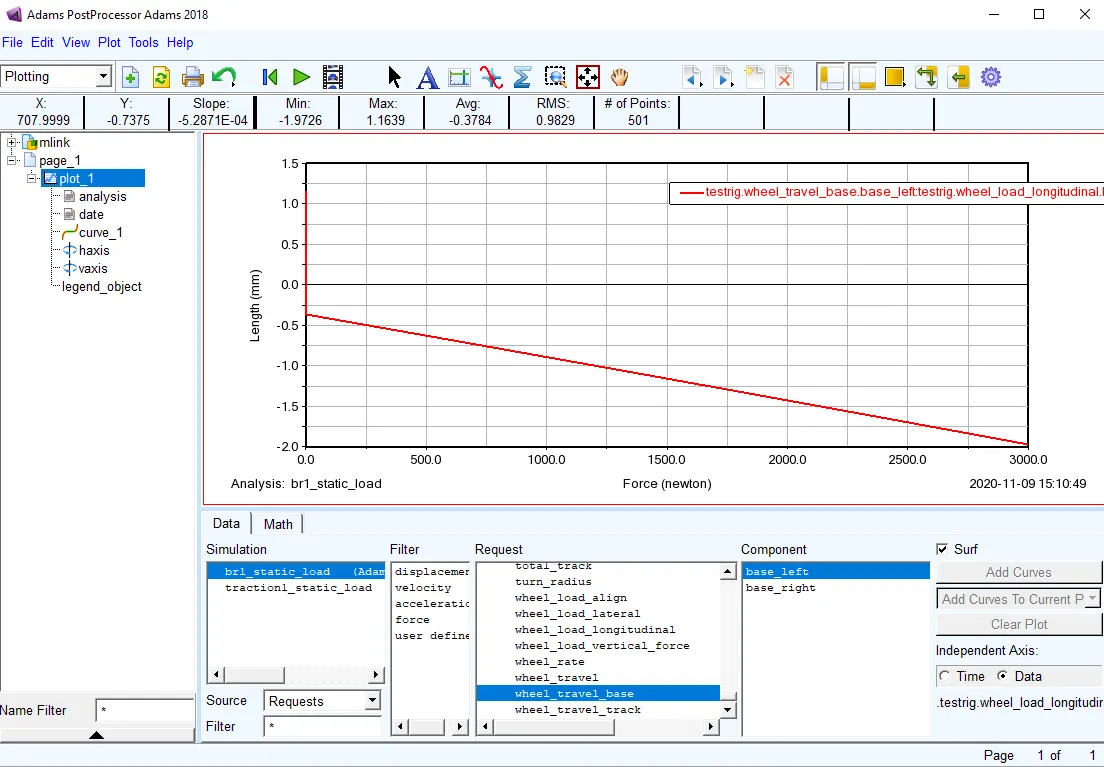
The trend of the Longitudinal wheel center recession under traction and braking varies, since the braking force applies at contact patch and traction force is applied at wheel centre and the direction of the forces is opposite to each other.
4.Lateral force compliance steer (deg/kN). Explain whether this is an understeer or an oversteer effect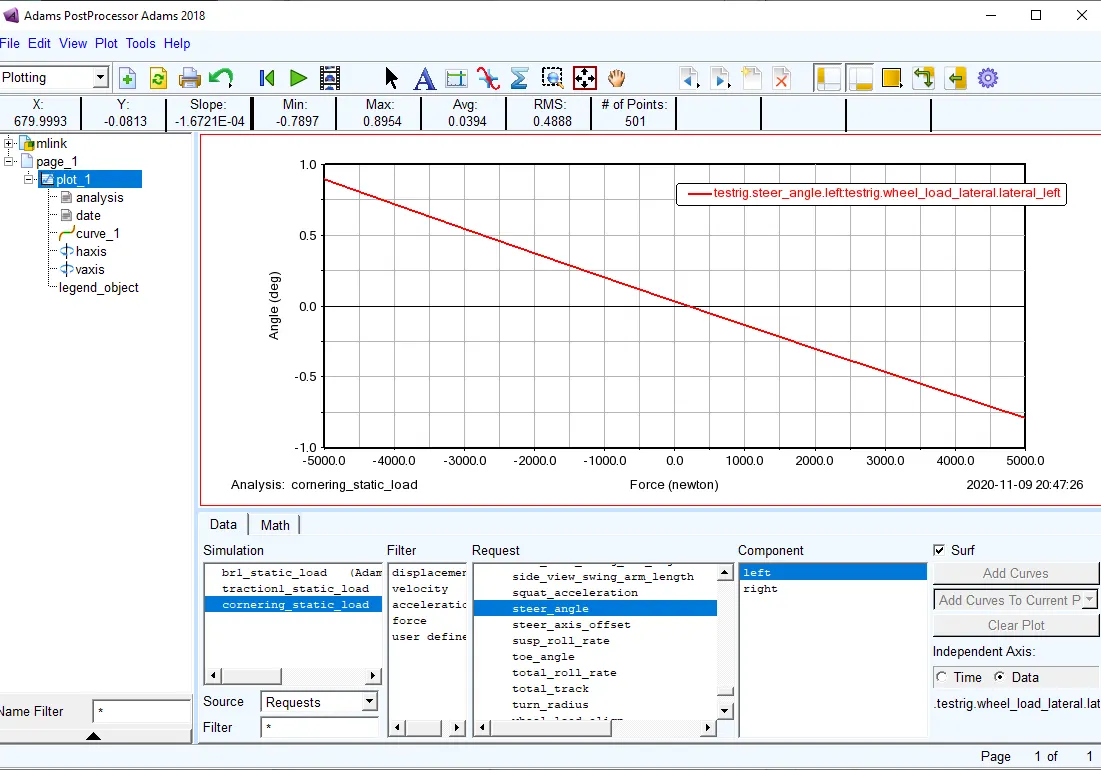
Lateral force compliance steer =1.67*10^-4deg/N==> 0.167(deg/kN)
On increasing the lateral force , the wheel toe out. Toe out in rear wheel results in Oversteer.
5.Lateral force compliance camber (deg/kN). Explain whether this is an understeer or an oversteer effect
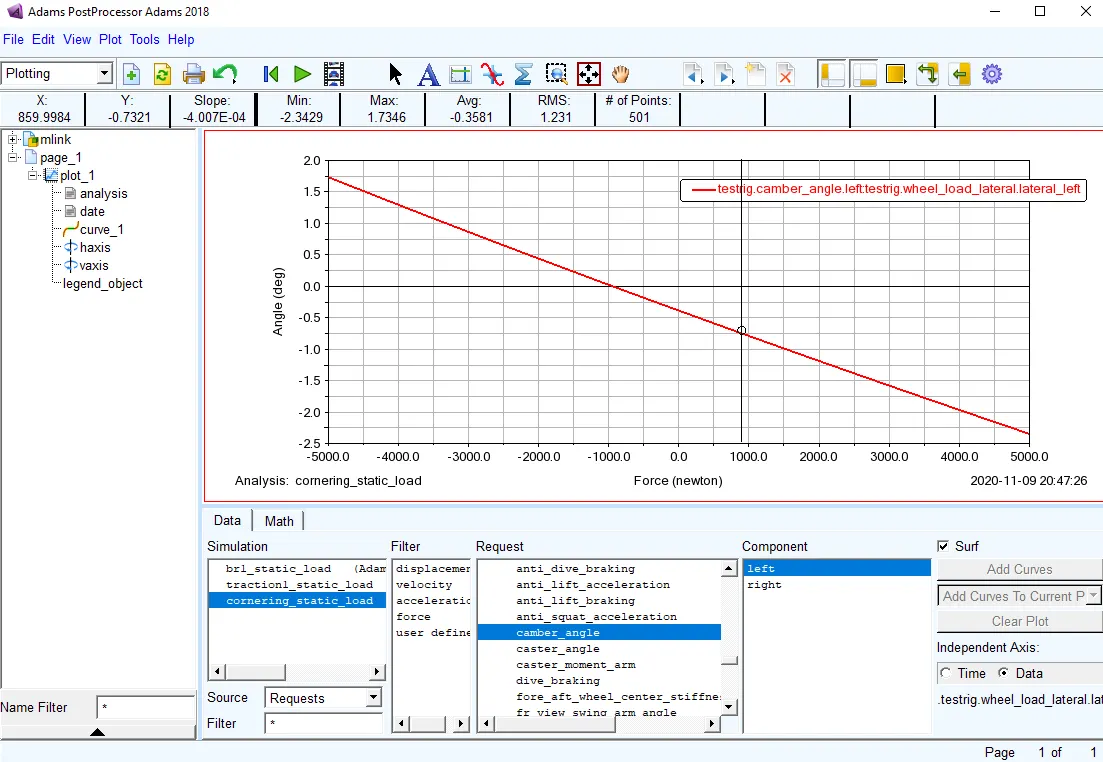
Lateral force compliance Camber =4*10^-4deg/N==> 0.4(deg/kN)
On increasing the lateral force , the wheel camber in negative , this results in Understeer.
6.Perform appropriate simulations and find out the bump steer. State whether it is an understeer or oversteer effect
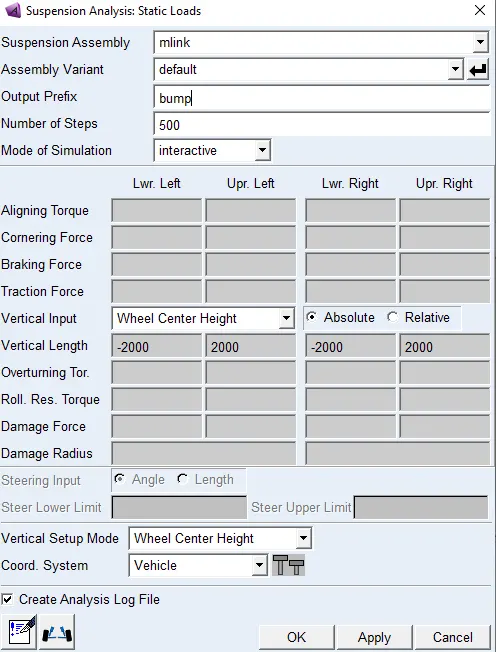
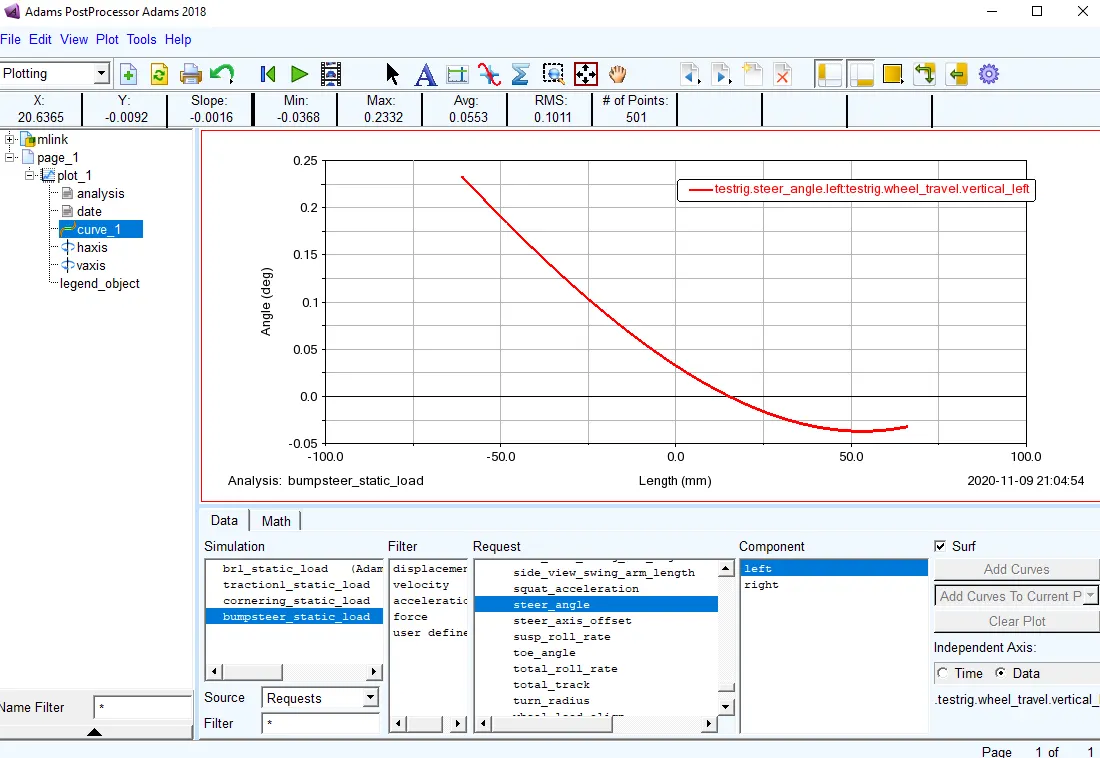
Bump Steer= 0.0015 deg/mm==> 1.5 deg/m
From the graph, it is observed that the wheel toes out during jounce, hence it is a oversteer effect.
Part 2: Tuning
You are required to tune only one parameter at a time to understand the effects of tuning correctly. Also remember this is a multilink suspension. Any change you make affects a lot of parameters. So when asked to tune a parameters, you will have to find out the right tuning knob.
Optimize the hardpoints to achieve a bump steer of +2.6 deg/m. Is this now an understeer or oversteer effect?
Parallel wheel travel analysis is carried out:
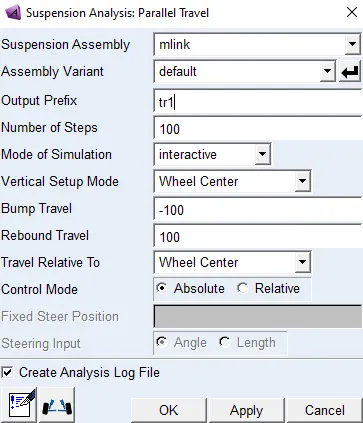
Hardpoints before modification:
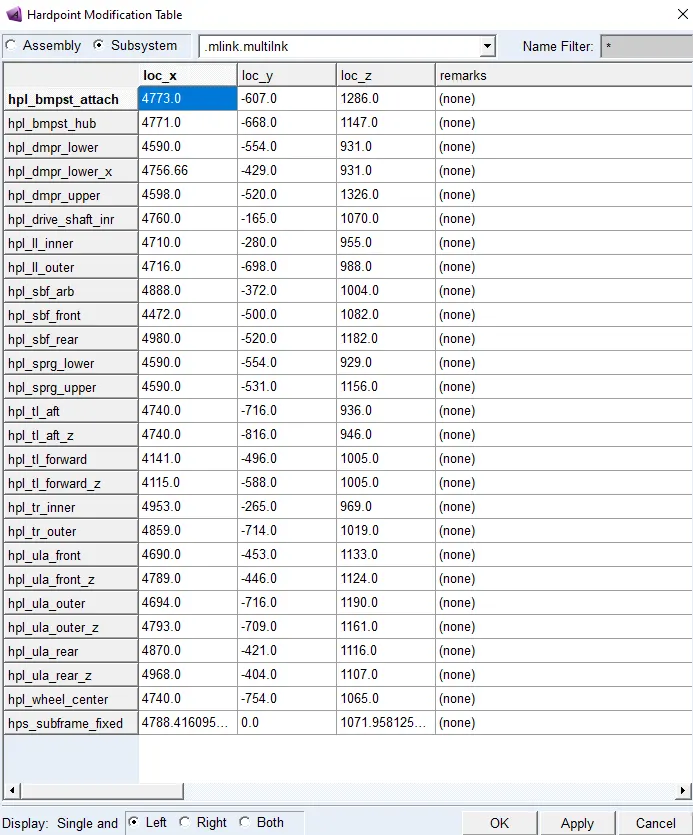
Bump steer=2.4 deg/m
Hardpoints after modification:
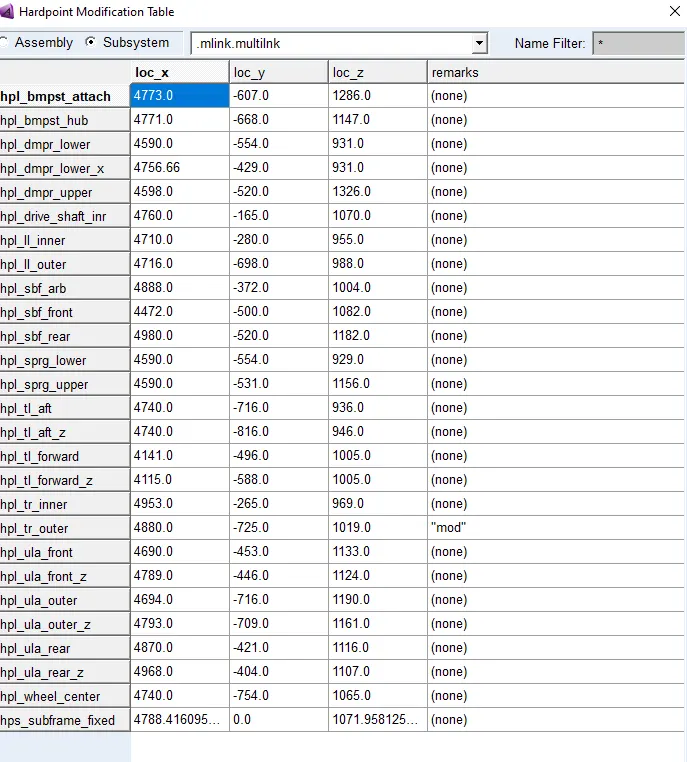
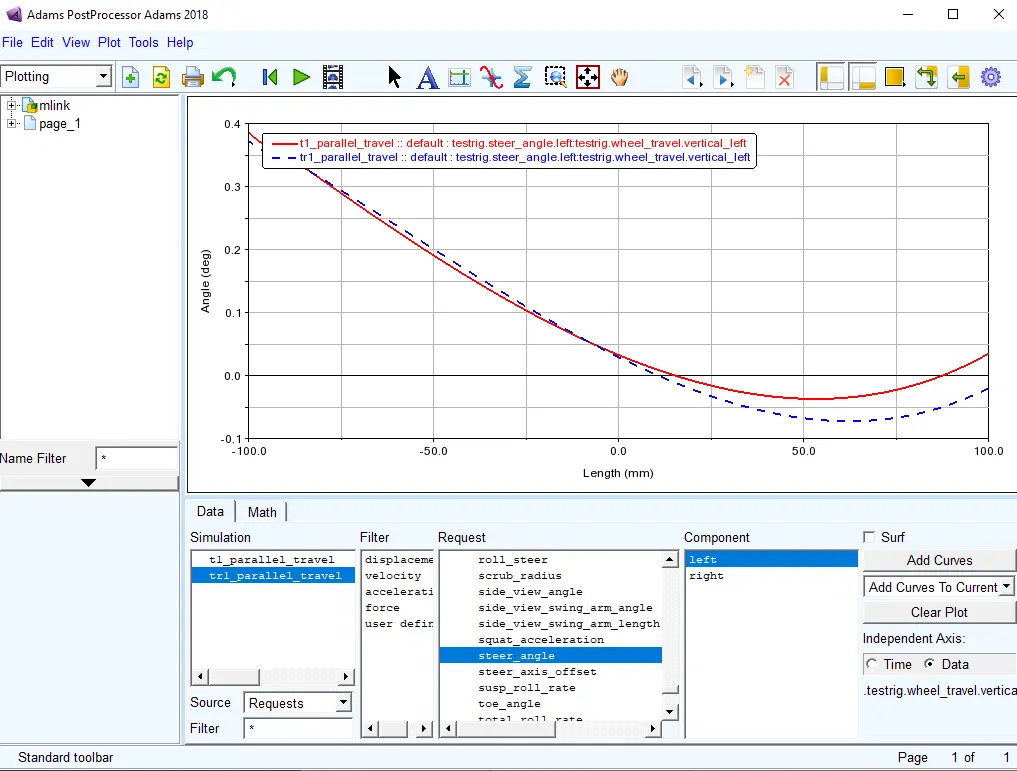
Bump steer=2.6 deg/m is achieved.
From the graph, it is observed that the wheel toes out during jounce, hence it is a oversteer effect.
Optimize the bushings (one bushing at a time) to achieve the following. For both cases, explain which bushing you changed and why
Target: Traction wheel center recession – stiffness of ~500 N/mm
Before Tuning:
Traction wheel center recession – stiffness of 952 N/mm
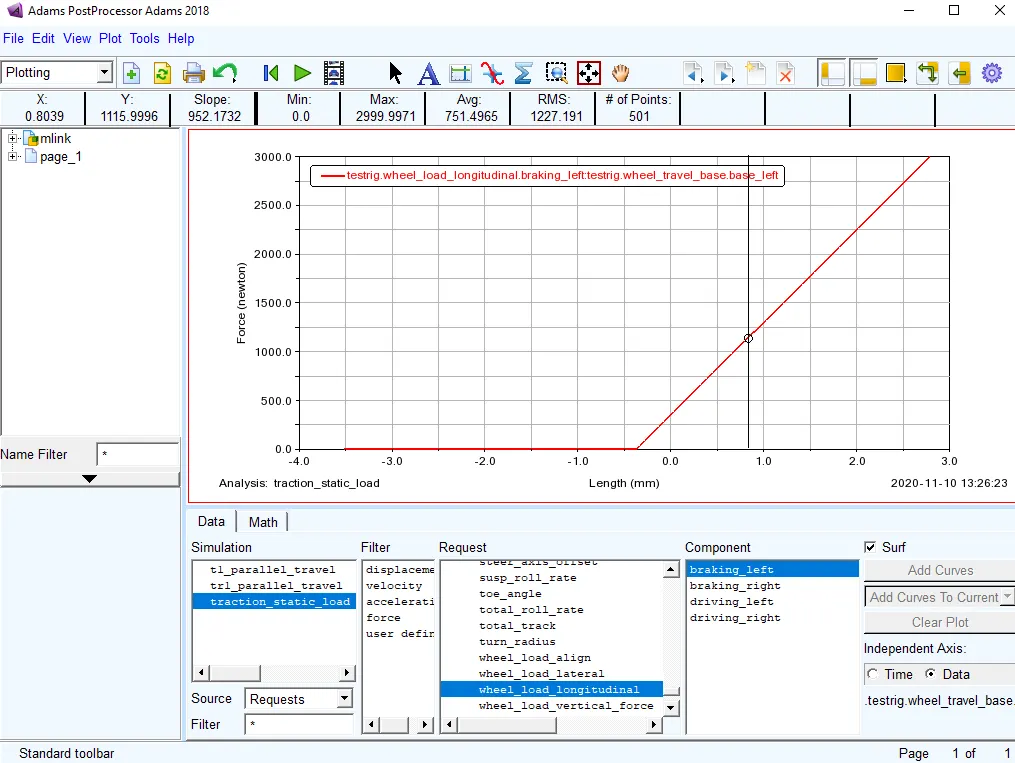
After Tuning:
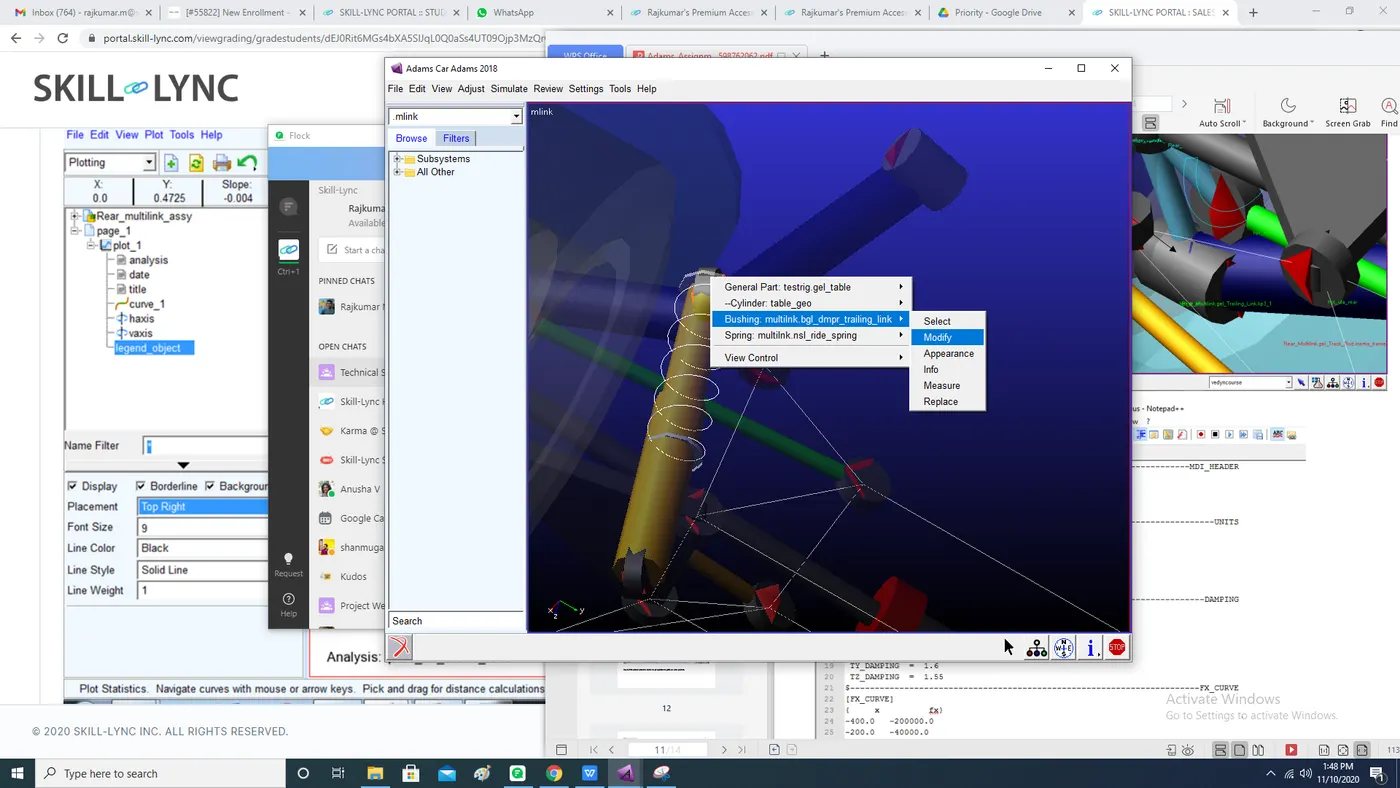
Trailing link bushing properties is modified, since it has more impact in wheel travel.
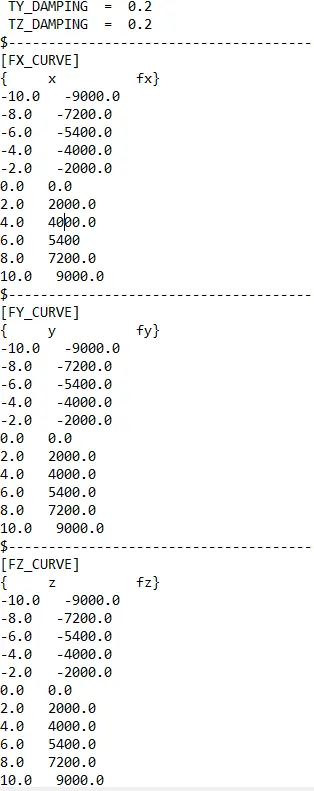
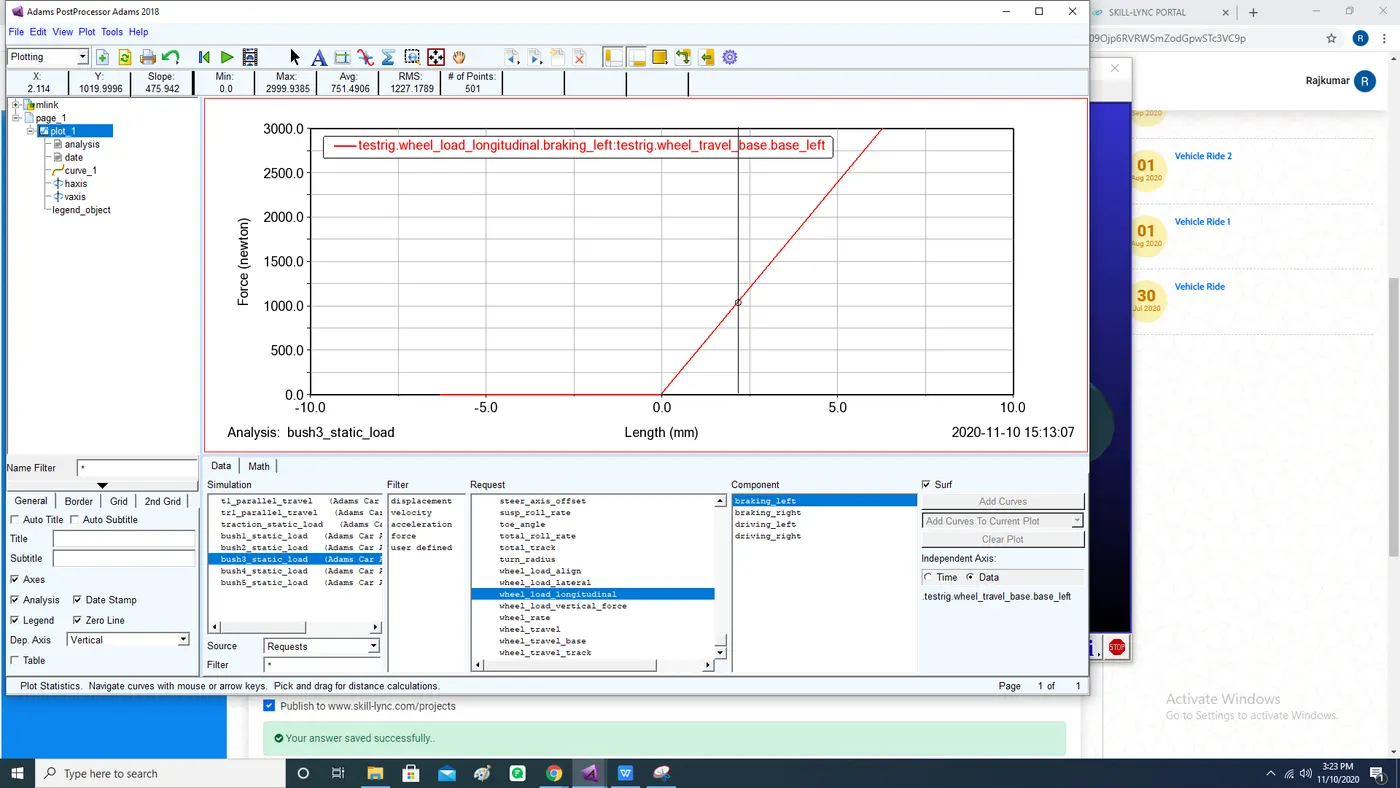
Traction wheel center recession – stiffness of 475 N/mm
Target:Camber compliance of 0.45 deg/kN.
Before Tuning: On running parallel wheel simulation, Camber gradient=0.002 deg/N ==> 0.2 deg/KN
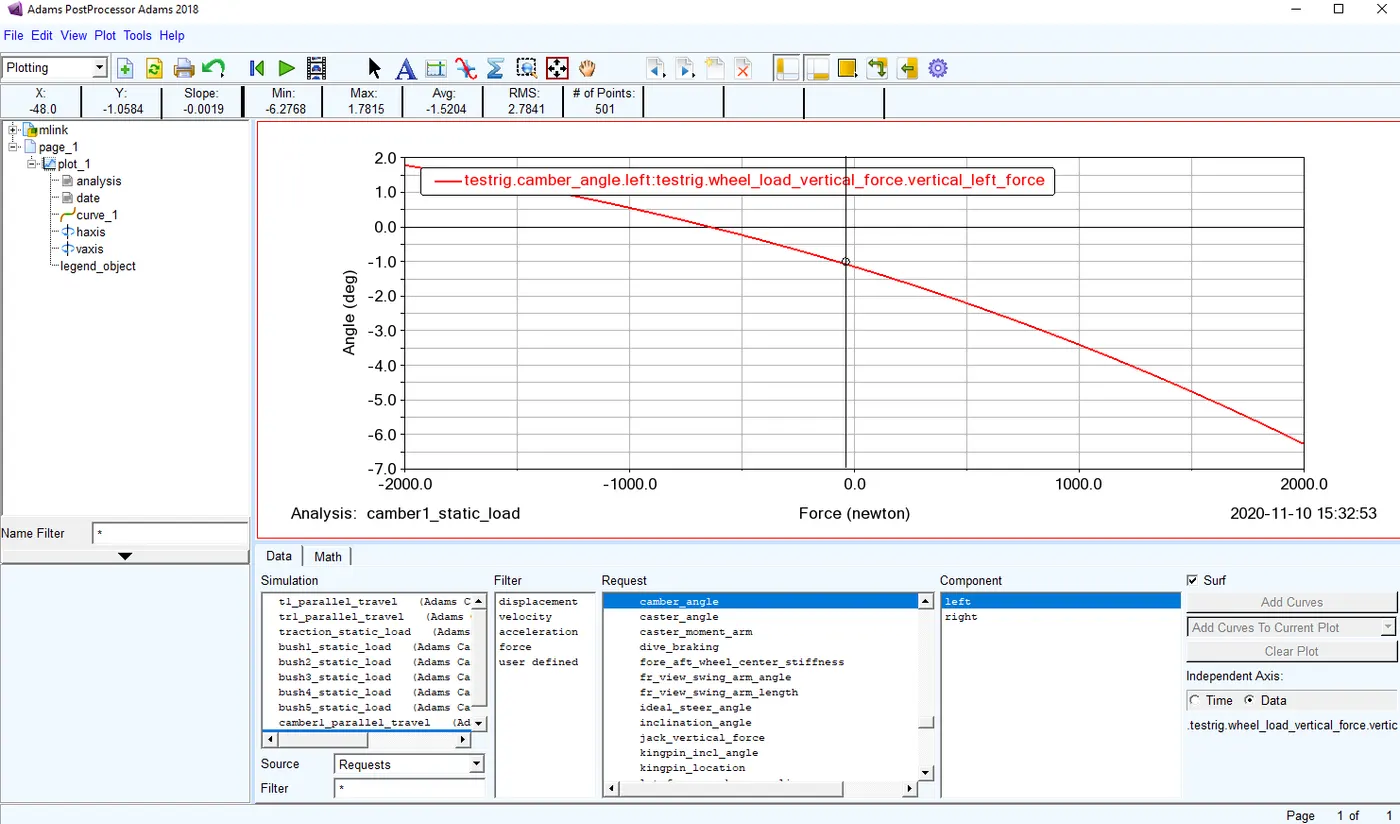
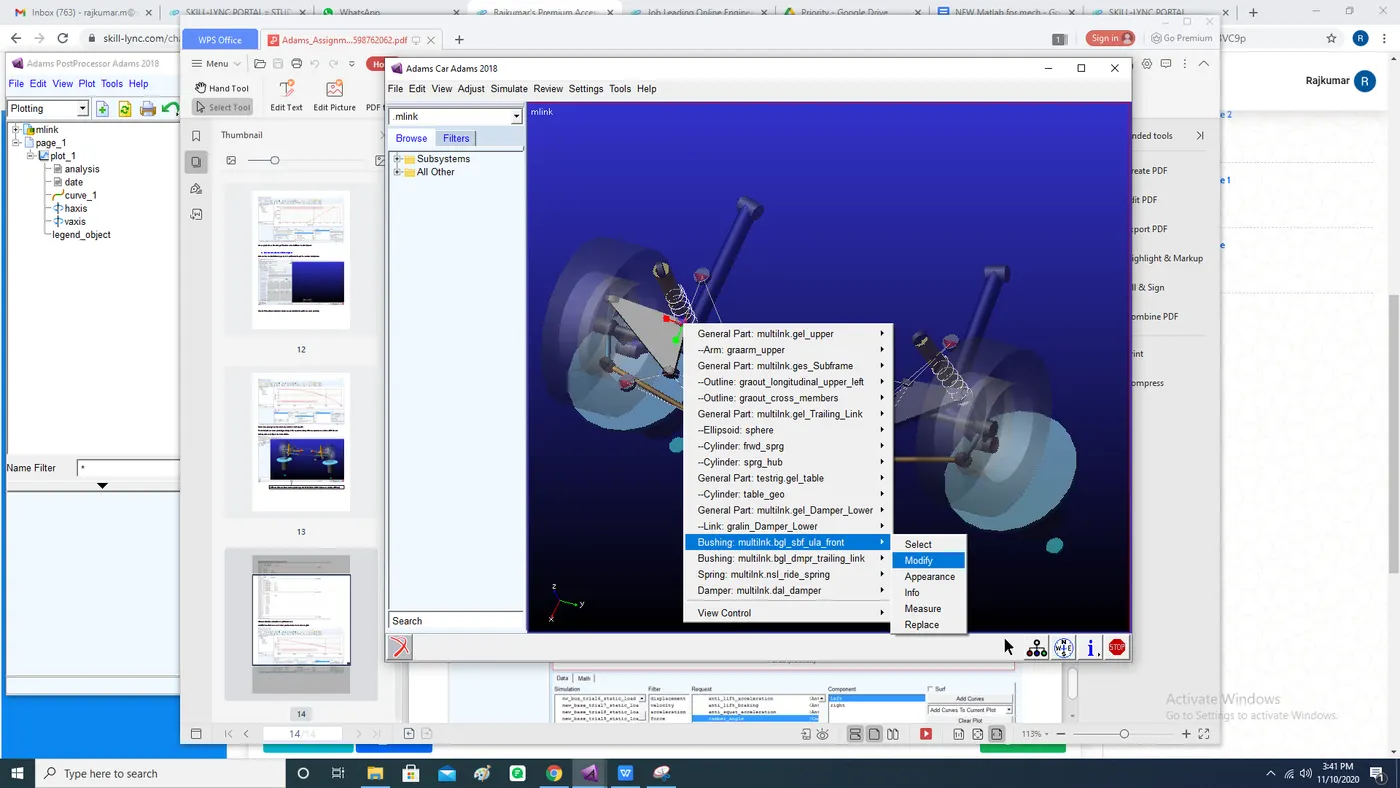
Upper contral arm bushing are varied since it has more impact to the Camber change.
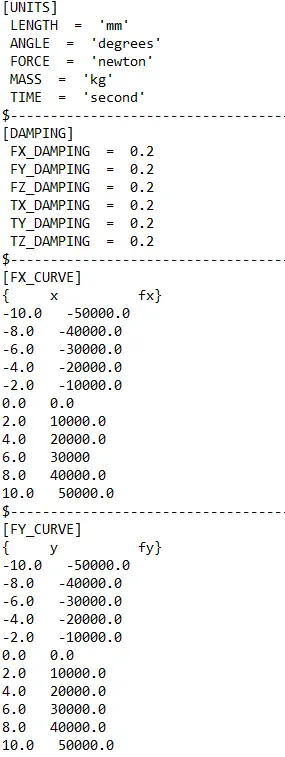
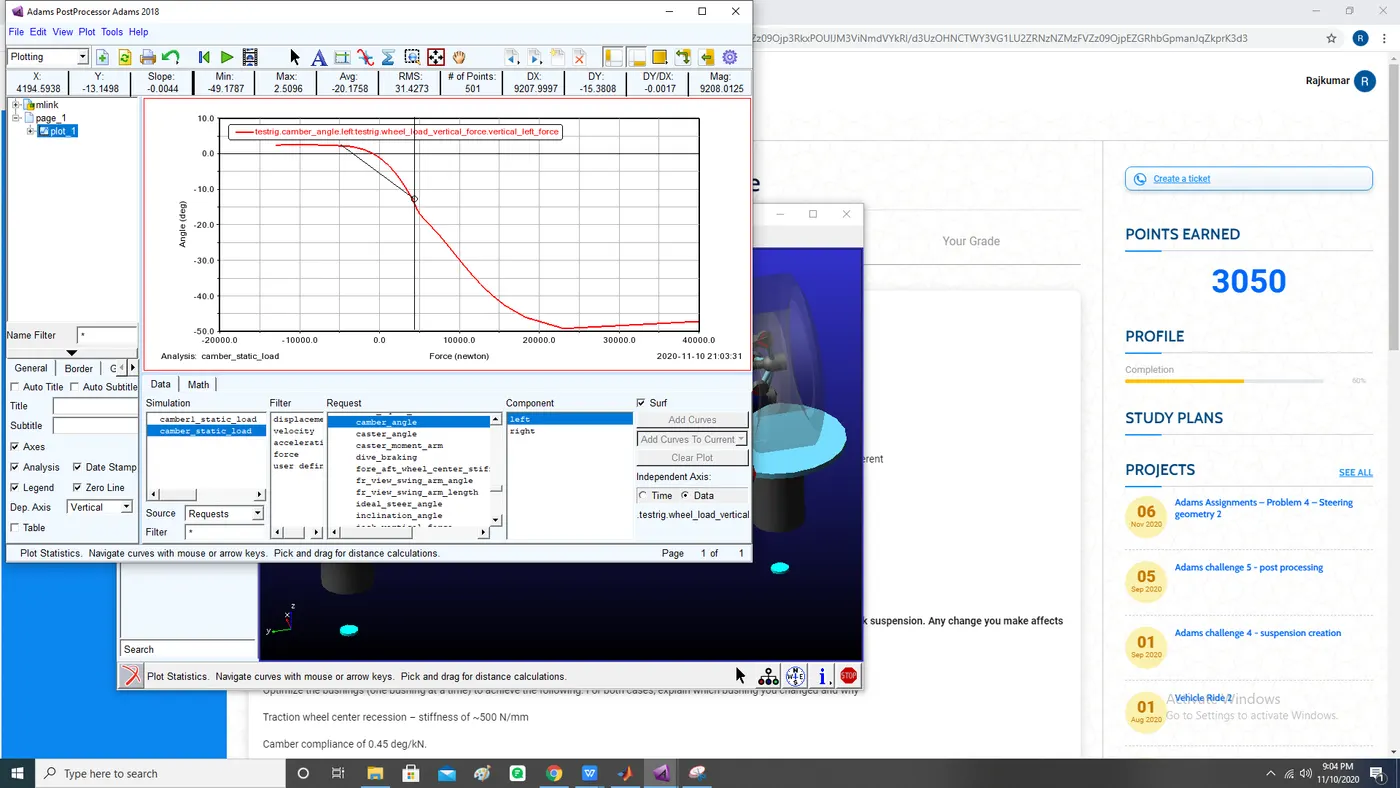
After Tuning: On running parallel wheel simulation, Camber gradient=0.0044 deg/N ==> 0.4deg/KN