Flow over a Mercedes Benz Actros Truck using StarCCM+
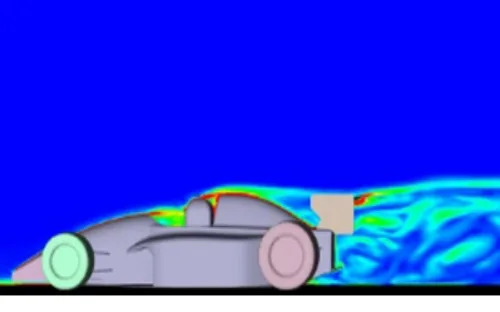
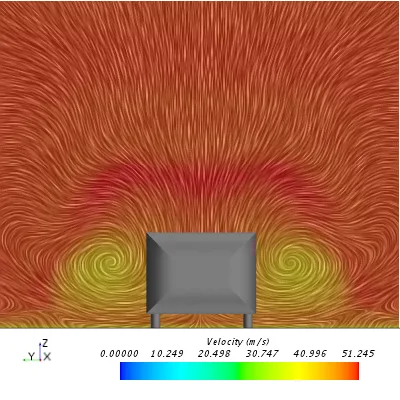
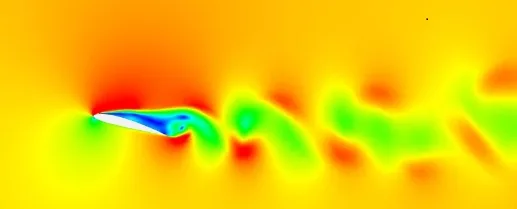
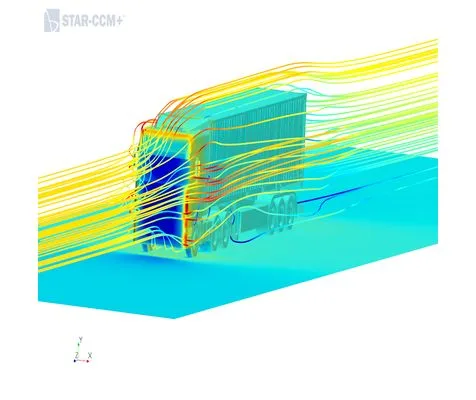
This project deals with simulating the flow around a Mercedes Benz Actros truck with and without the trailer attachment, We will be studying the production of wake and how the trailer attachment affects the wake produced by the tractor and the effect this has on the production of drag on the vehicle. Suitable reports and plots will be used to measure the drag coefficient and to assess convergence. Various post processing techniques can be used to provide animations that clearly show the flow patterns.
- Duration
- 1 month
- Fee
- ₹30,000
- For
- B.E Mech/Aero/Auto/Production
What will you do in this project?
In this project, you will work on a Mercedes Benz Actros Truck and setup for cases with and without the trailer. The simulations will be run for both cases and the drag produced will be studied and analysed based on how separation takes place. The following steps will be followed for this project:
Benefits of this Project
This project deals with simulating the flow around a Mercedes Benz Actros truck with and without the trailer attachment, We will be studying the production of wake and how the trailer attachment affects the wake produced by the tractor and the effect this has on the production of drag on the vehicle. Suitable reports and plots will be used to measure the drag coefficient and to assess convergence. Various post processing techniques can be used to provide animations that clearly show the flow patterns.The project is an advanced level project
- This project is useful for undergraduate, graduate or post graduate students looking to understand how to setup an external aerodynamics simulation in StarCCM+
Pre-requisites
- Must be comfortable with setting up a case in StarCCM+
- Need basic background in CFD and Aerodynamics
- Need clear understanding of turbulence models and meshing considerations
Learning Outcome
- You will learn StarCCM+
- Understand the importance of a good mesh and the y+ value
- Production of wake and how different geometries affect the wake and drag production