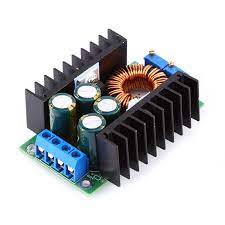
Loss Calculation of a DC/DC Converter using MATLAB
Any device has power losses and the calculation of power losses helps in evaluating and improving the quality of the device. In this project, the students will perform loss calcula…
DussehraFestive scholarship on Skill-Lync courses, this week onlyFestive scholarship is openOffer ends Wed, 21 Oct, 11:59 pm IST.
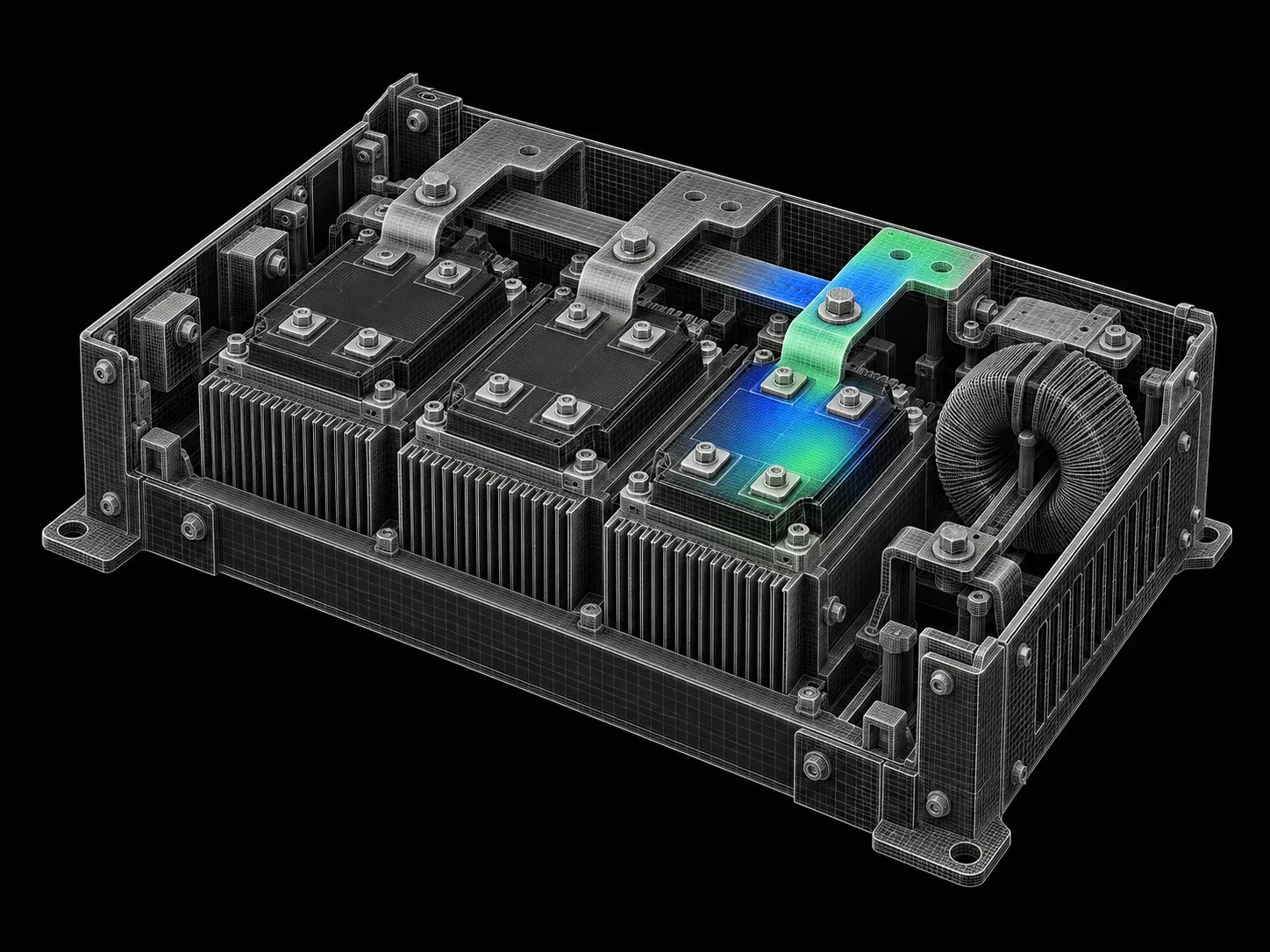
A 3 month course which covers the design concepts of power electronic converters. The course is designed form an industry perspective with 2 projects
In this module, the students will learn about the basics of power electronics, different types of power converters that are used in industry, and their applications. The topics include
The successful design of Power converters requires efficient component selection. Another major part of the design is meeting the different Industry standards. In this module, the students will learn about different power electronic components and an overview of the industry standards.
The heart of every power converter is a switching device, and in this module, the students will learn which devices are used in different topologies, and why?
With the evolution of semiconductor technology, wide bandgap devices are now popular with the benefits of higher switching frequency, reducing the overall size of the power converter. In this module, the students will learn the following topics
In this module, the students will learn how to operate a DC/DC converter or DC/AC converter with different switching methods and understand their pros and cons. The topics include
Modeling a power electronics converter in real-world application requires regulation of output voltage/current. In this module, the students will learn the basics of control systems and transfer function derivation. Also, they will learn about Buck Converter Design and analyze the transfer function. The topics include
Magnetic design is crucial in any power supply, DC-DC converter applications, gate driver design. In this module, the students will investigate the different concepts of magnetic design and design a push-pull transformer. The topics include
The first step in implementing any power converter is to determine which topology suits the desired application. In this module, the students will learn different inverter topologies that are used in the industry. The topic include
Inverters are one of the most essential power conversion devices, that can be found on UPS, TV, Electric Vehicles, Substations, etc. In this module, the students will understand the basics of inverter and single-phase inverter design. The topics include
Electric vehicles and other industrial applications rely upon rotating machines, and both DC and AC machines are widely used. In this module, the students will learn about the basics of electromagnetics and the necessary background needed to understand AC machines.
In this module, the students will learn about the types of heat losses in power electronics devices, how to model them, and design an efficient cooling system. The topics include
While designing any high-frequency power converter, the major challenge that a designer faces is on suppressing the switching transients on the switching devices. Since most of the failures on switching devices are because of high voltage transients. In this last module, the students will learn about the Snubbers, their applications, and their design. The topics include
Our projects are designed by experts in the industry to reflect industry standards. By working through our projects, Learners will gain a practical understanding of what they will take on at a larger-scale in the industry. In total, there are 2 Projects that are available in this program.
Any device has power losses and the calculation of power losses helps in evaluating and improving the quality of the device. In this project, the students will perform loss calcula…
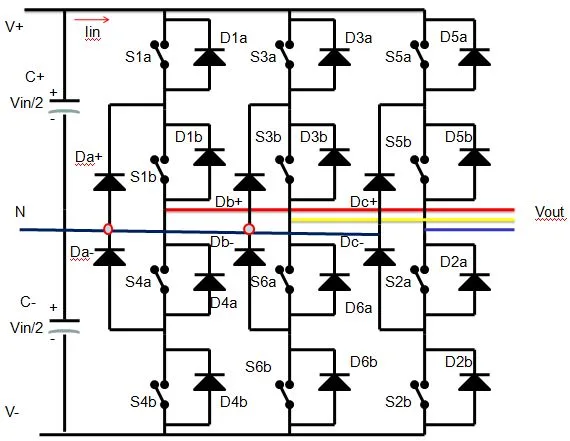
Electric vehicles are replacing the conventional IC engine vehicles, and a three-phase inverter is one of the important components of an EV. In this project, the students will desi…
Become job ready with our comprehensive industry focused curriculum for freshers & early career professionals
You will learn the fundamentals of power electronics, power converters, and switching models to model, design, and run actual power converters. You will also learn software like MATLAB to design and model power-electronic convertors and PSIM for circuit simulation.
You will need a basic understanding of electrical engineering concepts like circuit theory, power electronics basics, understanding of MATLAB and Simulink, and controls theory.
Yes, The focus of project 2 of the course concentrates on EV applications with the help of an induction motor.
You can complete the course in only three months.
A counsellor will walk you through the syllabus, projects and fee options — and tell you honestly if another course suits you better.