What Beginners Should Know About Data Structures and Algorithms!
Computer professionals are some of the highest paid in any industry, due to the constant demand for programmers, coders, and testers. Now is the best time to ride the wave and learn about computer science breaking into the field.
 Navin Baskar·19 Feb 2023·5 min read
What Beginners Should Know About Data Structures and Algorithms!

Computer professionals are some of the highest paid in any industry, due to the constant demand for programmers, coders, and testers. Now is the best time to ride the wave and learn about computer science breaking into the field. This blog will introduce the fundamentals of data structures and algorithms and how they can be used to solve complex problems. It will cover topics such as linked lists, trees, sorting algorithms, etc. By the end of this guide, you'll better understand how to use data structures and algorithms to solve complex problems.
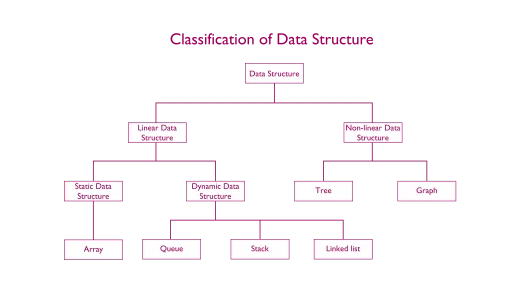
Introduction to Data Structures
Data structures are used to store, organize, and manipulate data. They are the foundation of efficient algorithms and allow us to solve complex problems.
Types of Data Structures
The different data structures are as follows:
Arrays:
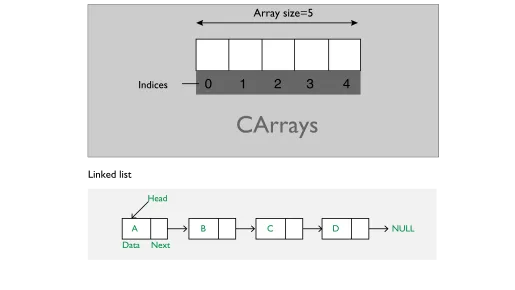
Arrays are the most basic data structure used to store a collection of elements of the same data type. These are indexed, meaning that each element is stored at a specific location in the array. These can be used to store a variety of data types, such as numbers, strings, and objects.
Linked Lists:
Linked lists are a type of data structure that stores elements in a linear fashion. Unlike arrays, linked lists are not indexed, meaning that elements are not stored at a specific location in the list. Instead, each element is connected to the next element in the list. Linked lists are often used to implement stacks, queues, and other complex data structures.
Trees:
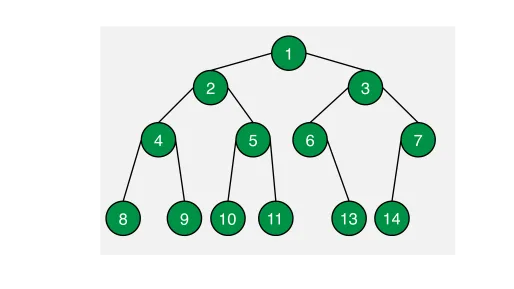
Trees are a type of data structure that stores data in a hierarchical fashion. Trees are composed of nodes, which can have any number of children. Trees are often used to store and manipulate data more efficiently than a linear structure, such as an array or linked list.
Graphs:
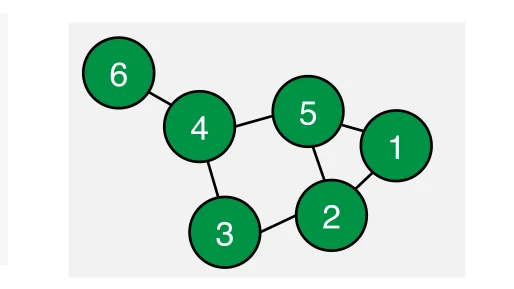
Graphs are a type of data structure that stores data in a network-like structure. They are made up of vertices or nodes and are connected using edges.
Introduction to computer algorithms
Algorithms are a fundamental part of computer science and are used to solve a wide variety of problems. Computer programs are a set of instructions that are used to perform a specific task. Algorithms are used in many areas of computer science, including software engineering, artificial intelligence, and data mining.
Applications of computer algorithms
Algorithms can be used to solve problems in a variety of ways. Some algorithms are designed to find the most efficient solution to a problem, while others are designed to find the best solution. Algorithms can also optimize a computer system's performance or help with decision-making. Algorithms can be used to solve problems in a variety of ways. For example:
- Algorithms can be used to sort data.
- To search for specific information
- To find the shortest path between two points
- Algorithms can also be used to find patterns in data and predict future events.
- Algorithms are used to automate tasks
- Sorting data
- Searching for specific data
- Algorithms are also used in machine learning
- Machine learning algorithms create computer systems that can learn from data and make predictions.
- Facial Recognition
- Natural Language Processing
- Autonomous Vehicles
Understanding the Complexity of Algorithms
Understanding the complexity of algorithms is essential for any programmer. It helps to determine which algorithms are best suited for a particular task. The complexity of algorithms is measured by the amount of time and space required to complete a task. A simple algorithm may take only a few seconds to complete a task, while a complex algorithm may take hours or even days in some cases, like Machine Learning (ML) and Deep Learning (DL) algorithms used for Artificial intelligence (AI). Additionally, some algorithms require more memory or storage space than others.
Two factors typically measure the complexity of an algorithm are:
- Time complexity - it measures how long it takes to complete a task
- Space complexity - it measures how much memory or storage space is needed
An algorithm's time and space complexity can be determined by analyzing the number of operations it performs and the amount of data it needs to process.
For example, a sorting algorithm may require more time and space if the input data is large. Similarly, a search algorithm may require more time and space if the data is not sorted.
Tips for Learning Data Structures and Algorithms
Below are some tips to learn data structures and algorithms:
- Start with the basics: Before diving into complex data structures and algorithms, it is important to understand them. Take the time to learn the fundamentals of data structures and algorithms, such as linked lists, stacks, queues, trees, and sorting algorithms; there are many resources online to help you get comfortable with the basic, like Skill-Lync, we are an online platform providing courses on an in-demand topic like Data Structures and Algorithms.
- Practice, practice, practice: The best way to learn data structures and algorithms is to practice them. Try to solve as many problems as possible and use different techniques.
- Take advantage of online resources: Many free online resources help you learn data structures and algorithms. Explore these resources and use them for self-study.
- Work on projects: Working on projects is a great way to learn data structures and algorithms. Try to find a project that interests you and use it to practice your skills. Skill-Lync provides hands-on, project-based learning to help students understand complex concepts.
- Don't be afraid to ask for help: If you are stuck on a problem or don't understand something, don't be afraid to ask for help. There are many online forums and communities that can provide you with the help you need.
With a solid understanding of these concepts, beginners can move on to more advanced topics such as artificial intelligence, machine learning, and natural language processing. Skill-Lync offers courses in post-graduate programs on machine learning and artificial intelligence using python, machine learning fundamentals in depth, post-graduate programs in data analysis and machine learning etc. With practice and dedication, anyone can become an expert in data structures and algorithms. To learn the concepts of data structures and algorithms in depth and get a complete understanding of even the most complex data structures and algorithms, check our expert-led courses on them.