Importance of Datasets in Object Detection, Identification, and Classification
Have you ever wondered about the technology that recognizes your face and applies a filter while taking a snap? This augmented reality filter was discovered by a Ukrainian startup that taps into the fascinating technology called Computer Vision.
 Skill-Lync·25 Jun 2023·4 min read

Importance of Datasets in Object Detection, Identification, and Classification
Have you ever wondered about the technology that recognizes your face and applies a filter while taking a snap? This augmented reality filter was discovered by a Ukrainian startup that taps into the fascinating technology called Computer Vision.
For applying filters, like placing the hat accurately on the head, the cameras use image processing technology which utilizes object detection algorithms.
From a broader perspective, this technology is used in medical image sensing, autonomous driving, remote sensing, face detection, and many other applications.
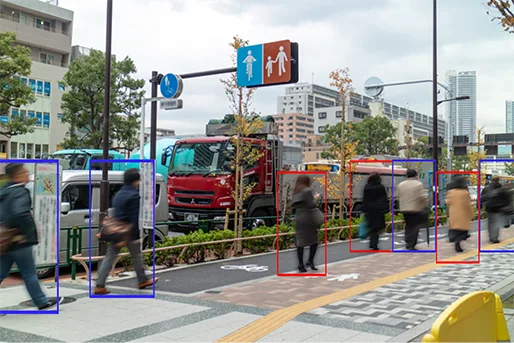
But how do they accurately identify the location and type of the object with precision?
To achieve this, engineers train the machine learning algorithms with predefined data sets, which then find the match between the real-time data and models.
How Does Object Detection Work?
Object detection is an application of computer vision in which the algorithm recognizes the image type and locates them in the frame using boundaries. It predicts the types and classes of the object within the vision range by recognizing various features like shape, edges, and color.
The computer vision object detection algorithm first locates the real-time or digital images in the frame and analyzes its features. Object detection can be achieved by two methods.
- Image processing: It is an unsupervised learning process where the image is extracted in a digital format and then analyzed for its features. In this case, there is no necessity for predefined data sets, and it is predicted based on the feature maps that the technology has created on its own. Also, the image processing technique does not require high graphical processing power.
- Deep neural network: Deep architectures possess a high capacity to learn more complex models and can accurately detect the objects in the frame. The DNN-based regression can capture strong geometric information that is utilized for classification. This supervised learning algorithm requires high computational power for predicting object classes. Computer vision, which combines deep learning and object identification, provides the accurate information you need to respond to security issues and discover a solution.
Why Are Datasets Needed for Object Detection?
Human eyes can easily recognize the image and locate it. Our brains are trained over the years to identify the object and shapes. In a similar way, the algorithms must be trained using large data sets for object detection.
As mentioned earlier, for accurate prediction of objects, the cameras capture their features and process them to locate them in the frame and classify their types. Object detection in computer vision is one of the fundamental concepts Hundreds of datasets are available online for training DNN algorithms. These datasets store digital images in the form of CAD models that can be better understood by algorithms.
Popular Data Sets for Object Detection
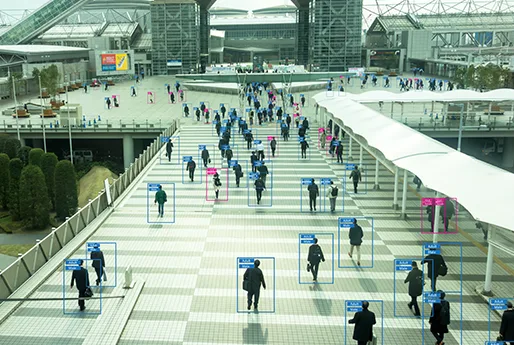
There are many generic datasets created with millions of images for different classes of object detection. Let us explore a few below.
- COCO (Common Objects in Context): COCO is one of the most widely used datasets for object detection. It contains over 200,000 labeled images covering 80 object categories, with a focus on object instance segmentation. The dataset is large and diverse, making it suitable for training advanced object detection models.
- Pascal VOC (Visual Object Classes): The Pascal VOC dataset is another popular benchmark dataset for object detection. It consists of 20 object categories and provides both bounding box annotations and object segmentation masks. The dataset has been widely used in computer vision research and competitions.
- ImageNet: ImageNet is a massive dataset containing over 1.2 million labeled images spanning 1,000 different object categories. While ImageNet is primarily used for image classification, it also includes bounding box annotations for a subset of the images, making it suitable for object detection tasks.
- Open Images: Open Image is a large-scale dataset that contains over 9 million images with object-level annotations. It covers a wide range of object categories and provides bounding box annotations for object detection tasks. The dataset also includes additional annotations, such as segmentation masks and visual relationship annotations.
- KITTI: The KITTI dataset is commonly used for autonomous driving applications and focuses on object detection and tracking in real-world driving scenarios. It includes various sensor data, such as images, lidar point clouds, and camera calibration parameters. The dataset provides annotations for multiple object classes, including cars, pedestrians, and cyclists.
Conclusion
Computer vision object detection technology is used in many applications, including face detection, species detection, clothing detention, and also in autonomous vehicles. Though there are many open-source data sets for object detection available, there may be a class imbalance.
To get a deeper knowledge of the world of computer vision and datasets, pursue a computer vision course offered by Skill-Lync. Talk to our experts to get complete course details.