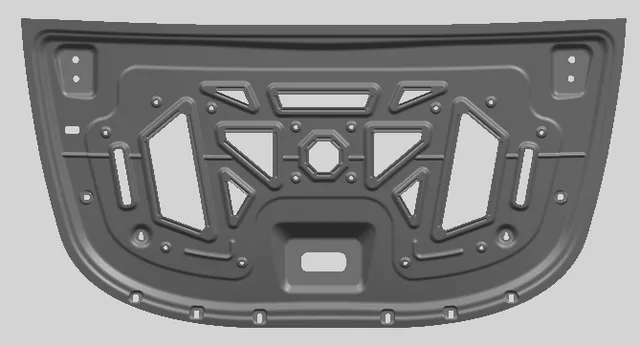
Designing of Hood
In this particular project, you will be working on designing the inner panel of the hood, according to EURO NCAP standards.
Black FridayUpgrade your career this Black Friday. Get up to ₹60,000 Scholarship on IIT programsUp to ₹60K Black Friday Scholarship52 seats leftOffer ends Fri, 27 Nov, 11:59 pm IST.
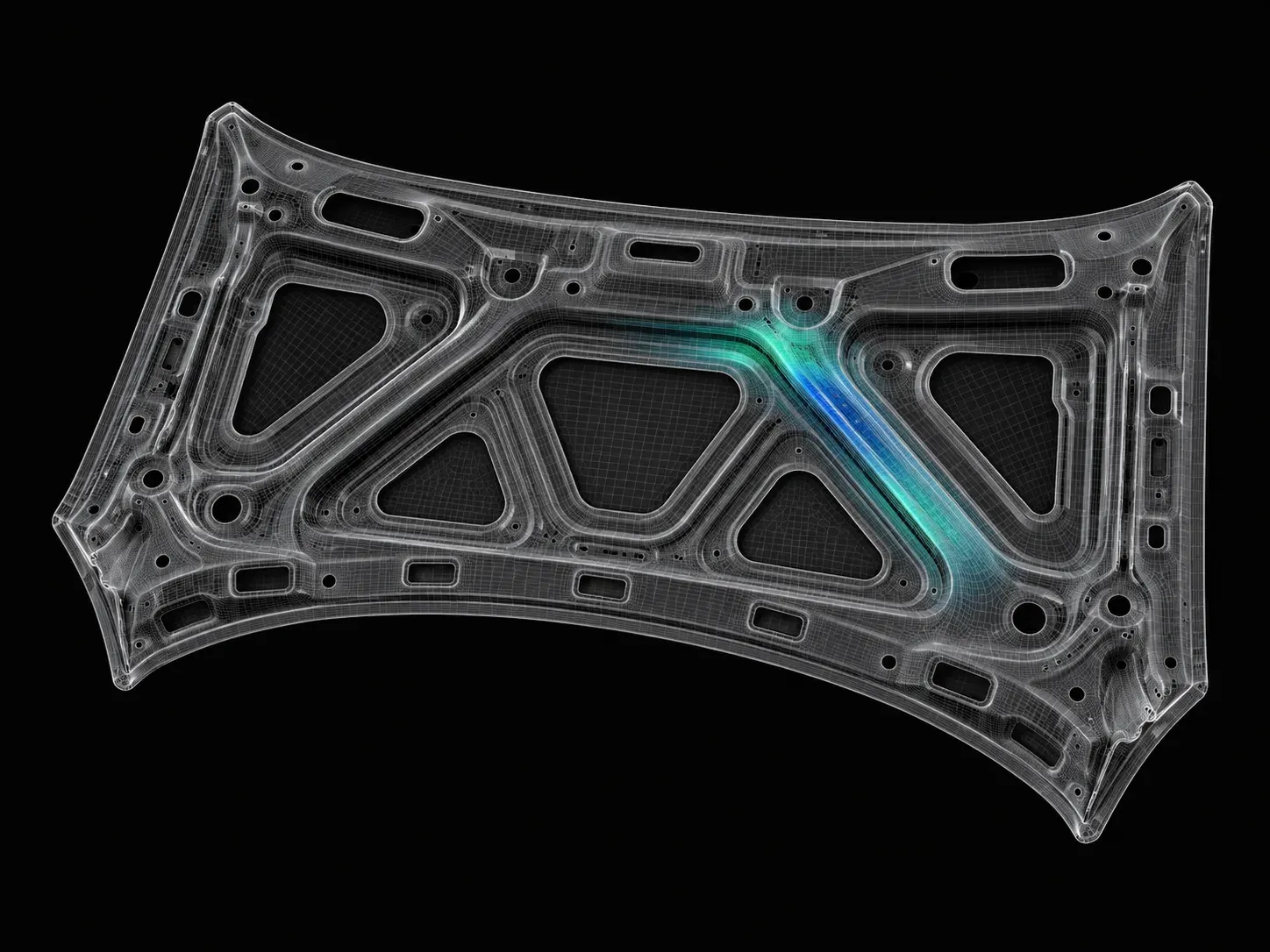
The Automotive Sheet Metal Design course provides an outline of the current Body in White (BIW) component design factors and detailed explanations about their significance to part function, cost, and reliability.
Automotive Sheet Metal Design using Siemens NX CAD / CATIA V5 is an online course from Skill-Lync: 12 weeks, 18 hours of content and 4 industry projects.
59 min of this course's own recorded sessions, with transcripts, on Grow by Skill-Lync:
Compare all 21 Skill-Lync automotive design courses · Compare all 8 Skill-Lync BIW design courses · Compare all 23 Skill-Lync CATIA courses · Compare all 8 Skill-Lync plastic and sheet metal design courses · Compare all 12 Skill-Lync Siemens NX courses · Best sheet metal design course in India: other providers compared · Best Siemens NX course in India: other providers compared
Our projects are designed by experts in the industry to reflect industry standards. By working through our projects, Learners will gain a practical understanding of what they will take on at a larger-scale in the industry. In total, there are 4 Projects that are available in this program.
In this particular project, you will be working on designing the inner panel of the hood, according to EURO NCAP standards.
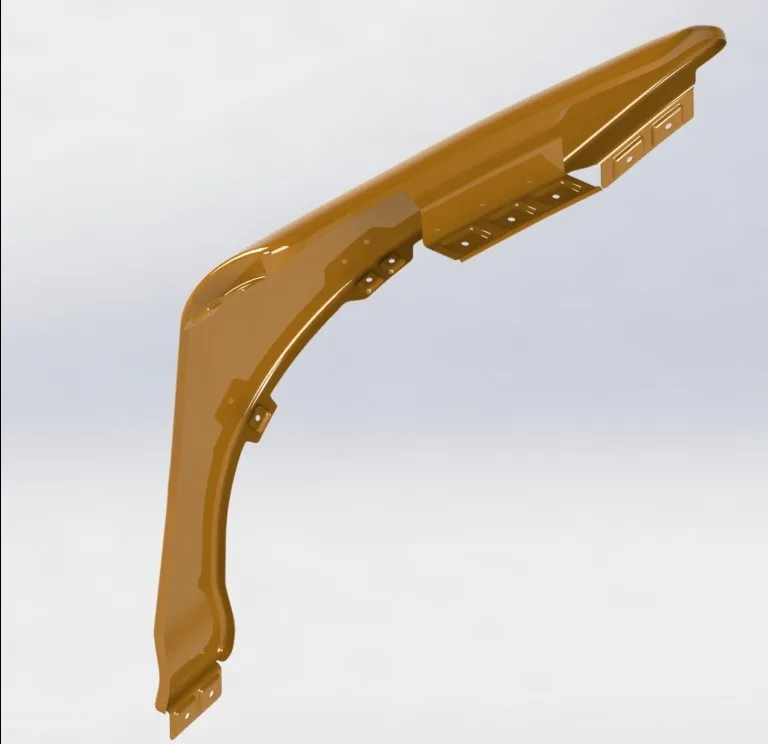
In this particular project, you will be working on designing the Fender, according to EURO NCAP standards.
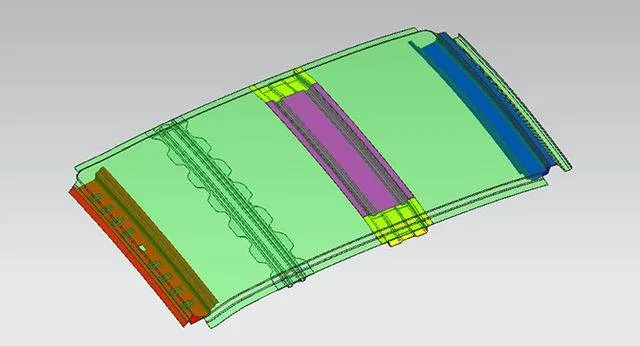
In this particular project, you will design a complete roof assembly with all the necessary reinforcements using automotive standards.
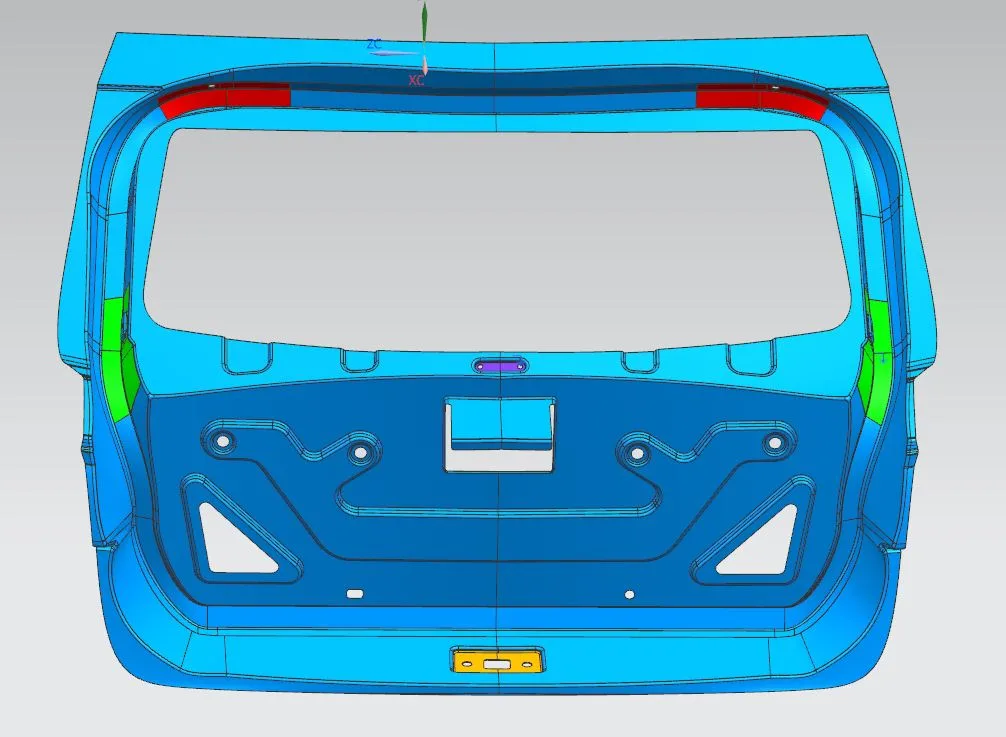
In this project, you will design and develop the complete Tailgate assembly using the given styling data.
Video stories from learners of related mechanical programs, from Skill-Lync's YouTube channel.
by the Skill-Lync team
They design the thin steel panels that make a car's body shell, called the body in white (BIW): hood, fender, roof, side doors and tailgate. Each panel must fit its neighbours, be pressable in a tool and pass safety rules. This course teaches that in Siemens NX, as 6 syllabus modules and 4 projects.
The modules, in order: the vehicle development cycle; BIW basics, with steel, material selection, cross-functional teams and master sections; design method for the hood, fender, roof, back doors and side doors, built on design, functional, regulation, gap and flushness and safety requirements; a case study that converts a tailgate inner panel from cast aluminium to a deep-drawn steel part; the lock and striker mechanism; and two supplier case studies.
The 4 projects are a hood inner panel and a fender drip area, both to EURO NCAP standards, a full roof assembly with its reinforcements, and a tailgate built from given styling data. See what learners have built for these panels in the sheet metal design project ideas.
Two notes. The page bills the course as 12 weeks but lists 6 modules, so we do not map modules to weeks. And the title says NX and CATIA V5, while the tools field lists only Siemens NX CAD. One lesson title, Surface Modeling Basics Using CATIA, shows CATIA is touched on. Our reading: NX is the main tool. A separate course, Advanced Sheet Metal Design, goes deeper into NX sheet-metal features.
A Class A surface is a high-quality freeform surface judged by how smoothly it reflects light. Wikipedia says automotive Class A surfaces are built on all visible exterior surfaces, such as body panels, bumper, grille and lights. By that definition the hood outer is Class A and the hidden inner panel is not.
Strictly, Class A means the surfaces match in tangent direction and in curvature where they meet. Many people read it as G2 or even G3 continuity. G0 means two surfaces touch. G1 means they also leave in the same direction, so there is no kink. G2 means the curvature matches too, so a reflection flows across the join without a jump. Think of the reflection of a window sliding over a car: a G2 join does not break it.
Wikipedia also notes that Class A is not standardised. It cites a proposal from French engineers that sets Class B at G0 and G1 only. Each car maker sets its own limits, so treat any G-number as an example.
The Class A skin comes from the styling team. The tailgate project here starts from given styling data, and your job is to build the panel and its inner structure to fit it. That split is our reading of the project brief, not a statement from the course.
Hemming joins the outer and inner closure panels of a hood, door or tailgate. The flange, a narrow strip along the edge of the outer panel, is folded over the edge of the inner panel. The result is a clean rolled edge with the inner panel gripped inside it.
Wikipedia adds two points. The accuracy of the hem strongly affects how the car's outer surface looks. In press hemming, the hem is the last forming step in stamping, so it largely sets the external quality of doors, hoods and trunk lids. Robot roller hemming is another way to make the same fold.
Why two panels at all? The outer carries the visible shape. The inner adds stiffness, mounting faces for the hinge and the latch, and room for the reinforcements. The next two answers show why a formed inner panel can be so much stiffer than flat sheet at the same mass.
The syllabus does not describe a hemming lesson, but a lesson in the LMS list is titled for the hemming process and hem reliefs. That title is all we can say about it. For the flat-length maths of a hem, the sheet metal feature calculator covers hem and jog flat length and minimums.
Bending stiffness depends on how far the metal sits from the middle line, and the distance counts squared. Fold the same 100 mm of 0.8 mm steel into a hat channel and most of it sits about 10 mm from the middle instead of within 0.4 mm. Below, that gives about 1,376 times the stiffness and 53 times the section modulus, for the same mass.
Two terms first. The second moment of area is a number that scores how well a cross-section resists bending: a deep section scores high. The section modulus divides it by , the distance from the middle line to the outermost edge, and the peak bending stress is for a bending moment . A plain rectangle of width and thickness has . For a built-up shape, add each strip's own plus , its area times the squared distance to the middle line.
Take a 100 mm wide strip of 0.8 mm steel. Option A leaves it flat. Option B folds it into a hat: two flanges of 15 mm (30 mm in all), two walls 20 mm tall and a 30 mm top, so the lengths add to 100 mm. We use a thin-wall sketch with sharp corners, and the 0.8 mm is an assumed value.
t = 0.8                                   # sheet thickness, mm
flat_I = 100 * t**3 / 12                  # flat strip, 100 mm wide
flat_S = flat_I / (t / 2)                 # S = I / c, c = distance to the outer fibre
flange = 2 * (30 * t * 10**2 + 30 * t**3 / 12)   # 2 flat strips 30 mm wide, 10 mm above/below the middle
walls = 2 * (t * 20**3 / 12)              # 2 vertical walls, each 20 mm tall
hat_I = flange + walls
hat_S = hat_I / (10 + t / 2)
print(f"flat: I = {flat_I:.2f} mm^4, S = {flat_S:.2f} mm^3")
print(f"hat:  I = {hat_I:.1f} mm^4, S = {hat_S:.1f} mm^3")
print(f"hat / flat: I x{hat_I / flat_I:.0f}, S x{hat_S / flat_S:.1f}")
It prints:
flat: I = 4.27 mm^4, S = 10.67 mm^3
hat:  I = 5869.2 mm^4, S = 564.3 mm^3
hat / flat: I x1376, S x52.9
Check it by hand. Flat: mm⁴. Hat: the two 30 mm strips sit 10 mm from the middle, so . The two walls give , and the strips' own thickness adds . The total is mm⁴. With mm, mm³.
The catch: a hood is a wide plate, not a narrow beam, and the corners have bend radii that this sketch ignores. Thin walls can also buckle, and a formed shape costs tooling. Treat the 1,376 as a size of effect, not a design number. For real hood sections, with an outer skin and an inner panel, use the section modulus calculator. The bending formulas are in the Strength of Materials book, in the chapter on bending and shear stresses in beams.
Much heavier. Flat sheet gets stiffer with the cube of its thickness, so matching the hat's stiffness takes 8.90 mm of flat steel instead of 0.8 mm. One metre of the thick strip weighs 6,984 g, against 628 g for the hat: about 11.1 times the mass. This is why car panels are formed, ribbed and joined to an inner panel.
The thickness comes from . To match the hat's the flat strip needs . The mass uses steel at 7.85 g/cm³, an assumed round value inside the 7.75 to 8.05 g/cm³ range that Wikipedia gives for steel. The load case is a 20 N push at the middle of a 500 mm span with both ends simply supported, and GPa, the Young's modulus Wikipedia lists for A36 steel. The two formulas are and , where is the sag at the middle.
t, rho = 0.8, 7.85e-3                     # mm, g per mm^3 (7.85 g/cm^3, assumed)
flat_I = 100 * t**3 / 12
hat_I = 2 * (30 * t * 10**2 + 30 * t**3 / 12) + 2 * (t * 20**3 / 12)
t_eq = t * (hat_I / flat_I) ** (1 / 3)    # flat thickness with the same I
print(f"flat sheet with the same I: {t_eq:.2f} mm thick")
print(f"mass of 1 m: hat {80 * 1000 * rho:.0f} g, thick flat {100 * t_eq * 1000 * rho:.0f} g")
P, L, E = 20, 500, 200000                 # N, mm, MPa
for name, I, c in [("flat", flat_I, t / 2), ("hat", hat_I, 10 + t / 2)]:
    print(f"{name}: sags {P * L**3 / (48 * E * I):.3f} mm, peak stress {P * L / 4 * c / I:.1f} MPa")
It prints:
flat sheet with the same I: 8.90 mm thick
mass of 1 m: hat 628 g, thick flat 6984 g
flat: sags 61.035 mm, peak stress 234.4 MPa
hat: sags 0.044 mm, peak stress 4.4 MPa
Check the mass by hand. The hat has mm² of cross-section, so 1 m is mm³, which is cm³ and g. The thick strip, with the unrounded mm, is mm³, so g. Mass ratio . The sag ratio equals the ratio, 1,376, because goes as .
The catch: the 61 mm sag of the flat strip is far outside the small-deflection theory these formulas use, so read the pair as a ratio and not as a prediction. A real part is checked in CAE, which is the producibility and crash check the free lessons describe. Beads do the same job on a flat panel, and the sheet metal feature calculator has a bead-stiffness section.
The first 3 lessons are free, about 59 minutes in all, and they cover how a car body is planned before anyone draws a panel. You can watch them on the free course page. The other 34 sessions are locked, so we only know them by title.
Lesson 1 compares body-on-frame with monocoque construction, defines the body in white, and outlines the vehicle development process, including benchmarking and carry-over studies in pre-design. Benchmarking means a structured comparison with competing cars. A carry-over study lists which parts can be reused from the previous car.
Lesson 2 follows a part through CAD construction levels. CAE colleagues check producibility and crash performance, then the design releases its blank data and freezes, and suppliers quote for the parts. It then works through benchmarking examples: underbody coating on two cars, and a weight comparison of two body structures.
Lesson 3 is a video of the paint process every body goes through: the ED bath, the heating chamber, primer, underbody sealant, paint and final inspection.
The locked list includes lessons titled Understanding Section Modulus and Area Moment of Inertia, Draft Analysis and Its Importance, Gap and Flushness in Automotive Engineering, and Getting Into the OEM Industry. Those titles are all we claim about them.
They lead to BIW design engineer jobs at modest starting pay, but our data on them is small. As of 24 Nov 2026, 1 of Skill-Lync's 3,905 placement records names this course, which is too few to say anything. 16 records have BIW in the role or job title, and none says sheet metal.
We counted two ways, because the course name rarely appears alone. By program name, 1 record names this course. By role or job title, matching "sheet metal", "BIW" or "body in white", 16 records match, from 2021 (6), 2022 (8) and 2023 (2). Of those 16, 15 disclose a salary: the median is ₹2.4 LPA and the range ₹1.8 to ₹15 LPA. 9 of the 16 come from the Post Graduate Program in CAD. 2 of the 16 are fixture-design titles, a different job from panel design. Employers include Tech Pennar, Expleo, Tata Elxsi, Alten, Hinduja Tech and Segula Technologies.
The catch: 16 out of 3,905 is thin. The records are a self-reported learner sample, the data covers 2019 to 2026, and it is mostly 2021 to 2023 starting offers. It is not a placement rate, and it says nothing about pay today or what any one learner will get. Treat it as a first-job picture, not a promise.
The course page says 2 to 3 years of experience can make you a full-fledged BIW engineer. We cannot confirm that from our data.
| Course | Length | Projects | Tools | Fee |
|---|---|---|---|---|
| Automotive Sheet Metal Design using Siemens NX CAD / CATIA V5 (this page)Body panels in NX: hood, fender, roof, tailgate | 12 weeks, 18 h | 4 | Siemens NX CAD | ₹40,000 |
| Automotive Sheet Metal Design using CATIA V5Automotive sheet metal in CATIA V5, 4 projects | 12 weeks, 12 h | 4 | CATIA V5 | ₹40,000 |
| Advanced Sheet Metal Design using NXCADSheet-metal features in NX, 5 projects | 12 weeks, 7 h | 5 | Siemens NX CAD | ₹40,000 |
| Automotive BIW Design and Development Part 1 using NXCADBIW basics and three outer panels in NX | 8 weeks, 8 h | 2 | Siemens NX CAD | ₹40,000 |
| Geometric Dimensioning and TolerancingTolerances on drawings, in NX | 12 weeks, 14 h | 1 | Siemens NX | ₹40,000 |
| PG Program in CADFull CAD program: CATIA, Alias, NX, SOLIDWORKS | 48 weeks, 203 h | 32 | CATIA V5, Autodesk Alias, Siemens NX CAD, SOLIDWORKS | ₹2,75,000 |
Lengths, projects and fees are taken from each course page on 24 Nov 2026; fees are the Premium plan in INR, including all charges.
Become job ready with our comprehensive industry focused curriculum for freshers & early career professionals
Students and graduates of mechanical, automobile and manufacturing engineering can take up the Automotive Sheet Metal Design using Siemens NX CAD / CATIA V5 course. If you are interested in designing and manufacturing the welded sheet metal components, you can pursue this NX CAD design course.
Yes, the CATIA V5 online course with a certificate is a 100% online course.
This course is billed as a 12-week program on its page. It covers vehicle development, body in white basics, and the design method for the hood, fender, roof and doors in Siemens NX, plus case studies and 4 projects.
The fee is shown on this page, with the plan and what it includes. The plan listed here includes 1 year of access to the learning platform, a personalised page for projects and certifications, and live sessions. Check the page for the current price.
It depends on experience and employer. In Skill-Lync's own placement records, 15 learners with BIW or sheet-metal job titles disclosed a salary, with a median of 2.4 LPA and a range of 1.8 to 15 LPA. That is mostly 2021 to 2023 starting offers, a self-reported sample, not a promise.
Yes. After completing the course and its projects you receive a Skill-Lync course completion certificate.
Yes. The plan on this page lists support over mail and telephone for queries, and live individual and group sessions. Individual sessions are scheduled case by case.
Industry experts in this domain have designed Automotive Sheet Metal Design using Siemens NX CAD / CATIA V5 course to make this course industry-relevant.
Yes, You have to work on projects for completing the Automotive Sheet Metal Design using Siemens NX CAD / CATIA V5.
A counsellor will walk you through the syllabus, projects and fee options — and tell you honestly if another course suits you better.