DussehraFestive scholarship on Skill-Lync courses, this week onlyFestive scholarship is openOffer ends Wed, 21 Oct, 11:59 pm IST.
Dussehra 2026

Start your next chapter this Dussehra

Tell us where you want to work. A counsellor will match you to the right course and confirm the festive scholarship you qualify for.

  • Festive scholarship on course fees, confirmed on your call
  • Free 20-minute call to map the right course to your goal
  • Real industry projects and placement support with every course

Offer ends Wed, 21 Oct, 11:59 pm IST

3,905 engineers placed since 2019 · 1,277 hiring companies

By submitting you agree to our Terms and Privacy Policy.

You're on the list

Browse courses
Electronics · Course

Basics of Digital Electronics

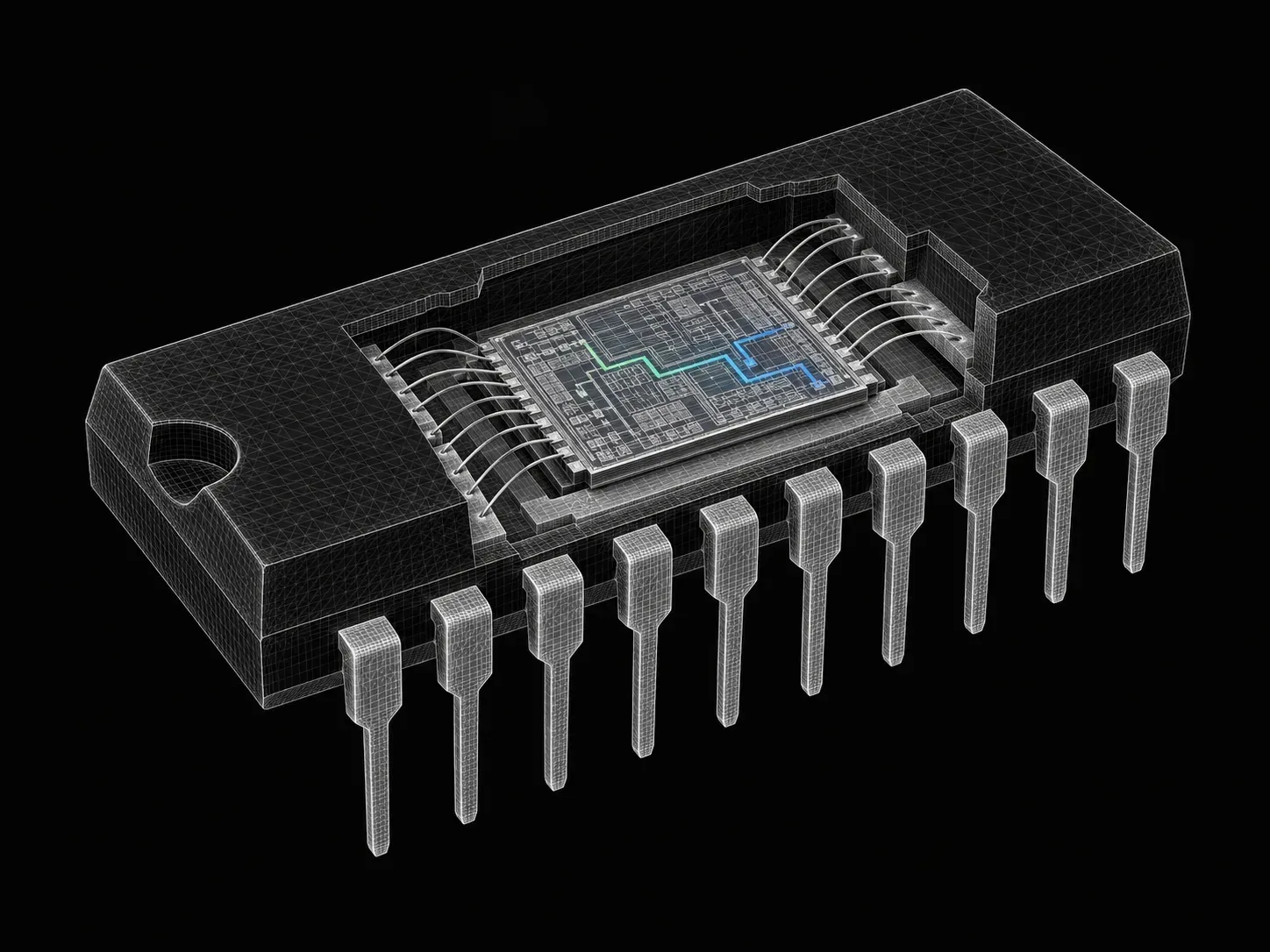
Understanding the application of VLSI will help students understand the development of MIMO antennas. Skill-Lync's VLSI design course will help students learn the fundamentals of digital design and design verification through simulation.

Duration
11 weeks
Content
22 hours
Projects
2
Mode
Online
Overview

What you'll
be able to do.

  • After this course, the learner will get a better understanding of electronics that involve the study of digital signals and the engineering of devices that use or produce them.
  • Additionally, he/she will have a strong grasp on the fundamentals of digital logic circuits, starting from binary representations of digital circuits to extracting Boolean expressions, the design of functions using multiplexers, using minimization techniques to further optimize circuits, etc., which helps them to design their own digital logic circuits.
Curriculum

11 modules,
built with industry.

  1. 01Basics of Digital Electronics11 modules
    1. Number SystemW01

      The following topics are covered this week:

      • Digital system v/s analog system
      • Positive/negative logic
      • Number system
      • Conversion from one system to another
      • Binary/octal/hexadecimal arithmetic
    2. Logic GatesW02

      The following topics are covered this week:

      • Basic logic gates
      • Universal gates
      • Truth table
      • Implementation of any function using logic gates
      • CMOS logic
      • NAND/NOR gate using CMOS
    3. Boolean AlgebraW03

      The following topics are covered in this week:

      • Boolean Algebra
      • Basic postulates
      • Practice problems based on Boolean algebra
    4. Function Simplification using Karnaugh MapW04

      The folowing topics are covered in this week:

      • Standard representation of logic functions -SOP forms
      • Simplification of switching functions - K-map
      • Standard representation of logic functions POS forms
      • Canonical form
    5. Code ConvertersW05

      The following topics are covered this week:

      • Positional number system
      • Binary coded decimal codes
      • Gray codes
      • Error detection code
      • Parity correction codes
      • Error correction code
      • Hamming code
      • Conversion of one code to another code system
    6. Combinational Logic CircuitsW06

      The following topics are covered this week:

      • Combinational logic
      • Half adder
      • Full adder
      • Half subtractor
      • Full subtractor
      • Encoder, decoder
    7. Mux-based DesignW07

      The following topics are covered this week:

      • Multiplexer
      • Demultiplexer
      • Design of all the logic gates using 2:1 multiplexer
    8. Functions using MultiplexerW08

      The following topics are covered this week:

      • 4 variable function design using 16:1, 8:1, 4:1 and 2:1 multiplexer
      • 3 variable function using 8:1/4:1/2:1
      • 2 variable function design using 4:1 and 2:1 multiplexer
    9. Sequential Logic CircuitsW09

      The following topics are covered this week:

      • Latches and flip-flops (SR, JK, D, and T)
      • Race around condition
      • Asynchronous inputs
      • Conversion of one flip-flop to another
      • Shift registers (SISO, PISO, SIPO, PIPO)
      • Counters
    10. FSMW10

      The following topics are covered this week:

      • Mealy and Moore FSM
    11. Programmable Logic DevicesW11

      The following topics are covered this week:

      • PLD, PAL, PLA, and PROM
      • Reconfigurable computing FPGA, ASIC
Industry projects

2 projects
you'll ship.

Our projects are designed by experts in the industry to reflect industry standards. By working through our projects, Learners will gain a practical understanding of what they will take on at a larger-scale in the industry. In total, there are 2 Projects that are available in this program.

Project on Number System, Logic Gates, Boolean Algebra and KMap

Project on Number System, Logic Gates, Boolean Algebra and KMap

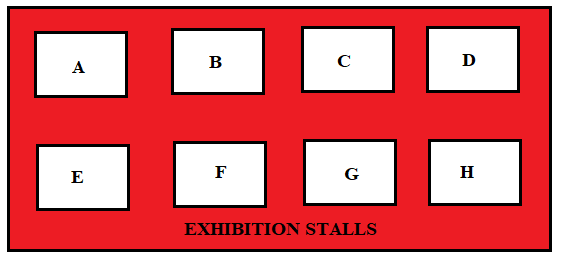
In this project, the learner has to convert the sale of all stalls from a number system format to a decimal number system format. The learner has to construct the minterms, SOP, ca…
Project on Sequential Logic Circuits

Project on Sequential Logic Circuits

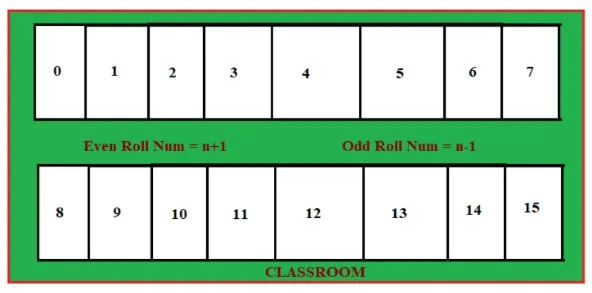
In this project, the learner has to consider a situation, where 16 students in a class are attending a test. The learner has to determine the result using some given conditions. Th…

Fee

One fee.
Everything included.

Become job ready with our comprehensive industry focused curriculum for freshers & early career professionals

Premium
₹40,000
Inclusive of all charges
  • 1 Year Access
  • Personalized Page
  • Live Individual & Group Sessions
  • Personalized & Hands-On
  • Job-Oriented Industry Relevant Curriculum
Check eligibility →
FAQ

Questions,
answered.

How can the course help you complete your MS or PhD?

While pursuing MS or PhD, you can choose the following major subjects to help you complete the course -ASM charts, CMOS VLSI Design, SOC/FPGA, digital VLSI design, etc. 

Will I get a certificate after completing the VLSI certification courses ?

Yes, course completion certificates will be provided to all learners. Moreover, the top 5% of the class will get a merit certificate. Using the certificate, learners can build a strong professional portfolio.

Will I get placement support?

No, the VLSI: Basics of Digital Electronics course does not offer job placements. However, the skills you gain make you industry-ready, along with providing you with certification.

How is this digital electronics online course going to help me?

Whether you are going for a job after graduation or higher studies, the knowledge of designing logic and functions is a non-negotiable aspect.

Which software skills are included?

The course incorporates designing, so understanding digital electronics is very important in terms of placement and IC fabrication as a front-end engineer.  Besides that, implementation using K-map, FSM, and design will be included in this course.

Do companies require these skill sets?

All the major companies in this domain, such as Intel, Qualcomm, ST, Cadence, etc., require a deep understanding of digital electronics. This course covers the basics and lays the foundation for expertise in the niche.

Next step

Not sure it's
the right fit?

A counsellor will walk you through the syllabus, projects and fee options — and tell you honestly if another course suits you better.

Get the syllabus + a call back

We'll email the full syllabus and call within one working day.

By submitting you agree to our Terms and Privacy Policy.

Call usEnquire

Talk to a career counsellor

Free 20-minute call. We'll map the right course to where you want to work.

By submitting you agree to our Terms and Privacy Policy.